7-Eleven’s Marissa Jarratt on Slurpee, Gen Z & Sustainability
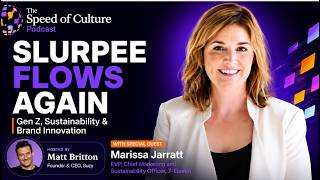
In this Speed of Culture podcast episode recorded on June 8 2026, host Matt Britton interviews Marissa Jarratt, Executive Vice President and Chief Marketing & Sustainability Officer at 7‑Eleven. The conversation begins with Jarratt’s personal background – a childhood fascination with creative‑analytical pursuits, a finance‑Spanish degree, and a 14‑year tenure at PepsiCo where she built brand‑marketing expertise across Frito‑Lay and global snacks. She then describes her move to Dean Foods, where she created a modern marketing function and broadened her skill set into general‑manager responsibilities, paving the way to her current role at 7‑Eleven. Jarratt outlines 7‑Eleven’s three strategic pillars: (1) targeting Gen Z, which now accounts for roughly one‑third of transactions; (2) delivering value amid post‑COVID economic pressure; and (3) expanding delivery through the 7Now platform, which grew five‑fold during the pandemic. She emphasizes the brand’s heritage and nostalgia, especially the iconic Slurpee, a frozen carbonated beverage with a 60‑year history that drives two‑thirds of store trips. To revitalize Slurpee, 7‑Eleven is launching the “Anything Flows” summer campaign across 13,000 North‑American stores, featuring a new visual identity, four creative pillars (electric joy, amplified taste, youthful spirit, colossal presence), a capsule collection on SevenCollection.com, and a diverse cast of characters representing flagship flavors. The campaign development leveraged deep archival research, a re‑evaluation of the brand purpose (“Jolt of Joy”), and insights from the company’s massive first‑party data assets: a loyalty program with over 90 million members (≈ 1 in 4 Americans) and the “Brain Freeze Collective,” a 250 k‑member consumer panel providing quantitative and qualitative feedback. Video‑first media (linear TV, digital video, streaming, social) is the primary channel, complemented by targeted messaging powered by the loyalty data. Jarratt also discusses her newly added sustainability portfolio, describing 7‑Eleven’s “good made easy” philosophy, the scale of the business (13 k stores, 50 % of U.S. residents within 2 mi), and the ambition to set measurable sustainability goals for 2030 and 2050 across product, people, and planet dimensions. Finally, she shares leadership advice: embrace continuous learning (risk‑taking and failure), work hard while being kind, and cultivate curiosity about culture, technology, and consumer trends. Her personal mantra, “To thine own self be true,” guides her decision‑making. Overall, the interview provides a comprehensive view of Marissa Jarratt’s career, 7‑Eleven’s brand‑growth strategy, the Slurpee revitalization effort, data‑driven marketing tactics, and the company’s sustainability direction.
Chapters
Hey!
Up today, we're going to be speaking with Marissa Jarrett, Executive Vice President and Chief Marketing and Sustainability Officer at 7-Eleven. Marissa has an extensive background in food and beverage marketing. We're really excited to have her on today. Marissa, how you doing?
I'm doing great, Matt. How are you?
Good. So great to see you. And I'm really excited for today's episode. And I'm so happy you took the time to join us. Before we kind of jump into what you're working on at 7-Eleven, I'd love to dig a little bit into your background. Would you say you were always interested in marketing at an early age? If you remember back to your high school and college days, did you always think, "I want to be a marketer one day"?
Well, actually, when I was a kid, I wanted to be either a Dallas Cowboys cheerleader or President of the United States. And so, you know, unfortunately neither of those, or maybe fortunately neither of those options panned out. But I got to tell you, I've always been sort of attracted to sort of creative and analytical pursuits. Um, in college I studied finance and Spanish. I interned in business internships as well as with arts organizations. And, you know, over time I landed in the marketing space in a career that really requires you to kind of use both sides of your brain in order to be successful. And it's been really a great fit for me.
Absolutely, clearly. And you, you know, you jump right into your career at one of the best CPG companies, um, in the world, PepsiCo. You went on to work there for over 14 years. How would you describe your journey over and your growth there over your stint there?
Well, I mean, I am so blessed to have been able to work at PepsiCo with so many innovative, intelligent, creative marketers, business leaders. You know, I really got my kind of marketing chops there, and I did a little bit of everything at PepsiCo within the marketing space. I kind of built my brand marketing credentials there, worked on so many beloved and well-known brands, and really learned how to build a brand in a way that drives the business. And, you know, I've taken that with me ever since.
And many people, what we see right now in the marketing field, they jump around a lot. You know, they're, they're somewhere for 3 years and they go somewhere else for 5 years. Did you intentionally say, I'm going to stay at this at this company? And I imagine you did jump around to different brands and different roles there. Or were there times where you were thinking, well, maybe this is a better opportunity and you got antsy? What was that like being there for so long?
Yeah, I mean, when I joined PepsiCo, honestly, I thought I'd be there— I'll be here for about 3 years and then I'll move on and do something else. I'm a— I'm really like a— I place a high value on learning and growth and development, and I just kind of thought, I'll let this run its course. But PepsiCo and to a large extent, large organizations offer an opportunity for continued growth and learning because they're so big. And that's kind of what I've experienced at PepsiCo. I was able to do a lot of different jobs, work on different brands. I spent the first 10 years of my career there at Frito-Lay North America. So in their foods business in the North American market, and the last 4 years I was there was in their global business and snacks. And so that was almost like working at a totally different company. Yeah. And it kept me engaged. It kept me learning, growing, having funds, intellectually stimulated. And it really was kind of until that point that I realized I'm ready to try something different outside of PepsiCo and see if I can, you know, bring to bear all of the skills and experiences that I've learned in the last 14 years in a different environment. And so that's when I jumped over to Dean Foods. I was in a pinnacle role in the marketing function. I was tasked with building a modern marketing function. And it's a completely different environment, infrastructure, category, and really challenged me in different ways. I learned different things. I actually expanded my skill set into more of a general manager skill set at Dean Foods. And honestly, that paved the way for me joining 7-Eleven. It helped kind of round out my experience and, and prepare me for, for what I'm doing here.
Yeah. And the title of CMO is one that it's obviously the pinnacle of the marketing and advertising industry. Did you ever think you were going to end up in the CMO seat? And when you were there on day one, Were you kind of like, oh wow, I'm the CMO, what does that mean now? What do I do? Or was this something that kind of came natural to you?
I was honestly, I was just ready to go. I mean, one of the reasons why I joined 7-Eleven, it's an iconic brand. It was ready to kind of be contemporized for a new, you know, new customer demographic, younger customer. It really played to a lot of my strengths that I had built in the last, 17 years building up that brand marketing, understanding who the consumer is, and then kind of bringing to bear the art and the science, the left brain and the right brain into marketing strategies that drive business growth. The big new piece that I was really interested in with 7-Eleven was the promise of being able to utilize first-party transaction and customer data and incorporate that into my marketing, you know, strategies and plans. So I actually didn't think a whole lot about, I'm CMO, now what? It was more about how do I approach this business challenge, this marketing challenge, understand this consumer and this industry in a way, and then really kind of have fun with it. Because this is a brand that, as I mentioned, it's iconic. It's been a part of culture for so many years. And so how do you kind of nurture that?
Yeah. And the category itself, the convenience store category, has gone through a lot of changes over the years, you know, not the least of which which was COVID and how that impacted the traffic patterns of consumers. What are some of the key trends and drivers you have your eye on as CMO of 7-Eleven that are really impacting your, your industry?
Yeah, I mean, there's probably 3 big ones. I mentioned Gen Z, that why that's so important to us is about a third of our transactions are going to Gen Z. And so it's really important for us to understand who they are, what they care about, what are their unmet needs, and how can we really best serve them. And because they're an important and growing part of our business, they are highly indexed with our proprietary beverage and food platforms as well as our 7Now delivery platform. So we want to grow with them. The second area, which really has come out more recently as the aftereffects of COVID we're starting to see is kind of economic pressures that our consumers and customers are facing. And, you know, we always talk about how value is an important thing for the customer. And it's even more so important today. And so particularly for a brand in the convenience space where historically customers may say, oh, I'm going to have to pay a premium if I shop at convenience store, we want to demystify that. We want to blow away that, that perception and really demonstrate how customers who come to our stores, who shop on our delivery platforms can get high-quality products at a great value. They don't have to compromise on that. And then probably the third area— yeah, go ahead.
Yeah, I was about to say on the delivery front, it just, it strikes me because that's something that frankly I wasn't even aware of, that 7-Eleven is really leaning heavily into delivery. I live in New York City where there are 7-Eleven locations. Certainly I don't pass as much as I used to when I lived in a suburban area. You know, how is that business going? Post-COVID and how are you driving awareness and adoption of that channel?
It's going great. It's a huge growth business for us. It quintupled in size during COVID which probably isn't surprising to any of our listeners out there. But, you know, our proposition is a little bit different in the marketplace in that we offer— we call it our store to your door. So over 3,000 products from our assortment, which include age-restricted products like alcohol, all the way to beer and, you know, pizza, pints of ice cream, etc. Um, under 30 minutes. And so that has done really well. We continue to build awareness of the 7-Eleven brand, and now we're looking at what's the next, next iteration of the, of the offering. How do we really realize this dream of being a convenient option for customers, not just limiting ourselves to what we sell in our stores? Absolutely. So that's about all I can say on that. More to come there.
Okay, cool. I'll be looking forward to that.
Yeah, you know, the third thing I would tell you that's really that we're focused on is innovation. And when I say innovation, I'm talking about it through the lens of how customers view innovation in our channel. The convenience store channel has long been a destination for product innovation because there's lower barriers to purchase. You think about it, you're buying a single item versus a, you know, 10 multi-pack at a higher price point. So it's easier to try something. And in fact, several brands have launched in convenience stores, even in 7-Elevens. And so we're constantly looking at what's the next innovation that we can introduce across multiple categories that drive engagement, that drive delight and enjoyment, that, you know, serve a functional purpose for our customers as well. So it's a key part, part of our strategy as well.
Yeah, it's interesting when you talk about your promise of 30 minutes or less, because if I were any, you know, manufacturer or retailer, obviously I'd be worried about Amazon. And how do you differentiate? But ultimately, they're not going to be delivering that variety of products within 30 minutes to your door. So it is sort of a big differentiator and something that the Amazons and Targets of the world probably aren't ever going to be able to compete with. And I imagine that is really something that you lean into as a competitive differentiator.
Absolutely. I mean, think about immediate consumption occasions, right? And that's really the space that we play in. And so when you think about delivery, it's immediate consumption occasions at home. Yeah, essentially. Yeah. So that is the key difference from many of our delivery competitors.
Absolutely. And when you talk about 7-Eleven and Gen Z, obviously it makes a lot of sense based on their consumption habits. 7-Eleven also to me is a very nostalgic brand because it's been around for so long. I mean, I remember in the '80s they used to sponsor and have their banners up at sporting events. It's just, it's, It's been a part of my life, at least since I was a child. And I can't think of many other brands, you know, in your category that I could say the same thing about. Is nostalgia something that's still important to the brand and tapping into that for your maybe Gen X consumers and older consumers?
It is. I mean, you kind of nailed the 7-Eleven story. So the brand's been around almost 100 years. So there is a high degree of awareness of the brand.
Yeah.
And in terms of usage, we know that like older millennials, Gen Xers, boomers, they grew up with 7-Eleven. You know, I'm a proud Gen Xer. I've got plenty of 7-Eleven stories from my youth, but which is great, right? So they're our core customer. They're our existing customer. We want to continue to, you know, serve their needs. We want to grow. We want to grow frequency with them, etc. Where we have an opportunity is growing relevance with Gen Z. They're aware of the brand, but they may not have grown up using it. They've grown up in a different world, right, with helicopter parents and a different competitive landscape in the QSR and retail space. And so our goal is to help them understand, hey, we sell a wide assortment of products that are convenient solution for your lifestyle on the go. And so, and at a great value and high quality. So give us a try. So nostalgia becomes kind of a mechanism that we can leverage to bridge between our existing customers as well as our new customers. Because we know Gen Z are fascinated with a lot of the things that have happened in the '70s, '80s, or even '90s now. And our core customers actually have that as lived experience. So yeah, you see that come to life with several collaborations that we've been doing. Pac-Man's probably the most recent one. The cool kind of insight there is we actually, as you may know, Matt, had Pac-Man arcades in our stores back in the '80s. And so, you know, today Pac-Man is much more of a virtual platform versus a physical platform, but it has both. And so we want to bring that to bear, that experience for our customers and for our fans, regardless of their age.
Very, very cool. And another big piece of nostalgia and love of the brand is the fact that 7-Eleven has its own products, most notably of which is the Slurpee, which is really something that is so iconic. And before we get into a big announcement that you have about the Slurpee, you— I'd love to hear a little bit about the background of the Slurpee, like when it sort of first surfaced within 7-Eleven and how it became— how it had such staying power within your brand and your channels.
Yeah. So Slurpee, a couple of things in terms of Slurpee's role for 7-Eleven. It's important to know for our, our banner, 7-Eleven, about two-thirds of the trips to our stores are driven by a beverage. So customers come to our stores looking for something to drink. Yeah. And so part of our strategy in making 7-Eleven as a destination for that beverage trip is to ensure we've got proprietary brands that they can only find in our stores, of which Slurpee is, is probably one of the best known. Slurpee has been around for 60+ years, and I'll just read to you some of the historical stuff. So it launched in the '50s when Omar Kneblek's soda fountain broke. So to keep his drinks cool, he stashed some soda in the freezer and stumbled upon the idea to turn a frozen soda into a bev— beverage. He used parts from his car's air conditioner to build a frozen beverage machine, and it was born. So the actual category is called a frozen carbonated beverage. And, you know, through the years, Slurpee has really become embedded in American culture. I mean, from the crazy flavors that, that Slurpee is to the different collaborations with entertainment and culture and the collectible cups and straws that, you know, you've been able to buy and collect over time, there's Slurpee Day that we have every year on July 11th, which happens to be 7-Eleven's birthday, where customers can come in and get a free Slurpee. So Slurpee is part of culture. It's indelibly linked with 7-Eleven. What's new in the last 2 years is 7-Eleven acquired Speedway. And so we've expanded the Slurpee brand into our Speedway stores. And so we saw a neat opportunity to sort of relaunch the Slurpee brand to, you know, a younger customer base across all of our banners and drive some renewed interest in the, in that business and, and reinvigorate our trips to store, particularly around beverage.
Yeah, so, you know, in that regard, you know, you have a big announcement to make that you're making here today on the Speed of Culture podcast about the Slurpee brand. You want to maybe share, uh, what's going on and what you're excited to talk about today?
I do, yes. So to, to celebrate the fact that Slurpee is now available in over 13,000 stores in North America, we are launching a campaign called Anything Flows. It's the first time we're advertising Slurpee across all of our banners for the whole summer, and we're really excited about the campaign. The whole idea behind it is that— one moment, Matt. Yeah, so we're launching a new Slurpee campaign called Anything Flows, and it's accompanied by a brand new visual identity as well as a new capsule collection for sale on SevenCollection.com. And it's anchored in 4 key principles that guide our creative: electric joy, amplified taste, youthful spirit, and colossal presence. Those are all tenets to the Slurpee brand, and you see them come to life visually as well as through the creative. The creative really look— the creative is focused on bringing to life a diverse cast of characters and sipping flavors like different Slurpee flavors: cherry, blue raspberry, piña colada, and the mix of fan favorites. And each character is moving through the world with kind of a vibe all of their own, which we think is very reflective of the Slurpee product experience and the Slurpee brand personality. And so it's kind of like this world where anything flows, bright flavors come to life, individuals are themselves, and this fizzy frozen, you know, ridiculously weird and wonderful frozen beverage that is undeniably Slurpee.
Very cool. I mean, as I hear about the campaign, you think about Gen Z and you think about their interest in gaming and the metaverse and everywhere it's going. And by bringing— you bringing the brand to life in this way, I imagine that was a big driver as you did your research for this, uh, rebrand. What, what, what's a process look like when you go through kind of the, the inner workings before launching a campaign like this? Where does it start, and how do you get to where you ended up today, ready to talk about this, this exciting new effort?
Well, you know, I mentioned my background at PepsiCo, becoming a brand marketer, so that That really informs a lot of how I approach marketing problems and opportunities. So with Slurpee, I mean, we dug deep into the archives of Slurpee, the heritage of the brand, what it means to customers and consumers, what does it mean in culture. And we dusted off the brand purpose of Slurpee and tried to kind of understand, well, how is this relevant today? What are the things that we need to, need to do to make it, make it relevant today? And it's a lot of what I just mentioned, you know, a lot of the visual identity of Slurpee Slurpee is about bright colors. And what you'll see in the color palettes of the campaign are actually really bright, saturated neon colors that actually hearken back to some 1980s kind of color vibes also, which, which was intentional too. But it feels very modern and fresh. So we went back, understood the brand, you know, reevaluated our brand purpose, which we call Jolt of Joy, looked at consumers today to understand how can Slurpee fit into their world, you know, the beverage categories are really, let's just say, competitive category. There's so many different options. So why would someone choose— and dynamic. Talk about innovative. So why would someone choose a Slurpee over something else? And there's an element of, you know, Slurpee being amusing and essential. It's kind of— I like to say it's the drink that there's really no good reason why it should exist. But also, that's exactly why it should exist. We need it both in terms of refreshment as well for the body. It's cold and it's icy, as well as for the mind and the soul. And so that's what we're trying to achieve with, with some of this work.
Yeah. And as with any new creative campaign or rebrand, a big part of it is the channels used to get the message out. So given your Gen Z target, what are some of the marketing channels that you have your eye on and you're going to be leveraging over the summer months to make sure everybody knows about, um, kind of this whole new initiative?
Well, video first is a, is a key driver for this campaign. So whether that's on above-the-line channels and linear TV, which that's, that's a part of what we're trying to do because we want to also connect with older demographic as well. So we want to continue to nurture our existing customer base. So we're not walking away from that, but we are very much prioritizing video overall and then incorporating that into our channel mix. So digital video, you know, streaming audio and then video within that, even display, video social, all of that is a part of, you know, the strategy. The brand really sings in a video format. I mean, the visual kind of experience is such a close reflection of the actual product experience. And so that's been a big part of how we're going to market with the campaign.
I don't imagine you know, the valuable first-party data that you have really lends a huge hand into being able to target, identify the right consumers to get the message out here.
Yes. So from a first-party perspective, I mean, we have— we're lucky to have a really large loyalty program at 7-Eleven. We have over 90 million members in our loyalty programs. So that's about 1 in 4 Americans. It's a big number. And so, you know, we're working first to understand that data in terms of how do we, how do we create a better experience for our customers in terms of, think of things like product assortment, flavor assortment, you know, pack size, product size, promotional price points, et cetera, et cetera. But then more broadly, we're utilizing that data in new ways with insights tools. And so we're able to, in fact, we have a proprietary customer research panel that we call the Brain Freeze Collective. It's made up of over 250,000 of our loyalty members, and they provide input from a quantitative as well as a qualitative perspective on, you know, all aspects of our business. And in particular, from a marketing perspective, our campaign development approach, our communications development approach, you know, our visual identity. We seek feedback along the way to ensure that we're, you know, striking the right balance of breaking through and also, you know, being familiar so people realize it.
Absolutely. Absolutely. So shifting gears here as we wrap up, Marissa, you know, you've obviously had a really exciting career and you're in a really exciting role now as, as your, as CMO of 7-Eleven. How would you describe kind of the pie chart of your day and how you spend your time and where you focus your energies to make sure that you're moving the brand and initiatives like these forward?
The pie chart of my day probably changes every day. Yeah, I'm sure. But I would say You know, it helps for me to anchor on our customer in everything that I do so that whether I'm thinking about marketing or communications or sustainability, which is a new function that I've recently assumed responsibility for this year, I try and always link it back to what is in the best interest of our customer, how are we serving their needs, and then from there, work my way out on the stakeholder chain. So our associates and franchisees, the communities in which we operate, our shareholders, etc., etc. When I have that focus, I can move pretty seamlessly between marketing-specific discussions, sustainability discussions, PR crises, and, you know, more general business type of discussions that I have just as part of my job. So it's a pretty dynamic environment, and retail in particular moves so fast that no day is the same. But I think that's really one of my primary roles here at 7-Eleven is to ensure that I'm thinking about the customer in everything that I do and that I bring that voice to the table for any of these discussions. Yeah.
And, you know, I was remiss to not bring up sustainability because it's in your title. Across all the news about Slurpee, we didn't really get into it. But why is sustainability so important to 7-Eleven? And what does it mean for you to be the Chief Sustainability Officer at 7-Eleven in that regard?
Well, I mean, we're a huge global brand, and in North America we have over 13,000 stores we operate. In hundreds of communities across the US. 50% of the US population lives within 2 miles of one of our stores. And so we know that it's our responsibility and it's our opportunity to work on how we do business for the future, right? So we talk about in terms of good made easy. So how do we make sustainability convenient? That's kind of our driving force. And as the Chief Sustainability Officer, We are working closely to, first of all, measure where we're at with everything from a sustainability perspective. So baseline measurement across all of our planet goals, product goals, people goals. And then we have really ambitious goals to hit by 2030 and then by 2050 that we are developing initiatives against. So we're thinking long-term in this whole space. And it is, as you can imagine, it's a complicated space. When you look at our business, We operate in a lot of different areas, whether it's food and beverage, packaged goods, as a retailer, fuel, food tech from a delivery perspective. So we've got a lot of different things that we have to consider and plan for across the whole sustainability landscape. So I'm pretty new in the role, still learning a lot. And I think over the next 6 months to a year, we'll have a lot more specific goals that we are able to communicate and talk about. And then more importantly, actions and initiatives that we are undertaking that we hope are going to be good for the business. But also, I think what we want to be able to do is generate value and create value for not just for the business, but for our consumers and our customers. So that's really the unlock that we're working on.
Yeah, I mean, with 13,000 stores, obviously, it's, it's it's a heavy burden to make sure that you put sustainability front and center just with the amount of purchasing and packaging and everything that goes into operating that scale of a business. All of that. Yeah. So finally, I mean, you know, you've had an exciting career, you're in an exciting role, great announcement today. Can't wait to see this Slurpee campaign in action this summer. Everyone make sure to stop by 7-Eleven this summer and drive continued volume for the brand. As you look back on your career, Marissa, What are some of the things that you think you did right to put yourself in the position you are today as you think about your journey that maybe we can impart on some of our younger listeners here at Speed of Culture?
I think there's a couple of things. I mean, one of my colleagues once said, if you're not learning, you're dying. And I think that's really true. So you learn by taking risks and by experiencing failure. And for someone who is such a driver, driver who has, you know, high ambitions, it's kind of scary to face that failure down and actually experience it. But that's, that's how you're going to grow. So I'd encourage your listeners to think about ways that you can take risks and fail every single day. They don't have to be massive risks, but build that into your kind of way of working, way of living, make it a behavior, and you'll accumulate the benefits over time. The second thing is to work hard and be nice. It's such a cliché, but it is true. And I've heard other, other guests on your podcast talk about this also, like nobody likes to work with mean people and we can, we can do great work together and have fun and enjoy working together. And so look for ways to do that. Role model that behavior to your peers, to people who are more senior to you, to people who are more junior to you. It's, it's important. And then I think the maybe the last thing I would say is, as marketers in particular, it is so important that we cultivate curiosity of the world. And you're probably, if you're in marketing, you're probably wired that way naturally anyway. But look for ways to build that into your routine on a regular basis. You don't want to wake up a year from now, 5 years from now, and go, I'm totally out of the loop on the AI discussion or the nostalgia, the role of nostalgia with brands, etc. So what are the systems and practices that you can put into place that can help you purposely nurture your intellectual curiosity about culture, about the consumer, about brands, about marketing, the world more broadly.
Yeah, one of the common themes across all the podcasts that I've used with CMOs is there's almost a spectrum of things that are urgent and that are important. So the urgent things are, I have to respond to this email, I have this meeting, I have this deadline, and a lot of people gravitate towards that. But the things you're talking about are things that aren't necessarily the urgent things you have to do tomorrow, but they're important things that you're going to need to have, you know, 6 months, a year, 2 years, 5 years from now. And, and curiosity is a big part of that, is always being curious about what's next, because while it might not matter tomorrow, it's going to matter in the future.
Yeah, I liken it to exercise, right? Like, perfect. Exercise is a keystone habit for me. Got to do it every morning, right? You got to do it. You just— that's part of how you, how you live your life.
Absolutely. So finally, is there a mantra or saying that you live by that you wake up every morning staring mirror and say to kind of get you going and up and running for the day?
You know, I have often thought that my mantra is, "To thine own self be true." And I think either Shakespeare or maybe the Beastie Boys said that. I don't even really remember, but I love it because it's all about knowing your purpose and your values and kind of why am I here? Why am I doing what I'm doing? And if I'm clear on that, then I can make really good decisions in my personal life and my professional life that are consistent with my values and feel good about kind of how I'm living my life. So, that would be my recommendation to anyone. And it's certainly something I try and aspire to is just be true to myself and what I know is my purpose, my values, and live consistently within that.
Very cool. Well, wishing you nothing but continued success. A really successful launch this summer, Marissa. So thanks so much for joining us today. On behalf of the Suzy and Adweek team, thanks again to Marissa Jarrett, Executive Vice President and Chief Marketing and Sustainability Officer at 7-Eleven, for joining us today. Be sure to subscribe, rate, and review the Speed of Culture podcast on your favorite podcast platform. Till next time, see you soon, everyone. Take care.
More from Matt




MikMak’s Rachel Tipograph on Consumer Spending, Retail Media & Holiday Shopping Trends



Jaguar Land Rover’s Charlotte Blank on Luxury, Purpose & Experiential Storytelling



