Abercrombie’s Megan Brophy on Brand Revival, Hollister & Advocacy
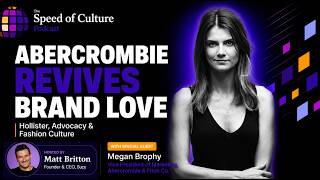
In this Speed of Culture podcast episode, host Matt Britton interviews Megan Brophy, Vice President of Marketing for Abercrombie & Fitch and Hollister. Megan recounts her early fascination with marketing, her decade‑long agency experience, and the decision to move in‑house to a brand she grew up with. She outlines Abercrombie’s 130‑year heritage, its decline in the early 2010s, and the comprehensive brand revival launched in 2019 under CEO Fran Horowitz, targeting 25‑29‑year‑old consumers while also courting emerging Z‑millennial shoppers. The relaunch hinged on relentless consumer listening—face‑to‑face focus groups, TikTok as a “billion‑person focus group,” and social listening—to shape product assortments that blend timeless capsule pieces with trend‑driven items. Megan explains how brand advocacy and influencer programs have become a major revenue driver, shifting from macro‑influencers to a democratized model where any creator can sell and earn commissions, and how the team balances relinquishing control while maintaining guardrails. Post‑COVID, the brand pivoted to loungewear, then back to experience‑driven fashion as the market swung. Megan emphasizes a leadership philosophy centered on empowering people, fostering curiosity, and removing barriers. Looking ahead, she highlights the rise of authenticity, humility, social commerce, and AI as key trends marketers must watch. The conversation closes with career advice for aspiring marketers, stressing diversification of experience, embracing uncomfortable opportunities, and staying curious.
Chapters
Up today, we're gonna be speaking with Megan Brophy, Vice President of Marketing for the Abercrombie Fitch and Hollister brands at Abercrombie Fitch. Megan has been with the business for 7 years and over 15 years of experience as a customer-centric marketing leader working across industries and channels. Megan, great to see you today. Thanks so much for joining.
Yes, great to see you. Happy to be here.
Absolutely. I've been really looking forward to this one. We haven't done too many episodes in the retail and fashion space, and it's an area that you know, is continuing to evolve. So I'm excited to dig in. What first drew you to the field of marketing? Was that something you always kind of knew you wanted to do back in the early days, or did you just kind of stumble into it?
It's actually something I always knew I wanted to do. If you actually look back at, you know, some of those papers you had to write in high school and whatnot of what do you think you wanna be when you grow up, I said in marketing and advertising. I don't even know if I knew totally what that meant at that point, but it is what I said I wanted to do. It's what I went to school for. It's where I started my career. It's where I am.
So. And what about marketing has always kind of drawn you to it?
I, I think it's very much the meeting of the right brain, left brain that is so intrinsic to kind of who I am and how I grew up. I love art, I love creativity. I also love psychology and understanding the, the reasons we do the things that we do. And that's ultimately what marketing does. It marries those two worlds together. I think, so I think that's why I've always been drawn to it and, and continue to find it just as fascinating today as, as I always have.
Yeah, I mean, in some ways it's so much more fascinating, also a lot more complex than it was, um, when you joined the workforce, for sure.
Absolutely.
And you spent the first 10 years of your career, um, in the agency world.
Agency side.
How do you— yeah, so how do you think those experiences prepared you to ultimately be in the position you are today?
So much, probably more than I realized at the time as I was, uh, in the agency space. Ultimately, what I loved about agency world is the vast experience that you get in a short period of time being assigned to so many different clients. So I've worked in a ton of different industries with that not only teach you the, the marketing side, the truly how do I understand and learn all these different types of customers and demographics and apply them to marketing strategies, but also how to work with so many different types of humans and so many different types of creatives and learn how to be managers. And just, you learn so much because you get such a vast experience. And now it's something that I, I often tell people as I'm talking to those who are kind of coming up, uh, in the marketing world or graduating out of, out of college and they're looking for some advice, that the agency world is kind of a really great, um, you know, boot camp, if you will, and kind of a learning ground to ultimately be able to take it in-house now, like I have as well.
Yeah, that is what makes agency world unique, is a lot of people don't realize what they're doing is you're working in so many different industries One day you're working in fashion, next day auto, next day tech. And, you know, there's so many commonalities between every industry, but there's also nuances and things that are unique. And coming out of it, you definitely feel like you're more well-rounded for sure.
100%. Absolutely. And it's fun. I mean, you, you, you end up learning about a million things along the way, so it's, it feeds the curiosity.
Absolutely. So talk to us about Abercrombie and how that opportunity came about and why you thought it was the right move for you. After being in the agency world for 10 years.
Yes. So, after being in the agency space for a long time, it did exactly what I was hoping it would do. It gave me all these experiences we just talked about, but I was starting to hit a point where also the challenge on the agency side is you only see a piece of the pie. You're only around for a part of the story. And I really wanted to be around for more. I wanted to be more a part of influencing and being a part of, you know, what kind of what happens after and not just maybe this project or this period of time in a brand. So, I wanted to go in-house and to learn totality. And I'm someone who need— I needed that to be something that kind of like lit my own personal fire. So what is interesting to me as an individual, that's the type of brand and/or company that I'd want to be a part of. So it's— I didn't necessarily go after fashion or retail, but it was a natural fit when I found it. Actually, I was living in Southern California working agency world at the time, and Hollister called, and the opportunity was really interesting to me. It's a brand that I grew up with, a brand that kind of always meant something to me. I had some nostalgia for it as a consumer. And I'm originally from Ohio, which is where the company's based. So I was like, I don't know, it feels like a lot of stars are aligning and maybe this is the right one to kind of to go in-house for it and make this big leap. So actually, when I first joined the company, I was on just Hollister for a number of years. Then I moved over and was on just Abercrombie for a number of years. And now I sit across all brands, those plus a few of our sub-brands. So even in my 7 years here, it's almost felt like— you know, a few different chapters. The brands as a whole have gone through so much. So, there's still a little bit of that kind of agency sense of what you're learning and how everything feels a little different that I've really been able to apply to my 7 years here at Abercrombie too.
Absolutely. And let's talk about both brands. So, Hollister, from what I know, is more of a surfer brand. I guess, did you grow up in the California area? Is that why you were exposed to it?
So, I grew up in Ohio, but I was fascinated with California as my entire life and always had set my sights on it, knew I would live there at some point. So I think you're right, that always resonated with me as a young consumer when Hollister very clearly kind of put their flag in the surf brand positioning.
Yeah.
And, but it's not necessarily who the brand is today. So it was born out of that, but it has very much evolved into just a teen lifestyle brand. At one time, you know, California meant something a little different when the world wasn't so global and connected as it is now. Those things are just more attainable in a different way. You can see California in the palm of your hand on TikTok every day if you want, in a way that before you kind of had to be traveling.
That's an interesting point. And younger people are traveling earlier in life too, right?
Exactly. People are traveling more.
The world is so much more attainable, yeah.
Yes, yes.
So yeah, so Hollister started as more niche and went broad. I mean, Abercrombie, itself has had so much more of a rollercoaster story as a brand. In doing research for Abercrombie, I mean, obviously it was a brand that was super hot in the late '90s and 2000s. It was sort of like the it brand, and then it kind of hit some troubles, I guess, in the 2010 time period. So talk to me about kind of the journey of Abercrombie, where it was when you joined and, and where you're taking it today.
Yeah, actually Abercrombie, what a lot of people don't recognize, is a 130-year-old brand. So most people think of it as born out of the '90s and 2000s. It's actually Born way prior to that, but that is kind of the era that a lot of people remember. So when the company was born 130 years ago, it was born out of this concept of escapism about kind of taking the out. At that point, it was taking the outdoors into downtown Manhattan and really became this immersive experience for consumers to be able to walk in, in the middle of Manhattan and feel like they were in upstate New York. There's a lot of that that has continued throughout our entire history. This notion of getaway, this notion of escapism, this like light hits of adventure and travel, those were born of the brand and those have continued to be reinterpreted over time, making them more and more relevant over time. So yes, in the '90s and early 2000s, the Abercrombie brand grew to icon status, as did the Hollister brand. And Abercrombie had a not so positive chapter, we'll just say that. And that's really when Fran entered, our current CEO, Fran Horowitz entered and started running the entire company in 2017. And from that moment on, it was, we are a different company and we will be a different brand, go forward. I joined the company in 2016. That happened to be the year that we were also, Abercrombie was voted the most hated brand in America.
Yeah, you were canceled before you could be canceled, right?
Correct, exactly. So I was entering the company at an interesting time, though I was on the Hollister business which was positioned and viewed pretty differently. And so, since Fran joined, we've really been kind of overturning every stone of the brand, and that's just as much internal as external. So, the product and the way in which we make the product, the way in which we get product to customers, just as much as the way we create marketing and market to that.
And merchandise, I would assume as well, right?
Correct. Correct. The shopping experience, how, you know, like digitally forward the Abercrombie brand is compared to others in the market. Retail space. So, so much has happened in her time on the brand. I joined the Abercrombie brand in 2019. And that was really the first, as did several others, our CMO and our VP of creative and others did. And that was really the first year that we started getting the new brand marketing definition of Abercrombie back out. And that's what we've been doing since 2019 is kind of re— Yeah. Letting people rediscover us. And we definitely never came out in 2019 or 2020 and said like, we are different, look at us, come trust us.
Sure.
Very intentionally said it needs to come from the people. So it started a little bit more of this like best kept secret kind of quiet and then has just really taken off over the past handful of years as we really listen to consumers and lean into the community as the storytellers for who Abercrombie is now.
And from where you sit, you know, and you talked about how iconic the Abercrombie brand was, in many ways still is, what goes into a relaunch or a rebrand? Like, what are the steps that you take to make sure, or at least stack the odds in your favor, that you're gonna get it right? Because a lot of brands try to relaunch and they miss, and you really don't get many chances. So what went into that process?
Yes. I think what goes into it is a lot of humility and a lot of listening. We stay incredibly close to our consumer. We came out and first tried to be very clear about who, what target do we want to go after? And then how can we understand absolutely everything that we can about that consumer? And that has never stopped. I, for example, this is a Hollister brand, not Abercrombie brand, but 2 weeks ago I was with a bunch of teenagers just hanging out, understanding what it's like to be a teen. That is a regular occurrence for us that we are constantly spending time either in person or in focus groups, listening on TikTok, which is itself a billion-person focus group, if you will.
Yeah.
Listening on social, all of the different signals that give us an understanding of what this new demographic is looking for. So when we relaunched Abercrombie, we said, or reintroduced, I should say, Abercrombie, we said we want to be about the 25 to 29-year-old, that kind of life stage. So every decision that we make is through that lens. And everything that we learn is by spending time with that cohort of people. And then also making sure that we're kind of understanding this Zillennial that's now coming up into the brand, that 23, 24, 25-year-old who has a little bit of a different mindset than a more traditional Millennial. So we never stop learning. That's ultimately how we relaunched a brand. We listened, we learned, we understood what they liked about us. We understood what they didn't like about us. We understood what they needed from us. And we've been listening since. Sure.
Yeah. And what can consumers expect of the brand today here in 2023? Maybe for consumers that haven't shopped Abercrombie in a while, or just maybe have a typecast of what it used to be versus what it is, how would you describe what the brand stands for, the products that you sell, and what the overall experience is?
Yes. So from a product standpoint, we are kind of classic capsule wardrobe-like pieces, things that are well made, that are quality, that can stand in your closet and take you from date nights to work to hanging out with friends, all the things that you do in that life stage, then complemented with trend pieces that are a bit more of the moment, that are more for those like kind of fun splashy moments that our customer is having. So there's very much this like foundational aspect to the wardrobe with this like added layer of trend to the wardrobe, which is what's informed ultimately our product assortment. Mm-hmm. From a brand and marketing standpoint, it's all about representing everyone that is of this age group. So really, we kind of turn it over to our consumers. Brand advocacy is a major element of our— or major strategy, I should say, of the entire brand. So really, a lot of the story of who Abercrombie is is coming from the consumer and how they're living their lives in our clothes.
Right.
And how they're, you know, and that is work and that is dates and that is travel and that is all of the things that represent what's important to a 25-29-year-old.
Yeah. And what are some of the trends that you've seen in retail and apparel over the last couple of years that you feel that, you know, you as a professional have really had to, I guess, adapt to, to make sure that the company stayed on the bleeding edge? Obviously, you just reported great earnings in your most recent quarterly reports. The company is clearly on fire right now, cranking on all cylinders. But if you, if you're not evolving quickly enough, that doesn't happen. So clearly you've been able to keep pace. Like what are some of those things, especially post-COVID on how your, your industry is different?
Yeah. Again, we, we listen a lot to our consumers in the way that they're spending their time. So COVID started and all of a sudden they're like, I want all the sweatpants and sweatshirts I can get my hand on 'cause I'm not leaving my house. So we had to really pivot into not just making sure we had a product to deliver on that, but also that's the lifestyle we needed to project to make sure that we were really resonating. Than last year. It was very much like we're fully out of COVID Everyone is making up for lost time. Every day is a day to do anything possible. And there was very much the swinging of the pendulum to like going out and embracing every day as epically as we can. And now we're seeing this year it's starting to like a little bit find its middle ground again and being kind of back into a little bit of a Monday through Friday, you know, mundane—
2019 lifestyle. Exactly.
Correct. Correct. So, we've done that. Pendulum swing, both in the product that we offer and the way that we kind of talk to our consumers that entire time. And then through all of it is everything we're doing in the brand advocacy space, the influencer space, the, you know, the authentic customer space in listening to them and showing them and bringing them into the brand. So we're not talking at consumers anymore. We're talking with them and ensuring that they feel a part of it.
Yep. And that's the consumer centricity and working with consumers is is the biggest shift I think that's happened where we've went from a world where big business decisions happen in the boardrooms and now they're happening on the sidewalks and the consumers have the voice and you can't dictate what they hear. And when you could, that's when brands got into trouble because they became disconnected with culture and society. And now you, it's hard for that to happen if you're really empowering your customer.
Absolutely.
Absolutely. Yeah. So from a marketing standpoint, in terms of how you get the message out, you mentioned TikTok is sort of like the ultimate development focus group and being able to hear consumers. What are some of the tactics that you have your eye on and where you spend your time to make sure that you're effectively conveying your brand message?
Yeah, I mean, we do a little bit of everything. We are a little bit of everywhere. TikTok has become an incredibly important channel. It's by no means our only channel, but it is one that gives you not— it is not only a marketing channel you can lean into from a paid aspect, but it also gives you all of those signals in a really nice, like, organic way as well. We all flocked to TikTok in 2020 when the world shut down, and we saw with the platform itself, that's really when the platform took off, and we were lucky enough to really be a part of that. And I run the brand advocacy team who, that is everything that they do is kind of ensuring that across TikTok and Instagram affiliate channels, YouTube, that they're out there constantly looking for new voices. And what's really interesting about the influencer and advocacy space now is it used to just be the voices had huge followings. Now it's anyone can have a voice. Anyone can go viral. Anyone can really kind of change the game. So it's, it's made the kind of work of the work of that portion of my team that much more challenging, but also really interesting knowing that anyone can play a role in the advocacy and the popularity of a brand.
Yeah, and we're seeing social media, and talking about influencers, really continue to move down the funnel and move into areas like social commerce. You know, it's really taken off big in China and really hasn't taken off to the same degree here in the US, but I believe that that's where we're headed, where influencers not only promote brands, but they directly sell brands on your behalf. Is that a space that you guys are thinking about and moving forward as you kind of build these advocacy programs?
It absolutely is. I can say advocacy today is actually a very large revenue driver for us.
Wow.
Which I think is rare. And I don't think a lot of other brands are maybe using it in the way that you can. So we definitely have a lot of focus at the, from the top of the company, not just within the marketing department, that advocacy is a way to continue to grow the brand, both through making money as well as creating brand lovers. So it is, it's definitely not only a huge part of what we're doing today, but to your point, we're always listening and learning and we want to continue to stay at or ahead of the pace of how the influencer space is gonna continue to evolve. And the fact that anyone now can influence and anyone now can be an affiliate and anyone now can make money. So how do we continue to, to stay a part of, of that?
And do you find one of the challenges from your seat is just overarching control? 'Cause I guess the downside of outsourcing the brand, so to speak, is it could be hard to kind of consistently convey that message if people are taking it and running it. So is that sort of a balancing act you find yourself facing a lot?
It's funny. I would— it's different. That balancing act is different than it used to be. I would say yes, there is definitely a relinquishing of control. I think that Abercrombie has now relinquished it so much for so many years that it's now our norm. It almost doesn't feel odd to us, but I think it did at first. And I think that's what you hear of a lot of other brands who haven't maybe gotten themselves there yet of how do Do you just have, you know, let control and kind of trust that your story is going to be told the way that you want it to? And the answer is like a little bit of yes, you trust, and a little bit of it's not always going to be told the way that you want it to. And that's okay because at the end of the day, we exist to, you know, clothe consumers to be able to fit into their lives, not the other way around.
Right.
So, when we work with talent, we're of course always saying, you know, here is Abercrombie and here's kind of what we stand for and what you know, what our guardrails are, what makes us us and who our partners are, things like that. But we don't dictate. We say, you know, you know what works for your audience. You have your own audience for a reason. So how do we fit into your own storytelling? Not how do we force you to fit within ours?
It's interesting because like luxury brands obviously aren't there yet where they try to create this kind of pristine, very guarded image of celebrities and beautiful people and and everything is shot and airbrushed, et cetera. And, you know, somehow they're still going down that path. And I wonder, as millennials become an age of wealth, if they're, you know, since they grew up in the age of the internet, if their expectation of a brand is gonna change and the whole luxury sector is gonna have to go along with it. Because I think what you guys are doing is definitely bleeding edge and it's something that other brands are following suit that target a younger audience, but I still see luxury brands is taking the old way of, of brand building.
Yes. Agree. Agree. I think luxury is gonna be a space that's gonna be really interesting to keep watching as a Gen Zer grows up into it. Gen Z-minded person grows up into it. What is that industry or part of the industry gonna have to do? I think it's gonna be fascinating for all of us. Yeah.
Cause if you think about it also, like the, the status symbols used to be brands.
Yes.
And now many ways are experiences.
Yeah.
So younger people have grown up in the Instagram age where they flex or they show who they are by the experiences they're able to ascertain versus, you know, them having a Rolex or a BMW. So will they even care when they get older?
Right.
Is the big question.
Right, right. It will, it will mean something different. And I mean, and you see even on, on clothes, for example, today that they're not looking to wear a brand name across their bodies in certain ways anymore. Um, so again, like, how will that continue to, to evolve is a big question.
Absolutely. So shifting gears a bit to you, Megan, how you spend your time as VP of Marketing. You oversee two brands and obviously you have a lot going on. I imagine you're dealing with the merchandising team and retail and agencies, et cetera. What's the pie chart of your day? How do you know where to prioritize and spend your time in any given week? Or is it even up to you or you just kind of go by the winds of the business?
Oh, it's a little bit of everything you just said. What I can say is at the end of the day, what I prioritize very much, especially in the role that I'm in now, is my people. So I have a team, both those people who work for me, but also my partners. The only way we get the things done that we get done and are able to move at the pace that we're able to is because of the way in which we go about and conduct ourselves every single day. So how can I be there to remove barriers for my team? How can I be there to really understand the intimacies of our product assortment and ensure that we're showing up to sell and deliver on that? So I would say that's, that's at this point the, the place I spend the most time. The way in which that happens is obviously a ton of different ways, but it's, it's the biggest focus for me is ensuring that my team feels empowered and that the rest of the business feels like marketing is a true partner in being able to deliver on what we're all here to do at the end of the day.
Yeah. As you build your team, what are some of the common things you see in people that are successful in working for you and successful in working within your industry?
Curiosity more than anything.
We hear that so much, Megan, all the time.
Right?
Yeah.
To be in marketing today means you have to understand that there's no black and white, there's no easy path. Whatever the path was today is likely not the path tomorrow. So, you have to be someone who's innately curious and innately ready to like sit on the edge of your seat and be resourceful in finding new information, knowing that the answer isn't just going to be handed to you. You're going to have to go look and search and listen for it. I think that is the biggest thing. And then I think as a manager in managing those types of humans is understanding that, is being able to empower them because they, you know, if you're hiring these people who are innately curious, they're going to get there on their own. They're going to get the work done. They're going to get the job done. It's how can you help, you know, empower them to do it, get barriers out of the way if they can't, kind of support their confidence in being able to do that if you're hiring people with that kind of innate curiosity within them.
Yeah, it's very much a parallel to how you think about your consumer, right? In terms of empowering them, listening, giving them the tools they need, and then kind of getting out of their way and letting them make it their own. It's sort of the same way you manage.
Very much so.
Manage. So—
Absolutely.
Yeah, absolutely. So, so as we, as we wrap up here, I mean, here in 2023, are there some trends or things you have your eye on, whether it's industry specific or just really at the job of a marketer? That you're super attuned to in terms of its potential to impact your business moving forward?
I think something that we have our eyes on and anyone in marketing should have their eyes on is this kind of shift to authenticity and humility and probably started in COVID, but us all showing up as humans. And I think that that's important as we think about how brands show up as humans, consumers show up as their authentic selves, how we as associates show up as authentic selves and know that we are complex and imperfect and embracing that. I think we're— I think the social commerce space is only going to keep evolving. So it's definitely a place that we have our eye on as a company and brand.
Mm-hmm.
And I think we're only going to see it continue to become more complex and more democratized. So less in a single place and less with big followings. But, you know, anyone's ability to have a voice and anyone's ability to make money with that voice, which I think is going to make it harder but more interesting also for all of us. I think we're always going to be watching what the next thing in social media is going to be. You know, 2 years ago, we never would have thought TikTok is playing the role that it is in brand development. So we know that that's always changing. So how do we stay on it? I think everyone— Yeah. Under the sun right now is talking about AI and the role AI is going to play in consumption, in consumer shopping, in how marketers show up and how we develop work. So I think there's a lot of different places that we're kind of watching and have our eye on.
Absolutely. Absolutely. So to close out here, we have a lot of younger listeners here at the Speed of Culture podcast, many of which want to end up in a seat like yours one day, you know, running marketing for a Nike iconic brand like Abercrombie and Hollister. What are some of the decisions you think you made correctly so early in your career to set yourself up to have the type of role and impact that you do today?
Oh, I think it's diversification of experience, and that is both hard skills and soft skills. Being able to try a lot of different things and know that you can apply that to the next thing. I think it's having confidence that sometimes the, that your gut will always guide you, but even if that still is uncomfortable, to still do it. I mean, there are big bets that I've made, there are big bets that we've all made to get further in our careers. I would say, don't just kind of sit in a place of comfort and safety.
Right.
Really have your eye on where you want to go. I think, you know, when opportunities come your way, grab them. Your path is not always linear and it can't always be— it's not going to be exactly the way you think the way you thought it was going to go because we don't have control over those paths. But as opportunities come your way, I think embrace them even if they scare you and have the confidence to know that it will all be okay and mistakes will be made and you learn from your mistakes in your career just as much as you learn from your successes. Those are, I think those would be some of the things I would say to apply. I love that.
Awesome. Well, we're going to leave it with that. You heard it from Megan, have faith and take the leap. I'm sure Abercrombie's glad she did, and it'll be exciting to see where you take the brand moving forward. Thanks so much for joining us today. It was a great chat. On behalf of Suzy and the Adweek team—
Of course.
Yeah, on behalf of Suzy and the Adweek team, thanks again to Megan Brophy, Vice President of Marketing for the Abercrombie Fitch and Hollister brands at Abercrombie Fitch. Be sure to subscribe, rate, and review the Speed of Culture podcast on your favorite podcast platform. Until next time, see you soon, everyone. Take care. Hey!
More from Matt




MikMak’s Rachel Tipograph on Consumer Spending, Retail Media & Holiday Shopping Trends



Jaguar Land Rover’s Charlotte Blank on Luxury, Purpose & Experiential Storytelling



