Aflac’s Garth Knutson on Health Insurance, Advertising & Marketing Strategy
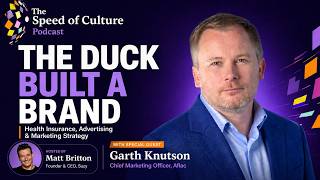
In this Speed of Culture podcast episode, host Matt Britton interviews Garth Knutson, newly appointed Chief Marketing Officer of Aflac. Knutson recounts his journey from a briefcase‑dreaming kid to an unpaid PR intern at the Seattle agency Wongduty, through roles at Wunderman, Publicis, and a stint at Papa Murphy’s, culminating in his transition to the client side during the pandemic. He emphasizes the centrality of relationships, citing mentors like Pat Doody and key connections with former colleagues that later opened doors at Aflac. The conversation delves into the iconic Aflac Duck campaign: its accidental inception, testing success, and how a bold 1999 risk by CEO Dan Amos lifted brand awareness from 10% to over 90% within three years. Knutson explains Aflac’s current media strategy—partnering with Spark Foundry, shifting from linear TV to digital, building an in‑house “Duck House” studio, and retaining traditional agencies for high‑profile TV work while producing evergreen digital assets internally. He discusses talent partnerships with Nick Saban and Deion Sanders, the testing process behind such deals, and the alignment with Aflac’s purpose of helping Americans prepare for unexpected health costs. Knutson shares his skepticism about the metaverse, prioritizing ROI‑driven initiatives, and the challenge of attributing marketing spend to sales in a sales‑driven organization. He closes with personal reflections on the importance of relationships, the primacy of great work, and how his dog Scout and his wife Ariel provide balance. The interview offers insights into career development, brand stewardship, media evolution, purpose‑centric marketing, and leadership philosophy.
Chapters
Up today, we're going to be speaking with Garth Knudsen, newly appointed as Chief Marketing Officer at Aflac. Garth, how are you today?
I'm doing great, Matt. Thanks for having me.
Absolutely. Thanks so much for joining. Uh, we're big fans of the brand at Suzy and, uh, really interested in hearing kind of about your vision for the brand and, and where you think it's going, etc. So let's get started by hearing a little bit about your background. You spent most of your career in the agency world. Would love to hear how that has gone and how it's contributed to your role today at Athlec.
Yeah, you know, it's— and this is as a little kid, like my goal in life was to wear a suit and carry a briefcase to work every day. I didn't know what that was, but like, that's how I pictured myself. Like I was going to be, be a businessman. Part of it was probably my dad was an attorney and he wore a briefcase or he wore a suit and carried a briefcase to work every day. And then as I got older, I started, thinking, I want to be a stockbroker. That's the thing. Like, that looks like a cool life. I want to live on Wall Street, drive a Porsche, you know, all of that, like live the big lifestyle. And then going into college, I was a business major at Washington State University, realized that I still do love business. I'm horrible at math, but I really like the communications courses that I had to start taking. So, I think I was a junior and I switched to advertising and communications at Washington State University and they've got a great program for that there. So, it really worked out well for me. And then coming out of that, I heard about an unpaid internship at West Coast agency called Wongduty, which I believe you're familiar with. You've done some work with in the past. Amazing creative agency. And at this time, this is— 2002, 2003, they were like it, you know, you open Adweek and there's like campaigns in there all the time from Wongduty and they're winning Cannes Gold Lions. So how I got there, like, I don't know, I really feel like I lucked out, but my manager at the time, Jeff Hassan, took a leap of faith on me because it was an unpaid PR internship with the PR department, not on the creative advertising side. And I had zero PR experience, didn't take a single PR class, but I had the drive and I wanted to work at that agency. That was— I lived in Seattle. That was the best agency that I could find. So I ended up being there for about 3 years. The 2 biggest things that happened at one point, Pat Doody, uh, one of the co-founders of the agency came up to me and said, do you wanna work on the advertising side? And I said, yes, like immediately. And he was like, all right. You know, soon after that I moved over from like down the hall from the PR side to the advertising side. And that's where I, I met my wife. We were actually both account people. Working on different accounts, but sitting next to each other in this pod of 4 other 20-somethings. And soon after that, I was like, well, this is my girlfriend. You know, we're dating now. Like, we shouldn't work at the same agency. You know, we were kind of hiding it because we thought like that, you know, we would meet 6 blocks away after work every day, you know, to, to go out for dinner or whatever. So at Wongduty, I had spent so much time learning like great creative and this like ethos that Tracy Wong has of the creative democracy and great ideas can come from anywhere and had seen interns pitch TV spots that got made, right? Right. Not even creative interns. The new business intern pitches a spot that becomes national, right? Like Tracy Wong would ask everybody in the first internal for their opinion, including me, you know, who was like a young PR kid at the time. And, and to me, that was really instrumental in my, my career and my growth and, and how I look at collaboration and creativity to then go to Wunderman and work on the Microsoft account exclusively for 6 years. So going from smaller regional brands, you know, uber creative, you know, winning, you know, Gold Effies and all that to this very historic, you know, going back to the Mad Men days, direct response, very data-driven.
Almost from art to science, right?
Oh, exactly. From art to science and B2B, you know, I wasn't doing much B2B at Womduty. And it really rounded out, I believe, my repertoire of marketing and my toolbox, if you will. And, you know, great experience. Met so many people, have so many great friends still there, you know, got to travel to New York and see Lester at 90-something years old, still sitting at his desk working away, you know, really. And that's just a learning of people who work hard and are dedicated to something will get places, right? And to just see a 90-year-old guy eating a cheeseburger, you know, writing a creative brief or whatever was amazing. Then I was really missing that creative side again and wanted to get back to that. So I went back to Wongduty. They were gracious enough to have me back and I came on as an account director at that time, working on a few different accounts. Papa Murphy's Pizza, which lots of people listening to this podcast won't— will not have heard of, but it's the, the fifth largest pizza chain in America, but it's take and bake pizza, which lots of people on this listening to this podcast probably don't know what take-and-bake pizza is either. But so that was a challenge. It was like, how do we use creativity to try to get people to understand this nascent category of take-and-bake pizza? Another just amazing, great experience to go back to there. And then after that, I spent, shoot, 5 years at Publicis working on the T-Mobile account, which that was a great experience for me because it was by far the largest. You know, we're talking $1 billion a year in media. And constantly cranking out new creative campaigns. I was on the creative side, not the media side, but, you know, worked very closely with the publicist media team on that. Great experience because there I really got to understand the speed of retail, you know, and competitiveness. And that brand at the time, if you remember, this was, this was what, 2012 or so, I want to say, when John Legere, you know, the bad, the bad boy of telecom came on. And really just flipped everything on its head and, and created T-Mobile, the uncarrier. And to me, what I learned from there, and I hope what I will take from him and that company forward as, as a leader in marketing, is that if you're going to say something, you've got to live it, you know, not just as, as the brand and then the actions you take, but as a person as well. And, and I don't even know if any, anybody, at least in my, you know, 18, whatever, 20 years of doing marketing has done that to the degree at which he did. Love learning from him. And, you know, going back to the retail thing, it was just a lot of fun being in the grind with our clients. We'd make spots, we'd put them on air, we'd get the Ace Metrix reports 3 days later. Is it good? What do we got to change? And it was constant optimization. And just seeing how that worked. I'm like, what's AT&T doing? All right, we got to change. What's Verizon doing? We got to change. Verizon did this. We're going to go after them because we know that John's going to be okay with that. So amazing experience. Somewhere along the way, maybe a year into that, and this is really where my whole career started to change and I didn't even know it yet. I got asked to work on the Aflac account and to lead that piece of business for Publicis. I was thinking, man, like this is, it's an insurance company in Columbus, Georgia. I live in Seattle where, you know, it's 3 hours ahead. But at the time I had been, this may be TMI, seeing a sleep doctor. I was having trouble sleeping and I saw this guy for a year. And one of the things we did, and one of the greatest things that's ever happened for me, I would recommend anybody listening to this, if you have trouble sleeping, seek professional help, changed my life. I was waking up at 5:00 AM every morning and just kind of, sitting around and waiting for work to start at 9, right? I had all this time to kill. You can only watch so much CNBC and drink so much coffee. But it ended up being perfect because, you know, as an account person, you want to be working when your clients are working. So, I was like, I am the most perfect person in all of the West Coast of publicists to be running the Aflac account because I'll be up when they're up. And you know what? And maybe I shouldn't have said this, but I'm just always an open book and kind of wear my emotions on my sleeve. All work from 6:00 AM Pacific to whenever the agency shuts down, which was probably 9:00 PM. So I was literally working all day, but I love the brand. I love the company. I love the clients. I love the work that we were doing. It was a very busy and sometimes stressful part of my life, but that's when I built two of the most important business relationships in my life, which one was Shannon Watkins, who was the my predecessor and CMO at Aflac, who now is CMO at Jordan Brand, and I know is going to do some amazing things there. So, everybody watch out there. And then, a man named Darrell "DC" Cobbin, who has a consultancy called Brand Positioning Doctors, who Shannon and somebody else on her team had brought in at the time, who's become a dear friend and mentor. But I created this relationship with them to where— Publicis stopped being the agency of record for Aflac.
I always tell people your network is everything, and a lot of people in the agency world may have said, okay, well, they're not my client anymore, let me focus on the next people. And I think not enough people understand that it's a long road and those relationships are everything, and you never know how the future can unfold.
Exactly. You know, uh, going back to Pat Doody, co-founder of Wong Doody, he used to say, and he would say this at least once a week, relationships are everything. And I've carried that with me everywhere to the point where I can remember Publicis is no longer working on the Aflac account. A new agency is working on it. And I got a call and I was, went back to working on T-Mobile at this time. And I got a call from the group account director at the new agency. So the competitor who took our business, right? Right. It was like, hey, can you help with some production stuff that we've got? Because we're going to be shooting with the Aflac duck and, and Nick Saban in a couple of weeks and we could use your help and your counsel. And I said yes. And I can remember being, being on production with T-Mobile and on the phone with my old competitor agency who took, took the business and helping them. Right. But, and it wasn't because I wanted to help them, you know, I could have been like, screw you guys. But really I wanted to help the brand because I feel like once I took on that job as being the, the lead account person on the lead agency for a brand, like I'm always gonna hold on that old—
it's interesting, just, and I wanna hear about, you know, how that transitioned to your role today. But, you know, one insight that popped in my head, you know, from being running an agency for 15 years is you put your heart and soul into a brand and you work on a brand for 3, 5, 7 years, and then all of a sudden one day you're told that you have to now work on a different brand. And when you're on the, when you're on the client side, you're at least more in control of that, but there's so many politics in the agency world and other drivers that can impact that decision that you could be doing a great job and all of a sudden you're told that you can no longer work on the brand. And that's hard. I don't think a lot of people in the industry, especially on the client side, understand that people in the agency world really do put their heart into the brand and act like it's their own.
Exactly. You know, and it's funny, so I mentioned Papa Murphy's Pizza, the take and bake brand. Still every year on my birthday, I go to Papa Mur— Papa Murphy's. And I get a family size, 5 meat stuffed pizza. It weighs 4 pounds. And I, and I eat it because I, I enjoyed it then and I loved the brand then and I still do, do to this day. And I'm, I will always be, be a customer and, uh, and, you know, cheering for them.
Yeah. So let's shift gears into your time in Affleck. So obviously you stayed close to the brand and how'd you go from there to getting the role that you have today?
Yeah. So the pandemic happens and, you know, there were, as you know, downsizing at agencies all over the world. I was affected by that. Right about that same time, I got a call from Shannon, the previous CMO at Aflac, and she said, hey, I may have this role coming up. Would you be interested? I said yes. Like there was no, you know, I immediately, I said yes, probably before she finished the sentence. And the rest is history. You know, only a few days later I was out in Atlanta at an agency briefing and, you know, got to— I had the pleasure of learning from her as a client. And I think at that point already she was mentoring me a little bit, but then working for her directly every day on the phone all the time to be able to get that mentorship and learn from, in my opinion, one of the greatest marketers in America was amazing. And there's no way I could have, could have said no to that. Even though, you know, it's going back to a brand that's 2,000 miles away and, and 3 hours ahead. But luckily that sleep, sleep doctor paid off and I was still waking up at 5:00 AM.
Sure did. So here we are, 20 years after you started in the agency world and you're CMO of, you know, a nationally recognized brand and frankly an iconic brand. Are you where you always hoped you'd be? Like, have you—
is this—
was this kind of your goal throughout your career or did you— is this sign that you had never really even imagined?
Great question. There are, I think, two places I thought that I would be. I already told you when I was a little kid I was going to be a stockbroker. Yeah. So that, that was the one place I was going to be. I realized pretty early that wasn't going to work out because my math skills weren't that great. And the other was owning a small independent agency, you know, a regional type thing like a Wongduty, or working, you know, managing an office for a large, you know, a Publicis, a DDB, you know, a 72 and Sunny, that type of thing. So this client side was never something that, that I thought about.
Yeah, I'm sure. And now here you are and, you know, you are, you know, in charge of this brand that, you know, obviously has had such a massive impact, in my opinion, on how the advertising industry itself has evolved. I mean, here's a company and the insurance category, and we'll get into it, is one that I think many people don't understand is so, I think, dependent on advertising to create an identity. It's one of those few products where even banks you can walk into and you can see a retail location, or, you know, McDonald's, you can walk in and see it. And obviously there's physical products, but insurance is largely an intangible thing. And the way that people, you know, gain the association through the brand is through the advertising, which is why your category invests so heavily in advertising. And I think it really is a core differentiator on who wins and who isn't.
Correct? Yeah. And it's ridiculous. And we talk about this all the time. Our CEO even talks about it. GEICO, for example, spends more than 25 times in media what Aflac spends. And that number, that number baffles people because they were shocking to me because we— our awareness is so high. It's currently sitting at 86%. And that's all due to a risk, a very calculated risk that our CEO took back in 1999. The company has been around for a long time, Aflac. We created the industry of supplemental insurance. There have only ever been 2 CEOs and our current CEO, Dan Amos, he is the second longest running Fortune 500 CEO in America, second only to Warren Buffett. So, that says something. This is a world where people don't get to keep their jobs that often, right? We all know about CMOs and CMOs have a life of 2 years. So, I guess, 3 years, you probably won't have me back because I won't be doing this again. He's done this for over 30 years. So, but going back to 1999, Aflac has a brand awareness of 10%, and that is not good when you're trying to sell insurance throughout the nation, right? In 50 states. So he had a pitch and he went to a number of agencies and said, I need people to remember the name Aflac. That was essentially the brief. People don't know our name. I need people to know it. One of the agencies involved was Caplan Thaler, founded by one of the most brilliant iconic people in the US, if not the world advertising, Linda Caplan Thaler. She had a creative team working for her at the time, Tom and Eric, and they're pitching the business. And the way that Tom and Eric have told me, they got into a feud, as many creative teams do, a couple of days before a pitch. One of them storms out of the office. This is in New York. They're walking down walking down through Central Park and the guy's yelling, Aflac, Aflac, Aflac, you know, just, and people are looking at me like crazy. Why is this guy yelling Aflac? What is Aflac? Maybe 1 in 10 of them knew what he was yelling, but they probably still thought he was crazy. And then it came to him. That sounds like a duck, runs back upstairs, tells his partner, I've got it. They tell Linda, Linda buys into it. And so they pitch it. There were 2 campaigns that ended up getting tested. One was a campaign starring Ray Romano, who, and this is, this is the time of Everybody Loves Raymond being on TV.
It's a huge— he was—
it tested, it tested really well. Like it would've done well, but this Aflac Duck campaign tested through the roof in numbers that it almost felt like the data was wrong, that it tested so well with consumers. But Dan Amos being so great at taking calculated risks said, well, we'll just put it on air. We'll run it once. Also, this is Y2K, right? So we ran it New Year's Eve. Media was cheap because everybody thought the world was gonna end. So nobody wanted to run commercials that day. That next day, January 1st, more people went to Aflac.com in that one day than the whole previous year combined. Wow. So it's like, wow. And then, so now within 3 years, awareness goes from 10% to over 90%, which at the time that was on par with a brand like Adidas, right? Like, yeah, everybody knows Adidas. Now all of a sudden everybody knows Aflac. Because of this duck and this risk that our CEO took and that an amazing agency, you know, had the guts, guts to pitch. And, you know, the rest is history and, and sales followed. You mentioned, you know, the, the amount of advertisers out there and they're so reliant on advertising. I just mentioned one, Geico, then it's like Allstate, Progressive, you know, USA, and you start to add those up and you're at like, I don't know, $5 billion, close to $10 billion, right? We're a fraction of that. So it is. It is a blessing to have the type of brand awareness that we have, and it's, it's my job to protect that with a fraction of—
Yes. Let's talk about that. Yeah. So now you're the steward of a brand obviously has great heritage and history and has, you know, created essentially an iconic brand in the US through its advertising, largely though through television. Right. And now we're in a world where there's a new generation. You have millennials who I imagine are your core buyer who grew up with the internet in the household, unlike Gen Xers like us. And now you have millennials coming up, Gen Z coming up next, who are people who grew up with the phone in the household and they're not watching TV the way that Gen Xers did. And you're not gonna be able to continue to build the brand through television, although I know it's probably a sizable part of your overall media mix. But I imagine you have to now start to shift up a little bit the way that you look at going to market. So what are your thoughts on that? And what are your plans moving forward, given the, you know, the historic success, yet what you have to do moving forward to continue?
We've been very fortunate. We work with Spark Foundry on the media side, and they've had us at the, at the forefront of the shift from linear to digital for a while. And we have the data to show that we've gotten there faster and are further along than, than your average brand. So that's great. And, you know, I heard there was a gentleman on your podcast the other day from Budweiser, and he was talking about how fractured the media environment is, right? So, we can't just make a couple of TV spots and put them in all the places they need to go. We need all of these different formats and sizes and versions and length. That is a challenge, you know, especially in an inflationary market where the cost of media is going up. Marketing budgets oftentimes, including mine, are not going up. So, we have to do more with less. We have built out a pretty amazing in-house studio now comprised of 20 people who have done national advertising, doing testimonial work, doing digital, doing social. Actually, just built literally this week in the office, a Duck House. So, we now have a house with a living room, a kitchen, a bathroom, and a bedroom for the Aflac Ducks so we can start creating all of this content we need with resources in-house, literally in-house, in a house that we built in our office.
Does that mean generally speaking, relying less on creative agencies for production of creative and you're focused on the media, or how's that, how's that impacted?
For the, for the majority of the, for, for the scale, we just need it because we still very much and, and maybe always will rely on your traditional creative agencies for our television advertising and maybe some of the more high-profile video assets and social—
for evergreen stuff that you need to pump out, whether it's in social media or display, mobile, whatever. You just need that continuity.
Absolutely. And, you know, we've also brought PR in-house now and still work with a great PR agency, but it's not marketing generalists working with a PR agency, it's PR people working with a PR agency. So we can do, we can do more of everything in-house. And again, we just have to because we're not, we're not getting any more money and inflation is real. It's not just the cost of eggs and gas, like media inflation. The amount that we have to pay for the eyeballs is really getting— I don't want to say out of hand because the publishers have to support their businesses as well, but it's getting tough. And for, you know, for that reason, earned media is becoming more and more important as well. Like, what are the things that we can have little to no investment that can have a big impact and help continue to maintain and protect that brand awareness. Absolutely.
And I know that you invest heavily during the football season, and you have a big activation right now with Deion Sanders and Nick Saban. Why is kind of the football season an important time of year for you? And tell us a little bit about that campaign.
Yeah, well, if you think about health insurance, and most of the people listening to this, you're making the biggest health decisions, healthcare decisions of the year during Q4, Q1, because that's when the majority of people are going through open enrollment. Open enrollment season is football season. So, we do a lot of, we call constituent marketing, other people might call it B2B, but we have so many different— we have supplemental insurance and being a sales-driven organization is pretty complex. So, we have lots of different selling seasons, but the place you will see us show up most is certainly college football. And it's great for us because we have equity there. We've been there for so long. Lots of people who know us for the Aflac trivia, right? And then about 4 years ago, we brought in Nick Saban. And then 2 years ago, my mentor DC, who I mentioned earlier, had this brilliant idea to bring on Deion Sanders, which really like put everything into overdrive for us. And now—
And do you test a decision like that, Garth? Like when you bring on Deion Sanders, are you testing his equity amongst your target consumer? So, behind a decision like that?
Great, great question. We do a lot of testing upfront. We test animatics before we, we make a big investment to do, you know, a multi-million dollar production. And it was the same with, with Deion Sanders. I think that we knew that we had something there. We were, we were taking a campaign that was successful with Nick Saban and the Aflac Duck and adding in something that we felt could only make it better. And it certainly had. Also, we work with CAA, which many people will know as the talent agency, right? You know, they're, they're, they're the agent to the biggest stars in the, in the world, but they also have a great marketing division and brand division. And we work with a woman, Jocelyn Monroe, who has just been amazing there, who helps us find talent. But then also if we, if we bring forward talent ideas, she helps us vet that and to understand if it's going to be within our budget, looks at brand safety, looks at reach, you know, can figure out is this person good or bad to work with. And with Dion, he checked all of the boxes and he has just been an amazing partner for so many reasons. We brought him in to star in our television commercials, but he has become really a part of the Aflac family and we believe we become a part of his family to where now we're showing up and doing events at children's hospital And Dion is coming along and frankly, and I probably shouldn't say this on the radio, we didn't pay him for that appearance. He wanted to come because we were going to his community to do something great. And we said, hey, Coach, do you want to come along with us? We're going to do it regardless because we believe in this and we do business in Jackson, Mississippi, too. It just happens to be your, your town. You know, people ask, why does Dion Sanders work for Aflac? And I say, Dion works for Aflac because Aflac works for Dion. We have amazing purpose alignment with him and his team and what he is trying to do with HBCUs and Jackson State. You know, we've been working with HBCUs for 20 years, so this wasn't something new to us, but we really are pouring gas on it now, if you will, because we said this guy can really make a difference and we want to support him. If he can also be in our advertising, great. But the more important thing, and the thing that gets me excited to wake up every morning, is that we're working together to do something for the betterment of society.
Yeah, that's positive impact. Absolutely.
Yeah.
So let's look towards the future as we wrap up today in terms of 2023. You were quoted as saying the future is not the metaverse, which I believe you were quoted as saying, which I couldn't agree more with you on that. I think, you know, we've both been around long enough to understand how these sort of trends can take on a life of their own and they start showing up in agency pitch decks without anybody really being able to connect with any real business results. And I do think there's a big difference between cutting edge and bleeding edge. Cutting edge is where you can innovate and bleeding edge normally is where you can waste because you're too early. But we'd love to hear your thoughts on some of the things you're looking at, why you believe that, first of all, about the metaverse and where are you focused heading in next year?
Yeah. And so going back to the metaverse, I talked about how we're outspent by the competition. Budgets are flat. There's inflation. I believe that at some point in time, the metaverse— I'm a believer in blockchain technology, but it's not there yet. And I don't have the money to help support the R&D for that. You know, Meta can do that. And if other brands want to help, help Meta, you know, figure out how it works, great. They have a lot bigger budgets than I do. I'm going to double down on what works and really you know, my biggest thing for this year, if I have one priority, it's translating that amazing brand awareness that we're blessed with into sales because we're a sales-driven organization. We're not a marketing-driven organization. We have thousands of salespeople.
Is that easy to do? Is that attribution challenging to connect the dots between top of funnel and—
It's extremely difficult. And, you know, marketing mix modeling is expensive. And then, you know, how much can you trust it? It's a black box. Do you trust that black box? But what we can do is my organization now of 50 people can help better support our sales organizations, both the direct sales and our thousands and thousands and thousands of independent agents out there selling our products every day in their communities. So we will continue to ramp up that, that support of our sales organization so that they can feel the tangible effects. I might not be able to say this dollar drove this sale.. But if the salespeople are saying we're getting that support that we need from marketing and we're selling more, then people won't question it.
Right. Yeah. And I think, I think that is definitely a theme that we're hearing a lot, Garth, is that, you know, there's more pressure for marketers to be more efficient and to have that attribution to the business results. I think for a while in an overinflated bubble, we can get disconnected with that and we can focus on wacky ideas without anyone taking a step back and say, How is this really driving our business goals? And I think now we definitely have seen a whiplash to the other side. And you know, I think that not every marketer understands that or can actually execute along those lines.
Yeah. So when it, you know, to going back to your question about trend spotting and, and what do I think, I wish that I could tell you this, that, and the other. I think that whatever we see in the next 1 to 3, you know, who knows how many years, they will be around. Value because of just what's happening with, you know, I mentioned inflation probably 8 times on this call. You know, you can't turn on the TV without hearing about it, whether it's the local news or CNBC. And, you know, there may be, you know, there's a looming recession perhaps too, right? So, if things get even worse and, you know, to me on a personal level, and I mentioned why I get up in the morning, it's scary because most Americans don't have $1,000 in the bank to pay for a health event if it would come. And medical debt is a huge problem in this country and isn't going to get any better, you know. And that's why it's my job to help prepare those people with the products that, that we offer. And I don't just say that as like a plug. I'm going to do everything that I can to let people know that there is a solution to that. And I think it's only going to become even more and more important as you know, this very unpredictable economy may get worse. And I hope that it doesn't. I really do. Right. But, you know, hats off to all the, the brands out there who are thinking about it and thinking about they can help. And Aflac is—
yeah, thinking about the consumer. And listen, I think having a purpose in what you're doing, rather than just making money, because you're actually helping people, in this case, prepare for something unexpected, I, you know, I think it drives you and it makes it easier for you to get your team aligned in your vision of what you're trying to do. So we're gonna wrap up today, Garth, with two questions. First and foremost, is there one quote that you live by?
I said it already. Relationships are everything. But you know what? And that I learned that from Pat Doody. Third time I've plugged his name today. I have evolved that since then. He said relationships are everything. I've added, and money matters, but the work is the most important. So I think that's one of the things that I bring from the agency side, like the work, the work, the work. We can have all these meetings, talk about all these things and all these processes, but at the end of the day, it's the thing that that consumer sees that is the single most important. If that comes out mediocre or not amazing, then this is all for nothing. So the work is the most important.
Yeah. Think about the one meeting where they came up with the idea for the duck that, you know, and then actually exported and how many other meetings have had zero impact on the business. So it's all about the key insights and figuring it out.
Execution, execution, execution.
Yep. So obviously as a CMO of a very high-profile brand, you must be running a million miles a minute. What is the one thing that slows you down and allows you to get the kind of other side so you can kind of get away from all the craziness of work and get some balance in your life?
My dog Scout, the cutest thing in the world. Here's a plug. You can find her on Instagram at a good girl Scout. And then my wife, who I mentioned, Ariel, she also works in marketing. Just sitting down, having a nice glass of wine after a day and talking about anything from the dog to the weather to marketing. And I love that we both share marketing. She's now SVP of marketing in a company called GoodCulture. We're able to bounce ideas off of each other and it's a lot of fun. It's a good, good life.
Well, good for you guys. Well, first of all, congratulations. On your relatively new role. And I have no doubt that the Athlete brand's gonna be under great stewardship under your leadership. So on behalf of Suzy and the Adweek team, thanks again to Garth for joining us. Be sure to subscribe, rate, and review the Speed of Culture podcast on your favorite podcast platform. Till next time, see you soon, everyone. Take care. Hey!
More from Matt




MikMak’s Rachel Tipograph on Consumer Spending, Retail Media & Holiday Shopping Trends



Jaguar Land Rover’s Charlotte Blank on Luxury, Purpose & Experiential Storytelling



