David Yurman’s Carolyn Dawkins on Luxury Jewelry, TikTok & Brand Heritage
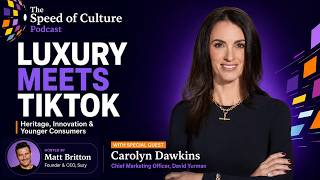
In this Speed of Culture podcast episode, host Matt Britton interviews Carolyn Dawkins, Chief Marketing Officer of David Yurman, about how the iconic American luxury jewelry brand balances its 50‑year heritage with modern, data‑driven marketing. Dawkins explains the brand’s origins, the shift toward younger luxury consumers, and emerging trends such as early collector entry, growth in gold and men’s jewelry. She details platform‑specific strategies for TikTok and Instagram, the importance of distinct content tracks, and how creator collaborations at various tiers amplify awareness, consideration, and conversion. The conversation moves to channel performance, highlighting the role of moments, the expanding retail footprint, and the strength of e‑commerce for first‑time luxury shoppers. Dawkins outlines how first‑party data powers email journeys, onsite personalization, media creative testing, and AI‑enhanced targeting and insights. Her career trajectory—from consumer packaged goods to L’Oréal, Estée Lauder, Google, and now David Yurman—is used to illustrate the value of hands‑on technology experience, strategic thinking, and continuous learning. The interview concludes with advice for aspiring marketers, emphasizing early strategic skill development, mentorship, and a willingness to tackle challenging problems.
Chapters
Up today on the Speed of Culture podcast, we're thrilled to welcome Carolyn Dawkins, the Chief Marketing Officer of David Yurman. Carolyn leads marketing from the world's most prestigious luxury jewelry brands, balancing heritage with innovation to capture modern consumers. Carolyn, so great to see you.
Thank you so much, Matt. Thrilled to be here with you today.
Absolutely. So for those in the, uh, that are listening that aren't familiar with David Yurman, why don't you tell us a little bit about the brand?
Sure. Listen, this is one of the most exciting brands that I've had the opportunity to, to work on. It was a brand that was founded through the deep passion of two acclaimed artists, David and Sybil Yeoman, both artists in their own rights, really came together. And what they say is it was the accidental forming of a jewelry brand. And this accidental forming has propelled this brand to be one of the preeminent luxury jewelry houses both in the United States, but across, across most markets. What's beautiful about this brand is that you can see it in every product design that comes through the house, is that it is deeply influenced by David's sculptural touch and Sybil, the way she looks at light, the way she looks at color. It really comes through. It creates this very different sense, sense of product. I think the other piece that's magic about the brand is that it is deeply entwined in how Americans experience luxury. This idea of relaxed American luxury is so true to how Americans want to experience luxury, have it really kind of connect in with their lifestyle, their life. It's something that is kind of meant for the everyday. That is what has personified the brand in its 50-year heritage.
And more recently, when you look at trends in the luxury space, what are some of the trends in terms of new interests and, you know, preferences that consumers have when it relates to the luxury market overall?
I think one of the best trends that we're seeing is that consumers are coming into luxury jewelry earlier than we've seen in past. We're seeing, right, collectors starting their collections early. I think that, you know, the rise of TikTok, we see that younger generation have such a desire for luxury items and we see them coming into the brand. It's wild. The volume of younger consumers who are interested in the brand, inspired by the brand, and then come in and start their collections. And then obviously we move them through the business. I think the second thing is that, you know, gold just continues to grow. I think we've got this powerhouse silver business, but we also have this powerhouse gold business, and they both continue to move together. So this idea of, you know, metal, mixing metals and kind of metal focus, I think continues to thrive. I think the third piece is men wearing jewelry has just become such a norm, and it— the growth that we're seeing there is— I think, you know, men, men find it so much more— there's not a lot of opportunities apart from, you know, certain category watches where men can express their creativity, they can express their uniqueness, they can express their style. And we have a business that is truly uniquely designed for men, which makes us very, very different to our competitive set.
So as consumers are starting down this luxury journey with jewelry earlier, you know, what does that mean for the brand in terms of obviously having that fine balance between the rich heritage of David Yurman, also making it accessible and more contemporary for the younger consumer?
You know what's fascinating? We just went through some research and I think we always think that these heritage stories are made for older consumers. These heritage stories resonate just as powerfully with consumers of all ages and of all genders. It's wild. We've got an amazing campaign out there right now where we're telling the heritage story of, you know, a few of our really key collections. So one of them being Sculpted Cable, one of them being Madison, one of them being Chevron for, for men. And we take the consumer all the way back to the inception where David and Sybil came up with the idea, or Evan influenced the idea, and then it takes it through to, to current day. This campaign just performs so well. Consumers watch it from end to end. They understand the key takeaways. They're highly engaged. The metrics that we've seen— I've never seen metrics jump this significantly, nor has our research partner. And it is literally across every different age cut. So I think we forget sometimes that the consumer that's coming into this category, they want the depth of story, they want the depth of heritage. Just as much. And I think, listen, compelling entertaining content is compelling entertaining content for all ages. And I think when you get it right, all of our audiences respond. Yeah.
And you mentioned earlier, like with a younger consumer, obviously they're learning about, and it's really true, it sounds like driving the category on places like TikTok. So what does that mean for you as a marketer in terms of maybe new muscles you need to develop, new areas you need to lean into a little bit more to make sure that you are in that TikTok and Instagram feed. So ultimately you're in a consideration set.
Yeah, I think, I mean, we all know, right? These, these two platforms don't operate the same as much as we all wish they did from a content perspective, but they are really different. And I think we are getting better at a team in terms of having really distinctive content tracks for one platform versus the other. I think the other thing to note is that on, on both platforms, the younger consumer is on both platforms. And they're responding differently. It's a bit, a bit of a misnomer to say, listen, TikTok is for the younger consumer because our sweet spot continues to be, you know, a certain age on both platforms. It's just we see them operating very differently. So I think it is the same content. It's just got really different editing and structuring components. And then I think what you wrap around it is different as well. Some of the, the campaign work, it resonates. It just needs different editing. And then obviously the influencers that we work with, the additional kind of content constructs is a bit different on each of those platforms. What's interesting is regardless of platform, the consumer is really inspired by our core collections. So one of our key collections for women, it is Sculpted Cable. It doesn't matter if they're on TikTok or they're on Instagram or they're on YouTube, et cetera. We see the consumers really respond to this product, to these campaigns. And then what's beautiful about this collection is once they then come to in-store or they come to site, they can then find different cable options that best reflect where they're at in terms of their jewelry journey or the price points they're looking for, whether it's for themselves, gifting, etc.
And in terms of the buying habits of your consumer, and I would imagine also varies based upon age, demographics, etc., but where are you seeing the most traction for David Yurman, whether it be you know, direct to consumer or through your various retail partners?
Yeah, I think there's a couple of ways to answer that. I think you're asking a channel-based question. I also— interesting for us, and I, I'll get there, is moments. This is a brand that was built on really distinctive moments and, and marking moments with jewelry. I think if you ask someone who has a David Yurman item, oh, when did you get that piece? There will be some story behind it, which is really exceptional and unique. So we see really key kind of moments throughout the year that really move our different sales trends and, and really leaning into those has been a big win for us in the last few years, really reflecting where consumers come in to, to the category at different points throughout the year. What's also exciting about our business is that we're moving on all channels. So I think you've got, we've got a footprint that continues to expand. In retail. So we have continued to, to grow there, and I think we're seeing some great results there as well across existing doors and new doors. But then e-com continues to fire as well, and they're doing very different things. E-com does see a greater amount of new consumers coming in for the first time. It's an easier way for new consumers to walk into luxury, right? It's an easier way, it's a slower way. You can spend a little bit of time, you come back, you can figure it out, you know, what, what works for you. You can create wishlists, et cetera. But we do see some amazing new consumer conversion there. What's interesting is moving them into store, then that's where we start to see the collectors start to move, right? So they're spending more, the frequency is greater, they have greater relationships with the brand. So we really like to reward that as well. Right.
And of course, one of the benefits you have of selling direct in your e-commerce platform is you're able to collect that first-party data, which obviously, as the age of AI is more valuable than ever before in terms of the ways that you combine the data, understand your consumer. So how are you using your first-party consumer data on a day-to-day basis to make you smarter and to inform decisions you're making?
Sure. So yeah, we pick up data across all of our own footprints, right? So from our retail footprints and then from our e-com footprint. So it is very rich in terms of how we understand the way the consumers behave with the brand, what they navigate towards. So I think You see it in so many different areas, right? If you think about how email operates, right, there's really specific journeys that are designed for different segments of consumers. So where are they at in their lifecycle with the brand? Different, you know, consumers who are spending at different levels and who have different design philosophies that they really lean into the brand for. Moving out of email, we have so much opportunity and we personalize a lot. Onsite. And I think we're, we're on that journey. There's some amazing things on the site already and there's more that, that's coming there. And I think we're also starting to use it in a more innovative way with our media platform. So we're starting to get more, a lot more sophisticated in terms of when to use our first-party data with existing customers, when to use our first-party data to fuel new, new customers. And then I think there's, there's so much that's happening in the creative space as well. So we start to really test into different creative treatments using some of this data on some of these platforms.
Yeah, it's interesting looking at just your career history. Obviously before David Yerman, you spent a lot of time in the beauty category. You were at L'Oréal and, you know, you were at Estée Lauder and obviously cut your teeth at some of the most prestigious, you know, luxury and beauty companies in the world. But you also spent time at Google. And I'm, and just in speaking to you, you strike me as sort of a unicorn in the beauty space. Not to toot your horn, just because a lot of people I speak to in beauty marketing are much more about the art and very little about the science and don't necessarily have the depth of understanding that you seem to command in terms of data, in terms of technology. That being said, how important was your time at Google and your overall focus on technology in terms of your success as a marketer?
Sure, that's a great question. And listen, I am so grateful for every opportunity I've had in my career. I think every step I've learned so much from, from the different leaders that I've had the opportunity to work with. Google was a really deliberate step. I think, you know, I looked up at L'Oréal at one point. I was like, there's a lot of amazing marketers around. How do I differentiate myself? Because I could end up, you know, we're all neck and neck with each other. And I think that was when, you know, digital was the wave of digital and the wave of data-driven marketing was, you know, you couldn't escape it. And so one of the key things I knew I needed to do was get my hands on the dial. I think as a marketer, you're often 2 or 3 agencies or 2 or 3 kind of headcounts removed from actually understanding and doing the work. So what better way to learn than kind of throw yourself right into the fire? And that was the opportunity at Google. I had to work with this amazing team and really put recommendations in front of sophisticated C-suite on how best to use Google platforms to achieve XYZ business challenge. So I think it was an amazing learning ground and I use so much of it today. I use it today with our creative team. I use it with our paid media team. I use it with our e-com team. It has been a huge differentiator and I do, you know, I mentor a few, few talents, some still at L'Oréal, some still at Google. And I think one of the things I do talk about is when you have started to build and you've solidified strength in a few areas, understand what is going to differentiate you, what is going to take that strength to that next level and make some deliberate, whether it's career moves, whether it's education moves, whether it's stretch projects. How do you fuel that differentiator? Because I think what you're talking about, and I think it's, you know, it's hard. I often get told I'm a performance marketer or I'm a brand marketer. This idea of thinking both left and right has been really important to me, and it's something that I continue to work on.
I think it's one thing you mentioned is essentially getting hands on keyboard. And I do find that you see a lot of CMOs on stage at Cannes talking about, you know, all these complex, you know, methodologies and jargon. But then actually when you peel back a layer, they've never really put their hands on keyboard and understood the tools.
Right.
And until you do, you really can't understand what's possible. And how to push your agency partners and push people. So I think it is becoming a lost art, but I would, I would imagine moving forward it's gonna become more important than ever before as the tools become far more accessible and powerful.
I 100%. I think one of the things I, I do with my team as well, we work on the, you know, what's our testing roadmap or what's our learning agenda? And to your point, if you don't understand how, you know, Brand Lift works at, at Google or how it works at Meta or how different platforms work and, and what you can A/B test, it's really hard to steer the team towards understanding some of these macro goals. And then how are these macro goals going to inform different creative strategies or media strategies or audience strategies? So I think you have to kind of move up and down as a helicopter and stay connected to what's happening on the platforms. And I do, I try and still spend time with the team in the weeds on certain things and with the different leads on the platforms across the channels.. So I do understand what's coming through, what's in, what's in beta, what are they looking at? How are the platforms thinking about things? Because you're right, like this, this changes. And I think if you get too disconnected, it's hard to balance the strategic steers that you need to make and then the tactical steers that are just as important.
Yeah, for sure. One area where I think art and science meet in your space is an area of personalization. And I think, what we're seeing is consumers increasingly want things that both speak to a, I guess, a broader cultural trend, but also feels uniquely theirs or has their stamp on it. What is your take on personalization relative to luxury and the jewelry category?
Personalization has been one of the hardest things to crack, right? We've been talking about this for a really long time, and it doesn't matter what brand I've worked on or whether it was at Google. You can prove it out in certain pockets, and then in other pockets, the theory of it just completely collapses. I think when you think about different stages of the funnel, it— in the awareness stage, it really doesn't do anything. It's never really been proven to, to shift enormously. Maybe you can get some tweaks here and there. It doesn't do an enormous amount. In theory, consideration is where you really can start to personalize the story to different audiences. We're having a really interesting moment where we're finding that the content that we're putting out through consideration it's deeply resonating with all audiences. There are some slight tweaks where certain audiences want it shorter or longer, but naturally the arc of that story is, is working. The conversion piece is the place where it definitely matters, right? That is where it's where your signals are the greatest. It's, it's where you, you know, the algorithms fundamentally do so much of that work for you. We definitely do a lot of work there. And I think there's ways that we have to swing those algorithms a little bit too, because I think the challenge can be it can push you to the lowest common denominator, which can be pricing, which is, which is not always the ideal in luxury. But I think there are other kind of pieces throughout the funnel that we are working on. Where does it matter? Where is the lift worth it and where does it— it's just not, it's not a known lifter.
So we've touched upon this earlier in the conversation in terms of the power of social platforms, and of course here in 2025 that means creators because those are the people who the end consumer is interacting with the majority of the time in social platforms. How have you engaged with creators on behalf of the brand and what have you found to be a successful recipe to drive real ROI from those engagements?
It's a great question and I think the, the frame in ROI is also an interesting one too. I think The way we think about content creators is, is pretty broad because as a luxury brand, you've got to influence, then you've got to drive consideration, and then obviously there is the conversion. So we think a lot about some of our creators, other talent that we work with. So whether it's Michael B. Jordan or Eiza Gonzalez, when they post on behalf of the brand, so whether it's through a collaborative post or they're posting and tagging the brand, We get exceptional performance of that. That association with the brand really does help elevate the brand and pushes the brand out to a broader audience. So deep fan base, which is fantastic. We also work with a lot of tier 1 talent through luxury type events, whether it is red carpet awards or music awards, or, you know, all the way through to work that we did with the US Open last year. And then you've got this this true creator-type talent, the talent that is really— we, we put the creative in their hands. And so that does another layer of work, right? That will generally encourage consumers to spend more time with it, which is, we know is the proxy for consideration. And then we do start to see great results off the back of that. I think the way the platforms are set up in terms of reading really direct ROI, not as strong, but then we see it when we run different types of tests throughout the year. The impact that we see as a brand, whether it is, you know, in paid media or organic in the social space, is really powerful for our brand. We know, right? Instagram continues to be the number one shopping mall. It's where consumers come to, to learn about new product and a brand that really is scaling its, its awareness and consideration. That kind of ecosystem with that kind of layered system of, of talent and with the advertising kind of wrapping around is working for us.
Yeah, I mean, and we're seeing that obviously the notion of also creators owning the brand, whether it be like Skims or there's so many examples of people who are either have a following or they gain a following through attaching their name to a luxury product that also seems to be working as well because they are intimately connected with it.
It does. I think the magic of those different tiers is particularly if you think about, you know, tier 2, tier 3, they can help translate the brand to their audience and telling the brand story to a consumer, having them sit down and say, listen, there's, there's some time I want you to spend with this brand, learn more about it. The brand advertising will always struggle to do that, but having this talent translate, listen, here's what's important to know, whether it's about the brand or the product, you can get consumers to spend more time there. And that's where we start to see some of the familiarity scores really move in a positive direction.
Yeah, it makes sense. And how do you see AI impacting both your organization and your role moving forward? It's obviously such a hot button right now, and I think for good reason, because it's really transforming the way in which we communicate and that we work. I'm just curious to see your point of view on this.
Yeah, I think everybody's first step was, you know, AI equals creativity, right? What can AI do with creativity? And I think we've seen a lot of false starts, which is challenging. In the luxury space, right? When heritage and the high-quality craftsmanship is so integral to the brand and is so deeply valued by the brand, it's something we have to be very careful with. So there's some work that we have in play right now that is starting to take some of that AI and has gotten more of our craftsmanship kind of intertwined. So we can talk more about that as that gets, gets going. But definitely in MVP phase there, I think it's it's going to be incremental in terms of how creativity starts to turn up, that, that visual expression of creative, how AI plays a role there. I think there's obviously, I mean, AI has long been the backbone of our media platforms and how we buy and how we optimize. I think what I am super appreciative of my team is they are really focusing on leaning in there. So some of these targeting components of PaaS, they're really challenging the norm. Like, you know, right now on these platforms, let's let the algorithm decide the targeting. So getting comfortable with that is something that I think we as marketers are wrestling with, but I really appreciate my team pushing in there and using those algorithms as hard as they possibly can. And then I think there's all of the data analysis, right? So how are we using AI to understand different things about the consumers, insights, you know, behaviors, et cetera. And then what do we do with that? So how do we then use that to model what happens next. I think they're the kind of 3 tracks that we're thinking about.
Yeah, I'm glad you brought up your team because we have a lot of younger listeners here on the podcast, and I was just curious, like, if you were to give some advice to people starting out in their career in marketing that want to end up in a CMO seat one day, like, what are the tried and true attributes you've seen of rising stars at the companies you've worked for that maybe you would want to impart on the next generation of leaders to really focus on and embrace in their own right?
I think one of the things I talk to my team about is developing that strategic thought leadership skillset early and using that to frame your recommendations. I think it's hard to build the strategic thinking skillset, and I think you'll have different opportunities in your career to really lean into that. But the faster you can lean into that, whether it's through learning, whether it's through hands-on, whether it's through certain projects. Once you start to nail like architectures of how to structure strategic thinking, it enables you to have a more senior seat at the table. People lean in and listen. It's no longer a tactical recommendation. That's a really important statement and recommendation that person's making. And so that is really what helps, you know, more senior talent lean in. And elevate that person and elevate that person's work. So I don't think we spend enough time talking about that and coaching our teams and our talent to that, but it's a huge, huge differentiator.
Yeah, I mean, sometimes we just glamorize ideas and shiny objects versus how we got there. And ideas kind of— I don't want to say a dime a dozen, but some work, some don't. But if you're tapped into the right insight, then you're setting yourself up over time to be successful.
Right. And achieving a certain objective, right? It's not gonna take one idea. It might take, listen, this is what we're going after, right? This is strategy A. I'm, this is MVP 1, MVP 2, MVP 3. If teams really come to you with that sort of recommendation, it's such a powerful way of thinking that as a leader, I think you really lean in to help test and learn and support their thinking.
So shifting gears, we wrap up here just in talking about, you know, your career and all the great places you've been at. What gives you conviction to kind of make the leap and go somewhere else? And some of this has been to a completely new industry and others has been within the same industry, but at what point are you able to take a step back and say, you know what, this new opportunity is good enough for me to leave my comfort zone or where I am today to go to a whole new journey? It's always something that fascinates me with people like you who've had such a prolific career at so many great companies.
I'm driven by a challenge and an opportunity. You know, when I connected with the David Yurman team and speaking to Evan, who is David and Sybil's son and he leads the organization, he's an exceptional thinker. His vision for the brand is phenomenal. Hearing that vision and hearing, you know, how we were going, what it would take to get there, I'm like, sign me up. I wish I wasn't like this, but make it hard and make it complex and You know, that, that sort of stuff excites me. I love having problems to solve. I think the other thing is, you know, seeing an opportunity you believe in. There is so much in this brand that's not been exposed to consumers at scale. That to me is super exciting. You can, when you can sit there and you're having a conversation with someone and you're really starting to already frame out exactly what, what needs to be done and you can see it so clearly, you're like, I would be so disappointed if I didn't get to be the to do this. So I think, you know, I want to have the passion. I want to see the challenge and I want to see, you know, as long as the vision for me is landing. And I also think, you know, as I, you know, grow in my career, the culture of the organization that I work for really matters. And I have to say, like, this is— it's an amazing exco at David Yurman. They are highly supportive. It's, as we know, right? It's challenging being a CMO. And constantly validating the expense and the impact of the work. And they have been partners throughout that entire journey. And having an exceptional team, whether it's my leads or whether it's the teams underneath them, there's so much great thinking that is coming through. And I think what's exciting is they've all signed up to come on this transformation as well. And I think we're all achieving it together. So, super rewarding.
If you look back at your career and you were to kind of extract some of the decisions that you think you made that were the right ones along the way that put you in a position that you are today? What do you think they were?
Having a really strong grounding in consumer packaged goods in my early stages. It was the pinnacle of marketing when I kind of came through, and it is a really structured, rigorous balance of analytic and creative, uh, thinking that means you're almost a GM of marketing. Right. So I use that a lot. So I think if you can think through as you're starting out, where, where is best in class in your given industry and as best as you can to get yourself in that space, it will be an amazing grounding. I think put yourself in really challenging situations and understand how you grow. Right. L'Oréal is an amazing, fast-paced culture full of brilliant thinkers that will really challenge you. And challenge you again, right? Until the work is absolutely exceptional. And Google's the same, right? This idea of, you know, moving at the speed of light, you have to be a really top thinker. You have to constantly challenge your own work because you know it's going to be challenged by others. I think that those two are really exceptional grounds in terms of constantly look for the opportunity, look for the problem that maybe others don't see and look for it in your own work as well. So you can make sure that you're finessing and you're evolving. I think the third thing I would say is understand where your gaps are and run towards them, whether it was at Google or I, you know, I continue to work with an executive coach and I probably will throughout my entire career. There's, you know, your strengths are always your Achilles heel. So there will always be things that I have to work on to, you know, evolve my leadership style and to grow and to evolve. And also with the next generation of talent that's coming through, their expectations of leaders are really different as well. So leaning into those areas of opportunity will make you grow, whether it's a skill set or whether it's an expertise or whether it's stylistically. I think they're the big 3 things I would—
Yeah, that's well said. And I'm sure that our audience listening is taking, you know, furious notes on your feedback because I think you left a lot of wisdom for us to think about today. So I really appreciate, Caroline, you taking the time today. It was a great episode and I can't wait for our audience to hear it.
Matt, thank you so much for having me. It's always— Absolutely.
On behalf of Susie and I, we team— thanks again to Carolyn Dawkins, the Chief Marketing Officer of David Yurman, for joining us today. Be sure to subscribe, rate, review the Speed of Culture podcast on your favorite podcast platform. Till next time, see you soon, everyone. Take care.
More from Matt




MikMak’s Rachel Tipograph on Consumer Spending, Retail Media & Holiday Shopping Trends



Jaguar Land Rover’s Charlotte Blank on Luxury, Purpose & Experiential Storytelling



