e.l.f. Beauty’s Kory Marchisotto on Super Bowl Ads, Brand Values & Cultural Relevance
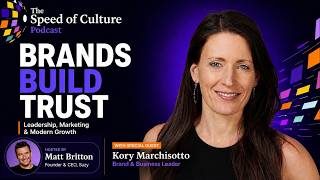
In this Speed of Culture episode, host Matt Britton interviews e.l.f. Beauty Chief Marketing Officer Kory Marchisotto. Marchisotto explains why e.l.f. waited 18 years before buying a Super Bowl spot, how the brand uses real‑time cultural data (courtroom drama, Jennifer Coolidge, TikTok trends) to craft culturally resonant creative, and how the company balances low price with high quality. She details e.l.f.’s digital‑first, direct‑to‑consumer model that generates 4.5 million first‑party loyalty members, enabling precise measurement and rapid iteration. The conversation moves to community‑driven product decisions (the Jelly Pop Primer revival), platform diversification on TikTok, Twitch, and Roblox, and the brand’s values‑led positioning (cruelty‑free, Fairtrade, 3 % profit pledge). Marchisotto also shares leadership and hiring philosophies, the importance of empathy during COVID, and career advice emphasizing non‑negotiables, failing forward, and staying true to oneself. Throughout, the tone is conversational and enthusiastic, highlighting e.l.f.’s commitment to cultural relevance, consumer‑centricity, and disruptive growth.
Chapters
We're back today with the Speed of Culture podcast with e.l.f. Beauty CMO Cori Marchesotto. Cori, it's so great to see you. So excited to do this podcast that I feel like we've had a podcast before the podcast already, but now we're really going to dive in.
Well, thank you for having me and thank you for the service that you provide to your audience. I think what you're doing is incredibly admirable and any way I can help service the audience, I'm happy to do so.
Oh, thanks so much. Well, you're doing it, uh, today just by joining. And, um, you know, I've been really looking forward to this, especially because we're coming off the heels of the Super Bowl where you had your big judged, uh, beauty spot, which was seen by hundreds of millions of people. Tell me what goes behind the decision for a brand like e.l.f. to invest in the Super Bowl, and what's the process like to land on the creative insight that you're going to move forward with?
That's a loaded question. Let me see if I can unpack that.
Coming out hot.
Because I would not advise a brand in their first year on the market, for example, to do a Super Bowl ad. So I do think it's important to just back the truck up. The first time e.l.f. Cosmetics did a Super Bowl commercial was 18 years into our existence. So we had a collection of experiences, 18 years long where we had penetrated the digital space as a digital native. We had done all sorts of marketing efforts that were proofing positive of opening the aperture to wider audiences and the benefit that that was bringing both to the audience as well as to the brand. So we were asking ourselves a lot of questions in that moment to say, well, where do we go next? We've had a significant rise in brand awareness. We've had a significant rise in brand health metrics. And all leading indicators said you need to go on bigger stages to reach more people. So we put our head in the stars and asked ourselves, where could we possibly do that? And what we found out was women were being underserved, and that was the hypothesis. So we said, okay, well, let's talk to— Underserved during the Super Bowl? Correct. So you have last year, which was our first foray, 115,000 women million viewers, which was a record breaker last year, and then this year it was 124 million, and 50% of those viewers are women, yet less than 1% of the commercials were serving women.
I've been saying that for a long time, and that's not even a new phenomenon. I mean, the NFL has long been the most watched live program amongst not just male but female viewers as well, yet you see so many ads for pickup trucks and beer and things that don't really target women.
Yeah. So we decided to bust down that wall and we came in real big last year with Jennifer Coolidge. And that spot was all about our Power Grip Primer. And the reason we chose those two cultural BMFs is because Jennifer Coolidge was having an incredible moment and she had this unique ability to really speak to all generations. And then we have this product that came out like a bat outta hell called Power Grip Primer that was TikTok viral and everybody was obsessed with the stickiness of it. So we said, well, how do we put these two things together in an engaging, entertaining way that has a high level of cultural relevance? We test piloted it with a regional buy and what came back was extraordinary. Our hypothesis was proved positive. Not only do women wanna hear about beauty, but women wanted to hear from us. So we asked ourselves if we should return again and if we should return bigger and better than ever before. So we did the same thing. We tuned the elf in and we asked ourselves, what's happening in beauty? What's happening in culture? What's happening in entertainment? And what came back to us was that e.l.f.'s values were really leading the charge. Our ability to deliver the best of beauty at accessible price points was really part of the cultural dialogue around beauty and people not wanting to overpay for beauty anymore when e.l.f. can deliver 5, 6x lower price than competitors, but yet not compromise on quality. So that conversation was happening. And then courtroom drama was exploding. Judge Judy, Ronald Gladden, and the cast of Suits were—
How did you uncover that?
—the number one topic.
How did you uncover that trend?
Data, right? So we looked into the data. We— Judge Judy's show was number one on Amazon Freevee. Suits was having an explosive year. Yeah, most viewed show after it had launched years ago.
Incredible resurgence of that. Yeah, incredible.
So, and you know, we're in a unique position, to use the title of your podcast, where we move at the speed of culture. So we don't start the script on a Super Bowl commercial a year or 18 months in advance. We start it like 6 weeks, 7 weeks in advance so that we make sure that we're at the center of the cultural zeitgeist.
Yeah, because I think that brands can definitely try to plan too early. And it's funny, like I was at CES and interviewing Allison Witherspoon, who's the CMO of Nissan, and she was telling me that they have to plan automobiles 7 years out. And I was saying, well, how can— how can you understand what's going to happen with the consumer 7 years from now where things change now? You know, every 7 minutes. And I can't imagine how hard that would be. But so it sounds like you had your finger on the pulse of this trend. How did you know that that trend of courtroom drama connected with your brand ethos? Like what? You know, I understand it was a fast-growing trend, but how did you make that connection?
Sure. So we were reading among many different community sections on beauty that people were starting to judge each other. They were starting to really place judgment on why are you spending $50 for this when Elf can do it better for $10. So we were watching these trials, if you will, happening in the comments section of social media posts. So it's one of those moments where the bright stars just align and make a constellation. And one of the things that I would say is my superpower is I feel it when that constellation hits and I tell everybody, just stop, we've hit it. Like the constellation is there. We have the courtroom drama, we have our value proposition coming up loud and clear. We have all of these people judging one another, and then we can utilize this Halo Glow product that we had, which is our biggest, uh, launch ever. Put those things together, bring them down to earth, and, and make an incredible spot where the community is gonna find themselves in it. And I think that's the core piece of this is to find the cultural relevance and the emotional resonance. Yeah. And that, of course, center panel is the sweet spot where these things really fly.
And when you mention value in a value brand, you know, one thing I would imagine being in the beauty category is value can be a blessing and a curse because you don't want to be a race to the bottom. You don't want it to be mistaken for lack of quality. So as you think about going to market, I guess, how do you balance the two of those things?
Your product has to speak for itself. And when I think about the growth trajectory of e.l.f. and I'll take you back to 2004 when the company started in 2004, it was two entrepreneurs, father-son duo who were looking for a white space. They knew nothing about beauty, but what they did see was a white space where women were not being served high-quality cosmetics at a low price. It wasn't something that you could find in the dollar store, yet you could find everything else for a dollar. So they had this crazy idea that not only could they create high-quality cosmetics for $1, but that they could sell it over the internet. Now, while that may sound normal today, in 2004, that was an earthquake. Nobody believed you could sell cosmetics over the internet because you have to feel it, you have to touch it, you have to be able to see the colors, choose your shades, all those things. So they actually disrupted the entire beauty industry by proving everybody wrong.. And everybody told them, even if you could figure out how to create $1 quality cosmetics and sell it over the internet, you'll never make that a profitable business. And we were able to do all of those things. So I think the core component when I think about e.l.f.'s ethos is we're born to disrupt. It's in our DNA. So part of the funnel through which we have to pass everything we do is, well, is this disruptive? Tell me how this is different. Tell me how nobody else could do this. But us. And we really water those roots every single day and make sure that we're constantly feeding our internal algorithm, as I like to call it, so it gets smarter and smarter, but it's built on that same core ethos.
And I think a lot of companies lose those standards, that bar they set, as they get larger, as they have to drive volume and please their constituents. Where you're like, okay, well, this maybe this product doesn't meet the quality standards, but it meets low value. And then you start brands kind of, kind of erode over time. Um, e.l.f. strikes me as a brand that has been able to keep that cultural, I guess, you know, levels at scale, which isn't easy to do.
It's not. And I think that's where you need fierce protectors. And I'm really proud to say that it's not just me, right? Because sometimes the CMO is the lone soldier who's trying to protect a brand and trying to protect an ethos and they're battling uphill. And I'm really proud to say that our entire executive team is very protective of not only our ethos and our culture, but also our number one strategic imperative as a company. Number one is to build brand demand. Yeah. So we understand the power of brand, but that's, You know, that also comes from a ladder of nearly 20 years of learning. We're actually gonna be 20 years old this year. And when I got here 5 years ago, we were not investing in the levels of marketing and brand building we are today. So just to give you that in, in numbers to show you the sort of giant leap, when I got here 5 years ago in 2018, we were investing 7% of net sales into marketing and digital. That would never get you to the place that we're standing today. We accelerated that significantly over time, and this year we guided to 24%. So you have an enterprise and a board of directors— we're a publicly traded company— who believe in the power of brand building. So then the work becomes, okay, if my number one imperative is to build brand demand, how do I do that in a strategically smart, calibrated way because if I can prove that this marketing investment works, then I can build even more of it over time. Sure. And so you really have to have a set of brand health metrics that you can measure to prove the worth of what you're doing and also not hold anything so precious that you're not willing to pivot and say, hey, I thought that thing was gonna work. It didn't. But great news. Let's fail forward. Let's use our set of experiences, both good and bad, as forward movement to inform the next decision.
Yeah. And in terms of attribution and making sure that the measurement really delivers, obviously it doesn't hurt that you have this direct-to-consumer strategy. It's very much a digital-first brand. How does that, you believe, give you, I guess, a distinct advantage versus maybe some of the other players in the space that have to sell through third-party retail channels? For sure.
And I'm, I'm still surprised even saying these words. So I would envision you and your audience are going to be surprised. We are the number one mass e-commerce site. Most of our core competitors are not commerce-enabled. They have sites, but they lead all of that traffic to third-party retail. Right. So it does give us a distinct core competitive advantage because we have a collection of first-party data through our Beauty Squad loyalty program where we now have over 4.5 million members. Right. So that gives us a rich source of first-party data.
Now more than ever. Now more than ever. Yeah.
Right. That can then inform our marketing effectiveness. So it is this virtuous circle that we're allowed to, you know, drive basically, which makes us increasingly effective in our actions. So it's really tremendous. And it also— think about that, 4.5 million loyalists. Those are 4.5 million people who live, love, breathe e.l.f. every day, and they are our marketing engine.
Yeah. I mean, if you— despite the fact that you ran a mass market Super Bowl spot, you know, we all know that all media is shifting and becoming more addressable, including TV. And, you know, obviously we've seen changes with Apple with iOS 14 and more recently Google with their— the crumbling of their cookie, where the ability to have first-party data to understand your consumer, to be able to bring them content they want contextually, it's really a differentiating factor. One, I think a lot of traditional CPGs that sell through big box retailers are really trying to contend with right now. So the market's kind of coming to where your business model is, uh, which I would imagine is, is going to continue to drive growth for your company moving forward.
Yeah, and you know, our community really informs everything we do. So why do we create specific products? Why do we create specific technologies? Why do we improve specific technologies? Is because we have a community of people who are increasingly vocal And they're increasingly vocal because they realize we listen. They realize that we are actively listening, taking their feedback and putting it back into the machine in real time, which makes them want to do it even more. So what I like to say about— Consumer centricity, right? Exactly. And what I like to say about Elfstad is, is I worked on a lot of brands in my career, is, is super unique here, is we're a brand of the people, by the people, for the people, created with the people. I do not see e.l.f. as our brand. I see us as stewards of the community's brand.
And that's the way, and I think so many brands need to go in that direction, but for whatever reason can't. Uh, you know, I like to say that the, the brands of the future are built from the sidewalks, not from the boardrooms. Like you have some of these companies that have myopic thinking or what we like to call the hippo, the highest paid person's opinion that makes all the decisions. But those people are largely disconnected, right? But to have the, to have the, I think the leadership support for you to do that. I think often is probably the biggest hump to getting there because, you know, it's hard to break down those cultural boundaries to allow a company to be truly consumer-centric.
Well, I think there's a couple of things that are really important that I would love to share with your audience, which is you've gotta shoot some 3-point shots and shoot them early. You need stories for people to believe in and then want them to be repeated. So what happens sometimes is people come in and they're like, I wanna boil the ocean. I wanna do a gazillion things. I don't know. And it's like, just pause for a second and think about what can have the greatest impact in the smallest amount of time. Shoot a 3-point shot. And now you have a story that people are gonna take into rooms that you are not like, whoa, did you see that? When this happened, this happened. And then people are like, oh, can you do that again? How did you do that? So then you get the support of the enterprise because they want to see more and more of that kind of performance. And what we were able to do at e.l.f. when we increased significantly our marketing and digital investment is showcase consistently in small batch nuggets that what we were doing was not only driving performance, but it was driving love, loyalty, evangelism. And you've got to be able to prove all of those things because everything can't just be measured in a number.
Right.
Because then you create a race to the bottom. Exactly. Love and community building is everything.
Yeah, exactly. Yeah, it's brand. And I think, yeah, yeah, you're right. And I think that's one of the dangers of too much data is you become too performance focused, you lose brand, and then that does become a race to the bottom. You find yourself discounting when you have low demand. And, and we've seen that in the beauty and fashion space all the time. There's brands that used to be prestigious brands, and now they're on a discount rack at a, at a value chain because ultimately they just kept chasing that. Right. And it seems like despite the fact that you provide value to consumers, you be able to keep a valuable brand with your audience, which is discerning audience, which is essentially Gen Z and millennials, who I imagine is your core focus.
Absolutely. And, you know, the key, the key thing on that is e.l.f. is value with values. And if you're going to be a brand that's talking to millennials, especially Gen Z and even Gen Alpha, the values part is fundamental. So what are some of those values? Yeah. Yes, we deliver the best of beauty and we make it accessible. That's fundamentally what everybody walked in the door for. But why they stay is because we're double-certified cruelty-free. And we know that our community loves that we don't test on animals when the vast majority of beauty brands still do, which I cannot believe. We are also Fairtrade certified. We are the first beauty brand ever to be Fairtrade certified, which showcases a commitment to the communities in which we have business operations. We have a 3% pledge where every year we donate 3% of our profits to charity. So our values are very strong. And what we see is when we stand up for women's reproductive rights, when we stand up against anti-Black racism, when we stand up for democracy, the love for our brand gets bigger and bigger. And the truth is we're just wearing our heart on our sleeve. That is, that is us turning Elf inside out to share it with our community. And what they're saying is, whoa, we want to learn more about this Elf. So one of the things that I realized in our journey is accessibility means a lot of things. Right? And most people think accessibility means price and location. Accessibility also means, are your community members at the boardroom table with you? Are the executives bringing them into every single conversation? And I'll just give you a perfect for example, because this is a lot of fun and, and it's a great way we build brand love. Our community was begging us to bring back this item called Jelly Pop Primer, which was something that came in as a seasonal one-shot item. We took it off market and people lost their minds. Like, what do you mean there's no more Jelly Pop? We need you to bring back Jelly Pop. So my community management team kept coming to me and I'm like, what is shining bright? What is the community saying? They're like, all they want is Jelly Pop. It doesn't matter what we post, the only thing they want to talk about is Jelly Pop. And I'm like, okay, I need to understand this. So I went and I did a TikTok Live to have real talk with the community and say, tell me what it is. Like, why, why do you want this thing? What is there about it? You know, I tried to help them understand there were other products. And when I understood what they wanted in the end, I said, I'm not the only person you have to convince. We got to go see research and development and understand how hard this is. We need to see supply chain. We got to go to our CFO and get approval. And then we've got to get ultimate sign-off from our CEO. And they came with me on the journey. And every week we went to see a different executive.
That's so cool. I've never heard of something like that.
I love that. And the final sign-off was our CEO. And he was hilarious because he thought he was going to be all tough. And then he got on and he saw the community going, bring back Jelly Pop. And he was like, okay. Wow. Yeah.
Was there a chance that you go through that journey and have to kill it and say no? I mean, like, was that performative or was like—
I mean, look, the, the reality was the cry for it was so loud that it was undeniable that, right, why would you know?
Yeah, yeah.
Why would you say no to that? Right. But I wanted to take them through the process. Yeah. And I wanted them to understand, like, this is hard work, guys. Like, Come with me, right?
Come with me on the journey.
You're convinced. You've convinced me. But we got other people that we got to convince.
Very cool. So you, you joined e.l.f. in 2019, and obviously I did. It's been a whirlwind, right, over the last 5 years, mostly because you went through COVID and all of a sudden people, you know, your younger consumer wasn't going to college or high school or young professionals weren't going to work. What was it like sitting in your role during COVID and what types of lasting, I guess, consumer trends have you seen your audience coming out of it?
So first and foremost was leading with empathy, and that started inside our organization, making sure our employees were okay mentally. It was such a hard time for everybody. And when you realized how not only did the dynamic of work change, but the dynamic of your relationships with everybody changed, right? Now all of a sudden you're in a Zoom room with people's kids, cats, pets. You're inside their lives, inside their homes. So We used that as a microcosm of what we understood was happening with our community. And we started to get all of these letters in saying to us, "Elf, please don't stop doing what you're doing because you're a world that makes us happy. It's a place we come for positive energy. We still want products even though we're sitting home because they bring us a certain level of joy in a dark time. So please keep the lights on in the darkness," basically. So, what happened was a lot of companies had to figure out how to operate. So, they started turning lots of things off, their innovation pipes. They were trying to figure out how to get their employees to be able to work together. We were already a hybrid culture. We didn't miss a beat. So, it's almost like COVID played to our strengths. And then, when our community said to us, because we asked them, "Hey guys, what do you want from us?" They're like, "Please don't stop doing what you're doing. We love what you're doing." We're like, "Okay." We went pedal to the metal. And in the last 5 years, we grew at 14 times the market rate. 14 times. And that's because we're in lockstep with our community. We're with them. We're not in front of them. We're not behind them. We're in lockstep with them. And when you can meet their unique needs, wants, and desires with empathy, real true care for what they want, they'll stay with you.
Yeah. And have there been any changes just in consumption or buying habits or channels in which your audience— like, you know, you mentioned going on TikTok Live, different things that you're seeing that you have your eye on here in 2024.
Yeah, I mean, TikTok, we don't even need to talk about that. I think everybody understands the— from a commerce perspective too.
Are you looking at— absolutely.
Yeah. TikTok Shop has been tremendous for us and we're really excited. We betaed that program with them. We've been partners with them for a very long time. We were an early adopter of the platform. They also know we have a renegade spirit, so that partnership works really well together, especially when there's new tools, new betas, new models. So what TikTok taught us is, is short— the importance of entertaining short-form content. And that allowed us to train a new muscle. If you think about our first foray into TikTok, we made an original music track. Here we are, a beauty company producing songs, which then actually became a top Spotify song across the globe. So here we found ourselves not only a beauty company anymore, but a, you know, Billboard chart-topping song producer. So that opened the door for us to recognize that this wasn't just about beauty anymore. This was about creating an orbit that people want to be a part of that has a tremendous amount of respect for their most important asset, which is their time. And I don't think we talk about this enough. We have to respect each other's time. If I'm going to ask you to watch a piece of content, well, then it damn well better be good, and it damn well better be something that is going to resonate with you. So we put a lot of time and energy into making sure that our content is really fit for the audiences that we're serving across a multitude of platforms. So That's one thing. And then I think what we've seen with our Twitch channel, we're one of the first beauty brands to start live streaming on our own channel on Twitch, which we've been doing now for years, which has been absolutely incredible. But also we just launched Roblox in November and in 3 months we have the number 1 rated experience on the platform and we've had over 6.5 million plays, which is bananas, right? So what that's telling me is when you think about your brand, you have to redimensionalize it for different places and spaces. How we show up on Twitch is very different than how we're going to show up in Roblox, which is different than how we're going to show up on TikTok. But the fundamental underpinning is create content that is worthy of people's time.
Yeah, it's interesting because it shifted. I mean, you know, it used to be brands felt, oh, you're enjoying this TV show, We're going to write a check. We're going to interrupt you. We're going to shove our unique selling proposition down your throat so we can sell our stuff. It doesn't matter if you were really enjoying that episode of what you're watching, but now in a world— and you obviously get, you know, consumer first— it really is about thinking about the consumer first and coming up with content that they're going to get value from, because otherwise you're going to waste their time. Even if you get their eyeball, you're not going to get their attention and respect and ultimately their business.
Yeah. And you know, it's, it's from both sides too, right? Because it's also innovation, like I was talking about before. So it's the content hub and, you know, create this orbit people want to be a part of that's worthy of their time. And then also create stuff they want. Right. And so many companies get caught up in what you were talking about before, what I think you called the hippo, which I super love. Uh, you know, they're creating things that they cooked up somewhere that nobody actually wants. And what we're doing is just constantly staying in lockstep with our audience. And that includes not getting precious about things that maybe we got wrong. Like, hey Elf, I love this thing you made, but I wish it was X. And if you're too precious about the thing that you create, then you're not listening to when people are saying it could be better. And we're always listening for that, right? We don't have those egos. We're like, tell us what we could do better. Tell us how we can be better. Tell us how we can.
Serve you better. Yeah, it's amazing. So shifting gears a little bit to you as we wrap up here, Corey, I mean, you've been in the beauty industry for, I guess, your entire 25 years. Uh, yeah, and you spent, you spent, uh, 16 years at Shiseido, um, you know, in, in marketing and kind of working your way up. When you're in a company for 16 years, what goes behind the decision to leave, um, you know, at that stage? Because normally what I find is people are either at a company for 3 years or they're there for career? Um, and, and how do you know it's time to go? And how do you know it's time to, to want something more?
Yeah, the answer to that question, I would say, it really depends on the stage you're in in that moment. So I think what's really important is that you identify yourself at the different stages, right? Because my decisions when I was 20 are dramatically different than when I was 30, which are dramatically different than I was 40, which are dramatically different than where I'm standing today. So I try to give universal advice. Have a set of non-negotiables. And everybody's non-negotiables are different. And that set of non-negotiables has to be met. And when it's no longer met, then you know that it's time to go. And that set of non-negotiables has to be your antenna. And you have to be in lockstep with that antenna. Hey, this place is amazing. But based on my unique set of non-negotiables, it no longer works for me. And that's where I was standing at that moment in my career. And what I really loved about the e.l.f. opportunity, it was a really unique place for me to take this 20-year set of experiences across multiple brands, divisions, operating models, and really put them all to work at maximum capacity. Like, I literally had to take my entire toolbox, open it up, put all the tools in usage and then I'm like, shit, I got to go to Home Depot and get a whole bunch of new tools for this. And I get excited by that. Like, I get up every morning because I want to make an impact because I want to serve communities because I want to be able to live the values that my company stands for. So, one of my non-negotiables is I have to be a kindred spirit with the company that I'm operating because I can't fake it.
Yeah, which clearly you are at Elf. And you mentioned earlier, you know, during this chat that, you know, you mentioned your team several times. What is your leadership style in your opinion? And what are you looking for in people who you bring on to your team that makes you feel like they're going to be a great fit?
So the first thing is hire for characteristics. What is the unique set of characteristics that have to be true in order for an individual to thrive in the environment that you're in? And I think too many people get caught up in the resume. Well, they have 5 years here and 4 years here, and they did this thing there. I'm like, no, no, no, that's not it. You have to really think about what needs to be true. What are the cultural conditions that we have here and what would need to be true for somebody to thrive in those conditions? So I'm always looking for the win-win. It has to be a win for the individual and it has to be a win for the company. This person has to be able to add value to the thing that we're doing. They have to be culturally additive. So, the win-win is fundamental. Then once they're inside the organization, the first thing for me is helping them understand what are their superpowers. But that's not enough. Sure, I know what my superpowers are, but how do we exercise those superpowers? How do we get you to show up every day in this incredible moment where you get to live those superpowers and then unleash them in a way that you never have before? And one of my key lieutenants who I adore, who's massively responsible for most of the growth in this company, company. His intention word, we all choose intention words for the year, is freedom. And what he found at Else is that he is free to operate in a way that he never did before the 30 years he got to the company. And that is very much my leadership style is let's identify what your superpowers are so we can unleash them and continue to do that with increasingly effectiveness and impact. And that just gets people motivated.
Yeah, absolutely. So as you look back, you know, as you mentioned, you've been in the beauty industry for quite a long time. If you look back and you had the ability to talk to 20-year-old Corey and tell her things that you wish you knew back then. So, you know, because we all make mistakes along the way. What would you have told her as you were embarking on what ended up being an amazing career and still is today? What would you tell her?
Yeah. First one that I think is probably the most helpful for everybody is the path is not linear, folks. It is not linear. Yeah, we hear that a lot. It is, right? It is winding. Think about it like a trail. You're going to go off course. You're going to go off piste. It is, and you should. Don't see things as this sort of linear ladder. The second thing is always fail forward. And I don't think we talk enough about how failures are an absolute critical component of success. Everybody just wants to talk to you about their successes. The number one question I ask in interviews is, tell me the hardest thing that you've ever done, right? Tell me the hardest thing, and then tell me, you know, what, what failures you had and how did you learn from them in order to increase your success formula on the road ahead, right? That's the learning algorithm. So I think, you know, that's fundamental. And then the third thing is, you know, stay true to who you are and don't bend because other people tell you that you're supposed to or that you should. This word should, for me, should be stricken from everybody's vocabulary, right? You should be this, you should do that. You should be you, and you should operate in places and spaces where people are most interested in you being your best self.
Yeah, that's fantastic and such great advice for especially some of the younger listeners just coming into the workforce and maybe getting influenced by all these outside factors that can make them lose who they are. So, well, it's been so amazing having you on today, uh, Corey. I've been a longtime fan and, um, continue to be one after this, uh, interview, and I cannot wait for our audience to hear it. Thank you.
I'm a big fan of yours too, and thank you audience for listening. I am here in service and really happy to be here with all of you today.
So thank you very much. Amazing. So we're gonna leave it with that on behalf of Susie and the Adweek team. Thanks again to Corey Marchessotto, the CMO of e.l.f. Beauty for joining us today. Please be sure to subscribe, rate, review the Speed of Culture podcast on your favorite podcast platform. Till next time, see you soon everyone. Take care.
More from Matt




MikMak’s Rachel Tipograph on Consumer Spending, Retail Media & Holiday Shopping Trends



Jaguar Land Rover’s Charlotte Blank on Luxury, Purpose & Experiential Storytelling



