Every Man Jack’s Gerry Chesser on Men’s Personal Care & CPG Growth
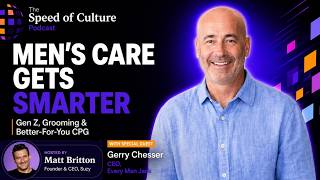
Gerry Chesser, CEO of Every Man Jack, built a men's personal-care brand that spent 17 years ahead of the curve before hitting mass market. He talks 30 years in CPG, the rollout to 700 Target stores, and why Gen Z men want transparent ingredients and consistent branding across TikTok, Amazon, and brick-and-mortar.
Chapters
Today we're thrilled to be joined by Jerry Chesser, CEO at Every Man Jack, a men's hair and skincare brand that strives to use as many natural and plant-based ingredients as possible. Jerry, so great to see you. Thanks so much for joining today.
Thanks, Matt Britton. Thrilled to be here.
Absolutely. So tell us a little bit about your background. Obviously, you know, the CEO role is one that takes on a lot of different facets, and we'd love to hear some some of the experience that led up to your current role? Sure.
I've actually been in, um, CPG for 30 years. Uh, the first 10, I was at big CPG in various operating and manufacturing roles. Uh, and the last 20, entrepreneurial, kind of more challenger brands, mostly in the health and wellness space. Everything from operations to finance to general brand to general management, and eventually COO and CEO.
And how did you find yourself ending up in the CPG space early in your career?
You know, it's, it's interesting. I was going to go to law school out of, out of college. Me too.
It's what back then we thought that you had to do to be successful, right?
That was what I had to do. Yes, exactly. And I loved actually the, the work around, uh, the law and the reading and the text. But, um, you know, when I, I started talking to lawyers and I realized they didn't seem like a lot of them were very happy. And so I just talked to my parents. My dad was like, you know, you're great with people. Have you thought about getting into manufacturing, which is what he was in? And manufacturing is about people. It's about organizing teams against a goal, motivating them and achieving that. So to me, that's how I got into consumer products, kind of stumbled into it, ended up 30 years later and here I am.
So. And among the many facets of the consumer products business, has there been one area that you tend to gravitate more towards, whether it's in the marketing or product development realm or innovation?
I, I'm more on the product side of it. I enjoy both, um, in terms of developing products, commercializing them, um, what is it about that experience that the consumer is going to have with the product? And obviously all the operational and financial aspects of it, uh, I really enjoy. But seeing that come to life has always been exciting for me. I mean, To me, it's about tangible products. When you can go somewhere and see your product on the shelf, like, you really feel like you're making some sort of impact there, and it's so tangible.
It's so interesting seeing something you can touch and feel. Like, we don't— we have a software company at Suzy that you can't touch and feel. The closest thing we have is like billboards on the side of the highway. But when people see it, there's something about people seeing things you build, whether it's a billboard or obviously the actual product, that has some type of gravitas towards it, and it makes people sort of respect in even greater detail what you've accomplished.
Yeah, absolutely. It's— it's— get a kick out of it when you're able to go into a retail store and my son will pick up one of my products, you know, be like, Dad, did you make this? So yeah, it's fun.
Absolutely. So tell us about your current role at Everyman Jack and tell us a little bit about the company and where your vision is for it moving forward.
Sure. So I am the CEO. I joined just over 3 years ago. And I was really brought to scale the company and take it from what it was, which ironically, it's been around for 17 years. And the thing that was really interesting about Every Man Jack is it's been around for 17 years with a very simple proposition, which was better for you, personal care for men at a great price, aesthetics and packaging that really, I think, delivered on equities for consumers. Uh, but it was very early in its life cycle, and I think it's a little bit too far in front of the curve. Um, so what has happened over the last 17 years is most of the growth has happened in the last 4 or 5. And the reason for that, Matt, is very— is, is really about the consumer. So that consumer is a young man who is engaged in better-for-you products, engaged in the lifestyle type of brand that we have, outdoor-inspired, better-for-you. Uh, and they really gravitate towards that. So although that's, that's a brand that kind of existed really and thrived years ago in the natural channel, what we see is that mass consumer now really driven by Gen Z and Gen Y that are hyper-engaged in better-for-you brands. They're looking at the back of the label and Everyman Jack has always been that. And now it's at a mass scale and it's got that engagement for the consumer. And that's what's driving all of these challenger brands in the men's space.
Yeah, it's almost like the market is catching up with where the product has always been.
Yeah, 100%.
So when you look at distribution and, and driving volume of your products, you mentioned your son seeing your product in a store. How do you look at the future of retail and some of the levers that you're pulling to make sure that you're continuing to be in front of the consumer where they're making obviously the buying decisions, um, and you're able to compete in a world of private label and obviously competing with a lot of the more traditional established CPG brands?
Well, I think you have to be everywhere where the consumer is. And so we are not a true omnichannel brand because consumers start their journeys in different places. I think historically, if you go back a couple of decades ago and when I was starting my career, you started your consumer journey in a retail brick and mortar. Now you start it searching. A lot of search starts on platforms like Amazon where they may be researching a product and they're engaging with it. You might, they might be comfortable at a certain e-tailer site. They might like to engage directly with a brand. So we have to be everywhere. And I think that's what we've really thrived in is the ability to kind of present our product everywhere and get that message consistent everywhere. At shelf or at our D2C site, at any different platform or existing, we're consistent in bringing that better for you, accessible pricing message of Everyman Jack and every single touchpoint. And EMJ is a very visual brand. And I think that's a really important part of our brand. If you can see from our labels, see how we present ourselves on, on, on shelf, on the digital screen. So that consistency, I think, of all platforms, but also just being available everywhere is super important in that consumer journey.
Absolutely. And in that regard, I saw you posted a couple of months ago that, that your product is now on display in over 700 Target stores in their Men's World displays. So what goes into a process like that, I guess, in working with such a prominent retailer and getting your product featured like that?
I mean, the process is you have to— and granted, the brand started at Target years ago, so we've always had that kind of direct engagement. And that's the case with quite a few retailers now. But how that starts is really sharing the vision for the brand. When you, when you talk to a retailer like Target and you're talking to them about where this consumer is going, this Gen Y, Gen Z consumer, the way they're engaging with a brand, the way that they're getting more into regimens than they ever have before. This generation is so engaged in different parts of personal care. Now, if I go back to like, I'm a Gen Xer, we used bar soap.
Me too.
Yeah. We— or we use probably— maybe use what your, your mom had in the shower, what your girlfriend or wife had in the shower.
We just didn't even think about it, right?
Didn't think about it. And these young men now are engaged in regimens. So I think what really resonates for us in men's world is the young consumer can go into that Target store, they can go into Men's World, and they can engage in multiple categories. And we play across these 5 categories, and they can engage with a brand there. And also the way young men and men think in general is they like to go one place and see it. And they're not necessarily like women where they may be in the beauty category shopping the aisle or shopping features and benefits. Men are going right to what they need. If they like the brand, or if they're in that need state that they're shopping, they're going right to it. So it serves us well in the sense of the full portfolio, the full regimen in one place that makes it easy for them to engage.
Yeah, it's interesting. It is much more function-oriented and it's more of a task versus, you know, activity, so to speak. Yeah, absolutely. In terms of shopping. So you know what you want to get and you want to get home, et cetera. So in terms of building the brand, obviously, you know, the target you're speaking of is hard to reach and they're being bombarded with messages within your category and out. What have you found to be some of the more effective tactics at building your brand and ultimately driving volume from a marketing standpoint?
Part of the ethos of Everyman Jack is, is the better for you, the outdoor lifestyle and outdoor inspired is part of who we are. So we have an ambassador team that's very engaged, whether it's professional surfers, skiers, and they have great audiences and they're engaging at the level where they're sharing their lifestyles and men like to see that, right? It's inspirational. The ethos and the purpose and the vision of Everyman Jack is to inspire men to take care of themselves and connect to the world around them. So we use things like social platforms and our ambassador programs to do just that, to inspire men. And it's not about having necessarily a celebrity or somebody who's an A-lister. It's about a lifestyle they can relate to. We have a tri team that we sponsor, and that tri team has a host of people that are engaged. They're not full-time only triathletes. They're dads, they're engaged in their community, but they can share their experiences. They relate to Everyman Jack and they can share that with us. So we're, we utilize that, I think, very well. But I think that lifestyle is really what appeals to young men, and we have to continue to engage them in it.
So kind of moving down the funnel, so to speak, Jerry, we obviously talked about brand building and, and making sure you're in a consideration set. Obviously, one unique thing about CPG, especially when you were looking at channels like Target and Walmart, is you don't have that first-party data, so to speak. You don't have the ability to drive that loyalty and repeat purchase. You almost have to rely a lot on the product to do the heavy lifting for you. How do you look at loyalty and making sure that you're you don't just have a one-time customer, but you're building those critical lifetime relationships?
I mean, part of it is Matt, through our, our D2C site. So it's not primarily commerce, it's primarily content and education, but we also try to develop a community there. So in that community, we have a large CRM program and we engage that CRM program in things. So we don't just have them as consumers. We communicate with them. We ask them about product ideas. We use them in some cases to send them product ideas to get their feedback on it. So that's one area where connecting young men to understanding what are the features, the benefits, the attributes that they like about our products. And that gives us a good sounding board. The other part of it is, you know, if you look at our social channels, are we doing all the right listening? So what are the consumers telling us? What feedback are they going to— are giving us that we can then riff off of, whether it's doing more of what they're liking, or is it more that we're listening to them about product ideas or even some of the tactics we use? So that's, that's definitely a piece of it. And the other is we have to be a part— I talked about like being where they, our consumer is. If I look at something like we're one of the fastest growing men's brands on TikTok. Well, we're there because that's where our audience is. So engaging with them and we have a team that focuses on that. We're seeing what's happening in the culture. What are young men caring about? What are they posting about? What are they watching? And we put content out there and we see how it's received as well. So I think there's a lot of things we get from just listening and understanding what's happening in our consumers and then reacting to it, whether it's at a product level in terms of how we communicate with them.
So, I mean, becoming one of the fastest growing men's brands on TikTok, you know, you mentioned that almost like matter of fact, but it's a major deal and I'm sure it wasn't easy to get there. Um, what was the process like to engage in a new channel like that where the consumer is so fickle and you really have to enter into the realm on the consumer's terms versus yours, unlike TV where you just run a spot. Um, and how did you, I guess, get your team to become so successful in that, in that platform?
Part of it was test and learn, Matt. We, we had to go in and see what content was being consumed and how is it being consumed. It is very interesting how these different platforms work, because you could take something on another platform that is very successful and it may be too long or it may not be that interesting. Um, so that's one thing we learned. The other is like what resonates on the channel once you once you kind of work through what it is you feel like the flow of the content is that's most appealing, part of it is, well, how are you delivering that content? What we found is with young guys, particularly, humor matters, right? So you have to have a reason for them to be entertained. I think when you look at the beauty category, which we always look at in terms of trends and how consumers and when consumers think about things, any trends that we could translate, when you look at that from a social media standpoint, it's very different. Women engage in things much more about education. Guys are— they want to be entertained. And then if you can give them information about your product while you're being entertaining, that is hopefully what really works and what we've seen work for us anyways.
Yeah. Interesting. So moving forward, when you look at the future growth of the business, obviously you have to continue to innovate. You have to continue to look at the consumer that drives your roadmap. What does innovation look like for your company? What does the innovation cycle look like and what are some of the new, I guess, tangential categories that you guys are either already involved in or think could be an interesting area in the future?
Yeah, well, it's interesting. Men are just in general expanding their regimens. And so they're much more interested and much more engaged in these categories than they ever have been. So the number of products they're using, the number of subcategories that they're engaging is, is well beyond what it's been. I mean, we've seen, you know, if you look at something like skincare, we've seen guys go from putting nothing under their face and maybe using a bar of soap to now they're thinking a lot, much more thoughtfully about that. They're looking at things like cleansing and hydrating. Are they going to be 5 and 7 steps of beauty? No. But cleansing and hydrating is a trend that we're seeing that young men in particular are adopting. And we see that kind of continuing to be relevant in skincare and a growing segment. I think fragrance always plays a big role with men. It is one of the biggest entries into the category. It's how they make their purchase decisions. So we're going to continue to innovate on fragrances and try to stay relevant there. If you look at forms and shapes, that's another one, you know, across body and deodorant specifically, you've seen that. You've seen a lot of innovations in things like whole body deodorant. So we're looking at all that and actually, you know, pretty relevant in terms of delivering a pipeline against that. But We're staying true to the 5 categories we play in, Matt. But what we're trying to do is innovate within those 5, both on the fragrance side as well as on the forum side. And we'll continue to do that. We're careful about not going too adjacent with our categories where then you're diluting some of your messages and your equities. Yeah, so we're focused on the 5 and then innovating behind that core.
And do tastes from your audience in terms of fragrance, not taste, but like their their preferences, I should say, in terms of types of smell they gravitate towards. Do you see just like shifts happening in the industry over time? Is there any rhyme or reason behind it?
There is, Matt. And I think that's what's been really interesting. Fascinating. Yeah, because we've started with men taking very simple fragrances, might have just really been like woody type of fragrances. Right. What we're seeing is men looking, particularly young men, again, because that's the growing audience, they're looking more in sophistication, not necessarily gender-neutral fragrances, but more sophisticated fragrances, fragrances that are more descriptive, that men can look at that and say, oh, I can relate to that. That sounds interesting. They weren't doing that 10 years ago. And so I think that's what that landscape has changed is the proliferation of fragrances. And they're more sophisticated. They're, they're telling a story there that I think men think are interesting. And that's been a bit dynamic.
Yeah, I mean, a lot of what we're talking about is, you know, we talked about what we cared about as Gen Xers. And when you look at the Gen Z consumer, they just have had so much more of a complicated upbringing, right? And, you know, you look at Gen Z having to go through COVID, but, you know, obviously seeing all this political divide in the US specifically. Um, and obviously most importantly, or most impactfully, the impact of their phone being appendaged to their body and the social media stresses and pressures that come along with it. I would imagine that that type of sophisticated upbringing has a big— is a big driver of a more sophisticated preference set for the consumer.
It absolutely has. And I think that's what's been unique to, to the men's category over the last few years and how it's developed is that you have a young audience that cares what's in the bottle. And so that's where you've seen the growth of better-for-you brands like Everyman Jack. They're looking at the back of the bottle. They're looking at the ingredients. Do they see any authenticity in this company? What does this company stand for? Um, we certified it as a B Corp, uh, last year. And we did that because we, we found that it's very important to our consumer in terms of a validation of your products, your practices, and your policies. So it's not just about what's in the bottle. Which is important, and you better show up with real authenticity there. You better have a purpose and a reason for the ingredients you use, and people better believe that those are better for you. And then in terms of who that company is, they're shopping for the front of that label. Who is this company? What do they stand for? What are they about? And so for us, a B Corp was really a validation of our people, our practices, and our products., and a lot of work went into, to, to document the things that we were doing. And it was a good validation, but it means something to these young consumers that they're getting something besides the product off the shelf. They're participating in the economy, they're participating in this company's success because they like what you're doing.
Yeah, it, it, it brings your story to life in, in a real way and, and your brand. Um, so let's shift gears a little bit, Jerry, just to you and your role. As CEO of a consumer products company, how would you describe the pie chart of your day? Because when you're talking about things like fragrances, my mind goes to like, is he smelling the fragrances himself? Like, how involved are you in that? Some people might say yes or no, but I'm just curious in terms of how you spend your day, where you prioritize your time in order to achieve your business goals.
Sure. And they do not— they occasionally will ask me about a fragrance and I'll give them my opinion, but I'll always say I'm not the audience, right? I'm very good. We have a great process.
You're just an everyman. You're everyman Jerry. You're just throwing in your one person's opinion, right?
Exactly. The older man's person's opinion. But, um, right. So in terms of my day, so one of the things that's been, um, really important to our success and my success in other companies before this is really running a disciplined, uh, company in terms of you have the how of how are you going to do things, but you have the what of what you're trying to achieve. The what for us is our purpose of Everyman Jack. So every year we have an operating plan that we put together, which is identifying all of the key objectives and then how we're defining key results against that. And we run the business according to those OKRs. And then that— so that defines the what. The how is our values in terms of how we're going to achieve that. But I run the company effectively through an OKR system. Every 2 weeks we have a leadership team meeting and we use that 1-page document of our OKRs of how we're proceeding in the year, how we're performing against it. If there's anything we're not hitting metrics, what's the action plan to get it back on track? So for me, that structure has always been important. The departments are set up to basically execute against those OKRs. And effectively, every person has OKRs down to their personal level. Throughout the company. And those all roll up to the company OKR. So I think that's important. The one thing I'd say being a part of growing entrepreneurial thriving companies is you have more opportunities than you can take advantage of. Yeah. So you have to be very selective of what you're going to work on and what you're not. And I think the ability to say no sometimes is much more powerful than what you say yes to. And we spend a lot of time on that. Cycling through our priorities and saying what aligns to the objectives we set. It doesn't mean that you ignore any new information coming in that are opportunities, but you put it through the same rigorous cycle and you determine, are those— is that going to change our current priorities? Does this actually fill a gap that we're going to say this is more important than something else?
Yeah, I mean, that's the definition of opportunity cost, isn't it? You could chase everything and then you're not doing the core things you do well, well anymore. And you find yourself largely diluted. So it is having a framework for decision-making. And I guess that's where it all goes back to the OKRs and having a structure, which is essentially a decision-making framework and a prioritization framework to achieve what's most important, rooted in the goals of the company.
Absolutely. And we, you know, we revisit that. We'll mid-year do an assessment of where OKRs are. We always make some minor adjustments. I think what we're always really clear on one thing is We try to be strategically rigid, but tactically we're flexible because the year changes. The way it unfolds will change, but nothing changes in terms of what we're generally trying to accomplish to advance our mission about how we serve these, these young men.
So one thing you mentioned a lot during this interview is just, and it strikes me that you really focus a lot on the consumer and how the consumer's changing and making sure that you're not getting blindsided by building, you know, building for a Gen X audience when you're going after Gen Z. And a lot of companies do that and they, you know, they're myopic in their thinking and, and they make decisions based upon what's in their four walls. And then sooner or later they just become disenfranchised from their audience, right? How have you been able to successfully over time make sure that you're evolving as a professional, that you understand emerging channels like TikTok and emerging trends that Gen Z brings with it to make sure that you are leading for the audience that you serve?
I think we always have to be asking questions and we spend a lot of time on that internally asking questions. We learned about TikTok a few years ago getting into it. And I think we, you have to be humble enough to know what you don't know and ask the dumb questions and then do some tests and learns and work your way in there. But I think that's a big part of it is just like, stay curious. And I think we do a good job of that internally. Ask a lot of questions, ask a lot of questions of our partners in terms of what we're trying to achieve and then align on those objectives and test and learn. But it's been pretty successful for us. I do think, though, that you have to remain open to ideas. I don't think you set it and forget it with your operating plan when your objectives— and I think new information comes in, you always have to be listening. And we try to do that in innovation plan in terms of how we look at launching new products. Whether it's, you know, we'll run some focus groups with our audience. We'll put that same information out to our CRM group. We'll go out to our big customers and top-to-top meetings and ask them what they see as trends and then share what we see and try to have as open and transparent as a dialogue as possible. And we learn a lot and that informs what we do.
Yeah, absolutely. And when you look at sort of the success you've had in your career and obviously, you're in a position where it's fun, right? You're, you're, you're, it's, you're a midsize kind of company, meaning like you're not an early stage startup. You have real distribution, but you're also not a Procter Gamble where you have layers and layers and layers. So you can very much dictate the future of the company, you know, and obviously to be successful in a role like that takes the right level of focus earlier in your career. So when you look back at your journey, I guess prior to joining this role, what are some of the things that you've done right? Whether it be decisions you've made or areas you focused on that you think have, have kind of created the person that you are today and the leader you are today to put yourself in the position to succeed?
Yeah, I mean, I guess it goes back, Matt, to me is asking a lot of questions. So, um, coming up in my career, I, I, I was never afraid to ask questions or raise my hand, uh, to spend that extra time to learn about something and then learn about adjacent functions. Um, and they, a big part of that for me has always been having a mentor. I chose mentors early in my career and I tried, I'll just almost describe it as being selfish with their time to try to learn as much as I could.
That's great advice.
Yeah, and I spent a lot of time and so we have a mentorship program that we established here at Everyman Jack. So everyone has the ability to have a mentor of someone more senior than them. And the construct is that they can share whatever they want to share that's not a direct manager. And really, it's to help them think through what they need to improve on with their skill sets, what areas that they may be interested in, how they can get styles of leadership. And coming up through my career, that's what I did. I was very fortunate to have great mentors. And so now, at the point in my career, what I feel like I kind of need to do to give back is I'm pretty liberal with my time. And so I'll set up time with people. If you ever want to have coffee, I'll sit down with you and share my thoughts on things. If there's things that you want to bounce off of me, It was pivotal in my career that I always had great mentors and always took advantage of it. I don't know if I would be here today without being able to do that.
Yeah, I think it's definitely something that— I think your point about being selfish with their time is such a good one. I think sometimes we get in our own way, especially younger in our careers, thinking, oh, they won't want to talk to me, they're too busy. And you really don't get what you don't ask for. And when, when you put yourself first and you reach out, just trust that if the person doesn't have time, they'll let you know. But assume that they do. Don't assume that they don't.
Yeah, absolutely. And you'll find that most people want to share their experiences. They want to give you advice. And 100%, you know, it's a big part of what we do. And it's something I think, particularly I think in consumer products, been in this industry for a long time. And whether I go to a trade show or, you know, you see somebody out at a customer meeting, people are very willing to just have conversations and learn and share their experiences. And I think people need to take advantage of it, you know? And I think that's been the unfortunate thing is something like the remote work is you're losing all that face-to-face with people.
Yeah, you are.
And interfacing and having the ability to just absorb things from people that I think is pretty valuable.
Yep, I think about that all the time. So this has been great. Just to wrap up here, Jerry, is there a quote or mantra that you live by? We like to wrap up our podcast with that, with that consistent question.
Sure. I would say never sacrifice the good for the perfect.
Okay.
And I've been a part of fast-growing companies for a lot of years, and your ability to take what you know looks like it might work and test it and move. And if you're looking for perfection or if you're looking to get every answer, you're probably not going to get where you want to go. And for me, that's been a big mantra.
Yeah, absolutely. I mean, I think so many companies just perseverate and spin cycles while the whole market's passing them. And I think always shipping and pushing things out and iterating is definitely the way to go, especially here in 2024.
Yeah. The speed of culture, Matt.
You know it. You know it. Well, we're going to wrap it up with that. Thanks so much, Jerry. It's been awesome hearing about your background and your current work. And I have no doubt you're going to continue to be successful. With everything you're doing.
Great.
I appreciate it. Thank you. On behalf of Susan, the Adweek team, thanks again to Jerry Chesser, CEO of Everyman Jack, for joining us today. Be sure to subscribe, rate, and review the Speed of Culture podcast on your favorite podcast platform. Till next time, see you soon, everyone. Take care. Hey!
More from Matt




MikMak’s Rachel Tipograph on Consumer Spending, Retail Media & Holiday Shopping Trends



Jaguar Land Rover’s Charlotte Blank on Luxury, Purpose & Experiential Storytelling



