🔮 FORECAST 2025: The Key Trends That Will Transform Business | Matt Britton
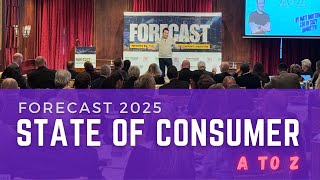
This is a YouTube video titled "🔮 FORECAST 2025: The Key Trends That Will Transform Business | Matt Britton" published on November 14, 2024, on Matt Britton's official channel. The content likely features Matt Britton discussing upcoming business trends for 2025 and their transformative impact.
So I am very pleased and it's my pleasure to introduce the one and only Matt Britton. Thank you. Take it away. Thank you very much. Great to be back. Unfortunately, my forecast 2020 presentation did not forecast Covid or many of us might be in a much better financial position today because the world really changed during that time period. And the world is always changing with the consumer. I've spent my entire career helping big brands understand and decode the new consumer. And since I entered the work world right about 1999, when the advent of the Internet came into the scene, I tell my kids that they think I'm a dinosaur. That when I started college, there actually was no Internet yet, or not really widely accessible. But the trajectory of my career has been about the new consumer. When I first started, the new consumer was the Millennials, the first generation to grow up with the Internet in the household. And that was a completely different type of consumer. The way their brains were hardwired, their intuitive understanding of technology compared to their parents was dramatic. And it was a whole new world. And a lot of brands still, frankly, are having a hard time catching up. And a lot of companies in this room, I would argue, are still having a hard time catching up to the shockwaves that the Internet sent into the work world. Then you had Gen Z and, and Gen Z was the first generation to grow up with the iPhone in the household. Or as I like to put it, if you have any Gen Z children in the audience, as an appendage to their body, the iPhone brought about to young people instant access to information, mobility and communication. But what didn't bring them is the ability to make more phone calls. Because while the iPhone is the pension of the body, Gen Z uses it for everything but to make phone calls. They hate phone calls. And now we have a new generation starting, which is Gen Alpha. And I'm going to get into these generations today. But more importantly, I'm going to talk about the future and what trends are coming up that will impact everyone in this room and is impacting in a great way business, culture and society. And the format of my presentation is called A to Z. And what I'm going to essentially do today is go through every single letter of the Alphabet. And every letter of the Alphabet is going to correlate to a big trend that I have my eye on for next year. I talk a little bit fast, but hopefully not too fast. I'm going to leave time. Somebody who runs a software company is obviously, of course, optimal importance. And when generative AI first Got widely adopted and disseminated at the end of 2023. My initial inclination was to give it to my engineering team, right? Give it to the R and D team, let them figure it out, take this AI stuff and build in the product. And after three or four months I was getting frustrated because they were getting frustrated. It wasn't really intuitive for them to figure out how to actually deploy AI. And at that point I made a decision which I think is going to change the trajectory of the rest of my career. I decided that I'm going to figure it out on my own. Everything I was reading was telling me that AI doesn't really require you to be a coder or an engineer to figure out how to work. It just requires you to be persistent, curious, imaginative and creative. And I believe I am those things. So I took the task into my own hands to try to figure out AI. And I made a decision that instead of just trying to figure out how to use it for my business, I was first going to use it to solve a problem I have in my personal life, right? I'm turning 50 years old next year. I do have some young children. A problem I want to solve for is staying alive as long as possible. And I figured what a better challenge to try to tackle with AI than to try to keep me alive. So I started to do a lot of research and what became clear about AI is the power of AI is really all about your ability to harness data because everybody has access to AI. But what differentiates your use of it is your ability to harness third party data or first party data and feed it into a model that can make you smarter, help you make better decisions. And in the case of my health, I start to go through 20 years of health related information about myself, my blood pressure information from my Apple Watch, blood test results, MRIs, X rays, doctor's notes, anything I can get my hands on. I start to organize them by archetype, blood pressure PDF, blood test PDF, MRI, PDF and I fed it into what's called a custom GPT which is essentially a version of ChatGPT, which is custom towards what I wanted to accomplish. And I started to train it. Act like you're a world class health professional from John Hopkins Hospital with one core task of keeping me alive. If you don't keep me alive, you hadn't done your job the right way. And I started to train and I started to ask it questions. I would say if I am going to make five doctor's appointments this year, what are the most important five Doctors appointments I should make, and why. And it not only gave me the doctor's appointments, but it gave me the phone numbers that I should call and even printed out dossiers for me to give to the doctor about my health history. Then they start to ask the more existential or even stereotypical questions, like if I were to die at 55 years old, or 60 years old, or 65 years old, given my health history, what is the most likely cause? And it told me it and it freaked me out. But unlike your doctor, who might be scared to freak you out, AI doesn't really care to freak you out. It's going to tell you the truth. And now fast forward today, six to nine months later, and I use this healthbot that I created, which I could create for any of you with the right information in five minutes. It's been life changing for me. It helps me with my diet, it helps me understand symptoms I might be feeling right now. In a pre AI world, if you are feeling symptoms, you'll go to WebMD. And what do you feel like after you go to WebMD? That you're gonna die. Right. It's not really the case with AI because it'll tell you, oh, maybe it's because of this. You should follow up with this. I gave my whole family history and now I'm on a hunt to give it more and more information. And it is such a valuable resource in my life, one that frankly, I would probably pay thousands of dollars a year for. But I don't have to, because I built it on my own. After I went through that journey of building my own healthbot, I started to take the same framework and learning and figure out how can I apply it to my business. So what is the blood test PDF of my business? Right. What are the key data points of my business that can help me make decisions for my business? And as it turns out, we talked about the pandemic a couple minutes ago. My company at the point of the pandemic, had 60 employees, all in an office here in New York City, SoHo. And from that point on, we've been remote. We now have 350 employees, but we're spread out all across the country. As a byproduct of us being remote, we deployed a lot of tools that were all cloud based that allow us to collaborate more efficiently. One of which was a tool called Gong. What Gong does, it connects into Zoom and essentially records every call that you have with a customer or prospect. So we'll call, have a call with a customer, say, procter and Gamble and the customer will hear. This call is being recorded for quality assurance purposes and it gets recorded. And once I went through the AI journey of starting to figure out what to build for our business, I uncovered the fact that we had over 20,000 hours of customer call transcripts. If you think about the value of that, it's enormous. These are 20,000 hours of customers in the wild talking about what they love about my company, what they don't, what competitors are using and which aren't, what product functionality we need and what we don't. It also knows the industry people work for their title, their history, the trends that they're interested in, the ultimate data source. And from that start to build a variety of different tools that allow my company to act more efficiently. We created the Suzy Growth Engine which allows my sales team to instantly pull up case studies and write follow up emails. We created a tool that publishes blog posts that are redacting a client's name and product right after a call is done and puts on SEO optimized blog. We have now 16,000 blog posts that we didn't have one human right that's bringing us inbound business. It identifies SEO search keywords, creates customer segmentation, even creates our future product roadmap. It has transformed our company from the inside out to the point that now we are more efficient and have less employees than we did have four years ago. And it's going right to the bottom line which we're going to get into later in terms of what this means for people's jobs. So the learning I had from my journey about AI is you don't need to be an engineer. And one thing that really drives me crazy is the uses of AI is disproportionately with young people, it's with Gen Z, because the misperception that it's for the whiz kids, it's technology. But, but I would argue older consumers, baby boomers, disproportionately need to be using AI because they probably have the most data, most historical context, are the most experienced in general. And to use AI you only need to be able to communicate, talk in any language, you don't need to know any prompts, you just need to be able to talk or type what you're looking for and have a thirst for knowledge. And you can create incredible things. You might be looking at me on stage saying, oh sure, it's easy for him to say, but I'm telling you, people who I work with, that are friends with, that are not technically savvy that are in finance or in real estate or in, you know, industries where historically you wouldn't need to have a big technology are blown away after I start to show them what you can do. So I would try to pick out a problem for yourself to solve. It could be you want to find a recipe for Thanksgiving dinner coming up, right? It could be trying to manage your finances because the same way I built my health bot, I built a finance bot where I entered all my financial information, all my tax information helps you make investment decisions. It is absolutely incredible what it's done for me and absolutely scary on what it's going to do for so many industries, your industries included, which we're going to get into today. I cheated on this one. I have a second A which is for Gen Alpha. So Gen Alpha is going to be the first generation to grow up with AI in the household. So they are never going to know a world where AI doesn't exist. So the baseline expectations of this generation, which is currently age 0 to to 15 years old, is going to be that the power of AI is integrated into every touchpoint they have every product, every service, every media channel. And I have news for you. 15 years old is going to become 18 or 21 years old pretty quickly and soon they're going to be in the workforce. And that's how change happens so quickly. That's how social media exploded, that's how the iPhone exploded. Is younger people disproportionately adopt these technologies and then they get into the workforce and then they disrupt industries from the inside out. And this is going to be the case in ways that we've never seen before. I'm writing a book that's coming out in May called Generation AI. I'm going to send out a link, everyone in the room, get you a free copy for being here today. But it's about the impact of Gen Alpha and AI and writing the process of the book really was incredible for me to dive in deeper in terms of all the ways it's really going to impact our world. B stands for the barbell economy. And and this is actually one of the only trends I've talked about pre pandemic that still exists today. The notion of the barbell economy is essentially in developed Western markets. The middle class is slowly withering away, there's a digital divide and the rich are getting richer and the poor are getting poorer, for better or for worse. I do not see that changing here in America in the years ahead. The output of this is that there are opportunities on Two sides of the equation. There's opportunities on the value side. There's Dollar Tree, Dollar Store, Dollar General. There's Vizio, sells flat skins for $199. There's companies that are winning on supply chain innovation, giving consumers the best possible product for the lowest possible cost. And then there's a luxury side of the equation. There's amman resorts charging $4,000 a night over the holidays for a hotel room. There's private jet rental clubs. There's Hermes that's selling luxury bags for 10, 15, $20,000. Companies in the luxury space are also thriving. But who's really getting hurt? The companies that are in the middle. It's the Gap that's selling jeans for $100 because Walmart is selling lead jeans for $20 and the boutique in Soho is selling designer jeans for $220. But the hundred dollar jeans there's less and less of a market for. And this has big implications to your business, to your programming. Who are you going after? What's the segmentation? Because if you want to go after advertisers to support it, there are groups of advertisers going after certain demographics and others. And that's the way the world is going to continue to move. And we've seen it play out in other markets as well. And America is going that way. One byproduct is like we're in the Harvard Club right now, right? It's exclusive. Not everybody can walk in. That's a huge trend that's going on here in New York City. There's Casa Cipriani and there's Soho House and there's Zero Bond. These are all membership clubs that want to keep everyone else out and let people in. That's happening in every corner. Now you have the Delta, there's a Delta Sky Club at the airport, but now there's the Delta One Club. Right? And I'm not saying this exclusivity is good or bad. A lot of what I'm going to talk about, there are negative implications. And afterwards I often get, well, isn't this bad? Yeah, but you know what? No one cares if it's bad or not. Innovation stops for nobody. Social media wasn't great either, but it also, you know, created a lot of families and it created a lot of connectivity and a lot of love, but also created a lot of hate and divisiveness. Every single innovation creates that. When writing was invented, Socrates said it was bad for humanity because people would no longer have to remember anything. So throughout history, every innovation has been demonized, but it didn't matter if it's demonized because the train is not going to stop. C stands for the creator movement. I mentioned earlier about Gen Z and how Gen Z is the first generation to grow up with the iPhone in the household. And when Gen Z, who is now becoming the core CFO of the household, right, they are currently age 15 to 28 years old. So they're sooner or later going to be people who are buying Tide detergent and they're buying deodorant for the household and they're making the decision on what car to buy. They are spending their time in a mobile first world. They are looking at their phone for everything. And when they're looking at their phone, they're normally looking at a newsfeed and social media. And when they're in the news via social media, they're looking at content not from traditional media sources, but from other people. That is the creator movement. So this generation, Gen Z has grown to love content from other individuals far more than scripted content. I remember growing up and there was must see TV on Thursday night at 8pm and you would watch Seinfeld or Friends or Cheers. Remember those days? Well, when I dropped my daughter off at college last year here in New York City, not one kid had a television in their dorm room, right? A lot of them were on laptops, a lot of them were on their phones. But the younger generation is looking at their phones. Doesn't mean you can't reach them with your content. But the modality and form factor is changing. And I wonder, once Gen Z does buy more homes and start families, are they going to have the same amount of flat screens I have in my house, which is like 20, right? Maybe not. I don't know. I don't know if the traditional television modality is going away. A lot of people confuse the form factor of the device from the operating system of the industry, right? So the television industry is different than the television itself. And I think there's a lot of confusion when people talk about that. But regardless, because some people also watch YouTube on TVs, but the creator movement is here to stay. And you see people like Ryan Reynolds, how are you a celebrity starting Mint Mobile and Aviator Gym becoming a billionaire? Because his brand as a creator, an A list creator nonetheless is moving products. Mr. Beast, the number one creator on YouTube, opened up a burger store across the river here in New Jersey and 10,000 people showed up the first day to go there. 10,000 people. How much advertising would McDonald's or Burger King have to do to get that many people to show up to one of its locations. Creators are able to grip the Persona of their audience and get them the weight on their every word. Ryan Seacrest is a creator. So we've seen so many great people in radio or television where people. Howard Stern that people really gravitate towards over time. And the creators is at scale on a niche basis. But unlike radio and tv, there are zero barriers to entry to being a creator. You just need a phone and Internet connection, which is why we're seeing more and more and more creators over time. D stand for digital twins. And this is a crazy concept. One of those two people are human and one is an exact clone. A digital twin of that person. The ability for individuals to clone themselves is really scary right now. I cloned my voice using a platform called 11 Labs. I uploaded eight hours of keynote presentations and now I can type in anything and hit generate and it generates an audio file that's indistinguishable from me. Fraudsters, obviously, huge problem, right? What if someone got ahold of my voice and and I asked my mom to wire money to me but it wasn't really me? Right. There's going to have to be a lot of fraud. I agree. There'll be a lot of technology and great companies that will be built around technological prevention of AI driven fraud. But we had the same problem with cybersecurity, didn't we? And identity theft and credit card theft and all those things that people buying online and Amazon's doing pretty well today, wouldn't you think? So I don't think that fear is going to stop this from growing. The implications for digital twins with celebrities is pretty mind blowing because somebody like Reese Witherspoon can clone herself and she can be shooting. She can be in a commercial in Tokyo and actually really in real life be shooting a movie in Vancouver. And to the audience, they wouldn't know which one she was actually on set for or not. So a list celebrities really have an incredible opportunity to essentially scale their IP and you're going to see them doing it. And it's going to come at the cost of the Hollywood industrial complex. Because at the same time, if you're an extra or a C Lister that people don't really know in Hollywood, people are just going to create synthetic versions of those extras and they're not going to get work. So your ability to build a personal brand is so much more important in the world of entertainment than actually your ability to act. Because your personal brand is what People come for and those people will be able to clone their identity and scale their presence and their commercialization of their presence, while everybody else, the exact opposite is going to happen. Not saying it's good or bad, but this is happening. E stands for engagement metrics. And I know all of you are in the broadcast world and for so long the metrics that we would sell have been, you know, high level, broadcast oriented metrics. Impressions, right has been in the metric that we shared for so long. The, the era of the impression is largely over. Right now. Reach and impressions are very much commoditized by brands. CMOs are turning over at a quicker rate than ever before because in the world of attribution, they're being held to a higher standard. The money they spend on platforms like yours need to sell products and with addressable TV and addressable everything, it's becoming increasingly important for the metrics to move further and further down the funnel. And while it might be hard for you to always show sell through your ability to show engagement, you're driving brand engagement is more important than ever before. What does brand engagement mean? It could be them going to their website, it could be they are taking a picture of a QR code of a packaging. At Walmart, there's a million ways to drive engagement. But, but building your advertising and metrics around engagement has never been more important in this world where again, the CMO and the advertising budgets are being held to a higher standard. F stands for fast channels. We all know in the TV world how much that has grown. And it kind of goes to my point earlier about what I'll call the last mile effect in your industry. I've been saying for a very long time that companies like Netflix or Apple should buy, you know, a Vizio, which Walmart actually ended up buying, and actually control the last mile to the consumer. Because if you look at what that did for Apple and the iPhone, they have tremendous power because they have their device in people's hands and allows them to control the entire ecosystem, how much they charge, the apps that go on the phone, etc. The fact that there's a bunch of low margin component makers like Toshiba and Panasonic, right, and Samsung to actually create the device where they have the remote control and they can create the interface and then you have all these content companies clamoring for those eyeballs who normally have higher margins and more power, it's fascinating to me because I'm just surprised the companies that actually create the content don't actually just roll out TVs which are becoming cheaper and cheaper to make. My first flat screen TV was $7,500. It was 42 inches. Now you can get it for $75, right? The drop in cost of televisions is dramatic. So when I look at fast channels, I'm looking at ease of use, user experience. The software that most of these TV manufacturers make, hopefully there's none in the office audience, but if they are, it's true. It's terrible, right? The software that the companies that make TVs, they don't know how to make software, right? And that's why people like me will plug it in an Apple tv, because Apple knows how to make software. I do the same thing in my car. I, I don't use my car manufacturer software. I use Apple software. But a lot of the companies that make the streaming platforms, they know how to make the software. So I think you're going to start to see emerging, I believe, where you're going to start to see a lot of streaming companies. If I were them, I would do it right away, purchase TV companies and some instances even give away the TVs for free and basically have it subsidized by the subscriptions and the advertising over time, almost like the Gillette razor model, if you will. But fast channels nonetheless are growing, and they're growing because they have the distribution. And they have the distribution because they are integrated with the device manufacturer. G stands for gambling and sports. Gambling is, it's a phenomenon right now. It's also really scary. Like a lot of these trends, it is impacting young men to a level that I don't think a lot of people realize. It has invaded entertainment culture. You probably know that you, you were able to bet on the winner of the most recent election on Robinhood. Robinhood is an investing platform which often said, oh, we're not about gambling in a game. Yet they turned on the ability for you to gamble on the. On the presidential election. The relationship that younger people have with money is the complete opposite of the relationship that baby boomers have with money. My dad passed away a couple years ago and he lived a very modest lifestyle, and I was shocked to learn how much he had saved over time. He grew up with parents who had went through the Great Depression and World War II, and their relationship with money was one of scarcity. And that's what he was taught. Let's flip to the other side. When Gen Xers got a lot of fiscal stimulus during COVID did they have a scarcity relationship with money when they were buying stock of GameStop or NFTs or collectibles. No, they had a risk on appetite and a risk on relationship with money. And what we're about to witness in the years ahead is the greatest wealth transfer in history. As baby boomers age and start to inherit money or donate money to younger people and those younger people are going to flush with cash. $42 trillion transfer of wealth to people who had a scarcity based relationship with money, to people who have a risk on base relationship with money. At the same time that online sports gambling is becoming legalized in every single state and being promoted in between the scores that are happening live sports controls live television. As we know, 88 out of the top 100 shows on television last year were live NFL games. Amongst by the way, both male and female viewers. And all those eyeballs are being tempted every minute by and listen, I bet on games myself, right? So because it lured me in and I'm a huge sports fan. But I know I'm going to lose and I'm never going to bet the amount, an amount that I can't afford to lose, but a lot of people will. This also tells you not only just about young people's relationship of money, but about their tolerance for risk gamification, how they want to be engaged. Underlying all of this is they want to be closer to the game, they want to feel like they're part of something. They want to be immersed deeper and it's that risk that allows them to do that. So this is a big trend. There is a lot of talk about regulation right now. It's obviously a huge advertiser and growing advertiser base. ESPN just launched their own gambling platform. You're starting to see them pop up in stadiums where just like it is in the UK where you can bet on soccer matches, same thing is happening here. Definitely something I would keep an eye on. H stands for hyper personalization. And one other thing that I've learned through through AI is that the world of one to many is going to be a thing of the past. So many companies have email newsletters, many networks have email newsletters where people sign up and they get a newsletter. One great thing that AI does if you have first party data on your audience is knowing what type of music people like, the zip code that they live in, the artists that they're into, the brands that they're into. There's no reason that you and and the technology is here today and it's cheap for every single person that gets an email newsletter from you or Any type of communication to be completely custom based upon their interests. That's hyper personalization. I don't think this is going to be limited at email communications. I think that one day the radio station or TV station I'm going to watch is going to be personalized. To me, every single individual is going to be addressable not just for advertising, but for the content that they consume. That's where it's all headed. You have a lot of things that are being combined. Quantum computing, 5G, right? The dissemination of these hyper powered, AI infused iPhones, all these things are going to allow people to basically get exactly the content that is for them. We've been talking about personalization for so long, but the era has now arrived. We've actually built for our company such a platform where every single customer and prospect gets a unique email from us every single month. Completely automate it based upon all the signals. And we built this with two or three people in the span of a couple weeks. So the technology is there right now. And if you're talking about driving engagement for your advertisers, what's going to be more engaging? Something that is targeted towards the 18 to 34 demographic or something that's going to be targeted to Joe Smith, right, Or Jen Smith? That's what hyper personalization can do for your business and the end consumer. I stands for intelligent content discovery, which is basically what we see when we log into Spotify, when we log into Netflix, where based upon our history, based upon that first party data, it knows what we're likely to want. And I think this is going to be something that's going to be increasingly entering everything, right? When you hear about first party data, the reason it's so important is because what AI now can unlock the same way it did for my personal health bot, right, Is all these insights based on an individual that allow you to deliver things. And if I were any of your networks, I would be clamoring for that first party data because not only does that enable you the ability to deliver personalization and personalized discovery, but also the ability to deliver such experiences for your advertisers, which again will drive better conversions which will make them want to spend more money with you. Too much of this room is still focused on cookie cutter demographics. 18 to 34 year old male, I can tell you so I'm from Philadelphia, huge Philadelphia Eagles fan. When I'm in the Philadelphia Eagles game, I have just as much in common with a 7 year old and a 17 year old because we have a shared passion Right. And a lot of media companies are still looking at cookie cutter demographics when it's really behavioral and psychographic information that really rules the day. Right now. The reason that cookie cutter demographics, age based demographics exist is because they were developed before any of this technology existed. But a lot of the media world has not followed suit and evolved quickly enough. This is really interesting. J stands for jobs. I saw a stat the other day that over half of Google's workforce is a freelancer. And what many large companies are finding right now in a world where they're increasingly being pressured to drive efficiencies, is that they are looking for part time workforce to supplement their full time workforce and basically lean into the areas that they need at any particular time. Right now there is tremendous opportunity if you have a specialized skill set to become a freelancer. I often get asked by parents after presentations like this, this is so scary. What do I tell my kid what to do? And one of the first things I tell them is that the education system is broken. And if your kid is going to go into debt to go to college, I would rethink that dramatically. I spoke for a college learning company a couple months ago in front of 800 college professors and none of them knew anything about AI. They were using textbooks that were invented before AI. Generative AI was a thing long before it. Yet these are the people that we're relying to train tomorrow's leaders for an increasingly competitive globalized world. The education system is predicated on driving people to remember young people to remember facts and, and regurgitate them. My son goes to an overpriced Brooklyn private school and he is taught to memorize different types of leaves so that he can write on a test that he knows those different types of leaves. Good luck with that. When your phone can take a picture of a leaf and chatgpt can tell you instantly what it is, what does that memorization and regurgitation skill set do for you? Right. It makes as much sense to teach somebody how to build a horse and carriage right now to get downtown. And this evolution is happening far faster than the evolution of horse in carriages to the Model T. So the education system is completely broken and not setting up. And it's really hard to see a way out of it. I think you want to see a resurgence in trade schools, specialized skill sets. Ultimately it's about teaching kids to go either deep into an art or deep into a science. Deep into an art is doing things that machines can't do. Right? Being resilient, being, being a problem. Solver being inspirational, being creative or going deep into a science, learning how to operate and optimize the machines. It's one or the other, right? And yeah, sure, we need doctors, right? There's certain things, but I would argue they're deep into a science and everything in between. If you're a master of all trades and jack of none or I might have reversed that, you're going to be in trouble, right? Moving paper from floor seven to four, four. And that's just not going to be a world where you're going to have a job. It's going to be offshore to automated and we're already starting to see it happen. So jobs are going to exist and the people who have these specialized skill sets that are deep into an art and deep into a science are going to have very lucrative careers, many of which in the world of freelancers. And this goes to the point, I was just talking about the world of knowledge workers. And this was a study that was conducted this year by Deloitte. What you see are two different colors of circles. You have light green and dark green. Light green are the circles that people at Deloitte who spoke to these big executives believe that are the least amount in demand right now. Dark green are the ones that are most amount in demand. And the intensity of those, the bigger the circle. So let's go through this. What is least in demand by employers right now? Data analysis. You could just drop a CSV file or spreadsheet into AI and it'll analyze it for you. If you're a data analyst, you need to look for a new job or you need to learn AI so you can show other people how to do it. Prompt engineering is going to go down as the BS term of 2023, 2024. There is no prompt engineering. AI knows how to detect human language and turn it into a prompt. So a lot of people are putting on LinkedIn, they're a prompt engineer. That's a no go, right? It doesn't work anymore. So software engineering and coding, I told you about my journey with AI. I am not an engineer. I don't know how to code. That's why that is being less and less developed. And then manual content creation, the ability for people to create content. Now obviously you're not going to want AI to do a Super bowl spot for you if you are Kraft Heinz. But a lot of content that's made on an everyday basis is by junior level people that are really just copying each other. And so it's not really in demand. What is in demand. The ability to think critically and be a problem solver. The thing I've learned about AI that's going to change the world the most is it's no longer going to be about how to solve the problem, but about identifying the problem that needs to be solved. So let me say that again, it's no longer going to be about how to solve the problem because the problem is about analysis of data, figuring out what code to write, figuring out what type of leaf that is on the park in Central Park. Those types of things aren't going to be value. What is going to be of value is why do I need to figure out what type of leaves they are? Why do I need to analyze this data and what decisions are going to be made? How do I motivate other people around the decision to get stuff done? It's a completely different skill set, many of which can't really be taught at later years in life. And younger people need to learn problem solving, creativity, resilience, the ability to work in teams, communication skills, emotional intelligence. These should be the courses in class, right? And I would bet if I come Back to forecast 2030, 2035, they will not be the courses in class. And that's what the higher education system needs to change. And I believe companies like Google and Microsoft are going to create their own colleges and they're going to fund it and they're going to teach people these skills because they know what's needed because the public system can't actually support it. Loyalty is obviously a huge part and loyalty is predicated on data. Why is someone loyal to your network? Because you're giving them things other people don't. Why am I loyal to Delta? Because I have points and they give me stuff that other people don't. So I will pay more to fly on Delta. Loyalty is everything. It's what people expect. It's predicated on first party data. It's predicated on a value exchange. And every single network that has an audience needs to have a loyalty program. The that's personalized based upon what people want, because that's what the consumer expects. M stands for music. And how many people in this room have played with a tool called suno? Okay, that's shocking to me because this, I would say is one of the most fascinating, impressive tools that I've used in this AI resolution. And what it allows you to do is have it instantly. This tool instantly pop out a song about anything you want, in any genre you want. You can write a song about your ex girlfriend, or about the boss that you hate, or about your dog. And they'll make an amazing song in any type of genre instantly. So if you think about what that means for you, producing radio spots or a brand creating a tagline, it's really fascinating. In fact, I actually created a song for me speaking at this conference today, Turn it up. So it's an incredible tool. You can create it for anything. So if you think about the industry that exists right now of brands having, you know, jingles written for them, of radio stations and TV networks creating songs now, is this going to make Coldplay and the Beatles irrelevant? No, not today. But what if I told you 10 years ago that there would be, you know, big concerts in the Las Vegas desert that 100,000 people would go to to watch DJs press buttons? Would you believe that? Are they performing? This is happening quicker than you think. In fact, Timbaland, a big music producer, just signed on with them to help them. You can, even with this tool, Suno take a picture of anything. I can take a picture of his audience and we'll write a song about, this is the most beautiful audience I've ever spoken in front of. And I'll write that for me instantly. But any picture, any song, it creates incredible tool. It just shows you where this world is headed. And the fact that two people in this audience, given the industry you are all in, have used, it shows how far we all have to learn and how quickly things have changed. N stands for niche audiences. The ability to reach specific niches is another way that you can engage people. There's a company called Reddit that went public this year. It's an online community. Reddit is where people are going right now to. To get community. The reason why is social media used to be where people got community. But what the algorithms have found is that you looking at a post from your old friend from high school doesn't get nearly as much engagement as a polarized news story, right? A political news story or a post from a big creator. So more and more of our friends are disappearing from our news feeds, which means social media is no longer where people are getting community. So instead people are going to online communities like Reddit to seek out those niche communities. If you're a French bulldog owner, right? If you're a fan of an obscure soccer team in London, right, no matter what it is that you love, there are other people that love it as well. And you can go on Reddit and you can build a community around it and the ability to cater to These niche audiences through programming is a massive opportunity for everyone in this room. Especially in a world of OTT where the barriers are lower for you to push out programming. If you think about the, you know, zoom out and look at the history of broadcast. It used to be when I was growing up, there were three channels right, on TV and then there was cable TV and then you had the Golf Channel and you had the cooking channel. By the way, the Martha Stewart documentary on Netflix is amazing. Side note, definitely check that out. So you have all these niches and now it's getting even more niched. People are seeking out what they care about in a world where people need more connection and niche audiences is where it's at and a great way to engage users. Obviously, OTT is a big contributor to that. I read recently. Now YouTube TV is allowing individuals to actually push their own content on YouTube TV. So over time, I wouldn't be surprised to see YouTube and YouTube TV merge. I don't know if they're going to be two separate things because ultimately the lines are being blurred between Mr. Beast creating content and you watching a news show on cnn. Right. Obviously it's different types of content, but the end user, they're all just ways to be entertained in short form, long form, etc. News networks are creating short form and long form. Creators are creating short form and long form. So why does it need to be two different channels? So I think you're going to see it being merged. And that's a, that's a huge revelation. Obviously, in the world of media, I would keep an eye on Peace. Answer. Podcasting, you gotta be there. I run a podcast with Adweek called the Speed of Culture. We've interviewed over 250 CMOs. It's been by far the best marketing venture that I've engaged in in my entire career. Every CMO wants to build their brand. CMOs ability to build their brand is what differentiates somebody who gets a hot job or, or somebody who's looking for work. Businesses shop for people the same way that mom shops for groceries. She looks for brands she knows in the aisle. Employers look for people as brands that they know to hire so they can go to their board and said, I hired this guy from Google, right? That's just how it works. How do people build their brands? By creating content. A lot of people don't know how to create content. What we've done with our company is we've created a podcast with that week that allows the CMOs to create content that's really good that they share, that builds their brand and builds our brand and drives business. Every single network and radio station should have podcasts, both for B2B and B2C. You can do it from your house, you can do it from a closet. It sounds just as good as a high end recording studio right now. There's even platforms out there right now which you could be interviewed for a podcast in a subway station. And. And there's technology that will make your audio sound like you were in the most expensive iHeartMedia recording studio that exists in Midtown. There's really no difference anymore. So podcasts obviously is where that we saw play out during the presidential election. The growth in audience for podcasts is far outpacing the amount of podcasts that are being created. That is a lot of people don't realize it's the case, which is why you saw the presidential candidates go on Joe Rogan or call her daddy. All these big podcasts. A lot of people in America is like, let's call her daddy. Like they didn't even know what it is. It's. And one of the top podcasts in the country has way more reach and influence than a lot of the major networks. It just does in terms of its engagement. This should be done. And what's really interesting about podcasts is the biggest podcast, none of them are by networks, all by individuals. So. But it doesn't mean networks can't fund the individuals. We saw ESPN fire Bill Simmons and then he created the number one sports podcast network and then Spotify bought him because ultimately he was the talent. Right? And I think being able to harness talent and push them out there and really deeply engage people through podcasting, it's where it's at. Podcasting is just starting. It's in the first inning and it's only going to grow moving forward. Quick hit content is just about understanding how people want to consume content in this day and age. I interviewed the CMO of the Kansas City Chiefs the other day and she was telling me that the way that people consume sports are different because now they are consuming songs and not albums. Right? They want the highlights. They want to be able to consume stuff in 6 seconds or 10 seconds or 20 seconds. Not necessarily always watch a game. It's not how it used to be, but it's how it is. Right? And that should be applying to everything. There should be quick in content. Programming should be short. Doesn't always have to be 30 minutes or 45 minutes. We need to think about the flick and building for the flick because gen Z is going to be the generation. It's going to be your core audience moving forward. This is an incredible product. It's called the Ray Ban Meta glasses. It's a partnership through Meta. Obviously the company owns Facebook and Instagram and WhatsApp and Ray Ban. The reason why it's taking off is because this product, unlike other whiz bang inventions like the Apple Vision Pro, those huge like ski goggles that wear this doesn't require consumers to change their behavior. We all wear glasses, we all wear sunglasses. That's why AI is going to take off. It doesn't require people to change their behavior. We all text each other. We can text a chatbot. It's about the modality and not asking consumers to do something different. These glasses, which I bought from my whole team, allow you to listen to podcasts or radio stations, allow you to take pictures and videos, allow you to actually say, hey Meta, what am I looking at? And it can tell you the type of leaves you're looking at. Again, you don't need to learn that. It'll tell you this is called augmented reality. It's, it's bridging the gap between virtual reality and real life. You could be looking at a house and say how much is that house on the market for? It'll tell you. You could be looking at a box of cereal in an aisle at Walmart and I'll tell you what the nutritional value is. This is where it's going. I think the next big wearables will be glasses. Google tried Google glasses a couple of years ago. Probably 10 years ago was before its time, but now it's here. This is an incredible product that if you want to get an understanding of where things are going, there are 3, 300 bucks. I'd pick up a pair. They're also great in terms of not being distracted. You could beat your kids soccer game. You could take pictures and not have to take out your phone. Which is one thing we're all looking to do more and more of these days is keep our phones in our pockets. And I'm just fascinated with where this is going to go. Mark Zuckerberg recently just demoed a product called Orion which is its next generation of these which look really, you know, because you could even have it net superimpose videos and you could kind of see what's behind you but also watch the video. So really fascinating. So this is interesting. So I talked about Gen Alpha earlier and Gen Alpha is now you're gonna start to see it more and more and more. They prefer social video over paid streaming. They would rather watch other creators create content and consume it than watch content from paid streaming. This is a major thing. And you looked at what happened with all the big streaming companies during the pandemic, and now some of them, like Netflix, are doing well while others aren't doing so well. And, and this is going to be a continued headwind as again, people get older. And the core audience of these streaming platforms, Gen Z and Gen Alpha, who grew up with the phone, who grew up with the AI, who grew up with creators, are those traditional scripted programming, which is so expensive, going to work anymore? Because people like unscripted. We all remember the Real World from mtv, right? That was kind of like the genetic marker of where we were headed. And you had Mark Burnett and Survival, and you had Apprentice, which had a little bit of an impact on the United States. And what we learned through that is that watching unscripted or real people was far more interesting than watching scripted content. It immerses people more, and we're just going further and further and further down that direction. T stands for Taylor Swift. What Taylor has shown us in a world of fragmentation and the long tail, is that there is still a place in this world for superstars. There's still a place in this world for celebrity, for big celebrities. And the amazing thing that Taylor has done through her tour, besides the billions of dollars that's made and its impact on local economies, is that it's brought people together in an increasingly polarized world. Right? And I think sports do the same thing. But the way she did it has been fascinating. And I think there's lessons learned from Taylor in terms of brand building, focusing on your audience, creating engagement that I think will stand the test of time. U stands for Uber. You look at stories about Gen Z and driving, you'll see two different headlines. One, Gen Z is fueling the car driving boom. Two, Gen Z doesn't want cars. We don't really know. Before the pandemic, we saw this huge rush of urbanization. People wanted to live in cities. They were giving up space and for the ability to be closely connected and have community, right? And we saw people staying in cities longer, pushing off, having kids for longer. The average age of a mother in the US is now 32 years old. It was 21 years old in 1974. The American family is starting later, getting older. That enables people to stay in cities for longer, right? But now what happened with COVID is you start to see people, especially remote work, moving out to secondary and tertiary cities. You saw Austin's real estate boom and Denver and all these markets, Charlotte, etc. And when you're in those markets, you don't have to pay eleven hundred dollars a month for parking, Right? Insurance isn't expensive. So what's going to happen? Right. Amazon recently announced that they want people back to work, right? And obviously Goldman Sachs, American Express, a lot of the big financial companies said that that's going to how that goes will go the way of the car. For Gen Z. If we run a remote company, I think it does pretty well. I'm sure there's trade offs. But when people don't have to live in cities because they can remote in, they can live better lives for cheaper, they will do so and that will enable them to get cars. Obviously has a massive impact on how people listen to radio. Right? And so I think remote work and radio are intricately connected in ways that many people don't really realize. Based upon this, V stands for Voice. We all have been frustrated with Siri and Alexa for so many years. It's like I don't want to go to Starbucks. I want to know who won the Sixers game. Like, tell me what the answer is. But it's no longer the case anymore. Voice is getting better. In fact, Amazon recently announced a deal with Anthropic who makes the AI tool Claude, which is in my opinion the best AI tool. It's unbelievable. And it's now powering the Alexa. It understands now what you're talking about much better. So does Siri. I think Voice is going to start to take over. A lot of times we're right about things, just the timing's off, right? We think things are going to happen and it just takes longer. Bill Gates said, I think we overestimate what can happen in one to two years and underestimate what can happen in 10. I think that's the case with Voice. I question and people hate when I say this, should kids be taught handwriting anymore? If they're going to be typing or Voice, I get yelled at for that. But what people don't understand is when they're not doing handwriting, maybe they're learning how to use the tools that are going to enable them to thrive in 2030. Like it's a trade off, it's an opportunity cost. And Voice is getting so good that I think people are going to more and more talk. I use a variety of different tools when I go on long car rides and I have conversations with AI to help me frame my thoughts and it dictates everything I say so when I get to my destination, I have it all there and it really, really effective. So I would definitely not count out voice and your ability to interact with people because it's coming. W stands for wallet. As we're rounding the corner here of the Alphabet. Thanks for all staying with me. We are going to be entering, I think a lot of economic headwinds for the consumer in 2025, despite the stock market being at an all time high today. I think it's very much a false positive of what's going on in the market. This is not investor advice. There are two stats here I want to show you. The one on the left is personal savings rate as a percentage of income. Right now it's less than 5%. In the 60s, 70s and 80s it was between 10 and 15% almost every single year. Which means somebody made $100,000. On average they would save 10 to $15,000. And now they're saving about $4,700 as a percentage of their overall income. Right. Keep in mind that that was when interest rates were even much higher. Right. And but so it was much more expensive to live back then to pay for mortgage, to pay for credit cards. But despite the fact people are saving less, credit card debt has topped a trillion dollars in the United States for the first time ever. Why is this happening? Well, we talked about the risk on appetite with young people with capital. They got a ton of money in 2020. Look at those spikes. Right? Look at that spike you happened in February 2020 because no one could go anywhere so they couldn't spend money going out. And then it happened again in February 2021 because all the stimulus started to pour in and they felt really rich. And over time it withered away. And right as it withered away, what started to go up? Their credit card debt. Because us as consumers have a very hard time changing our lifestyle. And once we establish a lifestyle, we will keep it and ignore all the signs around us even as the AMEX skills go up and up and up and up. And we are entering a real big consumer credit crisis in the US the same time the stock market's an all time high. I don't know if interest rates lowering is going to really solve this because I think ultimately we're going to end up with a demand problem. And I think what AI is going to do in the short term is take away a lot of jobs and then over time it'll add more jobs. We saw it happen with the automobile, with the model t, there are 70,000 7, 000 businesses that made horse that were in a horse and carriage business that went out of business when the Model T was introduced. And then over the next 15 years I think it's 40% of all the new jobs that were created in the United States from the automotive industry. Right. And I think we're going to start to see the same thing. But next year is the one step back year and then we have two sets forward. So I would expect that there's going to be a downturn no matter what the market says. We'll see. You can we got this video on video. We'll see if I was right or wrong. X stands for the experience economy. As a TV network, as a radio station, I would be leaning to experiences. Ultimately I think what where you can all win against big tech and big media is local. Local, local, local. Local people care about local people care about their local store, the local community, the local park, the local school, their high school football team. They still care about that so much and it's still so underserved. And everything we talked about today with data and the ability to bring it to life and the ability to be more of an experienced company I think creates great opportunities. Have a podcast about each local market and have the studio on mainstream with the hardware store that Amazon just put out of the business and lease that store and have a window where people are walking by and your podcast is filming for everyone to see every day. You want to build your brand and then put your advertisers logos on the outside, have a QR code where they can get a coupon from your advertiser. That's experience. And you can start to build on that. And I think this is going to be a huge thing. The spending of US consumers on experiences continues to grow. We've talked a lot about YouTube and again Z is for generation Z. So Gen Z obviously is your core generation. And lease that store and have a window where people are walking by and your podcast is filming for everyone to see every day. You want to build your brand and put your advertisers logos on the outside, have a QR code where they can get a coupon from your advertiser. That's experience. That's what and that's. And you can start to build on that. And I think this is going to be a huge thing. The spending of us consumers on experiences continues to grow. We've talked a lot about YouTube and that gen Alpha will follow. This is the iPhone generation. This is how they want to consume content and it's not going away. So it's all our jobs in the room to figure out how to mold our business around it. We need to change for the consumer. The consumer is not going to change for us. That's my A to Z. If you guys want a copy of the presentation or a video of the presentation, take a picture of this QR code, we'll send it out to everyone. And I think we have about five minutes for Q and A. And thanks so much for sticking with me for this. Questions? Okay, back there, talk a little bit about the population situation that we're having where we're having a huge boomer generation where pretend to die off later and there are enough people behind it then to make up for it. What does that have an impact on everything we just talked about? Well, I mean, one of our new White House appointees, Elon Musk, I think is going to push everyone to have 10 to 15 kids. So that may solve it. But I mean, I think that it's going to be an issue for our country. And we've seen what's happened to economies like in Japan and the stagflation that they've hit, you know, and China as well. So I think that it's an issue. People are having less sex, they're dating less, they're getting married later. Families are not as big anymore. It's too expensive. Right. And the same time you have this Instagram generation where people want to live younger later in life, they'll go to Coachella or they go to Burning man at age 50 and it's acceptable. My dad never would have went to Coachella 30 years ago. It just would have happened. Right. And he never listened to cool music in the car. But I think my kids like, why? Because we're in touch with younger generations. And when people are in touch with younger generations, they want to live longer, maintain that youth which has them pushing off families. So I think you're talking about a real big population issue that's going to happen. There's going to be less people, but they're going to be wealthy because of the inheritance they're going to get from baby boomers. The younger generation also is better fetched with us because I can make a reference to music or something from the 70s, 80s, everything like that. And my kids get it 100%. That's amazing. Yeah, it's a great point. And they correctly identified the fact that reaching current reaches frequency are no longer the lingual of a marketer. Increasingly, they're under pressure for growth. And I Think outcomes is another way to describe what you said? Yeah, we have an attribution problem and it's a twofold problem. It's the marketing attribution and a subset of that, which is the media attribution and the CFO is braiding the home. Give any advice for us on how to describe how we drive growth and deliver outcomes? I think it's about ultimately first party data. I think ultimately, you know, you know better than anyone like what's happening right now with Target and Walmart's retail media networks. Right. And the reason they can do it is that they have first party data. So Coca Cola will pay to have their, you know, their brands on, you know, in store. But more importantly, Walmart can add, you know, better than anyone like what's happening right now with Target and Walmart retail media networks. Right. And the reason they can do it is that they have first party data. So Coca Cola will pay to have their, you know, their brands on, you know, in store. But more importantly, Walmart can advertise P and G and crafts products all over the web because they have first party data. You are in a, you're the last mile of the consumer. So and just like Walmart has no problem driving attribution and really controlling everything you all do as well because you have the last mile to the eyeballs. So I think for ties, PNG and crafts products all over the web because they have first party data, you are ultimately, it's got to be about first party data and prioritizing that. I think most companies, media companies aren't even set up to figure out how to get that data, how to mine it, how to analyze it, like who in your team, your salesperson is not going to do it. So I think it's about organizational design as well to actually make that occurrence. Yeah, absolutely. Okay, well thank you guys so much, been a great audience and hope to see you soon.
More from Matt




MikMak’s Rachel Tipograph on Consumer Spending, Retail Media & Holiday Shopping Trends



Jaguar Land Rover’s Charlotte Blank on Luxury, Purpose & Experiential Storytelling



