Frito-Lay’s Brett O’Brien on Sports, Transparency & Consumer-Centric Growth
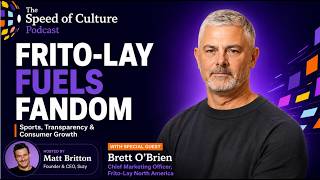
In this Speed of Culture podcast episode, Adweek host Matt Britton interviews Brett O’Brien, Chief Marketing Officer of Frito‑Lay North America. The conversation traces O’Brien’s career from an English‑government major who entered the sports‑and‑entertainment agency Octagon, through a 22‑year tenure at PepsiCo where he rotated across roles—including a decade leading sports and fitness for Gatorade—culminating in his 2023 appointment as CMO of Frito‑Lay. O’Brien explains how the agency experience taught him to thrive in ambiguity and value differentiated ideas, and how PepsiCo’s consumer‑first culture, internal talent development, and role‑rotation kept him engaged. He contrasts his past functional sports partnerships (Gatorade’s performance‑focused activation) with Frito‑Lay’s fandom‑centric approach, highlighting the Women’s World Cup campaign that educates fans about soccer history while celebrating the sport. As CMO, he balances innovation, performance tracking, cross‑functional collaboration, and team development, emphasizing flexibility, curiosity, analytical ability, and positivity when hiring. O’Brien discusses Frito‑Lay’s “real‑food” transparency initiative that tells consumers where chips and corn‑based snacks come from, targeting Gen Z’s demand for authenticity. He outlines the evolution of media strategy—from traditional Super Bowl TV spots to multi‑platform storytelling journeys, retail media, and e‑commerce, stressing the importance of first‑party data and 360° consumer engagement. The interview closes with career advice: stay open to opportunities, seek mentorship, and adopt a kindness‑first mantra inspired by the Dalai Lama.
Chapters
Up today, we're gonna be speaking with Brett O'Brien, Chief Marketing Officer of Frito-Lay North America. Brett, so great to see you. How you doing today?
Oh, I'm doing great. Thanks, Matt. Appreciate it.
Awesome. Well, really excited to dig in here. First and foremost, I saw that you started your career right outta school at Octagon, which is more of a sports and entertainment agency. Did you kind of know during your college years that you wanted to get into the, you know, sports and agency world, or was it something you kind of just stumbled upon?
Yeah, I kind of wish I did know that because I might have structured my college classes a little differently. I was an English and government major in college, which doesn't necessarily lead to any specific career. But yeah, I did. I really wanted to get into sports, not necessarily in the management piece, more in the marketing, in the sports marketing world and how to, you know, kind of work with brands to leverage their brand power in sports and help make them stronger based on their connection with consumers. And so, uh, I interned there, uh, right out of college and worked at J.Crew at nights and to, uh, to pay the rent. And, uh, and absolutely loved it and, and, um, ended up going back there full-time and staying for quite some time and just learned a ton. And I think for me, you know, the big thing about working on the agency side, and I know, you know, so many, uh so many people have done this, um, you just learn about this idea of like working in ambiguity and, and yeah, you know, making suggestions and working your butt off knowing that maybe that, uh, all that work is gonna come to fruition or maybe it won't. It, it's really up to the, the client. But, um, I love that aspect. I loved working with different brands. Yeah. I loved working with, you know, different creatives and I had a ball.
And you also had the ability to work in so many different categories as well. Which a lot of people don't realize, you know, one day you're in auto, one day you're in CPG or food and bev and learning the ins and outs. And one thing I found throughout my agency career is while they all sell different things, a lot of their business problems really are just still down the kind of the same issues.
Yeah, that's right. And you know, it makes you value that much more now on the, on the client side, it makes you value that much more how, how, how integral agencies are to understanding your brand, to giving you some just total differentiated ideas. Um, And my goodness, you got to have respect for those folks who are just plugging away every single day trying to make your brand better on your behalf. And—
Absolutely.
Certainly a great appreciation for that, but just an awesome experience.
Yeah, so after 4 years there, then you jumped over to the client side. And 2001, started out at PepsiCo, where you've been ever since. So in this world where we see marketers jump around every 3 years, It's not lost on me that you had this focus and you stayed at this business. What is it about PepsiCo that has had such staying power with you?
Yeah. Yeah, I'm not sure if you would ask me when I started if I would be here 22, 23 years later that I would have said yes. But I also didn't know. I'd never worked in an environment like this before. I think what's kept me is— well, there's a host of things. One, I think— the way that we operate here at Pepsi, you tend to get, as you start with Pepsi, every couple of years you transitioned into a new role and it's a different marketing opportunity and you're creating different expertise. And for me, it felt like I had a new job every couple of years. So I didn't really feel like I was in the same place. I felt like it was just kind of changing who I was and what I was growing and what I was developing into. And then I think the other thing was I just, I'm surrounded by such smart people here. It's awesome. It's great to feel like I'm getting smarter because of the people I work with. And, you know, I've never felt the need to go and transition out of here because I always feel like I'm growing and developing. And that's, to me, that's the most important.
Yeah, and some of the most talented people I've worked with in my career have come through or still at PepsiCo. And a lot of them on the podcast, Todd Kaplan, Antonio Lucio, Frank Cooper, so many people that I've worked— Bon and Beau. What is it about PepsiCo that makes it just a breeding ground for great talent? Is it the recruitment? Is it the development? How would you describe it?
Yeah, it's probably a lot of that. It's, it, it, I would say a lot of it is recruitment. But, but not only that, it's, it's the development internally. And, and I think the thing that, that I really cherish about my experience here is that it's all about the consumer. It's consumer first. And you're not getting a little pushback internally that's saying, well, wait a minute, maybe it shouldn't be consumer. No, it is. It's always consumer first. And that's probably why we graduate a whole heck of a lot of folks in the marketing world who, who think that way and kind live and die by the consumer. And that's what makes them successful.
Yeah, for sure. And prior to your current role at Frito-Lay, which we'll get into, you spent 10 years as senior vice president of sports and fitness at PepsiCo. So it goes back to what you first started doing. And obviously, you have a passion for sports. I assume you're a fan of sports in real life, as am I. What is it about the passion point of sports that you feel like is so effective in this category to really drive that consideration and loyalty over time?
Yeah, um, so when I, when I worked on the Gatorade business, uh, the, the interaction with sport was very different than it was on my Pepsi days and now certainly in my Frito days. And yeah, and it's that, that nuance is so interesting when it comes to the quality of how we talk about sports with brands, right? Because with Gatorade, it was on the sidelines, it was in the dugouts, uh, it was a functional, very functional, right? You got it. It's proof points. It's the best athletes in the world at the most important times of their career consuming Gatorade because it's the best thing they can do in order to make sure that they're maintaining their capabilities on field. So from a functionality standpoint, that's the number 1, number 2, all the way to 10 priority for Gatorade. And that's a very different understanding of sport and culture and how we work within that. We, you know, it's not as important for us to put a banner up on a stadium, it's way more important to make sure that those folks in the dugout are drinking Gatorade. Yeah. And so it's different, right? With Frito, when we talk about sport, it's about the gathering. It's about the fandom. It's about the people coming together to celebrate sports in a way that we all celebrate very few things like we do sport. And so because of that kind of emotional binding, that connection to sport and that connection to family and friends coming together to watch, that's where Frito plays such a great, great place. So, so if you think about OK, my last 10 years were all about how do I get in the athlete's body and help them perform. Now it's how do I celebrate the world of sports and engage in sports through these kind of unified experiences. And that's what I find so exciting now.
Right, it's about fandom and passion points and connecting your brand to that.
Yeah, you got it.
Yeah. So we'll get back to, obviously, some of the things you're doing in sports and Frito-Lay because you're up to some pretty big things. But after 20 years at PepsiCo, you were named Chief Marketing Officer of Frito-Lay North America last year. How is the CMO role different from the previous roles you've held at PepsiCo? What type of responsibilities have been new for you in this, you know, enhanced new role?
Yeah, it is a little bit different. So, so you mentioned the past 10 years working across the Gatorade business as, as in a, in a general manager role. And, and so that one was super interesting because it was also at the time of COVID and there was supply chains and pricing and, you know, outages and all kinds of fun stuff that we work through. Now coming over to Frito and just focusing entirely on marketing, it is quite different. And quite frankly, it's what I love. It's the thing that I'm most passionate about when it comes to that consumer experience. And so I think, uh, for me it was the ability to just kind of take a step back from the overall business and say, okay, I understand the overall business dynamics, but let me just really focus 100% on building brands, creating the right innovation, um, connecting with consumers in a really genuine way. And, and so I, I love it. I absolutely love it. And it, it is different than, than what I've been doing the last 10 years and in a really, really positive way.
And, and how's that manifest to like the pie chart of your day in terms of where you're spending your time, where you're focused on currently?
Yeah, I think it's, it's pretty split up that there's a lot of pieces in that pie. As I'm sure when you talk to a lot of folks who have a similar role as I do, it's a lot of it is innovation. A lot of it is what are we doing right now with our brands to build? How is performance and tracking performance? And then what do we do to kind of press some levers? It's working across different functions, especially with the sales team and kind of the growth office to say, What are some things we need to do over the next couple of months in order to spice up? And then what are things we need to do in, you know, next year to make sure we're launching the right programming? And then it's a lot of deep dives into consumer understanding. It's what's happening in the landscape, what's going on, what are we hearing? What kind of trends are we spotting and focusing on and what do we have to jump into? Some of it is work that we've got to respond to. And so we're about to launch this or that, or we're going to brief an agency and here's what their responses are. So it's a whole bunch of different things. I, I, there's no pie that's the same every day. Right. But it's also, you know, and, and I think that the probably becoming one of the bigger parts of the pie is just focusing in on the team and are they getting what they want? Are they building the knowledge that they need? And how are we making sure that we're putting our team in the right position to really excel in the way that they can?
Yeah. And, and in that, you know, in this last sports analogies, um, in, in building a team, you know, in marketing, uh, what are some of the attributes that you look for in young talent as you build your team at Frito-Lay as it's one of the most iconic the world, you're obviously held to a very high standard. How are you choosing who you're bringing along onto your sidelines?
Yeah, I think when I look at folks who perform really well in this business and would have those attributes when they come in, it's a lot of flexibility. It's high, high interest. It's curiosity. And it's smart. Can you look at a chart full of numbers and understand what to do with that? Can you take that next step and think a little bit bigger beyond, dissecting, here's what the issue is. It's, so what are you going to do about it?
Um, yeah.
And also just a high level of positivity. Like, we're here, my God, we spend so much time in our jobs. Um, we may as well have a whole heck of a lot of fun while we're doing it because we're going to spend the time. So enjoy it and enjoy each other. And so we, we certainly look a lot for people who just like have a smile on their face and approach work with, hey, you know what, we get to work for some of the best brands in the world, let's have a lot of fun with this.
Not only the best brands in the world, but really fun brands and brands that consumers associate with happy moments with friends and family. So you're really there to add joy to consumers' lives. And that, I would imagine, makes your life easier in terms of maybe not taking yourself so seriously. And I think that comes out in some of the work that you put out there.
Yeah, I think that's right on. It's, it's how can you expect a consumer to have fun with your brands if you can't have fun with your brands, right?
Yeah.
We got, we gotta lead that charge. And, and we do. And I, I'm, I'm really proud of that, but also I love being a part of it. It's just super fun.
Yeah. One thing I read recently is that you said that Frito is sharing its real food story to kind of facilitate transparency with consumers so they gain a deeper understanding of where their food's coming from, which I thought was really interesting. Talk to me about that initiative and why you feel it's so important.
Yeah, I think that, you know, when you think about our products, the products that you consume, so you're putting them into your body, you're making a choice to consume them. As a consumer, I would love to know where those products came from. I'd love to know how you make those products. How do I have the confidence to know that everything that I'm putting into my body is stuff that I, you know, feel really great about? But not only that, we have such an amazing story to tell with how our products are made. And I, I'm not sure we've, we've really emphasized that in the past. And I think we can do a little bit more of that emphasis of saying, do you know where potato chips come from? Do you know how they're made? Do you know how Doritos are made and how much corn goes into that and where that corn production is from? And kind of bring it back to the basics of how food is made. Because in essence, it's not a snack food company, it's a food company. So let's talk about our agricultural roots and let's talk about our culinary opportunities, um, beyond just what you're, what you're used to seeing on the shelf out of a bag.
Yeah. And I feel like the Gen Z consumer, who I'm sure is an increasingly large focus of yours, they really demand that type of authenticity because they grew up in the social media era. So it's almost a mandate, I think, on modern brands, say, to to peel back the layers and be transparent.
I agree. Like, why wait for somebody to ask you that question or demand it of you? Let's put it out there and let people engage in our journey because we're really proud of it.
Yeah. So obviously, a lot of these initiatives, whether it's with sports, whether it's with kind of the transparency of where your food's made, ultimately, you have to get the message out as well, right? And your brands traditionally have really leaned into television, linear television, Super Bowl, lots of large media buys, and now the world's changing and media consumption habits are changing, especially with the younger audiences. How do you look at storytelling and more importantly, the mediums that matter so you can make sure you're landing the right message with the right consumers?
Yeah, it's a constant evolution, and it's a lot of trial and error, to be fair. I think Super Bowl this year is a great example of, in the past, you would treat Super Bowl as the ultimate place to tell a story or to talk about your brand because there's more eyeballs than anywhere else. And I think you've seen an evolution. Certainly, we, we, we tried an evolution this year and it worked and we're really happy with it. But this idea of what if Super Bowl wasn't the end-all be-all? What if it was part of a communication journey so that you started several weeks before Super Bowl and then you kept that up several weeks after Super Bowl and it was less about Oh, I've already seen that spot. Or why would you show me that spot before Super Bowl? Now you've ruined the big reveal. No, it's, well, how are you, what journey are you taking consumers on that that spot plays a role in? And so months in advance, how are you creating this traction of, oh, what's gonna come? Or I'm interested in that. Or what's the big reveal? Or why would they do that? Then the Super Bowl happens and all the chatter and all the momentum and all the eyeballs, and then. The so what and how do I engage beyond just if I'm watching multiple screens? Well, how are multiple screens providing me differentiated engagement? There might be an ad, but then what about a virtual world that I can participate in, in a totally different platform? And what about another area where I can contribute and be part of the communications if I insert myself? So, I think it's not just about a singular point anymore, as everybody who's listening to this and certainly, you know. Sure. Not about just aligning a singular communication to multiple platforms. It's change that communication according to the platform and how people are using it. And how does it all combine to create an interesting communication journey that's beyond just a point, one point in time?
Yeah. And one thing that totally makes sense. And one thing I think, you know, I've been seeing a lot of in, in the CPG and food and bev category is the growing importance of retail media, right? Where, you know, obviously you're a brand that's purchased in the aisles, less so on e-commerce though. I'm sure you probably have a growing e-commerce presence as well. How important are those retail media channels as they kind of roll out? And because the first-party data that these retailers have is immense. So is that something that you're leaning into more, more use?
Yeah, it is. It is because it's that kind of 360 surround sound, right? And then it's, you know, we always talk in funnels, right? That upper funnel. And then what about those middle points and then the lower point? How are we interacting with, consumers throughout their shopping habits and where, where are we intersecting and saying, hey, let's, let's, let's make sure that we're, we're top of mind, but also how are we creating something and giving you as a consumer something that you wouldn't get unless you participated either through the media venue or through, uh, through purchase. And, and I think that's, you know, that's a big part of, as people look for more value, it's not just price that people are looking for. They're looking for, give me something differentiated. Give me something that I feel like you've just provided me a value. And a lot of that comes through. Those customer media channels. And certainly, you know, you talked about online purchasing. What an amazing way to talk to a consumer with a never-ending shelf and to say there's so many possibilities and let you have personally guide what that journey looks like. And yeah, it's crazy. And it's not just about our own proprietary snacks.com or Amazon, it's Walmart, it's Kroger, it's Safeway, you name it. Across the board, people are participating online and getting the things that they want. So it's crucial for us to continue to make sure we've got that, that voice that's continuing to help provide what they need.
Yeah, I mean, you and I both entered the workforce at the same time, and when we entered the workforce, you know, the internet was just getting started. There was no YouTube, no Facebook, you know, Google. I mean, the— and so just the acceleration. And now, I mean, who knows where we're going to be 20 years from now? You know, we've seen how much happens with the AI in the last couple months alone. So I just think one of the key things in our industry, probably more so than any other industry, is just you have to keep up keep up with the rate of change, and especially from where you sit, how are you able to do that and make sure that you're keeping the balance between not being bleeding edge where you can't really connect it to business results, but also making sure that you have a progressive approach?
Yeah, I think a lot of it comes to what you asked me earlier, which was, what do you look for when you bring people onto the team? And a lot of that is you want to have people who have different skill sets and have a very differentiated point of view and different interests. And there are people on our team who are just so smart when it comes to emerging technologies in media and digital and the way to talk to people the right way. And quite frankly, I don't have to get as immersed in that on a daily basis because they are, and I can learn so much from them and really count on them to say, let's take a risk here and there and let's go try this.
So, right.
I look to the team a lot for advice and for guidance. And, um, and we try it. We tried a lot of different things and some of them work really, really well. And some of them not so much. And that's okay. Uh, because just like the changes in media, we can change how we interact with media. And that's incredibly important to us.
Yeah, absolutely. We'll be right back with the Speed of Culture after a few words from our sponsors.
OK.
So we're going to shift focus a little bit and talk about your role at Frito-Lay and more specifically what you're doing in the sports space. I had the pleasure to see your spot around the Women's World Cup. I thought it was awesome. I thought it was very creatively executed. I saw the long-form spot. I'm sure you have a shorter form as well. Obviously, it's no surprise given your background in sports that you're bringing the brand in this direction. Why the Women's World Cup? Why now? Talk to us about that sponsorship and how you're planning on activating it to drive the brand.
Yeah, certainly over the last 5 years, so even before I got to Frito, we have really enhanced our participation in sports. And it's a lot of the things that we talked about earlier, which is just that natural gathering of people around passion points. And how does Frito help provide even more fuel to that passion? And provide real engagement around that group. And so for us, soccer is a no-brainer. It's obviously the world's biggest sport in terms of popularity and in terms of people playing it. But also, here in the US, we saw an opportunity to say, well, how do we start to provide some real kind of education around soccer? There's a massive soccer fan base, but there's still a huge amount of people who don't understand what soccer is all about. And they don't understand who the major players are. And they don't know what's the difference between a World Cup and a Gold Cup, and what's the difference between CONCACAF and all of these other things I'm hearing about. And so our opportunity to say, OK, let's figure out what is the biggest stage for soccer. And that is the FIFA World Cup. So then how do we take that stage, put our products firmly in the middle of that viewership and excitement around the World Cup, and then create some excitement here in the US, especially on the men's side, where it was, hey, I think this is awesome, and there's pockets of fans all over the country who are really invested, but the majority of fans are just saying, I'm interested during this time frame, and I'll watch. And that's cool. So that's where we saw a lot of that through our World Cup programming and our advertising around this idea of football versus soccer, and as a fan, how can I relate, and how can I interact? And then with women's, when we did the deal with FIFA around the Men's World Cup, up, uh, in 2022, it was incredibly important for us to say, hey, during the Women's World Cup in '23, we also have to have a major presence. So we're going to put those two together, and it's not— there's not one priority over the other. They both are going to be equally important to us. And so with women, it was a little bit different. Women, we've got a massive opportunity to go win this thing, um, and yet there still isn't that name recognition of all the major players that have, have really brought soccer, women's soccer, especially in the US, to the forefront of the global presence that it has. Yeah. So if we're the best, if we're one of the best teams in the world year after year after year, who are those people that got us there? And who did they play against? And what are some of those icons that people need to know about? And that's where you saw come through in that advertising. It gave us a chance to kind of tell a little bit of that background story and really celebrate those names that brought this, you know, brought us to what we really appreciate today, which is just an amazing, powerful force within the global soccer market.
Yeah, because it seemed like you were mixing in the current stars and then the kind of past icons of soccer to kind of tell that story, which I imagine also ties into a broader audience because those who did have— do have the awareness of Mia Hamm or somebody who may have played in the past, they might be a little bit of older age. You're able to kind of maybe use that awareness with a variety of different demographics.
Yeah. Or how great would it be if, you know, similar to like the girl on the spot, someone— a girl, boy, whoever— says to their parents, wait, who's Mia Hamm? Or who's Abby Wambach? Or, you know, who's Marta? And be able to talk a little bit about that or direct them to a place where they can learn about it. That's awesome. Now you're starting to create some excitement around those players and the history of what, what got the players of today to where they are.
Yeah, absolutely. So shifting gears as we kind of wrap up here, Brett, um, what are some of the things outside of the sports world that you're focused on, um, here in 2023? Given all the changes we just discussed across the marketing landscape that you think you're going to have to really command moving forward to continue to gain the mindshare of your, of your consumer target?
Yeah, I think, um, certainly one of the areas that I'm really, really invested in is, um, is culinary and agriculture. We talked a little bit about it before, but the idea of how products are made, where they're made, um, and then, and then that consumption habit of what, what people choose as far as their own culinary, um, kind of prioritization, so to speak. And How do you start to talk from a regional standpoint about how people are eating and consuming? And when, when we talk about gathering spots, what is that gathering about? Why? And what does, what does culinary mean as part of that gathering? And so you, you'll, you'll see a lot more of that coming from us, but that's an area that I'm really intrigued by. Um, here in the US, how we're farming, uh, how we can get better at farming, and then how our products are then made into those kind of real culinary-rich aspects that so many pockets of our population look for and gravitate towards.
Very interesting. And finally, as we wrap up, you know, you obviously have executed a great career trajectory and sitting here as CMO. As you look back on your 21 years at Pepsi and even your time before that, what are some of the things that you can point to that you think you did right so you continue to kind of progressed and, and step up the ladder, so to speak, in your career that you maybe want to impart on some of our younger listeners?
Um, I think there's probably a few things I would point to. One, I would say be open, uh, to opportunities. And when it's time for a job change or a role change, don't have one specific thing in mind. Be open. Understand what it is you're trying to develop as opposed to the one thing that you think is going to develop you. And then ask a lot of advice, go like create conversation. And, um, you know, at Pepsi, we're a big company and yet we're so entrepreneurial when it comes to getting things done. I love that about how, how we operate, but it also means you've got to rely on people all the time. And you consistently go back to those people that are really smart and really experts at what they do and go and get advice. And that helps you tremendously. And then you create bonds that, that will last forever throughout your career. But I think that was a big unlock for me was being willing— I'm a, I'm an introvert by nature— and being able to like just say, I need to go ask for help. Um, early in your career, do that. Later in your career, throughout your career, do it as much as you can. People are always willing to help. And I think that makes a huge difference for me and will for anybody else coming up through the ranks.
Absolutely, absolutely. And, and lastly, is there a quote or mantra you live by that you kind of sum up that career journey and, and your approach to, to work and life overall? That comes to mind?
Yeah, I don't know if that sums up my career journey. There is one quote that I, I tend to think about quite a bit, and it sounds a little bit strange because it's, it's very, um, it, uh, it's, it's, uh, it's, it's from the Dalai Lama, which, which evokes some, some Bill Murray. But, um, I, uh, this, this concept of being kind whenever possible, and it's always possible, I, I I like, how do you interact with people? We talked about earlier, when you're with, when you're with an agency, like, are you kind or are you demanding, or can you be both? And, and when you're in a restaurant, you're just asking for something, when you're walking by somebody in the street, be kind. It doesn't hurt. It, I mean, it doesn't cost anything. Just, just, just be kind. And I think we've lost a bit of that across, uh, across, uh, our society. And I think we could build more of that in.
Awesome. Well, we're gonna leave it with that. Thanks so much, uh, for joining us today. On behalf of Suzy and the Adweek team, thanks again to Brett O'Brien, Chief Marketing Officer at Frito-Lay North America, for joining us today. Be sure to subscribe, rate, and review the Speed of Culture podcast on your favorite podcast platform. Till next time, see you soon, everyone. Take care.
More from Matt




MikMak’s Rachel Tipograph on Consumer Spending, Retail Media & Holiday Shopping Trends



Jaguar Land Rover’s Charlotte Blank on Luxury, Purpose & Experiential Storytelling



