Grey Goose’s Aleco Azqueta on Honey Deuce, Luxury & Cultural Relevance
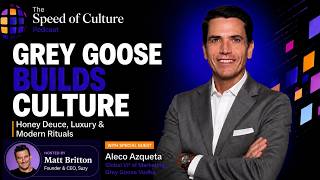
In this Speed of Culture podcast episode, host Matt Britton interviews Aleco Azqueta, Global Vice President of Marketing for Grey Goose Vodka. The conversation explores how the brand has turned the Honeydew (also called Honey Deuce) cocktail into a cultural touchstone tied to the US Open, describing the multi‑year activation strategy, planning cycles, and the "Super Bowl" importance of the event. Azqueta explains the brand’s partnership philosophy, highlighting the collaboration with American tennis player Frances Tiafoe, whose personality aligns with Grey Goose’s "joie de vivre" positioning, and how creator‑economy collaborations complement traditional media. Innovative delivery activations—Uber Eats home cocktail delivery and a pop‑up "Last Serve Bar" at Grand Central—are detailed as ways to extend the US Open experience beyond the venue. The discussion shifts to post‑COVID market dynamics, noting the resurgence of on‑premise consumption, the rise of experience‑driven hospitality, and new product initiatives like Grey Goose Altius paired with a "goosebumps" caviar ritual. Azqueta addresses the moderation trend among Gen Z, positioning Grey Goose as a lifestyle brand that promotes responsible, memorable moments, exemplified by the "Make Time Wait" campaign starring Zoe Saldana. The role of AI is examined, with Azqueta noting its utility for research and efficiency but emphasizing that authentic, cinematic experiences remain irreplaceable. He outlines criteria for agency partners—collaboration, thought leadership, fresh creativity, and deep brand DNA understanding. Finally, Azqueta shares leadership insights for emerging marketers, advocating curiosity, cultural immersion, and the metaphor of "sharpening the axe" before relentless execution. The episode weaves together brand storytelling, cultural relevance, and strategic marketing tactics that keep Grey Goose at the forefront of luxury spirits.
Chapters
Up today on the Speed of Culture podcast, we're thrilled to be joined by Alejo Esqueda, the global vice president of marketing at Grey Goose Vodka. With over two decades of experience in brand building, Alejo has played a pivotal role in transforming Grey Goose into a symbol of modern luxury and cultural relevance. And this year marks a significant moment in his journey, with Grey Goose continuing to break new ground in consumer engagement and cultural partnerships Great to see you, Alekko.
Likewise, Matt. Great to be on, and thank you for that intro. Appreciate it.
Absolutely. So of course, we are doing this podcast in early September. And for those that live in the New York area, that means one thing— US Open season. And I know one of the big drinks at the US Open is the honeydew cocktail, which has really become a cultural symbol that really transcends sport. You see it on all the newscasts, et cetera, covering US Open. What does Grey Goose have to do with this, you know, famous cocktail? And why do you see it as a big cultural and promotional driver for the brand?
You called it US Open season. We actually call it Honeydew season. And the Honeydew is something we like to say is really an overnight success, but 18 years in the making. So I think it's a real testament to the consistency of the partnership with the US Open. And just, it's really unbelievable just seeing what a cultural phenomenon this cocktail has become. And it really is, you know, a marketer's dream just seeing, you know, your brand being such an integral part of the cultural conversation. Because I don't think you can go on social media right now and not see something on your feed about the honeydew at the US Open.
Yeah. So of course Grey Goose is the official vodka of the US Open. This is the 19th year the brand has been behind such an activation. What goes into first and foremost, I guess the strategic planning to decide like, are we going to go in for our 19th year? And then when it comes down to activation, how does your team get together and look at all the different components and cross-sections of this event to make sure that you're activating it in a holistic manner?
Yeah, I mean, this is a huge event for us, obviously, you know, internally we almost call it our Super Bowl and it's really all hands on deck and planning begins really the year before. So after a US Open ends, we get together as a team. We really delve into, you know, what's, what's working, what's not, how can we improve it for the following year. But also sometimes I think you just catch a little bit of magic, you know, and I think that's what, you know, this cocktail, you know, has become. It really is right now the top cocktail in all of sports. And I really think a lot of things, you know, go into that. But it's, in a way, it's something that started really organically and really the people, you know, have talked. And I think it's really to the point that you can't really experience a US Open without having a honeydew. It's just become one of the traditions of the US Open.
Yeah, and of course in 2025, if you want people to have awareness of promotional activity like what Grey Goose is doing with the US Open, you can't obviously overlook the creator economy and partnering not only with creators, but in this case athletes. And love to hear about how some of the collaborations you've had with top tennis players and other celebrities kind of have helped not only efforts like this, but more broadly with the Grey Goose brand.
Yeah, for sure. And I think when you think about partnerships in general, you know, a lot of times a brand might default to getting the number one player, number two, you know, player in the world or the most famous person. But I really think brand fit is more important than fame when it comes to, you know, a partnership or a collaboration. You know, if you look at our brand, you know, we say our brand is all about joie de vivre. It's a brand that really promotes, you know, an elevated balanced lifestyle. And, you know, we're a brand that really bring people together. So for the US Open, we've partnered for the second year with Francis Tiafoe, obviously one of the top American players. Francis, he's not top 5 player, not top 10 player, but what he is is electric at the US Open and he's just really personifies our brand. So when you look at how Francis Tiafoe plays tennis, he just has so much joy that he brings. He always has great fits. You know, he's all about styles. Energy is style. And, you know, he's, he's must-watch. So, and he's also a big brand fan too. So, you know, we just had an event at Grand Central Station where, you know, Francis Tiafoe showed up. He actually got behind the bar, served up some honey deuces, and he is that embodiment of the, like, balanced lifestyle. That's really what our brand is all about.
Absolutely. And, you know, overall, when you look at the creator economy and partnering with celebrities and in this case, the long tail, even though Frances is obviously gaining popularity in ski and, you know, overall within the sport, how do you look at sort of the importance of this type of activity relative to some of the more traditional media vehicles that brands like Grey Goose have leaned into in the past, whether it be out of home or TV or print? Like, do you find this kind of leveling up in terms of its importance as part of your planning?
Yeah, I think it's honestly, it's a full ecosystem that we look at and I, what is really important I think is how you're connecting, you know, with the consumer segment that you're looking at and you want to do it in a meaningful way. So, you know, I think there's, when you look across, you know, the different ecosystem, it's not necessarily like when you're connecting, but it's how you're connecting and You know, we've always been big believers in experiential on Grey Goose, 'cause I really think it's where your brand can come to life. We, you know, we're all about elevating moments for people, helping people connect together. And you know, that's what being part of events like this, you know, can do for a brand. So, you know, it's challenging, you know, nowadays, like just media, because I think as we all know, people have just so much control at their fingertips and they're getting inundated just by so many messages. Different things. But when it comes to an event like the US Open, people are making the conscious choice that they're going. They're going to put all the hecticness of the world and all their responsibilities on hold from it. They're there to have really just a great time and to really enjoy themselves. And we really want to be part of that moment.
Yeah, absolutely. And of course, there's been other innovative activations. Greg, who's been a part of one of which, that kind of caught my eye was that you're leveraging Uber Eats to deliver cocktails directly to consumers in New York and Miami. Talk to me about that activation. Obviously, we saw during COVID consumers finally starting to accept at mass, you know, the ability to order not only groceries but alcohol, you know, into their homes. So how do you see that space evolving?
Yeah, and I think you bring up a great point, like during COVID because another thing that happened during COVID is the US Open still happened, but there were no fans. There were no spectators there, right? So as we said earlier, the Grey Goose Honey Deuce has become so synonymous with the US Open and part of the tradition. So we wanted to make sure that even though fans couldn't go and experience the US Open, so at least they could still get a taste of the US Open at home. So we actually started doing a honeydew cocktail delivery to people's home. And that's something that we've continued to build on. So this year, if you live in New York, we've expanded it to Miami and Chicago as well. You can have honeydews delivered to your home. And then the other thing that we did this year that was really cool was that last honeydew at the US Open doesn't necessarily have to be your last honeydew that you have. So we did a pop-up. At Grand Central Station. We called it the Last Serve Bar. As you know, the 7 train Grand Central is where you had a lot of commuters to and from the US Open. So we literally created a bar where we're handing out honey deuces. And it's really what our brand's all about. It's like we want to bring these moments of surprise and delight. When you think about Grand Central, you have over 700,000 commuters going through there a day, most of them just like with their blinders on, wanting to get home. And here you're just bringing a little bit of joy to their life by, you know, giving them a moment there, a pure pleasure where they can actually enjoy a Grey Goose honeydew.
Yeah, very cool activation. I agree. When you're interrupting consumers in a moment like that, you don't wanna ask them to fill out a form or bother them, but if you can give 'em a drink, that's a great brand interaction that definitely will carry its weight in gold. So we mentioned COVID and it's interesting how in interviews that I partake in, this be the Culture Podcast, how often COVID still comes up, even though this pandemic was, you know, done 4 years ago. But it really, it really did rock the earth to its core and the consumer. And, you know, one way it did during COVID and post was this kind of shift that you had between on-premise and off-premise distribution. So obviously during COVID there was no on-premise distribution because bars and nightclubs were closed and you obviously had to focus on the liquor stores and getting your product in people's homes. And now we kind of see this shift to the experience economy where consumers are roaring back and we see record numbers of like the Taylor Swift tour and sold-out NFL games, etc., as well as obviously the booming nightlife industry. When you look at the overall mix for the brand, where now that we've kind of come full circle, so to speak, where are you leaning in and where do you see a lot of the opportunities to gain share?
Yeah, so I think, you know, on-premise has, has come roaring back and which is great, obviously, because I think this is where, you know, people go to connect, to make connections, you know, so meeting with your friends and colleagues, you know, that still happens at a bar or at a restaurant. And that there's no better way to enjoy that moment, you know, than with a cocktail, whether it be, you know, a Grey Goose Martini, you know, or another cocktail. But it's all about creating, you know, these moments, you know, that matter. So the on-premise has really come back in a great way, you know, which is great to see. I also think that, you know, one of the things you're seeing too, like, in the world of hospitality and the on-premise. We've also had to up our game because what happened during COVID was, you know, you had the rise of the home mixologists and people learning how to make these cocktails, which tend to be, you know, more challenging. So when you do go now to a bar, restaurant, like vibe dining has become like a huge trend. So people are looking for these great experiences. For example, we have a new product from Grey Goose called Grey Goose Altius. That's, you know, an ultra-premium vodka. And the way people now have been consuming this at restaurants is through a ritual called goosebumps, where they're having the Grey Goose Altius with caviar as well. So this is something that they wouldn't be having at their home, but they're going to share that experience with their friends. And then on top of that, I think people also, you know, want to show like these experiences and share these experiences that they're having through social media as well. So, you know, that's really just, you know, an unbelievable dynamic, you know, that we're seeing, you know, right now. And honestly, I think that's also a huge part of the success of the honeydew, as we were talking earlier, that people want to be part of the experience economy. They go to the US Open, but having that honeydew in their hand, that's also cultural currency for them that now they can share out like, hey, I'm not just a passive participant at this cultural event, I'm actually actively participant. And I'm having the same experience.
They get more stake in the game, so to speak, right?
Exactly, exactly. And they're, they're having the same experience that, you know, a celebrity or an influencer would be having at that same cultural event.
Yeah. Another shift we've seen in the last couple years is just an evolution of younger consumers' relationship with alcohol. You know, some stats have shown that Gen Z is drinking about 20% less alcohol than millennials. I've heard Gen Z called the moderation generation, although they certainly partake in lots of other activities, especially with the legalization of cannabis, which has seen a rise of usage of cannabis here in the US over the last 5 to 10 years. How are you looking at that trend in terms of your ability to continue to drive growth? 'Cause obviously that's a macro trend that's not unique to Grey Goose by any stretch, but it's still something that you need to contend with as the Gen Z consumer becomes the main purchaser of alcoholic products moving forward.
Yeah, no, I mean that is definitely something, you know, that, that we see. You know, that we talk about. But I think for us specifically, what we promote is moderation. And it's, it's not about, you know, excessive drinking or anything like that. It's more about helping people have these like experiences and sharing and connecting with friends. So for example, we talk about when you go to the US Open, you still want to be part of that experience, that experience. Is a honeydew moment. If you're going, you know, a celebratory moment, if you're connecting with friends after work, you know, it's more about bringing people together and helping them create memories, you know, as well of just having, you know, a great time, but doing it in a responsible way. And even when we look at, you know, the people that we look to align ourselves with as a brand. So we just did a new campaign on Grey Goose, Make Time Wait. Where we've created a Gregus hotel, which is really like the embodiment of the Gregus lifestyle. Really, the heroine in our campaign is Zoe Saldana. So Zoe is also like a great— just like Frances Tiafoe, a great example of someone that's multi-talented, lives a balanced lifestyle. You know, there are moments that they're going to lean in, have a cocktail, enjoy themselves, and then there are other moments that they want to be active, be with their family in a different way. So that's really what we're, you know, what we're promoting, that's the lifestyle that is that Gen Z appeals to Gen Z as well. So yes, they might be drinking less, but they're still looking for those moments to share and to experience and ultimately just to make memories.
Yeah, I think that's the right approach. And I obviously, for you to be a lifestyle brand, I think a big piece of your overall strategy needs to be around storytelling. And that word, while often overused in the marketing world, I think is more important than ever before. As to your point earlier, consumers have so many choices for the consumption of media and content. What has worked for you as a marketer, especially with the Grey Goose brand, in terms of storytelling-based approaches? And how have you found storytelling to be an effective overall strategy? And you've already laid out some examples, but with your consumer.
Yeah, it's critical. You know, at the end of the day, I think a brand needs to stand for something, have like a really strong point of view. So as a brand, I don't think you can be all things to all people. So with Grey Goose, you know, really our point of view of the world is that there's this, you know, now in the world, efficiency is kind of what's valued, things that should give you pleasure. So if you're going to have that morning cup of coffee, you're ordering it on an app. You know, you look at Netflix, they even have like the skip fast feature. You know what, this would be a moment where you're just sitting down and enjoying, you know, a show. You see all these type of lists come out, like how to see London or Paris in one day. So everybody's valuing efficiency. And as a French brand, we really look at the ethos as a French people that they really know how to enjoy time. For them, time is the ultimate luxury. There, there's a reason why when you look across countries of people that spend the most time enjoying meals, you know, enjoying coffee, a glass of wine, a martini, it's the French. So this ethos is what we tap into as a brand, that pleasure can't just be a luxury for people. Pleasure has to be a necessity. And we really want to be the biggest proponents of that. And that's what our new campaign is all about, Make Time Wait, that basically you don't always have to be in a rush. You know, you need to take time to really enjoy those moments that really matter.
Yeah, I think that's a great overall approach. And obviously, you know, I think a lot of companies are looking at storytelling and the confluence of AI as yet another opportunity. There's been so much written in the last year about AI kind of entering the fray in terms of how marketers marketers initiate engagement in their internal processes and ultimately manifesting up to the work that consumers see. Where does AI play a role with Grey Goose and where do you think it's gonna grow and become of greater importance in heading into 2026?
Yeah, I mean, AI, you know, is, is just evolving every day and it's so fast and I think we are, we're all using it whether, to help, you know, plan our day out, you know, get a quick answer for something in the marketing world. When we do research, you know, now you can, you know, really get results quickly for, you know, with AI versus before you would have to, you know, do these very long, costly studies as well. But I also think that depending on your brand, it's not always going to be about AI. So, you know, for Grey Goose, you know, we really are promoting this elevated lifestyle. It's— we have a very clear brand world with everything that we do. So when we shot our new campaign, for example, we actually didn't want it to feel like AI at all. We actually wanted it to be incredibly cinematic as well. So we went to Lake Como and we, you know, shot the campaign with Zoe Saldana and in this Gregus hotel that we created. Really giving people a window into this world. And I think AI is gonna continue to be critical with, you know, everything that we're doing, but it's also no substitute for experiences as we were talking about as well. I think people are still gonna wanna see the world, they're gonna wanna share experiences, and they're gonna wanna attend these big cultural temples as well.
And I, I mean, I think there could be like a counterculture quickly brewing as well with, consumers really focus on things that are uniquely human. At the same time as AI steals the headlines, et cetera, I think things that are uniquely human and real will, might even catch a premium with consumers over time. It'll be interesting to see how that dynamic evolves. Yeah.
Yeah. And there's nothing more real than honestly connecting with someone you care about over a cocktail. And I think that's why we feel really good about the future of the industry, of, you know, of Grey Goose. And you're always gonna have these moments of connection and, and of human celebration as well. Yeah.
I, I don't wanna live in a world where that goes away, so hopefully no, it sticks with us with for quite some time.
Right.
So you've been in this space for a while and, and have been, you know, working at Bacardi and now the Grey Goose brand in various positions. What do you think has been the key to your success in this industry particularly, and what are some of the areas you've leaned into over the course of your career that enabled you to be in the seat that you're in today?
Yeah, I think really you have to, you know, maintain your curiosity at all times. I think you have to be, try to be as in touch with culture as you can. You know, for me, you know, we have a— I look at our consumer base, you know, it's very broad, you know, it's diverse, they're culturally in tune. So that also, I need that same, that reflection with my team as well. So I always like to have like a diverse team, like having a young team, because I think mentorship goes both ways. So yes, my team will learn from me, but I'm going to just I'm going to learn as much as I can from them, you know, as well, because they're the ones that are the best reflection of the consumer that, you know, that we're trying to talk to and resonate with. So I think that's critical.
They get to celebrate a lot more than you and I do, I would assume. They do.
They do. The other part is it's important to experience yourself like these moments that you're also trying to capture. So you can't just be, you know, in your office, you know, just looking at research like the whole time. I think it's really important. To be out there as well and see how people are interacting, you know, with your brand, see how your brand's coming to life, you know, in these moments. So to me, that's really, you know, critical as well. Like it's both, yes, you have to do the research, you have to do the work, but you also need to be fully engaged and, you know, leaning also on your agencies, on your team, you know, to really help craft, you know, the, The, you know, the vision, you know, for the brand as well and what you're trying, how you're trying to connect.
Yeah, I'm glad you brought up agencies and a question I have for you that I've asked at certain points throughout the history of the podcast is obviously I'm sure you have no shortage of vendors and agencies wanting to get your time and, and to work with you. And obviously you only have so much time, you only have so many resources you can deploy to working with partners. What does it take for a potential partner? To win your attention and ultimately win your business throughout your career? What has that approach been consistently that has worked?
Yeah, well, first of all, I think when I talk about our agencies, they're just an extension of our brand team. So we actually, we call ourselves, we're a Grey Goose, we call ourselves the flock, and that's whether it's the brand team or our agency partners. When we go into a program, we work with what we call our IAT, our integrated agency team. And really making sure that across all touchpoints, you know, our agencies are feeding in. So one, when we're looking at agencies, I'm thinking, okay, how are they going to fit in with the broader team? You know, as well, are they going to be collaborative? Are they going to be working together? Not just seeing their specific discipline in a silo, but more overall, like what we're trying to accomplish as a team. Are they bringing some new thinking to the table as well? So are they bringing thought leadership? That's really important to us as well. And then creativity is huge. I think also, are they going to be constantly bringing new ideas, giving us a fresh approach to something that we've been doing before? And especially see it with a program like the US Open, where we're going You know, on year 19, you know, we want fresh thinking, you know, every year, like, you know, coming in.
And fresh thinking is not easy in this day and age where there's so many new brands popping up. Sometimes it can feel like all the good ideas have already been done and to come up with truly fresh thinking, fresh ideas, fresh strategies is not easy. And, you know, I think there's no way around getting there, but putting in the time and the work. And I think when agencies and partners do that, I think often they put themselves in the position to succeed.
Absolutely. Absolutely. And I think, you know, they have to completely understand your brand as well as you do, like the DNA of your brand, your brand world, you know, what's, you know, your key positioning, who you're going after. So yeah, agencies have to be just as intimately involved with your brand, you know, as you are.
Yeah. The last thing I wanna ask you about is just about leadership and you've mentioned how you get ideas from the younger people in your organization, et cetera, and how they're, a critical part, and I love the whole philosophy that a great idea can and should come from anywhere.
Yeah.
What are one or two attributes that you think young marketers today who wanna end up, you know, running a brand like Grey Goose should focus on in the earlier stages of their career to really set themselves up for success down the road?
So I, I don't know, Matt, if you know the, the story about the two lumberjacks where they're Two Lumberjacks. So there are two lumberjacks in the woods and one guy is basically just chopping wood like crazy from sunrise to sunset. And then there's another guy that he keeps taking these breaks in between. And after a month, the guy that's been taking the breaks has been chopping more wood than the other guy that's been going all day so far. And that's exactly what he was doing. He was sharpening the ax. And I think when, like, when I think of my younger days, I was always just chopping the wood, you know, and just like you're so into like the execution phase of what you're doing. You want to just kind of, you know, show off to your boss like how hard you're working and what you're doing. But especially I think in marketing, you know, where you're building, you know, a brand, you need to take that step back to like one, strategize a little bit, see what's working, but then also taking the time to work on yourself a bit and how you can hone in your skills, you know, as well. So that, that would be the advice that, you know, I would give younger marketers that are out there.
Yeah, I love that. And I think the one issue I think younger people have, not just in marketing but in business in general, is that we're in this Instagram-influenced, you know, economy and society where everyone sees everybody else quote unquote killing it when the reality is people just sharing their highlight reels and you don't see the hard work and the failures and the ups and downs that led to getting that there. And I think because of that, a lot people early in their careers lack that patience, and that's why they just want to chop, chop, chop and not sharpen the axe. And I think it might feel good in the moment, but I do agree, really refining those core skill sets before you dive in is really what makes somebody a great marketer or great in business in general.
Yeah, I couldn't agree more. I think it's, yeah, taking the time, like, you know, to really learn something before you're ready to just move on, you know? Your career is going to come, you're going to get the promotions as long as you're putting in the work and you're also staying curious and you're open to feedback as well. So I couldn't agree more with you. I think that would be advice that I would give younger people coming into the business, but yeah, even my younger self as well.
Yeah. That's awesome. Well, to wrap up here, and this has been such a great conversation, would love to know from you if there's a saying or mantra that helps define your professional journey today. We often ask our guests to wrap up the podcast that same question.
Yeah, that's a great one. I think one of the— just 'cause I heard him being interviewed the other day, like, you know, Quentin Tarantino, and they were asking him about, you know, did you go to film school? And he's like, no, I just went to a lot of films. So I do think it's important, you know, obviously to do the work as far as the, you know, understanding the craft of what you're doing. But then it's also really important just to continue to stay out there, to get out there and stay hungry with everything that you're doing. And I think also as you get older and you move up, you know, the temptation could be more just stay in the office. You know, do your research, but it's really important to get out there, feel the energy, and, and see what's working firsthand.
Yeah. And it's clear that you've done that successfully, and I hope you, I hope you've had a chance to get out to the US Open this year. It's obviously been great. And, uh, yep. I'm gonna, I'm gonna have a honeydew in your honor, uh, tonight as well.
Oh, man. You're going tonight?
I know. I'm just gonna do it at home.
Okay. Wonderful. That's great. Yeah. You can have the experience.
Yeah.
It, it is great. I mean, you're a New Yorker, so you know that it's just such an unbelievable cultural event in the city. It kind of marks the end to summer, and I think it just gets bigger and better every year.
Yep. Well, thank you so much for taking the time to share your insights and your experiences. Congrats on all your success for this US Open and in general for Grey Goose, and we'll continue to watch your ascent from afar. So thanks so much for joining.
Great. Thank you, Matt. I really enjoyed it.
Absolutely. On behalf of Susie and I, we team. Thanks again to Alekko Esketa, the Global Vice President of Marketing at Grey Goose Vodka, for joining us today. Be sure to subscribe, rate, and review the Speed of Culture podcast on your favorite podcast platform. Till next time, see you soon, everyone. Take care.
More from Matt




MikMak’s Rachel Tipograph on Consumer Spending, Retail Media & Holiday Shopping Trends



Jaguar Land Rover’s Charlotte Blank on Luxury, Purpose & Experiential Storytelling



