Hello Sunshine’s Maureen Polo on AI, Storytelling & Consumer Insights
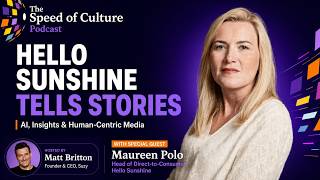
Maureen Polo, Head of D2C at Hello Sunshine, talks about the company's strategy of turning content into products and community. She explains how AI is reshaping the creator economy, why women now want entertainment over aspirational content, and how shows like Daisy Jones & The Six become retail lines and brand partnerships.
Chapters
Today we're thrilled to be joined by Maureen Polo, the head of direct-to-consumer at Hello Sunshine, the Reese Witherspoon-founded media company that aims to produce stories that highlight and celebrate women. We're here at CES in Las Vegas. Maureen, so great to see you.
So great to be here. Thanks for having me.
Absolutely. So CES is, it's interesting because it's really become kind of the hub of content innovation as well. I mean, it's called the Consumer Electronics Show, but might as well be called, you know, the content show. Yeah. Because all the big players are here, the studios, the distributors, et cetera. Tell me about your experience at CES and what you get outta coming here every year.
Yeah, you know, I skipped CES last year just because we were so busy in the business priorities and I realized being here this year how important it is to be here for our business priorities. And it's about content creativity, it's about connection, and it's about understanding our consumer.
Yeah.
And I feel like there's no better place to actually understand how quickly our world is moving than being here. So I'm getting so much out of just meeting with partners and hearing what they're excited about or what their challenges are. I love to see what we're doing behind the scenes in real life, you know, talking to TikTok as an example. Yeah. We've done so much in— we only just started on TikTok about a year and change ago. I've only been at the company for 2 years. So really seeing what we've been building with them and everything we've done with them has been really viral, but seeing sort of like where we can— where we're going with them, retail, in the retail commerce space in particular. Yeah, we get into that. So we're just really excited to see some of that. And then sitting— I was just on a panel with a group of, you know, executives from, you know, from Audible and from Lionsgate and from Snap and, and from, you know, Heartbeat. And just sitting with people like that who you have similar perspective but have a really different way of showing up, I think is just— is so much fun. So I'm so happy to be here.
Yeah, absolutely. And what are some of the common themes for 2024 that you're hearing about that are on the top, top of mind for people in your space?
Yeah, I think so. Some of the common themes, you know, this doesn't feel that new, especially because I just spent a decade at Fullscreen, which was a next-generation media company focused on digital creators. But I think everybody talking still about the human-based, creator-based ecosystem and continuing to tap into them in really smart, you, you know, probably data first, but also creativity first ways.
So that— For the creator economy overall.
It's just, it's just blo— when I entered the creator space, I think as a 40-year-old woman and a lot of people around me in the more traditional media realms were like, what is this? This is gonna be a flash in the pan.
Right.
I said, this is not a flash in the pan. And I think now, you know, 10, 11 years later, the fact that we're still talking about that is a growing trend. Is mind-blowing to me because it was so doubted back.
Well, and it's not just the creative space, isn't just one thing, right? It's a culmination of so many different trends. You have Millennials and Gen Z who are attached to their phone, so they're, they're the mobile devices all the time. They love short-form content because they're shifting away from a lot of traditional viewing methods. And people have always been inherently more interesting to follow than scripted characters. We see that through reality TV, which is like the earliest Yeah, I get the creators, right? And all the way through.
So I think all those things combined and then coming back, bring it back to tech, right? Yeah. The science behind it. Yeah. All of the algorithms and everything are prioritizing human-based storytelling. Yeah. And so if we're here as storytellers who are trying to be focused on how to, you know, I don't want to use the word capitalize, but to really leverage the tech ecosystem, it's making sure our human-centric stories that are commercial feel really authentic. And so I think it just comes full circle. That is an opportunity. And then, I mean, I'm sure everybody is talking about AI. Yeah.
Is AI something that scares you, excites you a little, both?
You know, it's interesting. I have this debate with my 15-year-old, or almost 15-year-old, all the time. She is, she's really anti-AI because of authentic. Really? Yeah, which is wild, right? And she's in a school environment where they, it's so taboo. You know, kids are getting kicked out of school environments because of leveraging it. And we talk in my house about, about the— if you do it, if it's human-led, if you're leveraging it to get a deeper understanding of the human connection, if you're doing it in a way that is honest and with some— I don't want to use the word policing, but like when you're really— when there's some guidelines and parameters that are put in place, I think that we have to, we have to tap into it and we have to sort of immerse ourselves in it.
100%.
And I get excited about it and about what it does to be able to give my team more time to be more creative. And so we're looking at, we're looking at tools that help us do just that. I think as a, when I think about even what we do with Suzy, when we deeply understand what our audience needs, wants, and how we can serve them better, and then thinking about how we can then give the consumer the opportunity to serve us with what we're learning about how to serve them and how they can be part of creation and fan creation in particular with AI. I love the opportunity to give the fan the opportunity to take a piece of IP from Hello Sunshine and personalize it. Yeah. And then share it. I just think that there's so much opportunity around it. 100%.
And so. And there's rights issues and a lot that needs to be sorted out.
For sure. And by the way, I work at, you know, a massive entertainment company that has built, it's a purpose-driven, mission-driven company. Hello Sunshine is about changing the narrative for women. And we have to be thoughtful and careful about how we help women own their IP and how they are represented and tell their stories and own their stories. Sure. And how, We just had a crazy entertainment industry-changing strike, right? And a lot of the conversation around AI was part of that. And I think you can be really careful and smart and protect, you know, our talent and protect the IP and protect ownership and still be playing in the space. And so I think we have the opportunity as a company like Hello Sunshine, Hello Sunshine, which is so mission-driven, which is so values-driven, which is so people-first, and puts people first and still be leaders in, in innovation.
And at your size, you have the ability to be nimble too. Yeah. And take advantage of that.
We could keep testing, learning, and, and growing. And again, because of some of our, our, our community really started out of our book community with Reese's Book Club being when Hello Sunshine was started. Um, Reese built a scripted business. Yeah.
Tell us what, for those who don't know, explain what Hello Sunshine is.
Yeah. The company. Yeah. So Hello Sunshine is a modern media company, a next generation media company that was designed for women, to put women at the center of every story. The goal of our company is to change the narrative for women, is to tell stories that authentically represent them where they see themselves in the content. And I think for Reese, it started with this idea that she— to change the stories, you have to change the storytellers. And she was being fed roles and scripts where she just didn't see herself in them, and they didn't really depict how she saw other women and the people around her. And so she built this company to sort of be—
Be the change she wanted to see.
And we've expanded so much in the last 6+ years beyond, you know, we now, we have an unscripted division and a kids and family division, but also the side of the business I run, which we call direct-to-consumer, which means lots of things to lots of people. But at our company, it's all of our owned and operated channels sit under, you know, my purview. It's marketing and strategy and business development. It's our, acquisitions. So we acquired The Home Edit 2 years ago, and Reese's Book Club sits under my purview. And then in agency, Solar, which is really the marketing engine that fuels all the marketing and creative work that we do at Hello Sunshine. But it's also the work we do with brands because if you wanna change the narrative for women, you have to change the commercial messaging. I've, again, my daughter at home that I just referenced who's almost 15, she sees more commercial messaging every day than she sees anything else. Yeah. And so for us to really truly change the game for women, We have to be partnering with brands to help them change the narrative in terms of the stories they tell about their brands and about the way they see women. So I think that the company is built truly to be moving at the speed of culture, to be able to leverage technology and storytelling to really shape the way women see themselves and the way the world sees women today and forever.
And you're producing a variety of different content, some which is more well known. I believe you produce The Morning Show, which is on Apple TV, which is a great show, and many others, right? What, what else did you produce that we might know about?
Yeah, um, so we produced Daisy Jones and the Six on Amazon, right? You love that show.
It was amazing.
You— one of the things we love so much about what we did with Daisy Jones, it started with our Reese's Book Club IP, right? Taylor Jenkins Reid, who's an incredible author who's been part of our community from day one. Um, we, you know, Reese and Sarah Hardin, you know, the, um, CEO of Hello Sunshine, read the book, loved the book, knew the story. We look for stories where women are the heroes of their own story, but in an unconventional way, and saw this opportunity in Daisy and in this really rich IP to tell a multidimensional story. Beyond that though, the ability to tell a story that was so broadly appealing to not just women, but to men, to multiple generations— Music fans, everything. Music fans, the convergence, which I think we're going to see more of in the future state of of entertainment and fashion and music. That was really how we created this trifecta of superfans on Daisy Jones. But then also Amazon was an incredible partner to sit in the rooms with and build this with, right? We had so much opportunity to produce. And I'm speaking on behalf of my partner Lauren Neustadter, who leads the scripted side of the world. But she'd tell me stories of what it was like to be in the room building that show for years, producing it. But then on the side of the world that I oversee, being able to take that IP and take the content that we were producing in partnership with Amazon and then build social content and storytelling and immersive experiences for our superfans.
Engage the audience, pull them in.
Yeah. And it, it was, we were doing such a great job of partnership and building and growing our Daisy Jones community that some of the talent said, hey, Hello Sunshine, can you produce our social content for us around this? And it just became You know, we, everything we did for Daisy Jones went viral across TikTok and Instagram, which is our two primary vehicles, at least for today. And we just kept seeing the audience grow and then the viewership grow and then the community grow and the superfans who were creating their own micro communities around what they loved around the music, right? We created a band. And so that is a cultural phenomenon that started with the book that leaned into, it was from costume to music to the way that we showed the multidimensionalness of the different types of women that you see inside Daisy Jones. So that's an amazing example of the way that we work the Hello Sunshine flywheel and some of the great work we did. I think another good example that sort of dimensionalizes the way that we think about content development for women, but how it can be broadly appealing is Surf Girls. I was at a dinner last night here at CES and the men at the table brought up Surf Girls, an unscripted series that we just produced. And they were like, oh, I love the story of these badass girls and what they're doing. Yeah., you know, some of the more traditional, you know, surfers who have largely been, who've all been men. And it's not about this female narrative that, you know, is just, it's earnest and it's compelling, competitive, athletic content. And it's just been so fun to be part of something that really is changing the game for women and also building culture at the same time.
Yeah. And so in terms of the business model, so someone will read the book and say, okay, this should be turned into a show, and then you will fund the creation of the show before it's bought by Amazon? Or like, how's that work?
Yeah, it's— we don't— we usually— there's a few different models at play. I think, um, the way that it generally works is we will, you know, work with— we'll find an IP. Sometimes it's not a book IP, but we'll find IP, um, and we will, you know, get the rights to that IP, and then we will start developing what it could look like, the scripting that we spend the time doing that. But we will take it to a partner before you go into production. Yeah. And we generally— that's most mostly what the model is today. I think that we're all exploring so many new models post, you know, obviously post-strike, but more so post all just the changing landscape of that's consumer-led. Um, but I think that the largely our model has been to really think about what our audience, what's gonna serve them most, and also what do we fall in love with? You know, for us, so much of it is where we really feel like our audience expects us to be, but in an unexpected way. And then we know what partners want what from us for the most part. We are so fortunate that we get to work with all the streaming partners. And again, I'm speaking on behalf of Laura and Nusatter and Sarah Rais, who sit in those worlds, and I work super closely with them. But they know when we're talking to Netflix and we're talking to Amazon and we're talking to Apple and we're talking to Roku, what are their— white spaces? What do we need? What do they need from us for us to serve and super serve them? Their audiences. Yeah. And I think one of the reasons I feel super grateful to be at a company like Hello Sunshine in a post-2023 world is we bring an audience to the table for those partners.
So you have a broader Hello Sunshine audience that you've created. So when you create new stuff, the Hello Sunshine audience goes with you. Yeah.
Right. And honestly, when our partners are building their marketing plans to bring this content out into the world and as they're developing their trailers. And they lean in with us. We're part of the marketing strategy. And we're talking about, what does our community want? How do we make sure that we're leveraging the Hello Sunshine community, the Reese's Book Club community, the Home Edit community, who are also super focused on culture and entertainment, and just our entire ecosystem? We start programming around how we're going to super serve our audience way before the show is ready to be out in the world and viewed, right? And then— or film. And then as we— they're out doing their marketing, we're also telling stories that work together, that play off each other, that tease each other. And when we feel like, oh, this is what our audience— we really own this on the Hello Sunshine side because this is what our audience is going to tap into this and they're going to go take it and make it viral. They'll lean in on us to do that work. And then oftentimes when we say, oh, this feels very IP first, you should take that out to the social ecosystem and then we'll hopefully find the magic where we come together. Right. That's, that's our model. And not many companies can say that when they're going and selling a production. Oh, you're also getting a 16 million women that we reach every single week growing every day.
So is Hello Sunshine a consumer brand that people follow and know? Yeah. Is that the platform on which this audience lives?
Yeah. And I think that's what I got so excited about coming here running direct to consumer was helping people understand that Hello Sunshine is not a production company. We are, we are a direct to consumer brand. Such a unique model. Model. It's such a unique model. There really isn't one that exists like this. Um, and I think where Reese was so smart to build a company— yeah, she's at the helm, so the quality, the level of what she stands for and what this company stands for is very clear. But we are evolving way beyond that, and we're, we're bringing this massive media to the table with our high-quality production capabilities and our knack for understanding what's going to really work. And I think it's an opportunity because the world's, you know, constricting around us and you have to bet on what is going to be successful. And, you know, dollars and budgets are, you know, everyone's going to— content's not going away. Entertainment's not going away. Of course, my kids and the next generation consumer that, you know, so well at your company, they want more content. They want— they're voracious consumers of creative creativity and content. But budgets are reducing, right? The world is changing. Yeah. And so you know what you're getting when you work with Hello Sunshine. It's not a question anymore. And, um, that's—
building audience is key because if I'm a streaming platform, then maybe I can get new subscribers, you know.
And yeah, we're in conversation sometimes with Apple or Amazon or Netflix or whoever when we are saying, hey, guess what we're seeing within our community there? They saw this in the first episode and our community is telling us how much they loved what was going on in this, the, this character's closet. Yeah, let's lean in to the fashion story, right? Or we are seeing this consumer who we didn't expect to be watching this show. We should be building content or talking to talent, right? Creators and influencers that tell that story because you and I aren't going to tell that authentically. But they are here and they're coming here and they want more of it. Let's go do that. And, you know, most companies have to lean into their own insights. But now, and we have a fandom that has been been paying attention since the day we announced we're going to— we, we bought the rights to the script, or we're going to be producing this with our partner. And that's, that's gold. And that's why insights are so important to us.
Yeah. And was it Reese's, um, star power that allowed you to galvanize this audience? Was that sort of like the spark of the whole thing? Because you mentioned Heartbeat. We, we spoke to them on our podcast in the past. Ty Randolph. Yeah, amazing. Exactly. So amazing. Very similar with Kevin Hart's audience, and it's such an interesting model. Is it very similar where you leveraged her star power, her audience, to start to get that flywheel going?
Yeah, I mean, I think what, um, Reese and I just talked about this, and Sarah Harden, we were talking about how they started the company. Yeah, Reese, of course you see Reese is involved in this, and she's built such an incredible brand around herself and a massive audience. But what I think is so incredible and is We are— when audiences come to us, they are coming to us for Reese, but equally. We have data from our insights engine that we're doing with your company that they're coming not just for Reese now, they're coming for everything else we do.
Yeah.
I have worked for a lot of celebrities.
And that's what you want, 'cause that's far more scalable.
Yeah. Yeah, I've worked for other celebrities and celebrity companies. That takes forever. To build. We're 6 years in and we are seeing that our audience is saying, we love her, we want more her. We're so glad she's attached to this. But this— there's so much at her heart.
Well, she wasn't in Daisy Jones and the Six, right? So it's like, there you go.
Right. And again, like the legacy, her legacy, this business was built for that exact reason. This isn't just about this one incredible, inspiring woman. It's about all the women that want to see themselves, that want the stories that, that are told. To reflect them, right? And it comes down to women also don't have time. They're— we know this, we know this from all of the research that we do, and the insights we have is women have never been more burnt out. Women, you know, the paradigm of choice, like they want, they want to come to us because they know what they're going to get from us too, and they come to us for joy. Some of the insights that we're seeing right now that we're so excited about is how 2024— we keep calling it the year of fun It's, I think it was 73% of our audience is what they want this year, what they're seeking more of is fun, you know, not self-empowerment. Right. Not more success.
I, I, I think it's a byproduct of the scary world we're living in right now. Yeah. The headlines, the, the polarization of our country, the geopolitical climate. I think people want escape on entertainment. They, they, and that's where fun probably lives.
100%. Yeah. If you were to ask me like, what do you think is like the biggest consumer trend for women right now? They want to, they wanna laugh. Yeah. They—
Travel's a big thing too. Travel's a big thing. Yeah.
You, people come to Hello Sunshine, so it's like 77% come for entertainment, 74% come to laugh.
Right.
To find that positive moment in the day.
Yeah.
And that's driving a lot of our expansion and our innovation.
Yeah. You'd mentioned TikTok and you've also mentioned commerce and TikTok has had— Yeah. In 2023 made huge strides in the,, you know, social commerce space. I, you know, tell me about some of the initiatives you're doing in e-commerce, because I would imagine that's another huge commercial opportunity that you have.
Yeah, I think, um, from an e-commerce perspective, right, we're really thoughtful and careful in terms of how we're starting to expand the Hello Sunshine consumer brand IP. Um, so we're looking and playing in that world as Hello Sunshine, right? Um, I can't speak to— there'll be a couple of announcements.
Okay, fair enough.
In the new year that you'll, you'll see. We're excited about. I think when I think about commerce, the brand that we're most focused on exploring, testing, and learning is The Home Edit. Are you familiar with The Home Edit? I'm not, no. Okay. So Joanna and Clea were two women who both moved to Nashville around the same time. They got connected by friends. They were both LA transplants that moved to Nashville, who they were, they were both entrepreneurial women who were obsessed with organizing. They built this organization business where they were going into people's homes and helping them organize. Clea had come from a background in PR and fashion, so she had a lot of celebrity connections. She wanted to go in and organize a few celebrities' homes. She ended up in with the Kardashians, and she's organizing these amazing, incredible houses.
And that's a huge thing on TikTok too, organization videos.
I mean, we built the category. The Home Edit built the category. We, um, that was a couple years, like, I think we're talking 4 years ago. Reese saw them. They had less than 100,000 followers on Instagram.
She just stumbled upon them on Instagram or something.
I've never met someone, I don't know if she ever sleeps.
We all know people like that.
So many ideas, so much inspiration. Right. And she sees things and she will just say, hey, do you, you know, what do you see in this? And then our team will go and look and I'll go and look, my colleagues will. And we say, there's something really magical here. She She found this, she thought it was magic. We, the company, started a relationship with them where it started more as an advisors with them. Like there's something special here you need to build out beyond, you know, just Instagram. They started to grow and scale. They— Hello Sunshine produced a YouTube-first content series that they— we had AT&T come in. AT&T is a great partner for Hello Sunshine. They generally, when we were about to do something, they want to jump in first and do it with us. They were like, "Oh, we'll get behind this." So they helped produce this YouTube series. This YouTube series became what we pitched to Netflix or what Joanna and Cleo, The Home Edit, really pitched to Netflix. We weren't even that involved in the beginning 'cause it was really just us mentoring them. They get this show called Get Organized produced. And now all of a sudden these organizers who are sort of going into celebrity homes but also going into everyday people's homes, they become TV stars. They also now start, you know, talking about launching product lines and people want to know where, what did, I love those shoes while you were organizing. You wear those all day. What are those? Right? So now they're doing this, this e-commerce affiliate linking and they don't even know what it's called. They just start doing it. Right. Anyway, long story short, fast forward 6 years, they're almost 9 million followers that they're reaching on a weekly basis. They have a massive product line at Walmart, at The Container Store.
I was thinking Container Store.
The Container Store was one of the first partners, but organization materials. They built a category. It's a category that didn't exist. Now there's massive communities of organizers that are literally demanding us build new products for them.
And the thing about it is like, it's like feng shui. It's like it changes how you feel. I mean, we all know like if you have a desk that's organized, you feel like you can work better. So it's not just how it looks, it's how you feel.
I have neurodivergent children and it's to, you know, to get my kids to really like lean into their brains and like really get, you know, take the advantages they have and really power them is getting a like clutterless space. Right. There's never— women are burnt out. They don't even know where to get started sometimes. Just having space.
And consumerism is everywhere. And then consumerism is everywhere. Yeah, people are buying everything every day. Amazon, one-click shopping. There's just so much stuff.
Yeah. So this business has quickly turned into an entertainment business, a product business, a content business.
Awesome.
And they're also inspiring all these other entrepreneurs. We're launching next year into the, in the kids space. We've launched luggage with Walmart this year. We've launched, we're launching categories inside Walmart that I can't speak to yet that are going to redefine 100-year-old categories from two—
Are those licensing arrangements?
These are licensing arrangements. Right.
Where you do the marketing and then somebody else does the manufacturing.
And— Yeah. And, you know, the reality is, as we've broadened this, you know, organization category, consumers just want it all the time and right now, and they don't want to leave their house for it. So we're really looking at what are some of the other ways that we're broadening those, those commerce experiences. How do we, how do we own that relationship with the customer? Doesn't mean that I have to own the distribution, but it means how do I get them buying by creating content for them that gives them the opportunity to feel like, oh, I need that now, right? Yeah. How do you make clear plastic bins something you need right now? How do you make it the lipstick in a marketplace where, oh, it's just a quick pick-me-up that makes me feel really good about what I do, right? Well, you give them an opportunity to see what the outcome is and how, what it feels like. And that's the opportunity to sort of take creativity and build commerce off of that. And we're seeing a lot of success with what we're testing and learning, and we're going to start to use some AI testing this year to see how— very cool— how do we, how do we scale that more quickly and how do we take some of those learnings and we start to build. And then product development-wise, there's going to be so much opportunity for our fans and our organizers that we reach to sort of co-create with us and give us guidance around what else they want to see. So that's a really good example. And yeah, it's across all the different retail spaces. It's in-store, it's physical, it's digital, it's on social, it's virtual. We are looking at expanding into virtual experiences where you don't have to get— you don't have to be in someone's home, but we can be organizing with you and then you're shopping and buying right in those moments.
And we talk about partnering with brands like AT&T. Do you just have a network of brands that have bought into your audience and then you're coming to them with different opportunities? Like the Home Edit YouTube series, or are they coming to you and saying, this is what we're looking for, and then will you produce around that?
It's a little bit of both, I would say. Ally Bank and Saks Fifth Avenue. Yeah, we know them well. Yeah, they're awesome. And they're— they've been really forward-thinking when it comes to branded, you know, brand-funded content. And I think that's another growth area that—
Yeah, because you talk about the economic challenges of streaming companies, et cetera. The money has to come from somewhere. At the same time, big brands are struggling to engage and reach consumers. So it kind of makes sense that it's always a balancing act of, is this a commercial? Is this really something consumers want to watch? And that's—
Right. And that's sort of what happened, right? Is Ally sort of came to us and said, well, you're Hello Sunshine. You're in the business of helping entrepreneurs and female-led businesses grow, scale, you know, have a platform. We, we're a business a bank that's really focused on empowering females. And so how do we build something that is really meaningful in the entertainment space that really serves the needs of our consumer, but also really serves the needs of the Hello Sunshine's mission to change the narrative. And so we developed, and not we, my partner on the unscripted side, Sarah Ray, and her amazing team developed this show where it's almost like the, I'm a super Shark Tank fan. So my wife, Ali, is, it's like the Shark Tank for women and for the best, for a better way to explain it, right? And We're finding these incredible female entrepreneurs who have incredible products and then retail partners and talk about commerce and distribution. They're like, oh, we're, we're gonna help you get this, this distribution platform, right? So that's—
you give them marketing, audience awareness, commerce.
And then all of a sudden this business that was essentially scaled and amplified by Ally Bank and Hello Sunshine is really seeing how Ally Bank is really getting behind females, right? That's an incredible model. That's one way to work with us. Another way from a brand perspective is AT&T is a really great example of a partner that came in with us early days. They were actually one of the original investors in Hello Sunshine. They saw the opportunity pretty early and they saw the white space. So they invested in us before we were essentially sold to Blackstone in the last, you know, year and change, 2 years. They tend to see when we innovate, they want to be part of it. So when we launched Home Edit when we said this is something big here. This is a human-based D2C brand and it's an entertainment brand. They're like, I see it and I see the need for women. I see the opportunity. Let's get behind that, right? We recently launched Shine Away, which is our first cross-company, cross-IP immersive experiential event that we hosted in October in LA. We were going to go out and look for a few partners who really were going to help amplify the stories we were going to tell on these stages and in these rooms and experiential centers. AT&T said, don't take it anywhere else. We want to be in this with you in a meaningful way. We want to show up in the same way we have with you guys. And, you know, I credit Kellen Smith and her incredible team at AT&T to say, this is how we're going to lean in authentically with Hello Sunshine to do it. And so they have this long-term relationship where we just kind of— they come to us with what their latest brand agendas are and we come to them with, well, here's what our agendas are and here's how we can make 1 1 5. And then there are some examples where we're just doing, you know, campaign-based work. Being at CES in the last few days, it's been amazing because we're sitting in rooms, you know, with other— I'm sitting here with CMOs and, you know, CEOs talking about what their needs are and how they need to show up differently for some of their customers. And then we're talking about, oh, well, this is how we're doing this with our customer. And then, you know, we're walking away with here's our next steps and here's what we should be building together. And those might be more campaign-centric because it's serving a very immediate need because everyone's here talking about, future state, but also immediate needs. Yeah, probably reflective of the market that, of course, reference just 5 seconds ago. So anyway, I think that we have a, we have a few different ways that we partner with brands and we sort of lean into like, what do we know their customer? Now that we know more about their customer, what do we think that customer needs from us?
Yeah, what are the unmet needs that you're uniquely set to deliver on?
And we've never been more focused, I think, in our industry on performance. And really what— once we nail the creative, how do we make sure we are really going to drive the results?
And then whatever the metrics are, whatever the metrics are.
Yeah. So that's— I also really get excited about how we can, we can build with partners in the way that partners need us to build.
Yeah.
And that's rare. You know, I came from a massive media company most recently where it's an incredible company, but, you know, it's at such scale that you bring what you have as an organization to the table.
Yeah, that's, that's what I was thinking. Build together. I was thinking, as I hear you talk and kind of go through all the things that you're working on, a lot of people who we have on the Speed of Culture podcast are people who, you know, they oversee a company that sells toothpaste and they're just pretty linear focus. How do I sell more toothpaste? Brand extensions, what we're doing. But you are doing so many different things in the course of this conversation. You basically span the gamut of what almost anybody in the marketing, advertising, media space would do. And you're doing it all. Yeah. How do you manage your time? How do you know where to focus? How do you prioritize? Because there's only so many hours in a day and this seems like an organization that can go in so many different directions that it's probably as much about what you say no to as what you say yes to.
1000%. Yeah, I, I don't think I've ever said no more. As an executive who has had to grow and scale—
I'm glad you said yes to the podcast. I did.
I'm happy to be here. But we, we don't wanna work with everyone under the sun. Yeah. You know, we really want to build authentically and meaningfully. And we know that when we do that, our partners come back and we do more in more meaningful ways. So it happens, our, our growth and our scale and our revenue metrics all grow in the right way. We, we say we do, we do a lot, but we do the few things that we do really well in that we need to be where the women are. So we have, we have to expand across all the different platforms and ecosystems, but we're not just gonna be there to be there, right? We haven't, I'm a super fan of what's happening in the gaming and the digital innovation space. I have two little boys who spend every second begging me for time on what they call tech, right? Which is they wanna be, wanna spend more time on Minecraft. Yeah. Or, you know, my, my older son who's 10 is still begging me for more time on Fortnite. Right. And I am like, you have to earn that. Yeah. You have to do all the things.
It's great bribery. Right.
That's great.
Exactly. The ultimate.
But we are not there yet because our audience that we're super serving isn't, we have so much more to do in some of the places we are right now. Right. We are, we're not there. Do I think we'll be there in the future state?
Absolutely.
Yeah. But right now our focus and our growth, there's so much opportunity in, in, in the places we're going, right? Audio is a good example that we've been— we've had so many companies pitch us to create your own podcast. Hello Sunshine brand perspective, like so many and so many incredible, impressive partners. And we've just been really thoughtful and really strategic about what we're going to do from a Hello Sunshine brand perspective. You know, Home Edit, we launched a podcast last year with Sony called Best Friend Energy. That was very specific for that brand, right? But when it comes to the Hello Sunshine IP, we do represent a lot and we do a lot. So what are we going to do in audio and how are we gonna show up in a way that is really smart, really innovative, and gives women what they need and doesn't put more on our audience's plate?
Yeah, this is very calculated.
Calculated, right? So we will have some exciting news to share soon in the audio space, but we've been building it for, I've been here 2 years and change, for 2 years I've been working on that piece because we gotta do it really right and we have to do it in a way that our audiences show up. They want to be part of it. It needs to— they need to expect it. They are going to expect something from us, but it's going to be unconventional. They're going to see something a little different. And also, we didn't— that wasn't the priority, right priority for us 2 years ago. Yeah, it's right now. And, you know, so that's how we sort of prioritize with what is our— where is, where's the white space that only Hello Sunshine can bring the consumer on the journey? Yeah, you know, What is our— where's the deepest penetration with our customer? That's, that's where we lean in because that's how we see that. That's when we see the results, you know, and for us, we're shaping culture without having to just capitalize on some of the trends and, you know, we're setting and shaping them. And so we don't feel like we have to jump on the bandwagon. We feel like we can be really intentional. And that's how we really ask ourselves the question, do our audiences really need this from us? Do we really feel like we're, we're going to win? And most importantly, is this a story we're in love with? Is this content we wanna produce? Is this a distribution vehicle that we really feel like we're gonna engage our audiences in a way that makes them feel like they're part of the experience?
Sure. Totally. So shifting gears as we wrap up here in terms of your career, I mean, you, you've had an awesome career and you've worked at a lot of big companies like Condé Nast and Meredith and Hearst and, uh, Fullscreen, which became Warner Brothers. So, and now you're in a much more entrepreneurial role. Yeah, sounds like, than working at those big organizations. How have you been able to remain relevant and kind of evolve with the pace and ever-changing industry to allow you to be in this position you're in now that maybe can be wisdom that we can impart on some of our younger listeners?
Yeah, I mean, I'll say, you know, it's funny, like I've been in all these really— I've been at so many of these really big traditional media companies, but I was always the first person to raise my hand for something new that didn't exist before. And I'll age myself here, and this is embarrassing. And my daughter is always like, Mom, don't talk about print as innovation. But when I started my career, print— no media divisions had print business, right? And so much of the rich storytelling was print at the time, right? Digital didn't exist. Yeah, I'm that old. Me too. Makes me feel better. Yeah. And so I raised my hand and said, I want to go start this print. Division. I want, I want to tell stories that can be deeper than a 30-second spot, you know. And I, I raised my hand to do it. And so here I was at a traditional creative agency. I was at Young Rubicam and doesn't even exist anymore. I think it changed its name 4 or 5 times in the course of my career.
It's like the ever, ever never-ending acronym right now.
Exactly. And but I raised my hand for that, right? And then I moved over to Time Inc. and I worked for The guys at This Old House. This Old House still exists today. I, you know, I can't even fix a window getting stuck in my home. Like, I really am not the person that can be a fixer-upper at all.
Right.
But I was so excited by these men who had a show on PBS who were authentically going into people's homes and transforming them. And I— digital just happened and I said, oh my goodness, This is a brand that is, you know, these men are endearing. They're doing things that make lives better. They are reaching people in a magazine, on PBS. They have— we should be in the moving space. So I was sitting there as a young person saying we should be building new movers content, like we should reach new movers. So it was just in a role at a company that was very print-centric doing innovation. And again, I'm aging myself. I was probably 25, 20-something years ago.
And then it's about initiative, isn't it?
It's about initiative. Yeah. And it's about opportunity. I, I, I'm curious. I love to understand people. I love to understand how things, how communities are built and how and what drives passion points and how our world evolves. And so I've just always raised my hand at big companies for something that felt a little bit daunting. I think one of the things that most women I see don't like, you know, they're nervous to take risks. And I don't know if that's just women or just people in general. Right. But I know for me, a lot of my friends who were growing up in the industry with me, they were sort of looking for that straight shot up to the top, like, oh, well, if I do this and I do this, yeah, I'm going to get the corporate ladder. And, and maybe that's anyone, right? But I felt like, oh, I don't see a clear path to the top. I see a clear path of understanding human behavior and entertainment, entertainment evolution. And I see a world where it's changing so dramatically. So if I can just keep taking roles where— sure, I love leading people, I love to lead, I love to work with people, I show up for my team, but I can keep leading people if I keep learning. And I'm not afraid to learn and make a mistake. I call them great mistakes. If I, I say to my team all the time, I say to my kids, please make great mistakes. Yeah. Meaning make the mistake, understand the mistake. Learn from the mistake and, you know, take those learnings into the next thing you do. So my advice for my younger version of myself, or what I say to my daughter every day, is just raise your hand if you're curious, if you're interested in something, don't be afraid that it's going to hold you back. Yeah, just keep learning. And I have taken all these jobs where I can just keep learning and growing. And I think as I get closer to, you know, a half century, I still keep— I think I keep growing and learning and I have entrepreneurial jobs because I'm curious and I understand human behavior and I love the changing media landscape.
Yeah. And there's no better place to explore that than here. See, you're in Vegas.
Yeah, there isn't.
So thank you so much for joining us.
This is awesome today.
Thanks for having me. Yeah, we covered so much and it's, to be honest with you, most of that I didn't even know about.
Oh, I love that.
Yeah. And I think our audience is gonna really enjoy learning about Hello Sunshine and all the great work you're doing there. So it's been great.
Awesome. Well, thanks for having me. A super fan of yours for a long time and, um, I'm just excited to be here and partnering with you and your team.
Likewise. Thanks for saying that. And thanks for joining again. On behalf of Susan and the Edwy team, thanks again to Maureen Polo, the head of direct-to-consumer at Hello Sunshine, for joining us today. Be sure to subscribe, rate, and review the Speed of Culture podcast on your favorite podcast platform. Here from Vegas at CES, and we'll see you real soon. Take care, everyone. Bye-bye.
More from Matt




MikMak’s Rachel Tipograph on Consumer Spending, Retail Media & Holiday Shopping Trends



Jaguar Land Rover’s Charlotte Blank on Luxury, Purpose & Experiential Storytelling



