iHeartMedia’s Gayle Troberman on Audio Growth, Podcasts & Consumer Insights
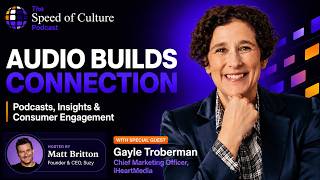
In this interview, host Matt Britton talks with Gayle Troberman, Chief Marketing Officer of iHeartMedia, about her unconventional career path, the cultural DNA that made Microsoft endure, the dynamics between agencies and brand clients, and how those experiences shaped her approach at iHeart. Troberman recounts the rapid re‑branding of Clear Channel to iHeartMedia, the importance of breaking down agency‑client walls, and the value of data‑driven creative testing (Suzy) versus the “HIPPO” (Highest‑Paid Person’s Opinion). The conversation pivots to the explosive growth of audio—broadcast radio, podcasts, and social audio—highlighting why listeners gravitate toward live, human‑centric content. Troberman predicts continued audio expansion, especially through immersive experiences in the metaverse, virtual events, NFTs, and QR‑enabled fan engagement at live shows. She stresses that marketers often chase shiny new formats instead of iterating on learnings, and that deep consumer insights about why people listen (connection, learning, entertainment) are essential. The interview closes with personal reflections on slowing down, valuing human connection, and a call for more research into the motivations behind audio consumption.
Chapters
Up today, we're gonna be speaking with the Chief Marketing Officer of iHeartMedia, a dear friend of mine, Gail Troberman. Gail, thanks so much for joining today.
Ah, it's great to be here, Matt.
Yeah, it's great to be here at the shiny iHeartMedia podcast studio. It's— if you've never been to iHeart's office, it's just really just an incredible sight on, in terms of how they built this out, and it really is a great reflection, um, of the iHeart brand. Uh, we're gonna quickly start by getting to know a little bit about you, Gale. Uh, you were Chief Creative Officer at Microsoft from 1996 to 2012, where we worked closely together. Uh, and then you moved on to become Chief Marketing Ideas Officer at IPG Media Brands. And then finally, for the last 7 years, you've been here at iHeartMedia as Chief Marketing Officer. So tell us a little bit about your career journey and kind of the ups and downs through that.
Sure, I always answer this question with, you know, some people, I think particularly younger generations today, are all about planning. Career plans, you have these visions, you know, you're gonna do this to get there to do this. I've always been of the stumble, stumble well, follow great people and what interests you, and bizarrely, that's how I kind of landed, I landed in advertising because I loved all of the TV shows about it. I thought it was fascinating, you know, Bewitched to Mad Men to—, back in the day, 30-something, and looked like a cool creative field. I had to check a box on college apps. I was like, oh yeah, advertising, that sounds fun, right? And, and that kind of landed me in that major. Um, uh, you know, I was in, uh, I started in the ad business in New York, then we did a pitch, was, wasn't my finest work, but I guess we were smart enough to not win the Microsoft business way back when in the PR days. And, uh, and I met, uh, Mitch Matthews and, and a couple other people from Microsoft through that. And, and, you know, in the early Microsoft years, they stayed in touch, and they convinced me to take a big leap, right, which was I had barely been on the internet, and I was moving to Seattle, where I'd been once, to work on the internet and figure out initial marketing campaigns for all the internet startups at Microsoft, which was crazy fun.
I'm sure, and I was kind of with you through some of those trials and tribulations. I read recently that Microsoft is one of only one of the top 20 companies most valued in the world that still is one of the top 20 today from 2 decades ago. So given what you've experienced at Microsoft, what about that organization has given them such staying power?
Yeah, you know, you know, the, the Microsoft culture, you know, particularly, you know, I'm obviously been, been gone for a little bit of time, but it was just such an amazing culture of make big, bold bets, resource them, and measure them, be willing to walk away from the ones that aren't working or don't pay off. But so much of, I think, in this moment of the great resignation and people changing jobs, one of the big secret sauces at Microsoft, and I'm sure you experienced the good and bad of this, was they just, the company hired crazy smart people. Passionate people who were driven at all costs. It wasn't an easy culture by any means. It could be brutal on any given day because everyone was so passionate and really wanted to win.
Especially during the Balmer era, right? Yeah. Because things changed.
Yeah, and the early Bill era. And it was a culture where you could, you passionately fought for what you believed, and the people who got to decide decided, and you made the bet, and you all locked arms, played it through and, you know, you measured aggressively and learned, but it was a culture of, you know, hiring really great people and empowering them. Right. And, you know, I think those are core principles. You know, I know I worked for, with Satya very closely for a minute in one of my errors there. And, you know, and he very much is of that, you know, Microsoft culture. It may be a little, a little probably kinder and gentler than perhaps it was back in the day. Yeah. But it's still about crazy smart, passionate people, resource them, empower them, and then hold them accountable and have clear certain distinct goals.
I think Microsoft's been so laser-focused on their core business lines. When they veered off, whether it's like with the Zune, remember that? Or so many products that just like didn't— Windows Phone— that didn't really hit. They weren't afraid to shut it down and keep moving.
Yeah, even as much money as it was invested in some of those, right? And they're really hard business decisions, right? It's always hard for all of us sometimes to walk away.
Yep. And then you moved over to IPG, and frankly, I don't really remember your time at IPG. How long were you there for, and what was it like? Why was it brief?
What was it like being on the agency side of things? Because that's Yeah, well, I think it was kind of the best worst job offer ever, right? It was Matt Siler, you know, who I love, called me, and we had just switched agencies, so we had basically just fired them and hired Publicis, and I had just resigned. I just left Microsoft. It was a regime change. It was time. Sure. And I was trying to figure out what to do with my life, and Matt called me, and he's like, hey, we've got this media pitch. He's like, "You just let us go." He's like, "We really aren't set up well for this." He's like, "We're probably 5 of 5 in the race right now." He's like, "What if you came and consulted and ran this giant global media pitch for us and did everything you would have bought?" And he's like, "I'll get out of your way. We'll give you the resources. Come reimagine it." How did that work out? And I was like, "That's kind of crazy." And there's a great story with it. My next door neighbor at the time was Ben Gibbard from Death Cab for Cutie. Of course, huge fan. And he had just had a big breakup with, with Zooey Deschanel, and, and we were both now suddenly home all day and he was playing like 3 sad notes on the piano that would ooze into our loft. And I was like, I got to get out of here. And so I was like, all right, I'll come consult. And, and it was really fun being on the other side of a pitch. It was an amazing learning because it looks so easy when you're judging, of course, versus what it takes to really restructure and reimagine integrated marketing around the globe. Yeah. Across multiple agencies in an ecosystem. And we did some really good work. You know, IPG won a won a chunk of that business, not all of it. And so then I— we turned it into a real job, but it wasn't quite a clear job. So I think, you know, after a while I had shaken things up a little bit and realized it's easy to judge the agency world. It's very hard to live it.
And I think all clients should work at an agency before they sit and pitch, so they know how much work goes into it. And what's interesting in running an agency for so many years is often you win business not when pitching the idea that's really best for the client, but the idea that's best for the pitch. We call it the pitch candy. It's like, yes, this idea actually will move their business, but is the end buyer really motivated by long-term business success, or do they just want to get in one of the trade publications? Do they just want to get a promotion? Like, is there— and right or wrong, it's a lot of the ways how the world works. And now you have some people at companies that really do believe in the business, but other people, it's like, am I really passionate about toothpaste? Or actually passionate about being able to get a promotion so I can get a bigger house for my family. And when you weigh those two things, those motivations, sometimes it impacts what you pitch.
And it's even, you know, I talk about this a lot in the, in the audio landscape today, right? Because audio, you know, radio is obviously huge, been around for a while. You know, podcasting is relatively new and now there's, you know, social audio and, you know, we'll talk about, you know, we're getting into metaverse ideas and things like that. And, you know, we've seen it through the years, you know, growing up in early digital, like there's always new shiny stuff. Of course. And I don't even know that it's as conscious for decision makers in the ecosystem, but our human bias comes into play all the time, right? That's why products like Suzy are important, right? To gut check our biases more frequently and faster because as humans, like, we think the coolest idea, it may not even be as malicious as, "Now I want to get in the press," and I'm, you know, it's honestly like, I think a lot of times it's very hard as decision makers, marketers, whether you're client side or agency or media company, like, you want You want to do the cool stuff. Yeah. You go into marketing not to, you know, not to crunch numbers, right? Most people go into marketing because it's kind of cool and sexy and creative. And then, you know, you want to do the new next things and yeah, they matter. But like you said, sometimes it's the tried and true, the most efficient. We have so many clients who rely on broadcast radio because of its scale and efficiency and it just drives growth. And you can optimize.
Predictably. Yeah. There's no benchmarking if you're doing something new every single time. So the agency ecosystem, in a lot of ways, people who are on the brand side sort of are coded to do those new things, to be innovative, when the reality is if you do a campaign, what you should really do is do the campaign again with the learnings that you have from the first time and keep getting better and better at whatever that thing is, and you'll own that thing. Where a lot of times people will do, oh, I'm gonna do a podcast, it didn't work, eh, let's move on to the metaverse, let's move on to this. It's so true. Because I think, you know, obviously we live in a world of, you know, instant gratification and, you know, big companies have to report every quarter and that's just kind of the world we live in and that's kind of the balancing act. So, and, you know, speaking of sort of a balancing act in the new world, I mean, now you are here at iHeartMedia, which has been kind of, you know, a company that, first of all, I've always been fascinated with just because, you know, in starting MrYouth, you know, MTV was sort of like the company and Bob Pittman started MTV and I followed his career so much through the years and then once he came here and kind of created this new conglomerate iHeart, I really had my eye on it. And then you joined and I had, you know, even a greater interest in the company. Tell us a little bit about your journey here at iHeart. Sure.
It was another one of those great job offers that wasn't a job offer. You know, I love a good challenge. And I had met Bob when I was at IPG, and he called me one day and I'd— again, I was sort of between things. I was going to take the summer off, chill on the island in the Northwest, figure out my life. You know, someday I'll get to that. And, and he called me comes to me and he goes, hey, I just took over here as CEO at what was then Clear Channel. And he said, I kind of have this crazy idea. I want to float it by you. I'd love to pick your brain. And he's like, I'm thinking we need to reimagine the company and the brand. And I'm thinking maybe we should change the name of the company and really rebrand from Clear Channel to iHeartMedia. And he's like, we've got the iHeartRadio app and the iHeartRadio brand, and it's really catching. And he's like, and he walked me through kind of his initial thinking. And he's like, so he's like, I'll call you at the same time tomorrow. He's like, give me a day of your brain and see what you think about it. And then I called him, did some work. The next day I talked to him and it was kind of what I love about iHeart. And, you know, Microsoft had become very big and deliberate and, you know, with a lot at stake globally and we'd become slower. And Bob, you know, one day he's like, yeah, I thought about that. We debated it. And he's like, I think I'm going to do it. He's like, will you come figure this out for me? He's like, I'm going to get everyone all of my leadership team in a room on Monday, and this was like a Friday, and he's like, and we're going to go through a list of every decision, every place our brand appears and what we do. Keep it, change it, get rid of it. Wow. And we went through a spreadsheet of thousands and thousands of line items as a leadership team, made every decision, ballpark costs. What is it? The sign on top of the building, the billboard here, the elevators in these offices, every single place the brand appeared. And we made a decision. Boom. And we rebranded the company in something like, I think, 6 weeks.
And that's how brands are made, right? And it was super fun. Every detail matters. They talk about how people answer the phone or what the business card said. Every little touchpoint becomes the brand. And sometimes you have to get in the weeds. Yeah, exactly. And knowing you, I know that you like, you know, being strategic, but you also like getting your hands dirty. You like talking to people.
Yeah, I like a line job because that's where you learn, right? Of course. You know, like, you don't want to do it every day, but you got to get in, particularly I think when things are new. You got to get in the weeds. You know, one of the questions you had asked me was like one of those big, you know, big learning moments. And when I first took over advertising for the whole company at Microsoft, one of the— like, it blew people's minds. And to me, it was the simplest thing in the world was there had been sort of the agencies of record pitching one big, massive, important B2B campaign for 18 months. They just kept coming in and nothing was landing and they go, go back, go back to the drawing board. And we just weren't marketing., like, in a big above-the-line way. And I just started and it was like my first week and, you know, so they brought in some new agencies and the existing agency and they did a pitch. And the existing agency stuff was fine and it was kind of like we have to go to Bill and Steve and everybody on like Tuesday, so I guess we should go with that. And I was like, but there's genius over here in this other idea. And they're like, oh yeah, but—
Is that Crispin Porter?
No, it was actually JWT. Oh wow, okay. It was the B2B campaign for the corporation, you know, all of our business products. And I was like, but there's this genius, but, and they're like, oh, but it's not right for us and they don't get us and it's too off. And I was like, but we have a whole weekend. And I remember talking to Mitch, the CMO at the time, and I was like, well, what if I got in a plane and went and worked with them all weekend? Monday we'll come back and if we're there, great, we can bring both ideas. And if we're not there, no harm, we'll go with the, you know, the okay idea. And I was like, you know, and I'm so glad I did it. You know, it's funny, I'm still great friends with Rose and Ty. You know, and like, but the thing that, you know, you know, I see a lot in my career and a lot of the best moments I've had is we broke down the walls between agency and client. They let me into the workroom. We stayed up till midnight, 2 in the morning, you know, then they'd be like, go away and come back at 8 a.m. and then rip it apart and then give us some time. And we worked together for 72 hours.
And that's— I mean, that is how it should be, right? I mean, we talk about a lot the HIPPO, which is the highest paid person's opinion. And my experience is is like agency goes behind these walls and they come up with this incredible idea, or what they think is incredible, and then they pitch the hippo. And during the meeting, the hippo shows up late, sometimes they're on their phone, which is driving me crazy, right? And ultimately it's like, your champion's like, I don't know, it matters what the hippo said, whoever that is. And a lot of times their decision isn't made on data, it could be based on what their daughter told them when they were dropping them off at school, or a TV show they heard, and that's gonna basically jade their opinion in a certain direction, which may or may not be right for the business, but there's no data behind that decision.
Exactly. You know, and I think that's the challenge we all have with creative ideas, right? That's why creative testing, I think, is so interesting, right? Absolutely. It's such an interesting space. We're doing more and more of it with audio. We're trying to do more and more of it with you guys in audio because, yeah, I think, you know, just getting a gut check. Like, testing doesn't tell you all the answers, but it prevents the disaster, and sometimes it helps you find a spark of genius you might have missed.
Absolutely. I'm often asked, what's the ROI of research? I'm like, well, what's the ROI of a seatbelt, right? It only matters if, if you really need it, right? So, uh, so we're going to get into our next section, um, called Culture Watch. Uh, as you know, this podcast is called The Speed of Culture, and Suzy is a tool that really enables insights and research at the speed of culture. And we're going to ask you a couple questions, one of which you've already answered, so we're going to jump into the next 3. In classic Gayle Troberman form, she's making the rules up as we go along, and I can roll with the punches. So I'm going to ask you 3 questions and we'll touch upon the one that you just answered as well. And just answer quickly in 30 seconds, you know, how you feel about this particular topic and then we'll dive in. So question number 1 is what do you think the fastest growing industry will be in the next few years and why?
Sure, you know, I mean, I think audio is growing crazy fast, right? On a huge base, which is kind of the exciting part of it. Obviously I'm a little biased. Of course. But, you know, broadcast radio is still reaching 9 out of 10 Americans because it's it's live and it's human and it's unscripted and it's not just a place to hear music, it's a place to actually have a conversation and not be alone. It's a really bizarre business most people don't understand, so that's why, you know, I think with all, you know, with the world's music in my hand right now on this phone, you know, we've certainly seen people listen in their cars, they listen on their smart speakers, they listen on their laptops, on their phones, on their watches, on TVs, but we're seeing listening continues to grow and to more types of content and I think I think in this moment where, you know, I think the promise of digital was it was gonna unite us all in a kumbaya, lovely, the world is connected, and God, what we're seeing is the opposite, right? It's brought out our worst selves. It's become a place that makes you feel worse, not better, and, you know, I think that's why you're seeing a lot of content that's live and human, companionship conversation media seems to be growing everywhere, and I think that's why we're seeing this massive new podcast rocket ship grow, right? Podcasting is really similar. You know, it's human, it's mostly human and unscripted. The other thing, you know, I think that's fueling audio growth, particularly podcasting growth, is I think, you know, and you were kind of way ahead of the understanding millennials, right, with Mr. Youth back in the day, right? I think we really as marketers missed, and most content companies misunderstood millennials, right? We kept talking about short attention spans, But we forgot we were talking about the most curious, interested, educated generation in the US. Connected and educated and interested, right? So we were going, "Oh, 140 characters, you can only handle 15 seconds of my advertising," and yet they're listening to 3-hour podcasts about revisionist history.
They're binge-watching 20 shows on Netflix.
Exactly, entire seasons of smart, interesting content. So You know, that's why I think podcasting has really filled a void, particularly for that millennial audience, right, who are smart and interested and curious. So I think we're gonna see audio growth just, just continue. And wireless headphones— now your ears are connected to the grid. Yeah. So think about that. We were consuming most all our content through our eyes, and now our ears are connected. Yep.
So it's like extra bandwidth. I mean, people think AirPods are gonna be the future of the smartphone. Phone. Yeah. And, you know, it's the one wearable device that's really taken on in a true utilitarian way. Exactly. For consumers, I mean, I forget they're in my ears. I wear them the entire day and it creates such utility I never thought, and it's all based on audio. Yeah, exactly.
Exactly. So that's why, you know, I think audio is destined for continued growth and sustainability, but most marketers don't understand much about it.
Yeah, exactly. So that's the opportunity. What do you think will be the fastest growing product or product category in the next few years?
Yeah. You know, I think, you know, I think the obvious answer of the week has to be metaverse. But what that means, I think it's, you know, it's like saying internet back in the, you know, mid-'90s. What exactly does that mean? I think we're all in a learning phase. At iHeart, we've made some announcements. We're going to take a lot of the success we've had in our events business So we do, you know, hundreds, hundreds of events from, you know, the big jingle balls to small local events, music events, concerts. And we're going to start bringing events into the metaverse so we can connect fans and artists and brands in some new ways. And we're going to start learning. So we're going to go where consumers are. We've announced we're going to go into Roblox. We'll be creating iHeartLANDS where now we can bring, you know, without all the physical world costs, right, of what it costs to put on a giant festival. Or a live event in the real world, I think we can do even more interactive and more engaging opportunities that bring the fan closer and closer to the artist.
And the community around the artist.
And the community. Yeah, yeah. Absolutely.
Exactly. And I know we were talking just before this interview just about, and this was your answer for the fast-growing consumer trend, you talked about basically the connection of real world and digital. And I was talking to Rich Kleiman, another person we interviewed for the podcast who runs 35Venture, and Kevin Durant, France, uh, business partner, and he said the same thing. He basically said, you know, and, and you guys both share that you guys play in the entertainment world, him more in the sports, although he does the music, and you and music. And there's this notion of being able to go to a physical event, being able to experience in the metaverse or digitally, being able to buy tokens that kind of get you access to both, that there's something there that's going to be unlocked, that's going to be transformational. And the question is, when's it going to come out? What is it going to be? How is it going to be adopted, etc.?
Yeah, yeah, exactly. And, you know, I mean, creatively, it's just, you know, in the virtual world, like, who knows? You know, I think everything's possible. I think blockchain commerce is going to be real. But, you know, and I think we're learning fast on the NFT space. That's the other place we've been dabbling. Yeah. So when you go to an iHeart event, you know, you want to engage with the event and, you know, a simple thing like a QR code. Who would have thought QR codes would become so important? Well, the pandemic, right? But they're so accessible. Yeah. Now that we know how to grab menus. Right. Right. We were shocked. We did. We did our first sort of QR code, sort of virtual upgrades, rewards experience loyalty program at the iHeartRadio Music Festival last fall. And, you know, at the daytime stage where all the like hottest pop stars who are just breaking are there and it's tons and tons of teens, I was shocked, right? People entered, they walked through like a QR canyon, they did all their step and repeat pictures on their way into the venue, and about two-thirds of the attendees grabbed grab the code to enter to win upgrades, to get free stuff from brands, to get a meet and greet with one of the artists. So all of a sudden, you know, what used to be like somebody on a mic trying to scream from the stage into a loud arena and crowd, now everybody can engage and participate in that show and that experience. We have a two-way communication going now at scale. Yep. With a simple thing like a QR code.
And that is such a sea change from— from when we were growing up, it's like, whatever you want to hear, you either have to buy the cassette tape for $20 and beg your parents for it, or it's whatever Clear Channel or whatever it was called before that was playing on heavy rotation. And that was it. Like, you didn't really have the choice at all. And now it's the complete opposite, right? And there's just limitless choice. And within that limitless choice, you have communities where you feel comfortable. And you feel this artist represents who I am. And if you can layer— They're tribes, right? Yeah, they're tribes, right. And if you can layer, and podcasts I would argue is another point of that. And I think if you can layer on top some type of currency, currency, community, content, accessibility all together, then you have people that basically are getting such value in an area where they feel connected in this world that's become increasingly polarized. It's so true.
Like, when we do so much work with the artists, their fan armies are insane. I know, right? And you're right when you say podcasting, 'cause like a super fan of Stuff You Should Know, right? They listen to every episode over and over again. They subscribe, they follow, they show up at live events. Tense, right? The podcasters are becoming the rock stars building these new communities of listeners. It's so true. And it's so different than like, you know, those of us who might be like, watch a movie or a TV series. Like there is something about the connectedness of these like audio tribes and they want more, right? They're like rabid. And so that's where things in the virtual world, right, become so exciting. Absolutely. Yeah.
I was in Las Vegas for a Philadelphia Eagles game and I'm a huge fan and I I listened to this podcast that a couple guys do about the team, and I was with my friends in Las Vegas, and I like all of a sudden got starstruck with this random middle-aged dude, and I like ran away from my friends, they're like, who is that? I'm like, oh, he's the host of my favorite Eagles podcast, and they were making fun of me, right? But, 'cause you think I was running towards like Michael Jordan.
But you feel like you know those people, right? A lot of our broadcast radio personalities too, they always say it like, you know, people ask Ryan Seacrest all the time, like, dude, like, you know, you're on Idol, and you got your own morning show, and why do you get up every morning, 'cause you can do 3 hours of live radio, like it's a hard gig. And he's always like, because those fans keep me real. So they're like, you know, he'll be standing with Katy Perry and people will come up trembling like, Katy, can I get a picture? And they'll be like, oh Ryan, would you take it? How's that cold you had? Right? And they feel like they know these people, like the intimacy is so different in audio, I think, than the artifice of sort of screens and video.
Yeah, I wanna wrap with one point that you were talking about earlier in terms of, so you flew to New York to meet with Ty and Rosemary who are two great creatives who are at JWT and then went to go found their own agency. And there's something about this idea that you loved, right? And there was this safe idea. And ultimately, like, in our industry, everyone throws around the word insights, right? Insight this, insight that. But to me, you know, an insight is something that, like, to me, the most insightful person ever is Jerry Seinfeld, right? You watch all the shows and the humor was from that, whatever that one funny insight was. —people quiet on the wall. It was an observation, right?
Yes.
And it's like, it's an insight that hits with people. It strikes a chord inside them and makes you really want to open your eyes to whatever story they're trying to tell. Was that—
is that why you thought it was special? Exactly. And they, you know, we did end up working with JWT on that campaign, and we ended up winning a Cannes Lion for that campaign. It was a B2B campaign, and the insight was really simple. The world was changing because of technology, and all of the different siloed divisions of a company were finally going to have to work together, right? And this is going back, you know, whatever, 10, 12 years ago, right? But the marketing and IT, right? Yeah, and the CEO and HR, and all of a sudden technology was bringing these people together to force them to make decisions, to plan, to communicate, and that was the insight, like, we have to break down these walls, and the campaign was called Because It's Everybody's Business, business. Yeah, I remember that. And when everyone is a stakeholder, you think about things really differently, right? And it was a genius campaign. It was also beautifully done, but it was really hearing from those different sides of the business, and those were conversations that weren't happening. They were very, very siloed, and we kind of gave voice to them at the scale of national media in a really unique way.
And often, you know, to wrap this, like, often the insight, a great insight, flies in the face of a shiny object. So true. Right? Like, so like the idea is not the medium. The idea is the insight and what you build on it. And then it could be—
Don't buy the thing, right? Have an insight, understand something about your customers, and then figure out which things deliver on that insight, right? But yeah. And that's hard work.
It is. Anything that's hard work, people will skip over to the fun stuff. It's just that's how they are. And that's why I think you see a lot of not great work out there. Companies that don't know how to continue to build their brand, et cetera. And, you know, it's definitely an opportunity. So this has been amazing. We covered a lot of ground. One final question I have for you is, you know, in a fast-paced world and you're going East Coast, West Coast and running around with iHeart, what do you feel is worth slowing down for, for you? What's, what slows Gail Troverman down?
What slows me down? Age. Other than that, you know, I think one of the things, you know, COVID was such a learning moment for all of us as humans, right? And, you know, one of the things that, you know, I got I got back into was just, I think, some of the amazing content that's out there. So like, you know, you were talking about the ability to just slow down and actually watch a great film, right? Actually pay attention and watch, not multitask, but actually stop and consume really quality content. So that's something I, you know, I wanna keep doing. And similar on the life side, like, you know, I think, you know, we say we all missed human contact and connection. Like, I think what we really, like, at least in our lives, what we miss so much wasn't like all the travel and the giant events and stuff. They're fun, but like what I missed was just like a few friends and a great meal and that conversation, and we're really trying to keep that and bring that back. Just, right, just people you love at a dinner table having a meal and a conversation and making time for that. You know, that's the most important thing.
So to wrap things, in our last episode with Rich Kleiman, partner and co-founder of 35 Ventures, influencers. We talked about how brands should partner with influencers to create content. And Rich wanted to know if consumers thought that influencers should be more like rent an ambassador for a brand or if they should be kind of there for the long term. Because what we find a lot is that brands kind of stick to influencers for a short period of time and go on to the next thing and they don't really be connected the same way that maybe Michael Jordan was connected to Nike. And, you know, so— but what we actually found is that some consumers actually thought about a quarter thought that influencers should stick with brands for a short period of time and others should be for the long period. So, kind of indifferent there, but that was a great question, Rich. But while we have you, Gayle, what is one question you want to ask consumers on the Suzy platform about anything that we touched upon today?
You know, I think, you know, I'm obviously passionately curious about all things audio, so I'd love to learn more from consumers about You know, and I have kind of my theories and certainly a bunch of our own research, but I'd love to hear more from consumers about, you know, why they listen, right? Why they, you know, why they listen and, you know, why they listen to different types of content. Like, I'd love to get to that idea of, do you listen to be connected? Do you listen to not be alone? Right. Right. Are you listening for the content itself or the ideas? Are you listening to learn, to be entertained? You know, I think I think it's, it's really interesting to keep understanding why, why people connect to, to audio in a different way, and it impacts our brain differently. So the more insight I get about that, the better we are at iHeart.
Yeah. And talking about consumer insights, I mean, since we— Susie has not had an often since the middle of the pandemic, although we get together as much as we can. But when I'm at home in my home office working and it's completely quiet, I cannot work. Yeah, these are right, something on, just so I— and that gets me in sort of a flow state. So I think for For some people, audio is distracting if they're multitasking. For me, it kind of turns my engine on.
Yeah, it's like kind of what's the role of audio in your life, right? Right, right. Well, we will definitely dig in.
Well, Gayle, this is, as expected, this has been amazing. So I just want to thank you again. Also thank you for being a huge part of Suzy's journey and success, being a member of our board of directors since really the beginning, and it's been incredible to work alongside you, and we wouldn't be where we are today without you. So thank you for that. Awesome. And this should be great. I'm really excited for audience to hear this. So on behalf of me, the entire team at Suzy and Adweek, I just want to thank everyone for joining. Until next time, we'll see you on the Speed of Culture podcast. Take care, everyone.
More from Matt




MikMak’s Rachel Tipograph on Consumer Spending, Retail Media & Holiday Shopping Trends



Jaguar Land Rover’s Charlotte Blank on Luxury, Purpose & Experiential Storytelling



