Levi’s Kenny Mitchell on Heritage, Culture & Modern Brand Growth
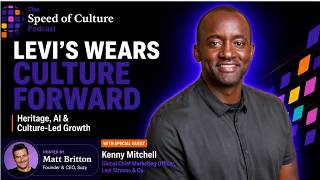
Kenny Mitchell, Levi's global CMO, explains how the 170-year-old brand stays relevant to younger consumers through celebrity collaborations like Beyoncé and Nike while maintaining deep ties to subcultures. He uses a four-quadrant relevance model and CASE framework to craft unexpected narratives, and leverages D2C data and AI for hyper-personalization across channels.
Chapters
Up today on the Speed of Culture podcast, we're thrilled to be joined by Kenny Mitchell, the global chief marketing officer at Levi Strauss Company. Under his leadership, Levi's has launched bold collaborations with cultural icons like Beyoncé, Shibuzi, and Nike, redefining what it means to be both a heritage brand and a cultural trailblazer. Kenny, so great to see you.
Matt, I'm so excited to be here. Thanks for having me.
Absolutely. Really looking forward to this. You know, one question that came up constantly as I was prepping for today's chat is, you know, Levi's is such an iconic brand in American history, and you are in the position where obviously you need to hold on to that heritage and trust and brand equity pillar, but at the same time move the brand forward for tomorrow's generation of customers. Talk to me about balancing that as a CMO and stewarding this brand forward.
Amazing. So that's a great place to start, Matt. I'll say that it's a real privilege to have the opportunity to work on such an iconic brand that has an incredible rich heritage, but also is relevant now both from a pop culture and a subculture perspective. So one of the things that's been really, you know, energizing for me as I've come on board here at Levi's is we started the early journey of kind of establishing the brand brand's point of view and perspective as we're thinking about the next chapter. And where we kind of aligned on was this idea that Levi's as a brand has, if you look at it across history, has always been and continues to be kind of this, this uniform, this unofficial uniform for people that are driving progress and are game changers that are move makers, people that are, that are driving their world forward. And you, you've seen that from, generations before, and you see that in present time. So we've kind of landed on that point of view or perspective as a bit of a sharp point. And what it allows us is it actually allows us to pay homage to our past and our history. And it's very, very unique to our brand while look towards the future and, you know, showcase and highlight the ways that the brand is incredibly relevant right now for consumers around the world. So it's a big-time privilege. And one of the things, Matt, that is particularly unique about the brand is that it is remarkably elastic. It's a highly, highly democratic brand. So if you were at Fashion Week this year and you would see Levi's with Sakai going down the runway, you could also, you know, so here we are, you know, in partnership with, you know, one of the leading brands from a fashion perspective, perspective, you also see us connected to deep subcultures.
Right.
And, you know, working with our partners with Nike as a launch of our Air Max 95.
Yeah, it also could be looked at as a blue-collar brand too. So it's kind of—
Absolutely.
Absolutely. Right.
You can look at us from a workwear perspective, from a Western perspective. It's a brand that's incredibly elastic and it's something that's, it's a fun thing. From a marketer's perspective.
Yeah, for sure. I know recently, and I've mentioned this at the outset, you know, Levi's has partnered with some major celebrities. And in the world where people are questioning like what makes a celebrity in the world of the creator economy, and you have people who are unrecognized to most people that have 100 million, you know, subscribers on YouTube. So we're in this sort of weird gray area.
Yeah.
But yet there's some celebrities like Beyoncé that kind of stand the test of time and is actually still a real Hollywood A-list celebrity. Celebrity even in this day and age. Talk to me about your strategy with working with celebrities, why it's still important for a brand like Levi's and where the creator economy fits in.
Absolutely. Absolutely. So I'd say at a, at a high level, Matt, one of our core, you know, strategies is to ensure that Levi's stays at the center of culture. And we, we look to do that in a myriad of ways because the brand is so elastic and so democratic. So on one hand, we show up very often adjacent to, connected with, and, you know, and outfitting some of the biggest icons in the world. So that's— Beyoncé is a great example of that. The work that we've done with Shibuzi is actually a really good example of that. And then at the same time, we show up very meaningfully in subcultures, as I've mentioned before.
Yeah.
And subcultures can come in the form of working with, you know, creators and influencers that have deep followings within, you know, their particular vein or showing up in areas that are relevant for our brand and, but actually have a deep kind of cultural connection. So when we show up, you know, try it with our, intent to be in the center of culture. We typically do it through the prism of fashion. We do it through the prism of music. We'll do it through the prism of sports and we'll do it broadly through the prism of like, I'd say like arts and culture is, as you know, Levi's is often considered this canvas for self-expression. So in those veins, Matt, those are areas where we focus on going deep into subculture. So it's just as likely you'll find us partnering with Colors, a music platform for discovering, you know, up and coming artists or the Boiler Room, which is, you know, it's a bit of an if you know, you know platform for people that are into DJs and house parties and music. And, you know, we, we, that, it, that's an example of some of the elasticity of the brand where we could, you know, show up with a Beyoncé and also be in the Boiler Room. And it actually makes sense because we're, we're a brand that has that, that type of elasticity.
How do you get conviction? Obviously Beyoncé is a huge investment, both for the brand and, and the capital that, you know, is required to deploy such a celebrity partnership. Like how do you gain conviction that this is right for our brand? I know it's gonna work. I, I, you know, I'm willing to make a big bet.
Yeah, so I'd say when we think about conviction behind like big ideas and big bets, I think there's two pieces that we, we think really deeply about. One is we want to make sure that it is kind of connected to our business strategy. And the second is we want to make sure that there's this authenticity and this relevance connected to the program, to the partnership, and the way that we go to market. So if I were to use the, the, the Reimagine campaign as an example, our business strategy, they're, they're pretty clear. One is around being in the center of culture. So this definitely, you know, checks that box. Another is around being a D2C first brand. So thinking about our direct-to-consumer business, our stores and our e-com channels. So, so much of what we did was really coordinate, you know, pretty meaningful and impactful commercial moments connected to the partnership to help drive that traffic, to help drive increased rate of sale around— I'm Yeah, items that were important connected to that strategy is winning with women. And, you know, this obviously squarely falls in that direction. And a third component of it is around, you know, like literally amplifying our global brand and global IP. And there are very few partners that have such amazing global relevance than what we did with Beyoncé. So from a business strategy perspective, check, check, check. Check. Check, check. And then when you think about an authenticity and relevance perspective, Levi's and Beyoncé have had, you know, been connected in some way for decades. She was a part of a campaign with Destiny's Child back in 2000 and 2001 with the brand, with our Super Loose product at the time. And, you know, had a bit of a relationship through some of our, you know, entertainment marketing team with some folks on her side from a, a styling perspective. So it was not a surprise that she had actually selected Levi's shorts to wear during her Homecoming film and her performance at Coachella. So there's been a bit of an authentic connection and brand fandom that were there. So you get those two ingredients and that gives you some good confidence that there could be a successful marriage.
Yeah, it's fascinating. So let's talk a little bit about the consumer. Obviously, the consumer and their tastes and behaviors are changing, it seems like faster than ever before. You know, what are the biggest shifts with the consumers and some emerging trends that you have your eye on heading into 2026 that you think are relevant to Levi's and its business?
Yeah, yeah, it's a great question. I, I'd say that one of the things that's been really interesting for our category is the speed by which, you know, trends from a style perspective are happening.
Yeah.
You know, it, it used to be—
What do you, what's driving that, Kenny, in your opinion?
You know, I think part of it is there are just so many platforms and ways that people are inspired and get and seek inspiration that, you know, your connection to style, to trends, to what may be happening in culture that may be interesting to you, you just have more access to it. And more frequent access to it. And culture moves more quickly now than it ever has. So, you know, you bring those things together and you'll have, you know, we talk often, particularly when we're looking at some of our innovation, you got the baggy trend that's happening in major ways. You got, but you also have the skinny trend that's beginning to come back. Right.
You know? I don't know which one's more in right now, baggy or skinny. I've seen both of them and bell bottoms. I know at one point—
Exactly.
Out of fashion, right?
Yeah, you got your boot cut fit, you got your baggies, you got your bell bottoms, you got cropped shirts and tops happening. But you also have things that are like very loose and flowing. So I think it actually on one hand creates a tremendous opportunity because there's just kind of so many fertile, you know, fertile options and opportunities from, a fan perspective. At the same time, it, you know, it challenges your ability to kind of like focus behind big bets that, you know, we, you think are gonna be successful in the marketplace.
Does Levi's, or I know this, you know, precedes your time at Levi's, you were at Snap during the pandemic, which we could talk about separately, but does Levi's business get hurt during a period when, during a pandemic when everyone's home and, you know, everyone's buying athleisure 'cause there was that huge boom of athleisure brands, which I think has kind of cooled off a little bit. Is your business susceptible to things like that?
Well, I'd say, you know, first and foremost, it's a brand that's been around for 170 years. So it, it has seen many, many cycles and is a business that has been able to sustain itself and stick around and be successful. But to your point, Before I arrived here, you know, the experience with the pandemic, my understanding of it looking at the data is that like many apparel businesses and retail businesses, as folks came out of the pandemic, you have like a pretty big, you know, spike in consumption and activity that Levi's, like many other brands and businesses experience. And, you know, I'd say that, The larger point from a Levi's perspective is that, you know, when brand, when consumers are feeling times of uncertainty or times of challenge, they tend to gravitate to brands that they trust and brands that deliver quality and brands that kind of represent them in their identity. And Levi's has been uniquely positioned, you know, to be able to get through those cycles, to get through challenging environments because of the, the power of the brand.
Yeah, I think another broader shift, at least that I'm seeing, is at least in the workplace, and of course some businesses are still hybrid, but as people fully return to office, it just seems to be much more of a casual wardrobe approach where I think suits and ties seem to be going away, at least from this focus group of one. And I would imagine as people feel more comfortable wearing jeans into work, then there's more occasions for people to purchase your products.
I think you're absolutely right. I think there's a casualization of the workplace that's happening globally, frankly. And, you know, that just offers more options for our consumers to figure out what, you know, how they express themselves and how they show up. And, you know, it's been a great opportunity for the Levi's team to help, you know, to be a part of that.
So, you know, of course, your business has been around for 107 years, and one thing that has definitely changed is the way in which you garner eyeballs and attention. And right now that is done over the mobile device and in social media and in places like TikTok. And as you well know, and that comes down to stories and telling stories. So as a CMO, what is your approach to storytelling from taking the assets that is the brand and your products and some of these partnerships and bringing them to life through digestible stories to be shared where your consumer is?
So that's a wonderful question. And I think one of the things that is sometimes a bit of a misnomer is the importance and the power of storytelling. Regardless of how folks are consuming or getting exposed to storytelling, it still remains incredibly powerful as a vehicle to build brand love, to get attention for your products and your services, to, you know, to drive that commerce for your business. And when I think about our approach to storytelling, I think of it kind of through two veins. Like one is, you know, if you had a four-quadrant box of things with the axes being relevant and irrelevant and things being expected and unexpected, you wanna be in the quadrant of unexpected unexpected and highly relevant. That ends up being a part of, you know, you, you think about some of the best storytelling that you've seen, some of the brands that have been really sticky in, in, in terms of—
Like Martha Stewart and Snoop comes to mind as like a partnership that no one would expect. And that's relevant, but super unexpected.
That's right. That's, that's exactly right. So you, you wanna be in that quadrant. So that to me is like one of the first things that you need to think about is, you know, is, is, is it really aligned with our brand? Is it really aligned with our consumer? And also is it like unexpected? Is it something that's able to catch and garner attention? The other thing I think about is I personally use a bit of a framework, call it CASE. So C-A-S-E. I need to trademark it at some point, but it's a little bit of a framework that I use that's actually specific to storytelling. And it stands for 4 things. So it stands for creative, authentic, strategic, and emotional. So, as you're looking at storytelling, your first thing is like, it has to be interesting, has to be creative. You have to take a bit of a novel way in, and maybe it's driven by insight, maybe it's driven by the, you know, what's happening culturally, maybe it's driven by your specific point of view, but you gotta find a creative way in that, you know, to be interesting. Second is you wanna be authentic, authentic to the brand. Authentic brand. So something that is actually really true for you, but also authentic to your fans or your consumer base, right? So something that really connects well with them. The third is strategic. And I like to say that, you know, creativity without a strategy is art. And I'm not in the business of making art, right? It actually needs to be answering the brief. It needs to be highly strategic on what it is that you're trying to accomplish. And then the last is emotion. It has to make you feel something, you know? So that's something that you feel that could be inspiration, it could be aspiration, it could be joy, but it has to make you feel something. So if you have storytelling that is, you know, coming from a unique point of view or creative perspective that is authentic to your brand and to your consumer that is on strategy in terms of what you're intending to deliver and it makes you feel something, that is a good set of ingredients for strong storytelling. And Matt, to me, that is regardless of the platform. So whether you're talking about, you know, digital and native storytelling, whether you're talking about out-of-home or television, those components remain very true. And the brands that are doing that well are winning.
Yeah. You had mentioned earlier that, you know, your D2C business allows you to harness a ton of consumer data and along with it, consumer insights.
Okay.
How are you leveraging data as part of your overall role as CMO? And where does AI play into both how you leverage data and how you bring these stories to life here in 2025 where it's a buzzword you obviously can't escape?
Absolutely. We, you and I should put .ai after our names.
We probably should. Exactly.
Go out and raise some money. Yeah, so, you know, we're, we're, we're in a pretty privileged position to have like a, decent amount of data and understanding of our consumers and of our fans, you know, whether it be through, you know, transactions that happen, you know, across the business, whether it be through our loyalty program and how we leverage those insights for our CRM. And I think at the highest level, our data allows us to be more efficient and more effective with our marketing efforts and our spending. at the highest level. And, you know, when you think of things like AI, we've been leveraging AI as a tool to help us with things like personalization, help us with things like targeting, help us with things like content development and personalization kind of connected to that, helping with things like analysis and how we think about leveraging our insights to help help drive action, to help us, you know, frankly automate some things that are highly repeatable and maybe of high volume, but don't necessarily always need a human hand to guide. So, you know, we think about, you know, automation and enhancement of workstreams and also helping to drive, you know, some of the efficiency and effectiveness of our— Of our work. Our efforts and our spend is how we're using data and AI specifically in some of our working efforts. One example I often like to talk about, which is one of my favorites, is we're basically within our CRM. We are being able to do, I'd say, like personalization at scale. With a lot of our messaging outreach and it's all powered by AI. So whether it be, you know, the messaging, the copy, the imagery, the targeting, like so much of that is being leveraged through AI and we're seeing such improvements in impact across the business.
Yeah, I'm doing a lot of work on hyper-personalization as well. And it's interesting because it's something that we've been talking about in the marketing and advertising industry for so long, but I believe it wasn't until now where we can truly pay it off. Where if you have a database of customer records and you know information about that customer, you can use large language models to hyper-personalize messaging and deliver it to an individual based upon if they have a family, where they live, you know, the types of styles that, that they usually gravitate towards and really speak to them. And I think, you know, I often get asked like, what is the difference between say Gen Z and Gen Alpha? Like this new generation, I think this new generation is gonna expect that brands talk to them as an audience of one. And if you look at sort of the trajectory of demographics, you know, it wasn't too long ago we were talking about like the 18 to 49 demographic and now it's the demographic of Kenny Mitchell or Matt Britton. And I think that's fascinating to think about as a marketer.
Yeah, I think you're absolutely right. I think that, you know, the tools are available for us to be more and more personal. I think the expectation is that things will be more and more personalized. If you are a social media user, you don't even realize the level of personalization that's happening behind the algorithm connected to the content that you're receiving. And I think that whether that is on social media, whether that is on the streaming programming that you are exposed to, and whether that's connected to messages you might see from a marketing perspective or e-com experiences, I think that, to your point, will become kind of the commonplace expectation.
Absolutely. So I wanna shift gears a little bit and talk about you and your career journey. I mean, just looking at your LinkedIn and the places that you've served, it's like a dream career roadmap, you know, spending a lot of time at Gatorade and obvious, and NASCAR and doing a lot on the sports side and then going deep into culture, you know, places like McDonald's and being at Snap and leading its brand during the heyday of Snap. And there's obviously still a great company and serving on multiple boards. You know, when you look back at your career, I just have a couple of questions for you. First and foremost being like, what makes a great teammate? Like what, what has stood the test of time as things have changed that you look at somebody and you're like, that is a great teammate, somebody that I would want to work for me or I'd want, um, to work for them. And, and things that you really find valuable allowing you to kind of, uh, you know, reach your ultimate potential as a professional.
Oh man, that's, That's a heck of a question. I really like it. And it really resonates with me because I am a former team sport athlete, and it's a big part of my identity, a big part of how I see the world, and a big part of how I show up. So I'm a former point guard, and point guards are often, you know, like the coach on the floor. Point guard is, you know, part of your job is to make sure you, based on the talent on the team, Put people in their best position to—
Yeah, make everyone around them better.
Yeah, make everyone around you better.
Who's your favorite point guard of all time, Kenny?
Isaiah Thomas.
Yeah, I love Isaiah.
Yeah, that was my favorite point guard. Age myself a little bit.
I love the Isaiah growing up too.
You're not aging me at all. Yeah, when I played in high school and college, I wore number 11. Like he was my idol. But, you know, one of the things about being, participating in team sports is there's so many, like, valuable lessons that come with it. The notion of this preparation and practice and hard work and training and how you see outcomes on the, you know, on the court or on the field connected to that. Sometimes you are the leader, sometimes you are, you know, a follower or a team member, you know, making sure that you know and understand and digest, like, the game plan and the strategy and can actually go out and execute it. And also learn— learning to deal with success, learning to deal with failure, and learning to deal with people that are not like you and working towards a common goal. So, there, there's a bit of me to, to answer your question directly, that looks for, you know, attributes that I'm familiar with in terms of people that are good teammates. Good teammates, they put in the effort. Effort first and foremost. They are so willing to roll up their sleeves, um, uh, and, and, and, you know, and, and, and, and kind of apply their skill in, in whatever way possible. They're often selfless. Um, um, so focused on the, the core goal, but also have like a bit of selfishness when it comes to, um, leveraging their talent and their skillset and get, you know, and to the best of their ability. You wanna feel that fulfillment. You wanna feel like you are really contributing, but you also have this mindset connected to this common good and trying to get through it. I place personally a tremendous amount of value on, I'd say, authenticity, honesty, people that are forthright, people that are, you know, you build passionate relationships so that you actually can go through hard times together. And I put a lot of, I put a lot of value behind that. I want someone that is constantly curious and trying to learn, you know, 'cause, you know, whether it be in sport and you're trying to perfect a skill or in business and how quickly the world evolves, the industry evolves, the marketplace evolves, you just gotta have that natural curiosity and hopefully a desire to be great as a part of it. But that curiosity, which is— Yeah., which is critically important. So, so I'd say Matt, broadly speaking, I, I tend to think the, the principles connected to, you know, to sports, to being a good team member, to some of the attributes that lead to successful, like, athletic careers are very, very applicable to—
100%. I make those analogies all the time between things that happen, you know, on the court or on the field and what happens in the boardroom. I mean, there's so many correlations and it is ultimately about trust and teamwork and leadership and all those things that, that, you know, make you win. And I think, you know, that, that's— and, and obviously that, and learning from the losses and all those things. So, uh, yeah, speaking about, you know, learning from, um, you know, just those who have achieved a lot, when I look at your career and when I look at everything you've achieved, obviously you wouldn't have been able to do this and accomplish what you have without making some smart decisions along the way. So my final question for you before we wrap is, as you look back on your career journey, what are some of the things that you think you've done right, whether it's decisions you've made or areas that you've leaned into that have put you in a position where you are today?
That's a great question as well. So I, I'd probably say two kind of core principles connected to, to some of the things that I, I feel like I've done right. The first principle is I feel like in many cases in my career, I zigged while others zagged. I'd say the second is I got some really good advice early in my career about like really kicking ass at the current job that I'm in and how that actually can help drive success in the future.
So— Versus like always looking around the corner towards next.
That's right. That's right. So, the whole zig while others zag point that I'll give is when one, one of the better examples of it, when I was kind of mid-career at Gatorade on the Gatorade business. And I had a, a new CMO who had come on board, Sarah Rabohagan, who I, I love and is, is a friend and, and mentor of mine. And she had come from Nike and she had a, a bit of a vision for the Gatorade brand that she was they had this idea around like democratizing sports and kind of broadening Gatorade's kind of, you know, its surface area outside core stick and ball sports. You know, it's like if you, it probably brought in a little bit from the Nike, if you have a body, you're an athlete kind of, you know, mentality. So she had kind of challenged the business. So like to think a little bit more broadly and where's the next kind of frontier Gatorade should be thinking about. And I had an opportunity to kind of tackle that project and ended up focusing on action sports, interestingly enough. So skateboarding, BMX, snowboarding, et cetera, as kind of a really interesting frontier for Gatorade to play. It made a lot of sense because physiologically, kids are athletes, definitely are active a ton. Yeah. They're competitive in many ways, but it's also a bit of a lifestyle and culture as well, which you wanna be careful about how you bring a brand new into that space. So, so many of my colleagues and peers, you know, kind of came to Gatorade because of the connection to the footballs of the world, the basketballs of the world, the baseballs of the world, et cetera. And I'm like, actually, this new space is really interesting.
Yeah.
And it was a bit of a zig while others zag, kind of like moving into a different kind of unknown frontier, frankly, for a brand that's, you know, kind of known very well in the stick and ball space and moving into a space that I personally was not familiar with. I'm a former, as I said, college basketball player. So I wasn't a skateboarder or snowboarder myself, but really kind of ingrained myself in partnership with others into the culture, into the mindset, into the sport, the space, the, you know, the whole deal. And it ended up being a very successful program launch, many-year kind of campaign and initiative that, you know, I think others may have, you know, literally colleagues of mine saw it differently. Like, oh, that's, that's, that felt like a little risky or a little bit off the agenda. And I was like, no, this actually is really interesting. So there have been other pivots I've made in my career. I've, you know, you mentioned I worked at NASCAR for a bit with some really fine folks there. Those are things that almost in some ways represented a zig or a different approach.
Right, going outside your comfort zone.
Yeah, exactly, where others would zag. And that has actually paid off incredibly well for me. I can look back at some of these decisions and experiences I've had that paid off in the long run when I go to Snap and realize that some of the things I was asked to do and some of the experience I had there were actually relevant to some of the work I did when I was at NASCAR, just as an example. And, you know, when I come to Levi's, which, you know, is an amazing iconic brand, I'm able to marry some of the great work I did on the Gatorade business— With some of the learning and insights I had from working deeply in tech and social media from a platform perspective to help take an iconic brand and also make sure we're bringing it, you know, forward in a modern way as a marketer. So look, those, that kind of zig while you zag kind of choices and decisions have, yeah, I didn't even have the foresight to know that they would, but they've kind of paid off.
Yeah, you never know it at the time, right? And it all connects, you know, everything you were talking about in terms of being teammate and also kicking ass in your job you're in and just having your head down. And over time it kind of all comes together. I, I do think a lot of people right now see everyone else quote unquote killing it on Instagram and, you know, not having patience to go through the journey that you or I have gone through. And there's really no way around it, you know, despite what you might think or quick, you know, shortcuts to success. It, it takes a lot of time and a lot of learning and ups and downs to get there.
Yeah, yeah, you've gotta get those battle scars, you know, like you kind of have to walk that walk in order to, you know, to kind of confidently go into those, you know, those next things and do it on a foundation of experience and of strength and have a little bit of that, I don't know, that conviction that you mentioned earlier behind certain programs.
And some of that is just built on those critical experiences and some of those choices So to wrap it here, we always ask our guests as a final question if there's a saying or a mantra. I have a feeling that you have many, being a former athlete and obviously someone who is a student of culture, but what comes to mind for you as a saying or mantra that you think helps best encapsulate your career journey so far?
All right, so the saying or mantra that may help encapsulate my career journey me the most is this quote from Mike Tomlin, who's a football coach for the Pittsburgh Steelers. And he had this quote, "The standard is the standard." And the story behind it, at least where it got on my radar, was in the 2009, 2010 season with the Pittsburgh Steelers. They end up winning the Super Bowl that year and they're having a pretty successful season as they're going along, despite the fact that they're experiencing injuries to key players. So like their defensive captain, Troy Polamalu, he was injured and out for a bit. Their tight end, Heath Miller, he was injured and out for a bit. Even their quarterback, Ben Roethlisberger, was injured and out for some time. We're— despite that, the team kept on experiencing success, particularly during the regular season. So they're at a Monday Night Football game, they interview, you know, Coach Tomlin and was like, what, what's been the key to your, your success? And, you know, his, his, his answer was that, you know, with the Pittsburgh Steelers, they have a standard, standard of excellence in terms of how they prepare, how they train, how they, you know, have the attention to execution and how they, they, you know, kind of rely on each other to go out and perform. And, and regardless regardless of the individual, obviously very talented individuals, but there, there's a standard of, of excellence and expectation for the Pittsburgh Steelers for that specific position, whether it's defense, quarterback, you know, running back, et cetera. And, you know, regardless of circumstances, like the standard is the standard. And for me, the way that I've kind of translated that into, you know, the work that I've had the privilege to, to do is I've, I've had the privilege to work on really iconic brands and businesses, and many of which have an incredible standard in terms of their brand, their brand heritage, their brand history, the storytelling connected to it. And, you know, I have to, and myself and my team, we have to live up to that standard. We have to live up to that legacy. So we can't let good enough be the answer.
Or make excuses, which I think is so easy to do. Yeah, yeah, yeah.
We have a standard to live up to. I mean, when I was in graduate school, I studied case studies on Levi's and some of its iconic storytelling from the '80s and from the '90s. And so that's the, you know, that's the history and foundation that, you know, we are, you know, kind of responsible for moving forward.
And stewarding, yeah.
Yeah, exactly. So if that's the case, like the standard is the standard and we should be, be at all times aspiring to do the best work of our careers, particularly on the iconic brands that they've had a privilege to work on. And I've definitely held that as a mantra and a truism. And anyone who's worked on my team, if you were to ask 'em, you know, kind of one of the lessons from Kenny or one of the principles that he's, you know, had all of us aspire to, that's gonna be the one.
I love that. Well, it's clear you've set a high standard for yourself, your brand, your career. You've also set high standard for podcast episodes. I think this was a fantastic one and I can't wait for our audience to hear it. So thank you so much, Kenny, for joining today. It's been a fantastic chat and look forward to seeing your continued success, uh, with the Levi's brand.
Well, thank you. Really enjoyed the conversation, Matt.
Thanks so much. Likewise. On behalf of Suzy and I, we team, thanks again to the great Kenny Mitchell, the Global Chief Marketing Officer at Levi Strauss Co., for joining us today. Be sure to subscribe, rate, and review the Sneaker Culture Podcast on your favorite pod— platform. So next time, see you soon, everyone. Bye-bye. Hey!
More from Matt




MikMak’s Rachel Tipograph on Consumer Spending, Retail Media & Holiday Shopping Trends



Jaguar Land Rover’s Charlotte Blank on Luxury, Purpose & Experiential Storytelling



