Liquid Death’s Dan Murphy on Viral Marketing, Collabs & Creative Chaos
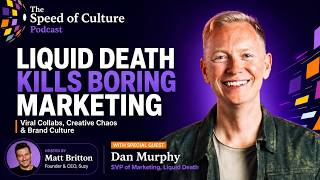
In this Speed of Culture podcast episode, SVP of Marketing Dan Murphy explains how Liquid Death turned a simple can of mountain water into a cultural phenomenon. He frames the brand’s rapid growth around three macro trends—health consciousness, sustainability, and a generational aversion to traditional alcohol marketing. The decision to package water in a beer‑style aluminum can created an instant shelf‑stop that leveraged the “beer‑in‑a‑can” visual cue, making the product both eye‑catching and conversation‑worthy. Murphy describes the company’s “entertainment‑first” philosophy: a comedy‑centric, in‑house writer’s room that produces share‑driven content at a Hollywood‑level cadence without agency fees. The team models its process on stand‑up and writer‑director dynamics, pulling in freelance comedians to punch‑up ideas, and measures success primarily by earned‑media impressions, social shares, and the correlation between high‑trust placements (e.g., local news, Jimmy Kimmel) and sales lift. He walks through high‑profile collaborations—e.l.f. makeup, Travis Barker’s enema kit, Tony Hawk’s blood‑painted skateboards—showing how the brand acts as both media partner and influencer, turning partner fees into revenue. The conversation also covers the brand’s hybrid publisher model, the strategic use of a Super Bowl spot to amplify organic buzz, and the nuanced balance between edgy humor and brand‑safe guardrails (no politics, religion, realistic violence). When asked about AI, Murphy says the technology is a useful design and compositing tool but cannot replace the cultural intuition required for breakthrough ideas. Distribution is expanding from Live Nation concert venues to sports arenas, big‑box retailers, and new shelf space, with a focus on trial in high‑energy environments. Finally, Murphy offers career advice: experiment early, produce your own content, spend modest ad budgets to learn paid media, and embrace failure as a path to mastery.
Chapters
Up today on the Speed of Culture podcast, we are thrilled to welcome Dan Murphy. Dan's the senior vice president of marketing at Liquid Death Mountain Water. Dan has been instrumental in shaping Liquid Death's success, leading campaigns that have gone viral, and redefining how brands engage with their audiences. Dan, so great to see you today.
Hey, great to be here. Excited for the fun chat.
Absolutely. I've been so looking forward to this. Obviously, Liquid Death is such an impressive brand, and what they've accomplished will be written about in case studies for years. And I have to admit, I'm I'm one of those who, when I first saw the brand, I didn't get it, you know, and I know many people are like, oh, it's a fad, it's gonna pass. Why has Liquid Death had staying power over these last couple years? Not just staying power, but the explosive growth that it's, you know, that's experienced.
You know, I think there's a lot of really massive global trends happening with or without Liquid Death, and we've created a brand that's just a massive sail that's caught a lot of them. I think first and foremost, we are a healthy beverage platform and, you know, I'm not trying to still, you, most of the audience I would imagine has heard of Liquid Death, but sometimes might not put all this together. We have, you know, Mountain Water, uh, competes with the best of the best out there, mountain source premium water. And it always infuriates me. It's like, well, it's just water in a can. Well, isn't Fiji just water in a plastic bottle? Like, isn't San Pellegrino just water in a plastic bottle or, or glass?
So, you know, you could say that about anything. You could say that about any luxury brand as well. Isn't a diamond just a rock?
Like, I mean, sure, sure. But yeah, but there's, there's something about, you know, that, that folks can at times be a little incensed that, that the ones that don't get it anyway. So yeah, we're there. We're the healthiest thing you can put in your body. Some good natural source mountain water. We then evolved to flavored sparkling. It's become basically a healthy soda. You know, we're pulling people off high fructose corn syrup, off of high calorie, high sugar stuff. And they can have, you know, basically scratch that soda itch and it's just clear, it's uncaffeinated. And then we emerged and went into teas, iced tea, similar idea, really low sugar, really low caffeine. So the umbrella of health is a great place to be right now. I think everyone is way more health conscious than they were 10, 15, 20 years ago. I remember when I was a kid, like Gatorade was healthy, like all that sugar.
Michael Jordan used to drink it, right?
It's a sports drink, right? So we, we got that going for us. I think folks are very environmentally minded. Sust— sustainability is a new consciousness that we have. And I thought I was doing my part putting the crinkly plastic bottle into the blue bin, not realizing 95% plus winds up in the ocean or a landfill. Economics are upside down. People are not drinking alcohol as much, or they're more mindful when they do drink alcohol. I think Gen Z looks at drinking the way maybe my generation looked at cigarettes, like, you know, maybe just not for me or not to the same quantities. But then what wraps it all together is we hate marketing just as much as you do. And we are doing a true entertainment-first approach to spreading the gospel about Liquid Death. We're no bullshit. And there's so much of that that I think is just resonant and stand out.
Yeah. So let's unpack that because obviously the first thing that Liquid Death did to really break through from a product standpoint, as you, as you drink out of Liquid Death here, for those on video would see that, is you put water in a can, right? And that was something that was so novel when I first saw it. I remember being in a Live Nation venue. I know you guys have a big partnership with them and, but it was just kind of like, you know, obviously a can. Most people, when you see somebody drinking out of a can at a concert event, it's beer, right?
And now it's water.
How important important was just that nuance in, in form factor and packaging to the initial success of the brand?
Massively so. I think, you know, as a startup, you go, you start with zero brand awareness by definition. So part of the premise was how do you absolutely get someone to stop when they're walking down the water aisle? What does it have to look like? What do you have to name it? What is the form factor? Because that's half the battle. They— you've made them stop and look at it. Then they pick up the package. They dig a little, a little bit further. You know, the fact that we do look like a beer, that's no accident. It makes us dangerous to kids. When have 6-year-olds been begging mom and dad to buy them water? You know, it is— it's certainly a bit of the modern candy cigarette in that regard. And again, like you said, in social settings, if you don't want to drink, no one is questioning this.
And in that regard, I mean, you know, we've spoken to a lot of people from, you know, the liquor and beer space, and they are not shy of talking about the struggles they're having, right? Younger generations do not want alcohol in their drinks, or at least they want alcohol in drinks far less than previous generations. There's cannabis, there's a whole healthy movement you're talking about, and there's not to mention a new category of nonalcoholic beers as well. So does that— from what I hear you're saying, like that gives you headwinds because when people are out, if they're not drinking beer, then that, that opens up a whole nother market for you to address with canned water.
Tailwinds, in fact, hardly headwinds. Yeah. And it, it's, it's certainly, you know, not all of what we are. I think people find us for a number of different reasons. There is something interesting too, where this, for the same $2 at 7-Eleven or wherever you're grabbing it, starts conversations in the way few products do. You're drinking this on a Zoom at 10 in the morning. You share the elevator with your boss and the uninitiated will raise an eyebrow. You bring it to the soccer practice as a parent, and when they're let in on the joke, um, it changes everything. And, uh, you know, I often think of the traditional marketing funnel. We have a little bit of ice on the top of ours because if you're not in the category for a beer, or maybe some people confuse us with energy, you might not even pick it up. But as soon as you realize what we are and what we've been up to, like the type of truly, you know, borderline performance art at times we put into the world, you fall and you fall fast.
You crack right through. Yeah. I mean, I'm glad you brought that up because I think most CPG brands by nature have played it safe. And Liquid Death clearly goes the other way from the name Liquid Death, which obviously, like in testing, most companies would never think about putting the word death in a drink, right, to how you go to market. So let's talk about the brand. Like, what are the core pillars of the Liquid Death brand? And what are some of the ways that you and the company have brought the brand to life that you're most excited about?
Look, we're, we're entertainment-first marketing. We're not the first to have done it, and certainly not even the first in CPG world. Like, you have Red Bull and Monster quite famously putting out content. Somebody is jumping from outer space. You, you've got crazy extreme action sports stuff that fans of that would surely pay to see. And if they pay with their Netflix subscription or, you know, by suffering through ads on YouTube, they genuinely would want to consume that content. We are doing the same thing except our North Star is comedy. I think many people listening could name their famous, their favorite comedian or comedy movie. Many more than would name their favorite professional kite surfer. Like comedy has mass appeal, but it's exceptionally difficult to do. I think, you know, advertising for the longest had a degree of monopoly on attention. You paid for it in that commercial break, and if you were mildly humorous, you stood out to some degree.
Yeah. I mean, regardless, you just, you controlled the airways, you would be able to drive mass awareness.
Yeah. Especially early on, like in the early days of mass media, you gotta get back to the '60s, '70s, you know, when you could say drink more Ovaltine, a third of the country heard it and it moved the units.
Right.
Uh, the, the internet broke and fractured all of that. And, and I think what we're really doing is, again, entertainment first, something that would stand on its own if you were watching Saturday Night Live or, you know, somebody funny in social, putting that out to a huge embedded audience. Right now we're over 13 million combined on social, third largest, soon to be the second of, of, uh, all beverage brands, alk or non-alk. And getting through your feed. I think, you know, before you, you got the golf clap, that was kind of funny. You suffered through the commercial break, you were forced to see it. Now you just look around, everyone has their phone out, and that is the new battleground. And anything digital is inherently skippable. If it smells like an ad, if it hasn't captured your attention, you flick it away in 400 milliseconds. You're blasting skip in 5 seconds. You're fast-forwarding through the podcast read if it's not authentic, if it's not ringing through. And We just treat that bar as high as it really is. So we wanna be the funniest thing you see on your feed. Our God metric for social are shares. That is the thing we wanna see happen that lets us know it's broken through.
And of course, to drive shares, you need to make somebody cry, laugh, smile, you know, move them emotionally in some way.
Yeah, yeah, yeah. No, and, and thank you for bringing that up because again, our North Star is comedy. What I would recommend to any other marketer, Doesn't have to be that. Like you said, you could be earnest, you could be educational, you could find—
inspirational, right?
Yeah. But it has to be something and it has to be as good as everything else on the internet for a fighting chance. Otherwise, that last mile from whatever media you are in to the brain is just not happening.
So true. But easier said than done, right? Dan, I mean, to create something that is by nature viral or even good enough for someone to share, there's no real formula for it.
So like, there aren't.
What? There are formulas.
Yeah, because look, what, well, happily so there's entire industries that have done really, really well delivering comedy consistently. Movies, TV, standup comedy.
But there's also bad movies and bad TV shows that get out as well.
Truly. 'Cause I think they've kind of gone away from some of the main advantages we have, which is a small team without too many cooks. If, if you think of the best movies out there, And the folks that are the writer-directors, their track record is phenomenal. Scorsese, Quentin Tarantino. If you think about the new things that have gone through, you know, the factory model of big Hollywood, you just know the difference. They're unoriginal. You could tell how many fingerprints are in it. So yes, in our case, how do we make good comedy? How do we do it consistently? And I can, I can share the number. In 2024, we only had one month that was under a billion earned media impressions. And that was January. We had $940 million. We ended the year over $30 billion earned media impressions, of which I would bet we didn't pay a sum total all in, all production dollars, rights, casting, uh, um, you know, it was earned media. We didn't need actual boosting under $5 million in production dollars. Well under that. And look, we did it consistently. It's not a slot machine where we had to put out a ton of content to get a hit or to get one hit out of the year. We did it every month. To answer your question, how do you do it? Look to the models that have served Hollywood standup so well. It's a writer's room model. First off, we're all in-house from concept through to production. So nobody else is, is, uh, tainting the purity of the ideas and the stuff that we want to put out there. The people creating it have been paid to be funny. They're not ad funny. They've written Adult Swim shows, written The Onion. We have a distributed network of standup comedians that can pop into our writer's room and do punch-up. In that writer's room, it's only creatives. I'm not in it. You know, I'm, I'm sitting here often, you know, getting us to market, figuring out the contracts, the legal, the budgets, those realities, the mechanisms of, of media when we leverage it. We want the purity of people who are better than the average person. In fact, in our case, way better at coming up with novel, interesting, fun ideas. And if you're not completely additive to that process, uh, you, you shouldn't be in it. And so you build something like that and then all of a sudden it's pretty consistent. It's a machine that does it time and time again, month after month.
And is there a particular process where it starts with some type of cultural insight, something that's in the news? Does it start from something that your customer is saying? Like, what, what's the starting point when, when you get your team in the room, which must be a— I'd love to be a fly on the wall for one of those brainstorms, but you know, like how, how's it start and how do you define what success looks like?
Yeah, so we have business and marketing challenge like any brand. I mean, part of our big focus, I mean, we have, you know, we've eclipsed, we're nearly 60% aided brand awareness. But of that, not everyone understands that we're a healthy beverage, that we're water, sparkling flavors, or iced tea. So part of the job to be done in 2024 was educated awareness, making sure that that comes through in the campaigns we put out. There's no one that can watch our Super Bowl commercial and think were alcohol after that. When you have the pilots and the surgeons and the judges and the school bus driver chugging what looks to be a beer. Kylie Kelce, we did a campaign with her. She happened to be very, very pregnant at the time. The idea Kegs for Preggs came out of that. Again, you can't look at that and walk away and say, oh wow, this is alcohol. We are, you know, quite famously over, over the last, you know, few months or a year have been doing a lot of collabs with other brands. Makes a lot of sense for us. If you look at what made celebrity marketing powerful, well, they represent something in culture. They have a big embedded audience. Well, in our case, we could do the same thing by bringing a brand onto the Liquid Death stage, but we have the added benefit. Instead of money going out to the celeb, money comes into Liquid Death as we are viewed as an influencer. Yeah. A production company since we're handling all of that, a creative agency because we're doing that. And then with the track record of our media, we're effectively media that, that can be banked upon. So, you know, there is always to some degree a brief when we're partnering with that person. What is the right answer for a cosmetics company and Liquid Death? And, you know, the Elf collab was, was, uh, our answer. Yeah.
Talk about the Elf collab. So, so tell me about how that came about and what, what the activation looked like in the end.
So I, it, you know, like many things, it, it came about organically for us. I spoke on a panel with Corey, the, the awesome CMO of Elf. Yeah. She, she's been on the podcast. Before. Yeah, yeah, we were actually just in Germany 48 hours ago at OMR. So, you know, always good to run into our good friends in the world. But, you know, an interesting brand. I mean, we wanted to target more of a female audience, which they had, and started brainstorming things. And, you know, our, our answer— we play so much in mocking advertising and playing with the tropes of advertising. And it's not just because we think most ads are maybe not the, the most hilarious things in the world, but it is, there is such embedded and, and, uh, latent value in these tropes. The beer companies have spent probably trillions of dollars over decades to get a certain format of ad or a jingle to just be earwormy. And when we start with some of these tropes, but then flip it and it, it forces people to pay attention, you know, the humor is there and the message comes out. And so for us, we wanted to kind of mock a little bit of the, '90s and maybe early 2000s teen makeup scene, you know, the Tiger Beat style magazine. But in our alternate universe, it wasn't a celebrity that the, you know, the teens were swooning after. It was Glothar, who was kind of, you know, a metal figure in the style of makeup known as corpse paint, that real stark black and white makeup. And the humor fell from that. I think additionally, because it was so arresting to see that style of makeup, especially in a feed where you literally have a second to capture somebody's attention. We went out and engaged with some of the, you know, top 10 get ready with me makeup influencers, but they didn't give the wink. They just put the makeup on as though that was the legitimate new trend as we were purporting it to be in this spot. And so if you didn't see us, whether you, you know, were following Elf or Liquid Death, you would just go through that. Feed that day, maybe see it once, but certainly by the second time you saw the influencer with that style of makeup on the face, you had to dig a little bit deeper in it, and it led folks back to our campaign. It was— everything we do is really real. I think that's an important thing about Liquid Death. There isn't an April Fool's joke. We really did take Tony Hawk's blood, paint skateboards, and sell them. Uh, you know, we really did have Travis Barker selling a luxury enema kit. You know, Blink-182, "Enema of the State," was kind of the reference there. Uh, so we We put together the Corpse Paint makeup kit in collaboration with e.l.f., so the black and white makeups and primers and things you need along with the can of Liquid Death to again, just $3.60 this campaign.
Wow. And obviously some of these campaigns are very much on the edge and it's the opposite of just like bottom funnel, like give people a coupon to buy something at a store. In that, like, what does measurement look like? How do you know some things work? How do you attribute some of these campaigns to moving volume at the shelves?
A lot of ways we track, you know, the top of funnel, which is effectively, you know, pennies on the dollar for us to create because we're all in-house. You know, we're not paying for agency fees, you know, markup on production company fees. So we can generate a lot of that really inexpensively. We look at the earned media it gets, but it's not a vanity metric. We are such a startup. Everything has to move units. We're very connected to the data of sales. Both broadly as an organization, but specifically as a marketing department. So a level deeper that, that we've been able to find and identify are kind of our, our metrics around what's an A, B, and C level of earned media. It's not just a mention of Liquid Death. How are we getting embedded video in there? Or very high trust sources. We've made it onto, you know, Jimmy Kimmel, for example, or local news. We found a tremendous correlation with local news and local sales. And it stands to reason. When your local newscaster is talking about Liquid Death, it is such an authentic thing. I thought this was a beer, but then I picked it up and I, it's just water. I didn't know. I didn't know that. Like it really does actually get to the person. We measure all of that and then we truly are operating quite full funnel here. We have our chief media officer, Ben Wa, startup background, one of the smartest guys in the media space you'll ever meet. Follow him on LinkedIn. And we're understanding when we have these top of funnel big moments of which we operate at least 1 or 2 a month, like a metronome, month after month, we've been doing it for years. We can see the differences in earned media and what the downstream impact to mid and lower funnel is. And there surely is one, you know, for the brand marketers that think you can just give them the 50% off and you haven't made anyone feel something about your brand one way or another. It's not gonna happen.
Or it's a race to the bottom.
It's so expensive. You're gonna have to put so many impressions out there, uh, to, you know, to actually move units.
Yeah. And then, and you're, then your brand, you, you have no brand power and then it's a race to the bottom because somebody else will make a, a competing product and, and charge a little bit less than you and the consumer's not gonna care because they don't have any equity for your brand.
Yep. 100%. And certainly the case is true in CPG beverage. You really can't own the liquid. Um, you can only own the brand.
You'd mentioned that brands pay in a lot of instances to be able to partner with Liquid Death. You mentioned that you have a built-in audience, right? And obviously you guys are a content machine. So in a lot of ways, it sounds like Liquid Death is in essence like a publisher. Do you look at yourselves as a publisher? And like, how should all brands be publishers moving forward? Like, how important is that?
Well, look, our, our founder and CEO Mike has said that we view ourselves in many ways as an entertainment company that monetizes through beverage. I think You know, my advice for other brands is that the world changed in 2017. That's when the line met and the divergence started between traditional media and digital media. If you were in digital, it is so absolutely skippable. You're flicking away, as I mentioned, uh, the, the delta right now is bigger than you could ever imagine. And if you take that to heart, you have to put content out there that somebody wants to see, wants to share. If you do that as a consequence, press typically writes about it. And if you're not thinking that way, if you're still thinking that you can force feed your message into somebody, I think it's this like new insidious slot machine they have in Vegas where you put a dollar in and you pull it and it goes ding, ding, ding, you won. But what did you win? You won a quarter. You are just, well, you're doing everything right that used to work in, in your media and your marketing, but you're not actually getting into brains because the people are on their phone, they're skipping past you even though you paid for the placement. And it's not moving the units. I think people would say, oh wow, Liquid Death, you guys take such big risks. I think the biggest risk is millions of dollars that you flame up that does not actually move the needle.
Yeah, it is. And, and it's crazy because I think a lot of these big companies, it's like, oh, we cut our, our, you know, our budget for traditional TV by 5%. And so I'm just like, well, why do you even have a budget for this? You know, is anyone, does anyone care? A lot of these branches start from ground zero and rebuild from, based upon today's world. Instead, they slightly evolve based upon last year, and that's how they think they're pushing forward.
Yeah, I mean, we, we have a really interesting, uh, system for content that elevates to broadcast and, and it, you know, uh, may seem silly after I've railed on traditional media for the better part of this podcast that we're even there. Well, the reality is we needed to be in the Super Bowl. The Super Bowl is the one time of year where people tune in to watch the ads. It's the singular event. It's a great opportunity to really spread message. I think this year we were rated the third most effective, uh, of all spots out there.
That's the only place I would advertise on TV if I were you guys, because that's the only place people aren't time shifting.
Yeah. Yeah. So, so Super Bowl is important. You have matching funds that you need to spend through the rest of the year. Well, what's interesting for us is we can put content out to our embedded audience of 13 million. We look at the fingerprints of success we've known, like, like save views and shares are the big, big ones for us. The ratio of views to likes and all of that is secondary. Then we can elevate that to an ad expected environment, excluding our audience. So if you put it in YouTube pre-roll, are they skipping after 5 seconds? Is through view very high? When you push it out on social, excluding your audiences, it's still resonant.
And you guys like, like audibling on the spot, pushing new versions out, like how much optimization are you doing based upon that data?
We, we generate so much content that we, we don't necessarily need to version things. Right.
And usually, you just turn knob on some stuff up and bring us other stuff down.
Yeah. And, and, you know, usually everything we put out is novel enough that, that we're seeing pretty good results out of it. But then we can go to, you know, CTV where the, the, you know, measurement isn't quite as fine, see performance there, and then we can get into the allocated broadcast we have. Now the difference is a Liquid Death spot in between insurance and the next pickup stands out so much it now has a second cycle in social. On X and social going, I was watching NASCAR and did you see the crazy grandmas doing jackass stunts? You know, for example.
Yeah. I mean, and, and ultimately, like, how do you know how far is too far for the brand? Like, do you guys have guardrails in terms of creative territories you won't play in?
Yeah. I look, we've never touched race, religion, politics. We never do realistic violence. Everything is cartoonish over the top. Style violence. Um, you know, again, we're people that think what we're doing is edgy. We're not. Look at the top podcasts. These are serial killer, true crime, pulling bodies out of the ocean. Look at what is— what are the most successful shows.
OnlyFans.
Yeah, exactly. Like everything else in your feed, we are PG-13. We are Saturday Night Live on NBC, a traditional broadcast, you know, company. Yeah. We're, we're not going that far. It's just as we're compared to other advertisers, it is so lame and so boring and, and not very memorable. And not cut out so much.
Which, which, where, you know, today's generation is, it's just, you know, you guys know from the ground up the way that the current consumer is entertained and the modalities that work well for them and the form factors, and you're just delivering them what they want. And so I have a question for you. I mean, right now, obviously AI is all the rage. I'm Short, the conference that you just got back from, they spoke about it nonstop. And the Possible conference a couple weeks ago, Miami, same thing. Where does the role of AI play in your creative process? And where do you think it will play in the creative process overall in the near term? Because I don't want to say 10 years ahead, because 10 years ahead it could be my bot talking to your bot, right? But let's talk about 2 to 3 years. Like, what will AI do to the creative process?
It's, I mean, right now the tools are phenomenal. You know, we're, we're putting boards together. We're putting comps together. We're using it as a tool. We're using it as a design tool. Now, I think, you know, underneath all these questions about AI is kind of like, when can I fire my agency, hit a button and get, you know, a brand delivered from ChatGPT? If folks want that, you know, like mediocrity has been democratized. It will come out with something and you can follow it to—
Everything will start to look like it eats everything else, right?
Yeah. You can, you can, uh, shoot the spot that ChatGPT tells you to do and it will be as forgettable as, you know, boring creative elsewhere. I think there, you know, for us, we don't have an issue generating ideas. We have too many ideas. Uh, I think, you know, for others, you know, AI might be an answer, but I just don't see it. I don't see it in the true breakthrough creative that understands something about human culture in addition to a good idea.
Yeah. My last question on the business front, and I wanna switch gears a little bit and talk about you and, and your career is just distribution. So obviously I mentioned earlier you have a huge deal with, uh, Live Nation at live concert venues, which makes so much sense. I'm increasingly seeing your brand at convenience stores, at big box like where are you moving volume today and what— where do you see the distribution evolving as you continue to expand the brand into new subcategories?
We're certainly in all the majors. You're going to find us just about anywhere you get a beverage. We need more space. We would certainly love more space in all of those. You know, occasionally we're marketing to empty shelves when, you know, people come in and we've been blown out and the truck hasn't, you know, shown up yet. I think what's interesting about Live Nation is You know, I, I couldn't think of a better place for trial. You're around all your friends, you're having the time of your life. Um, you know, you're documenting the whole thing on social media for free and you're paying for it. Boy, I love all of that. And you know, the Lollapaloozas and the Live Nation venues are great and such a staple and has endeared us to Gen Z. Now we're starting to look at other channels for different audiences. We're the official tee of the Philadelphia Eagles. We're New York Rangers beverage. We did a partnership with NASCAR, you know, the Brewers, like we're in a different type of place where we're normalizing the brand a bit, you know, Live Nation concert, people are partying their ass off sports. Like that's the American pastime where you're taking your, your family and it's, dare I say, a touch more wholesome. So to see Liquid Death there gives a different halo around the brand. So I see us from a marketing perspective, you know, pursuing more of those type of places. In terms of the business. Yeah, we want Liquid Death on more shelves and, you know, more shelves in new stores.
Yeah, totally. So let's talk about you and your career. How did you end up at Liquid Death? Obviously such an iconic place to work right now. What were you doing prior and what gave you the conviction to jump over?
Well, I fell into advertising. I was kind of, you know, at a little mom-and-pop marketing type of company in Chicago and my roommate and I were throwing these crazy parties that got written up in the local, you know, rag paper, the Red Eye. And this, you know, guy heard about these parties. Well, it was a DDB, Dave Rolfe, whether through one of his employees or saw it. And through happenstance, I, you know, was able to have a conversation with Dave Rolfe and thought that maybe I could get a job at DDB. He left and went to Crispin, returned to Crispin where he had kind of worked prior. And I had the opportunity to follow him there. So I found myself with zero industry experience in '06 or '07 in the peak of Crispin Porter Bogusky. Yeah.
Right. When Serbian Chicken, I worked with them on Victoria's Secret Pink. They were, yep. You know, Alex, I mean, they, they were, he was an icon at that point and they were doing the best work. In fact, they were doing a lot of work that is eerily reminiscent of the approach that Liquid Death has.
100%. And it's no coincidence that both myself, our VP of creative, Andy, and Mike all passed through Crispin. It was such a wild time. I mean, my first project there as a, you know, interactive producer was Domino's Pizza Tracker.
Yeah.
I remember doing things that have stood the test of time to this day now, 20 years later. So, you know, Crispin allowed me to really, you know, write my own path through marketing. We had this crazy diaspora of people that got burnt out there and then, you know, ran either brands or, or production companies or were high up at other agencies. And so I popped through all the acronyms, you know, Saatchi Saatchi and, you know, BBDO and Deutsche and elsewhere. Along those travels, I met Mike at a now defunct agency called Eleven in the Bay Area. And I remember then, you know, remained friends with Mike. I think I was in SF for long enough to get the itch and started my own startup career, 3 fairly failed startups under the belt, but you know, beyond just a, you know, Google Slides and a dream, these were Wilson Sonsini Delaware C-Corp, raised a little money for some, really tried to do it. Found myself at Google Creative Lab for 3 years, really playing around with machine learning and exploring some really interesting tech at that time. But fast forward to, you know, 2020, I'm with a startup called Reset, a stress supplement. Wound up coming to LA just because the pandemic allowed a lot of mobility. I didn't want to be in my shoebox apartment in the Lower East Side of Manhattan any longer. As that business was kind of winding down, I was having a conversation with Mike and he asked if I wanted to hop on board. And I think, you know, also I was an early investor in Liquid Death. So when Mike made the call to, you know, the friends, family, and fools, as they say, for that initial check. I was one of 'em, followed on, on, you know, in a more substantial way in the Series A that was raised a few years later. So I've kind of been a part of Liquid Death from day zero in that regard.
Very cool. One of my closest friends in the world's Michael Lazzaro, who I'm sure you know well.
Oh, Laz.
Oh, he's great. Early investor at Liquid Death and, and huge ambassador. Every time we're out, he's either wearing a fish hat or a Liquid Death hat. So he, he obviously supports the brand. And as do, you know, all your investors and, you know, they're, they're really behind it. So that's clear as well. And it's clear how that's connected to culture. So we have a lot of younger listeners here on the podcast as we wrap up here, Dan, that would love to work one day at a place like Liquid Death, would want to be at a company that's creative and has been able to build the culture and relevance and impact that Liquid Death has. Like, what are some areas you think young creative professionals should focus on early in your career to end up in your seat one day?
I would say this, it's, you're gonna learn so much more by trying something yourself than you will academically. And I, I mean, you could listen to all the podcasts, they're, they're great starting points. You could read the books, you could do that, but you will learn so much more by just trying to do a thing. You know, try to put content out on social, see what works. Spend $25 on Meta, try to boost it, start understanding the paid side of the business. Launch your own podcast, start making your own content on an iPhone with a gimbal. I mean, the, the barriers financially to try anything are so, so low. And when I'm interviewing somebody, I can absolutely sniff out somebody that has wrestled with it and failed and understands the, the granular, uh, bits of the machinery that make all of this go. So number one bit of advice is just go out there and do it yourself. And see what happens, learn from it.
Right. Yeah. Get out in the field and take initiative. I think, you know, we live in a world where A, everyone's on Instagram comparing themselves with other people's highlight reels. So they have no patience. They want to try to make it tomorrow, but what they don't realize is either those people haven't made it yet and they're just flexing a little bit that they do have, right? Or, you know, that they're bit— that's taken way longer than you'd think when you look at it. And I think because of that, it makes that impatience, makes people not want to actually take the time to actually be an expert or be a master of their domain and try things. And then they wonder why when they're finally on stage and they finally have the chance, they don't have the skills to do so. Finally, like we ask our guests if there's a saying or mantra that's helped kind of encapsulate their professional journey. What comes to mind for you, Dan?
I would say, uh, jump out of the plane and stitch the parachute on the way down. You know, as it was formerly known, pressure makes diamonds. I mean, I, to be where I'm at right now, I took a lot of risks. I mean, even, you know, popping from Boulder and Crispin to Sochi to the Bay Area to New York to starting my own companies, which by the way, like, you know, Liquid Death will, will make up for it all in a major way. But there was substantial money that went into my startups that went to zero. 3 of them, substantial time that went into them and effectively went to zero. And so, you know, I guess I have been, I haven't been risk averse, I'll put it that way. I have been a bit, you know, tenacious. I will keep at it stubbornly. And, you know, time can be your friend, especially if you're young. You have time to fail, you have time to figure things out. There are, you know, I grew up in the comedy business. My mom has run a comedy club for over 30 years, and there are plenty of household names today. I mean, Bert Kreischer is one, this comedian, uh, uh, Ron White. They didn't find success until much, much later in life. Uh, you know, even I would argue, yes, you know, many, many others. And so keep at it and you'll get there.
Yep. Perseverance, patience. And keep trying new things. Don't be afraid to fail for sure. Well, Dan, this has been an awesome discussion, as I knew it would. Some interviews are hard. I have to extract things out of people, but I knew this wouldn't be the case with you and the great work you've done. So congrats on all your success and I'm a big fan. I'll continue to be a fan from afar watching your and Liquid Death's ascent.
Oh, we're, we're having a lot of fun over here and I hope it shows in the work.
Awesome. Well, you heard it here. Murder your thirst, everyone. Support Liquid Death. And thanks for supporting the pod. On behalf of Suzy and I, we team. Thanks again to Dan Murphy, SVP of marketing for Liquid Death, for joining us today. Be sure to subscribe, Rate, and Review the Speed of Culture on your favorite podcast platform. Till next time, see you soon, everyone. Peace.
More from Matt




MikMak’s Rachel Tipograph on Consumer Spending, Retail Media & Holiday Shopping Trends



Jaguar Land Rover’s Charlotte Blank on Luxury, Purpose & Experiential Storytelling



