LoanDepot’s Alec Hanson on Mortgages, Digital Marketing & Personal Branding
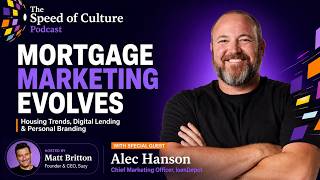
LoanDepot's CMO Alec Hanson discusses the mortgage market, the company's multi-channel model powered by first-party data, and why they bought Miami Marlins stadium naming rights. He also shares how AI will reshape underwriting and loan fulfillment, and why he built a public personal brand despite the psychological barriers most salespeople face.
Chapters
Today we're excited to be joined by Alec Hanson, the CMO of Loan Depot, digital-first mortgage lender. Alec's been working in mortgages for over 20 years now. He's now our chief marketing officer. I'm really excited to dive into all things housing market, mortgages, and marketing with Alec. Great to see you today.
What's up, Matt? I'm excited to be here, brother.
Thank you. Absolutely. And where are you, uh, podcasting in from?
Southern California. Nice and sunny. Okay.
Good place. And is that where Loan Depot is headquartered?
Yep. Yep. We're in Irvine.
When I start these podcast interviews and we have the benefit of being on Zoom, I like to look at people's backgrounds and see how they're set up. And you actually have a legitimate podcast setup. Is that because you participate in a lot of these or do you create your own content?
So 2020, right before that hit, I got super geeky on all this like audio and video tech.. And then as we got forced into Zoom world in COVID land, you know, I was like, wow, you know what? How you look and sound actually really matters. Yeah. And that's kind of our medium now. And so that was before I started my own podcast and got into the space and really figured that out. So I, I just kept upgrading tech. Yeah. Um, and I just realized like on the Zoom calls, I was more effective, uh, when I was, you know, recruiting or talking or growing and, you know, just it mattered. I, I think it matters. Immensely in this day and age. So yeah, I make sure I show up the way I want to.
It's really interesting insight because I think, you know, people are so concerned about their appearance and they say like, you know, first impression matters so much. Yeah. But then you'll do a Zoom call with them and they'll have a messy background in terms of their home or bad lighting or bad sound. And I agree with you, it does make a difference. And it's just crazy in terms of how quickly this world has changed and how I think there's certain parts that have caught up with the change, but there's other parts, other industries that are still, still lagging into adopting to this new world that we're in.
I think Matt, it's, it is a sign of self-respect. It's a sign of actually respecting who you're talking to because you are the one that has to hear me and deal with my, I still, I, I hear my own stupid voice the way I always sound. But you know, when you do comparisons from these webcams to actual mics, it's like, oh, oh, I sound like I'm in a bathroom stall. This is terrible.
Right.
So you, I think you gotta up the game.
Absolutely. So, Alec, you've been in the mortgage industry for quite a while. Too long. And you've seen lots of ups and downs, as tends to happen in this market. Describe for our listeners the state of the mortgage industry right now and how that's different from where it's been over the last couple years.
Wow. There's multiple ways to answer that. So let me try to hit it with some high notes. We are right-sizing from one of the largest cyclical cycles we've ever been through. So when rates go down through that, the COVID disaster down into the low 2s and 3s and all that insanity, you know, the industry just expands because the demand is so gigantic. So every company is hiring everyone they can and it's full craziness. And we've got up to like a $4 trillion industry, which is gigantic. And so then you go realize, well, this isn't sustainable. You know, rates went up, the, they need to go up, but they went up the fastest they've gone up since like the Carter administration. So they really shocked everybody. Yeah. And so now we have this contraction back to what would be a normal market of like $1.5, $1.8, maybe $2 trillion, but probably a little less. So you think about that, that's half. Right. So the industry is getting shocked and roiling. And of course, when you build into a $4 trillion industry and then you have to cut back down to, let's just say, $2 trillion, there's wreckage. Companies got too big. They can't sustain. There's cuts. There's losses. Record profits and record growth to dynamic losses and hardship. So that's what's kind of happening there. But at the same time, like, from an industry perspective, you know, there's still a lack of inventory in the United States. And so people aren't moving. They have 2% rates. They don't need to move, or they want to move, but they're not going to go for a 6% or a 7% rate. Exactly. So demand's still high, and so supply's still low. So there's still some protection of people's valuations of their homes. You don't see markets crashing, and you see people kind of settling back in and realizing maybe this is where we're going to stay for a while and then picking up in their normal activities of selling and buying. So we're predicting rate cuts this year. Everybody is predicting them, but they were supposed to already kind of happen and they didn't. I think it's going to be a good year for lending if we still weren't hungover from 2020 and 2021. So there's just a lot of kind of normalizing happening, and that's still painful. So there's lots of issues still ahead of us, but we are feeling some wind in our backs a little bit. We're feeling a little bit of optimism.
So where is the industry overall in the cycle of, I guess, downsizing, going through the pain of, I guess, reformulating the operating model to a market that's been cut in half? Are you in the 8th inning of it?
We're right near the bottom. And the reason I say we're right near the bottom— and there were some organizations and companies that were holding out with hope for this year to kind of save them. And then realizing it's not really coming in like they expected so that you're seeing more mergers and acquisitions and sales happening. You got to have normal staffing to the normal market, which is very painful, but it's very healthy. So I think we're going to see a little more of that through this year. And then I'm very optimistic that 2025 will be more of a growth-centric year.
Gotcha. And when and if interest rates start to be brought down, because obviously your business is closely tied to the Fed. And its decisions on interest rates. I've read some stories that showed that all this pent-up demand of— because the one thing that hasn't stopped is families have continued to grow and there is more people, more kids in the household. So people are running out of space. And when the interest rates come down, it's affordable. Do you see all of a sudden the flood of demand outweighing the flow of supply, which will basically then even drive costs up further and then at the same time bring more volume? Is that what you guys are hoping on? How do you see it playing out?
Candidly, I feel like when rates come down, let's say they come down into the 5s, that would be a market where somebody who has a 3% would probably consider selling now. Hey, 3% and 5%, you know, and they do the— do some payment, do some math check and go, you know what? Yeah, let's take like— but I still think we have the supply issue. So even though we'll have more sellers, you now have more buyers because the affordability is easier. And I think we're going to see a rush of buyers and home prices accelerate up again, kind of like that mini bubble we had in 2021. So I think supply is still an issue. I think it's still going to be an issue for a while.
Right. So even with interest rates going down, it's not like homes will just instantly become more affordable because it could be counteracted with an increase in prices driven by so much demand.
Yeah, 100%. That's why people who are— waiting for rates to come down are going to run out when everyone else does at the same time and realize there's a line to go into the house again. And it's going to be kind of a, oh, crap.
So you might as well just call up Alec today and get a mortgage if you're waiting.
Yeah, I mean, it's about affordability though, Matt. If you can afford it and you can qualify, you have to make your own decision on your own risk tolerance. But if I had to look into the golden— into the crystal ball and make a call, You know, I think that's what's going to happen. I think rates are going to come down. They're like, oh, now I can afford it. And then they're going to watch the price jump.
Absolutely. So let's shift gears a little bit to Loan Depot, where you are the CMO. Tell us a little bit about Loan Depot, how long you've been there and your overall approach to offering mortgages to consumers.
Yeah, I've been here a long time, 13 years. I was part of their— one of their early acquisitions when they got into the retail space. I've spent 20 years in the sales and leadership side of the house. And, you know, I have a unique journey to the CMO role because I always considered myself kind of a sales guy. So that was kind of wild. But I've watched this company grow up. I've been part of it. I've watched it expand. I've watched it navigate tough markets. I know where all the bodies are buried. You know, this is, this is a company I'm very proud to be associated with and be able to kind of put my thumbprint on as best I can.
And as CMO, you're responsible for generating that demand and capturing share of the market. What is your strategy in that regard for Loan Depot and how are you spending your time trying to build the business over time?
Well, so we have a multi-origination vertical strategy here. So one of our channels is our joint venture channel. We have one of the largest in the country and we're really proud of that channel. They do a tremendous job and they partner with home builders and serve them across the United States. We have what we call a direct-to-consumer, you know, kind of call center environment channel. They're about, you know, call it if we oversimplify it, they're like, you know, 90 plus percent refinance-based cash-out equity lines. And then you have our in-market sales professionals that we kind of call them retail sometimes. That gets a— that's a kind of a tough word. But, you know, they're about 90% purchase business and they're our distributed branch network. So serving all of those different organizations has its own challenges. And it kind of means, you know, our department's pretty varied and pretty interesting in how we set up to support those channels. But that's kind of where, you know, my duties and responsibilities get pulled in different directions.
Gotcha. And on the direct-to-consumer front, I imagine your ability to understand the consumer that you're targeting, bottom funnel, matters a lot, right? Because you don't want to target consumers that can't afford a mortgage. You ideally, you want to target consumers that are just at the right credit score, just the right time. Yeah. So how do you look at performance-based marketing versus brand and the power of first-party data and your ability to be effective with that spend in building the business?
Well, having a great data team is the core of that piece of the puzzle. And I'll tell you too, having extensive mortgage personal background and having originated for 8 years and run teams, I speak the language very fluently. Right, that's important. That's a superpower a little bit because a lot of marketers are like, I've never sold a mortgage. How do I talk to these people?
That's important insight.
But your question on brand versus performance marketing, you know, it's in my opinion, it's all starting to blend because they're all interacting with the same customer, just maybe at different life points of their life cycle and their buy cycle. And so they're really influencing each other. And that's, you know, so in the last 8, 9 months, one of my biggest priorities has been making sure we understand how they're influencing each other and how they're touching each other and connecting those dots. Because they're not in competition, they're in synergy with each other. Yeah. So it's been pretty wild. But yes, I mean, you're dead on. Understanding the data points and being able to really strategically go after the right people at the right time is critically important.
Yeah, and have the recent changes to both the cookie in Google Chrome, as well as prior to that, the iOS 14 changes in terms of retargeting, has that had an impact on your business and how you go to market?
Absolutely. I mean, the only thing that— mortgage is so radical because you're literally on a roller coaster where they're changing the track on you, like, all the time.— and even like TCPA changes coming in 2025 are radical shifts in the business model. And I feel like that gives us a little bit of a competitive advantage because we're so entrepreneurial and we're so change-centric. But you think you get it nailed down, and then the next day you're like, well, I guess that's all done. Let's pivot.
And I would imagine a big part, just in terms of telling your story, is I've been a home buyer for decades. I would never think to go to a company like Lendibo because when I think of getting a mortgage or a HELOC, I would just think about going to a more traditional bank.
Of course.
Right. So how do you, I guess, position yourselves against traditional banks and why would a consumer go to Lendibo versus a traditional bank?
It's a multi-prong strategy. So let's kind of unpack it a little bit. Like going back to my glory days of origination, it was the same issue in 2003 when I started. You know, why would I go to a non-bank instead of a bank where I have all my checking accounts and all this stuff. And there's interception points where there's opportunity to start sharing the viewpoint that may be different of why a non-bank might be better than a bank or what the advantages they have versus they have. And, and we find these interception points in very unique ways. So for example, one of them is with our referral network of agents and homebuilders. I mean, these people are at the front end of the consumer interaction. And with strong partnerships, they turn around and go, don't go to your bank. They don't care about you or whatever they say. Right. Call Alec, call Loan Depot. I know him. He's been here 20 years in the market. He knows the local down payment assistance programs. He gets— he does half my business every year. Like, call him. And so that was tried and true back when we were on brick phones and Nokia phones and BlackBerrys. And it's still true today. There are still amazing partnerships. But social media and digital is another massive intersection point because now you have this internet-first generation of people who are staring at their phones all day, staring at all these social platforms all day. And that to me is like the guerrilla warfare opportunity of our time. And so, you know, forget the TV commercials. I mean, all that stuff's fine. I'm not here to slander a certain strategy, but in my opinion, where the real fight is for attention on the front pages of social is where the battle's taking place.
Right. So being more accessible, being in the channels, meeting the consumer basically where they are makes you more accessible and differentiates you from some of these institutions where you basically are sitting on hold forever and talking to a robot and things of that nature.
Yeah. And we, and we provide a unique strategy where it's, it's about serving the customer the way they want to be served. Our founder, Anthony Hsieh, always talks about that. And, and there are some customers that want a purely digital experience in lending, and that's super normal and that's becoming more normal. But there's some customers who literally wanna sit down across the, across the table from you and have a coffee and talk about their situation.
Sure.
And so having local strategy and digital strategy and being able to meet customers differently is, is a little bit of a hack. Some of our competitors can't do both or don't do both well, and that gives us a little more opportunity to win.
And what are your thoughts in terms of how AI is gonna change the way that you can communicate with customers at scale? I mean, tools are so incredible right now. Deployed the right way to be able to have that high touch and really scale the unscalable, you know, but it's obviously a fine line. I'm just curious to hear what your thoughts are.
AI is going to make massive impact across in multiple areas across originate or across mortgage. So for one, you know, we don't have to dive into it, but it's going to affect fulfillment, the speed of getting a loan done, the paperwork process, the intake of documents, the review of documents, like it's going to come in, right? Yeah, it's going to be amazing for customer experience. It's going to radically change that, which is going to Pick up speed, lower cost, all the things that customer wants today.
Basically, this is going to create roles and be able to analyze data. It's about data analysis ultimately, right?
Of course. I mean, that's what underwriting is. Now, you know, there's lots of nuance and, you know, you need a soul. You need to have wisdom in analyzing somebody's situation. It's not just pure numbers, but there's a lot of number work is going to get lifted off the backs of the underwriters and it's going to create opportunity. But then when you look on the sales side and kind of the management side, you know, I see AI kind of almost being a permanent assistant/concierge for for people in their mortgage process or in their home management process. Yeah. Where it's just like, hey, I need this, what do you got for me? And resources and solutions are going to come up. Now, to the point where it can replace a licensed salesperson and provide actual wisdom and consultative advice, I don't think we're close. I think we're closer than ever before in the terms of human time. But like, that's going to be another angle where, you know, what level is people going to trust that over a human giving them advice, but we'll see. We're on the journey, right?
Well, it's not gonna replace them. You could also, I would imagine, arm your sales agents with their own Copilot, so to speak, where they can have all the information needed when they're talking to your customers and prospects to help facilitate more smooth transactions and conversations.
100%. I mean, I feel like it's gonna be a scalable tool. It's gonna enhance people's ability to do more. And then you're going to have certain, you know, type of originators who just want to— who just leverage it and are more comfortable with it and can do more. Yeah.
And my experience has been that the real estate industry is a lot like the financial services industry, a lot like healthcare, and that there's a— it's a huge market, but yeah, tends to move very slow. They're regulated to varying degrees, obviously not as much as healthcare and financial, but there's still a bit of regulation in the real estate industry. And because of that, slow to adopt digital, slow to adopt new technologies. And tends to create opportunities for upstarts who can create credibility and move quickly. Do you see that being the case in the world of AI and creates opportunities for a company like yours?
Yeah, I mean, it's almost like the same people who aren't adopting social media as a strategy for origination and human connection are— it's like the same thing, right? Like if you don't adopt these new places where people are playing and leveraging new tools, like you just get bypassed.
Absolutely. I meant to ask you this earlier, but I guess pleasantly surprised to see that you now are the title sponsor of the Miami Marlins baseball park, the Lone Depot Park. What goes behind— we were talking earlier about performance marketing versus branding, and what goes into a decision like that? How do you justify an investment like that, and how are you planning on activating it for this upcoming baseball season?
When we were in our early days of considering whether or not going public was the right decision for the company and getting a bigger brand, consumer brand for perspective was really, really matter. That was when kind of the stadium naming and the Major League Baseball sponsorship kind of came together. And you have to recognize, or at least we recognize, that you've got to build consumer brand in new and dynamic ways or you're not going to win. Like, you can't just play social. Now, again, I'm very bullish on social. I think it's the way to go. But like I said before, we have a huge localized presence across the country. And in October, when the championships of Major League Baseball are happening, we're on everybody's screen. And it gives us huge opportunity to activate across different platforms in different ways. And I think that's just having our toe in the water and understanding that the old isn't just garbage. Both matter. And being great at both is kind of the strategy that we have to figure out. Yeah.
And why did you pick Miami of all markets to activate?
You know, our, our founder and chairman did. He lives out there. I think it was just more of a personal Back then, too, Derek Jeter was the CEO, and Anthony and Derek hit it off and just really, you know, found a great partnership and relationship. So I think that just kind of naturally came from there.
Yeah. And also seems to be whenever there's a booming housing market, kind of Miami is the first in, right? Because obviously the weather and the taxes and everything else that comes along with it. Yes. So shifting gears to you a little bit, Alec, you know, I often go and stalk the LinkedIn profiles of the people I'm going to interview and Most people I've interviewed in the CMO role, CMO role, have not been as prolific in terms of content creation and personal brand building as you have. Why is that important to you and what's your process in terms of making sure that you're consistent at putting the right content out there to build your own personal brand?
You know, Matt, I have learned so much by just being a practitioner of the same strategies that I coach around or that I lean into or that I have Home Depot do. It's like playing a sport versus just watching it. Like, I've learned so much and it's, I joke that I'm the CMO because I put videos on the internet. Like people ask me like, well, how did you become CMO? I'm like, I put videos on the internet.
Right.
So, I really feel like it's an unbelievable hack and a lot of marketers, I think, hide from it and then they want to execute on it. And I feel like they're missing out the real tangible understanding of how it works.
Same way how you know how to market a mortgage company because you're in the front lines, the same way how you know how to market because you're on the front lines of building your own brand.
Yeah. And I don't want to ever come across like I've figured it out and now I'm the guru guy. Like I'm just in the streets trying and learning at the same time, which I think gives me an advantage.
Yeah. And I agree there. I find that a lot of people at a certain point in their career think that they're above it or they're above hands on board and they just want to have other people do stuff for them. I'm the same way. Like, I, you know, I see like on your LinkedIn that you have like these memes with you on it. I would imagine that you're designing them yourself, right? You're going to something and you're doing it. You— but you doing that and going through the process allows you to understand what's possible for your organization in terms of how quickly it can move in creating content and the power and the benefit behind that.
Dude, you're nailing it. That's exactly what was— and, and plus, you remember, we also support a lot of in-market sales professionals who I have been yelling at to build their own personal brand, to drive their own business and success. And so now I can speak from a position of authority a little bit stronger when I've done the same work.
Of course. And why do you think, just curiously, people aren't doing it? Because I talk to, you know, my sales team and I, I speak a lot in front of many industries, including the real estate industry. And I, I basically say there's a direct correlation between the content you put out there and your success. Yet people still don't do it. Why do you think they don't do it? What the people who don't adopt it, what's the reason why, in your opinion?
So I think it's layered, but I think it starts to come back to the same foundational stuff. And so think about it from salesperson whose job was to go meet realtors in 2003. That was my whole entire job. Go meet realtors, find them, cold call them, schedule appointments, because they will refer you customers if they learn to trust you and like you and they know you. And so I was like, okay. And it's tremendously uncomfortable. I mean, cold calling people or walking in on their open house and trying to introduce yourself and ask for a meeting is terrible. Rejection, fear, insecurities. And so all that stuff that's at the bottom of that is still there when you go, well, I guess I should put a video on the internet. And all of a sudden you're right back to the little, you know, high schooler or wherever, junior higher, who's just like asking a girl out and can't do it and is too afraid and it's too much fear of rejection and no one's gonna like me, no one's gonna like what I say, I'm a fraud. And so, you know, you fall back on that stuff. Yeah, as opposed to just embracing it and being human and be— and just living in it and being okay with it and learning it. So I think there's lots of parallels there to that stuff. But Matt, you nailed it, like the success on the other side of being uncomfortable. And this is it, like this is a pathway for people. And not everybody can— is willing to put themselves through that to find themselves in it.
Yeah, I think we all get to a certain point in our lives where when we walk in the rooms, we stop worrying about what everybody else thinks of us. And we start more thinking about what we think of them. Right. And I think for some people they get that confidence when they're 17 years old, and for other people they get it when they're 71 years old. But I think the sooner you get to that point where you can post something on LinkedIn and you don't even have to log back in to see how many people liked it, and you're logging in to see the comments just so you can respond. But if one person comments or 100, you feel the same way. Well, then I think you're at the point where you can actually embrace it. But I think a lot of people, and I think especially the younger people who are growing up now, that basically base their identities and their self-worth on the social engagement, you know, I think that you have that sort of trauma with you, and then it stops you from putting yourself out there as professional.
Yeah, I have to fall back on this continual foundation of what are you trying to accomplish. And if you're, if you're trying to help somebody, sincerely help somebody, then you need to get over yourself and go help them. That means if one person views it, if one person views it, no, no comment, no engagement, one view. But if that person got a little optimism or education or, or, or information that's gonna help them, you, you did it.
Yeah. The same way you could look at it almost with public speaking too, right? It's like you're there to help people. You're not there for them to judge you. And I think the same thing with social media. It's a great point. It's like, are you doing this for self-validation?
Yes.
Or are you doing this to help someone? If you're doing it for self-validation, then you're always gonna basically have a blocker in posting this. Cuz you're like, is this really gonna validate whatever preexisting thought I have about myself? If you wanna help people, then you're pushing out all the time. It's actually a great framework I had not heard of until now in terms of how to push it out there.
And it's hard to stay focused on that cuz you got, we always start looking internally again and we start looking at ourselves all the time of like, you know, judging ourselves and, but you step and you can step outside yourself. I think you win.
You know what else is interesting? I posted a video. I actually spoke in front of a bunch of professors. College professors about the future of AI, and I posted on, I think, Facebook, and I had like a very small amount of people like it. And then they had more people actually text me or DM me saying how much they loved the video than actually liked it. Right. So another, I think, key learning is they all see it and they all get value. And I think that's really what matters. And not focusing on how many people like something because it's usually not even a direct correlation with how many people actually gain value with what you're putting out there.
It's such a fact. So I put out a lot of content. Sometimes I get comments, sometimes I don't. And I got to tell you, like, I was in an event, mortgage event, and people would come up to me and be like, I've seen your stuff. It's so good. And I'm just yelling at them. Like, why don't you ever comment on it then?
Right, right, right. Because I'm here alone.
But you nailed it because that's not the expectation. These vanity metrics, like, you got to let that stuff go because they are seeing it. You are making an impact. You're just not feeling the ripples. You're not seeing it.
Right. But then one day you'll feel it. One day you'll get that piece of business or your promotion because of all that consistency that you're putting in every single day. 100%. So the wrap up here has been a great chat. I'm so happy we set this up, Alec. When you look back at your career, obviously, you know, you're the CMO now. You've worked your way up the ranks. What have you learned through your journey that maybe you'd want to tell 20-year-old Alec that maybe we can impart on some of our younger listeners here at Speed of Culture in terms of setting yourself up for success and ending up in the C-suite? Someday.
I wish I would have started personal brand development earlier in my career and taken it seriously and had the insight to see it for what I see it as now, because I just never did. You know, I had Facebook, I had Instagram forever. I just never used it or thought about it that way. And, you know, but combine that with getting into those places to go be of service or help to somebody as opposed to use it and get stuck in the vanity of it and the garbage of it. The toxicity. If I would have started that earlier, I know I would have been— I'd be in an even better place to serve and help other people in my own career path. And that's the game. So it would just been to, to get in there earlier. And hopefully in that process, I would have earlier not cared anymore what people thought, right? Because I found that on my own journey. I found it in my career path. But, you know, if I would have started earlier, maybe I would have found it earlier, and then I could continue to be a better version of myself.
Yeah, I think for those of us who are parents, it's just great wisdom to impart on our kids too, is just not to worry and, and support them being their own selves and pushing themselves out there and not seeking that external validation. But again, it's increasingly hard in the, in this complicated world that we live in.
No doubt.
Absolutely. So the wrap-up here, is there a quote or mantra that you like to live by? I know we've gotten a little philosophical on this pod, which I think is great. And I wish I did it more often, but is there some type of quote that you want to leave our audience with to wrap this up?
Yeah, let me hit you with two. I got one that's good and one that I have to do off memory, which I'll butcher, but it'll hopefully land. So we were talking about, you know, where to stand and how to create content and all this stuff. And so this guy David Forrester Wallace wrote this quote that I have on my wall. Basically, it says, you will become way less concerned with what other people think of you when you realize how seldom they do. And it's— and that, that to me was fantastic. But then the real lesson here. So my sister is 18 years now sober. She's my inspiration in so many things. She's gone through so much hardship in her life with MS and all this craziness. And I remember going to one of her meetings where she was going to get a chip for celebrating another year sober. And there was a speaker and I fell in love with this guy. And I remember even— I remember listening to a CD of his back in the day when that's how you listen to people's, you know, information. And he said something that I've never forgotten, and it's a foundation of kind of— you talked about parenting— it's foundation of my content. And he says, you know, I had this huge misunderstanding in life, which was I thought that if I helped somebody else, they would help me back. I thought that if I gave somebody grace, they would give me grace back, or if I loved somebody, they would love me back. And that's not really what happens. What happens is if I love somebody, no matter what happens backwards to me, I become a loving man. If I extend grace to somebody, it doesn't matter if they give grace back, I become a graceful man. When I heard that the first time, I was like, wow, it just, it took all expectations off about what I'm getting back. So the vanity likes, the invitations to public speak, forget all that. I become who I want to be. I stand on who I want to be and I become that person in my life. And that's the real reward.
You're in control of your own happiness at that point.
It was liberating, Matt. And it stands, but it sits in my primal brain now and it, it directs my actions as best as anything else. Awesome.
Well, we're going to leave with that. This has been such a great chat, and I can't wait for our audience to hear not only your insights on the mortgage industry and your work you're doing there with Loan Depot, but also on how you've been able to build your personal brand as well as your leadership. So thanks so much, Alec. And, uh, some time in the, uh, in the future for real. So on behalf of Susan and the Adweek team, thanks again to Alec Hansen, the CMO of Loan Depot, for joining us today. Be sure to subscribe, rate, and review the Speed of Culture podcast on your favorite podcast platform. Till next time, see you soon, everyone. Take care.
Hey!
More from Matt




MikMak’s Rachel Tipograph on Consumer Spending, Retail Media & Holiday Shopping Trends



Jaguar Land Rover’s Charlotte Blank on Luxury, Purpose & Experiential Storytelling



