Matt Britton Interview With Dr. Marcus Collins
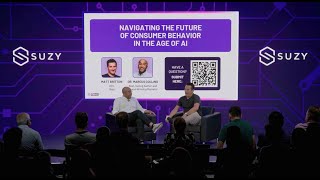
Matt Britton talks with Dr. Marcus Collins about how culture shapes marketing. Collins traces how brands evolved from legal marks to tribal identity markers, and walks through McDonald's celebrity orders platform as a case study in building cultural connection.
Okay, guys, so I'm the only person standing between food and drinks, but I promise you this will be worth it. For those of you who don't know, I run a weekly podcast called the Speed of Culture, where I interview CMOs from major companies and really thought leaders. And I've only had one guest on twice, and that guest I've had ON Twice is Dr. Marcus Collins. MARCUS is somebody who I have long followed. And the thing about Marcus that you'll see is he's done the real work to talk about something that a lot of people just throw out there, which is culture. Culture is a word that we throw around all the time. We know the impact of culture on business and society and relationships and. And really the future. But not many people actually take a second to step back and say, what does culture really mean? How do brands leverage it? Marcus has a bestselling book that recently came out called for the Culture. You all have a copy of it on your way out. So compliment to Susie, and this is one that you're gonna wanna read. Marcus background is really interesting. He spent a lot of time working with the Beyonce team, helping build Beyonce's marketing strategy and Beyonce's brand. He's worked on bringing the Nets from New Jersey to Brooklyn. We'll see if that ends up being a good move or not down the line, but certainly a huge cultural moment. And most recently, Marcus was the chief strategy officer at the iconic ad agency Whedon and Kennedy. So we're going to shift gears away from research, really, the output of research. Where do insights meet? Culture meets strategy meets business. So I'm honored to welcome my dear friend, Dr. Marcus Collins. Thank you.
Thanks for having me.
This is great. Absolutely. So why don't you tell us how you ended up in the position where you are being such a leader and such a forward thinker on culture? Because that's not something that we often grow up as kids thinking is. I'm going to be a culture expert.
Sure.
So how did you get from where you were to kind of where you are right now?
You know, I would account it to ignorance. I found myself in the world of marketing, world of advertising, using language that I didn't really understand. You know, let's get our ideas out in the culture. Our ideas need to be informed by culture. What's happening in culture? Culture, culture, culture, culture, culture. If you ask five people to define culture, you get 25 different answers. Right.
Why is that?
Because culture is so nebulous and omnipresent, and it's in everything that we do, which makes it very hard to describe. The abstract nature of it is like describing water to a fish. And what I realized is that much like many marketers, I was using this terminology, this lexicon, with no real understanding of what it was. I knew it innately. It was that quote. Like, it's hard to define porn. But you know what, when you see it, I feel like that's kind of how it was with culture. Like, I knew what I saw it, but didn't know really what it was. And I didn't like that. I felt sort of like a fraud. So I started to explore this thing that we call culture by looking at it through the lens of people a million times smarter than me. And once I started to understand it, I was able to operationalize it. And out of the operationalizing this thing that we call culture, I started to be able to implant it and impregnate it into the work that I did. And more times than not, those things that work started to started to birth ideas that impact not only what we do, how we do it, and how we propagate it across our social networks, which is really powerful.
And culture has grown so much in importance to brands. It used to be a nice to have and now for brands to really ingratiate themselves with consumers. Oh yeah, it's become now a mandate. Why? Why is culture become so much more important over time?
Because there's no external force more influential human behavior than culture, full stop. And the technologies we have at our disposal, as Avi laid out in the timeline, these technologies are helping extend human behavior. And as a result, the things that we adopt, that become a part of what we wear, what we do, what we buy, where we go to school, if we go to school, who we marry, if we marry, how we bury the dead. All these things that are part of our daily living are being propagated across our social networks through these technologies that we have. And the more advanced technologies become, the more accelerated the rate by which we're exposed to these information and become adopted into our day to day living is off the charts.
Yeah.
And therefore, for brands whose job it is to influence behavior, that's our job as marketers, to get people to move. If our job is to get people to adopt behavior, then culture is the biggest cheat code ever. But if we don't understand it, there's no way we'll ever be able to fully leverage its power to the full fidelity of what it is.
Right. And if you think about brands, because you mentioned brands, consumers, relationships with brands has Changed?
Oh, yeah.
Over time, as you write about in your book.
Oh, yeah.
Driven by culture. So what is that? What is that trajectory like? And why is it matter?
Okay. I feel like I need the timeline like Avi, because it's about. So the very first brand to ever be trademarked, right, Is Josiah Wedgwood Wedgewood Pottery. He made pottery. And to make sure that when his pottery was in the marketplace that he can get mistaken with someone else's crappy old pottery, he put his name on it. Right? And that was the first legal mark that was trademarked by a brand. And that's how what brands jobs were. It was a way by which we were able to delineate who. What belongs to who. In fact, if you translate the word brand in any Romantic or Germanic language, it translates into mark or marque or mark up. It's a mark of ownership. And it became a legal marker in the 1700s. And that's the way brand marketers did marketing. You put a logo on it, you did brand marketing. Congratulations. But you fast forward two and a half centuries later. It's like the 1950s. Marketers go, you know what? We want to get better than just showing that we own a thing. We want to increase the likelihood that people will consume. So we started using psychology. That's how we got value propositions, positioning statements, familiarity. And the notion was that the more people were exposed to a thing, the more they trusted. They become familiar and they trusted. And brands became a trust mark. You know that saying, no one's ever got fired by hiring IBM? That's the thinking. I trust it, and therefore I'm more inclined to consume it. Fast forward 30 years later, marketers go, it's not enough people just to buy our stuff. We want people to love us. So marketers started selling these really robust, rich stories so that we'd fall in love with the characters. It's a big narrative, and the brand is sort of a character in it. We fall in love with the character, and therefore we fall in love with the brand. Sachi Sachi refers to it as love marks.
Advertising is.
That's what kind of we want love marks. So brands move from being legal marks, from being trust marks to being love marks. But today's most powerful brands leverage culture because they become ways by which people communicate who they are to the world. They become ways by which we signal kind of peacock who we are. And these brands serve as identity marks because what the brand stands for or stands in for is a shortcut to my identity. So I use these brands as a way of saying who I am. Which leads us to the brands of tomorrow. If you buy that timeline, you buy that chronological evolution of brand, then the brands of tomorrow will be the brands that we use not only to identify who we are, but who are the people like me. They become tribal marks because we are by nature social animals, as Aristotle says. Right. We're given to community, to belonging. And these brands that we use to signal our identity become ways by which we go, oh, you're like me. And as a result, we find connection. And that's all we're after as a species.
And a brand could be a college you went to or sports team, you follow? Right. That's how you find connection.
That's right. Or the political party that you follow. The sneakers that you use, even the jacket that you wear, all these things become marks of identity. And. And the best brands use these marks of identity to facilitate community in a powerful way. And then the technologies become the ways by which we accelerate the way our brands become adopted and propagated into the population. Right. Like, I love the way the web three guys, they refer to marketing as community and community as marketing. Because we trust people more than any form of marketing communications. Right. We Trust Sexy Lover 24 from Denver More than we trust the actual brand we're going to buy from. Right. Which is super sobering for all of us in this room. You know, we have these communications to convince people. But I go, yeah, I saw that ad, but I don't know if it's for me. And you go, marcus, you need to be watching Yellowstone. Let me tell you why. And you convince me. And that's how every decision that we make ends up becoming fortified. It's through our people.
No longer through advertising. Forcing messages down.
That's right. And the best brands use their resources to facilitate community by creating fireworks that get people's attention and facilitating communities that facilitate connection.
So we have many corporate researchers in here from big enterprises. Not all of them work for Nike or Red Bull. You know, we have a lot of people that work in more traditional food and beverage companies, household staples. Right. And how do you. If you are a researcher and you were working at a big brand. Yeah. And you knew the mandate was to get a brand to the level in which you talked about going down that journey.
Yeah.
Where do you start? How do you know where your brand has a right to play, what culture you should ingratiate yourself into to really create that tribe?
I think it starts with who. What do we believe? How do we see the world what's our point of view of the world? What's our conviction? And I'll say conviction not purpose, because purpose is passive. You have a purpose, but whatever, do you live up to it? Conviction is like something I'm willing to stand for, right? Like, by nature, conviction means I'm convicted. I stand for it. This is what I believe. And then you go find the people who see the world the way you do, right? Of all the people who listen to Beyonce, you find the beehive. Of all the people who watch Star Trek, you find the Trekkies, all the people who vote Democrat, you find the progressives, the people who see the world the way you do. And then you find out where the cultural characteristics of those people, what do they believe, how they see the world, what are their artifacts, behaviors, and language. Because culture, as Emile Durkheim, one of the founding fathers of sociology, would argue that culture is a system of conventions and expectations that demarcate who we are and what people like us do. And the idea is that we find congruence between the cultural characteristics of our brand and that of these people, and then we find ways to remove points of friction that they experience.
But what's crazy, Mark, is that's not how I've really ever seen it done, Right? So, yeah, see big CPG companies saying, Our client is Betty. She's age 24 to 39. She lives in Minnesota. She has a household income, of course. So that's cookie cutter demographics that you're talking about. Psychographics, you're talking about passion points.
I'm talking about culture. I mean, this is why marketing sucks. Let's keep it true. Like, marketing sucks because of this very reason. Right? Here's an instance. Meet my friend Deborah. Deborah drives a minivan. Does Deborah have kids?
Yes.
Yeah. Do our kids play a sport?
Yes.
Right, and what sport?
Soccer.
Right. And where does Deborah live? I gave you one data point about Deborah. You mapped out her entire life with great fluency, by the way. This is what we do as marketers. We suck at this. We put people in nice, neat boxes, not because it's real, but because it's easy. Not because it's accurate, but because it's fluid. And as a result, we wonder, why aren't people acting the way they're supposed to act? You darn millennials. Why aren't you doing the thing? And the thing is that demographics just do not describe who people are. Take my demographics. I'm 44 years old. I'm black, if you hadn't noticed. I'm From Detroit. Holla. Went to public schools my entire life. If a marketer saw that on a brief, they'd go, oh, he must hang out with those people, do those things, buy those things, because that's what those kind of people do. And it sounds racist AF for me to say that out loud, but you just did that with Deborah, right? This is what we do. All women love to shop. No, they don't. I teach at the University of Michigan Ross School of Business. Go blue. There you go. And I hear students say, you know, all men are dogs. No, your boyfriend's a dog.
There's a difference.
There's a difference. We don't know people. And this is what. It's so vividly stated by W.E.B. du Bois. He says, herein lies the tragedy of the age. Not that men are poor, because we all know something about poverty. Not that men are wicked, because what is good? Not that men are liars, because what is truth, Nays, that we know so little of mankind, we don't know each other. And this is why we do research. This is why we investigate the underlying physics of humanity, why we do what we do. And it's the shortcuts that marketers take that kneecaps all the great rigorous work of research. I'm an academic, so I do scholarly work, but I'm also a practitioner, so I do practice work. And I can tell the gap between academic and practicing, but we bridge those gaps with, like, really rigorous thinking, with really rigorous intentionality on how we describe people, their identity, and then find the real touch points where the brand and these people overlap, that we get something really, really rich. And it doesn't happen often, which is why if you watch two hours of television, 98% of the marketing communication is trash.
So what are some examples of some more less sexy brands, if you will, that have done a good job selling the culture?
Let's take McDonald's. And I'll say, my bias. McDonald's is plastic, kind of mine. At Watton Kennedy, we met McDonald's. McDonald's had been battling 15 years of hate ever since Super Size Me. McDonald's became the punching bag for everything wrong with the American diet. And we met them in. They were just. They were so downtrodden. They basically said, help us, like, navigate the hate. We said, oh, people definitely hate you, that's for sure. But 68 million people show up at your door every day. That's a lot of love. Why don't you focus on them? And they were like, we never thought about that. That's a Good. That's a good idea. But the challenge is that neither they or we, we didn't know who those people were. We knew their transactional data, but we didn't know who they were as human beings. Like, who are these people? That despite the vitriol associated with the brand, they still raised their hand and say, I'm a McDonald's fan. So we did an ethnography. You mentioned ethnographies earlier. So we jumped in the car and we traveled from Chicago, where McDonald's is headquartered, down through the heartland, talking to real life human beings, talking to people who transcend demography, age, race, gender, household income, socioeconomic status, education, et cetera, like real life human beings. And what we found was pretty miraculous, is that no matter where these people were, there was this refrain that was consistent across all of them. And we ended up calling them fan truths. Some of these fan truths may ring familiar. Your friend will ask for a fry, even though they say they didn't want any fries. That's my wife. All day long, fan truth, right? Is there anybody out there who doesn't eat the cheese that stuck to the wrapper? If you don't, you're a monster. Because that cheese is amazing, right? And it was like. It was these things that were just so. They were so obvious once we saw them that even though you know what you're going to order, you go to the counter and go, can I get a. It's just what we do. But there was one truth that just blew our mind. No matter how big, how famous you are, everyone has an order. It's like McDonald's is like the democratizer. Everyone has an order. And we said, oh, my goodness. As we were, like, kind of going through the data, coding the data, synthesizing the data, this was what was. Kept bubbling to the top. Everyone has an order. It's like, well, what if we use that to stoke fandom? So the first thing we did. The what now? I like that. The what so what what now? We decided to do a film that celebrated many famous people, both fictional and nonfictional, their famous order. So all you saw was the tray, the order, and the name, right? So Magic Johnson eats a filet o fish. Whoopi Goldberg eats a Big Mac. Kim Kardashian apparently eats chicken nuggets with honey mustard. And it was like, you know, Marty McFly, you know, what is Count Dracula eating? So it was some fun, some jest in there, but also all reality. So we put it in the world. And something McDonald's hadn't experienced in 15 years that people were celebrating the brand. People were engaging in the discourse by expressing their identity. They became identity projects. People were like, oh, I eat this and this is my order. No way she eats that. That's crazy. My mom eats that. And we go, whoa. We went from an insight to an idea. So what if we made it a little bit more tangible, made it more real? So we decided to partner with an actual celebrity and make that person's order available to everyone. And that person's name is Travis Scott. His famous order is a Quarter Pounder with bacon, shredded lettuce, barbecue sauce and dip, the fries, and a Sprite. And by the way, that's not a new order. It's not a new product at all. It's the Travis Scott. Could have been the Marcus Collins interpretation.
Of the McDonald's product.
It's just his order. Right. It could be anybody's order, not a new product. So we put it in the world. In the first two weeks, we broke the supply chain of ingredients for the quarter pounder at McDonald's. People were stealing the posters off the wall, off the windows when the restaurant closed. And in the one month that this campaign went live, we added $50 million of incremental revenue from McDonald's and Wall street added $10 billion to McDonald's market cap. So now we went from insight to idea to platform. We got a thing here.
Yeah.
So then we partner with J. Balvin. He's the prince of reggaeton. His famous order is, oh, a Big Mac with the Oreo McFlurry. When the machine isn't broken, it's always broken. And then, like, you know, bts, then Mariah Carey, then Cardi B and offset. And while those executions have been working for McDonald's, what really changed from McDonald's is taking this, finding this nuanced truth of these people, these cultural characteristics of these people, and changing the way it goes to market.
And what's interesting is a lot of brands, what they would do instead is they would say, this is Betty. This is our demographic. She likes Shania Twain. Let's do a sponsorship deal with her and put her on the commercials.
That's right.
So it's top down. It doesn't come from a human truth.
That's right.
And that's why it touched a nerve with this.
Exactly, exactly. I mean, that's the most powerful thing, is that when someone who seems to be outside of the group notices you, you go, oh, my goodness. You feel seen. And then you welcome them in. You go, hey, be a part of this thing. So while McDonald's were making ads that worked as fireworks to get people's attention, really creating campfires that brought people into the brand new. And the entire strategy for McDonald's changed drastically. It was no longer company talking to consumers. Right. These machines that eat messages and crap cash. No longer talking to consumers, but fans talking to fans. And most recently, you see the Grimace milkshake that, like, TikTok just went wild. It was like, nah, we're going to take this and rework this and give it new meaning now. Most companies are like, we're gonna lose control of this thing. It's so morbid and dark. And they were like, this is what the fans gonna do. Let's do it. Because we're fans, too. And I think it's that level of conviction that the brand has that allows the brand to connect in meaningful ways. But you don't get there by just pulling something out of the air. You get there by intimacy. And that's, I think, the biggest challenge for contemporary marketers, especially those who do research, is that we often mistake information for intimacy. And those two things aren't the same thing. We have tons of data at our disposal. Tons of data. Like reams of data. We've increased our acquisition data exponentially, but our ability to extract insight from said data has only grown marginally. Because we think, because we have data on people, that we know them, but knowing them, getting close to them requires being able to make meaning of the data that we have.
Yeah.
Being able to make sense of who these people are. Not as machines, not as Deborahs who are in boxes, but real life human beings that abide by a cultural meaning system that governs everything they do.
Yeah. So as we wrap up here, because I get the sense of all this talk about cheeseburgers and fries.
Yeah. Yeah. That was good.
Thank you. You know, we're talking about AI today.
Yeah.
And a world of AI moving forward is exciting, but it's also scary.
Sure.
You know, you have deep fakes. You had that Drake weekend song that sounded like it was made by them, but it really wasn't. So everything you're talking about is a core human truth based on authenticity.
Yeah.
And human. Where AI is anything but.
Yeah.
Where do you see the two colliding? The path that you've gone down that you've described so successful. And AI, which kind of throws a wrench in things and where it's at.
It. I mean, the brilliance before this conversation that was said in the panel and the demo and Abby's talk is sort of the same. It's the same refrain that, like generative AI is the thing that we're afraid of. We've been leveraging AI for a long time, right? The fact that pilots are not even flying a plane scares me, by the way. But the generative AI part, that's the thing that we're afraid of. And why are we afraid? I think some of it is that we feel like there's bad actors, but there's bad actors in everything. Some of it feels like, is this thing going to be like Terminator where it's going to decide to. It's only making paperclips and now everything's a paperclip and we don't have any control. That's what it is. It's the lack of control. And everything new is scary that way. I mean, this is how we. This is why we have urban legends. Like we tell these stories to thwart sort of our enthusiasm about new technologies. But all technology is meant to extend human behavior, like the will. The extension of the foot allows us to go further. Glasses are extensions of the eyes, allows us to see further or closer, depending on your impediment. Clothes are extensions of the skin. Social networking platforms are real life extensions of our real life networks. And this idea of instead of artificial intelligence being augmented intelligence is exactly what the technology is doing. It's extending human behavior. So I find it really exciting. My background is in music. I think about how when new technologies were entered into the music industry, a lot of traditional players were not happy.
Yes, Napster, Limewire.
Drum machines. Session drummers were like, what are you doing? These people aren't drummers. I'm the drummer, right? And of course, a lot of drummers didn't have as many jobs being session drummers. But it opened up more opportunities for new producers to come in and make music. I mean, I am a child of hip hop, right? People used to say hip hop isn't even music because you were taking other people's ip, sampling and creating new things. And they'd be like, that's not music. You mean, tell me Dr. Dre isn't a musician? You mean, tell me Q tip. That sounds ridiculous right today, but everything looks that way in the moment, in time. It's not until after we pass it and we look backwards and go, how could they have not? Like people thought that the Internet was stupid. How could they not? So the idea is that we have to embrace a little bit of the uncertainty, right? And I think if our perspective is cautious but yet curious, I think we find these technologies become more advantageous to our. To our ambitions than they are harmful.
Yeah. So to wrap up here, Marcus, and this has been just as amazing as I knew it would be. Thank you. What strikes me about you is you've done the work through academia. You often quote authors and philosophers. So your knowledge on the subject comes from many hours of coming up with a thesis.
Sure.
And many people who talk about brands and cultures read a headline, try to grab it. And try to grab it for our audience here, who I'm sure you've convinced by now the importance of culture because they want their brands flying off the shelf.
Yeah, totally.
What steps can everyone take to be more in touch with consumer culture and the better kind of educate themselves about this type of process?
So I say three things to consider. One, that you should learn from comedians. Comedians are the best market researchers on the planet.
Seinfeld's insights were on point.
All they do is they watch people and go, hmm, that was odd. Yeah, he did it. She did it. Okay, this is a thing. And when they observe it, they now apply theory to the social phenomenon. And then they find a way to, like Emily Dickens puts it, tell the truth until it slant. They find a way to communicate in such a way that people go, that's so me. Of course it is, because they have a level of intimacy.
People do the same thing with memes. They see memes.
Absolutely. Exactly. So the first is learn from comedians by observing people with intentionality. The second, I think, is having a level of empathy that we don't spend a lot of time doing. Empathy is about seeing the world through the lenses of someone else. Being able to translate the world through people's meaning frames and may not be your own, which is hard because it means denying our biases, denying our experiences, denying what we believe that to be true. Which leads us to the third. It's the fact that the world is not objective as much as we want it to be. It's subjective. And that is our truth, is only our truth. But people abide by different cultural frames by which they translate the world. For instance, if we think about the world in which we live in, the social world is a basketball game. If you have nosebleed seats and I have courtside seats, we're watching the same game, but we're not seeing the same game because of our perspective. And if you take that analogy further, if we want to know the truth about the social world, you have to sit in many, many, many, many seats and see the world through the eyes of many, many, many, many people. That requires a tremendous amount of empathy. That requires watching people with intentionality, and to a point, you have intimacy. But most importantly, requires accepting the truth that your truth is not the only truth. And so long as your truth doesn't mean my oppression, it doesn't mean my marginalization, it's all good. And not only do we become better marketers when we think that way. I would like to believe in, you know, in a very, you know, Kumbaya way, that that actually makes us better humans, like better citizens of this inhabited world that we live in. And I think that's worth celebrating.
Well, we're going to leave it at that. Guys, give me a round of applause.
More from Matt




MikMak’s Rachel Tipograph on Consumer Spending, Retail Media & Holiday Shopping Trends



Jaguar Land Rover’s Charlotte Blank on Luxury, Purpose & Experiential Storytelling



