Matt Britton Live Keynote At Universo Totvs - São Paulo Brazil - June '19 | Estratégias de marketing
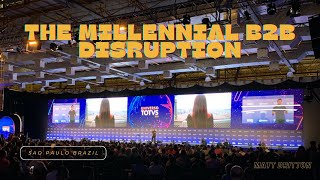
Matt Britton’s keynote explains how millennials—people who grew up with the Internet and mobile—have reshaped consumer behavior and what that means for legacy brands. He outlines major forces (the barbell economy, TV becoming programmatic, urbanization, the experience-as-status shift, service-ification and Amazon-driven retail) and argues companies must choose to be a utility or an experience (value vs. luxury) and build ecosystems (example: Tide as a smart-washer+consumable model). The talk mixes cultural examples and business tactics aimed at CMOs and brand leaders navigating millennial-driven disruption.
That. I'm Matt Britton. I am here all the way from New York City. Anyone in the room ever been to New York City before? All right, great. For those of you who haven't, just don't go now. Wait until about September. Weather's a lot nicer. So, by show of hands, how many people in the audience consider themselves a millennial? Okay, not that many. I'd say about 10 to 15%. Even those of you who raised your hands as a millennial, you're really not that young anymore. And that's kind of the point of my entire presentation. For the last five to seven years, major companies around the world have been obsessed with the notion of Millennials. The reason why millennials have been so important to the business world is that Millennials were the first generation that grew up with the Internet in the household. Think about that for a second. Everyone else who did not raise their hand did not even grow up with the Internet in the household. We had to go to the library to do research. We actually had to pick up the phone and talk to people. People who grew up with the Internet in the household. They have brains that are wired completely differently. And one of the biggest business misses and also business opportunities that exist right now is that many people who run large corporations around the world are still operating in a pre millennial mindset, and they are missing this groundswell of change that's happening right beneath their feet. And now Millennials are becoming the age where they are going to be making the most important business decisions, the most important household buying decisions. And if you as a businessperson do not understand how millennials think and feel and look at the world, you're going to find yourselves on the outside looking in. Now, most companies think of Millennials as young kids still. They think they are people that want to buy pizza and video games and go out to the movies because their notion of Millennials is still that of a child. But the reality is millennials are of the age where most of them have families. No, Millennials are actually still in college. The the youngest millennial is actually 23 years old. The oldest is 38 years old. These are the people that are starting to raise families together. These are the people that have been at companies for the last five to 10 years and have their eye on the C Suite. I would argue that the biggest change that the Millennials have imparted on society around the world has yet to happen, because now Millennials are finally of the age where they can have massive impact. To date, most large organizations have been impacted by Millennials from the outside in, meaning they were operating their business and one day they found out about a young startup and they had to disrupt the way they went about business. But now, as millennials enter the C suite, they're going to be disrupting their businesses from the inside out. They're going to be bringing people into their organization who understand this new world and and are going to be making changes instantly. I often get asked about Generation Z, the next generation. And the reality is the flip from Generation Y to Generation Z is going to be nowhere near as stark as the transition that just happened from Generation X to Y, because there's not going to be another Internet invented anytime soon. However, by far the biggest evolution was, which is adopted by everybody, is the advent of the mobile device. If you think about it, 10 years ago, the iPhone barely existed and now it's in our hands and it's changing business as we know it. So now you have a market and a generation that for the first time next year is going to be overtaking Gen X in global spending power. Think about that for a second. Finally, the world of people who grew up with the Internet in the household will now spend more money than people who did not. That creates a massive opportunity and again will continue to create massive disruption for major corporations, especially companies like these low involvement categories, packaged goods companies that have thrived for years and years, marketing to consumers in a premillennial mindset. During this presentation, I'm going to be talking to you about the changes that are going to exist through the lens of one of the most prominent brands in the world, Tide. A laundry detergent Tide has existed now for over 50 years and has dominated the laundry detergent category by having a mindset that no longer exists. So how will Tide and Coca Cola and Hershey's and so many brands like it will be able to weather the this new storm. And what changes they need to think about is what I'm going to be talking about today. The key millennials, the key principles of millennial thinking, and the first is the notion of the barbell economy. The barbell economy is here to stay. The world's eight richest men control as much wealth as the poorest 50% of people on this earth. That's obviously creating massive social and business and socioeconomical upheaval, and it's above my pay grade to solve that challenge from a social issue. I'm here to tell you what you can do about it from a business standpoint. If you look at America, you're starting to See the wealth divide continue to spread out. If you go to the coast, to San Francisco, Seattle or, or New York or Boston, you're going to see tremendous wealth. But if you go into the middle of America, what you start to see is tremendous outsourcing and offshoring as many jobs are getting pushed overseas and it is really in America. A tale of two countries. Many other nations around the world share that. Some are more advanced in terms of their wealth disparity, some are less. But the advent of the Internet and the mobile devices and technology and is only going to facilitate this wealth inequality further and further around the world. Some companies are going to do incredibly well as a result of the barbell economy. If you go onto the Champs d' Elysees of businesses like Coach, like Prada, right, like Louis Vuitton, that are doing incredibly well, because as the wealth disparity happens, the luxury market is booming right now around the world. Louis Vuitton, Mo A Hennessy just announced on this. Middle class is really going to find themselves in a whole world of hurt if they don't try to diversify their business offering. Some companies as big as Procter and Gamble or Johnson Johnson are actually buying companies. On the luxury side, they're buying companies that have organic materials, but some of them aren't really moving fast enough. So the barbell economy is number one, the biggest threat that's been brought on by the millennial generation as the digital divide has created massive opportunities on luxury and value, but a lot of pain in between. The number two change that's being brought on by the millennial generation is the TV becoming a giant iPad hanging on your wall. TV, as so many of us know it, is, is the notion of tuning into a TV network and seeing what's on television. But if you ask a 10, 1112 year old kid, how many people in the room have kids that are 10, 11, 12 years old? Okay, those of you raise your hand will know that they are not tuning into traditional television anymore. They are going to YouTube. They are not consuming television content through the traditional channels. For them, the TV and the iPad is the same. Many kids come out of the womb and they'll go to a TV and they're going to try to swipe the television because they believe a television should be swipeable. And one day it will be, because the TV and the computer around the world will become one. And that has massive, massive implications for brands that have built themselves in a traditional TV era. The closest thing to a new version of a television is what we See on something like Apple TV where you can log into Apple TV and instantly and programmatically select the show that you want to watch. In a world of Apple tv, Apple knows who you are, they know where you live, how much money you make, your gender, and when. Brands want to target people in this environment, they can do so programmatically in an addressable format. If you're Targeting females age 18 to 24 who, who like Beyonce, you would only be able to target those people. Right now, most television is buying these very broad cookie cutter demographics that were meant for a world where everyone veered towards the middle. However, I see the Apple TV model changing where instead of you actually tuning in to networks, I think the future of television is people tuning into people, because brands are people and people are brands and people are far more interesting. And young people are showing us that they would rather tune into an individual's channel than a network. Because network television really only serves two purposes. One, to curate what show you should watch and two, to distribute it in a household. Well, the Internet is distributed in a household and I'd rather have an influencer who I care about pick what I should be watching than an executive based TV network. And to further this point, at the Consumer Electronics show in January this past year, Samsung announced that itunes and the Apple TV functionality will be built in, in native form into Samsung devices. The very beginnings of the TV and the iPad becoming one. So why does this matter for so many brands? Well, Tide grew up in the world in 1950 where when they launched there was only three television networks. And the family would come home after work and sit around and watch one of these three shows. And back then if you had a checkbook, all you had to do is buy a TV spot. And if you as Tide told the public to that this is a brand you can trust, everybody would go buy Tide because they had no choice. They didn't have the Internet, they didn't have other sources of resource. Their source of truth was the television. And whatever brands owned the airwaves were able to create these massive brands. But in this new world where young kids don't even know what a TV network is, it's gonna be incredibly hard for so many of these brands to, to keep their brand equity because they can no longer just win by buying a checkbook. In fact, when television becomes programmatic, the playing fields are going to be leveled and any company will be able to advertise on TV to a small sliver of the population that matters. So the barriers to entry to brand building are becoming demolished. And it's going to create tremendous issues for brands like Tide because they will no longer be able to advertise on television to build their business the way that they used to. So we've discussed already the macroeconomic situation around the world with the eroding middle class and the opportunities at luxury and value. We've discussed television itself, traditionally the number one mediums for brands to be built. The next point is something that I think is not paid enough attention to. The millennial generation is in a rush to grow up quick, but to get old slow. And what I mean by that is that children right now have access to information that we never dreamed of having growing up. They can learn anything instantly. And a 12 year old can see what music a 21 year old is listening to and what they're wearing. And since they have access to that world ahead of them, and they are in a rush to grow up, and they are adopting trends that us as parents get incredibly scared about at such a young age. But it also has an opposite effect on people who are 30, 40, 50 years old, who are also now in a rush to get old slow. They are holding on and maintaining the ideals of their youth because late at night they can look at their phone and actually understand what youth is. Before the Internet, before mobile devices, there was no way for people to know what young people were thinking, feeling and doing. But now youth is a commodity that is accessible to everybody. This is a festival called Burning Man. It happens in the desert right side of Las Vegas in America every single year. And nearly 100,000 people come to Burning man and don't sleep much. It's an all night party where cash is not accepted. It's a barter based system. Anything goes. This is something that you would associate with a youth demographic. However, Eric Schmidt, former CEO of Google, arguably the world's most powerful company, then more recently the chairman of Google, got his original job as CEO of Google because Larry and Sergey, the founders of Google, ask Eric Schmidt to come to Burning man as a cultural test. Could he survive in that world? Imagine Bill Gates being asked to come to Burning man and address like this. That never would have happened. But we're in a world where holding onto those ideals of youth and acting younger far later in life is now socially acceptable. And that changes the way that so many businesses need to look at consumers. This is what businesses expect people to still be dressed in when they walk into work every day. They want them to wear the corporate uniforms of yesteryear. But the reality is today's business leaders are imagining their own styles because the Internet has made it acceptable socially for people to hold on to their youth. They aren't just dressing younger, but but they're acting younger. The institution of marriage is getting pushed off and delayed everywhere around the world. There are more for the Internet. Before mobile devices, there was no way for people to know what young people were thinking, feeling and doing. But now youth is a commodity that is accessible to everybody. This is a festival called Burning Man. It happens in the desert right side of Las Vegas in America every single year. And nearly 100,000 people come to Burning man and don't sleep much. It's an all night party where cash is not accepted. It's a barter based system. Anything goes. This is something that you would associate with a youth demographic. However, Eric Schmidt, former CEO of Google, arguably the world's most powerful company, then more recently the chairman of Google, got his original job as CEO of Google because Larry and Sergey, the founders of Google, asked Eric Schmidt to come to Burning man as a cultural test. Could he survive in that world? Imagine Bill Gates being asked to come to Burning man and address like this. That never would have happened. But we're in a world we're holding onto those ideals of youth and acting younger far later in life is now socially acceptable. And that changes the way that so many businesses need to look at consumers. This is what businesses expect people to still be dressed in when they walk into work every day. They want them to wear the corporate uniforms of yesteryear. But the reality is today's business leaders are imagining the their own styles because the Internet has made it acceptable socially for people to hold on to their youth. They aren't just dressing younger, but they're acting younger. The institution of marriage is getting pushed off and delayed Everywhere around the world there are more two income households. There's online dating tools like Tinder. And as a result, people are now staying single for far later in life. The notion of the family around the world is getting older and older as people are in no rush to get old. That is impacting how people spend their time and spend their money. More people are going to nightclubs and restaurants and traveling far later in life. When Tide launched back in the 50s, you'd expect a woman to be a mother with two children by the age of 25. And now as world population fertility drops dramatically around the world, that is no longer the case. The expectation of brand should be. People are acting younger far later in life and young kids are becoming far more sophisticated far earlier and those changes in demographics will favor new entrants who understand this new world that we're living in. Another impact of people acting younger far later in life is called the urbanization movement. The notion of the American dream or the global dream of moving out to the suburbs with a white picket fence and 1.7 children is no longer the case. The millennial generations see cities as the place they imagine living and creating a life in. They are sacrificing space and privacy for community and proximity as they give up that suburban lifestyle to stay in cities and not planning on leaving anytime soon. Especially as cities like here in Sao Paulo become safer, as there becomes more schools, more parks, we're starting to see urbanization around the world really take hold, which is creating gentrification all over the world. In major cities, you will see scenes like this. Homes that were built 50, 75 years ago next to brand new modern apartment buildings. Businesses that have been around 50, 60 years having to shut their doors because they can no longer afford the rent. Neighborhoods that you would not walk in at night anymore, becoming thriving metropolitan hubs with Apple Stores and Starbucks. Why is that happening? It's happening because the millennial generation does not want to leave cities. This is Manhattan. The light blue is the working class. When I was growing up, there was the notion of the inner city blue collar worker. Well, I don't see much light blue on this slide. The inner city worker is now being pushed out to the suburbs as the creative class. And the millennials actually stay in the cities because they do not want to leave. Driving real estate costs in places like Brooklyn, New York, where I live, over 100% in the last 10 years. I think you're going to expect to see this happen. And this urbanization has a massive impact on so many industries, the biggest of which being the automotive industry. The ease, the ubiquity, a tool like Uber, compared with the cost of gas, tolls, parking, and insurance, and owning a car is a decision that's so easy for a young person to make. Young people do not look at buying a car as a rite of passage anymore. They're living in cities. And as long as they can continue to push a button and have a car take them where they want to go, this is the future of the automotive industry. And automotive companies have to reimagine the way they go to market in a world where young people, while they like cars and they see an identity with cars, really don't see a need to own cars anymore. Many millennials don't even see the need to walk anymore. Many of you probably see scooters like this that are popping up in cities around the world. Companies that are taking advantage of the last mile to get people to rent scooters like these and get them to the very place they want to go. This is convenience for them. This is something that saves them time. It's a utility, and it continues to grow. The other impact of urbanization is home ownership. This is home ownership for those born in the United Kingdom. Look at that massive drop in home ownership. Now, most would say the drop in home ownership has to do with the financial crisis globally in 2008. And while that may be true, I think another major driver is 2008 was the first year that Instagram was invented and took mainstream. It gave people the ability to share experiences. It made travel more alluring and made owning a home far less appealing. Tools like Airbnb, which just went public, have soon popped up, which allows people to rent out their homes and rent out other people's homes when you're traveling. And now makes owning a home and owning a car the two places consumers have traditionally spent the most amount of money, no longer something that is necessary. So I often get asked, how do millennials afford to go to all these festivals and concerts and travel? It's because most of them aren't buying cars and homes like we did when we were younger. Major companies are also following suit. Traditionally, major corporations around the world would have these huge suburban enclaves where they would get tax concessions and plenty of space to go out to the suburbs. But what many companies are learning right now is it's incredibly hard for them to attract millennial talent out in the suburbs. So they are now moving their centers into the cities. They want to be closer to where the action is, closer to to where the young talent actually wants to be. And it's bringing a huge crop of new businesses, like this company called WeWork. Recently valued over $40 billion, WeWork is the largest tenant of commercial real estate in places like Tel Aviv and San Francisco. And what wework commercial real estate in places like Tel Aviv and San Francisco. And what WeWork does makes a lot of sense. They rent out huge warehouses and does makes a lot of sense. They rent out huge warehouses in well lit, affluent urban areas and let individuals rent anything from a desk to an entire floor for as little as one month or as long as several years. Well lit, affluent urban areas and let individuals rent anything from a dis. Any. And it gives young people the freedom and the flexibility to become the CEO of Them. The new American dream is actually for people to embrace a free agent or freelancer movement. The average age of a company in the Fortune 500 in the 60s was over 25 years old. Now the average age of a company in the Fortune 500 is barely over 10 years old. Companies are not around that long anymore. So it used to be get a job at a major organization and work your way up to the C suite. But that's no longer the tried and true path to success. Many young people understand that if they get a marketable skill set, they can actually market that skill set over platforms like Upwork and Fiverr, which also just went public around the world and work at a place like WeWork and have the freedom and the flexibility which represents a new version of, of a dream. And if anybody in this room wants to hire millennial workers, you need to understand that they have no interest in sitting on a desk from 9 to 6 every single day. That might be what you want from them, but they all have side hustles. They all have other things going on and you need to embrace that. You need to embrace the other things that make them passionate and be just as passionate about the things that they love. And as you expect them to be passionate about your business. Otherwise they're going to come in the door one day and go out the back door the next day. Google has reportedly more contract workers than full time employees. That's something they just announced last year. Why? They want the flexibility to be able to tap into workers that meet their changing needs, contract their full time workforce, make them far more nimble. As a side note, I often get asked by parents, what do I tell my kid what to study? How are they going to survive in this new world? And what I always say is have them go deep into an art or deep into a science, deep into an art, be a writer, be creative, do something that the machines can't, or go deep into a science, learn how to code and operate the machines. This new world. And what I always say is have them go deep into an artist or deep into a science, deep into an art, be a writer, be creative, do something that the machine, if you have one of those two skill sets, you can work out of a wework, you can be a contractor for Google. What you don't want to be is a jack of all, trade master of none. Because those jobs are the first to get offshored and outshored. The best way to get fired is to act like a robot and be told what to do and just do it. If you have one of these two skill sets, you will be future proof. And that's what I'm telling most parents to tell their kids what to do. The next change is something that has a dramatic impact on how people spend their time and spend their money. The status update is a new status symbol. The status update is a new status symbol. In the 80s 90s, early 2000s, people would represent who they were to society by the houses, watches, sneakers, clothing that they wore. Those brands were the social currency that told other people what they represented. If you think about it, before Instagram, the only way that people could share experiences was through a photo album. If I went to the Amazon rainforest, if I climbed to the top of Machu Picchu, if I sat the front row at a soccer game, the only people I could show were the people in front of me who could look at my photo album. But now with the massive growth of Instagram, which surpassed 1 billion monthly active users last year, it's created a whole new definition of social currency. Now, experiences, not the accumulation of stuff is what makes people is getting pushed off and delayed. Everywhere around the world there are more two income households, there's online dating tools like Tinder, and as a result, people are now staying single far later in life. The notion of the family around the world is getting older and older as people have a brand in their society. The experiences you post on Instagram could impact the jobs that you get, the relationships that you get into, the the various opportunities rush to get old. That is impacting how people spend their time and spend their money. More people are going to nightclubs and restaurants and traveling far later that come your way. No longer is it your shoes or your watch. That woman life. When Tide launched back in the 50s, you'd expect a woman to be a mother with two children by the age of 25. And now as world population fertility drops dramatically around the world, that is no longer the case. Make people think differently about you. It's your online Persona which is driven by experiences, which has created a trend that I talk about in my book Youth Nation called Diffty. The expectation of brand should be people are acting younger far later in life and young kids are are becoming far more sophisticated far earlier, which stands for did it for the Instagram experiences are so critical at defining one's Persona that people are now pursuing these experiences not really even so much to enjoy them, but to prove that they were actually there. Now some people say isn't that a bad thing? But I would argue people getting a Rolex to show off how much money they had with wasn't really a good thing either. Millennials are. And those changes in demographics will favor new entrants who understand this new world that we're living in. Another impact of people acting younger, so different. Just the world around them has changed. And this is a new way of establishing far later in life. It's called the urbanization movement. The notion of the American dream or the global dream of moving out to the suburbs where with a white picket fence and 1.7 children is no longer the case. The millennial generations see cities as the place they imagine living and creating a life in. They are sacrificing space and privacy for social currency. This is a mountain called Mission Peak. It's in Fremont, California and it's been around for a very long time because it's a mountain community. And proximity as they give up that suburban lifestyle to okay. But in the last three, four, five years, Mission Peak has been plagued by overcrowding, traffic complaints by local visitors. Why stay in cities? And not planning on leaving anytime soon. Especially as cities like here in Sao Paulo become safer as through there becomes more schools, more parks. Because Mission Peak, while it looks like this person climbed to the top of Mount Everest, is an easy 15 minute hike up the mountain. It's conveniently located off of two major highways and there's a Starbucks at the bottom of it. But nobody that sees this person on Instagram knows that. And when they're laying in bed feeling lazy about themselves on a Sunday morning and see their friend Jenny who just climb Mission Peak, they're going to say, wow, she's adventurous, she's outdoorsy and make that person feel real. We're starting to see urbanization around the world really take hold, which is creating gentrification all over the world. In major cities you will see scenes like this. Homes that were built 50, 75 years ago next to brand newly bad about themselves. But Jenny's going to climb right down that mountain, get into her Uber and start watching new modern apartment buildings, businesses that have been around 50, 60 years. Netflix in about an hour. But that's the world that we live in right now. These experiences are driving so much. People in Russia are renting grounded private jets to take Instagram photos. These are planes that never leave the having to shut their doors because they can no longer afford the rent neighborhoods that you Runway that people are paying to make others think they're actually flying a private jet. It is impacting so many industries would not walk in at night anymore. Becoming thriving metropolitan hubs Anyone here ever do Color Run? Wow, this is not a very active audience. You guys gotta get out there and do Color Run. Color Run is a race where everyone shows up in white T shirts and they're instantly doused with colorful powder, creating the perfect Instagrammable moment. In true millennial fashion, there are no winners and no losers. Everybody gets a participation trophy, and everyone who finishes is treated to a live concert. This is the millennial generation's impact on the fitness industry. People would rather pay for this than than go to the gym because it provides an experience worth sharing. This is a new phenomenon in America called the Museum of Ice Cream. Now, the Museum of Ice Cream is not a traditional museum like the Tate Modern or the Louvre. There are not famous artists with works there. Instead, at the Museum of Ice cream, there are eight to 10 rooms like the Sprinkle Room that allows you to take the perfect selfie to a live concert. This is the millennial generation's impact on the fitness industry. People would rather pay for this than go to the gym because it provides. The Museum of Ice Cream now in four cities and soon to be traveling around the world is how millennials want to spend their time. If they're spending their time and their money and experience worth sharing. This is a new phenomenon in America called the Museum of Ice Cream. Now, the Museum of Ice Cream is not a tradition. They want an experience worth sharing. This is what a museum means to them. In their minds, they can look at a picture of the Mona Lisa on their iPad. So we need to understand that if young people are going to be spending their time and and going to spend their money, you need to provide them with an experience worth sharing. Even things that used to be looked at as a very individual, isolated activity, like video games museum like the Tate Modern or the Louvre, they are not famous artists. It's now becoming experiences Esports, which is for those of you who don't know. The notion of going to an arena like this and watching a bunch of kids play video games is now a multi billion dollar industry. And some think one day will be larger than professional sports leagues like FIFA. People think it's crazy, but if you look at the numbers, it speaks for itself. It works there. Instead, at the Museum of Ice cream, there are eight to 10 rooms like the Sprinkle Room that allows you to take the perfect selfie. The Museum of Ice Cream now in four cities and soon to be traveling around the world, is how millennials want to spend their time. If they're spending their time and their money they want an experience worth sharing. This is what a museum means to them. In their minds, they can look at a picture of the Mona Lisa on their iPad. So we need to understand that if young people are going to be spending their time and, and going to spend their money, you need to provide them with an experience worth sharing. Even things that used to be looked at as a very individual isolated activity like video games is now becoming experiences. Esports, which is for those of you who don't know, because unlike FIFA, every kid imagines themselves being able to be on this stage. And you don't need to have incredible athletic ability to do this. There are some esports stars making over $20 million a year, and arenas and stadiums far bigger than this venue are getting sold out with other people. Watching people play video games. The notion of experiences is creating a global hospitality renaissance. Instead of buying cars and houses, people are spending far more money on travel. Travel is the social currency. Travel is the status update that is the new status symbol. And it's only going to continue to grow. And when people travel to amazing destinations around the world, the way they learn where to go is see where other influencers went, people who they trust, and that's where they're going to go. If they can get a great picture there, that's where they're going to travel to. If it's a hotel with a cool shareable lobby, they'll go there. If it's a restaurant that it has Christmas lights and flowers everywhere, that's where they're going to go to. Because it's about the experience. But more importantly, it's about what's captured. Because if it wasn't shared, maybe it never really happened. You will never, ever see somebody traveling of the millennial generation without a phone on them at all times. Because capturing those moments are so critical to defining who they are. And the event and festival industry is exploding. This is the electronic Daisy carnival that happens in major markets around the world. The version in Las Vegas has over 400,000 people attend. People are spending their time and their money having technology actually bring them closer together. If you talk to Coca Cola, they'll tell you their fastest growing channel isn't at Walmart or isn't even on Amazon. It's actually these live events. The notion of people staying in cities, the notion of them actually having a bigger exp expectation for on demand services, is also creating something I call the service ification era. As people decide not to move to the suburbs, but to stay in small apartments to raise their family, they have Bigger expectations. The notion of going to an arena like this and watching a bunch of kids play video games is now a multi billion dollar industry. And some think patience of services on demand and convenience apps like Wag1day will be larger than professional sports leagues like FIFA. People think it's crazy, but if you look at the numbers, it speaks for itself. A dog walking app, almost like an Uber for dog walking, just raised over $300 million from global VC firm SoftBank to allows you to actually push a button and have a dog walker show up at your house, walk your dog and you can track it in two income households in places where because unlike FIFA, every kid imagines themselves being able to be on this stage, people have dogs as they're pushing off having children. It's no surprise that companies like these are doing incredibly well. Other platforms like like TaskRabbit that allow you to have a cleaning service or a handyman or a moving service on demand, hit a button, come into your house, are doing incredibly well. In fact, Ikea, one of the largest furniture manufacturers in the world, acquired TaskRabbit because what so many companies are learning is in a world where consumers are staring at their phone all day, first party data means everything. So if you're a retailer, if you're a packaged goods company and you can buy a platform like TaskRabbit, which has the ability to go into people's homes, which has the ability to collect data on them, those are gonna be the companies that are by far gonna be most valuable in a world where you can no longer buy a TV spot and reach everybody like Ty did in the 50s. And then there's Amazon, by far the company that brought on change within retail. And you don't need to have incredible athletic ability to do this. There are some esports stars making over $20 million a year and arenas and commerce in the millennial generation. And Amazon is really just getting started. They are making it easier and easier for people to buy Amazon products even when they're not home. They just bought a company called Ring a smart doorbell company where you ring your doorbell and stadiums far bigger than this venue are getting sold out with other people watching people play video games. The notion of experiences is creating a global hospitality renaissance. Instead of buying cars and house, a delivery person and you're at work, you can decide to let them go in your house and drop off a package without you even being home. They have storage lockers like this in major cities that allow people to pick up their packages. They are exploring something called Prime Air which are drones that will deliver things right to your home. Right now the average Amazon prime user spends about three to $4,000 a year in America on Amazon. And that number will go up to 7, 8, $9,000 as Amazon continues to go into more low involvement categories. They just made a massive acquisition of a grocery chain called Whole Foods. So now Amazon has become the de facto place to deliver your groceries. There are also completely new retail models that are emerging. This is a billion dollar company that you need to watch out for called Rent the Runway. Rent the Runway rents high end women's clothing. It's a subscript. People are spending far more money on travel. Travel is the social service where you can get four garments including bags and accessories sent to you. Social currency. Travel is the status update that is the new status symbol. And as soon as you're done you send it back and you can pick four more. The world and it's only going to continue to grow. And when people travel to amazing destination where women constantly say once I've taken an Instagram of me in that outfit, I can never wear it again. Tools like Rent the Runway are incredibly impactful because it allows around the world. The way they learn where to go is see where other influencers went, people who they trust and that's where they're going to go if they can get a great picture there. Those people that have choice, changing styles without being bogged down with buying expensive clothing. Rent the Runway's impact on traditional fashion and apparel companies is going to be massive. This company is only getting started and models like Access Over Ownership, which first started with music, are yes, now actually going to clothing. And it's now socially acceptable for, for somebody to say they are wearing used high end apparel. Nike is getting into subscription services themselves in a rush to collect their own first party data. This is a new platform they recently launched called EasyKicks. EasyKicks allows you to subscribe to an ongoing service where as soon as your kids grow out of their Nike sneakers, even if it's six months later, they will send you a new pair of. They make it easy for you to measure your kids feet and constantly you're getting new pairs of sneakers. They are locking in consumers at an early age. They are creating recurring revenue channels and most importantly they are collecting first party data about their consumers at the earliest possible age. All these things make it incredibly easy for Nike to be able to defend all the challenges ahead of them. And in an Amazon driven world, traditional shopping malls are starting to look like this. Not because they actually planted swimming pools in them. In the 80s and 90s, kids would spend their time in shopping malls. That's where you would hang out because stuff represented who you were. But this is now being replaced by concert festivals and things like Color Run. And the notion of the mall will be no longer very soon as this is no longer within the millennial mindset, that's where they're going to travel to. If it's a hotel with a cool shareable lobby, they'll go there. If it's a restaurant that has Christmas lights and flowers everywhere, that's where they're going to go to. Because it's about the experience, but more importantly, it's about what's captured. Because if it wasn't shared, maybe it never really happened. You will never ever see somebody traveling of the millennial generation without a phone on them at all times. Because capturing those moments are so critical to defining who they are and the event it used to be. If you worked at any of these major brands, the trick was getting more shelf space at a big box retailer. As long as you got a couple extra inches of shelf space every year, you, your brand was going to have a great year because people would go and walk down the aisles and throw things in the shopping cart. But in a world where young people are staying in cities and they don't have cars anymore, their festival industry is exploding. This is the electronic daisy carnival that happens. And no longer going to big box retailers the way they actually used to. And at the same time, big box retailers themselves are are competing with brands selling their own private label products to protect their margin and downside in growth. What would you rather buy? Ziploc sandwich bags for $5 or store brand sandwich bags for $3.50? If the consumer really believes it's the same every day, they're going to buy the private label. So traditional manufacturers of packaged goods are getting it from Amazon and they're getting it from retailers. They they're getting squeezed on all major markets around the world. The version in Las Vegas has over 400,000 people attend. People are spending their time and their money having technology actually bring them closer to sides to their credit. Proctor and Gamble, the owner of Tide, are exploring new form factors of their product. This product called DS3 is essentially together. If you talk to Coca Cola, they'll tell you their fastest growing channel is isn't at Walmart or isn't even on Amazon. It's actually these live events. The notion cleaning detergent, which essentially comes in non liquid form, it cuts down on shipping Costs cuts down on storage and allows you to just add water to this little tablet and create cleaning supplies. This is the type of innovation of people staying in cities. The notion of them actually having a bigger export packaged goods companies need to be able to survive and thrive in this new era. Amazon's latest assault on how consumers are looking at products is with voice and their Alexa product. How many people in this room have an Amazon Alexa product and a voice product? Okay, so one piece of homework for you. Buy an Amazon Alexa. It retails for about 40 to $50. Buy it, play with it. It will show you a lot about the future of how we interact with nation. For on demand services is also creating something I call the service ification. Digital companies and commerce. What's interesting about Amazon Alexa is that they are making a bet. And their bet is the ease and ubiquity of ordering something outweighs the value of a multi billion dollar brand. If you try to order a brand name battery over Amazon Alexa, as people decide not to move to the suburbs but to stay in small apartments to raise their family, they have bigger expectations of services on demand and convenience apps like wag. Amazon will say I will sell you Amazon Basics batteries. And you could say no, I want Duracell batteries. And Amazon will say I will send you Amazon Basics batteries. A dog walking app, almost like an Uber for dog walking. Just raise batteries. They are betting that consumers will buy their brand over a brand they trusted for years because they're too lazy to even take their phone out of their pocket because time is everything and they are probably right. And now Amazon is creating a portfolio of private label brands. One reason I think Amazon is going to have antitrust issues with their government around the world in the next year is the practice. What they're doing with private label products, what they are doing is they are seeing a mop or a T shirt that's selling over $300 million from global VC firm SoftBank allows you very well. And then they're learning about that product, learning where it's made, how it fits with the size and what the materials are. And they're just creating their own and undercutting the original manufacturer, using their distribution to usurp these small businesses. How is a small company supposed to succeed in a world where Amazon could just replicate what's happening and instantly take that company out of business? So those practices are incredibly concerning to governmental agencies and something I think will be one of Amazon's issues moving forward in terms of antitrust regulations. Again, to actually push a button and have a dog walker show up at your house, walk your dog and you can track it in two income households in places where it's companies like Amazon. Ultimately, in a world where either experiences or utilities are what's winning is changing the most valuable brands in the world. It used to be companies like McDonald's and Disney and Coca Cola that were the world's most powerful global brands. But over a 15 year span, as you'll see the companies that won on telling brand stories slowly dropped down and the companies that are now the most valuable are people have dogs as they're pushing off having children. It's no surprise that companies like these are doing incredibly well. Other platforms like TaskRabbit that allow you to have what I'll call utilitarian brands, companies that help consumers save time, companies that help consumers save money. Telling a kid that if they wear Nike sneakers they'll get better at basketball is no longer a path to be able to build a brand. They told me that when I was a kid and it didn't work. So in this day and age, in order for you to win, you need to become a utility. You need to think of the consumer first. What do they care about at 6am and where do you fit in? So it's no one cleaning service or, or a handyman or a moving service on demand. Hit a button. Comment why? The large world's most valuable brands are utilities. And they are all mostly in the pink here. But what you see is this. In the second level is these luxury brands. Louis Vuitton, Rolex, Cartier, Hermes. I think these brands are here now because Gen X is now becoming of age where they can afford luxury products. But once they age out, once millennials get to be 40 and 50, either house are doing incredibly well. In fact, Ikea, one of the largest furniture manufacturers in the world, acquired TaskRabbit because what so many companies are learning is in a world where consumers are staring at their phone all day first party, don't think luxury brands are going to have that same run anymore. So if I'm a company that is in a luxury brand business, I, I would definitely think about reinventing my business model more towards experiences. Because while they are having great years right now, I think millennials will care far less about luxury brands moving forward. There's even companies like Brandless, which just raised over $100 million to bet on the fact that consumers don't care about brands at all. Brandless is a company that sells data means everything. So if you're a retailer if you're a package good products in a variety of categories for from maple syrup to toothpaste to peanut butter. And their one brand quality is we will give you the best possible product for the lowest possible price. $3. That's it. We're not building a brand. It's a company that's based on this company. And you can buy a platform like TaskRabbit which has the ability to go about not being a brand and is doing very well and starting to pick up traction. So it's not just tied but, but all the companies in this category that really need to think about what they're doing. The ultimate piece of advice I give them comes down to this quadrant that I recently created. And the quadrant has four levels to it. On the top right hand side, it's companies that are in the luxury space that provide experiences. Those companies need to focus on the luxury set to give them the best version of what they want. The companies on the top left hand side are the companies, the people's homes, which has the ability to collect data on them. Those are going to be the companies that are by far going to be most valuable in a world where you can no longer buy a TV spot and reach everybody like Ty did in the 50s. And then there's Amazon that provide luxury utilities. Many of the companies I mentioned during this presentation, like Uber or, or Clear, that allows you for $300 a year to enter the airport on by far the company that has brought on change within retail and commerce in the millennial generation. And Amazon is really just getting started. They are making it easier and easier for people to buy Amazon products even when they're not home. They just bought a company called Ring I, a smart doorbell company where you ring your doorbell and if it's a door and skip the security line, that's a utility. It's saving consumers time. And the same exists on the value side. You could be a value based utility or a value based experience. To me this quadrant is where winning companies and winning brands will win. You need to pick a side. Are you a value brand or a luxury brand? You need to pick a side all. Are you a utility or are you an experience? But brands like Tide really sit in. They sell laundry detergent. They are not positioning themselves as a utility. They are not positioning themselves as an experience. And it's not just them, but tens of thousands of other brands in similar categories. So what would I do if I were running Tide? If I were the CMO of Tide, what would the first thing I would do to try to fix this company. Based upon the challenges of the millennial generation. I look no further to one of the most successful companies of the millennial generation, Apple. And one reason why Apple won is they created an ecosystem. They did not just make software, but they made hardware and they used data to make it seamlessly work together. And while tied by might have laundry detergent which is software, the hardware is actually the washing machine. And if I were tied, I would look at the washing machine as my place to differentiate and actually reinvent my business. I would buy delivery person and you're at work, you can decide to let them go in your house and drop off a package without buy a company that makes washing machines and I would make them super small so they fit inside millennial apartments. These washing machines however would be smart washing machines. They would only accept Tide products and as soon as my Tide ran out, they would automatically ship me new Tide. You even being home, they have storage lockers like this in major cities that allow people I could order organic version of Tide, I I could order the value version of Tide. But regardless, I would never need to pick another brand because the brand is built into my home and the way that I live. And if I was Tide, I would no longer pick up their packages. They are exploring something called Prime Air which are drones that will deliver things right to your home. Right now the average Amazon prime user spends about three to $4,000 a year in America. Try to sell my product into big box retailers. I would give my laundry machine away to the largest real estate developers in the country and around the world to make sure that my laundry machine is installed in these apartment buildings. Now I have an intravenous buying method. I'm getting first party data. I no longer have to actually rely on traditional channels where like television to build my brand. Tide wouldn't be a brand, it would just be my washing machine. And they happen to be the company that provides the stuff that cleans my clothes. And that is the future of branding in my opinion. Offering convenience, fitting into consumers lives and completely reverse engineering the way that you go to market on Amazon. And that number will go up to 7, 8, $9,000 as Amazon could. What if I told you during the Industrial revolution when we were all mining for oil that in the next year there would be a thousand times to go into more low involvement categories. They just made a massive acquisition of more oil readily available. What do you think that would happen would have impacted the industrial Revolution. Well that's actually what's about to happen next year with the advent of 5G, 5G has data that is up to 1000 of a grocery chain called Whole Foods. So now Amazon has become the de facto place to deliver your groceries. There are also completely new retail models that are emerging. This is a billion dollar company that you need to watch out for called Rent the Runway Times faster than traditional cell service. And in a world where data is is everything, the facilitation of data to drive every single industry around the world, because data is so readily available, whether it be driverless cars or whether it be a smart laundry machine, is going to have an impact. In a world where millennials are taking over the households and spending like we've never seen before. I would argue that this digital resolution is simply in the first inning. Right now we are really just getting started because the impact of 5G is going to really change the world as we know it. Because the one thing that has driven businesses in the last five to 10, rent the Runway rents high end woman's clothing. It's a subscription. Year's data is about to come down like we've never seen before. So your consumer is the Millennial. But the Millennial is not a kid action service where you can get four garments, including bags and accessories, sent to you anymore. The Millennial is the mother of the household who serves as the chief financial officer making buying decisions for groceries. The Millennial is the future CMO or CFO or CIO that's buying your software products. And as soon as you're done, you send it back and you can pick four more. And in the world that care about experiences that are not able to be reached the same way, many of you in this room, probably most of you, are in the B2B space. What do you do in the B2B space? In this world where women constantly say, once I've taken an Instagram of me in that outfit, I can never wear it again. Tools like Rent the Runway are incredibly impactful because it allows. Well, there's no difference. The consumer that comes to work doesn't change the second they walk into work. These things matter to them. You need to have first party data to them. You need to be a utility to them. You need to provide them with experiences the same way other brands do. You need to create an ecosystem for them, speak their language and provide value. Not just sell a product, but sell an ecosystem and an experience that will make their lives easier. Those people to have choice changing styles without being bogged down with buying expensive clothing. Rent the Runway's impact on traditional fashion and apparel companies is going to be massive. This company is only getting started and models like Access Over Ownership, which first started with music, are. Yes. Now actually going to. So whether you're targeting a consumer or a business buyer, Millennials are no longer kids anymore. They are your most important custom. I'm Matt Britton. I hope everyone here thinks about their business, thinks about the change they want to impart on consumers, knowing that the world is changing, society is changing, and the old ways of doing business, clothing. And it's now socially acceptable for somebody to say they are wearing used high end apparel. Nike is getting into subscription service. Will no longer work for you. I wish all of you prosperity and success in an amazing summer. Thank you so much.
More from Matt




MikMak’s Rachel Tipograph on Consumer Spending, Retail Media & Holiday Shopping Trends



Jaguar Land Rover’s Charlotte Blank on Luxury, Purpose & Experiential Storytelling



