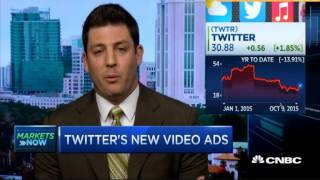
A multi-speaker CNBC/YouTube discussion (Jan 2017) about Twitter’s monetization strategy: new ad products may provide short-term revenue bumps but face limits because the user base is stagnant and many high-engagement influencers migrated to Instagram. Speakers describe Twitter increasingly as a broadcast-style platform (similar to TV) and debate longer-term prospects, including possible acquirers (Google commonly cited; carriers like AT&T/Verizon also mentioned).
More revenue.
Sure, it's going to bring in revenue, but you're still going to be taking in, that's good. But you're taking it from the same stagnant user base. Over time, you have to grow that user base. And like I said, I think it could provide a short term pop in revenue, but long term, unless, you know, the recycled leadership finds out a way to get people on the network. I mean, grandma gets Facebook, she has recycled leadership.
You're full of them today. Holy smokes. I mean, listen, hold on, hold on.
Let's see what Matt thinks of what you're saying.
You're nodding your head.
You like this company, I assume you like this strategy.
Well, I mean, Twitter's problem really came from Instagram, really hit mainstream pop culture because a lot of the big influencers, the Kim Kardashians of the world, instead of them sharing their everyday lives on Twitter, they all flee to Instagram. So in terms of the main pop culture platform for the millennial audience, it's now Instagram. In its departure, Twitter is really a broadcast channel, just like a TV network. And that's why they're going this direction. They want publishers for the ability to monetize their content in a way that truly partners both companies. I do agree though, it's a stagnant user base. Unlike other social platforms, you have 99% of the content on Twitter really being created by like 1% of the audience. So it's going to be a broadcast channel long term. Twitter's big opportunity is the shift of tv. When TV goes all digital and Twitter could become almost like the next TV network and they're aggregating content for multiple publishers. There could be a real opportunity there.
What about bottom line profitability? In the meantime, you're going to bring in more revenue.
It's going to, it's going to, it's going to help.
Right, so what does that mean? Does it mean eventually somebody just buys them to be an additional revenue stream or just giving up on their growth? Oh, yes, I heard Lou says yes, absolutely.
Look, I would not short Twitter because I think there's a big risk at some point it's going to become compelling enough and an attractive valuation where someone's going to acquire them. It's going to be a bolt on acquisition. The asset is the network of users who wouldn't want 300 million users to.
Add on to who's a likely candidate to buy them. Is it like obvious like Apple or Google?
Everybody says Google. Yeah, I think Google is the front runner. That's where the consensus is. But, you know, I actually think it.
Could be like an AT&T or Verizon.
Why?
Because they're all getting the broadcast game. I mean, think about it. AT&T bought DirecTV. Verizon bought AOL. They're competing their traditional revenue, revenue streams are trying to.
Jack Dorsey views Twitter the way you do.
You know, it's hard to tell. He's kind of always a couple steps ahead. I think that they're bullish internally. I think that it's still a major phenomenon, but the expectations of investors of these social media stocks are really high. So it's not about short term growth, it's about long term explosive revenue growth. And their deteriorated user base might hurt.