Miami Dolphins’ Michael Shaw on Sports Fans, Brand Strategy & Fan Experience
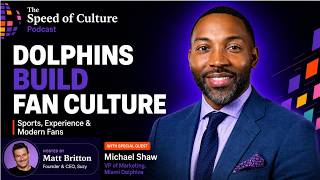
Michael Schall, VP of Brand Marketing for the Miami Dolphins, talks about rebuilding fan trust at the Marlins under Derek Jeter, then shifting to a consumer-centric strategy for the Dolphins now that season tickets are sold out. He emphasizes cross-platform messaging, younger-fan outreach through player content, and integrating Miami's music and culture into the brand.
Chapters
Today we're gonna be speaking with Executive Business Brand Leader, Michael Schall. Michael currently serves as the Vice President of Brand Marketing with the Miami Dolphins, Hard Rock Stadium, and its properties including the Miami Open and F1Crypto.com Miami Grand Prix. Michael's also an experienced keynote speaker, Adweek and Brandweek Executive Mentor, as well as Global Institute of Sport Advisory Board Member. Michael, so great to see you today here in Miami.
Thank you so much for having me. Welcome to Miami.
Oh, thank you. Love it here. Love to hear a little bit more more maybe in February and March than—
And most New Yorkers do. Exactly.
Exactly. But it's all good seeing the palm trees and being down here. I have to tell you, I'm a huge sports fan. And there were many times growing up when I thought I wanted to be in the industry. I knew pretty early on it wouldn't be as a professional athlete. But as you know, there's lots of other roles in the sports industry. When did you know that you wanted to be in the world of sports in your career?
Yeah, so I had that dream that many, many young folks do. Like, I want to do this as a professional. Yeah.
That dream.
What sport? So primarily I was, played basketball and baseball. I was a point guard in basketball, played center field and pitched in baseball, left-handed. So there's only a couple of positions you can play in baseball.
Oh yeah.
First base pitcher, you play outfield. And so one of the first reality moments for me was a 14-year-old AAU National Championship tournament. Quentin Richardson, there was a team from Chicago. Let's just say that they're starting 5, all of them played, made it to the NBA.
Wow.
And I had at 14 years old, had the realization that these guys are 6'6", 6'7", 6'8". I think I've leveled out.
And so reality— Meaning like maybe I won't be a professional athlete.
Maybe I won't be a professional athlete. Right. But I love the game so much. I had my opportunity to play kind of on a, you know, walk-on basis very early in my career. I went to Middle Tennessee State, very brief cup of coffee to play. And then I realized I'm more interested in the sport, the business of sport. I was interested in contracts, I was interested in media rights. I was interested in how the inner workings of the sport went. So I started to transition by, by the end of college, but certainly about 14 years old, I realized that maybe the NBA is not the thing, but there were certainly some opportunities to get in the business of sport.
Yeah. And, and after you left college, I mean, you worked for 5 years at sort of like the preeminent place that anybody who wants to get in the sports industry would wanna work at, which is ESPN.
Yeah.
So tell us about your experience of working at ESPN and, and what some of your key takeaways were from during your time there.
I often tell people, those who have not been to Bristol— Did you live there?
From Bristol?
I did. I was in a very small town right by Bristol called Southington. And you have to be from Connecticut to know where that is. But I would say that I often tell people, those who went to a college like University of Michigan in Ann Arbor or Tallahassee with Florida State or Gainesville, it is a college town, but everybody, it's not the college, it's that everybody who lives there works at ESPN. So it's very much the town is run by those— Yeah.
Collegiate atmosphere.
It's a very collegiate atmosphere, which, which for somebody coming right outta college is a lot of fun.
Yeah.
Right? There's really competitive basketball leagues and there's a lot of great athletes that work there. So from a, a learning standpoint, I don't know if there was a better place for me to start because—
That's great.
Because for a few reasons. One, understanding the business of sport, understanding how media rights negotiations, understanding most of all corporate relationships. I would tell you that 90% of the people that I consider friends, I, I met them when I started ESPN. And so most of the contacts that I have that are in in the industry. I met them in those— They've gone to different places. They've gone to different places. They've gone, you know, they've gone to social media companies, they've gone to investment firms, but they kind of started there. And so it is, it was really great training ground, but also relationship building and having an opportunity to really learn the industry. And I, and it was valuable years. I, I, I think were so important to the foundation of my career.
Yeah. And then, so what makes you decide to leave a place like ESPN? 'Cause some people obviously never leave.
Yeah.
I know that living in Southington probably wasn't your dream, so maybe that has something to do with it. Certainly not as cool as my Miami. Um, but what made you decide to leave?
There are opportunities, and this is one of those learning lessons. There, there are sometimes when you're in a large organization where sometimes you gotta go somewhere else to grow. Uh, and so perhaps whether it's a compensation opportunity or whether it's just a larger title. And so what I saw is there was an opportunity, uh, for me to join a smaller group. Uh, there was an opportunity to grow a company called Silver Chalice run by Jerry Reinsdorf, who owns the White Sox. He's starting, he was building digital media platform companies. He was hiring individuals. And so I took, and there was certainly a wave of ESPN was certainly starting to go digital.
Yeah.
And so ESPN3 was in the works. They was called ESPN 360 at the time.
Mm-hmm.
And so there was a real opportunity I saw to have a bigger role and certainly have another, a bigger title and have some more responsibility to take a lot of what I learned and quite frankly, an opportunity to advance a bit without, you know, some of the corporate structure that comes with the red tape at a huge, huge corporation. But I saw that as a great opportunity. And again, using those same relationships. The person that hired me also worked at ESPN. So that's where, you know, you start to see those relationships come into play.
Right. And then from there you went to Groupon. So I imagine you lived in Chicago for a little bit.
So I was not, my wife was not the biggest fan of it, but I was commuting between New York and Chicago throughout the week.
Oh wow.
And so I went from Connecticut just south to the city. And so my wife and I were living in Harlem and we did, probably did for almost 10 years, completely from Connecticut to New York City. And I was commuting on Monday, leaving to go work in Chicago.
That's not easy.
And then I'd come back on a Thursday night. So it was almost like a traditional consultant, kind of like where you like leave on Monday, work through Thursday, and then I'm back home for the weekend.
Uh-huh.
And so what happened is I had an opportunity, a friend of mine named Brandon Gayle, he's COO for the San Antonio Spurs. At the time he was in the role as the head of sports at Groupon. He had an opportunity and he called and he basically asked, hey, there's, I'm leaving and there's an opportunity. Is it, are you, would you be interested in this role? This role is interesting because Groupon at the time, I would say Groupon was Amazon before Amazon.
Yeah.
Right. And so Groupon—
A lot of people don't realize that. Yeah.
And so Groupon at the time was still a rocket ship. And so they had created a live sports vertical where they were helping the industries of sport, live entertainment, and, and theater and arts to help sell those last minute distressed tickets so they don't go unsold. And then Groupon had an audience that was untapped.
Once tickets don't go sold to a game, that's it.
That's exactly right. And so I had an opportunity there So if you think about ESPN, it was really my introduction to sports, but learning the media business.
And digital too.
And digital, right? And then I moved and transferred that into Groupon was really about ticketing, right? It was about ticketing and business development. So as I'm thinking about my career, you know, ultimately one day thinking, ah, I think I wanna be CEO or think I'll be a general manager. I just saw few opportunities to continue to add to the toolbox of skill sets to say, now there's an opportunity to learn about ticketing, learn about the revenue sharing, learn how teams divide up their revenue and where there can be some growth. And Groupon was a great opportunity opportunity to really build on the team side. 'Cause I'm working directly with either the team presidents or the chief revenue officers. They're making the decisions about how to divvy up their tickets, what they're willing to relinquish to Groupon, and we can help them sell. So it was a great opportunity to learn that business. Yeah.
And you know, it strikes me that you were very intentional about your career decisions, which I think a lot of people might just chase the money and money's obviously always a part of it.
I made the mistake too. I've chased it, but— Yeah, we all have.
But you know, you are also trying to piece together different types of experience to kind of, put together the puzzle, the pieces of the puzzle that will be who you eventually wanna be.
Yeah.
And I think, you know, having these different experiences, meeting different people, understanding how these companies work, allow you to be diversified in your skillset.
There, Matt, there, there's a few different approaches, right? I think we all know there's certain individuals, you've seen them, they've been lifers at companies, they've been at a company 10, 15, 20 years, and there's advancement there. And I think, you know, God bless them, there's an opportunity and, and, and that's a path.
Yeah.
I didn't see that as my path. I thought my path would have to be diversity of skillset. Uh, and so I would, was, you know, I won't take, I can't take credit. I gotta give God credit. 'Cause sometimes I was, I landed places and I wasn't sure how I got there, but there was a really great opportunity for me to learn a different skillset. So it went from learning media to learning ticketing to business development, to leading sales teams, and then ultimately getting to brand and brand development and leadership. Well, then you look back at your toolbox and you're like, wow, I think I have a nice skillset.
Yeah.
You know, that can offer up to an organization, a really inclusive leadership style that I can help a lot of people.
Yeah. And you also have to be willing to bounce around. So you were in Connecticut.
That's right.
You went to Chicago and then you ended up in Miami.
That's right.
Where, where you still are today.
That's right.
But first working for the Miami Marlins.
Yes.
Which I still look at as an expansion team, even though they're, they've been around for quite a long time.
Yeah.
But I remember when they were sort of like a new school expansion team. What was your experience like working for the Miami Marlins and being part of a, a Major League Baseball team?
Yeah, it was an incredible experience. A lot of learning lessons, but a lot of incredible moments. One being, I had the opportunity, so I was hired. Derek Jeter had just—
I was just about to ask you about that.
So yeah, so Derek had just purchased the team in October 2017. And so he was very new into ownership and he was the, he was the CEO. And it was really a great opportunity. So I got hired in May. So it was just months later after beginning of 2018. And the opportunity really was, it was his vision of what he thought the Marlins could be. It wasn't about what they were. We knew coming into, and I knew when I took my job, there was a, it was a, a full kind of rebuild that needed to happen. One, on the field.
Yeah.
That wasn't my job.
'Cause they were very successful for a while and then they kind of disbanded.
That's right.
Yeah.
And one of the big challenges that I quickly discovered is that there was a lot of broken trust between the fan base and between the organization for whatever reasons. And so those reasons were that, you know, the teams had been broken up and even the teams that were successful, then they get broken up after they were successful. And so there was a lot of fractured trust in the community, a lot of fractured trust with the fan base. And it seemed to be one of Derek's missions to really try to build trust. Meaning, hey, if I say I'm gonna do a thing, then we're gonna do that thing.
Yeah.
Right? And so, you know, I think he certainly is a man of integrity. And so him kind of bringing me on as part of the leadership team, I saw an opportunity as a new vision. So it wasn't about what the Marlins were. I was really believing in kind of the vision of Derek and what they could be. And I think for, for almost 5 years, it really was an exciting opportunity to really help start to build something and really build trust with fan base. And those, the success wasn't, it, you know, wasn't evident immediately on the field, I think on the business side there were some really, really huge wins and something we're really proud of.
And how hard is that when you're getting success on the business side of things, but you, you're not the coach, you know, you can't control how the players perform on the field. Is it hard to feel like you're successful and working for a sports team when maybe the sports team itself is, isn't at the top of the standings?
It can, it can be very frustrating, man.
Yeah.
Right. Like candidly, like—
'Cause winning solves all, right?
Well, you know, like there's a, I, I made the joke, uh, on our, on my panel on Monday on stage. Is that the marketing is a lot better when the team's winning. Exactly. Yeah. Right? Like it just, it just works that way.
Yeah.
Right? And so you could have some of the best ideas and some of the greatest strategies, but if the on-field product is not, you know, up to par, there's struggle.
There's always so much you can do. Somebody could get injured. It's a lot of, you know, it's—
It's exactly right. It's exactly right. Like, so, you know, what, what one, there's a few lessons to learn from that. So one of them is, is one, we control the controllables. The controllables, we're not outplaying the game, right? So the win and loss, we won't make excuses. Whatever the team does, the team does. But what we should be doing what we're doing is preparing for when the team is more successful.
Yeah.
Right? And so we won't use records as an excuse of why we can't do our job. We know what the challenges were. And so we, how do we work around them? What are the creative— and, and in some instances, Matt, it forces you to try to be more creative, right? Yeah, for sure. Like you have to be more creative, even more grassroots and think of like, what are the things that I can do from a game-to-game basis to get an extra 500, 1,000 fans in the seats? What are the things from a brand perspective that we can do to get people excited from a customer service perspective? And so I think what came out of it for me personally, professionally, was a renewed sense of kind of rolling my sleeves up and figuring out how to strategize in very challenging circumstances is, you know, even on the business side or on the on-field side. And I think when you look back, you say, well, wow, look what we learned and look what we accomplished and look what we can take to the next stop.
For sure.
Right. That we can integrate and, and really excited to look at our on-field product for the Miami Dolphins and say, wow, we got a lot to be excited about. Yeah.
And we'll get to Dolphins in a second. My last question about the Marlins.
Yeah.
Because, you know, I think what a lot of people don't realize is that baseball is so big in Latin America and Latin America is such an influence here in Miami that there are a lot of fans who really look at that as their kind of home team and have a different level of pride attached to it. And we also see that happen with soccer, with Messi coming—
100%.
Yeah. Here to Miami as well. 100%.
I, I think it's a big opportunity. So for those who are familiar with the World Baseball Classic, it is an— it, it is a World Cup of baseball.
Yeah.
And, and so for the matches, the games that are hosted, In Miami, they're completely sold out. And credit to the current Marlins organization of— it is, it's an atmosphere unlike anything you've seen in American and US baseball.
For sure.
And so what we know is, and what we knew then is that to your point, the Latin American, LATAM audience, whether it be, you know, Cuban, Dominican, Venezuelan, it is an enormous opportunity mainly because, and what's different than, than call it the NBA and NFL, there are a lot of Hispanic players, right?
Yeah.
And so when you have players who are already carrying the flag with pride and you already have players and families who are in the, in the area, in South Florida, in Latin America, then you have something that's really special. And so there is some great opportunity for the Marlins and we, and I see opportunity because they, when they look at their team and they look at the makeup of the players, it represents who's in the community.
Absolutely.
And so there's a great opportunity from them.
Super flexible.
That's exactly right.
For sure.
Yeah.
So I wanna jump to your current role where we're in the heart of, football season, and it's a great time to be a Miami Dolphins fan. Yes, it is. You're currently a vice president of brand marketing at the Miami Dolphins at Hard Rock Stadium. Hard Rock Stadium is— when I went there, I went there a couple years ago.
What did you go for?
I went to see the Miami Dolphins beat my beloved Eagles, even though the Eagles are better. It was a game when the Dolphins had that incredible fake field goal. Oh, it was a fake field goal. When they had the crazy formation.
Sure, sure.
But I didn't expect the stadium to be so cool. I just, I don't know. I'd been to football stadiums in Miami in the past, and I— it just, it wasn't as modern and had like a lifestyle feel to it.
Yeah.
And I loved it. And I can't wait to go back there. So for those of you who haven't been to Hard Rock Stadium, definitely go. But talk about your role at, you know, at the Miami Dolphins and Hard Rock Stadium. What are you focused on and what do you hope to achieve in your role, which you're still fairly early in?
Yeah, I am. So first, to hit on your first point about experience, you know, give credit to our Vice Chairman and CEO, Tom Garfinkel. One of the things that he challenges his leadership team and everyone in the organization, it's like, how do we think like the customer?
Customer.
Yeah. Like it, it, it obviously seems very simple, but often forgotten, overlooked is that when you're creating new brand ideas, new strategies, new visuals, new creative, when you're creating new experiences, are you thinking about what's convenient for you as the employee? Or are you thinking about what, what would actually make someone who spent their hard-earned money, what make, what would make something memorable for them? Yeah.
Becoming consumer-centric.
Right. Very, very consumer-focused. And so, when we think about, you know, the role that I have now, First of all, if we talk about Dolphins, we are, I'm very grateful for, for the first time we're not selling season tickets 'cause we're all sold out, which is fantastic, right? And so what does that mean? Well, it means we have more bandwidth, more resources to focus on brand building actually, right? Where we're not chasing necessarily revenue in a performance market.
You're working on what's important versus urgent. Like we have to sell tickets next to these games. That's exactly right.
That's exactly right. And so the fun in that is that really step back and look and say, well, how do we want, one, our organization to be portrayed? How do we want it to show up? Across platforms, whether we're talking about social or out-of-home, what are the things we wanna say and who are we as a brand? And so I think we have a really firm idea of who we are, how we show up and what we look like in the community. And now it's a really fun opportunity to like embrace the success of the team. And as we look forward, we're saying, let's make sure we're showing up on all platforms consistently. So one of the things that you'll notice if you're riding around in Miami, so right now you'll see a Marlins win. If you drive, if you— sorry, you see a Dolphins. So if you see— Dolphins. See a billboard, you're gonna see something on our social channels and it's gonna match what's actually on the billboard. 'Cause we're, we're actually trying to create kind of an all-in-one experience where it's like Dolphins win on Sunday and then Monday morning you're gonna see on your way to work the score. You're gonna see— That's super cool. A cool image that's gonna mirror something that's on social media. Right. And so we're trying to take the time now to really get people really excited. 'Cause what we are trying to do, much like your Eagles, we wanna get to the Super Bowl.
Yeah.
We wanna have some success, some sustained success.
Yeah.
Right. And so, So top, top priority as the Dolphins and leading the Dolphins brand is really how do we create more brand? How do we find that younger audience? How do we create the type of experiences, music, entertainment that they want to engage with us in, whether it be at the game or whether it be on our digital platforms. And then we have the other vert— business verticals, which could be the Miami Grand Prix and Miami Open, which in themselves are their own huge businesses, which we spend a lot of time and spend a lot of time focusing on strategy.
Yeah. So we had the head of Allegiant Airlines Airlines, who runs, you know, the, the stadium in Vegas. Yes. And Miami and Las Vegas have a lot of similarities in that they're places where people come to have fun. Uh, they're about entertainment and, you know, Miami itself is a brand. And I would imagine that you have to reflect kind of the virtues of the Miami brand when you're building the Dolphins brand. Meaning it's not a, it's not like a, a, you know, it's not Pittsburgh, right? Yeah. Yeah. So, so you—
I grew up in Nashville, right?
Yeah.
It's not Nashville. It's different.
Exactly. So you have to inject that into the experience, I would imagine. That's 100%.
Not only do we have to,— we believe that's the expectation, right? And so when you're from out of town and you come to an event at Hard Rock Stadium, what we want to do is deliver what we, what we believe is an authentic Miami experience.
Yeah.
Whether that be from the food that's offered or the music, how it sounds, the look and feel, the lighting, the colors, right?
Yeah.
Like all of those things are considered. So what we, what we hope is it's an overall integrated approach, meaning that our color palette from what we are wearing in our uniforms should also give you that, that vibrant feel of the colors that pop and the things that are happening around the city, the vibrancy, the excitement.
Yeah.
The music, the drums, like all those things should—
The culture, the flavor.
That's exactly right.
Yeah.
It should, you should feel that in a, in an authentic way when you're at a sporting event or when you're at an entertainment event with at Hard Rock Stadium.
Yeah.
Yeah.
You, you mentioned the younger fans and you know, the, the fans of today are consuming sports differently than I did. I'm a Gen Xer growing up where I would, I would just hope that my team was on television. Right. And I would look at the, the box score the next day in the newspaper.
Yep.
Where now you have, you have FanDuel and fantasy sports and gambling, and you have TikTok where people are following players and not teams, and they're all about the highlights. How does that affect your content strategy and what you put out there to make sure that— because you guys have a lot of exciting players. You have—
Yeah.
Tua. You have Tyreek Hill, who's probably the most—
Waddle. Yeah.
We got Matt Britton. Incredible players that, you know, I think in some instances transcend the team.
Yeah.
Especially with the young kids, they'll wear their jersey even if they don't like the Dolphins.
Sure.
I imagine you need to kind of lean into the songs and not just the album, so to speak, when you're promoting.
You're absolutely right. So, so growing up, obviously like many people, like I loved Michael Jordan. So guess what? I was a fan of the Chicago Bulls, right? Because I love Michael Jordan. Right. And so I think in your point, I think what we don't need to do, we're not shying away from those that, that love Tua, that love Tyreek, or that love, you know, Nick Chubb or whoever your favorite player is. Right. And so we think that's a great entry point into getting to know more about the organization of the franchise and getting to know, if you want, know about the player. So the way that we look at it from a brand and a marketing perspective is what information, what details, what can we share with you that goes outside the lines of football?
Yeah.
And so a lot of the times the platforms, when you think about especially Instagram and TikTok, it's an opportunity to learn a little bit more about the, the individual outside of what they do on Sunday. Right? And so we see an opportunity with the fan base. They care about more, they care about what sneakers they're wearing, right?
Yeah.
They care, they care about, they care about what shows they're watching.
The lifestyle, the player.
They care about the lifestyle, right? And so what we wanna do—
Access.
We wanna make sure that we're providing, yes, one, we want to have all the game coverage you want, right? But more than anything, we want to give you a reason to care about 'em and care about what they do.
Right.
Care about what they do in the community, care about what they wear. And so we believe that kind of all integrated approach builds a fan at a very early age of like, hey, I'm a fan of Tua, so guess what? I'm rooting for his team now.
Yeah.
And so then we see the opportunity opportunity to make them a fan, make their family a fan, and then we have something really special.
Yeah, you've probably seen the Google campaign because, I mean, Google, they've done a great job with YouTube TV finally taking over Sunday Ticket this year. And within that, they're playing this spot where you see the players— I'm sure you've seen it— walk to the locker room, and then you can snap a photo of it and see what they're wearing.
What bag are they carrying? What glasses are they wearing? I think that's so cool. I give a lot of credit to— to David Stern and Adam Silver, because I think the NBA really, really started kind of like, you know, I think the NBA more than anything is about the individuals.
Yeah.
Where I say NFL's about the team.
It's harder too, 'cause NFL, they're wearing helmets. So many people.
And there's so many people on the field. And the roster is so much bigger, right?
Yeah, and you're not as close.
That's exactly right.
Where NBA, you really get to see them. That's right.
But in the NBA, what they have done really well is they made kind of the entrance it's become a runway.
Yeah.
Right? Right. So when the NBA, when a player is getting off the team bus, or they're getting outta their cars, it's literally like New York Fashion Week.
Yeah. You see Westbrook, you see what they're wearing.
That's exactly right. That's exactly right. And so the NFL, so we found opportunities cuz you know, all the athletes, they know each other and they, they wanna be competitive in everything. They wanna be the best. This guy's wearing that and that person's wearing that. So there is an opportunity to really continue to tell the story through fashion or what the guy's wearing. Guys are interested in. They're interested in so many different things. And so that's what we want to do. We don't need to create anything. We just wanna tell the story.
Yeah. You amplify it.
We amplify what's already happening. We have some really, really great individuals and some really great stories. And so we'll see how we amplify it and allow our fans to enjoy that content.
Yeah. And I mean, and athletes today, they wanna build their own personal brand that transcends the team as well so they can get involved in business opportunities.
Absolutely.
We, one of our investors is Kevin Durant and Rich Kleiman from Boardroom and you know, You know, that's a perfect example of Kevin building his own personal brand and getting involved in so many things that go outside of, of the basketball court.
Yeah.
And I imagine a lot of your players wanna do the same thing.
And, and I don't see, I, I really am a big proponent of it because I believe when players are aware of their brand and when they're aware of, of life after they're on the field or on the court, I think it actually makes them a better teammate. I think it actually, 'cause they're thinking about more than just the day-to-day.
Yeah.
I think they're thinking about long-term and I think— As they should.
As they should, right? Just like you and I are.
That's exactly right. And so I, I'm a, I'm a big proponent of allowing the athletes to have their own brand and to have their own camera crews, you know, within reason of, you know, obviously where they can be.
Of course.
But allowing them to have that own personality and persona, because I think ultimately what happens is they become better educated about what the process is. They become better aware of what they'd like to do post their career. And I think it just makes them a better all-around individual.
Yeah, for sure.
Yeah.
One property you work on, which which I'm not as familiar on as a fan, but I'm very much familiar on its impact and culture is F1.
Oh yeah.
What is this F1 thing? Why is it, why has it taken off so much here in the United States? And what's some of the work that you're doing with the Miami Grand Prix that's unique and that you're excited about?
Formula 1 has become a phenomenon. I would say it's big everywhere else in the world, much like soccer was many years ago, right? The rest of the world's like, we've been, we've been on F1 for a long time, right? But, but what I would say, there's a few, I think, guiding reasons why. One of the things that I know has played an impact, I, I won't say it's fully, but certainly Drive to Survive on Netflix.
Yeah.
During the, during the pandemic, right? There were a lot of people who were introduced to F1 through, through this documentary.
Just like they were with chess with King, uh, Queen's Gambit. That's exactly right.
Right. So everybody's in the house, you gotta find some stuff to stream. And so Drive to Survive numbers were, were incredible. And I think especially in the US, it did, what it did was help people understand personalities and teams. And so much like your favorite basketball player, your favorite NFL player, once you, once you are a fan of their personality— It's a huge part of what you're trying to do with the Dolphins.
That's right.
Yeah. So what I believe from an organization perspective, I think F1 sees tremendous opportunity in the US. I think similar to the way that Commissioner Goodell sees tremendous opportunity internationally, 'cause you know, NFL, NFL is, is already, you know, matured here in the US.
More and more games are happening in Europe every year.
But as you look, you know, internationally there's more games. Well, I think it's the reverse effect for Formula 1. So Formula 1's looking to kind of continue to grow in the US because they see an incredible, you know, financial opportunity, incredible fan base opportunity. And so Miami as one of the 3 US races, so Las Vegas will have their first race this year.
Yeah.
And Austin's been around for quite some time. And And so in Miami, the way that we look at it is that we are— I think you said it really well before, Matt, that we are— when you come to Miami, you want to feel like you're in Miami.
Yeah, no matter what you're doing.
No matter what you're doing. And so what I would tell you is that the goal of our race is to create an experience unlike anything else you've done. Not like unlike any other Formula 1 race, unlike any other event that you've gone to. And I think through the first 2 years, we've had some very, very good fortune and some success a lot of celebrities and notables and just racing fans have been able to come and enjoy. And what I believe our goal is, is to create individual unique experiences. So if you're a hardcore race fan, then you can come and watch the racing and then you'll feel thrilled to do that. But also, if you're a first-time fan and maybe you just watch Drive to Survive, there should be an incredible experience for you. Just, you don't have to be a racing enthusiast. You should be able to come and have a great—
The experience should be accessible to the casual fan.
That's exactly right. And so we believe between— the entertainment seeker, the music lover, the art lover, the hardcore racer. We think we have several personas that can come and we can have an incredible experience for those individual personas so that we wanna build something that we would call legacy. Meaning when you think about the Kentucky Derby or you think about the Masters or you think about some of these events where people plan traditions, right?
Yeah.
We don't want this to be a one-time thing where you come one time and then you're, you say, I've done that. What we're trying to build is tradition where families and friends come together every year, the first weekend in May, And then there's like, we're going to Miami Grand Prix 'cause that's where, you know, that's where the action is.
Yeah, I mean, what we're seeing in the US economy at least is just, it's just the boom of the experience economy is back. It, it was strong and then there was such pent-up demand during COVID and now you saw it in Europe this summer in, in Italy and places where you couldn't, you know, go to a restaurant, restaurant, even walk on the sidewalks in Venice. Like it's obviously happening. I'm sure you're seeing that.
People are excited to come back together.
Yeah.
Right. I think there was certainly, you know, when you think about 2020, '21, people were just excited. I think we all, and I certainly put myself at the top of the list, we take for granted some of the freedoms and options that we have. And I think we all kind of looked and said, oh, you know, if we had to spend the rest of our life in our house or in our apartment, like what kind of life would that be? And so I think we realize the importance of personal connection, right?
Even doing this interview in person, like I do a lot of these podcasts over Zoom and it's just different. Like our conversation will be different. The vibe will be different.
Yeah, no question. And so I do think I think, you know, for, I believe that our primary goal, and we take away whether it's football or racing or tennis, our goal is bringing people together and to create moments, right? Like, so what, what's like what Disney would say, right? Like make memories. Like our goal is what I, what I love to hear outside of the fact that we beat your Eagles. But what I would love to hear is you're like, hey, me and my friend, me and my son, me and my wife, whatever it is, we came, we went to an event and we—
That's what people remember.
And we never will forget that time. That's what they remember. That's exactly right.
That's right.
Yeah, and so that's what it's about. And so when we think about what our aim and what our mission is, we're trying to create those lifelong moments so that we will, you know, we will always know that you, when you came to Hard Rock Stadium for whatever the event was, it was something that you'll never forget.
Yeah, I love it. So switching gears as we wrap up here, Michael, I mean, this has been an amazing conversation and you strike me as somebody who like, you're entering your prime of your career and it's clicking, you know?
I hope so, man. I feel good.
I feel good. It feels like you feel good. You look great. You got, you know, you have all— you, all the kind of pieces and pillars that you put in place to get you here are certain. They certainly shine through.
Can I hire you as my agent?
I don't know if they're good for me, but, but what are some of the things that you think you've done right today, you know, as a, as an executive? And how does that impact, I guess, your leadership style? Because I imagine you also have people that report to you now in your current role.
For sure.
As you grow as a leader in your career. Yeah.
I believe first and foremost, there's some important DNA of that great leaders have.
Yeah.
And I think it's a shared DNA. And I believe this with every fiber in my body. The, there, there are some things that, you know, I like to use sports analogies 'cause people understand it. But if you think about when I was growing up, the Celtics were really good. And when they got, they got Kevin Garnett and they had Ray Allen, that was a big three.
Paul Pierce.
Paul Pierce, right? But Kevin Garnett was an emotional leader. There were things that Kevin Garnett brought to that team that didn't really show up in the box score.
Oh yeah.
Right? So there, I believe there's some DNA in great leaders that can create great performance that doesn't necessarily show up in IQ. It doesn't necessarily show up in—
Charisma is a part of it.
It's exactly right. Those things to me that I, that impact my leadership style, like, so courage, right? Like how do you show courage? Courage to me is like the ability to go in and be able to ask tough questions, to be able to ask a question when nobody else is willing to ask, even if that means that you're your CEO or superior, right? And so to give— my leadership style is to give people the space and platform where they can have courage, and I want to demonstrate that to them. And then there's a type of infectious energy, right? You see it. Every great leader, there's an infectious energy that not only makes you feel better, but also it's actually going to propel me too, right? Because energy— like, like, like, you know, right? And so I believe this type of energy—
Passion is part of it.
That's exactly right. And so the type of courage and the type of infectious energy, and then the And so that's one of the other components to me that impact my leadership style is, well, how do you have tough conversations, right? Because the ability, that's a different piece of courage, but it's a tough conversation. Meaning if there's something that you need to talk about, and I've learned this in my marriage, but the better and the sooner you can talk about it.
100%.
The better off.
Yeah.
And guess what? That's where we build trust, right? Because if I'm willing to tell you, hey Matt, there was something I was depending on and you let me down, but here's how we can improve it, then I think you're gonna respect me. And I think it's gonna be—
Doing them a disservice if you don't tell them whether it's your spouse or your employee or frankly somebody who you work for.
Yeah.
You can't expect them to read your mind.
I agree.
And, and, and if you tell them and you can right-size, and if you can't, well then you deal with it then. But you have to—
We gotta deal.
Always be sharing it.
Yeah.
We gotta deal. Those hard conversations are really, you know, and I imagine coaches of, uh, the, the coach of the Miami Dolphins faces the same thing as well. Right. And, but that's where, how you get better.
That's how we get better.
Yeah.
And, and if we can't can have that type of, and what my goal is, is to have that type of self-awareness to where if you're telling me something that's gonna make me better, I'm not gonna immediately get defensive because I actually wanna see it as an opportunity to get better.
Yeah.
Right. And so you actually care about me because you're telling me.
Yeah.
Because if you didn't care, you wouldn't say a word.
100%.
And so I think in terms of leadership, how can I convey those things in such a way that it energizes and creates incredible performance across my team? For sure.
So where do you see yourself in 5 to 10 years? You, you had mentioned wanting to be a, a CEO, or I could see you being a GM. Like what, where you wanna go eventually?
There's, I think, a leader of an organization, I would guess in certain instances I lead part of an organization now, but I would say to have, you know, primary responsibility as a CEO, I think is something that I certainly would be open to and strive for. It's interesting because you talked about chasing money and it's one of the lessons that I learned some years ago is that I'm really focused on doing my job incredibly. And what I found is when I focused on that and shut the other things down, is off, the knocks on the door and the opportunities just come.
Exactly.
And I don't, you know, you're not worried about anything else. And so—
Well, patience, you have to have that patience. Yeah.
There's patience, Matt. And there's also some discernment and wisdom because the thing is sometimes the opportunity is there, but to know if that's the opportunity or this is the opportunity, well, it's not, I've got to define kind of what's important to me. And so what's important to me, compensation's great, but culture's more important, right? The person and the ownership of the organization is more important. So I've been able to define those things. And so I would say as I've gotten more clear on who I am, the opportunities that line up, line up for me. And so in 5 years, who knows what that looks like? Hopefully a few kids, happy with my wife and, and an opportunity to, you know, continue thriving with a great organization.
I love it. Well, I have no doubt you're gonna continue to achieve great heights. Uh, lastly here, Michael, is there a quote or mantra that you like to live by?
There's a quote, I don't wanna get it wrong.
Well, it could be yours, so there could never be a wrong quote. Even if you butcher it, it's cool.
There's a quote, Nelson Mandela has a quote that I love that I believe it goes something like, "Courage isn't the absence of fear. Courage is having the fear and pushing through despite the fear." Yeah. Right? And so that's why courage is one of those pillars 'Cause I was talking to some students. That is so true. Right? I was talking to some students Monday after I spoke on the platform and I wanted them to know, it's like, every time I get up and speak, I get nervous, but I want you all to know that you gotta push through it. So the courage is, so it will never, you'll never not be scared or you'll never not be nervous, but the courage is actually in actually pushing through that.
It's on the other side of it.
It's on the other side of it, man. It's so good.
I love it. Well, it's been an amazing chat. I cannot wait for our audience to hear it. I cannot wait to see your continued— Thank you for having me. Yeah, it's been incredible. Level. So, and best of luck to your Dolphins this season. Thanks so much. Until of course they meet the Eagles.
Until we play the Eagles, right?
Awesome. On behalf of Susan and the Adwee team, thanks again to Michael Schall, VP of Brand Marketing at the Miami Dolphins, Hard Rock Stadium, and a bunch of other stuff for joining us today. Be sure to subscribe, rate, and review the Speed of Culture podcast on your favorite podcast platform. We're here in Miami, and until next time, see you soon, everyone. Take care.
More from Matt




MikMak’s Rachel Tipograph on Consumer Spending, Retail Media & Holiday Shopping Trends



Jaguar Land Rover’s Charlotte Blank on Luxury, Purpose & Experiential Storytelling



