Milwaukee Bucks’ Dustin Godsey on Championship Culture & Building a Global NBA Brand
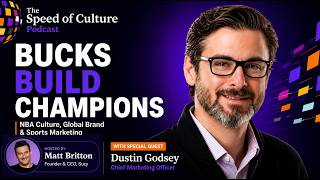
This content was created by Matt Britton. This content was uploaded by Matt Britton. This is a YouTube podcast/interview episode titled "Milwaukee Bucks’ Dustin Godsey on Championship Culture & Building a Global NBA Brand," recorded live at Fiserv Forum in Milwaukee (created 2026-06-03). The excerpt is a hosted conversation in which Matt Britton interviews Dustin Godsey, Chief Marketing Officer of the Milwaukee Bucks, about the team’s brand-building, championship culture, digital and streaming strategy, fan engagement and first‑party data, partnerships and sponsorships, Giannis Antetokounmpo’s impact, retail and lifestyle collaborations, and marketing career advice.
Chapters
We are live in Milwaukee at Fiserv Forum, home of the Milwaukee Bucks, and we're really excited to be speaking with Dustin Godsey, who's the Chief Marketing Officer of the Milwaukee Bucks and Business Insider's 2022 Innovative CMO of the Year. Dustin, thanks so much for having us today. I'm so excited for today's conversation.
Yeah, absolutely. Appreciate you coming in and experiencing here Fiserv Forum and the Bucks experience.
Yeah, it's amazing to be here, and I'd love to start by just getting to know a little bit about you. I mean, growing up, I could say one of my dream jobs would probably be the CMO of a National Basketball Association team. Here you are sitting here as a CMO. How did you end up here, and tell us about your journey?
Yeah, so I mean, I grew up in the Midwest, grew up in Iowa, and, you know, I think up until probably the age of 12 or 14, my, my goal is to be in the NBA, but as a, as a player, which was very obvious. I was not going to be one of the Michael Jordan stories of—
how old were you when you realized you weren't going to be able to make the NBA?
I was very young. It was, uh, I was not going 'cause you can't be one of those cut from your freshman year team and make it in stories like Michael Jordan. So I kind of went a different path, really, you know, went to school to be into journalism. Actually, my dream was to be on the Sports Reporters on ESPN, if you remember that show.
Sure, Jeremy Schapp.
Jeremy Schapp and all that. And, you know, got through probably the first year of journalism school and realized that reporting was not what I wanted to do either. So I ended up, you know, going into marketing and got the journalism marketing degrees and really happened upon the sports world. I didn't even realize that that was an opportunity for a career. Happened into an internship in minor league baseball and have kind of stuck in the sports and entertainment world ever since.
Very cool. And back in 2012, you were actually the Milwaukee Bucks' first marketing employee. So you basically had a blank slate. Tell us about how that job was sort of painted to you. And then when you came in, how did you kind of know what to do being the first employee?
Yeah, no, it was— so I was in Philadelphia prior, kind of working on really more the arena side. Shut down the Spectrum, was part of the Wells Fargo Center, worked with the Sixers and the Flyers, but really had my, my goal at that point was to run a marketing department for a team. So specifically in the NBA, hopefully. So applied kind of on a whim in Milwaukee, had been in the city once in my life, and came in and really, you know, as the position was kind of being positioned to me, you know, they're like, yeah, we've never had a marketing department. It was a very small organization. I mean, I think we were at 70 total full-time staff. Marketing was certainly happening, but it was, you know, each kind of department was doing their thing.
Almost like an afterthought.
Kind of an afterthought, kind of, you know, ticket sales did their thing, our partnerships team did their own thing. There was no real brand cohesion. There was no real story. And that was kind of what the story was pitched to me. It was come in, pull all these silos together, and kind of to pull it down. So that was really where we started. That was under our previous ownership of Senator Cole. And the really interesting part was I got into town, you know, quit my job in Philly, moved back across the country back to the Midwest. In the sort of 2 weeks interceding there, Commissioner Stern at the time had come to Milwaukee and said, if there's not a new arena or a new— a plan for a new arena by 2017, we're not signing another lease. So, the Bucks aren't going to be here. So, you were on the clock. We were on the clock. And a lot of people, you know, in the market at the time, it was a pretty distressed brand again because there was no real brand, there was no story behind it. And so, you know, the community really basically told me, I mean, there were people to my face that would say, "Don't unpack your boxes 'cause, you know, it's gonna be a pretty short trip here in Milwaukee." But, you know, things have certainly changed and it's been a great opportunity to build from, you know, kind of marketing person number one into this full team that encompasses, you know, a number of areas that I, at the time, could have only kind of dreamed of being a part of.
Right, so I mean, you know, we're talking 2012 when you first joined. Here we are over 10 years later. The world has changed. You know, the world of digital obviously has taken over, especially when it comes to streaming and the NBA, et cetera. What are some of the main pillars that you've helped lay down here for the Milwaukee Bucks that you think have been so transformational in terms of the success of the Milwaukee Bucks brand?
Yeah, I mean, I think it really starts with, you know, 2014. The team was sold. We had new ownership coming in, and Marc Lasry and Wes Seedens, new president Peter Fagan, You know, our brand identity and what we've started to build really came from a— really one of the first meetings that we had. The new owners brought in our— the entire staff into, you know, this kind of small kitchen, kind of crowded everybody in. And I remember Wes said to everybody there, it was like, you know, we're here, we're here to win a championship. We're here to be a championship organization in the city of Milwaukee. If you don't believe that that's possible, that's fine, but you're probably not going to fit in our organization. And that really set the tone moving forward. And when you think about what we are as a brand, we are We're a championship culture. That is first and foremost what we talk about. That's how we hire, who our internal team is. Off and on the court. Off and on the court. So we have great alignment with our team, with the basketball operations. We're lucky to have a general manager in John Horst who, you know, I kind of grew up with in the organization. So we know each other very well. They look for a certain type of championship player, the right kind of player that's going to go out and do the things that are committed to the city of Milwaukee and what this franchise wants to be. When we hire our staff. And, you know, that's the message that we've put out to our fan base is we don't want to do anything if we can't be the best at it. So, you know, there are going to be times when we're going to try things and fail, but we're going to keep trying. And, you know, we've been able to bring one trophy in, and hopefully we've got more of those to come.
Yeah, and obviously, you know, having a beautiful arena here at the Pfizer Forum obviously doesn't hurt. So you have this great arena, you have an incredible superstar in Giannis Antetokounmpo, who we'll talk about in a second. But what are some of the tactics that you've used as CMO of an NBA team to build the brand? What's been successful? Because ultimately, I would think your remit is ultimately selling tickets and selling merchandise. Is that what you gauge on for success?
That's a big piece of it. When you look directly at the P&L, yeah, single game tickets and retail and—
Sponsorships.
Sponsorships, all that kind of together. Falls under it, but I think, you know, from my standpoint where we've kind of built out this team. So we have, we've kind of brought all of the areas that the brand touches under one roof. We used to be very disparate. Digital kind of reported into a different place. We had marketing, we had broadcast, we had our game entertainment, all kind of reporting different ways. So what we've done is we've brought that all together. So we have, you know, sort of our brand strategy pillar, we have our digital platforms, we also have our direct marketing, our database, our email. You know, all the personalization, all that. And then our game entertainment and our live events. And then we have our arena marketing team. So that, that was kind of the first piece was bringing all those groups together. And now, as you mentioned, it was streaming and that sort of thing. Broadcast is now within that too. So really everywhere our brand touches falls kind of within that roof. And so I think the thing for us, and I think the thing when you think about NBA teams and what the role is, is, we have to super serve our fan base here in Milwaukee, right? That's, you know, most of our revenue is either coming from our media deals or our sponsorship deals or people coming in hyper-localized. But when you look at our fan base and our audience, 75% of our social audience is global. Yeah. So, you know, we have to both super serve that local fan here, have the world-class experience, the, you know, the sort of thing where we're blessed right now with a very good team and more often than not, fans are leaving happy because we won. We want to make sure that no matter what happens on the court, they're enjoying that experience and going through. But then we also take a lot of pride in a big piece of what we do is we're showcasing Milwaukee, not just the Bucks, but the city to the world. You go a lot of places in the world, they don't know where Milwaukee is, but they know the Bucks, and they know Milwaukee is a piece of that. So a big piece of what we're doing is also telling the story of this community and our involvement in that.
Yeah. And obviously you have to appeal to not only just fans around the world, but fans of all ages. This younger fan base consumes content differently. You know, they're on TikTok, they're about short form, they're about the highlights. Has that changed how you have to kind of storytell and bring new people into the franchise and get them interested?
Oh, it absolutely has. And that's a big piece. And we often say, yes, we're a basketball team, but really we're an entertainment— we're a content company. Right? So, and when you look at, you hit on a good point, is outside of, you know, maybe healthcare, we're one of the only industries that actually serves every generation, right? From kids who becoming fans to, you know, the older fans who've been with us since the days of Kareem. I mean, it really runs the gamut. So for us, like being able to sort of, you know, turn on a dime, understand what's new coming through. We were the first team on TikTok. We were one of the first teams serving the Chinese audience on Weibo. Really understanding those outlets and where you can storytell differently, how you have to produce things differently for these different audiences to go through is a big piece of what we do. And I think one of the challenges that comes, one of the great things, but also one of the challenges that comes with that is we can only plan so much. We have a trade deadline in a couple weeks. We have no idea what's gonna happen and the entire narrative of the team could switch. So that's one of the things also is we have to know what's coming. We have to know what the audience are. But we also have to be nimble enough to be able to kind of change in stream as we go.
Absolutely. Absolutely. And obviously television is a huge part of the NBA ecosystem and the business model as the world changes. And we were just talking about CES, and one of the big themes there was about OTT and how traditional linear television is now shifting and will be almost completely shifted in the next 5 to 10 years to streaming. How does that change? A, how you work with sponsors, because I would imagine the beneficial part of that is they could be much more programmatic and targeted on a local basis, but you can also still have global and national advertisers there. And also, does it impact the way that you kind of, I guess, produce content over that channel?
Yeah, no, it absolutely does. And I think even as the league has, you know, kind of broadened League Pass and that sort of thing, we, you know, we get numbers now from all over the world, right? So we know from a League Pass standpoint, who's watching our games. We've even changed what we do in arena and sort of how we create that show because we know if someone's watching on League Pass in Paris, they don't see commercials. They see what's happening in our arena and what our experience is. Exactly. So we have to think even from that standpoint of every one of those touchpieces, which at one point may have just been like, let's run this funny skit or that sort of thing without context in the building. Now we know that that's being broadcast internationally.
So you're involved in the on-court programming as well, whether it's halftime or in between timeouts, you're thinking about those as well?
Yeah, absolutely. That's one of our kind of pillars on our team. We have a great team that does that, that's one of the best in the business, that it's completely integrated in with the storytelling that we're doing on social, the storytelling we're doing on our TV broadcast. We want those all to be aligned and similar.
And what about, how do you know if you're doing a good job? Like, is there interactions with your fans? How are you listening to the fans, whether it's within the arena or more broadly? Obviously, they're going to talk about complaining about the game, and there's only so much you can do about that, especially the coach. But how you kind of have that feedback loop open with your fan base?
Yeah, I mean, that's one of the great things about this industry is people care. And so when you're doing something that they don't like, or less so when you do like it, if you don't hear anything, you generally feel like you're doing a pretty good job. We have a lot of mechanisms for getting that feedback. It's, you know, we have a very robust analytics and insights team that we work with internally, that we're doing surveys after every event. You know, we have regular touch bases with our fans where, and you know, social media, it's a great world as well where we can get that sort of instant feedback from people and really be able to kind of change our strategies in real time based on what we're seeing and what we're hearing from our fans.
Which you need. It's kind of a mandate right now for any brand in any game.
Yeah, absolutely.
So besides acquiring you in 2012, one of the best acquisitions Milwaukee Bucks ever had was bringing on Giannis Antetokounmpo in 2013. I'd love to talk about him because he is such a force of nature, both off the court and on the court. He is a global phenomenon. Yeah. And he obviously has a massive role in the recent success of the organization. Can you talk a little bit about how he has changed the culture throughout the organization and what benefits that gives you as a marketer? To be able to do your job effectively.
Yeah, no, I mean, look, the great thing about Giannis, and really from the beginning when he came in, he was kind of an unknown quantity.
Yeah, picked 11th. 10 other teams passed on him.
Yeah, so, and comes in, had never really been in the United States before, had certainly never been to Milwaukee. But really right from the beginning, we saw, you know, this potential just from a personality of him being willing to sort of tell his story and be out there. Authentically. Authentically. And, you know, I mean, we were right there in the car as he was out learning how to drive and those sorts of things. So to be able to kind of be on this journey with him and go through has been incredible. And I think we saw that potential from the beginning and we were doing things, you know, Bill Simmons mentioned one time, like all he wanted was a Twitter account that told him when Giannis was going to get in the game so he could turn on League Pass and watch him. So we did that and, you know, created that because we sort of saw that, like that myth-making almost right from the beginning. But it wasn't a myth, it was really who this guy was. And I mean, his story is incredible. So, you know, it's allowed us obviously to, you know, kind of put our kind of global growth and what we wanted to do on a fast track because his, while he's, you know, from Greece, has Nigerian roots, his story is kind of translatable in any language. People really understand what this is. And the great thing about him is he aligns so well. We don't have to try from our brand to align it to what Giannis is. He is, this hardworking, all he cares about is being on the court winning championships. And that's really— was aligned with what our brand was and the story we were trying to tell. So it's been a perfect fit and, you know, sort of lucky. You know, we don't often find ourselves in a role where, you know, the team and the superstar aligns so well with what we say we are from a brand. So it's given us those opportunities to go out and, you know, certain people say your job must be easy now. You know, you've got Giannis and you won a championship and And in some ways it is. Selling tickets isn't a challenge.
But the NBA has an embarrassment of riches in terms of the amount of young stars it has right now. So there's so many other great stars around the league as well that you have to compete for mindshare with.
Yeah. And it almost becomes more challenging for us. We're still a very small team when you look at organizationally, the spotlight that's on me, market size. And our entire department's about 40 people. All told when you look at all these. So, you know, we really have to focus on prioritizing what we're trying to accomplish and go through. And, you know, winning and having Giannis has brought, you know, kind of an embarrassment of partners wanting to work with us and other organizations want to come. We have to prioritize who fits with us, who, you know, aligns with our brand and choose our partners kind of wisely.
So, let's talk about that. So, you have brand partners that want to partner with the Bucks in a variety of different different ways, whether they want to have their billboard up in the arena, or whether they want to do a promotion at halftime, or they want to have the rights to co-market with the brand. What is that process for how you evaluate brands? Do you have free rein? Is the league involved? Talk us through that partnership dynamic.
Yeah, I mean, the league's involved to a certain point in that we have certain assets that in arena signage and that sort of thing that in a nationally televised game, they have the rights to that, right? So, like, if they have exclusivities with partners, we have to kind of go through that. But beyond that, it's every team is kind of on their own to go out and build this through. So, obviously, from a marketing side, we work very, very closely with our business development team that, you know, we're going out, and when we talk about it, we don't say the word sponsor. You know, you're not buying ads with us. You're partnering, and we— Fisurf is a great example of our naming rights partner here. It's a local company, you know, really aligned in terms of excellence and what they want to do and how they portray themselves with us. And that's what we like to go out and, you know, kind of work together with the business development team and the marketing team on. We could partner or we could sell a lot of sponsorships, but what we want are partners that, you know, align with who we are culturally and who we are as a brand. And then we build partnerships based on that. It's not about what's— you're going to get signage, you're going to get brand exposure in these different places. But it's, you know, how do we tell your story alongside of ours in a way that makes sense and is authentic for both of us?
So I'd imagine that's a big job of the marketing team, is you understand your content calendar, the key pillars, the in-arena experience, and then you'll take that and you'll overlay it with what a potential partner wants to do, and you'll come back and work with your sales or business development team and say, here's what we can do for you.
Yeah, and we really work with them from the beginning. We're involved in the pitches, we're involved in the meetings going out. We want to, you know, as any good sales team's going to do, you're going to listen to what the partner's trying to accomplish and put together a package based on that. But we don't want to do anything where it's cookie cutter, you know, we have this series, you know, let's do product placement or whatever. Like, we'll do some of that if it makes sense, but we really want to work from them right from the beginning of them understanding what we're trying to accomplish with these things and how that can best align and accomplish their goals. So it's been a really fun process. And again, and that's where we look at our international audience and those sorts of things. We've got Motorola on our jerseys, right? That, you know, they really look at us as this opportunity to be seen as a global brand, and, you know, they've got goals in South America and other places where we've got big audiences, and we can help kind of develop and build those plans over time as well.
Yeah, I mean, even the thought of having a corporate logo on a jersey 10 years ago or 15 years ago would have seemed foreign, and now it's sort of commonplace.
I know FIFA—
started to do it to begin with. So I imagine that part of what you're doing as part of your role is trying to figure out— I don't want to call it inventory, but just other opportunities where a brand can get more deeply integrated into the Bucs story.
Yeah, absolutely. And I think that's for us, you know, when we look at what we're trying to do. Again, we want to be sort of on the front edge, at the cutting edge on innovation and what we do. You know, we look across the league, and you mentioned it on the jerseys. Again, when I started, you know, it was only 10 years ago, but, you know, each team had 2 jerseys, maybe a third. You know, when we went through our rebrand process in 2015, you know, we unveiled our alternate, you know, our alternate jersey. We then also said, how can we take this a step further? We built an entire new court to match that jersey. So we were— and being able to, again, kind of build those platforms to be able to go to a partner and say, at that point in time, you couldn't be on the jersey, but you could tell the story of this entire platform of our Fear the Deer nights and what we're doing. So that's kind of where we think is constantly looking at, OK, like, NBA sports in general can be a little bit cookie cutter. And there's a lot of kind of stealing ideas from each other. Where can we find these kind of unique areas to kind of own and take over?
I can tell you by just being a fan, watching the NBA Finals a couple of years ago when you won against Phoenix, you could tell from the shots of the arena that the Bucks had a great story, that they had an incredible fan base, that they were in it. You could just tell, like, it was an exposure to a national audience from the outside. Because you mentioned Fear the Deer, that was something you saw everywhere with people holding up the signs. It felt more like a team, like a mission. And the mission begins with the leadership, it begins with the story. And it's clear from the outside perspective that that work has been— was put in.
Yeah, no, I appreciate that. And I think that was, you know, for us, again, that You sort of think the championship and the finals, like that moment where it's kind of the top of the mountain. But for us, it was kind of the start of what we wanted to do and kind of the realization of some of the promises. But it was something that we always had an eye of what we're going to do and how we wanted that to look when we got there. And again, how we tell the story of Milwaukee. And we really saw ourselves as this brand that was sort of aligned with our city of, you know, kind of once proud, you know, kind of this championship. Milwaukee was, you know, one of the top 10 markets in the United States. A little bit of a decline, and now kind of back up on the upswing through this younger generation, through innovation, through that sort of thing. And so for us to have that moment that was kind of this, you know, $2 billion commercial for the city of Milwaukee was, was really incredible to be able to be a part of.
Absolutely. So it's a cold winter day today here in Milwaukee. We're in the heart of the season here in early 2023. You know, you talked about innovation. What are some of the things that the fans can expect to see from the Bucks from a marketing perspective this year that maybe they haven't in the past. I know the app has been one thing you really focused on building out. So let's talk about the app and maybe some other things that you have your eye on.
Yeah, I think when you look at, you know, how we keep an eye on this, it's, it's thinking about that holistic 360 journey of, of our fan and knowing that that is completely different because we have, again, that, that super cert fan who are the ones who are here at every game, the season ticket holder going through, to, you know, the ones who maybe are in Greece and are waking up really early in the morning to be able to watch Giannis. The app, the mobile app has really become our sort of one source of truth and where we want the experience, whether you're watching content, whether you're watching our press conferences, our interviews, you know, our behind-the-scenes, you know, kind of restricted area content pieces within the app. Or if you're coming into the building, that's where you're managing your tickets. That's where you're going to order your food and beverage so you can sit right in your seat, not miss, you know, the t-shirt cans as they're coming out. Put in your order and go through. And then for us, it became— becomes obviously from a marketing standpoint, our area of data collection, understanding really who's in the building. And I think that's been a giant change over the last few years, is really getting from a point where, you know, you had one person who bought 4 tickets, you have no idea who those other 3 people are, to us now trying to connect the dots. And then when you talk about—
Getting that first-party data.
Getting that first-party data and understanding who it is. And then, you know, when you look at deer district and we have, you know, 10,000 people out watching a game, we have no idea who those people are. So how we start to bring those technologies together to connect that, work with our analytics and our insights team to really understand, you know, maybe this isn't a season ticket buyer, but they're probably a jersey buyer, or, you know, they're going to go to our bar and restaurant across the street, and how do we connect all those dots? So that's a big piece for us is continuing on that technology side. Another piece is you talk about retail and brand and how we're trying to continue to engage our global audiences and maybe fans who wouldn't, who don't necessarily care as much about the storytelling on the basketball side is we're in the process of launching our private label retail line. So, you know, obviously all the teams work with the Mitchell Ness's and the New Era's and Nike obviously is a major one. What we're doing is we're creating more of a lifestyle and culture brand that will allow us to tell our brand story even more. Wow. Tell that Milwaukee story. We've got kind of 3 pillars of it that we're going to do. One is, again, sort of this lifestyle kind of working with some licensees that we're going to be able to sell on our pro shop and go out. And then we're going to work with, and we've got 3 lined up right now, of collaborators that are either local artists or kind of international brands. Or, you know, we're working with Brandon Jennings, who, you know, when you talk about Bucks Six lore, he's actually the one who first said Bucks Six kind of in jest about It was my first season. We were playing the Heat, and somebody asked him, you know, LeBron James, Dwyane Wade, Heat, you know, who's going to win the series? And he said, Bucks in 6. And it became sort of this myth, and a little bit, you know, sort of— we obviously got swept and went out, but as we went through and then we won the Finals in 6 games, and so it became this sort of full circle thing. So we said, you know, this is really part of our culture and who we are, so we're going to build this out. And like I said, so we're going to do a capsule with him. We've got a line with a local artist who's actually a Sudanese refugee who moved to Milwaukee when he was 13 and has now created his own lifestyle brand. So we're going to help him kind of tell that story. And then another brand that Chris Middleton has, you know, has worn and is friends with and has connections with. So really doing this to extend the brand, you know, culture and passion has— beyond just jerseys and logos slapped on things, you know, it's Fashion and culture has become so much of what the NBA is, and, you know, the awareness and people wanting to see what guys are wearing into the arena. We want to create something that players for other teams would want to wear when they're walking in.
That's very cool. Sorry, Cole. Ian, you talk about seeding the brand into culture and making sure you're kind of expanding the story of the Bucks beyond just being a team with 5 guys on the court.
Yeah, right. Absolutely. And that goes back to, you know, when we did the rebrand, we most teams work with kind of the same 2 or 3 agencies that do a lot of the logos, and there was never really much storytelling even behind that. We went out, we found this streetwear, really cool small boutique agency in Brooklyn that helped us kind of build this out, and they'd worked with Nike, they'd done this. So we really went into it intentionally around, we wanna create things that, yes, we're gonna have fans who root for our logo no matter what it is, just because the players are on it. But we also wanna create something that that throughout the world people are gonna wear and be a part of and drive that growth.
Absolutely. So as we wrap up here, Dustin, you know, as I mentioned at the onset of this interview, you have a very cool role, and it's even more cool now after hearing all the different components of it. If you were to give one of our younger listeners here at the Speed of Culture podcast advice on the steps they need to take early in their career to one day maybe end up in such a prolific seat, what advice would you give them?
I mean, I think one of the big pieces that, I mean, obviously networking and understanding and sort of collecting people, right, and understanding who's out there and always taking those opportunities to get to know people. You never know when that's going to come back around. But I think for me, one of the things that was kind of big in my career was not saying no to opportunities. Right? I remember my first full-time job. I went in. It was with a junior hockey team. They offered me a position kind of on the spot. They're like, we need somebody. Season starts in a couple weeks. Salary's gonna be commission only. I was like, well, I'm not really selling. I'm the PR guy and the marketing guy. Like, what am I selling? They're like, well, you'll sell in the offseason. I'm not sure that works for me, but like, come back tomorrow and we'll figure it out. So, I came back the next day, we figured it out, and it was kind of the stepping stone to the rest. I moved into, you know, kind of more arena, outside of sports, into more arena marketing, entertainment marketing, you know, promoting the circus, promoting Disney on Ice, which again was not on my career bucket list of things to do, but I learned so much from those opportunities. So, you know, I think that's the big thing is always kind of understand that those opportunities that come around may not fit exactly. You know, don't plan out your 5 years. You may have your goals and that's great, But really, you know, anything you can learn from any of those opportunities is gonna help you as you go down your path.
Absolutely. Is there kind of one mantra on that that you kind of like to live by? That you wake up every day?
Yeah, I mean, I actually, you know, on my wall in my office behind me, I've got a framed piece from an artist named Mike Montero, who's a graphic designer, that says, "Let's make better mistakes tomorrow." And to me, that's kind of the— for especially in our business and what we do, but I think it kind of applies to everything— is fail, fail fast, learn from it, and move on. We're all, you know, fallible humans. 100%. Everything's gonna be, you know, You know, even if it's something works, there's going to be mistakes made along the line. Let's learn from it and build from it.
Yeah, what do they tell players on the court if they miss their first 8 shots?
Take the 9th.
If you're a shooter, keep going, and eventually they'll start going through the net. And you know, it seems like a lot's been going through the net, uh, for you here at the Bucks. So congratulations on your success. On behalf of Suzy and Adwee team, special thanks once again to Dustin Godsey, Chief Marketing Officer of the Milwaukee Bucks, for joining us. We are here at Milwaukee at the Pfizer for with the world champion Milwaukee Bucks. And, uh, really excited to be here. I'm really excited for our audience to hear today's podcast. Be sure to subscribe, rate, and review the Speed of Culture podcast on your favorite podcast platform. And thanks again for joining. See you soon, everyone.
Take care.
More from Matt




MikMak’s Rachel Tipograph on Consumer Spending, Retail Media & Holiday Shopping Trends



Jaguar Land Rover’s Charlotte Blank on Luxury, Purpose & Experiential Storytelling



