nft now’s Matt Medved on NFTs, Web3 & the Future of Media
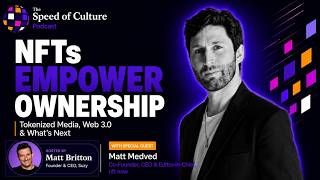
In this interview, host Matt Britton talks with Matt Medved, founder and CEO of NFT Now, about his career trajectory from music journalism and DJing to leading a Web3 media company. Medved explains how his early work at Billboard Dance, Spin, and Modern Luxury shaped his understanding of creator culture, and how that insight led to the creation of NFT Now in 2021. He describes NFT Now’s mission to build a community‑centric, ad‑free media model that uses tokenized media and the NOW Pass/NOW Network to align incentives between creators and audiences. The conversation covers the fundamentals of NFTs—digital ownership, decentralization, and royalty mechanisms—while contrasting Web2’s audience‑only model with Web3’s community‑ownership model. Medved reflects on the boom‑bust cycles of crypto, emphasizing that bear markets are fertile for builders, and discusses the challenges of NFT user experience, likening the needed breakthrough to an “iPod moment.” He outlines the concept of tokenized media (both community tokenization and on‑chain provenance of content) as a defense against AI‑generated disinformation. The interview also touches on NFT Now’s events (Gateways), partnerships with legacy brands, and the company’s early adoption of AI tools in editorial workflows. Finally, Medved offers advice for aspiring founders: stay open‑minded, pivot when opportunities arise, start small, iterate, and balance speed with thoughtful execution.
Chapters
Up today, we're gonna be speaking with Matt Medved, CEO at NFT Now, who Yahoo Finance recently ranked as one of the top 10 most influential figures in the NFT space. Matt, so great to see you. Thanks so much for joining today.
Great to see you too, Matt. I'm really happy to be here. This is gonna be great.
Absolutely. This should be an interesting one and definitely a little bit different than some of the other guests we've had in the past. And before we dive into all things NFT, Would love to hear a little bit about your background and the road you took to get you to where you are today.
Yeah, absolutely. So come from 15 years at the intersection of media culture, specifically in music prior to Web3. You know, in 2015, I founded Billboard Dance, Billboard's dance electronic music brand at Billboard, grew that into the leader in North America. After that, ran Spin Magazine as editor-in-chief, exited with the sale of that in 2020. And then was actually running content at Modern Luxury, the lifestyle publisher, before I was pulled down the NFT rabbit hole by my good friend, Blau, who's a DJ, producer, and kind of a pioneer in the music NFT space. And, you know, for me, I'd always been dabbling. I'd started dabbling crypto back in 2013. During the '16 to '18, I was really focused on like, how does this technology empower musicians and like help create a better like music industry model? And so NFTs for me were that missing puzzle piece where it was technology I'd believed in for a long time, finally disrupting fields I'm actually passionate about, and in a way that has the potential to empower creators. And so went full headlong into it and founded, co-founded NFT Now in January 2021, and it's been an amazing ride since.
Yeah, and we're gonna dive into NFT Now. Before we do though, quickly, a big point that you didn't bring up is you're also a DJ as well.
Oh yeah.
You spun at big festivals and clubs. So talk to us about how you got started being a DJ, and how that intersects with what you've been able to do on the professional side to date?
Yeah, it's a great question. So growing up, I was always writing creatively and I was also making music. I was in bands growing up, some probably lackluster punk bands and the like, but it was always fun. And in college, I started DJing because one of the things I loved about DJing was I've always said DJing is an exercise in empathy. The best DJs think about their audience first.
Yeah.
It's not about what I wanna play. It's about the intersection of the music I like and have at my disposal and the experience that's going on around me and making it a great experience for those people. And I just found that like really like amazing to think about and also found it like the independence of it versus being in a band, you know, not having to be reliant on like 4 other people and their schedules and was really, really inspiring for me. And you know, one of the reasons why I think that we were able to build Billboard Dance the way we did so quickly and gain the trust and, and the credibility with the artist community was the fact that I spoke artist languages.
Right.
You know, like when I met Martin Garrix for the first time, it wasn't like a Q&A, it was us nerding out about synthesizers, you know what I mean? And like things like that. And so I think that that also extends into the NFT space as well. It's like, you know, understanding the artist experience and being able to speak to that from a genuine and authentic place. I think that that's really powerful. One of the things I found in dance music is that it's largely covered in, covered by people who have no idea how it's made or how it's performed. And so being able to bring that kind of knowledge to the table, being able to build those much deeper connections with artists. And also, like I've always said, you know, from Billboard Dance to Spin to NFT now, I've always like been a curator first and foremost, you know, always having that ear to the ground, like wanting to be what's on the next big thing. And I think part of being able to identify talent early is understanding the medium and being like, wait, How did they produce that? You know, having a— being able to like dig into that. And so that has served me well in the NFT space as well. And it's something that is a real passion point for me.
It's funny you say that, Matt, because there are a lot of parallels between— behind both EDM and the NFT space, electronic dance music, NFT space. A lot of haters kind of say, oh, DJs just press a button on stage. You're not really doing anything. And a lot of haters in NFT say, well, you could just screenshot it. It's very similar. It's like not understanding everything that kind of goes into it. And just kind of shrugging it off because it's new. Yet you have this entire generation that are fascinated by both of these tracks. And I can definitely see the parallels.
Totally. I mean, going into like a legacy institution like Billboard and being the champion for dance music at a time when the editorial leadership there was pretty old school rock, was definitely swimming against the current. And, you know, definitely had to rely on data to make my points and be a champion of it, be an evangelist for something that, you know, that people didn't believe in at the time, but ended up being the fastest growing thing. And so I do see some parallels here with this as well. And so, I'm comfortable in that role. I like being, I like the underdog. I like being that—
The black sheep.
Yeah, exactly. And when you have conviction in something and you feel it the way that I feel it around the future of Web3, around the future of this technology and its ability to empower creators, it's the same thing I felt about dance music. It was inevitable to me. It was just a matter of how it would play out and when, not if. And so, you know, it's a role I actually really embrace because I think people always fear what they don't understand. And that's why we've always been really at the forefront of like welcoming new people into the space, arming them with the tools and the education they need to understand it and succeed. And yeah, being evangelists for something we really believe in.
So in 2021, you became the founder and CEO of NFT Now. Maybe we should start first by hearing a little bit about what NFT Now is and what the thesis behind you starting that company was.
Yeah, thank you. So NFT Now, we are the number one trusted source in the Web3 space, omnichannel media company. We are also, you know, we're really at the forefront at the intersection of content and culture and like, and bringing, you know, creatives into the space. I think that our mission from day one has always been to empower the creators of culture and to bring this technology from niche to mainstream. There are a lot of outlets out there that are very content to preach to the crypto-native choir. That is not us. We want to help convert the masses. We want to bring new people in, and we want to make sure that when we do so, they're getting good information, that they're being set up for success, that they're not taken advantage of, and that ultimately they're able to understand the power and potential of this technology beyond simply like— Yeah. Speculation and the markets. And so we are also building what we like to call the future of tokenized media, which is really exciting. And part of, I'll dive into that a bit deeper, but one of the things I think is important to understand is that from day one at NFT Now, we always wanted to do things differently with regard to the media model. Like I saw from my time at legacy media brands, just how broken the Web2 media model is. And from day one on nftnow.com, we have not had programmatic ads. We believe programmatic ads misalign incentives and actually incentivize this sort of perverse clickbait race to the bottom.
Interesting.
Yeah, we have not had one programmatic ad. And we also, we believe in privacy. We don't track our users. We don't have pixels. We don't have cookies. We really stand by those principles. And yet we've been able to still thrive as a modern media brand. And for us, it's really about pioneering a community-centric media model. And in March with the launch of the NOW Pass, which is our NFT membership pass that gets you access to the NOW Network. That's the foundation for everything we're building for the future of tokenized media. We really believe that this technology has the power to incentivize, like, kind of realign incentives, reward participation, and really create deeper relationships, not only between, you know, a, you know, audience and publishers, but really on like predicated on the idea of community where our community members actually share in the value that they're creating, that they can actually contribute to co-creating the content that we're making. And it becomes this really amazing kind of symbiotic relationship. And we've seen the power, the transformative power of Web3 in other industries. And so we've been really focused on how can we build a better media model through this? And we're well on that path.
So if somebody was kind of dropped into, right in front of you from outer space, right? And they missed the last 3 or 4 years and they asked you, the person who, you know, is at the forefront of this, why are NFTs so important? What are they?
Yeah.
And where are they going?
What would you say? Yeah, without, I could give them the very long version or I could give them the very short version. I think we want the quicker version.
Let's say you have 2 minutes to answer that question. Yeah, yeah, yeah.
How would you answer it? So what I would say is this, obviously, you could get into like, you know, the technology, the—
Sure.
Immutable ledger transactions, but ultimately, I think that the important thing to understand really is just, at the end of the day, NFTs allow a level of digital ownership over content that has not existed before. And that is really powerful because it unlocks a lot of different things that were just never possible. All of a sudden, digital artists can build collector bases, you know, because you can actually prove digital ownership of a digital art.
Or even a physical item, correct?
And a physical item, exactly. You can track, like you said, you can have tokens that are, NFTs can be assigned to physical items as well, and you now have a transparent, immutable record of their movements. And one of the things I think is really important to understand about this technology is it allows you to bypass the centralized platforms and, you know, the sort of everything that comes along with them in a really powerful way.
So it's peer-to-peer truly.
Right, and so it's decentralized. And so like, for example, we came up in this, you know, like in the Web2 era where all these big centralized tech companies and platforms have access to all the data. They're not sharing that data. They're selling that data.
Amazon, eBay, you name it.
Exactly.
Facebook, Google.
Exactly, you're at the behest of their ads and of their algorithms, of their ad models and the like. Whereas with this technology, you can circumvent that, you know? And it enables, what I would tell this alien is I say, it enables far more equitable economic models, especially for creators. In Web2, Web2 was all about building audience as a means to an end to indirectly monetize as a middleman for brands. That's the programmatic ad model for media. That's the influencer model for individual creators, brand partnerships and the like. Ultimately, you're in a likes and comments economy, right? And you're using it to try and build enough of an audience to be able to monetize that. Mm-hmm. By getting big brands involved. Cool. But with Web3, there's something a lot more powerful at play because something that's more powerful than just audience is community. Audience is aware that you exist. Audience may see you in the feeds. They may, they may click your things, they might buy your products, they may even attend your events. But ultimately it's a one-way street of a relationship there.
Yeah.
Whereas with community, they actually wanna see you win. And Part of the reason is, is that they actually have a stake in that. All of a sudden, by owning, for example, your favorite musician's NFT, or by owning, for example, you know, an NFT that offers you membership to an organization or a group that you really believe in, you can actually share in the value that's created by their development. And what's amazing is that it has a transformative effect, because what it can do is it can unlock a different level of loyalty. I always say in 2023, every single company is a media company and every single company is a loyalty company, whether they know it or not.
100%.
And so what's amazing is this technology is transformative on that front because now instead of just being a fan, you feel like a shareholder. Instead of just being like an advocate, you can be an ambassador. And what's amazing is it enables what I think was the original promise of the internet. We all know Kevin Kelly's 1,000 true fans, the idea that you don't actually need millions of fans to have a sustainable career as a creative.
Yeah.
All you need really is 1,000 true, true diehard fans who are gonna pick up what you put down, who are gonna buy the ticket, take the ride, buy the merch, buy the album, stream the, drive to the show, all that. The issue is that in Web2, with all of these centralized platforms who didn't have an incentive in allowing creatives to reach their full audiences, you know, they gatekept it and they, they actually were like, hey, guess what? You have to pay us to reach even a fraction of your organic audience. And you have to like fit into this whole like algorithmic ad-based like—
You put like Ticketmaster as part of that as well when it comes to— Exactly.
Right. Exactly. And so what it did was it created an unsustainable climate, which is why you see it's like they often say, for example, I come from the music industry. There's no middle class in music, because you either— either you're Drake or Justin Bieber, or like, you're kind of struggling, you know what I mean? And like, and part of that is because of that scale. But for example, what I think is really powerful about NFTs and Web3 is they allow you to directly monetize with your community. And they allow you to build community as a— not as a means to an end, but as an end in itself. And they have really powerful mechanisms to allow you to share in the value that you create.
Over the long term, right? Because there's models where you sell an NFT, and then you get a royalty every time it's sold in the future.
Yeah, there's the— there's— that's possible depending on the platform as well. Yeah. And that's really powerful. And amazing thing is like, you can take what's called a snapshot. And by taking a snapshot, you can immediately see and get access to all of the wallets that carry— that are holding your NFT at that time, and you can directly reach them. You could send them another NFT, you could send them something that's, hey, guess what, I want you backstage at my show, I want you to have the meet and greet, I want you to have I want you to have the, you know, just like the fan club membership. And that creates this incredibly powerful level of connection where you're not reliant on, you know, the algorithms and the like of centralized players.
Right.
And so there's an incredible potential with these at play. And one of the things that I would also say to, you know, this alien who, you know, eyes may be glazing over at this point, but, you know, hopefully has figured out that this is important and they need to learn more about it, is that while we have seen certain use cases take off and command the headlines, like digital art, digital collectibles, yeah, cool, eye-popping sales, I know those are the ones that get the headlines, those are just still scratching the surface of the potential for this technology. We are big believers that NFTs, Web3, this technology is gonna fundamentally redefine how creators and their communities create and share in the value together. And what'll be amazing is,— it'll, like, right now, we talk about it as NFTs, we talking about it as Web3, all this. It's just gonna be the next evolution of the internet, and people are gonna be using it whether they know it or not.
Yeah.
And I would just, like, I would tell that alien as a closing point, I would be like, "Look, one thing that's important to understand is that we are all part of the last generations to grow up without digital ownership from day one. So future generations are gonna grow up owning things digitally, they're gonna own things physically, and they're gonna have none of the hangups that our generations have about that." They're not gonna be like, how do I hang it on my wall? They're not gonna be like, right-click, save. They are going to own these things and they're gonna appreciate them for their own unique strengths and appeals. We're already seeing this with Gen Z and Fortnite and Roblox and the like. And you know, it's like they get it more than we do.
And before that, we saw it with FarmVille, right? Like ultimately there was digital currency, you know, as long as the internet really existed.
100%. And so NFTs are, that critical component for ownership of unique items, whether that's a piece of art, whether that's a piece of music, whether that's a deed to a house, whether that's a deed to a car, whether that's— A membership to something. A membership, exactly. And the use cases are gonna, what's amazing is one of the reasons I know we're still early is that people still speak about NFTs like a category instead of a new medium that transcends every category.
Yeah, it used to be like the same way with digital or social. It used to be its own category. Now it's sort of part of the way we communicate. It's dial tone, right?
Exactly.
And it had to jump and cross the chasm to get there.
Exactly. And each of these categories has different use cases. As the markets mature, we're gonna see they all have different creative and consumer priorities at play, just like they do prior to Web3. And we're gonna start to see, I think people are gonna gain a much more holistic understanding of this technology's potential when things aren't all being lumped under one category and like, you know, monkey JPEGs and like, you know, things like that are commanding the spotlight, so.
Well, and often when you have, you know, something new that gets introduced to culture and society, you kind of have this adoption curve where, you know, very early on it becomes a frenzy and everyone's talking about it. Then it implodes, and then the real work begins. And then over time, it becomes something substantive. It happened with the internet itself, the dot-com boom and bust of 2000, right? We're seeing it happen right now, happen with crypto, and more specifically with NFTs. Talk to me about that boom-bust cycle, how it was for you to kind of live through that, 'cause I'm sure it wasn't always easy, and I know you have conviction. I can tell by the way you're talking that you believe in it. And what needs to happen with the technology itself for it to gain mainstream adoption to get through to the other side?
So that's a great question. One thing I'll say is this, this past cycle was my third crypto cycle. So I started dabbling with Bitcoin in 2013.
Why?
I was living in Milan, it was really cold, I didn't really speak great Italian. And so I was spending some time on Reddit and stumbled across it, bought the exact top of that market, sent the Bitcoin whitepaper to all my friends, it crashed like 2 weeks later, but I just held on because I believed in it.
It always happens that way. Yeah, yeah.
But what's funny is, I believe in the tech, but it's not like I necessarily had full conviction that it was coming back at that point. Like, I thought that was interesting. Could have just been like a weird flash in the pan on the internet, you know? Then it was '16 to '18 with the rise of Ethereum where I was like, okay, I was on to something.
Yeah.
And this time I also see the potential beyond just the financial side for this to also empower creators or to be able to impact culture. It was still early, especially on the music side. So when it came back around this time, I was like, I have seen this movie before. Here we go again. I already know how it ends. And this time it is like, back in those times, it was magic internet money. This time it's art, music, and culture, and you don't bet against art, music, and culture. So that's how I had the conviction to jump in. But one thing we have to remember is that a lot of people bought their first crypto to buy an NFT, especially from the creative industries.
Yeah.
And so they are where I was after my first cycle. They don't necessarily have conviction necessarily that's coming back 'cause they haven't seen it before. They can go look at the charts and all that, but like, you know, you have to live it to really experience it. So one thing that's important to understand is that bringing that perspective, myself and my co-founder Alejandro, we both have been through booms and busts, bulls and bears before. So we had that in mind. Like we always knew, like even in the froth of like 2021 and, you know, in the top of 2022, like we knew like winter is coming, right? And so we prepared accordingly. So that's really critical. You know, it is challenging, especially, you know, when you see, for example, you know, search volume go down, or you see, for example, you know, obviously, we weren't necessarily expecting the implosion of FTX, you know, bad actor, bear markets always shake out bad actors. That's obviously a really big, big level that obviously, like, shook the industry at its core. But ultimately, I'm a big believer that the bear markets are actually extremely healthy for us.
Yeah.
Bear markets are for builders. There's less noise, you're able to focus on what you really believe in. And the people who are showing up every day in a bear market are the ones who truly believe in the space, who aren't motivated by short-term financial gain, but are actually trying to build the future. And that's actually one of the reasons why we launched the NOW Pass in the midst of a bear market. A lot of people asked us, they were like, you know, you could have made a lot more revenue off of it if you had launched it in a bull. I'm like, yeah, but like, I wanna build a values-based community. If we're gonna build a community-centric media model, this is that first case study, right? Like, this is that, like, if I'm gonna super serve a community, if I'm gonna show up for them every day, it better be the real ones. It better be the ones that like, that actually believe in the space, the ones who believe in what we're building, the ones who were there. I always say Web3 rewards those who show up.
Yeah.
And so now's a great time to be building what we're building. And I'm not gonna minimize the challenges of the market conditions, But one thing that we have full conviction on is like, you know, this is— digital ownership is the future. And this technology is the key to unlocking that. And one thing that we're seeing is even though many, you know, like retail, like mainstream attention, you know, has shifted away from Web3 and all that, on the business side, we're seeing tons of big brands exploring the space. I just saw a report from Coinbase that more than 50% of the Fortune 100 is is developing blockchain-based initiatives.
Yeah, it takes time. I mean, I work with all these big companies and I know it takes years and years for them to even just get through legal, to understand the data and privacy concerns, and to actually build the technological infrastructure to integrate into their systems. So it's gonna take time. The big brands are always who's last to join the party.
Totally, totally. And you know what? When they are, we're here, we're ready to welcome them. You know, we've helped bring a number of big brands into the space. Like for us, we're always like, we wanna see this space succeed. And so we wanna see big brands enter the space and we wanna see them do it credibly and we wanna see them do it the right way. And we wanna see them do it in a way where they are building long-term connections with their community. Like one thing that's important, I always say, like, you know, that is really important is you have to rethink what you normally think about like a go-to-market strategy or anything like that. Like most people in Web2 and before, it's like, it ends with the sale. In Web3, it begins with the sale.
Yeah.
An NFT sale is not an end, it's a beginning of this incredibly powerful connection with your community. But that connection is something that you need to be prepared for. It's something that you're gonna need to nurture, and it's something that you're gonna need to make sure that you have a long-term, right, long-term perspective on. And so, I really welcome the big brands that are coming in now, and I welcome the ones that are gonna come in later. And we're here to help them too.
I think one huge opportunity is when you talk about, you know, a lot of the things you're talking about are mainstream consumer habits that have been around forever and they just need to transport to a new medium. Like loyalty has been a thing. People have always wanted to buy digital music. I mean, they did it over iTunes at the beginning, right? So it's, and now they rent the music versus owning it. But basically the notion of digital ownership has been around for a while. I think one thing that's in the way of NFTs really gaining that mainstream consumer adoption is just sort of the form factor and the process of buying an NFT. Like, I don't know what MetaMask is. Like, I'm pretty technologically savvy, probably more so than 99.99% of people on Earth, and I jumped on the first time I tried to buy NFTs, and I was confused.
Totally.
It's like, where's my money? What's MetaMask? What's that difference between that and Coinbase? And for somebody like you, it's intuitive 'cause you're in the space,— but it should be as easy as buying something on Amazon. And it's not.
100%.
And I think until that happens, you're not gonna have consumers really adopting NFTs. I get if I own this BMW NFT, 'cause I own a BMW, that I can get into the BMW concert at Coachella. I get all that stuff, but the process of getting that NFT is, I think, what gets in a lot of people's way.
Sure. And you know what?
Fully agree. And why is that?
There's, right now, the UX, the UI, like the tech hasn't caught up. And that's okay. Like, you know, like that's, we'll know we've reached that point, you know, when we have that, the iPod moment, you know, when it's like 500 songs.
LimeWire was really hard to deal with at the beginning too, right?
Right. We'll get to the point where we're not talking about the tech, but we're talking about what it enables for consumers and like what amazing things are created in that way. Like, you know, and so like, that's like, we'll get there, but it takes time. Right now there's a lot of friction to get from interest to onboard. But like you said, like, it is this new medium. And like you said, like, what's really interesting is when we think about in the media context, 'cause you know, like, for us, it's like, you know, NFTs are just one area of Web3 that we focus on. And like, ultimately, we're really focused on the idea of tokenized media. And what does tokenized media mean?
Yeah, what does that mean?
It involves—
I wanna get back to the NowPath, which is tokenized media. So let's shift gears to that and talk about what is tokenized media and then how you build on top of that idea for the Now Pass and what the Now Pass is.
100%. So I think one thing to just understand, like, you know, is that like technology has just always pushed storytelling forward, right? Like from the Gutenberg printing press, like creating like the information revolution to like the advent of the internet.
Yeah.
You know what I mean? And then, you know, suddenly we get mobile smartphones and then everything has to shift mobile, you know, so print to digital to mobile, like, You remember all of these, like, well, not the Gutenberg printing press, but you know these other—
The other—
Yeah, that's right. You know the other transitions, right? Tokenized media is the next frontier. It's so clear. And what's amazing is not only will this medium, like, is this a shift in medium, but it actually, like I mentioned, has the ability to actually change the longstanding relationships between publishers and their audiences and communities, right? And so one thing I just wanna say too is there's, I think there's two buckets to tokenize media. There's the tokenization of communities around media, which is what I've spoken to a bit around like how this is different and what the potential is. And that's what we're building with the NowPath and the NOW Network. And then there is also the actual tokenization of media as in putting articles, blog posts, podcasts, videos on the blockchain, for verifiable authenticity, on-chain provenance. We're building at the forefront of both because we think they're both really critical. And one thing that— one development that has really brought the latter into focus, because we've been talking about Tokai's media for a while, and sometimes people like, you know, I'm not sure if I understand this. Ever since those viral photos, those AI photos of Trump getting arrested, you know, went viral and fooled, you know, tons of people. It's been incredibly clear the need for tokenized media. Then we saw, you know, AI photos of a fake explosion by the Pentagon wipe billions off the S&P 500, right?
Yeah.
Like, this is not gonna stop. AI will never be less sophisticated and— less sophisticated than it is right now, right? Like, full stop. It is only gonna get more sophisticated, is only gonna get more powerful. The disinformation and the deepfakes are only gonna get more realistic., and there's going to be a real need to be able to track the authenticity of media pieces of content, understand where did they come from, understand did they come from trusted sources, understand that journey, um, and be able to do that all on chain. And so that is an area that I think is incredibly critical to combating AI disinformation. Then when we think about the tokenization of communities around media, that's the Now Pass, that's the Now Network. That's where we start to think about, cool, what's this community-centric media model? How do we shift, like, an understanding of what a media company's role is in 2023? What we have a saying at NFT Now, that we believe media companies shouldn't serve you advertisements, they should serve you opportunities. And that's something that, like, we've really worked to embody by tapping into the incredible network that we have, by tapping into, you know, the amazing artists and builders and creators and, you know, executives, collectors, you know, founders that are part of our community. And realizing that we can actually super serve this community. We can give them, there's the stuff that mirrors all of membership in Web2, like exclusive content, exclusive access, exclusive access to our events, things like that. But where it gets really fun and interesting is when we start to think about loyalty and we also start to think about rewarding participation. So one of the things that gets really interesting with the NOW Network is we are actually building out this whole reward system. You'll be able to earn XP points in exchange for consuming our content, sharing our content, contributing your own content to be published on NFT Now, and ultimately sharing in the value that that creates, and being able to then like trade those XP points for like exclusive rewards that tie into all of our partners like through our network. Another really critical part, we now can also decentralize content creation and curation. Like this is part of progressive decentralization. So one of the things that we're doing is starting to open up some of our curated content series to be community-curated content series. And so like, for example, like at the end of our first year, we did something that most media companies don't do, which is we asked our audience what we could be doing better. What would they like to see more of? You know? And we actually got a really resounding answer. People were like, you know what? You do a great job supporting artists. You do a great job covering artists, but mostly the established ones. They're like— Yeah. Rising artists need love too, and there's no real way for rising artists to get the support right now. We said, "Great." So we started a franchise called NextUp. NextUp is our rising artist franchise. It's been great. We've been ahead of the curve on so many amazing artists, and it's become a really important platform. But ultimately, it's still a very centralized process. It's me and my writers and editors coming together, deciding which artists we're gonna spotlight each month, and then giving them, shining that light on them. But ultimately, what excites me about Web3 and this technology is being able to bypass gatekeepers, not create new ones, right? And so one of the things that I'm really excited about is being able to open up Nat Next Up to our community. They're gonna be able to vote fully on-chain with what's called token curated registries, TCR models, and be able to nominate, vote, you know, and have a say in which artists get this recognition, and be rewarded with these XP points in exchange for doing so. So not only are they incentivized to help support the artists they believe in, but there's actually a direct incentive in terms of like coming back here. I think that like, you know, we've always said it's like the NOW network will be built over time, not overnight.
Yeah.
But ultimately it's really about showing that we can succeed, you know, outside of this like programmatic, you know, clickbait race to the bottom.
It sounds like it's a culmination of loyalty, your media platform, and a community that you're bringing together.—
That's right.
Altogether, right?
Yeah, 100%. And you know, like we're an open book. You know, we've done $5.2 million in top-line revenue over the past 2 years without a single programmatic ad in media, you know? And I think that's really significant. And I think it's just a glimpse into the future of what's possible when you double down community, when you actually create content to serve your audience rather than an algorithm. And when you, understand how you can leverage this technology to actually, I think, foster and create the deeper relationships that we all want to see. Because here's the thing, like, Matt, you know, the power of media, like, it goes beyond just like a business and a commerce. Like, this is, this is the marketplace of ideas. Yeah. Right. And largely, it's become this incredibly polarized, like, series of echo chambers.
I mean, I was about to say, it's in desperate need of reinvention right now.
Exactly. And look, we both come from media, like, legacy media is not going to come up with a solution on their own, right? Like, you know, like they're, they're just trying to stay afloat right now.
Legacy companies, you know, rarely do, and especially traditional media companies are really hurting right now, so it's not going to come from them.
And so that's why it's going to come from us. Yeah, and that's what we're working on. And, you know, and, and so like for us, it's like, you know, to those who are listening, we're always like, reach out, you know, whether you're, whether you're a brand interested in, in learning more about about this technology and Web3 or coming into the space, if you're a marketer who's trying to figure out what that looks like for you, and if we could be helpful, we'd love to be. And I think that it's been an incredibly exciting year for us with the launch of NowPass Now Network. We actually just announced the Gateway Korea in September. So we're actually bringing our flagship event. Have you ever been to one of the Gateways, Matt?
I have not, no.
Ooh, so we did it 2 years running in Miami Basel, First year was with Christie's, which was a little wild. It was like, you know, 6-month-old startup partnering with a 275-year-old auction house.
Right.
It definitely opened some eyes, but you know, it was really special. We built this whole immersive audiovisual gallery. And then last year was wild because we actually, we partnered with Mana Common, MoonPay was the title sponsor, and we did a whole Web3 metropolis, took over downtown Miami. It was 5 days. It was 2 city blocks, 12 buildings, like in addition to all the usual like Web3 suspects, like, Art Blocks, Gmoneyz, 90CC, Artifact, all that. We also had, Christie's came back, but we also had Instagram, we had Porsche, we had FaZe Clan, we had WME. We brought a lot of more legacy into the space. And that's something that we really want to, that's at our ethos, is we're not here to, we're not here to create, barriers or to create like, this is just the new paradigm and like, either you're with us or you're against us. It's more about it's always an and, not an or. Like, digital and physical will always coexist. Like, there's no need to be scared, you know? And if you want to learn more about this space, we're here to help you. Like, education is at the forefront. One of the reasons why we founded NFT Now to begin with was to solve a problem that we ourselves faced, which was a lack of credible resources in the space.. And it's been really amazing to continue to see it forward. And I think the future is extremely bright. There's going to be, obviously, the darkness of bear markets. There's going to be challenges ahead, but—
It takes conviction, and it's clear that you have conviction. You're thinking things a different way. So switching gears as we wrap up here, Matt, I mean, you obviously are somebody who you've had a really exciting career and you're clearly just getting started in what you're doing. Um, you know, it takes courage along with conviction to do the sorts of things you're doing. What advice would you give to some of our younger listeners who want to go out on their own and create something like NFT Now? What are the steps they should take to really get the, the courage to, to make that leap and to end up where you are today?
It's a really great question. Um, I kind of live my life according to two principles. Principles, um, stay open and don't force things. Pretty simple, but it's like most of the time you're either doing one of the, one of one or the other. You're either not being open-minded enough or you're forcing something that you've given, you know, no thought. And so like, that's something I think is really important. It's important to be flexible. Like, I mean, look, I, I grew up reading Spin Magazine. That was my favorite magazine, but it's not like I set out to be like, my career goal is to be the editor-in-chief of Spin Magazine.
Right.
That wasn't like, if you had told young me about that, I would be excited, but that wasn't like, I set that as like my North Star or anything. It was really about being open-minded, seeing opportunities, not being afraid to pivot hard when I saw something like dance music taking over America. I was, you know, I don't know, we didn't get into it 'cause it's a whole backstory, but like I used to work in nonprofits and NGOs like prior to all that. And so I was actually finishing graduate programs related to that. And, but then when I saw dance music taking over America and I had this opportunity to be that guy at Billboard, I pivoted hard and I have no regrets about that because I recognized that like there was, there was, this, like, there was a moment, you know, there was this window to be able to build something like that. Same thing with NFTs and Web3. Like, when I left Modern Luxury, people thought I was crazy. That's a really cushy job. It's, you know, it's a great team. And, you know, and I left to go do an NFT media startup. What? People were checking in if I was okay. And those were the same people who a few months later were asking me what NFTs to buy. You know what I mean? And so what was really interesting is like, I think like having that conviction, not being afraid to take big swings, But ultimately, you don't have to wait for those big swings to have at-bats. Like, there are a lot of, like, before, like, NFT, there are a lot of, like, things that I tried to start. You know, like, I had, like, an IG Live, like, podcast during COVID called Studio Break with artists checking into musicians. Like, you know, that ultimately, like, didn't really become anything, but it basically walked so that the NFT Now podcast could run. You know what I mean?
Yeah.
Like, I got through all my reps doing that and realized the challenges, what am I good at, what am I not? Like, what do I need support on? Oh, the editing, things like that. Like, you know, so I would, I always tell everyone, like, don't wait for, like, the right brand or the right opportunity to do it, to start creating, like, start a newsletter, start a podcast, start a Twitter Space, just start putting yourself out there, start doing it, and you'll be able to attract attention and find things that, like, really, you're really, really passionate about. Like, you know, for me, it was like, you know, I was during, like, when I first started, like, learning about Web3 and NFTs, I was up till 4:00 AM every night, like going down rabbit holes. Like when you find yourself doing that, like go down deeper, you know, like, yeah, that's amazing. Like, like just, just really, really like, let, let, let that journey of discovery take you in. And also like, don't be too, um, don't, don't be too married to an idea around outcomes. Um, like have principles, but. Right. Stay open-minded, right? So like, when, when, when I started the NFT Now accounts on Twitter and Instagram, like, I remember the minute that it happened. And I was like, cool, nobody likes this. Like, I wonder if other people will, you know, it was, I was like, you know, it's like starting from scratch. But ultimately, I didn't know what it was going to become. I thought, you know, maybe it could be just like a pet project, it could be a curation channel, just like something to like, I was just posting about art that I was like, I like that I was discovering. And like, I was like, there's no credible resources here. I just want to like build something here. But I didn't know necessarily that it was going to take the trajectory that it has. But ultimately, I knew that we wanted to do things differently, that we wanted to build a better media model, all of these things. And so by building this out and realizing opportunities along the way, we're able to give this vision life and give it form. And one thing that I think is important too is like, I always say it's like, you know, there's a fine balance, like— Yeah. Like jump in. But for the big things, like also take the time to make sure you do it right. There's always time to make sure you do things right. Like, you know, it's like, if you're not embarrassed by your first product, you launched too late. And when I look back at the early NFT Now podcast and the newsletter, like I cringe, but that's okay. But sure, we waited, but we waited 2 years to launch— Wait 2 years, we took 2 years to launch the Now Pass because we were doing tons of research. We were— we had a front row seat to everything that was working, the things that were not working in the space, and we wanted to do something incredibly special and memorable. Like, if you go check it out, it's not just like a normal, like, membership pass. It's like a fully generative on-chain artwork that has all of these incredibly interactive, engaging elements to it. Tons of Easter eggs there, tons of things we're building out. We're building out the member portal. And so, like, we knew we wanted to do something really, really special. And so, you know—
Yeah.
We took the time it needed to do something very memorable. So I think it's really a balance of like not being afraid to like ship things and get your skin in the game while also understanding that while you may know your north star, you may know your principles, the paths, especially when it comes to technology, innovation, et cetera, they quickly change. You know, like look at AI, the rise of AI. Like AI's been on my radar for a long time. I played around with it for a while, but over the past, it's, you know, I just got back from Cannes. It's all anybody could talk about out there, as you can imagine. Yeah. And one of the things that's really critical too is like we embraced AI like earlier than most other media companies and we did it incredibly transparently. You know, there's been a lot of like shadiness in the media space around AI, you know, and like we worked it into our editorial workflow. We made a, we made a whole thing out of it. We were like, hey, this is our first AI-powered editorial news article. This is our first AI-powered listicle. This is our first AI-powered feature. We weren't like, we weren't, we were actually proud of it and we actually earned platitudes from the AI community at large because of the way that we presented it. Every article has a disclaimer that says, you know, editor's note, this was written by an NFT Now staff member in collaboration with GPT-4, in collaboration with Bard, all that, because that's what's really important. It's never like, oh, I'm copying this, I'm hitting publish, I'm calling it a day. There's always a human working with this tech. But what's amazing is we were also able to get our team on board with it. Like, I was able to assuage the fears, like, from my editorial team. I was like, hey, this is not here to replace you. You know, like we say, like we often say, it's like, it's not artificial intelligence, it's augmented intelligence.
Yeah.
And what it's here to do is replace all the rote and routine things that humans don't like to do so that you can focus on the things that only humans can do. And it's been like a real smash success, you know, in terms of like optimizing our workflows, increasing productivity, and the team actually really has embraced it. But that's an example of something where, you know, a year ago, integrating AI into the workflow wasn't necessarily like one of my top priorities. But as soon as you could like see where the path was leaning, you, you, you have to be flexible too. You got to be nimble in the space. Because, because it moves fast. I always say Web3, weeks are months and months are years.
So yeah. Well, you've definitely accomplished a lot in a short period of time. And I have no doubt that you're gonna continue to innovate in this space. And, you know, really excited to see what you're able to do to bring us to more mainstream and and work with so many of the great brands that listen to Speed of Culture. So thanks so much for joining today to Matt Medved, founder and CEO of NFT Now. On behalf of Suzy and Adweek team, please be sure to subscribe, rate, and review the Speed of Culture podcast on your favorite podcast platform. Until next time, see you soon, everyone. Take care. Hey!
More from Matt




MikMak’s Rachel Tipograph on Consumer Spending, Retail Media & Holiday Shopping Trends



Jaguar Land Rover’s Charlotte Blank on Luxury, Purpose & Experiential Storytelling



