Redefining Consumer Engagement: AI, Gen Z, and the Future of Marketing with Matt Britton
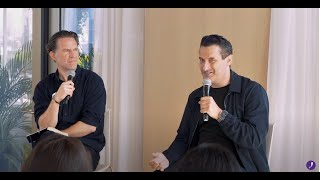
Matt Britton argues that brands need to stop thinking in albums and start thinking in songs: consumers want bite-sized, highly contextual content. He says the future belongs to companies that build first-party data, use AI to personalize at scale, and start by asking who their customer actually is.
You can tell a story and you can go to Cannes lions and win an award. But like, what's the value for the consumer? People now want songs and not the album. The only thing that matters on the use of AI is the proprietary data you put in. Often we're talking about impressions or likes or shares, these metrics that are still somewhat divorced from how much volume are you driving? It doesn't start with the brand, it doesn't start with the agency. It starts with who is Sally? What does she care about when she wakes up at 6 o' clock in the morning? And how do we fit in?
Hello everybody and welcome to the Marketers Debrief podcast from Journey Further. Now today I bring you a super exciting special episode. Earlier this year we held an amazing Fuck the Formula event in New York City and our keynote interview was with Matt Britton. Now Matt is a New York Times bestselling author, consumer expert, futurist and, and just overall marketing genius. So we thought let's give you 20 minutes of that interview because it was absolute gold. Our US CEO Duncan Smith sat down with Matt to pick his brains on the ever evolving consumer, how to reach them in the right way and crucially, how to keep them engaged. So much good stuff coming your way. So let's dive straight into the conversation and we're gonna pick up the chat with a simple question. At a time where consumers are engaging less and less with long form media, how do brands offer more bite sized snackable content? Let's find out.
What'S interesting. The best analogy I have is people now want songs and not the album. Right. And it really exists throughout entertainment. I was talking to somebody from the NBA who was saying that most young NBA fans don't watch full games, but they go after highlights on TikTok. Right. So they have to kind of create their content distributed in a way that is built for the flick, not built for somebody sitting down and watching a three hour game. So I think every brand needs to think about what is the song versus the album in terms of how they're pushing out content because it's not going to be episodic and you are going to have to be highly contextual and highly relevant more so now than ever before because consumers, the new consumer obviously expects that.
Yeah. And speaking about relevancy, because that's really interesting, right? If you've got so many different places that people can interact with a potential brand in so many sort of different ways, there has to be a way that the technology can help out. And we've seen apps over the last couple of years really come to the fore. So what role do you think AI should be playing in helping create?
We have all these signals, right? At first it was demographic signals and then when social media brought us a psychographic signal. So not just who somebody is, but what they like. Right. Their interest graph, who their friends are, the things that they're interested. And when you combine the two, you get a really unique DNA of a consumer. And for a while, we've always been talking about personalization, but really no one pays it off. And the reason you can't pay it off is it's just hard to have all this data and how do you sort through it and understand that Joe Smith likes this and Jen Smith likes that, but that's what AI can actually do in a really powerful way. And I think we're going to be in a world where I'm going to be something, see something different than you are and you're already seeing on Spotify or when you log into Netflix, et cetera, but you're going to see it across almost every channel.
Do you think you can ever get the level of emotional engagement, though, through creating communications and content in that way that a more human driven approach to date has been able to deliver? If you've got a machine ultimately curating that content on a personal basis, how far away do you think we are from actually delivering the emotion that goes along with that?
Well, I think emotion comes from value. So I don't think anyone really emotionally cares about sneakers or toothpaste or deodorant. Right. And the reason that people. You're talking about Liquid Death earlier, or I remember back in the day, Axe was the brand that was sort of redefining Martin marketing. Right. And. And Old Spice did it then for P and G. And we've seen. And Dove is a great example. Right. Dove is a great brand that has tapped into emotion. What these companies have done well is they deliver value ultimately, and the value is based on some type of emotional response. Right. They make people laugh, cry, smile, share. Right. Get excited. And ultimately, if you're offering value, you're going to drive some sort of emotional interaction. And I think that's what gets lost in all this talk about storytelling is you can tell a story and you can go to Cannes Lions and winning the. But, like, what's the value for the consumer? Like, is it something that they're really going to want to spend time on?
Yep. Yeah. And we were talking about then how, you know, we're all set up. I reckon in this room around how the media and communications are delivered. We've got a paid media team, we've got a creative team, and yet I think there needs to be a shift more towards how that message is received. So if you think about it from a consumer point of view, you never really think, hey, that's a paid TV ad now. Oh, that's actually a bit of own content someone shared with me. It's all a total brand experience that you're, you're indulging in. And I think there has to be something around how agencies, marketers need to set themselves up, around how that message is going to get received more holistically. What do you think? Right.
So basically what you're saying is a lot of agencies will set up where they'll have search and then they'll have paid digital and then they might have above the line and they're kind of working in silos and delivering creative in different ways. But it's all one consumer is basically what you're saying.
Yeah. And I think, I think the way that we've set things up today, especially given the complete sort of myriad of different ways that a brand can connect risks creating a very fractured brand experience ultimately. And I do think we need to sort of reframe it around.
Right. I think the hard thing is that agencies are commercial entities and they are meant to hit numbers. So they are looking at different pockets of budget with client spend and organizing accordingly, which not isn't necessarily in the best interest of a brand who has product or service to sell to the consumer.
Going back to then that, that notion of kind of liquid death side of things.
Yeah.
Purpose and authenticity could be sort of two fairly different things. And especially if you're trying to sell your own brand. Right. You know what's going to turn the dials of your customers. It feels to me that that pursuit of authenticity, when you haven't really got an angle from your brand feels disingenuous. How do you feel audiences are reacting to that these days? But our days, I think we were much more trusting. If the brand says that, it must be great. Now there feels a bit more cynicism. How do you sort of counter that savviness? Should you be going down a more authentic route or what does that mean to consumers today?
Well, I think you have to almost flip what you look as authenticity. Right. I don't think, and I know the liquid death guys, and I don't think they look at it like we are authentic to liquid death. So we're going to stand by our brand ideals. What I think they think of is by giving consumers liquid death, it allows the consumer to feel authentic because they're doing something different. They're at a bar and they're drinking water out of a can and it's sort of counterculture and it supports their, the consumer's ethos versus the brand bestowing their craft, you know, ethos on the consumer. So I think ultimately it just starts with the consumer always. It doesn't start with the brand, it doesn't start with the agency. It starts with who is Sally? What does she care about when she wakes up at 6 o' clock in the morning? And how do we fit in, right? How do we offer value? And that's just the big shift. Like we can talk about all these nuances of marketing and advertising, but the big shift really happened in the social media era because before that a brand could talk about their unique selling proposition, right? 350 horsepower, 20% more absorbent, whatever their USP was, and they could cram it down the consumer's throat through television advertising. And the consumer had no choice but to watch it. And that's how most of the modern day brands were built. And then when social media came about, all of a sudden things became fragmented, consumer became a control and then it stopped being about the brands being able to cram the unique selling proposition, start to shift from advertising, the content set of talking about us, how can we deliver value to the consumer? And I think we're very much in the early innings of that new realm of what it means to build a business. And that's really where I'd be focused on just to kind of dumb it down to its most common framework.
I think there are two ways you can win a win at marketing. One is how do you get people to your brand as fast as possible. And that's what a lot of paid media agencies are set out to do. How cheaply can I get a customer into my ecosystem? But then I think you have a lot of agencies that go, right, job done, thanks very much, and they'll walk away. The much more valuable bit is that second half. How do you keep people in my brand for as long as possible? It's a lot cheaper to keep people in a brand and to win a new one. And I think I'd say 75% of the audience here in marketing is probably starting to create more and more data around your consumers that you're owning yourself. And it's going to become a point where you're going to be able to leverage that directly. So if you were thinking about either working with an agency from scratch or building one from scratch, I mean, you have done a couple of times. How would you start thinking about that today?
Well, I think you hit on the key point, which is the importance of data ultimately. Because to my example earlier of giving everyone their own unique newsletter, if I didn't have data on those individual consumers, I wouldn't know what should be in that newsletter. I wouldn't know what content they're interested in. I think some of the largest brands in the world traditionally have had no consumer data. Like Coca Cola sells through the channels. They don't have the data of anybody who buys Coca Cola. And now they're trying to contrive ways to collect first party data, um, or what they like to call zero party data. But I think that's going to be hard to do, but it's certainly a necessity. But I think in a world where the cookie cutter demographics are going away, like again back in the day it was 18 to 49 year old males, but that's not really a demographic anymore. Right. And it's kind of shifted, the paradigm shifted a completely different way where you really need to look at every consumer to the extent you can as their own unique digital fingerprint. And how do you deliver something of interest and value to them? And that all starts with data. So if I were starting an agency today, first of all, I would build it all around how am I going to leverage AI to make brands more precise in terms of how they deliver the right message to the right consumer at the right time? And again, this thing we've been talking about in digital for the last 10 to 12 years, but no one really delivers it. I mean, how many of us get banner ads or things in our Facebook feed that have nothing to do with what we're interested in? Right. It's, we're not really there yet, but I think we are going to be there. And I think now is the time where I would double down on that personalization.
Focusing on that moment of truth between a brand and consumer and building everything out from that point makes a lot more sense than they're over there somewhere. How do we get in? It's, they're right here. How do we build it out? Feels like a much more productive use of people's time. And I think you're going to create a much more holistic experience ultimately for that consumer because you've understood every step and every interaction they can have around that, that moment of truth as well.
Absolutely.
This whole event is called Fuck the formula. But there are some principles, right, that underlie how we should be going to market, how we should be interacting with consumers. If there were four or five things today that you'd say any marketer should be thinking about in order to create a more successful way of communicating, what would those be?
Well, I think first and foremost it's organizing your data sets is probably the first thing that comes to mind. So I think one of the big misconceptions around AI is the application you build or like the large language model you use, whether it be OpenAI or anthropic, et cetera matters, when the reality is the only thing that matters on the use of AI is the proprietary data you put in. So for example, what we've uncovered at our company, and we're a B2B company, is where we became remote during the pandemic and we start to use a tool called gong. And gong essentially recorded every conversation that we had with customers and prospects. And over the last year we've uncovered we have over 20,000 hours of transcripts of from calls with customers. And once we fed that into an AI model, we were able to create a tool that basically told us exactly what we need to do to grow because that is basically the pulse the market. We could see what competitors are out there, what product attributes our customers like the most, what makes a good sales call, what language do people resonate with. Right. And that data, when put through an AI model can do everything from give us an SEO strategy to write ads for us, to helping us concoct our sales deck, to even figuring out our future product roadmap. Right. And I think that's sort of a proxy for how I would be as a brand. And if you don't have first party data directly because you're not an EE Commerce or DTC player, are there other alternative sources of data that you might have? Whether it's if you run a customer support center, do you have those transcripts right. If. And because if you're JetBlue, you probably have so many of those that you can actually uncover and learn what the biggest pain points are of your consumer. And that should drive where you go forward. So I think that would be number one and then two, it's, it's truly drive organizational and cultural adoption of what AI is because the other thing we found in going through our journey is I had to myself, so we have 300 people and I have a huge engineering team. I had to myself build AI started last December and Figure it out and show our team, no, this can be done. See, I did it myself and I'm an engineer, but we don't really need to be. And in doing it, I got my team to believe, and then my executive team adopted it, and now their team adopted it. And now slowly, we've had this cultural resonance around AI where people understand it's not just a toy and you just play with the newest application, but they understand truly what it can do. And now I feel like we've kind of given our organization a bit of a superpower relative to our competitors because we have that organizational adoption. And I think that would be the second thing I would do. And then third, I would just focus, continue to focus on what is value to the consumer. Like, really, truly, don't get lost from that in terms of what is your consumer looking for and where do you fit in? Because those are the brands that are winning. And I guess the last thing I would think of is where's the creator economy fit in? I mean, we're in a world where millennials are entering a C suite, which means Gen Z is going to be the next sort of big emerging household decision makers. Gen Z is on their phone 24 7, right. So if you want to reach them, you need to be on the mobile device. And what are they looking at on the mobile device? Content from other people. So, like, I think this is going to shift completely towards the creator economy. I think people think it's a fad. I think it's just getting started. Because, you know, ultimately hearing from individuals is so much more compelling than hearing from scripted, you know, TV shows or writing, etc. And I think we're going to go further and further in that direction.
How do brands adapt to a world where they're not going to have these massive platforms outside of the super bowl, let's say, where they can set their wares out and say, here's what we're all about. If it's all completely dependent upon independent commentators, ultimately, well, it just basically means.
It'S no longer pay to play. Right? So it means that brands have to figure out partnerships, not just vendors and people to write big checks to. Right? So ultimately, whatever the category you're in, you need to understand who are the creators that are driving popular opinion and swaying influence within the consumer set. I need to get to know these people and get to know the type of content they want to create and how they look at building engagement with their audience and figure out how you as a brand can help. And sometimes it is writing a check, but often it's things that are much more integrated in terms of supporting what they're doing.
One thing we definitely encounter on the agency side is a lack of flexibility in the budget. A lot of times certain elements within marketing organizations have been set a budget, that's it. And there isn't the fluidity I think you might need. So, so how do you get around that? Do you just need to throw the whole thing up in the air and go, right, there's one pot of money and wherever the results are best, that's where the cash is going to go.
How did I think the best way to get around that is connecting your marketing results to business results? I think often we're talking about impressions or likes or shares or, you know, these metrics that are still somewhat divorced from how much volume are you driving, you know, so the closer you can get to the point of purchase, the closer you can get. You know, if you're working with the CPG and you can show that what you did created a couple more inches of shelf space at Walmart, trust me, you'll get the budget right. But if instead you said, hey, look at all these awards, look at this cool video that we did. Ultimately, the CFO at large organizations is far more involved than they ever have been because the cost of the capital is higher, the cost of a mortgage and credit card interest and everything is higher. It's been in decades, right? And As a result, CFOs now have way more power in organizations. And what CFOs are looking at is the business results. They're looking at volume, they're looking at profitability. So if I. The other thing you'd ask me what I would do if I was starting an agency is all those things being said, I would figure out, if you look at the funnel of. You're creating awareness, you're creating consideration, you're creating conversion. I would make sure that my data source or on, on the output of everything I'm doing is as close to that point of purchase as possible. If somebody in a brand manager becomes a CMO and ultimately a CEO, it's because he or her chase the business results and not the marketing results. Like, if you show me anybody that's successful at any large organization, it's because they went to where ultimately the bottom line is driven. And yes, there's a transactional way to do that, I. E. Promotions, coupons, dropping prices, etc. And there's a harder way to do it, which is you're driving it building value while they're doing it. Like you talk about Nike and that did both, right? It built their brand through Air Jordans and they sold billions of dollars of sneakers. They did both at the same time. It's possible. It's not easy, though.
There we have it. Thank you so, so much to Matt for that incredible conversation. So many pearls of wisdom. I lost count. So I'm really pleased that we could bring it to you on the podcast. Now, before I let you go, I've got a very, very small plug, if that's all right. That interview was part of our Fuck the Formula event series that we hosted in New York earlier this year. But I am super excited to tell you that we are bringing that event back to London very, very soon, and we want to see you there. If you're a marketer that wants to look forwards and do things differently, then this event could be for you. All the information on the event and how you can get involved will be listed below. Go check it out and I would love to see you there. And if not, I'll see you in the next episode.
Sam.
More from Matt




MikMak’s Rachel Tipograph on Consumer Spending, Retail Media & Holiday Shopping Trends



Jaguar Land Rover’s Charlotte Blank on Luxury, Purpose & Experiential Storytelling



