Target’s Rick Gomez on CPG, Consumer Expectations & “Expect More, Pay Less”
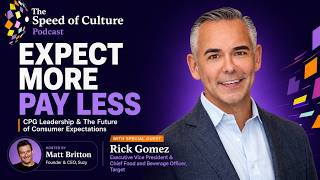
Rick Gomez, Target's Chief Food & Beverage Officer, talks about shifting the company from a pure retailer to a celebrator of food. Target's Circle loyalty program has 100 million members, and the company is expanding same-day services like Drive-Up while launching hundreds of new private-label products to compete on affordability and convenience.
Chapters
Today we're going to be speaking with Rick Gomez, the Executive Vice President and Chief Food and Beverage Officer at Target. Over the years, Rick has played pivotal roles in shaping Target's marketing strategies, particularly in merchandise categories and managing multi-billion-dollar consumer packaged goods brands across Target's food and beverage business. Rick was a winner of the 2022 Retail Touchpoints as a Retail Innovator Award. I'm so excited for this podcast interview today. Rick, great to see you.
Great to see you. Good to be here.
Thanks so much. So let's just dive right in into your background because obviously you're in a pivotal role right now at one of the most prominent retailers in the world, and that's just not a role that you get to overnight. Uh, if you can like wind back a little bit to your earlier days, maybe in college, did you know that you wanted to be in the world of marketing?
No, actually, I, um, I had plans to become a lawyer, a corporate lawyer.
Me too. Me too.
When you don't know what you're going to do, you become a lawyer. Exactly. And I studied government, political science, and I had applied to law school and was planning to go and got accepted and was thrilled, shared it with my parents, and they said, we are so proud of you, but how are you going to pay for that? And that's when the light bulb went off that I need money. And so I deferred to law school for 3 years and took a job working in brand management at the Quaker Oats Company. And, you know, I took the job because it was a decent salary in Chicago, which was less expensive than New York. And that's the reason I took the job. And, you know, after 3 years, I was the assistant brand manager on Captain Crunch and was having a blast coming up with what were the toys in the box and the games on the back of the cereal and coming up with TV commercials for Crunch Berries. And we just had this realization that there's no way that being a lawyer could ever be this much fun. And I've never looked back. Yeah, I've never looked back since and continued on working in marketing for many years, became part of the PepsiCo family, did a brief stint working for MillerCoors. And then about 10 years ago, I made the jump from CPG into retail and joined Target.
And cutting your teeth, so to speak, at a CPG, whether it be Quaker Oats or your work with Cap'n Crunch, huge fan of that brand, by the way, um, as well as being at PepsiCo, which is a common theme amongst our Speed of Culture guests as they work at companies like PepsiCo or Procter Gamble, is, you know, usually what I hear is that the, the learnings are invaluable in terms of brand building and the disciplines that you're able to ascertain. Can you talk a little bit about your experiences at those larger CPG companies and maybe how it formed the leader you are today?
Sure. I, I think 3 lessons for me. You know, the first one is really around managing a brand and what does that mean and how you think about positioning your brand. And then you have all elements of the touchpoints of the guest, the product, the packaging, the pricing, all support that brand and that brand point of view. And then to be, to be really vigilant about protecting that brand, growing the brand, stretching the brand, but being really true to what it stands for is something that was ingrained in me really back at, at, at Quaker Oats, um, which is a smaller CPG but had, you know, big brands like Captain Crunch and Gatorade and, and Quaker Oatmeal. Um, the second thing that I learned, which was the importance of, uh, being consumer-centric, really listening to— at Target, what we refer to as our guest— listening to our guests. What are their needs? What are their pain points? And then thinking through how can we better deliver on those than the competition. And so being very focused on listening and learning from the guest and not assuming that because you buy that product or you shop there that you are the guest, right? So that was kind of the thing I learned. And then the third is just the benefit of working in a really big matrix organization like PepsiCo. You learn the power of influence management. You know, you don't own anything, you work on everything, and you have to be able to collaborate cross-functionally, work horizontally, build relationships, collaborate effectively. And that's been invaluable to me. So it's really the power of a brand, the importance of listening to the guest, and then the ability to work in a big matrix organization have been really important skills for me.
Absolutely. And you took those skills and your learnings and you joined Target. In 2013. So it's now over 10 years that you've been, um, you know, at Target. First of all, that in itself is, I think, commendable. And, and to me, I admire because many people don't stay at roles and companies for that long. And obviously there's benefits in doing so. You get to understand the brand, the culture, the people, um, and really ultimately have much more impact. I'd love to hear about your journey in terms of how the company Target has changed over the last 10 years from where you— when you started the company to where it is today?
Sure. I mean, it's changed quite a bit. And I think if you talk to anybody who works in retail, regardless of where they work, they will tell you that there's been a lot of change over the last 10 years. You know, we've— a couple of thoughts. One is, you know, I've been very fortunate to work at Target and to be here 10 years and to have new challenges, new roles, expanded responsibilities, started in marketing, but then got a chance to run our e-commerce business, then got a chance to oversee corporate strategy, and then got a chance to move over to food and beverage, which is a $23 billion business. And I'm running a P&L. So it's— I'm very, very grateful for what Target has allowed me to do and to learn and to explore. So it's been a really amazing 10 years. But I will tell you, the company has changed a lot. And, you know, I'll talk— let me talk more specifically about food and beverage. And the food and beverage business has been on a multi-year journey to really transform the business. We made a commitment that we wanted to go from being a retailer that just sells food to being a retailer that truly celebrates food. And to celebrate food, we've made significant investments in the business. We've made investments in completely revamping our own brand portfolio. And by own brands, I'm referring to our private label brands.
Private label, right.
We've completely revamped that. We launched Good Gather. It's now over a $3 billion brand. We've made big investments in our team. Recognizing the importance of having grocery industry expertise at the table. We've really invested in team. And then the third thing that we've done is we've really leaned into our industry-leading same-day fulfillment services, particularly Drive Up, which has become almost a signature service for us, where you can order your groceries online, come to Target, and we can put them in your trunk in less than 4 minutes. So it is completely easy and free and has been an amazing service for our guests. And so we've come a long way. We're in a very different place now than we were just, you know, 5, 10 years ago.
And given the, I guess, broader macroeconomic changes and even changes in consumer, you know, needs and behaviors coming out of the pandemic, into a landscape now where we do have rising inflation and rising food costs. How have you been able to, I guess, alter your strategy to make sure you're meeting the changing needs of consumers?
Yeah, coming out of the pandemic— I mean, during the pandemic, it was about safety. It was about cleanliness. It was about contactless shopping. And so we saw a huge boom in our e-commerce business, and we saw a huge boom in our drive-up services. I think coming out of the pandemic, what we consistently hear from our guests is the need for affordability. They're trying to manage their budget. You know, they're trying to stretch their budget to go as far as they can, dealing with inflation, dealing with the return of student loans, dealing with high interest rates. And so they're looking to— looking for value. And that's something that we have always been committed to. It's part of the Target promise. That's part of what makes Target Target is that we offer on-trend, products at a great price. And so we have been very committed to that in food and beverage as well. And we deliver that in a couple of different ways. One is with the products that we sell, and I've mentioned this before, our private label, our own brands, Good Gather, Favorite Day, Market Pantry are excellent quality products, but they're at a really good price point. The other way, excuse me, that we deliver affordability is through Circle. We have Circle as our loyalty program. It's free to join. We have over 100 million members, and we're able to use that data to then be able to provide personalized savings for you based on what you purchase and, and what you might like. So we'll do personalized, and then of course we offer, you know, everyday great prices on those things that really matter, like the eggs and the milk. And then we're doing things to be, to deliver value that are seasonally relevant. Right now we're heading into Thanksgiving. And so everyone's thinking about that meal and wanting to have it be a special time with family and friends and people they love, but they're on a budget. And so what we've done for Thanksgiving is we've curated a Thanksgiving meal for 4 under $25. And it's a turkey, 99 cents a pound, and it has cranberries and stuffing and vegetables and sides. And it's a way for you to have a delicious meal It's a great idea. For $25. And then we have a whole bunch of Good Gather sides that are all less than $5. So one of the things that we hear so much from our guests is times can be a little bit tough right now, and they're trying to stretch their budget, but they still want to celebrate. They still want to have those family moments, and they still want to have what we refer to as affordable joy.. And so that's kind of our mission, and we're going to do that for Thanksgiving.
It's interesting because to me, as an outsider and a Target customer, it's like the brand has seemed to be quite elastic over the years because, you know, when even pre-pandemic, when we were in, you know, much better, a much better, more stable economic state, I feel like Target did lean into the Target side of the brand in terms of, you know, fast fashion and being and, as almost like a— to me, it seemed like more of like a Walmart differentiator than just going into value. But I think it also does provide value. So in a time like now, you can lean further into that benefit. Is that true? Is that kind of what goes into your thinking in terms of what aspects of the brand equity pillar do we lean into based upon the current state of your consumer?
Yeah. And I, the way I would articulate it is, we often say our brand, it's the and. And what I mean by that is it is on trend, it is high quality, it is delicious products, and it's at a great price. And so that is, that combination is what we stand for. We often say, you know, expect more, pay less is our brand promise. And it's really those two things coming together that make us differentiated in the marketplace. And that brand promise is relevant today, just as it was 10, 15, 20 years ago, right?
And, and one other thing you brought up was just the benefit of first-party data. And, you know, in the world of food and beverage, many of the traditional food and beverage companies don't have that because they're selling through big box retailers like yourselves. They don't have first-party data. Um, and I would imagine that provides you with an incredible benefit at understanding the types of foods consumers are looking for, the way you should be positioning it. So how big is that data set? And I guess you talk about consumer centricity. Is that part of your process in rolling out new products? I saw recently you rolled out Good Gather, uh, baby and Good Gather toddler. I would imagine in a case like that, you're using the first-party data to really frame your go-to-market strategy.
Absolutely. I mean, uh, the, the short answer to how much data we have, it's, it's a lot. We have, like I said, 100 million members. And so for 100 million members, we have their, you know, a lot of their shopping behavior and their preferences, and we're able to then be more relevant to them. You know, examples of what we do is when it's back-to-school time, we have information on teachers, and we're able to give teachers an incentive to get school supplies. We have— we just had Veterans Day. We were able to then send an incentive to veterans to celebrate them. So we're able to do really targeted, personalized stuff, which has been incredibly helpful. And what we're also able to do is partner with a lot of those CPG partners who sell their products at Target. We do that through Roundel. We have a media company. And we'll partner with them to create marketing campaigns that leverage our first-party data and are able to do really what everybody wants is to understand, did my marketing spend, what did it deliver? And we're able to target the audience that they're looking to meet, the audience, and then we'll measure it and we're able to, with first-party data, be able to show exactly the return on that investment. And that's something that marketers have been looking for for years. Absolutely.
And, and another shift that obviously we've been seeing a lot of lately is consumers finally believing, gravitating towards purchasing groceries online. Um, and you know, Instacart recently went public, and that was something especially pre-pandemic that many consumers either shied away from or didn't really believe in. What trends are you seeing relative to this with your business?
Yeah, I would say, um, our digital business is continuing to deliver double-digit growth coming out of the pandemic. I mean, it was explosive during the pandemic for obvious reasons. Uh, but we, we've seen strong momentum continuing, uh, post the pandemic. Um, but I will tell you, there's also, um, our stores are still play a really important role. And I think it comes down to what is your trip type, what is your trip mission? And some of them are quick and they want it to be hassle-free, and they're going to look digitally to get what they need. And we can deliver to your home through our Shipt shopper, or you can come pick it up through drive-up. And it's about ease and convenience. But then there's also another type of trip at Target, which is about inspiration. And it's about discovery. And we hear all the time guests have a free 1 hour. Their kids are at a soccer practice, and they've got a free hour. They'll go to Target, and they'll walk up and down the aisles. And they'll explore. They'll look for the— what are the new brands? What are the new products? Um, they often do it, uh, like this time of year to get in the holiday spirit. And, you know, we, we, we do a terrific job of not just having seasonally relevant items, but, you know, we decorate the store in a really seasonally relevant way. So when you come in, you get into the spirit of whether it's Christmas or, or Valentine's Day or Mother's Day or Easter or whatever it may be. So, um, what I will tell— what I would tell you is right now What guests are asking for is, it varies. And sometimes they want digital, sometimes they want it in the store, sometimes it's a combination of both. And our commitment at Target is we will get product to our guests however they want it.
Yeah. And another big initiative I know that you've been behind is just wellness within the, you know, food and beverage space, which I know is obviously top of mind for anybody that's in the industry. Can you talk a little bit about some of your efforts there?
Sure. Yeah, you know, I mean, I've been in the food and beverage industry for forever, and wellness has always been a topic and it's always been a trend. And I think it continues to be. What we're seeing is our guests are very interested in health and wellness. But what we're starting to see is it's starting to emerge and we're starting to see some new things in that space. So what we're seeing is certainly stuff like, you know, organic and, you know, organic freshness, all natural, that of course is still there, but we're seeing more growth in vegan, dairy-free, keto. Another area where we're seeing growth recently is non-alcoholic beverages. A non-alcoholic beer, wine, mocktails. You know, it used to be Dry January was something that people would do, um, but what we were seeing is Dry January is extending beyond January, and, um, people are looking to take care of themselves. They're also defining health and wellness more broadly, and, and they're, they're— our guests are defining it like not just food and nutrition but also self-care. And so even businesses like our beauty business, you know, which you might think of as a luxury or a nice to have, it's actually part of taking care of yourself and feeling good about yourself. And we're seeing really strong growth in our beauty business.
Yeah, that, that totally makes sense. It's interesting because I was looking at some data and you look at Gen Xers, right? And the, the youngest Gen Xer is 43, and the average age of a parent having a child in the US is 27. Which means even the youngest Gen Xer, their, their kids are at a minimum 16 years old. And if you're appealing to families, that means that we are basically 2 years away from families being solely millennials. And millennials, as you know, grew up with the internet in the household. So we're kind of at the precipice of this complete new shift of parents being millennials. And I would imagine, like, when you talk about all these things on the channel, you talk about wellness, you talk about the shift to e-commerce and all these things, it's just going to become more and more prevalent in the years to come and embolden whatever strategies you're tinkering now to be the core strategy.
Yeah, absolutely. I mean, technology is not going away. And I think what we're seeing is guests, our guests, consumers more broadly, their expectations just keep getting higher and higher and higher. Expectations for what is convenience and how is that defined. Expectations for what inspiration looks like. I'll give you an example of something that we just launched. We have Drive Up, and we've expanded Drive Up during the pandemic to include fresh, frozen, adult beverages, really the full assortment. But what we just launched nationally in October is you can now get a Starbucks. So when you drive, you come in and you say, I'm here to pick up my groceries, we— or whatever you're buying at Target, we can— we prompt and say, would you like a Starbucks with that?
Brilliant.
And the feedback is through the roof. And, um, that, that would have been unthinkable just a couple years ago, that we would manage to get a hot drink out to your car. We do it in less than 4 minutes, um, and, uh, the store team members have figured out how to do it, and the feedback has been outstanding. We look at NPS scores as an example, and it's quickly become one of our highest-scoring experiences at Target. And I think it's just an example of how expectations are getting higher and higher and higher with technology.
Yeah, and you're tapping into a, obviously, core consumer behavior that your customers share, and they would do it on their own, and you're just making it easier for them, and you're connecting it to your brand and making it part of the brand experience.
Totally. And the thing that I love about it is, you know, we've been rolling this out across the country. And so we have a lot, a lot of data. The number 2 item that's being purchased is a cake pop. And I think that just speaks to it's, you know, the parent in the front seat and they're getting a cake pop for their kid, the kiddo in the back seat to make them just as happy as they are. And, you know, and that becomes part of the whole Target experience for the whole family.
I'm smiling because I have a 3-year-old daughter, and every time I'm with her in the city and I go into a Starbucks, she asks for a cake pop. It's like she believes she deserves cake pop. I'm sure. So you're speaking my language here. So let's shift gears a little bit, um, Rick, to you and kind of the way that you go about your work. The first question I would have for you is, how are you able to, as an individual, keep in touch with all the kind of changing consumer trends? What tools and what people do you lean into to make sure that you're, you know, at the speed of culture, so to speak?
Mm-hmm. Well, you know, it takes a village. You know, we have a big team at Target who focuses on the consumer, consumer insights. We have a group that focuses specifically on food insights and food trends. They're talking to guests every day, getting feedback, what's working, what's not working. But they're also traveling around the world and they're seeing what's working in other markets and what we could potentially learn from and bring back to the US. You know, one of the things I'm excited about for this holiday season is we're doing a partnership with Marks Spencer's, M&S, which is the world famous British retailer, and bringing in their assortment and selling it for a limited time this holiday season with most items under $10. And it's just a great example of, you know, we were out in London and we were looking at different trends and we were so impressed with the products at M&S. And so we made a partnership and we did it for the first time last year and it was gangbusters. So we're doing it again this season. And it's just an example of inspiration can come from a lot of different places. Obviously, you know, they—
Go on, sorry.
I was just going to say, you know, obviously there's, you know, we're getting tons of media clippings, articles, podcasts. You know, we have external speakers come to Target to share their insights and their perspectives. And oftentimes we bring in people from other industries just to bring a fresh perspective. Again, you never know where a good idea is going to come from.
Absolutely. And you talk about taking a village, and a big part of that is you being able to trust your team and building a great team. What do you look for in the people who you bring up to your team at Target? And what are some of the proven success strategies at building a successful team around you?
Yeah, I, um, a couple things. One, I think first and foremost is building a team that's diverse, uh, people who have different backgrounds, different lived experiences, different career paths, different industry experience. So if you look at my direct report team, they come from really, some of them have grown up at Target their whole career. Some of them have worked in the grocery industry at competitors. Some have come from, doing completely different things, not in food and bev, uh, have experience working in the home business. Um, and then people who, you know, um, I think stylistically bring different perspectives. Some are operators, uh, some are supply chain experts, some are more, uh, creative marketers. Um, and I think having that mix is where you get the really good ideas. So I think, you know, diversity, a diverse team is paramount. Um, the second thing I would say is, you know, when we're recruiting— if you would ask me this question just 10 years ago, I would have given you a different answer. I probably would have said, you know, when we're interviewing, we're recruiting, we're looking for people who— strong leaders, track record of success, good strategic problem solver. And those are important, but I actually think what's become more important now is two things. One is resilience. And the ability to, you know, it, it doesn't always go your way and it's, there are ups and there are downs in business for sure in, in retail. And you have to be able to weather the downs and then try to extend those highs as long as you can. But, you know, it, it's, it's not all gonna be the way you had planned. And so you have to be resilient, you have to be tough, and you have to be able to pick yourself up and pick the team up and get people motivated and to go back at it again. So resilience. And then the second thing I would say is just being flexible, agile. I mean, things are always changing, and so you can't get so locked into this is the plan and we're going to go execute the plan, the annual, you know, the annual operating plan, we go execute that and then we're going to be successful if we deliver the execution. It's constantly changing. I mean, on a daily basis we're looking at daily sales and we're talking weekly and we're looking, do we need to make any changes to this, our plans for this weekend.
And so being able to kind of, uh, be flexible and agile and not too stuck in your ways is really, really important, especially in this world, in this world of AI, where we have no idea the types of innovations and tools that are going to be at our disposal 3 to 6 months from now. So if you're not flexible, then you could find yourself sort of on the outside looking in, right?
Absolutely. I mean, flexible, and you have to be curious. I mean, you have to be kind of a lifelong learner, like You're never, you know, how we go to market today is so different than how I went to market at Pepsi or at MillerCoors or at Quaker. It's changed so much. And you have to be willing to, it takes a little bit of humility, a little bit of vulnerability to say you don't know everything. And somebody who might be a lot younger on your team might be way more experienced on a different platform than you are. You know, you need to lean into their insights, um, and, and, and, and, and be curious and, and want to learn about it.
Yeah, I think it's all great advice. And, you know, wrapping up here, Rick, I mean, obviously you, you're in a very exciting position. You've had a great career. You wanted to be a lawyer when you were first getting started, and now you're in a very creative industry and a really fun, powerful brand. What would you tell 21-year-old Rick based upon everything you've experienced in your career that you wish you knew then that maybe would have made the journey a little bit easier for you?
Oh, um, I think I probably would have told myself, don't stress out so much, don't worry too much about all those little things. I mean, I, um, I, I caused myself a lot of stress in those early years, and I probably could have avoided that and just had more fun. And, you know, I think when you show up at work and you're having fun and you're enjoying the people you work with, and I have the pleasure to work with an amazing team and a company whose culture I completely align with and identify with, that's a lot of fun. And so to just remind yourself that that's what it's about is not sweating all the little details and stressing yourself out unnecessarily. Uh, it'll all work out.
Yeah. And then, you know, as we know, there's doctors who are, you know, have people's lives in their hands, and maybe they need to be stressed out. But for you and I and the work that we do, although it's important and we are responsible for the livelihood of others, ultimately it's not life or death, so to speak. So I think erring towards the side of having fun and being more creative in what you do probably will yield better results anyway, right?
Yeah, I think so. I mean, you know, we are in a creative business, and I think the winners in retail are the ones who are going to come up with new ideas, fresh ideas. They're going to be the ones that are listening to the guest and are really truly empathetic and understanding of the guest's needs and then come up with really fun, creative ideas to deliver on those needs.
Yeah. And in that regard, anything for 2024 that you're excited about or maybe you're working on that you care to share in terms of what you want to accomplish for next year for the brand?
I mean, there's a lot of things we're excited about, and the areas that we're most focused on are really Certainly ease, affordability, and innovation are the three kind of areas that we're focused on. From an ease perspective, we're constantly looking at how do we make our same-day services even better? Like with Starbucks, what's the next thing? We're launching now returns through same-day services where you can just drive up and return your products, which makes it even easier. We continue to lean into affordability. We think that will be really important for our guests throughout next year. And one of the ways we do it, and we do it with Target, I think, is our own brands. And so you're going to see not just a few new items. You will see hundreds of new items across Good Gather and Favorite Day next year. And then, you know, we'll continue to lean into inspiration and do things, partnerships like the Marks Spencer partnership I mentioned. Well, we also did a partnership with Tabitha Brown that was really well received, who's a super optimistic, joyful influencer. And we have been working to have a line of products that we will have on the shelves year round. It was an in-and-out item. It did so well. We want to bring that back. But we're always looking to partner with new, fun, creative partners. Very cool.
Yeah, I can't wait to see what you guys got up your sleeve for next year. So to wrap up, is there a quote or mantra— we ask all of our guests this— that you like to live by that drives you every day, Rick?
Just be you. Just be you. I know that sounds really simple and maybe a little bit trite, but at the end of the day, just be your real, authentic self. And I think that's really important. And I think oftentimes, particularly in corporate America, we can forget that and spend a lot of time trying to be someone that we're not. And lose sight of what makes us really special and that we should be bringing to the table every day. So I would just say, you know, just be you.
Love that. That's fantastic advice. And we're going to leave it with that. So thanks so much, Rick, for joining. Cannot wait for our audience to hear this interview. I've been a big-time fan of yours for a while, so it's been great to be able to dive deeper into stuff you're working on. Thanks, Matt. Yeah, thank you. On behalf of Susan and Adweek Inc., thanks again to Rick Gomez, Executive Vice President and Chief Food and Beverage Officer at Target for joining us today. Be sure to subscribe, rate, and review the Speed of Culture podcast on your favorite podcast platform. Till next time, see you soon, everyone.
Take care.
More from Matt




MikMak’s Rachel Tipograph on Consumer Spending, Retail Media & Holiday Shopping Trends



Jaguar Land Rover’s Charlotte Blank on Luxury, Purpose & Experiential Storytelling



