The Intersection of AI and Fashion: Navigating Future Consumer Trends with Matt Britton
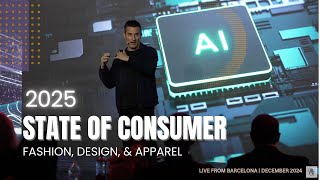
Keynote-style presentation by Matt Britton exploring 26 consumer and fashion trends (A–Z) with AI as an overarching thread. Covers concrete, industry-relevant trends — e.g., AI and custom GPTs, Digital Twins/voice cloning, generative design, creator-driven commerce (TikTok Shop, creator lines), inventory optimization, localization/ultra-personalization, resale growth, fast-fashion drivers (Shein), health/ozempic impacts, and AI shopping assistants (Zalando). The talk mixes data points, vendor examples, and practical advice about upskilling and preparing for job and supply-chain shifts heading into 2025.
I hack you, you know, I hack all the speakers. So that's totally fine. Yeah, yeah, absolutely. Great energy. How's everyone doing this morning? Thanks so much for having me. I'm really excited to be here. I love the fashion industry. I love apparel because it really is sort of ground zero for trends. And trends is something I've been fascinated with my entire career. When I graduated college, the Internet was first coming out. And when I tell my kids that, they really look at me, talking about feeling old, like I'm incredibly old. But it's true. I graduated and came to the workforce around 2000, and I saw this incredible groundswell of change that was driven by the Internet. And of course, the millennials who were being born at that time are really famous for being the first, what's called digital natives, the first generation that grew up with the Internet in the household. They never knew a world without the Internet. And if you think about what that does to their brains and what that has done to the corporate workforce, when people come to companies and they don't understand why things are the way they are because they never knew a world without the Internet. The next big generational shift was Gen Z. And the big distinction with Gen Z is they were the first generation to grow up with the iPhone in the household, or as many of you probably have, Gen Z kids, an iPhone as an appendage to their body. The iPhone obviously brought constant connectivity, you know, real time information in a way that we've never experienced again, differentiating in hardwiring brains even further. And now age 0 to 15 is the core of a new generation coming out, which is called Generation Alpha, which I'm going to be talking about today, which is the first generation to grow up with AI in a household. The shifts brought about by Generation Alpha are going to be like anything else that we've never seen before. And it's something that fascinates me, which is why currently I'm spending about 90% of my time in AI building, figuring out what it means for every industry, including your industry. Today, I'm going to be talking about trends. I'm going to be going through the Alphabet letters, A to Z. And every letter of the Alphabet is going to correlate with a trend that I think has major implications to your industry heading into 2025. Of course, AI is a thread that goes through all of this, but I'm going to illuminate ways that both the consumer macroeconomic factors and barter shifts are impacting your industries in ways that you need to know. So If I've done my job right today, you'll remember a couple of these letters. You'll take them back to you for wherever you're working from, and it'll hopefully have you change and maybe think a little bit differently about your jobs. I talk a little bit fast, but I'm going to try to slow it down for everyone, especially because it's early in the morning and we have a lot to cover. 26 letters, 42 minutes. I think I got this, so let's dive in. Of course, A is AI. And I'll tell you a little bit of a story about AI. I run a software company called Suzy. We have about 300 people, and when AI first became sort of a big thing, I gave it to my engineers to figure out. So I have about 80 engineers on my team. And I said, this is AI. It's a big thing. You need to figure out how we can build into our product, how can it impact our customers? And time went on, and time went on and nothing was really happening. And I got increasingly frustrated. And after. After about six months, I learned that maybe I was the problem, that telling them to figure out AI is the wrong way to go about it. Rather, what dawned on me is maybe I need to figure out the most important problems that need to be solved, and then how can AI actually help solve those problems? So I actually made the bold decision as somebody who's not a coder, and I took AI back into my reins and I said to myself, figure it out, Matt. Figure out what AI means. And before jumping into using AI to solve a problem for my business, I decided to try to solve a problem for me personally, something I would have even a more vested interest in than the success of my business. And for me, like many of us, or probably all of us, it's staying alive. I'm turning 50 next year. I have young children, and I want to use AI to help me stay alive. So I went down a journey to try to figure it out. And the one thing I learned right away about AI is all about data. And data, when it comes to staying alive, is about the data of your body. So I start to go through 20 years of information to collect all the data of my body that was possible. Blood test information, MRIs, X rays, notes from doctors, anything I can get my hands on and start to categorize it. I put all the blood test information as a blood test PDF, all the X ray information, and consolidate it as an X ray PDF, and it creates something called a custom GPT, which for Those of you, how many in the room use ChatGPT at this point? Most of you, right? Which is incredible because if I said a year ago it would probably be maybe 15%, now it's probably 80%. A custom GPT is a custom iteration of ChatGPT. So while ChatGPT crawls essentially all the Internet, a custom GPT will only crawl the information that the user, in this case me, deems most important. So I took all that bodily information, if you will, and I put it into this custom GPT and I trained it. I told it to act as a world class doctor with the number one goal of keeping me alive as an individual. I start to ask it some questions and the more I played with it, the more existential questions I asked. For example, I asked about where did they. Why they aren't watching tv but they're watching lots of video. Where they're watching videos on their phones and when they're watching videos on their phones, it's not from mainstream traditional media sources, but from other people. They are watching content from other people. And that is what a creator is. And what I tell every big brand from Nike to Nintendo to Netflix, the Procter and Gamble is. Your planning should start with creators first and mass traditional media last. And the reality is most businesses have the inverse. They're looking at TV and billboards and radio and traditional media, which is fine for yesterday's generation, but tomorrow's generation isn't consuming media from mass sources. They are consuming media for individuals. And I can tell you that's no more true than it is in your industry. Every single trend that is being driven right now is being driven by individuals. Not billboards, not Vogue magazine, not anymore. Younger people are seeing what creators are doing at places like Art Basel right now in Miami. And the things those people are wearing are the things that are being sold. The creators impact B2B and B2C. And it should be the core focus of any planning cycle if you want to gain the most valuable asset in marketing to the end consumer, which of course is attention. I am Matt Britton here on a December morning speaker speaking to a brilliant audience in Barcelona about the future of fashion and apparel in an increasingly AI powered world. So that was me. Except it wasn't me. That was my digital twin. I have cloned my voice using a platform called 11Labs. Before today's keynote, I simply typed in a few sentences and I had it output a voice that sounds exactly like mine. There's equally easy technology to clone you your look and likeness. Where in about six to nine months, any of us will be able to appear on a screen, talking in your voice, looking exactly like you in a way that's indistinguishable to the other people. This may not even be me right now. Just kidding. It is. The notion of Digital Twins has massive implications if you think about it. An A list actor. Now they can be in a movie filming in Singapore while filming a commercial in Toronto, and in one, they're actually not even on set. If you are a model, if you're an actor, if you're somebody whose time is in demand, you now have the ability to clone yourself. Many people probably think this is crazy, and many people don't believe it. But if I told you 20 years ago that half a million people would go to a concert festival called the Electronic Daisy Carnival every year to watch DJs, push buttons and play music made by computers, you would have said I was crazy then as well. The end consumer doesn't really care. And we are now going to have the ability to clone ourselves, which for you in the fashion industry, if you're talking about models, actually, if you're a good model, it gives you the ability to really scale your presence. But if you're not really in demand, your job's going to be eliminated and there's going to be a lot of job elimination, which we're going to talk about in a second. But Digital Twins is real. Cloning my voice was so easy. I will send as a lead behind the way that you all can clone your voice. You may not have a good application for it. For me, I also run a podcast and every time I'm asked to run a promotional clip, it's not even my voice doing it and save me a lot of time. There's going to be a tremendous amount of applications for this in the years ahead. E stands for Exclusive drops. And just like how young people love to be on their phone and Gen Z is the iPhone generation, they also love this dichotomy that defines their culture, which is they want to feel connected, but they want to retain some level of individualism. They want to be part of something, but they still want to stand out as a unique individual. And one place, obviously they do that is the things that they wear. And one way that they do that is through platforms like Exclusive Drops. Nike very successfully launched something called Sneaker S N K R, which is an app that's sort of like a sister app to its core Nike, Apple, where they will drop exclusive sneakers and it'll be live for 24 hours. And that creates a scarcity value and it creates the ability for individuals to really have something unique that other people want. And when we look at a world of mass customization in the apparel industry, that will remain. But at the same time, having this really drives deep engagement. So when you think about your go to market strategy, whether you're in a B2B or B2C sector, the the notion of exclusive drops is something I would definitely take a look at. F stands for family matters. And this is the mean age of childbearing in Europe from 1950 to 2022. And this number continues to go up. What this means is that the average age of a family starting in developed Western nations continues to get older and older. And older people are acting younger for way, way longer in life. It used to be, and if you look at some of this data, it's fascinating that on average a family will be starting when the woman was age 22, 23 years old, and now it's in the 30s. That means it's eight more years of popping bottles of champagne versus bottles of milk and formula for your baby. Eight more years of dressing in cool stuff versus dressing in stuff that gets stained from taking care of your kids. It actually has given people license to act younger or older in life. If you go to a big concert festival, you may see somebody that's 50 years old there and no one looked twice. But if I saw my dad in 1985 at a concert festival with a bunch of kids, I would have thought something weird was going on. Right? And that's how things have changed. Older people understand the music, the trends, the fashion that younger people are into because of Instagram, because they're starting families later. Why people are staying in cities for longer. There's more two income households. So. So your consumer is changing right before your eyes. And the start age of a family is a big reason why G stands for generative design. I love that video that we kicked off with. And that video is generative design. We are at version 0.1 right now of what generative design is going to do. When you saw that video, you all said, oh, it's AI. Everyone kind of knew it. And if you remember when you first started maybe watching videos on the Internet, it was very choppy or even when you got on the Internet, for those of you who use dial up, it was very choppy, it was very slow. And now that's all we do with Stream. The rate of change in AI is 100x what the rate of change was in the digital movement. So you're going to see generative design become more and more realistic to the point where it will become indistinguishable. And that video that you see next year will be indistinguishable from a video that's made by AI or a video actually from real models. And that's fascinating when you think about the implications in terms of speed of design. It also changes jobs. A big thing that I see over and over, and I'm going to take my jacket off because it's hot up here with the lighting. A big thing I continually see in my company is fear, fear around AI, fear about job loss. What is this going to do for me? The reality is there will be job loss. When Henry Ford invented the Model t, there were 70,000 companies that went under that made horse and carriages. Yet in the next 10 years in the US the automotive industry accounted for 67% of all new jobs created. I believe we're going to see the same things. If you're a designer that doesn't understand how to use this technology, you will definitely be part of the casualty of this. But if you do get your arms around it, you'll be able to ride the wave from a more broader perspective. I think we will be taking one step back and then many steps forward. But I do believe in 2025, you will see companies ident identify so many efficiencies across so many industries that will cause job loss. And it will be up to those people to upskill and learn new things. It's going to be scary, but technology has always been demonized. When writing was Invented in the 1500s, Socrates said that it was going to be bad for humanity because it didn't really make people have to remember things anymore. But where would we be without writing? And I can go through every technology, whether it's the automobile or. Or the printing press. Throughout history, the same has happened with AI, but the reality is it almost doesn't matter. We're not going backward. We're all looking for ways to be faster, better, more efficient. That's what drives the business world. And things like generative AI are gonna be a big part of bringing that to life. This is a product called the Meta Ray Ban sunglasses. It is born from a partnership between Meta, obviously the company behind Facebook and Instagram and WhatsApp and Ray Ban, which is a great eyewear company. And they have come out with a partnership for an incredible product that I actually bought for my whole executive team last year called Meta Ray Ban Sunglasses. They have cameras which can take pictures and video. You can play music, you can take calls from it. But now what's being rolled out in their most recent iteration of their software is what we all know as augmented reality. Meaning I can look at a shirt on a rack in a store and it'll tell me how much it costs and it might even show me what I would look like in that. I can walk by a home and it'll tell me how much it costs. I can walk by something in the grocery store and it tells me the nutritional value of it. I might be able to walk by you guys. And if you've opted in, I can even see who you are through your LinkedIn profile. It's an overlay into what you're really seeing. That's augmented reality. Virtual reality is those crazy goggles that Apple tried to roll out which completely disassociates you from the world. I think that has a bigger hurdle. But this augmented reality doesn't because it doesn't change human behavior because we all wear glasses, right? And I think this is the future of devices. This combines really the notion of a phone and AirPods all in one. I think five, 10 years from now, the notion of us holding a phone and walking around with it will be something that we looked at sort of ancient history. And I think these are the new type of products we're going to start to see coming to market. I stands for inventory optimization, something I'm sure very near and dear to all of your hearts. You know, obviously tech driven supply chains aim to minimize waste and prioritizing and inventory management. And it all goes back to the original example I gave you of data feeding into a model. So just like I had a data, a data model that was able to tell me what I should do for my company or what I should do to keep myself alive. Models are being created that will allow you to understand how much inventory you have, what's being bought, by constantly pouring through historical data to allow you to figure out how much is too much, how little is too little. And the best companies are already switching over to AI driven inventory optimization. And it's as simple as gathering the data points that you need to have that allow you to make those inventory driven decisions and putting in the model that you can simply talk to. J stands for jobs. Jobs are changing. Why does jobs matter to you? Because when people come into the office, they wear something different than when they work from home. So this changes obviously fashion styles. I just spoke to the CMO of Anthropologie which is a big apparel company in the us who told me casualization is our number one trend. People are dressing more casually, which makes sense. My parents and my dad used to wear a suit and tie every single day to work. I don't really see any ties in this room right now. Right. And so fashions are changing, which means that drives what you want to make and what you want to bring into the market. And what's changing that is sort of an outside in impact from jobs at Google. Now, 60% of their workforce is freelancers or part time. I often get asked after this, people come up to me and they say, well, what should I tell my kids to do about all this? And I always say the same thing. Have them go deep into an art or deep into a science. Deep into an art is learning how to be creative, learning how to figure out the problems that need to be solved, learning how to collaborate, learning how to be creative. Going deep into a science is owning and operating and building the machines. If you can do one of those two things, you can have a lucrative career as a freelancer and not have to worry about layoffs, not have to worry about working at big companies and also not to worry about coming to an office, which again changes what you wear. So jobs are changing and it's very much relevant. K stands for knowledge base. And this is very much what I've been speaking about this entire time. Knowledge is everything. Data is everything. My use of AI and yours, the only difference is the data that we feed into it. We all have access to the chips that power AI now we all have access to the large learning models like ChatGPT. The only differentiation is, is how you pull data together. Some people have data in file cabinets, some people have data written down, handwriting. Some people have data in their minds. Some people have tons of PDFs. Gather the data that matters. The historical data that you've all experienced is gonna drive your future decisions. But if you can't access it, it will not be able to be done effectively. So that is obviously step number one in any based AI application is your knowledge base. L stands for localization. Your ability to customize and localize what you do is now a thousand x easier through AI. Your ability to take languages in hundreds of different languages and push out the same type of copy, even ways that are culturally relevant, no longer requires you to have experts around the world. 50% of fashion executives say in 2025 they're planning on localizing their strategies that could be localizing their products, localizing their messaging. But the more local and personalized and relevant you are to your end consumer, the better off you're going to be. And AI enables you to do that at scale. In the heart of Barcelona, the future takes the stage. Matt Braden's words of wisdom for a brand new age. AI's in fabric. It's woven in the scenes, revolutionizing fashion, fulfilling all our dreams. Pretty cool song, right? It's a song about today. It's a song that I made this morning for today's keynote about me speaking in Barcelona to all of you. It took about eight minutes for me to create and pull together. Music and fashion is synonymous. It always has been. Music now is accessible in a way that we've never seen before. This was built by a tool called SUNO that allowed me to come up with custom lyrics in any custom genre and output. Music now, is this going to replace Coldplay and The Beatles and U2? Not today, no. And I think there's always going to be a room for real musicians and real artistry. But if you want to create music for social media, if you want every single one of your apparel lines to have its own song, you can now do it at zero marginal cost. Music moves us emotionally, I could see even when I was playing this song. And your ability now to access it through AI is really fascinating in a way that most people still don't even really understand. In fact, I spoke at the Canadian Music Week conference in Toronto a couple months ago. It was the music industry. And I asked the audience about 400 people, how many people have heard of this tool? And they said two. So that's how there's such a big disconnect now about what's possible. N stands for near shoring. Obviously, where I live in the United States, the Trump administration is going to change a lot in terms of global economy, one of which is tariffs and what it means for importing and exporting around the world. Near shoring is something that is growing in relevance, and it's just something to keep an eye on in terms of how you look at your supply chain, how you look at your vendors, how you have an increasingly globalized structure that can move along with this. We don't know what's going to happen, but, you know, the threats of 100% tariffs to the BRIC countries from the United States, well, if that happens, it's going to change the world. It'll probably drive a lot of inflation in the United States and other areas. You know, everybody has their own political views, but this is something that is going to be an increasingly big topic heading into 2025. O stands for Ozempic. Probably the number one thing that's going to impact your industry besides AI in 2025 is Ozempic. What people don't understand is in America, 60% of the population is impacted by obesity. 60%. So it's the majority. Right. And disproportionately, the people that are impacted by obesity are people that are on a lower socioeconomic bracket, where up until today, drugs like Ozempic has been largely out of reach for them. Because the price of these GLP1 drugs are still so expensive. But. But with regulation, if it becomes more accessible, then all of a sudden you're gonna see a boom in adoption of these drugs, which is gonna change how people feel about themselves. When people lose weight, they get new wardrobes and they go out and they feel good about themselves. This could be a massive impact. And I work with all the big snacks companies who are having the opposite impact right now. Right. But for you, this is a good thing. I'm not a doctor. I don't know what the long term impact of this are, but I do know it's being adopted. I, I do know doctors and the medical community is more so behind it than not because it's compared to the impact that obesity brings and all the health issues. And I think you're only gonna see this grow and impact your business in a big way moving forward and something to keep an eye on. P stands for podcasting. I run a podcast called the Speed of Culture with all the biggest chief marketing officers in the world. It's been the most successful marketing venture I've had. Podcasting is a revolution, far outpacing the amount of new podcasts that are coming out every year. And it's a way to create personal relationships. Everybody should have a podcast on the B2B level. You should have podcasts for your consumers. We are in a world that's increasingly mobile. People are on the go. There are zero barriers to entry to create podcasts. And it's something I would keep an eye on moving forward. In fact, there's a tool called Notebook LLM where you can take a PDF document and drop it in, and it instantly creates a incredibly realistic podcast about whatever is in that PDF. So I took my book in the PDF, my book, and I dropped it in and. And I listened to it on the flight here and my mind was blown. So podcasting is more accessible than ever before. You don't even need to produce one. You just need data to produce it with Q stands for quality over quantity. And this more goes to Gen Xers and baby boomers. Older consumers are spending 21% more per capita on clothing than younger generations. They favor durability and timeless design. There is a divide. The digital divide is the same dividend divide with quality over quantity. Older consumers, Gen X and baby boomers want quality over quantity, where the digital generation actually want the inverse, which we'll talk about in a second. So you do need to look at that strategy and very much it goes along the luxury and value chain, if you will. And we're seeing this only grow over time. Where young people might be okay with fast fashion and throwing stuff out right away, but the older generation looks at things completely different. The resale revolution is where young people are adopting value. The resale market's expanding 12% compound annual growth rate. It's going to reach nearly $400 billion by 2028. The apparel resale market is something that young people look at as an entrepreneurial push. It falls into the world of exclusive drops. It allows people to find and identify things, and it's only going to continue. And it's not something that should be looked past. Because while young people might be okay with wearing things once or twice, some of them throw it out. But a lot of people try to sell it on platforms like Depop. Right. And try to monetize that. And it's something that is going to create both increasing opportunity and risk to this industry. S stands for Shein. Shein obviously is a massive driver of change in the fast fashion as Zara and H and M. Right? But this is even faster fashion, even cheaper fashion. Shein generated over $30 billion in revenue, growing over 40% last year. The growth rate will be nearly the same this year. It is one of the number one places that Gen Z has went to for holiday shopping. In the realm of apparel that just came out from Black Friday Cyber Monday data, the price is so appealing. As I mentioned earlier, people want to feel like they're individual. And being able to buy things and then not wear it again allows them to feel individual. It's terrible for the environment, for sustainability. It is terrible. Amazon, who has long talked about how bad this is, is now launching a competitor to Shein and Temu that's going to be coming out next year. It does drive a lot of volume for your business. And the crazy thing about platforms like Shein is they have no inventory. It's just all data. They're driving demand data and connecting it to manufacturers and Suppliers direct from China and, and connecting the dots with consumers. And it's really how the future of shopping is going to be. I think companies like Amazon do have risk ahead of them because ultimately you can have an agent or an AI bot if you will, go and seek out from any supplier in the world. If you want a red sweater with pom poms on it, they can find it for you and they can get it directly from the manufacturer. That's basically what she ends doing on a mass basis. But soon we're going to see AI agents allow people to do it on an individualized basis, essentially skipping the middleman, if you will, and going right to the manufacturer again, which creates a lot of opportunities if you can connect with these models. T stands for TikTok. TikTok recently launched something called TikTokShop. I work very closely with TikTok. An announcement came out yesterday. TikTok is supposedly going to be banned again in the United States. We don't know if it's going to happen. TikTok is the number one place where most young people are looking at their phone. And there's other competitors to TikTok around the world where they're consuming content the same way. And like most social platforms, they are getting into commerce. TikTok just launched TikTok Shop and drove over $100 million in US sales 3x their performance from a year ago. What is TikTok Shop? Well, it's called social shopping. As I mentioned earlier, creators is what people look at. It's where they get their information. It used to be creators used to say, this is what I'm wearing tonight. I got my dress here, I got my shoes here. You can go buy it. And then maybe they'll have a link. Now it's more like a live shopping experience where they will host a 30 minute show going through their entire closet and actually selling stuff. And many good influencers that have big audiences are actually creating their own lines. I've tried to work in the past with many manufacturers in apparel to team them up directly with creators, because creators are going to be the future brands. So if you look at big apparel brands, if you look at, you know, Gap or Banana Republic or big brands, in the past they grew through traditional media. But as I mentioned earlier, young people don't consume traditional media. They consume content from creators. Which is why we see Kim Kardashian's line of skims worth $4 billion. Right? And it's happening in every single industry. Celebrities and influencers are the new brands and now they have a platform to distribute. So I would really think about who are the creators, who are the influencers in your world. How can you team up with them directly to help them come up with their own lines and let them sell directly? It's a completely different model, but a booming model, as evidenced by TikTok. Shop U stands for ultra personalization. And this kind of comes through a lot of different older generation looks at things completely different. The resale revolution is where young people are adopting value. The resale market's expanding 12% compound annual growth rate. It's going to reach nearly $400 billion by 2028. The apparel resale market is something that young people look at as an entrepreneurial push. It falls into the world of exclusive drops. It allows people to find and identify things. And it's only for stations, one of which is in content marketing. We all get email newsletters all the time from companies. And normally the one I get from a company like say, Nike is the same that you get. But now with the knowledge bases that I discussed so frequently during this presentation, AI models can actually create emails that are at scale one to one, where I'm going to be getting an email from KLM Airlines that's completely unique to me based upon where I traveled in a way like we've never seen before. So personalization could be about allowing people to personalize what they wear, what they order. It could allow them to actually be personalized in terms of an online shopping interface when they log in. But it also can be driven for communications. And I think this sort of monolithic mass media model, if you think you're going to continue. And it's not something that should be looked past, because while young people might be okay with wearing things once or twice, some of them throw it out. But a lot of people try to sell it on platforms like depop, right? And try to monetize that. And it's something that is going to create both increasing opportunity and risk to this industry. S stands for Shein. Shein obviously is a massive driver of about where we've been in the past. I'm gonna market to the 18 to 34 demographic, right? That's a cookie cutter demographic change in this industry. You know, we used to think of fast fashion as Zara and H and M, right? And we all know people that are between ages and 18 to 34 have vastly different worldviews. And this is even faster fashion, even cheaper fashion. Shein generated over $30 billion in revenue, vastly different interests. Now moving forward, you do have the ability to become personalized. And Gen Alpha growing over 40% last year, the growth rate will be nearly the same this year. It is one of the number one places that Gen Z has went to for holiday shopping. In the realm of apparel that just came out from Black Friday Cyber Monday data, the price is so appealing. As I mentioned earlier, people first AI generation is not just gonna expect, but they're gonna demand personalization. Right? And if the oldest gen Alpha's 15, you're talking about Gen Alpha entering the workforce in about six years and then 10 years from now they're gonna be starting families and this is gonna be AI generation. Starting families wanna feel like they're individual and being able to buy things and then not wear it again allows them to feel individual. It's terrible for the environment, for sustainability. It is terrible. Amazon, who has long talked about how bad this is, is now launching a competitor to Shein and Temu that's gonna be coming out next year. It does drive a lot of volume for your business. And the crazy thing about platforms like Shein is they have no inventory. It's just all data. They're driving demand data and connecting it to manufacturers and suppliers and it's gonna be completely different in terms of expectations. V stands for voice. We've all had our own Chows direct from China and connecting the dots with consumers and. And it's really how the future of shopping is going to be. I think companies like Siri on the iPhone, where I'm like, no, I want to go to Starbucks. And it just doesn't understand, right. The technology of these voice platforms, version one, Alexa, Siri, platforms like that have not been very good. But now in the age of AI, they're spectacular. They are so good that I'm not sure it makes sense, let alone for kids to learn handwriting, to even understand typing. Amazon do have risk ahead of them because ultimately you can have an agent or an AI bot if you will go and seek out from any supplier in the world. If you want a red sweater with pom poms on it, they can find it for you and they can get it directly from the manufacturer. That's basically what she ends doing on a mass basis. But soon we're going to see AI agents allow people to do it on an individualized basis, essentially skipping the middleman, if you will, and, and going right to the manufacturer again, which creates a lot of opportunities if you can connect with these models. T stands for TikTok. TikTok. Recently, I think we're gonna be increasingly speaking to our devices and interacting to our devices like we are people. I started my company Suzy in 2018 because I had a feeling that we were gonna be entering this AI age where people are gonna be interacting with their technology like people. So I named my product after a person launched something called TikTok Shop. I work very closely with TikTok. An announcement came out yesterday. TikTok is supposedly going to be banned again in the United States. We don't know if it's going to happen. TikTok is the number one place where most young people are looking at their phone and there's other competitors to TikTok. And I think over time you're going to see personalization be driven by voice. When I go on long car rides, I'll open up ChatGPT's app and I will brainstorm with it about ideas or concepts. I know it sounds crazy, but it's amazing and it listens to me. Unlike some talk around the world where they're consuming content the same way and like most social platforms, they are getting into commerce. TikTok just launched TikTok shop and drove over $100 million in US sales. People who work for me who might probably be doing something else while I'm talking to them and by the end of the car ride, it transcribes the entire conversation. The voice recognition is near perfect and I would really think about understanding voice when you look at things like shopping assistance and its ability to actually comprehend voice. W stands for wallet. Wallet is a big thing. This is for the US but it's actually replicated in many nations around the world. In the United States during COVID there was a tremendous amount of fiscal three extra performance from a year ago. What is TikTok shop? Well, it's called social shopping. As I mentioned earlier, creators is what people look at. It's where they get their information. It used to be creators used to say, this is what I'm wearing tonight. I got my dress here, I got my shoes here, you can go buy it. And then maybe they'll have a link. Now it's more like a live shopping experience where they will host a 30 minute show going through their entire closet and actually selling stuff. And many good influencers that have big audiences are actually creating, creating their own lines. I've tried to work in the past with many manufacturers in apparel to team them up directly with creators because creators are going to be the future brands. So if you look at big apparel stimulus as we know, and one thing we saw as a result of this stimulus Is the difference of how brands if you look at Gap or Banana Republic or big brands in the past, they grew through traditional media. But as I mentioned earlier, young people don't consume traditional media. They consume content from creators. We which is why we see Kim Kardashian how people treat money and the relationships with money across different generations. So my dad passed away three years ago. When he did, I was put in charge of his estate. And when I was I was shocked to learn how much money he had saved compared to how he lived. I just didn't understand it based upon how much he had. Why did he live in a house like that? Why did he have the same car for 20 years for somebody like me? I just couldn't comprehend it. And I start to really look into it and talk to his friends that were still with us. And what I Sheehan's line of skims worth $4 billion. Right. And it's happening in every single industry. So learned was that he grew up, you know, as a baby boomer whose parents had lived through the Great Depression. Celebrities and influencers are the new brands and now they have a platform to distribute. So I would really think about who are the creators, who are the influencers in your world. How can you team up with them directly to help them come up with their own lines and and let them sell directly? It's a completely different model, but a booming model as evidenced by TikTok. Shop U stands for ultra personalization. And this kind of comes through a lot of different manifestations, one of which is in content marketing. We all get email newsletters all the time from companies. And normally the one I get from a company like say Nike is the same that you get. But now with the knowledge bases that discuss so frequently during this presentation, AI models can actually create emails that are at scale one to one. Where I'm going to be getting an email from KLM Airlines that's completely unique to me based upon where I traveled in a layout we've never seen before. So personalization could be about allowing people to personalize what they wear, what they order. It could allow them to actually be personalized in terms of an online shopping interface when they log in. But it also can be driven from for communications. And I think this sort of monolithic mass media model. If you think and World War II and their relationship with money was one of scarcity. Let's look at the different end fiscal stimulus that happened during COVID and young people got money. Was their relationship one of scarcity? No NFTs meme stocks, right. Online sports, gambling. It was a complete opposite. It was a risk on behavior with money. It was essentially them taking money and spending it as quickly as they could in many instances. Try to make that about where we've been in the past. I'm going to mark it to the 18 to 34 demographic. Right, that's a cookie cutter demographic. And we all know people that are between the ages and 18 to 34 have vastly different worldviews. And Dan McBuck, the opposite of the baby boomer approach of patience. And we're starting to play that out in economic data. On the left hand side is personal savings rate. Actually, sorry, it's on your right hand side personal savings rate as a percentage of income. And you could see the peaks that happened during COVID when first people didn't have anywhere to spend it because they were stuck at home and then they actually got all this fiscal stimulus. Vastly different interests now moving forward, you do have the ability to become personalized and gen Alpha and then you start to see it slowly wither away. During the 70s and 80s, first AI generation is not just going to expect, but they're going to demand personalization. And if the oldest gen alpha is 15, you're talking about gen Alpha entering the workforce in about six years. And then 10 years from now they're going to be starting families and this is going to be AI generation starting families. When inflation rates were as high as 15 to 17%, it veered in terms of savings rate between 10 and 15%. Now it's under 5%, it's at its lowest rate ever. People aren't saving money and it's going to be completely different in terms of expectations. V stands for voice. We've all had our own challenges with Siri on the iPhone, where I'm like, no, I want to go to Starbucks. And it just doesn't understand, right? At the other end, you see credit card debt has topped a trillion dollars in the US for the first time. Technology of these voice platforms, version one, Alexa, Siri, platforms like that have not been very good. But now in the age of AI, they are spectacular. They are so good that I'm not sure it makes sense, let alone for kids to learn handwriting, to even understand typing. So what happens when people basically have an expensive lifestyle and they can't afford it? Well, first they drain through their savings. I think we're going to be increasingly speaking to our devices and interacting to our devices like we are. And then they put it on their credit card, right? You see things like buy now, pay Later. I'm sure you all know platforms like clock people. I started my company Suzy in 2018 because I had a feeling that we were going to be entering this AI right that allow you to put it off and pay later. I'm not sure they're going to be able to pay later. And despite the fact that the stock markets and many markets are all time highs, I think we're in for an age where people are going to be interacting with their technology like people. So I name my product after a person and I think over time you're going to see personalization be driven by voice. When I go on long car rides, I'll open up ChatGPT's app and I will brainstorm with it about a rough period of economic headwinds heading into 2025 which is going to accelerate the path for companies to adopt AI to drive efficiencies which will create short term job losses. But ideas are concepts. I know it sounds crazy, but. But it's amazing and it listens to me. Unlike some people who work for me who might probably be doing something else when I'm talking to them. And by the end of the car ride it transcribes the entire conversation. The voice recognition is near perfect and I would really think about understanding and drive a much more efficient economy overall. But this is just fascinating, especially when you look at the risk voice, when you look at things like shopping assistants and its ability to actually comprehend voice. W stands for wallet. Wallet is a big thing, this is for the US but it's actually replicated in many non dopamine infused relationship that people have because again, you're talking about a generation that grew up constantly looking at their phone and wanting that instant gratification. Well, they want the same thing from their money. They want to be able to buy nations around the world. In the United States during COVID there was a tremendous amount of fiscal stimulus as we know. And one thing we saw as a result of this stimulus is the difference of how stock options in Tesla and make what it used to take a year in a couple minutes. They don't want to work for how people treat money and the relationships with money across different generations. So my dad passed away three years ago. When he did, I was put in charge of his estate. And when I was, I was shocked to learn how much money he had saved compared to how he lived. I just didn't understand it based upon how much he had. Why did he live in a house like that? Why did he have the same car for 20 years for somebody like me, I just couldn't comprehend it. And I start to really look into it and talk to his friends that were still with us. And what I learned was that he grew up as a baby boomer whose parents had lived through the Great Depression and World War II. And their relationship with money was one of scarcity. Let's look at the different end fiscal stimulus that happened during COVID and young people got money. Was their relationship one of Scarcity? No, no. NFTs, meme stocks, online sports, gambling. It was a complete opposite. It was a risk on behavior with money. It was essentially them taking money and spending it as quickly as they could in many instances try to make that quick buck. The opposite of the baby boomer approach of patience. And we're starting to play that out in economic data. On the left hand side is personal savings rate. Actually, sorry, it's on your right hand side. 50 years at the same company saving like my dad did, they have no interest in doing it. It's about looking at everybody else's highlight reels and living for the moment, which obviously there is some merit in. But not if you're living off credit card debt. Right. And I know I probably sound like the cranky old man complaining about how things used to be. Maybe that's what I'm becoming. But the data doesn't lie. I'm responding to the data. I'm not sure it's going to change. That is what's driving Sheehan and consumerism more broadly that's happening is people want to buy. It's easier to buy things than ever before with platforms like Amazon. It's just fascinating to see how it's impacting society so broadly. X stands for excess stock. You're going to see big issues from platforms like Shein in terms of sustainability. And I know that, you know, all of you here are focused on doing good and making sure you're acting responsibly. The fashion industry produced 5 billion excess items in 2023. It's expected to be about 7 billion items in 2024 based upon these fast fashion based about younger people being okay. Personal savings rate as a percentage of income. And you could see the peaks that happened during COVID when first people didn't have anywhere to spend it because they were stuck at home. And then they actually got all this fiscal stimulus and then you start to see it slowly wither away. During the 70s and 80s when inflation rates were as high as 15 to 17%, it veered in terms of savings rate between 10 and 15%. Now it's under 5%. It's at its lowest rate ever. People aren't saving money on buying disposable and obviously the resale market is one way but this is a big issue and companies on the other end. You see credit card debt has topped a trillion dollars in the US for the first time. Can tackle this issue in a variety of different ways. Are going to be companies that are going to find themselves on the right side list because so what happens when people basically have an expensive lifestyle and they can't afford it? Well first they drain through their savings and then they put it on their credit card. Right. You see things like buy now, pay later. I'm sure you all know platforms like Klarna, right That allow you to put it off and pay later. I'm not sure they're gonna be able to pay later. And despite the fact that our stock, the stock markets and many markets are all time highs, I think we're in for this is becoming just the sustainability is becoming increasingly unsustainable if you will. And I think you're going to start to see tipping points. I think you're going to start to see a lot of regulation there as well. Y stands for younger shopping habits. And this really plays to what we talked about with the economy 70 a rough period of economic headwinds heading into 2025 which is going to accelerate. 3% of Gen Z shoppers in the US report changing spending habits due to increased prices. Obviously inflict the path for companies to adopt AI to to drive efficiencies which will create short term job losses but in the end drive a much more efficient economy overall. But this is just fascinating especially when you look at the risk on dopamine infused relationship that people have because again you're talking about a generation that grew up constantly looking at their phone and wanting that instant gratification. Well they want the same thing from their money. They want to be able to buy impacted a lot of developed western markets and people are really starting to feel the pinch of obviously the rising credit card balances are a reflection of that. So value is really the name of the game. When you look at the younger consumer how do you reinforce value, value, value because that's really what they're interested in. And Z I thought was really interesting is a company called Zalando which is a European retail brand stock options in Tesla and make what it used to take a year in a couple minutes. They don't want to work for 50 years the same company saving like my dad did. They have no interest in doing it. It's about looking at everybody else's highlight reels and living for the moment, which obviously there is some merit in. But not if you're living off credit card debt. Right. And I know I probably sound like the cranky old man complaining about how things used to be. Maybe that's what I'm becoming. But the data doesn't lie. I'm responding to the data. I'm not sure it's going to change. They launched something called an AI shopping assistant and it was used by over half a million customers in the first year. So what is an AI shopping assistant? Well, I'm bringing this presentation full circle. That is what's driving Shein and consumerism more broadly. That's happening, as people will know. Right, but now I'm zooming down to you. An AI shopping assistant is essentially my healthbot for your industry. What would an AI shopping assistant want to know? What data would be important for an AI shopping assistant? Want to buy? It's easier to buy things than ever before with platforms like Amazon. It's just fascinating to see how it's impacting society so broadly. X stands for excess stock. You're going to see big issues from platforms like Shein in terms of sustainability. And I know that all of you here are focused on doing good and making sure you're acting responsibly. The fashion industry, well, it wouldn't know my size, my measurements, pictures of where I looked good in the past, right? Show me the picture where you felt like you looked the best. Show me your Instagram post that got the most likes, where people are like, I love that. Show me what your style is. Tell me what type of music you like. Tell me everything about 5 billion excess items in 2023. It's expected to be about 7 billion items in 2024 based upon these fast fashion, based about younger people being okay, buying disposable and obviously the resale market is one way. But. But this is a big issue and companies that can tackle this issue in a variety of different ways are going to be companies that are going to find themselves on the right side of this because this is becoming just. The sustainability is becoming increasingly unsustainable, if you will. And I think you're going to start to see tipping points and I think you're going to start to see a lot of regulation there as well. Y stands for younger shopping habits. And this really plays to what we talked about with the economy yourself, Matt. So we know that you only wear black, right? And Feed that into a model. And then when you want to buy something, you can go to that shopping assistant, say, I need new clothes for the fall. I need a new suit for an upcoming business meeting. I need a new dress for.3% of Gen Z shoppers in the US report changing spending habits due to increased prices. Obviously inflation impacted a lot of developed Western markets and. And people are really starting to feel the pinch date that I have on Friday night. And that AI shopping assistant will know what you like because it has that. Obviously the rising credit card balances are a reflection of that. So value is really the name of the data, just like a personal shopping assistant would. And with access to manufacturers around the world, well, game when you look at the younger consumer, how do you reinforce value, value, value, because that's really what they're interested in. And Z, I thought was really interesting is a company called Zalando, which is a European retail brand. Go and find that for you in the most efficient way possible. That's where pressure comes and that's where opportunity comes because it is very much skipping over the middle layer of. They launched something called an AI shopping assistant and it was used by over half a million customers in the apparel and industrial complex where which is the retailer in the middle and retail in the first year. So what is an AI shopping assistant? Well, I'm bringing this presentation full circle now, right, but now I'm zooming down to you. An AI shopping assistant is essentially my healthbot for your industry. What would an AI shopping assistant want to know? What data would be important for an AI shopping assistant? Ours are jumping on it in the case of Zalando, but it actually collapses the supply chain in a lot of ways and ultimately benefits the consumer. And the thing about this that's most fascinating, well, it wouldn't know my size, my measurements, pictures of where I looked good in the past. Show me the picture where you felt like you looked the best. Show me your Instagram post that got the most likes is it does not require new habits because you're just talking into a device just like you would talk to an actual shopping assistant. This to me is the number one way I think AI will be for people like, I love that. Show me what your style is. Tell me what type of music you like. Tell me everything about yourself, Matt. So we know that you only wear black, right? And feed that impacting your industry in the years ahead is the way that people consume that into a model. And then when you want to buy something, you can go to that shopping assistant, say I need new. It's going to be consumed in a way like they're talking to a person, except to talking to technology in a way that benefits the consumer and ultimately, hopefully benefits the industry. So that's all I have today. There is a cute close for the fall. I need a new suit for an upcoming business meeting. I need a new dress for a date that I have on Friday night. And that AI shopping assistant will know what you like because it has that data just like a personal shopping assistant would. And with access to manufacturers around the world will go and find that for you in the most efficient way possible. That's where pressure comes and that's where opportunity comes because it is very much skipping over the middle layer of QR code. You're welcome to take a picture of and you'll get a video of the presentation, a list of 100 AI tools, maybe many I mentioned today. My information's here if you have any questions. I'm happy to reach out. You guys have been an awesome audience and thanks so much for the. For having me. Le. Thank you. The apparel industrial complex, which is the retailer in the middle and retailers are jumping on it in the case of Zalando, but it actually collapses the supply chain in a lot of ways and ultimately benefits the consumer. And the thing about this that's most fascinating. Thank you so much, Britain. You know, Matt, is it does not require new habits because you're just talking into a device. Just like what was so interesting also to you guys, I had to smile a bit when you. You would talk to an actual shopping assistant. This to me is the number one way I think AI will be.
More from Matt




MikMak’s Rachel Tipograph on Consumer Spending, Retail Media & Holiday Shopping Trends



Jaguar Land Rover’s Charlotte Blank on Luxury, Purpose & Experiential Storytelling



