The North Face’s Sophie Bambuck on Brand Innovation, Outdoor Apparel & Street Fashion
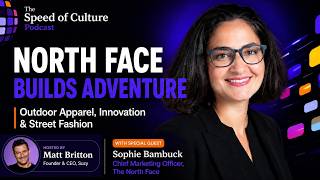
Sophie Bambuck, CMO of The North Face, explains why the heritage outdoor brand attends CES and how it uses mindset-based consumer frameworks instead of demographics. She brought lessons from 15 years at Nike about authenticity and risk-taking, and now focuses on DTC, TikTok social shopping, and an Explorer Pass loyalty program.
Chapters
Today we're thrilled to be joined by Sophie Bambuck, the CMO of North Face. In 2018, Sophie was named one of Forbes' 50 CMOs who are redefining the role, and 6 years later, she has no intention of slowing down. Sophie, so great to see you here in Las Vegas for CES.
Thanks for having me.
Very excited. Absolutely. You know, it's funny, CES has not always been the conference that every marketer came to. It was actually originally just for people who made actual consumer electronics. Why is it important for North Face to be at a conference like this and understand the world of technology?
Yeah, I mean, I think there's twofold. One is relationship, right? There's a lot of people in the industry now that we know who are here. We actually also see a lot of media partners that are now at CES. So it's important for us as a brand to be here and make sure that we get the face time during the year. We usually don't, you know, get to see each other very much.
Sure.
This is a moment. And then also we just want to know what's coming up, what's coming next. I mean, CES is a place where all the new cool stuff is happening. So we want to see what's going on. I'm going to actually tomorrow morning, I'm planning on walking the floor to see health and wellness.
Always a good idea.
Yeah, just to see what's up. Even if I don't actually have a direct business, I just want to know. I'm curious. I want to know what's out there. You never know where inspiration comes from, right?
Yeah. And I think the world of fitness and technology have obviously very much overlapped in the last couple of years with the Apple Watch and with the Oura Ring and the Whoop and all that. So, I mean, is that a space that North Face is actively looking at?
No, not actively. I mean, it's a space that we're interested in. Of course, it's not a space that we're necessarily investing in. I think right now it's more because we're so focused on our apparel and footwear innovation. This is very much where we, where we are, you know, focused. But even in that, when you think about apparel innovation nowadays, within your apparel, there's so much you can do. So we're, again, maybe it's less purposeful right now, it's more curiosity. I think eventually we'll probably get to a place where it makes sense. But I've had in my career, I've had many stints working on wearables and all that. And I see when it works and how very often also it doesn't work. So. Yeah. We're not rushing in. It would need to make a lot of sense for us to get to go there.
Yeah. And speaking of early in your career, you spent 10 years at Nike as your first— 15, actually. 15, actually.
Oh, I see. Yeah, 'cause Converse is part of Nike.
Right, right, right. So it was 15 years at Nike. Yeah. Obviously iconic brand. Yeah. If you look back, you know, at your entire stint there, what were some of the main takeaways? 'Cause obviously they do so many things Sprite, I would imagine that you learned so much there. What comes to mind?
Yeah, I mean, when you're a marketer, I think it's the best school for marketing. Nike doesn't also— Nike does Nike marketing. It doesn't always translate or transfer to other brands. That's the number one question when I've gone to other brands, people want to always ask, can we do the same that Nike does? Well, actually it's kind of hard. Nike has a specific way of doing things and it doesn't work for That's where we were. But I do think that I've learned the value of brand, I've learned the value of creative, I've learned the value of product marketing and how product marketing can be brand. Yeah. And aspirational.
Well, to the consumer, it's all very much connected.
Exactly. It's really about providing benefits to the consumer and solving problems that they might not even know that they had. And so, in the process of doing that, how do you build your brand? How do you create affinity for your product? And honestly, Nike, you know, has been one of the best at this. So I have to say, that's the number one thing I learned. I learned how to be a marketer. I learned what it is to be a well-rounded marketer. But then also there's the benefit of Nike being such a powerhouse that you said it does a lot of things right. It also does a lot of things wrong, but the beauty is actually failure is encouraged because you learn from it and then you reiterate and you improve. That's obviously something that only a very healthy and big company can afford to do. But that's the beauty of working in such a big, with such a big brand is you can actually fail and learn. When you don't fail, you don't evolve, right? Yeah. So that's, I'd say that's the other thing that I learned is to take risks and experiment.
Yeah, I know it's Hollywood, but you know the movie Air? Yeah, yeah. Where, you know, they go through, they chronicle the formulation of the Air Jordans. And before they met and brought on Michael Jordan, they talked about how it was that the sneaker, the basketball brand was like about to go under. They couldn't get it right and they kept trying and trying. And then finally they hit gold with Michael Jordan. Right. So it's kind of a microcosm of what you're talking about. You have to fail, fail until you finally get it.
And it's about having big, ambitious goals. It's even if it feels unattainable or even if it feels like there's no way You know, that's what I loved. I don't know if Nike today does the same thing, but back in the day it was very much about we're going to become a women's brand or we're going to go into skate. I mean, Nike going to football, soccer, you know, was a big deal. Yeah.
US-based company diving in. Adidas had a huge presence already. It was.
Yeah. Even internally, it was like, can we do this? You know, and going after skate was the same thing. I mean, skaters did not really want a big brand getting into skate. And then you saw the work of Sandy Bodecker and all that. I mean, it was— it's beautiful, big, ambitious goals.
What goes into entering a new category like that, going into skate at a company like Nike? Authenticity.
Authenticity, making sure the right people are involved in the conversation, that you're taking as much insight from the community as possible and making sure that everything that comes out, whether it starts with product always, but everything is thought through. Again, when I say serving the consumer, it's that with that authenticity and that insight, how do you actually build the best product with the resources that you have? So, again, when you're a big company like that, it's easier because you have access to a lot. Sure.
But that's what it takes. But you can't always just buy your way in. No. Like we've seen a lot of companies try to buy their way in to compete with Nike and they weren't able to. —it doesn't work.— succeed.
Yeah. It doesn't work. And, and again, that's also why sometimes you try, you try, but if you didn't have the right insight, you have to go back to the drawing board and do it again. So it's really at the core is making sure, do you understand your audience that you're going, the new audience that you're going after? That's what it's all about.
Always. Yeah. So what's behind the decision to leave a company like Nike? You're on the fast track there. You were there for 15 years working your way up the corporate ladder at an iconic company. And One day you say, you know what, I'm ready to try something else. Like, what goes behind that decision? A lot.
Yeah. A lot. Definitely, it's scary, mostly because at the time people did not really leave Nike. And so making that decision was scary because I didn't really have anybody to talk to about how do you leave Nike. I mean, literally, I had one friend I remember I called and I'm like, how did you leave? Like, what's the process to leave? That's how. Infrequent that was. Right. For me, it was about a few things. One is I had this fear of the 15-year mark. I was worried that if I had only done one big company for 15 years, then people would just think that I only know how to do one thing. Yeah. And I didn't want that to be the case. So I felt like I had always in my mind this 15-year mark. Now, I love the brand. Kind of arbitrary, isn't it?
15 years, it's just—
Yeah, I don't know. It was something that I put in my head. I don't know, you know.
The corporate version of the 7-year itch.
Yeah, at least because I had passed the 10 years. I'm like, okay, well, fine, the next one is 15. Right. But, you know, to this day, I still love the brand. It's a great brand and I will never not love the brand. But I realized that I could love the brand and not work there. Of course. And so that just, that was like, oof, a light bulb for me to realize I didn't have to work there. And then I wanted to learn more. I was in senior roles where I was pretty disconnected from the marketing mix, and I wanted to really understand more about the digital marketing environment and data. At Nike, it was very separate. It wasn't part of my day-to-day. I mean, I would set strategy, but then there would be teams just making it happen. It wasn't necessarily a part of that. And I wanted to be the person moving up the dial up and down. And I knew I couldn't do it there.
So getting your hands dirty a little more.
I want to get my hands dirty and I want to learn more. And then, you know, and the other thing that happened is there was a massive reorg and the categories went away. And I used to run Nike Sportswear and I, you know, that new operating model didn't make sense to me.
Right. So it just felt like it was time. It was time. It was time.
So I went to a digital native startup to get my hands dirty.
And how was that going from a big company to— looks like it was Everlane. Yeah. That must have been culture shock for you.
I was prepared. I had talked to enough people to understand the landscape. But yeah, for sure. I mean, you know, you go from like complaining about your ops team to not having an ops team, you know? So I really liked it. I really liked— I learned a lot. I mean, Talk about getting your hands dirty. I mean, or sending an email about a new pair of jeans on the hottest day of the year. You know, it's the stuff that like I had never had to really think about and tweaking daily, looking at numbers daily, definitely weekly, but for sure daily at that time. I definitely did more data crunching than I had. Yeah, I know all about that. Done before. So no, it was a really, really good experience. And it's such a good brand. I love Everlane. It's— I was already a consumer before joining.
So, yeah. So what was behind the decision for you to join North Face? What about North Face excited you? And tell me about your role today and where your focus is.
Yeah, I think I got worried that marketing wasn't right for me anymore. And I, when I left Everlane, because a lot of the roles out there were so heavy growth and performance, and that's not who I am.
The world was heading in that way. Yeah.
Yeah. And that's not who I am. I mean, it's part of what I do and I understand it and I can do it. That's not what I want to do every day. I want to set strategy. I want to think about who the consumer will be in 3 years. I want to do cool shit. Yeah. I want to have fun and actually build a brand. And there's not that many companies that are willing to invest in brand. Which creates an opportunity. 100%. Yeah. I mean, and I'm seeing the pendulum swinging. I'm seeing now companies starting to say, okay, we're realizing we need to get back into that.
Also, performance is much harder now with all the privacy changes that have been enacted by Google and Apple, right? 100%.
I'm super excited about that change. Yeah. I mean, I think it's also gonna make the conversations with CFOs a lot easier. It's like, hey, we can't track this anymore, so we're gonna go do that.
Right. It's very much cyclical because with email, there was the email marketing era where everyone did it. Before there was direct mail. You have these kind of direct mediums. Programmatic was the, was the most recent one. Then it kind of shifts back and I think you're always gonna have that push and pull.
Absolutely. Yeah. Absolutely. And I think joining The North Face allowed me to still do brand. And there's not that many companies in the world that are brands. They call themselves brands. They're not necessarily brands and they're necessarily not necessarily investing in brand. The North Face is. Yeah. And that's why, I mean, it was a no-brainer. The other thing is, I'm at this stage in my career where it's a lot more about the people that I work with. And Nicole Otto, our brand president, was assembling a really killer team and it was like, of course, of course I want to be a part of that team.
So that's— So what does it mean to be CMO of a company that is so brand-focused? Like, where are you spending your time and how do you define The North Face brand in that regard?
Yeah, I mean, when you think of The North Face, very often you think big mountain, big sky, Everest, right? You're seeing somebody summiting or— Hiking tents, yeah. Hiking tents, or you see the, beautiful snowboard line, you know, coming down the mountain. That's kind of like traditionally what it's been. And that's still in my head when I think about the North Face, I definitely think about, you know, or the Yosemite North Face. And that's not going away. That still is, I believe, the DNA of the North Face.
And that's still who we are. Exploration, adventure.
Exploration, aspiration, adventure, the outdoors, human potential. Absolutely. It's still, It's at the core of who we are and what we do.
And to me, it also translates to quality, right? You have to be able to trust the product. You know it's not going to let you down if you're out in the middle of the mountain. For sure.
Everything we do is athlete— we consider this athlete-tested, expedition-proven. So we have an athlete team. We have 150 athletes worldwide. They are the best in the outdoor space. They are the people who do the first ascents, the first descents. They are snowboarders. They're trail runners. They test the product. They rely on the product to live, to survive. We actually give them product in the harshest conditions in the world.
You're in a snowstorm in the middle of a mountain and you're in one of your sleeping bags and tents and you're relying on Earth Face to keep you warm and get you through the night.
Totally. Or you're hanging by on with one hand and you need to be able to really quickly open your zipper with the other to grab your mask or like we have to make sure that that zipper opens when you need it to open.
It's literally could be life or death. It's life or death.
Yeah. Yeah. So not for all of them, but, you know, in the most extreme sense, it is life or death. And so we have a responsibility. So to your point about quality, to your point about being what athletes need as they evolve as athletes also. And then after that, figuring out, okay, great, now we've served the edge. Yeah. How do we actually trickle that down to the mass, right? Because maybe the mass doesn't need the pocket where Conrad Anker needs the pocket.
Right. But that's kind of the case with everything. You see the commercials for the Jeep going over the rocks on the river. People aren't doing that. People are driving in the suburbs to the mall. So. Totally. I mean, that's very common.
Right. Very common. But you need to be inspired by the use case needs to be inspired by the most extreme condition. And we innovate for the most extreme condition and we design for the most extreme condition. And then from there, yeah, we translate that to the consumer.
So how? How do you translate it to a broader audience?
I think some of this, it starts— so again, we start with performance innovation and then after that we kind of I talk about dials a lot, but it's like when it's about the extreme condition, we dial up the performance innovation and maybe dial down the style. There's still style, but we dial it down. When it's actually same jacket but for use in the street or New York City—
Because it had become a fashion symbol as well, North Face jackets.
Exactly. So we dial up the style and then bring down a little bit the—
Was that by accident? Did North Face become sort of a lifestyle fashion brand by accident? Or was that by design?
Well, it's before my time, so I'll say, you know, and at this point everything is hearsay, right? Yeah. I've heard so many stories. I think it's a little bit by accident. Yeah. And by that, it's by— what is not an accident is that the product was designed to serve a very specific condition, cold weather. And they were designed a certain way and with certain color because it looked good. Right. And so that's purposeful, right?
Those are two pretty good attributes for a winter jacket. Exactly.
And now the fact that, you know, the street basically adopted it organically and saw the jacket and decided to wear it and it kind of, you know, culturally, you know, picked up from that, it became an icon. It became, yeah, it is an iconic piece of outerwear. We're talking about the Nupsi jacket here specifically. I think that growth, that organic growth is a little bit, you know, once the consumer takes it, they make it an icon. As a brand, you can't make something an icon.
Yeah, well, I also think that consumers smell authenticity and they smell, you know, the opposite. They smell when people are trying to fake it or buy their way in. So just the same way that Nike was able to gain it in categories, it was built within the realm of authenticity and consumers kind of felt that. Exactly. Both literally and figuratively. And then it became the way it got adopted.
100%. I mean, And we're seeing it's cyclical as well, right? So we're seeing the, like, somebody dubbed it like, what do they call him, Gorpcore. It's like you're seeing the adoption of performance innovation in style and fashion on the street. It's not new that with an Upsee it happened. I mean, this was the first jacket where people were wearing on Everest, right? Like this happened with an Upsee, this happened for us with Steep Tech where Everybody thought that was the coolest thing. It was extreme ski gear and people were just wearing it in New York City. Sure. So it's cyclical. This keeps on coming back. Thankfully, your product looks good and people want to wear it, but it's not necessarily developed intentionally for the street. Right. It's developed for the mountain. It's developed for the outdoors, and it gets adopted organically in the street. But that's how you know you have icons. Yeah. That's how you know you're doing well is when people decide The consumer decides. The consumer decides what is going to work and what is going to stand the test of time or not. All we can do is just do the best we can. All we can do is best design, best innovation, and really hope that it, you know, picks up.
Yeah. So as CMO, I would imagine one part of your role is also understanding who your consumer is and working on consumer segmentation and understanding the different groups that may be attracted to different products and how to effectively communicate that. How do you go about doing that? Who are the core consumers that you have?
Yeah, good question. So I'm actually— when I joined, and our chief product officer joined at the same time as I did, and the first thing that we agreed upon is to kind of move away from consumer segmentation. Interesting. We actually work with mindsets. So we've developed 4 mindsets. And those mindsets really encompass—
So psychographics versus demographics.
Yes, in a way. I mean, it's more about behavior. Yeah, it's about behaviors and intent. Yeah. Right? And so, you know, I always use the example, we have one of our athletes is somebody named Jimmy Chin who is very famous in his own right. He's an award-winning director as well. But I always use his example, it's like, He climbs Everest and he needs, in that moment in time, he has a certain mindset, he has an intent, he has a purpose, and he needs gear for that particular moment in time. Then he might go on a surfing trip with his friends and he needs, you know, he needs to be geared up for that and we need to serve him when he's in that mindset, which is maybe more community-oriented. And then he really cares about conservation and he goes to Patagonia and does efforts over there. We wanna be there to serve that mindset. And then he was on the red carpet and he, we also want to be able to serve that mindset when really he's more worried about looking good. Yeah. That's true for everybody. We all have those mindsets. Now, it might not be Everest, it might be another, you know, obsessive or kind of like more intense, you know, mindset. But we have those, we all have those 4 mindsets. So it's really a question of like, how do we serve those mindsets versus serving before we had like, I think we had like 9 consumer segments or something. Right. And you would have like, the extreme skier that—
This is Peggy. She's 34. She lives in the Midwest. She has 4 kids, right?
Yeah, yeah. So, serving the mindsets allow us to serve more people, but also really think through our intent also. Who do— like, how do we want people to feel? What state or what behavior are they trying to fulfill when they're walking into this door or when they are buying or browsing this online, then let's make sure that creatively, content-wise, product-wise, we're actually serving that mindset. Of course, we have segmentation as well because we can't do media buys without segmentation, etc. But it's not the start.
It's probably not in the creative brief, probably starts with the mindset versus the demo.
100%. Yeah, I mean, it's very hard to inspire a, whether it's a product designer or a brand designer around like Peggy's 30.
Yeah, many brands still try to do that.
Oh yeah, majority. Yeah, exactly. But I'm not sure, I, I don't see it. And so that's why we moved it.
We moved it away. Yeah. Makes a lot of sense. In terms of channels and ways that you're getting these messages out, what do you have your eye on in 2024 with all the changes we've seen in the media landscape?
Yeah. I mean, you know, it's interesting. I, I do see, I mean, we're in the usual channel like that, you know, everybody's kind of playing in the same channels. Of course, social and social shopping is still there and is just getting— Are you saying TikTok?
Yeah.
Emerge as a shopping channel. Yeah, yeah, TikTok. I mean, we're still very, you know, big on Instagram or Meta.
We're still there. Are you selling direct?
Yeah. You are? Okay. Gotcha. Yeah. So, I mean, we do have wholesale partnerships, of course. Yeah. But we do have a pretty big DTC arm. So we, in those instances, we sell direct.
Which right now I think is, it really gives brands a huge distinct advantage because you're collecting that first-party data, you're able to model your audiences in a way that other companies—
Yeah, absolutely. Don't, can't. Yeah, I mean, it also does require on the backend that we are able to track everything, but yes.
Yeah, exactly. Yes.
Which is a whole other thing. It's a lot like this, totally. Right. But no, we're also, I actually think that we're getting back into a more of an analog space right now. I think consumers want to feel things more. Experiential. And not just, yeah, and not just digital, so.
And that fits very well with your business because you're all about. It does. Experiences.
Yeah, it does. It's also retail and we have room to get better.
And you guys have, but you guys have a really good retail. Footprint. Footprint. Yeah.
Our experiences are getting better. Uh-huh.
Well, I guess so. I mean, if you're comparing with Apple, it's one thing, but if you're comparing with most of the apparel category, putting luxury aside, I think it's— Yes. It delivers on what the consumer expects.
For sure. Yeah. For sure. I mean, it's like we're definitely not on the innovation phase of retail right now, which I think is the aspiration that we actually are more innovative in stores. It's hard though with apparel margins.
You'd have to— have you guys ever thought about services or other areas tangential to get to the consumers?
Top of mind, 100%.
North Face could be a travel company. It could be. I mean, there's so much we could do. Right, right. There's so much.
I mean, right now what we do is we have partners. We have great partners that actually offer things like that. And so we actually do give access to our members, but it's not ours. Right, right. And would it ever make sense for it to? Maybe, maybe not. You know, those are questions that we ask ourselves, but we have fantastic partners. We also have a very big loyalty base. So we have the Explorer Pass. Yeah. Which is a pretty sizable membership. And through that, people do get access, like we take people on their first experience for their first ski experience or their first trail experience, etc. So that's definitely something going into 2024 that we want to keep doing. And then, you know, media, it's interesting, I think, We are very big on content. We do a lot of longer form content, not long form, you know, features, but we do 30, 40-minute films. Really? Yeah, a lot. I mean, it's been a part of our DNA forever and it makes sense. I mean, we have athletes that go places where if we don't have a camera there, nobody will know they went. Right. So we make a lot of films. We fund expeditions every year. So we have some really big expeditions actually coming in 2024.
Any that you get to go on?
No, I mean, actually there was, I had one opportunity, but it was like literally next week or something. And you know, you're gone for like, it was to go to base camp of Everest. Wow. I mean, I wanna go, I'll do it one day, but you, you know, you're taking a month out of your life to do it, which I can't. Right. I'd love to, but I can't. But eventually, eventually I'll do it. All that to say, you know, we're, we're looking at content and looking at how distribution of content, looking at how we broadcast, broadcast content. That's for me a big shift I wanna make in 2024. 'Cause right now we make a lot of films, they go to film festivals and it's great, they win awards and then they go on YouTube. Right. Which, you know, they just sort of—
The question is how's it driving the business? How's it connecting with your consumers?
And how do more people get to see it? Right. So we are, that's, Top of mind also for me in 2024.
Well, okay, it's interesting 'cause what I think you're gonna see in '24 is that there's gonna be a dearth of content because you had the writer's strike. People are gonna find there's less and less on TV. Yeah. And brands can step in and fund it and give consumers stuff to watch and engage. 100%.
And also it doesn't have to be brand content, but it can be connected to the brand. Of course. Yeah.
And that, that can be very interesting. No one wants to watch a 40-minute commercial.
No. Right. No, but also nobody knows how to make a 40-minute commercial.
Right, exactly. So I have a question for you. This is sort of a little bit of a tangent, but, you know, we've seen this year a lot of brands getting behind social issues and it really started during the pandemic and that back then every brand, you know, had to have some say on what was going on. What do you think brands— do you think brands have responsibility to take a really hardcore stance in social issues or is that something you think they should step out of and just be a business?
I think, so one, I do think brands need to be a bit more personal and therefore there are things we need to speak about, but it has to be things you can authentically speak about. Right. So just coming out and saying, I stand for this, where either internally or like if you've never done anything about it, don't do it. I think there's a fear that brands, and I see it, we all have this fear of like, oh, this is happening in the world. Should I say something? Everybody else is saying something. I should probably say something. But if I don't say something, people are gonna— you have to go back to your, what's true to your brand.
And does it make sense? Not what might be true to the head of marketing or the CEO, but—
Or what is like, oh, everybody else is doing this. I should probably say something. You have to do what's right for your brand. You have to go back to your values. You have to go back to your mission statement. You have to go back to your stance on things. You have to go back to your internal behaviors. Yeah. But it's hard. I mean, it is a fine line. Cancel culture is real. Trolls are real.
And we live in a highly polarized society.
It's like, I feel the amount of crisis that have emerged, you know, from a brand standpoint, like I used to never talk about crisis management. Yeah. It's a big part of my job now.
Yep. Yeah. Just because somebody tweets something, somebody says something, there's— there's concerted efforts also.
We see a lot of movements and groups that just, you know, go out and blast things, target brands and go at them for whatever reason. Yeah. Right. I mean, you know, Pride last year was, you know, was an intense 2, 3 weeks for us. That's just one of them.
I mean, there's We just had a, you know, and these decisions that you need to make as CMO, people are looking at you for the answer.
Yeah. I mean, the good thing is, you know, yes, it's me, but it's also, you know, of course I work back with, we have a fantastic brand president. I, you know, I work back with, you know, the, so the president of The North Face, we, the board, depending on how big it gets, the board gets involved. So it's, and the CEO, we have the CEO of EF, you know, it depends on the scale, the magnitude. But it, yes, very often it starts with like the team looking at it. It's like, okay, can we handle it or not? And then they'll bring it to me and then we'll make the call. And then if I need to elevate it, I will.
That's something they don't teach you in CMO school. No. Not that there is CMO school. Nope. But it's something that—
No, you just kind of learn on the spot. And every, I mean, you know, we've, there's crisis and crisis. I mean, we've had athletes who have accidents. That's a very big crisis for us. And then there's, you know, I mentioned Pride or somebody said something. Yeah. You know, you handle— every single case is different. There's almost no single blueprint that you can really apply. Oh, I get that. You always have a different situation. Yeah.
Yeah. So wrapping up here, Sophie, I mean, you've had a really fun career being at Nike and now this new role at North Face. When you look back at your career, what are some of the things that you think you did right? To set you up for being in a position where you can actually choose and do the things that you wanna do? I mean, you said you didn't, you know, Nike was great, but you wanted to try digital. And then, you know, there were things that you loved about North Face, and it's a luxury to be able to choose where you wanna go. For sure. At such a high level, you know, in the corporate world. What do you think that you did right that enabled you to have that type of freedom and flexibility and choice?
I don't know if it's because I did it right, but I do think I was lucky enough to have great mentors. Okay. First of all. I do think mentors are very important and you should seek them out. Too many people, I think, think that they can do it on their own or— Yeah. I see this, I'm gonna sound old, but I see this generation now who just like, they don't wanna hear, they don't wanna listen, they don't wanna learn from anyone. Yeah. And it's just, you can't do that.
They wanna watch YouTube video and figure it out on their own. Right.
Like there are people who actually have fantastic experience and you should probably listen to them even if you don't like what they have to say. The mentors I've had— Or even if you don't accept their advice, at least hear it.
Absolutely.
Right. Absolutely. So, mentorship, I think, has been huge for me. And then I think like I put a lot of value, like I have a lot of ego. So, I put a lot of value in who I am and how I feel. And so, sometimes if it doesn't feel right, I definitely follow my guts. And so— It takes confidence to do that though. Yeah, it's a little bit of my personality as well, but it's, I just, I mean, you know, leaving Nike was a big deal. Financially, it's a big deal. Of course. Leaving a place like Nike. But that's how I felt. And so sometimes you just go with your guts. And, you know, when I left Everlane, I didn't have a job. I didn't have The North Face lined up. I left and I kind of took a— I was like, all right, I'll figure it out. Yeah. Easier to do at this stage in my career, obviously. Yeah. But Yeah, a little bit of, yeah, I'm confident. I'm definitely, I mean, I have imposter syndrome at times for sure. I don't understand why people want to hear me necessarily, but it's, but in terms of my career and the things I can control, I'm much more attuned to what I think I need in order to be happy or in order to just keep on growing. But growth, ultimately growth is very important. Like I The idea of being content and just stagnating, like that scares me. Right.
Gotta keep on moving. Yep. And that's what drives you. Yeah. And is it, is there a mantra that you like to live by or something that comes to mind?
I mean, I have one, but it's more to help me mentally. What is that? It's like every day it's, 'cause I have a hard time getting up. And so— Me too. My dad growing up would always say, the day belongs to those who wake up early. Which is true. I mean, figuratively.
Depends how you define early, right? Exactly.
But figuratively and exactly that and literally. So I think about that a lot because early adoption is being early, right? Like I think about that a lot, mostly now with the metaverse and all that. I'm like, oh, I see those opportunity and we're not going after it, but that's early. Like the day belongs, I think about that all the time.
Yeah, AI, everything is happening right now.
Yeah, so it's, he used to say that to wake me up. That's kind of like what's the start, but I've kind of taken it to actually mean many other things. Very cool. You know, you want to be first to the worm, right?
Well, thanks for sharing that. Thanks for joining today. It was a great conversation. Yeah, I really appreciate it. I can't wait for our audience to hear it. So on behalf of Suzy and I, we team— thanks again to Sophie Van Boek, Chief Marketing Officer at The North Face, for joining us today. Be sure to subscribe, rate, and review the Speed of Culture podcast on your favorite podcast platform. So next time, see you soon, everyone.
Take care.
More from Matt




MikMak’s Rachel Tipograph on Consumer Spending, Retail Media & Holiday Shopping Trends



Jaguar Land Rover’s Charlotte Blank on Luxury, Purpose & Experiential Storytelling



