The Power of Putting Customers First | Matt Britton Live Keynote At Google HQ | June 2024
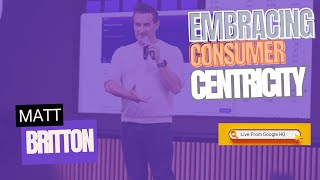
Keynote by entrepreneur Matt Britton (June 2024) about practicing customer-centric sales and product strategy. He traces his career from nightclub promoter → Magma Group → Mr. Youth/MRI → Crowdtap → Suzy, and shares tactical frameworks (a four-level ‘customer hierarchy of needs’) and practical AI/data uses (e.g., dumping 20,000 hours of Gong transcripts into models) to better understand customers and drive measurable business outcomes.
Salesperson gets a bad rap. But I've never met a good entrepreneur, somebody good at business who isn't a good salesperson. Because if you're not selling a product or service, you're selling yourself or you're selling a potential employee. So I'm selling all day long, especially when you're a startup, when you're fighting battles all the time. And even though I have a 50, 70 person sales team right now, keeps growing, I'm still selling all the time and something that you really never lose. And I think a lot of the core tenets of being a good salesperson you'll see come through in my career and it always is about being customer centric. Right. I think the worst sellers are the ones who spend 90% of their time talking and 10% of the time listening. And the best sellers are the ones who are the opposite that are listening the entire time. Because ultimately that's what it means to be customer centric. It means that you're really hearing the customer, hearing what their key pain points are and figuring out how you can solve them. And not enough people do that. Too many people are far too eager to start putting, pushing unique product features and things that will try to move the needle. And I just think that turned people off. So I think you'll kind of see that just a little bit about myself. So I started my career. Well, I actually started my career as a nightclub promoter. I find a lot of good people in business started off as nightclub promoters. In fact, I want to write a book one day. Everything I've learned about business I learned from being a nightclub promoter. But somebody once gave me a stack of flyers at Boston University. I just started handing them out to people. And I think what I loved about that is at a very early age I saw like, well, it's really awesome to be able to dictate people's behavior. Like since I convinced them to go to this place, they changed their plans and I saw them there and something about that was really inspiring to me. And when I graduated college, it was really interesting because I'm a Gen Xer and I found myself very fortunate to be a Gen Xer compared to other generations. So my daughter is 18 years old, she is finish her freshman year at Columbia and she's Gen Z. I look at my childhood and hers as just so vastly different. I grew up during a time where there wasn't a lot of political polarization. The president we always looked up to, I didn't even really know what was going on in politics because it just wasn't a thing. Right. It wasn't. We didn't have social media, so there was really no pressure kind of in that area. And it was a time of peace and prosperity. And then I look at Gen Z and it was kind of the opposite. Right, right. They're growing up with a time with such divisiveness. They're growing up with a time where everything they do, they feel has to be broadcast. They're competing with their friends or they believe that they should. And I think when I was born really contributed a lot to my success. A little story is I started my first agency right out of college. It's called the Magma Group. I called it the Magma Group because I watched the movie Austin Powers and they said liquid Hot Magma. And. And I said, oh, I'm going to call the company Magma. The logo of the company was a red rhinoceros with a black background for no reason I can remember. I don't know why it was a rhinoceros. We had nothing to do with rhinos. But it looked pretty cool. And the idea of it is when I was doing nightclub promoting during college, I built this network because Boston has a ton of colleges. So I had this network of like 50 kids that were promoting clubs. And I'm like, well, what if I can just build that nationally? And at that time in 2000, it was at the beginning, 1999 really is when I started the beginning of the dot com boom. Right. And all these companies were getting funded and they were all looking to do one thing, get more people to sign up for their service. So there was ebay and Lycos and yahoo and food.com and pets.com and everything.com. they're all wildly funded and the people who were first adopting the Internet were college kids. So I had an idea. I'm going to help all these Internet companies who have all this money get college kids to sign up for their website. Now, I didn't know anything about digital marketing and Google was really, I think, just. I don't even think Google's launched yet. In 1999, I guess it was. But I wasn't using it right. For AdWords. I started buying AdWords in 2001 actually. And it was incredible because just side story, I was buying the term youth marketing for 20 cents a click. And by the time I saw, my agency was selling for like 3 $39 a click. So that arbitrage very early getting in was super helpful. But back to my Magma Group story. So started selling these big Internet companies on we can help you get registered users for college students. And since I didn't know anything about digital marketing, the way we did it is I had this national network of college kids and they had clipboards. And on the clipboard, users signed up their username and password on a clipboard and then we data entered it into the site. So imagine right now in this day and age of two factor authentication and GDPR and all this shit done that exist, or maybe it did. We were just too dumb to know otherwise. And we charge these clients 2, 3 bucks a pop to get college kids to sign up for the websites on clipboards and a team of other college kids that were doing data entry. And it was a pretty great business until the dot com bubble burst. And I remember landing at Dulles airport on my Palm 7 phone. And because you had to, I'm really dating myself here. But that's how you connected to the Internet back then. And my business partner at the time said, call me. Not good. And what he told me is a lot of our clients weren't able to pay us or they got their funding pulled. And I basically knew we were about to be out of business. And we built it up to like $5 million in revenue, which is a lot like your first year out of college. And all of a sudden, the business kind of got pulled out of my feet. And I was able to sell the company to. To a company in New York called Ustream Media. And I specifically remember this because I was saying it to a friend the other day, going to the next game, and because I walked by this McDonald's on 28th street and Broadway, right? And I walked by it and I said, you know, I was at that McDonald's once. And when I went, there was when I sold my company to this company, Ustream in New York. I had no money. They gave me a signing bonus. So we didn't really sell our company, right? And this goes back to there being no social media. I would have been probably so embarrassed, right, if there was social media. But no one really knew what I was doing. No one cared. No one had Instagram. I was just kind of living my own journey, right? And the money that we, quote, unquote, sold it to was basically a signing bonus, which I actually had to give to my dad, who was fronting the receivables from companies who never paid us. And then I put a little bit down for an apartment in New York, and I realized that I wasn't getting my paycheck for a couple of days. And I Didn't have any money. All my credit cards were completely maxed out, and I was hungry. I was living in Herald Towers and 34th and 6th, and I had literally not a dollar. The ironic thing was, four months later, I was on part of a cover story in Entrepreneur magazine. 30 hot millionaires under 30. And the way I ate dinner that night is I took a jar of change and I went to one of those coin machines at a supermarket and got money to eat, Right? And to me, that was an amazing moment for me. Right? And I think another thing that was okay back then, that I don't feel that the younger generation has now, is they're really not allowed to fail because failure is so amplified. I think millennial parents protect their Gen Z kids from failing, Right? And I failed hard, but I also failed not in public. There was no social media. No one knew I'd started the company. No one. Meaning I don't even know who they are. I guess it was my high school friends, my college friends, people who I would have cared about, people who my daughter probably cares about today as well. But no one saw me win. No one saw me fail. I went through that moment on my own, and it really drove me. And it didn't really dawn to me until I walked by that McDonald's the other day. That that was an amazing moment for me. And I just think it's a lesson for all of us, whether we're parents or for employees, that you just need to let people fail. And I know it's harder in this day and age, but we're not going backwards. Social media's here. Everything's being broadcast. But I do find myself quite fortunate that I did grow up as, you know, a Gen Xer kind of during that era. So I would leave that company, ustream. I saw they were getting bought, and I was like, I'm out. And I started my agency, which was originally called Mr. Youth, in 2002. And the idea of Mr. Youth was kind of the same idea as Magma Group, except I wasn't just focused on dot com companies. So I learned how to sell in, you know, you know, P and G and Coca Cola and these other brands, which I have to say, was pretty hard because those companies had much kind of more stringent evaluation approaches than these dot com companies that were throwing money at us. And I was fortunate enough in 2004 to have a employee who had just graduated from Columbia University who told me everybody was using this platform called Facebook. I, at that time, was working on the launch of Victoria's secret Pink, which was one of the most successful apparel launches in the history of apparel, and convinced them that they should basically promote the launch of Pink on Facebook. I went to Facebook. There was no phone number, nothing to call. So I went to their domain registry because back then when you registered a domain, you actually had a phone number. It was a 617 number. I called it. This guy Eduardo answered, who was Mark Zuckerberg's original founder. And three weeks later, him and Mark Zuckerberg came to my office, my dirty, disgusting office at 32nd and park and pitch me with the worst deck I've ever seen. Facebook. And ended up buying the first ads ever from a corporation, major corporation, onto Facebook. And at that point, Facebook then started to take off. And I pivoted my agency from being just a youth marketing agency to becoming a social media marketing agency, rebranded it from Mr. Youth to MRI. So people looked at us as a broader business and we rode the ride. You know, I. I personally registered at Visa on Twitter and helped Visa launch your entire social media practice. Did the same for several Coca Cola brands. And it was. It very much reminded me of what I see right now with AI you know, a big change. It's had the lawyers got in the way, just like lawyers are getting in the way for every other major brand right now. Again, AI same thing kind of all over again. But was able to kind of take that ride to build like a really prominent agency called mri. And the Publicist group, as was mentioned, acquired it. Before the agency was acquired, we had built this software to manage and measure the earliest iteration of bloggers. And you know, now they're called the creator economy and influencers. Back then they were called bloggers because we had all these networks. They were first college kids and then they were a broader segment that we needed to manage and measure on behalf of brands. So we built this software called crowdtap. And right before the agency was sold, I spun it out. So Crowdtap was its own company. I put in a CEO and that CEO would then recruit about a million users as part of this kind of like early iteration of like a create a content creator network, if you will. It wasn't even called that back then. And the business had some challenges. And when my earn out ended at Publicist, which by the way, I was helping run Starcom Media Group, so I totally understand how the media buying world works. And I was able to be exposed to that. Had an incredible leader named Laura Desmond who I was working for, who really changed me, frankly. Cause I never really Had a boss until then and she was awesome and she is awesome. And I basically was asked to come back and run this company, Crowdtap, and the company was a disaster. I remember I walked in at 4 o' clock the first day and everyone was gone. And then the next day the engineers were playing Xbox all day and. And they had three floors at an office in Soho and there was only like 30 people. Like each people, each team of 10 had their own floor. And I basically was like, this isn't going to work. And start talking to all the customers. This goes to kind of customer centricity. Started talking to all the customers of this company, Crowdtap. And I was saying, what do you like about this? Because most of them weren't renewing and it wasn't really a good product. And there was a small segment of customers that were saying, well, we use Crowdtap for a different purpose than having this million network audience create content. We are using this polling feature where we're basically asking people what packaging do they like, what ad type do they like, how many times a week do they brush their teeth or buy toothpaste or whatever it may be. And that is what's working for us. So I made the decision at that point that's what we're going to be as a company and called our board and said, listen, I know only 300,000 out of the 9 million in revenue is for consumer insights and research, but this is what I want the business to be. And basically walked away from 98% of the business and decided to rebrand the company and launch as Suzy and basically created a new brand. Kept the consumer brand as Crowdtap, which is this million person network, but launched a new software platform called Suzy to basically enable companies to conduct on demand consumer research. I knew nothing about market research except I had worked with big brands through the last 20 years and saw that they made so many decisions without any data behind it. And the rest has been history of Suzy. We've launched a great company, we now work with over 500 brands and it was all about really identifying what that unique use case was. Because I could have asked myself like, what should Crowdtap be? And I probably would have taken in the wrong direction. But instead I shut up and I talked to the customers and just by listening to them, I was able to sort of unlock this opportunity. And while we still have a ways to go, we definitely have made a lot of dents in a very sleepy industry, which is market research, and are well on our way to having Great success stories. So it's been really great. So that's kind of the story of Suzy. And really what I want to do now is talk about some of the tactics, because I think my background's important for this conversation. I go on stage all the time. I normally never talk about myself. But for today, if I'm talking about to you guys about how to get prospects and clients interested and keep their attention, I think it's important to show the tactics I use to build my career, because I think now more than ever, you can put those tactics to work for you to really be successful in everyone that you're. That you're talking to. So just to skip around. So I was thinking when I was building this deck and I apologized to the team who brought me on because they had asked me for the deck, and I kept saying, it's coming, it's coming, it's coming. And I finally just got it today. But in thinking about what I was going to talk about today, this morning, I was thinking about what works for customers. Like, what gets customers really excited, what really gets them to listen to you, what gets them to believe in you, what gets them to buy from you. And I came up with my own version just this morning of this kind of, like, hierarchy of needs that customers have. And there's really four levels, the top being most important, right? So I'm gonna start from the bottom. So I think one of the things that customers obviously care about is the business metrics that they have to drive, right? So let's just say they work for Proctor and Gamble. They need to move more volume of deodorant, right? And that obviously is important. But I bet if you talk to any brand manager at Proctor and Gamble, they probably aren't passionate about deodorant or soap or shampoo. Like, they're probably not a shampoo person, right? And they always thought that they were gonna be selling shampoo. They. They're passionate about something greater. But being a brand manager at P and G and moving volume of shampoo is sort of a means to an end to where they want to go next. And it's certainly important, but I would say it's definitely not the be all end. All right. But that's kind of, I would say, probably the fourth biggest thing that they actually think about every day. The second area, which is slightly more important, is business knowledge. They want to arm themselves no matter where they are, their career. The same reason that you are listening now for me, because I've established my credentials and I've achieved a certain level of success and you want to try to extract those things so you all can grow in your career. If you weren't ambitious, you wouldn't be working for Google, obviously. Right? So customers want knowledge, they want market knowledge, they want business knowledge, they want to be educated to where things are. Because just like all of us in this room, clients are making it up as they go along. And most of the things that you learn in college or it just doesn't really ever apply now more than ever, right? So they need to know what's going on in the world and that's a big need of theirs in order for them to continue to succeed. I think the third area and this all builds up is their personal brand. I think, you know, I've seen this happen over and over and over again where I'll work with customer A and customer B at a company. And customer A is so much smarter. But customer B keeps getting promoted. Why? Because people buy from Walmart the same way. They decide who they're going to promote as a company. They look at people as brands, just going to, you know, people are brands, brands or people. And if you heard of somebody's name enough, you'll probably just promote them because you trust the brand. You're not going to dig deeper and actually see, is this person really smarter than the other person. But if you see them always posting on LinkedIn, if you see their name everywhere, you're probably just more likely to just promote them. And that's just the way the world works right now, for better or for worse. So personal brand, I would say is second most important. And then first is career aspirations. But I actually should probably rename that because it goes beyond that. Because what people care about most is their family. They want to have a bigger house for their kids. Right. They want to be able to take their family on a great vacation. They want to be able to take care of their aging parents. They want to make sure that they can pay for their kids to go to college. That's really what they care about. They care about that way more than selling shampoo, I can promise you that. And I think often when you talk about being customer centric, it's easy to kind of lose that, that these people are just like us. We all want those things. They want those things. And if you can tap into those things and help them get ultimately what they want, which is not another end cap at Target, but to be able to support their family and feel like they're advancing in their career, well, then you're really helping them. And the best customer relationships I ever had have been when I've played some role in somebody's success. And I can tell you that's actually the most rewarding customer relationships I've ever had. Like if, you know, you played a role in seeing somebody go supernova in their career, then ultimately you're winning for them and you're winning for you and you're gonna wanna do more of it and you're way more passionate about that than, than helping them move more cases of deodorant. Right. And it doesn't mean that that's not part of it. Right. Because ultimately it kind of starts with that, but that's definitely not what's most important. So today I'm just gonna break down these four things. I'm gonna talk about some tactics that I've been able to deploy across the spectrum that I've seen work for me that maybe you can take for yourselves in a very practical way and put the work. So let's talk about business metrics. So how many of you been in the Can Lion Festival? Okay, so not as many as I thought. But like this is where all the big agents, you guys might up that budget and send these guys to south of France. That's what I'm talking about. So a lot of, a lot of big decision makers are there, A lot of the big media buyers are there. A lot of the brands are there. And I always thought it was kind of like a joke despite the fact they were there because you know, you saw, and this is a global event, right? And you see all these brands talking about these incredible campaigns, yet you nearly, you barely ever see any real business results. You never see this drove this much volume. It's like the creative industry loves the idea of being an artist but not necessarily being connected. That's why Google's obviously been so successful is you have a tool which always, at least for me as an entrepreneur, we spend a ton of money on Google and we continue to because I can connect it to business results. And I'm not going to hire BBDO to make an anthemic brand spot for Susie because I have no idea what it's going to do. But that's who's there, right? And ultimately I just think there's such an opportunity there at connecting the two. And ultimately it just, it continues to amaze me to this day that this is still a thing in a world where everything can be measured or everything should be measured. So I predict with, especially with CTV and addressable media at the broadcast level. Some of this world's going to go away over time. Because I think what we've seen through the creator economy is that the best performing ads are things that usually are just filmed with a phone. They don't need to be high value production. But I think it really exemplifies where at the same time you see 3/4 of CMOs saying that they have pressure to cut spend on Martech, on advertising, et cetera. I mean, let's face it, the stock market's at an all time high, but at the same time, I hear from recruiters it's the hardest job market ever. You have credit card debt in the US at an all time high. You see credit card interest rates at a level that we haven't seen, I think since the 80s. Look at mortgage rates, I mean, in terms of paying interest. So because the consumer's getting squeezed, make no mistake about it. And I think personally we're in for a big reckoning with the economy and I think it's going to get delayed with the election. But I do think we're going to go through a hard time as a nation in terms of the economy. And I think that the country is just running out of the stimulus spend that we saw from the pandemic. And that's why people want to keep their lifestyle up. So what are they doing? They're spending more on credit cards and credit card interest getting higher, but the cost of borrowing is also getting higher. Right. And I think we're only going to see more of this. So I guess, I mean to say, and again, we're in the first section about business metrics. Business metrics are going to be more important than ever before. I think this is what's called a dead cat bounce, where like the market dropped and it kind of went up a little bit and I think it's going to drop right back to the floor. Sorry, I didn't use that analogy. It was just in my head. But I think that's kind of where we're going and I think sticking to business metrics is going to be more important than ever before and having a good understanding of those business metrics. So this is something I use using your awesome Gemini tool. But it's a great tactic that I bet not everyone in this room does, where if you're working on a end customer, even if you're working through an agency, one of the best ways to see what a client thinks is the key business metrics is just dropping in the transcript from an earnings report into your tool and saying, summarize the key metrics that this brand is focused on from an executive level and connect those to the products I'm selling at Google. And from that you can start to kind of tell a whole story when you talk to customers of this product will hit this metric, this product will hit this metric, et cetera. And the metrics are always changing, the priorities are changing. But I found the best, most reliable way to understand because often you'll ask your buyer or you'll ask the agency, they're not really going to know. They may have recency bias from what came from the last call. But this is coming from the CEO and the cfo. And you better believe that in times which I think are going to get tougher moving forward, given everything we just talked about, that whatever is talked about during this is really what's most important and really the things that need to be focused on. So that's a way where I, I found I've been able to deliver solutions that are rooted deeply in the core business metrics that customers really care about, business knowledge. So obviously business knowledge is the second level. And again, that's about education. It's about arming your customer with the tools they need to start to move a little bit higher up the chain. Because you can't build your personal brand and you can't get to the panacea you want to get to in your career without business knowledge. Right. It starts from there. And again, the business world is changing so rapidly, especially now in the age of AI. I mean, nobody knows anything like in this world. Like I was yesterday at Canadian Music Week, for example, there's this tool called Suno AI. It's a ridiculously amazing tool where you could basically type in a song you want to make in any genre and it pushes out these amazing songs. And like, I was like, my daughter was in a fight with one of her friends and I actually helped her make a song that she sent to a friend that actually helped her make up with her friend. Like, you can use it for anything. I was at this conference with music executives, 400 music executives. I'm like, how many people in the room have heard of Suno AI? Two people raised their hands. This is a music tool that literally, if I would have told people about three years ago, you would have said that I was crazy. Because what it outputs, if you try it, you'll be mind blown. And for the music industry, it's literally going to change the music industry. Because now brands might not have to hire production companies to make anthems anymore. Right. Because you could just do it instantly. The implications to this are wild. So if the music industry doesn't know about this tool, I think most people really don't know about what's going on in their industry either. Which is why business knowledge today is so important. Because the rate of innovation and change that's happening with AI means that most people don't know anything. And if you can help them learn these things and go from 0 to 1, then you're adding tremendous value in that world. I was just shocked that they didn't know about it. So ways that you can help them learn. So this is something that we've been using that have been. It's been incredibly helpful helping them be knowledgeable about business and frankly allows us to be knowledge about our business. So I've been spending about 95% of my time in the last six months in AI. I just feel like this is something like social media back in the day. That is like happens a couple times in your career and if you don't jump on it, you're going to regret it. And what I was finding in my own organization, and it's only 300 people, is our lawyers were getting in the way and we just weren't doing enough. We weren't really diving in. And the benefit of being small is that you should be able to act quick and really dive in. So I was like, I just need to lead by example. Right. And in all the research I saw through AI, what I started to realize is that, you know, a lot of the large language models are, are very close, let's just say, in terms of their efficacy and what they can push out. And the focus isn't necessarily on the large language models, it's really on the data that you feed into them. Right. And that's what makes businesses really come alive. And one thing I've been able to do, which I think you all could probably do as well, is so we use a tool called gong. Everyone here gong. Right. So records all of our sales teams calls, all of our customer calls, et cetera. I took 20,000 hours of call transcripts from Gong and I dumped them into a model. And what came out of that has really changed the way I look at business in general. Because now I can start to ask things like what are the food and what's the food and beverage industry most important? What's most important then when it comes to our product, what is the biggest missing piece of functionality that Suzy has to the tech industry? This is even crazier pump out 100 SEO terms that we're currently not using based upon the phrases that customers are saying that can actually help us get more. Write ads. Write 50 ads for each category that we play in. And the feedback has been incredible from our team because now we've armed them with this tool and the model and now they are able to use it in a way that's so much better than just typing something into an AI tool because it knows everything there is to know about us. We're learning about competitors, we're learning about why companies choose competitors. We've now built in applications on top that can have early churn warning systems where it's like, oh, they're saying these things. And in the past those things have meant that the client has churned. Let's jump on it. We have built in a sales coaching tool into it where basically we taught it what here's what a good sales call is. And then it sends basically report to the manager and the seller saying, here's what you did right and here's what you did wrong. So if you're basically talking about centricity and understanding the customer, well, maybe the 20,000 hours of actually what the customer's saying is a good starting point. In the past, we were not able to do anything about this, but now with these tools, we can do everything about it. And what I've also found personally is so our company used to be at that office in, in soho and then during the pandemic, we went remote. And we've been remote ever since, which has had its set of challenges. But one thing it has brought us to as an advantage in the age of AI is since we were remote, everything had to be in the cloud. So all of our data was there. And if data is the unlock of AI, we already had it, right? So we never had one call, even internal call that wasn't recorded on GONG because nothing was ever in person. And that has definitely opened up a ton of advantages for us. We also look at product usage data, sales and marketing metrics. But it really has been the call transcripts that has really changed our entire strategy. It writes our product roadmap for us. It does so many things that have allowed us to make sure that we're going in the right direction. And also a remote environment. It doesn't allow people to hide. Like I never have to ask somebody what happened on that call. I could just take the transcript of a call and say what happened? And the AI will tell me what happened. And if they maybe the Salesperson would leave out some things that didn't go well because they didn't want to deal with it. But I could see it, right? And so I think there's so many applications of it. But ultimately this comes down to business knowledge, right? Because us understanding what the customer pain points are through the nature of the call transcripts then allow us to feed them knowledge that we know. We're also because we're looking at gaps that Suzy has, but now we see gaps that they have gaps in their knowledge, things that they don't know. And when you combine that with my first point about the overarching business goals that maybe would come out during an earnings call, you could really unlock some magic. So since you guys create your own AI, I figure maybe you have the capabilities here at Google to pull something like this off if I can on my own. And it's a pretty cool idea. And happy to go into further detail about how we built stuff like this. And we also have all these internal streams as well. So we've connected everything to Slack and it's kind of built into our work stream at the business other areas of business knowledge. So and this kind of goes into thought leadership stuff. I have invested a ton of time personally in obviously personal branding, but this is one step below personal branding, which is really just content creation that adds value. So I try to partner with people who I know and I respect. So this woman, Rachel Tippograph, who's an incredible leader who runs this company, Mick Mac, who it's an E commerce company. So every year, for example, I partner with her on a Black Friday Cyber Monday report and it's just hopping on a webinar and we've now done it for four years and every year people like look forward to it and it's like a thing. And now we've built a database and she shares a database and we share the database and we use Suzy Research and she has, she's the e commerce expert and we put it together and we invite clients and I hear it all the time. I love your webinar with Rachel. It's awesome. And I have six or seven of these things I do every year. And you don't need to run a software company to do this. You could do it for your customers. Just if you know somebody that works at a another company that might be an expert, well then you could do it. I partner with a woman from I think it's Candy magazine and every year I do something with her around Halloween and Halloween trends and she promotes it and they actually now promote in their publication. And there's, there's no reason you can't do this stuff with, with the tools available now. And even if 10 people join, whatever, because you're also creating the content, you could share after the fact that, and you could push that out to everyone who wasn't there. It almost doesn't matter who joins. It's just the process of doing it shows that you're committed to helping your clients gain that business knowledge and allows you also, as an individual, start to build your brand as well. And I find doing it through partners is great because Rachel gets to leverage my network, I get to leverage hers. We leverage each other's expertise and it works for everybody. And these are things I'm committed to doing more and more of. And frankly, it just doesn't even take that much time. And it's something that you could be doing on an individual basis with your account list and the networks that you have. You know, if everyone here committed to doing one of these a year, it would impact the numbers overall. It just would. And it might not be something that impacts right away, but over time, you know, you start to see the results. Another thing we've done for business knowledge, and this is something that we just launched, is talking about data sources. This is a feed that we have built on LinkedIn that we just launched called the Food and Bev Trendcast. And this is all AI generated. So we basically have found these sources of emerging trends. And frankly it comes from Google Search, the Google Trends product that you have. And it basically is able to extract from that what are the biggest jumps in any category of specific food trends. Right. And it just crawls it all the time and is able to extract these things. And then we actually have AI generated posts that are created and you can see they all have kind of the light bulb and they're all purple. So it all has the same aesthetic. And this is just publishing automatically. It's going to publish forever. We don't need to do anything about it unless Google shuts down Google Trends, so please don't. But. And now we're building these for every category and every micro category. And you know, we have 58 followers. Big deal. Well, actually 18 of them are core customers at the biggest food and beverage companies that we want to go after. And 58 will be 580 a year from now. And oh, by the way, this is created at zero cost. We don't need anybody ever to touch this again. Right. So there are the possibilities in terms of content creation in terms of value add for customers are mind blowing right now if you just go to what the core need is. So in the term of business knowledge, the need for our food and Bev customers was where, what are the latest trends? Like, what is the new food and beverage trends? And this is just an easy way for them to know about it. And we just put it together and was able to launch it for them. And it's pretty cool that we were able to pull that off. So the third area is personal brand, and personal brand is. Sorry, I'm seeing like a mouse run on this. It's good. Not an actual mouse. Like a. Ah, don't worry. New building. So personal brand has been big. Personal brand's hard. Like, obviously we know of, like, the Tony Robbins of the world who, like, build their personal brand, that's like, their world. And it's really hard to do when you're jumping from meeting to meeting, et cetera. I have found, though, from my career that there's a direct correlation to just posting on LinkedIn or doing things like this and the success that I found in my career. And I think that your customers are really the ones that need it. Right? Because when you're in sales, it's like you hit your numbers, you grow. But when you're a brand manager, a pg, again, you could lose out the promotion to somebody else because they built a personal brand and the other person hasn't. So you helping your customers build their personal brand is such a massive boon to their career and ultimately will help them get to the top of this pyramid. The best thing I've done for this is a podcast that I run with Adweek called the Speed of Culture. And, you know, podcasts are interesting because every time I tell someone I have a podcast, like, well, how many people listen? I have no clue. And I don't care. I don't care. And a lot of people say they listen to it. I don't know if they do or not, but to me, it's not even about that. Because the process of starting a podcast has allowed me at CES to have the CMO of Walmart and MasterCard and Target come to my room for an hour where I have a makeshift podcast studio and spend an hour with me. Do you think if I called them, like, hey, you want to hear about my new market research tool? It's yes, they'd meet with me? No way. No way, right? Not only that, not only do I get to spend an hour with them at the podcast, then we have the opportunity to follow up with them when it gets pushed out two months later, on top of that, they're sharing it. So they're basically, as soon as it comes out, they're sharing it. And they're tagging me and they're tagging Susie and they're the cmo. And what do you think that does for our ability to build relationships, create trust with these companies? If the CMO of Walmart is posting about me and Susie, don't you think that makes it easier for us to do business with Walmart or us do business with anybody that sells in Walmart? Do you think I care how many people listen to that podcast? No way. I care about the fact that I was able to build that relationship. That's what B2B is all about. Oh, and lastly, by the way, we get all this awesome content that we can push out through paid media sources to build our business even more. So a lot of people, when they think about a podcast or they think about webinar, it's like, oh, no one cares. No one needs another one, blah, blah, blah. It's not about that. It's really not about how many people listen. It's about the relationships that you build along the way. I was very uneasy about starting at the beginning, admittedly, and I just went to the people I knew and friends that go on it, and then it kind of started to take on a life of its own. And then we were able to create a partnership with Adweek, which obviously really helps a lot. And now we are turning people down. Like, now everybody wants to be on it because it's a herd mentality, right? And. But it's been an amazing tool for our business. But the best thing that we're doing is we are giving content to these people to build their brand. So every single one shares because they don't have any content on their own to share, and they know that they need to remain relevant and share content. So you're not just doing yourself a favor by you putting them in a podcast, by you creating videos. Like, even if you didn't have a podcast, I would set up a studio here and I would have them come in and interview them about the future of marketing. And just you share it, and then they're going to share it. And even if you just do that, they don't have that type of content to share. So the easier you make it for them to build their personal brand, the more they're going to want to do business with you. It's just that simple. And I'm just So surprised that more companies just don't do the low hanging fruit to make it easy for people to create content about themselves. Right? So set up a studio everywhere you can make it easy, have some type of production template, give it to them, they will share it, it'll help your brand because your brand will be connected and it'll help them and their brand and that will help you do more business with them in the future. So now I'm like all in on this and I think too many people aren't again because they're worried about how many people are going to listen. The same thing happens with LinkedIn, by the way. I think what we know about LinkedIn at this point is so many people don't share because deep down inside they really are afraid how many people are going to like it. And what I always find is people come up, they oh, I saw you posted about this. I'm like, you didn't fucking like it. That's in my head. Like everyone sees everything and no one likes anything, but they see it. And that's kind of the point. So it's like, who cares if they like it or not? Push stuff out there, it doesn't matter. You know, I find I got to the place in my career where I could truly be a leader when I posted stuff because I wanted to share it, not because I cared how many people liked it. Some people get there at 16, some people get there at 61, some people never get there. But I think the second that you are are pushing stuff out because you believe you have something of value to add and you never have to go back again, that's when you know you've hit a point where you feel good about your talents and where you're at. And the sooner you can get there, I'm telling you, the more successful you're gonna be. Because that's really the key is people think about what they've seen and that's where people are spending time. I mean, obviously you can use all the other platforms as well, and I probably should as well, but this has been the platform for me that has been incredibly impactful. So last is career aspirations. I couldn't find a good career aspirations. I'm using this awful stock image of this man looking at a stairs to nowhere. But I, I think ultimately this is about personal relationships. Understanding people's ambitions and what they really want in their life only comes from having a beer or a glass of wine with somebody and understanding what their journey is about. And I think once you understand what their Journey is about not in a selfish, selfish way where you're trying to sort of take advantage of that, but really because you want to help them. Because, you know, helping them helps you. And it's a trade off, it's all partnership. But knowing that somebody has a promotion out there, nobody. So knowing somebody might be looking for a new job, right? And not really happy and one. And that's the time when I need to build their personal brand, right? And people are moving around all the time. So knowing that someone's looking for somewhere new or knowing that there's layoffs on the horizon or whatever, and then helping them take advantage of that and say, how can we at Google help you build your brand, learn more, get out there. You do that and so many great things are going to happen in terms of the relationship, right? Because ultimately you guys have great platforms, great properties, and there's other ones as well. People gravitate towards people they like, people they trust, people who can help them. And the thing again, that people need the most help in is the thing that are most important to them. And I think this is something, the reason that's the last and most important thing. It's also the hardest because you have to break down barriers, you have to break down walls. Not everyone's going to share this right away. You know, I find that there's like the corporate version of someone and then there's the personal version. And once they start sending emails like they would their friend to you, you know that you can kind of get to this fourth level. And in order to do that, you have to be authentic, right? You can't be a salesperson. You have to be somebody who is looking to say, you're going to help me, I'm going to help you. How can we get to it? But you can't help them until you really understand what's important to them, right? And you can't do that until you listen. So I think this is probably the most overlooked part of business is that what does the person really want? Oh, I want to sell more deodorant. No. Oh, I want to get promoted. No, you actually want to get a bigger house, right? You want to take care of your, of your aging parents. You want to do this, this is what you really care about. And I'm going to help you get there and you're going to. And we're going to have a relationship. They're going to help each other in our career. Because what we all know as well is that people change careers all the time and they change jobs all the time. And the best relationships are one where you're going to work with people no matter where they're at. Right. So it has to transcend the job, has to transcend the metrics of the moment to have relationships. And that's ultimately what it's about. And all the stepping stones I talked about along the way are things that you need to do to establish yourself, to build trust along the way, which is incredibly important. I'm going to end with this, then we're going to questions. So I just thought this was, this is a little of a tangent, but I think it's relevant to everything we're talking about. This is a recent survey that came out in terms of skill sets needed in the workforce for people to be successful. And the ones in green are the ones that people feel the light green are the ones that the employers feel they need less of. The ones in dark green are the ones employers value more or need more of. And you can see they're stack ranked. So if you look at the things that people need less of, data analysis, prompt, I think prompt engineering is going to be like the peloton of the AI era. It's going to be like, because like, it's like I remember six months ago we need to hire prompt engineers. And now I think what we realize is like these AI tools can understand English and you just have to be thorough. You don't need to be a prompt engineer. And so I think that's why you're finding that this is, people need less of this software engineering, coding. We'll see about that. But this is what employers believe. But what do they need more of? What's really the soft skills that can't be taught, right? How to be a problem solver, how to be creative, how to be resilient, how to work in teams, how to have communication skills. All the things, by the way, that my kids overpriced Brooklyn private school are not teaching them. They're teaching them how to identify different types of leaves and how to regurgitate it. But this is basically the, the skill sets that I think are needed. And these are skill sets I think everyone in this room should lean into. And these are skill sets I think your customers and your prospects need to lean into. And a lot of these things are soft skills, but a lot of these things are things that can be learned over time. But I think this is how AI is going to change things. I actually believe in this. I think ultimately it's about not learning things. So you regurgitate them, but actually learning how to deal with people and be creative and dive in and possess a lot of the things that I've had to learn along the way. Right. That I've put to work in my career. So I just thought that was really interesting as well. So that's all I have for you guys. Thank you.
More from Matt




MikMak’s Rachel Tipograph on Consumer Spending, Retail Media & Holiday Shopping Trends



Jaguar Land Rover’s Charlotte Blank on Luxury, Purpose & Experiential Storytelling



