Vegas Golden Knights’ Eric Tosi on Fan Engagement, Storytelling & Sports Marketing
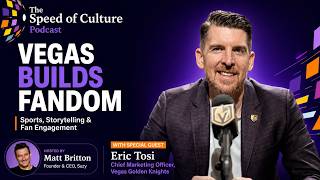
In a CES 2024 interview, Matt Britton talks with Eric Tosi, Chief Marketing Officer of the Vegas Golden Knights, about the rapid transformation of Las Vegas into a premier sports destination and the marketing strategies that have driven the franchise’s success. Tosi explains how the arrival of the Knights in 2017 shattered the stigma around professional sports in a gambling‑centric city, paving the way for other leagues (NFL Raiders, WNBA Aces, Formula 1, Super Bowl, UFC, and upcoming MLB and NBA teams). He details the Knights’ fan‑base segmentation—die‑hard season ticket holders, casual fans, and brand‑unaware locals/tourists—and how the CMO’s role spans creative storytelling, in‑venue programming, digital and out‑of‑home advertising, data insights, and partnership activations. The conversation dives into the team’s brand narrative built around the owner’s military background, the knight motif, and the energy of Las Vegas, and how that informs music, lighting, giveaways, and the “best show on the Strip” ambition. Tosi discusses leveraging short‑form platforms like TikTok to showcase hockey highlights and player personalities, and cites a successful sponsor activation (free tacos from Taco Bell when the team scores two goals). He reflects on his prior experience with Red Bull New York MLS and the Boston Bruins, noting the contrast between a historic, stable market and the startup mentality required in Vegas. The interview also covers the Knights’ rapid rise to a Stanley Cup championship, the city‑wide celebrations, and the importance of authentic fan engagement. Looking ahead, Tosi highlights emerging technologies—AI, transparent displays, immersive venues like the Sphere—and how they could reshape the fan experience. Finally, he offers career advice for aspiring sports marketers, emphasizing patience, persistence, risk‑taking, and drawing inspiration from outside the sports world.
Chapters
Today we're thrilled to be joined by Eric Tosi, the CMO of the Vegas Golden Knights, right here in Las Vegas where we're here at the CES 2024 show. Um, Eric, it's so great to see you.
Yeah, thanks so much for having me.
Excited.
Absolutely. Excited to chat with you.
Yeah, so it's always great to kind of get a little bit, um, of a texture of the local flair of what's going on here in Las Vegas. It's such an exciting market and there's so many new things that are happening. Of course, the Sphere is a new, venue that I'm staring at from our hotel room every day. And it's just— it really is the heart of entertainment and where things are headed. And sports in Las Vegas itself was something that was a dream only until a couple of years ago, and now it's quickly becoming a major hub. Talk to us about what you're seeing more broadly here in the entertainment and sports world, more specifically here in Las Vegas.
Yeah, it's been incredible to see how this city has transformed and evolved in the last 6, 7, 8 years since the arrival of NHL hockey and the Vegas Golden Knights. As you said, this was— there was a bit of a stigma around Vegas in terms of professional sports wouldn't work here because of gambling, the integrity of the games. Leagues made explorations into seeing that this was a viable market and just was determined for whatever reason, multiple reasons, that it wasn't going to be viable for those reasons. So when Vegas Golden Knights came in in 2017, that ushered in a new era of the city. And it's not just the entertainment capital of the world anymore. It's the sports entertainment capital of the world, which is, which is amazing to see what has happened With the NHL's arrival, you have the Raiders now here. You have the 2-time WNBA champion Las Vegas Aces, Formula 1 race this past November, which was incredible. Super Bowl here in February. So it's evolved past just a gambling and convention town. And it's now with the UFC here, it's now a premier sports destination with whatever your interest, it's going to be in Vegas, which is incredible for the city.
And I think there's news about Major League Baseball coming here as well.
Oakland A's will be here in a couple of seasons too. Yeah. So that just got approved this, this past offseason.
So, so NBA is the last piece, right? NBA.
NBA team. T-Mobile Arena, where we play at the Golden Knights, is made for an NBA basketball team. Yeah. There's another significant project that's happening on the south end of the Strip that got approved that has plans for another arena here too. So NBA's not too far behind either.
Yeah, absolutely. And what do you think changed that allowed the Golden Knights to come here based upon some of the hesitations that existed with the major sports leagues?
I think there was more adoption of sports betting and gambling. I think there's just more of a tolerance. It's everywhere, right? It is everywhere right now. And but also the Golden Knights provided proof of concept in the city. And in terms of the connection that the fan base has here to the Golden Knights, people didn't really understand the market in knowing that it is fairly— it's viewed as fairly transient, but there's still 2.2 million people that live here, which puts it around 40th in terms of the DMAs in the country. But with the Golden Knights' success in that first season, it proved that it was a viable sports market and it was more than just again, the conventions or, or marquee events, big fights that comes through here, that it could support local sports teams.
Yeah. And unlike other markets, there is such a huge tourism component here that on a normal night for a Golden Knights game, do you have more locals coming, or is it predominantly tourists that are coming?
That's a great question. We have heavily marketed and positioned ourselves as the local team. So while we appreciate visiting fans with their curiosity and coming in and seeing what our fan experience is all about, We want it to be local. And so, yeah, so they're visiting fans that come in. We view this as the most sought-after destination. If you're a visiting NHL fan, if you're going to pick one trip to go to during a season to watch your team play, if you were from Columbus or Detroit or Boston or Chicago, you want to go see your team play the Knights. You want to come to Vegas, see a game on the Strip, see what our fan experience is all about. But in terms of how we want our home ice advantage to be, we want it to be local. And so our fan base is predominantly local. That's how we like it. It's how we want it., and it's on us to make sure that it stays that way. Yeah.
And when I think of the NHL historically, you think of cold weather environments, whether it be Boston or Toronto, you know, the Maple Leafs or the Detroit Red Wings, places where it's cold, right? And Las Vegas is in the desert. I mean, were there concerns? I know there are other warm weather NHL environments, but were there concerns just about the receptivity to an NHL team and what sort of work went into the market analysis of that decision?
Very legitimate concerns.
Yeah.
You know, it's a, it's a paradox in and of itself. Exactly. Ice hockey team in the desert. Where it gets to be 115 degrees sometimes in the, in the summer. Looking at the market prior to the arrival, 3 sheets of ice in the entire town to service 2 million people. So if you look at— there's some facilities in New England, some facilities in Minnesota that have 4 sheets of ice in one complex in suburbia, in, in, in those, in those markets. So there really wasn't much of a, of an ice hockey or youth hockey community or infrastructure that, that existed here. So there were a lot of unknowns. But what we've seen in terms of the adoption, we like to say and point out the fact that we were, in terms of USA Hockey enrollment, which is a good metric to look at as far as where the hotspots are for interest in hockey and participation, youth hockey, particularly at the youth levels, we were 48th out of 50 in the country in terms of USA Hockey enrollment in 2016. We've now climbed up into the, into the top half just because of us adding more ice hockey infrastructure in place here, programming, training, and then obviously interest. Just with, with the success of the team. There's more families, there's more kids that are, hey, I want to be like William Karlsson, I want to be like the Golden Knights, I want to play for the Golden Knights. And now there's a pathway and a development program that we've instituted that's helped the game flourish here.
Absolutely. So in your role as CMO, I imagine first and foremost it's putting, you know, warm seats, warm butts in cold seats, so to speak. But so what goes into that and what goes into the I guess, the pie chart of the role of the CMO of a professional sports organization?
Yeah, there's, there's a lot that goes to it and a lot of different spokes and verticals that roll up underneath our marketing group. And there's our creative team, which, which has been really critical for us, I think. And I come from a creative and storytelling background, something I'm really passionate about and would, would argue one of my strengths as well. So that's something we definitely prioritize. And if you go to one of our games, that's— you'll see that's a big piece of even, even the area around the arena in terms of just the signage that you're going to see, the, the wraps. We really feel it does help elevate the overall experience, get people excited. And then when you go inside, same thing, just the visuals that you're seeing, the, the retail products that we're offering, and then that overall vibe and energy that we're going to help cultivate and curate. Now, we always like to say too is that we can play the loud music, we can have the fun interactive games, we can have the fun video features that we play in arena, but if our crowd's not energize or bring it either, then it's not going to work. Right. So, so that's where our fans really come in. And we, we— it's like a, it's a relationship where they have a high level of expectation and we want to meet and exceed. And it just— and then they bring the energy and the atmosphere has been regarded as the best in the NHL. Yeah. Players have voted on that. Media has voted on that. So it's regarded as one of the best, best experiences. So back to your question. Digital marketing will fall under there, or out-of-home advertising will fall underneath our marketing group too. And then data and insights as well. So there's quite a bit. And then our traditional fan development, how are we growing our markets? How are we adding to our fan base? You know, we view really kind of 4 categories of where our fans fall in terms of our own internal segmentation. There's our, our diehards, our most passionate, avid fans. Those are our season ticket members.
And those people who were hockey fans even before the team came into the market.
Yeah, yeah. A lot of them were hockey fans, but a lot have become, you know, they're going to 30 of our 41 home games. They're going to 35-plus of our home games. They're watching our games on television, on the road. And if they're not attending a game, they're watching. So they own a lot of our merchandise. So that's, that's our most hardcore fan. And we got to, we got to keep them happy. We got to keep them engaged. We have to make sure the product on the ice, which is outside of obviously marketing's control and purview, but the team on the ice has to be competitive and the experience needs to— it needs to change too. Like we're in year 7 right now. Which is wild to think about that. It's been such a— yeah, it's been such an amazing ride. And then you have our casual fans who probably go to a few games per year. So our eyes as a marketing team, like our, our vision is to pull them. We want them to become your, your Abbotts, right? And then there's, there's your, then your brand aware but don't really kind of indifferent. So we want to pull them to start coming up with different ideas or programs, initiatives that, hey, you haven't— you went to one of our games, but you haven't really followed up or like a family night or something, something that like appeals to them.
Individually to bring them into the consideration. Exactly.
So then maybe you have a great experience at a game with your kids and family, and then you're going to start watching more games on TV. You might buy a jersey on the holidays or a birthday gift, and that's where that's going to cultivate and accelerate their passion and affinity for the, for the Golden Knights brand. And then the last group would be your brand unaware. So they don't— they live here, but they don't really follow hockey, care about hockey, or know about us. Presumably fall in that category. Tourists could fall in that category too. So what programming can we develop and engage those communities to grow our fan base? One of the core principles and goals of a marketer.
And I would imagine programming in the venue is important to, to keep them excited. So there's a lot of thought going to everything from the music you play during the breaks and the giveaways and all sorts of things that make up the fan experience.
100%. So we, we view— and this goes back to our brand storytelling— as our Golden Knights brand, we're really proud of the story that we have here and how unique it is and how it positions us uniquely, not just in our market, but really in all professional sports. So our owner, Bill Foley, he is a West Point grad. Military background, went to, uh, served in the Air Force as well. And he brings a lot of that, those mantras that are militaristic themes. You would say always advance, never retreat, which we actually have on the inside collar of our, of our jersey. Never give up, never give in. So those are applied to kind of the mantra and philosophy that we want our players to have. Always advance. You can see how that can apply to a playoff team too, advance to the next round. And so, uh, personally and professionally, that's something that we embrace as a business staff is that we want to get better, improve every day, improve our business, improve ourselves in terms of professional development. So he's one pillar of our brand triangle. The second is our name, which is the Golden Knights. So Bill was very intentional about what the concept of the knight represents. It's— they're noble, they're valiant, they protect those that are unable to stand up for themselves. And so we brave— those are qualities that again apply to our players on the ice in best case scenario, but They also help instill the mantra and philosophy and ethos that our business has in terms of being leaders in our community and inspiring our community. Yeah. So that's how the, the, what a Knight represents is, is something that we, we, we pull from. And then the last piece to, to go to your question is, is what Vegas is all about. And what do you think of when you think of Vegas? It's energy, it's fun, it's the bright lights, it's the, the nightlife. And so when we're talking about music selection, when we talk about our in-arena activations, giveaways, like that's where we're on the Strip. And there's a lot of competition for entertainment on the Strip.
Yeah, the bar is pretty high.
The bar's pretty high and we want to be the best show on the Strip. And, and when we— that's, that's our goal and that's our internal belief is that we are and, and, and, and need to continue to set that bar to be the best show on the Strip.
Yeah.
And so that's where the music comes in, the lights, the giveaways, our hosts, and also just our partner activations that we have in, in, in arena, in venue too, that add to the overall entertainment experience that you're gonna get when you come to one of our games in person.
Absolutely. And in terms of sports marketing in general, one thing that's definitely changed, at least from when I was a kid, is like people listen to the songs and not the albums. I mean, like they follow the players, especially the younger generation. They love the highlights versus just the team in general. There's fantasy sports, there's gambling and all of the things that kind of have altered what it means to be a fan of sports. Is that, is that translating to NHL as well?
Yeah. So I think if we're being honest and we have to be in our own assessment of where there's opportunity to grow, I think NHL is lagging behind some of the other leagues in terms of that star development. I think if you did a random poll on Las Vegas Boulevard to ask, you know, if you could name 5 NHL players or who's the best, the top 3 NHL players, they could have a hard time getting, getting—
because you don't have Wayne Gretzky in the league right now.
Yeah. But the thing is, is we have a lot of exciting players and Connor McDavid in Edmonton. We have an extremely talented young player that was a rookie this year, Connor Bedard in Chicago, who's going to be a household name here in a few years. So the talent is there, but sometimes the personality doesn't always translate or connect to that more of that lifestyle. Yeah. Transcendent beyond just NHL circles that are in awe of their ability, if that makes sense. 100%. Yeah. So that's where even for us here, we have some incredible personalities and that's on our marketer, a marketer's responsibility and our content side too, is to make sure that we are putting our players in positions and lighthearted situations through our content and through our storytelling, right?
Yeah.
That, that, that creates more of that affinity and more of those laughs and fun that should be part of the experience when you're following and supporting a team. Yeah. So how could we cultivate that from a, from a content perspective? How could we utilize our players to, to shine a brighter light on their personalities beyond just how good of athletes they are?
Yeah. And what about like platforms like TikTok in terms of short-form content highlights that are so very important to the younger generation of bringing them into the fold.
Exactly. So I think that's where we do have an advantage in hockey circles is that the highlights are extremely impressive. Yeah, you can, you can know very little about hockey and see some of the skill that's involved at the pace.
Yeah, SportsCenter brings out top 10 almost every night. You have hockey highlights.
Exactly. Saves, big saves that you don't need to know much about hockey to see. Wow, that's a, that's a, that's a big-time save. So definitely TikTok's a platform that across the league and especially here in Vegas devoted a lot of resources and time and strategy towards. And you're going to continue to see that. We have a, you know, we want to meet our fans where our fans live and where our fans are consuming content and reaching new audiences as well. So seeing, it doesn't take an expert to know just the adoption of TikTok and what those audience sizes look like. So it's a space where we're active and definitely a great home for those short-form pieces of content and highlights.
Yeah. One thing that's really growing that we're seeing and talking to brands here at CES, and this has been the case for, for years, is just live sports is where it's at. That's where you can garner eyeballs at scale on linear television and streaming, etc. So I imagine another part of your role is also working with your corporate partners and sponsors to make sure they can leverage their investment and to create new partners. What are some of the trends you're seeing there and how are you guys working with your corporate partners?
Yeah, yeah. It's interesting. There was a report that just came out for, for all of 2023 that of the 100 most viewed events on television, 96 were live sports.
Yeah, it's of course male and female viewers too. Yeah, 96.
And then one was Of the 4 that were not live sports, 1 was the cooking show that happened after the Super Bowl. So a lot of those ratings— Exactly. Yeah, exactly. So that is where the, that is where the value can be for partners. And we know the regional sports network landscape has changed drastically in the last, really the last several months. Yeah. So we now, we're, we're now on with a different partner on the broadcast side that is, is over the air. So we're going back in terms of just if you have cable, if you have, Digital Rabbit Ears, you're able to watch Golden Knights games now within our TV territory. But we also have a streaming product too that we're— that we launched this season. So definitely a trend that we're seeing. But, but in terms of where you're providing value for your partners is the audience size is number one. But how can you genuinely connect and help them achieve their goals through unique activation? Yeah. Yeah. And even— and that's where it's a win. The best activations are going to be— they're going to be on brand for the team. They're gonna support the partner's goals in terms of visibility or metrics that they're looking for, and they're gonna benefit the fan. So we've had a few successful ones of those, and, and one that we really are, are proud of is, is if we score 2 goals in a, in a game, in a home game, everybody in the arena gets free tacos from Taco Bell. Nice. So that's become a moment now that fans look forward to, and our PA announcer teases it up where he, he'll say, I have a very important announcement to make, and everyone knows what's coming.
So that, and it brings the casual fan in and fans more engaged.
Yeah. Yeah. And look, it's a, it's a couple of tacos from Taco Bell, which may not be for everybody, but it's still— if you were to poll, and we have, if you survey our fans about what activations are they most familiar with, everybody knows that if you score 2 goals in a period, you're getting free tacos. And so whether or not you're redeeming those tacos or not, it's great for the partner. It's part of the fun. It's part of the fun. Yeah. And then those are the most successful activations where, again, that's on— it's on brand for us. There's no creative that doesn't look like ours or messaging that doesn't look like ours. It's benefiting a fan. And the partners getting great exposure and benefiting the fan as well. Absolutely.
So shifting gears a little bit to you, I mean, you've spent most of your career in sports marketing. You worked for the Red Bull New York Major League Soccer team and then spent a good deal of time working, you know, for the Bruins in Boston, which is far more of an institution in Boston. Obviously, Vegas is a much more transient market where Boston Bruins have advanced, you know, 50 years. So I imagine that was a lot different than here, but you probably got a lot of learnings that you brought here. Talk to us about that experience and working in Boston overall. Yeah.
Such a great sports town. Yeah. Love, and from outside of Boston too. Right. So it was a team and grew up rooting for a team that's been around since 1924. There you go. Right. So very traditional, original six market, traditional fan base in terms of what is expected from the, from the fans who've been following the team for decades and also have had their fandom passed down from generation to generation. Yeah. So my dad Bruins fan, my grandfather Bruins fan passed down, which, which is great here.
You're allowed to be a Bruins fan now.
Yeah. You know what? We're actually playing them soon here. And it's, it's the Golden Knights aren't going to win the Cup. Yeah. For the games when the Golden Knights play the Bruins, we hope it goes to overtime and the Golden Knights win. So that's, that's the hope. So very different coming to a town like Las Vegas. First ever professional team in the city. Transient, as you mentioned. Whereas if our kids went to school together, mine might be from Boston. Yours are Philadelphia. Philadelphia, right. So, so they could be Eagles, Phillies fans and Sixers fans. Mine are Patriots, Bruins, Red Sox fans. So when it comes playoff time, there's really not that connection between our kids.
I live in New York, but my— I grew up in Philadelphia and I brought that to my kids. And now they're Philadelphia fans, even though we live in New York.
Yeah, exactly. So that, that's what exactly how it played out here. But now with the arrival of the Golden Knights, you're starting to see classrooms that would do math lessons or bulletin boards that have Golden Knights theme because that's something that's united the whole community together. Which has been super cool and powerful, powerful to see. So the other piece that I think has, has been really rewarding is just that we've, we've viewed ourselves as, as really a startup, a startup, and having a startup mentality or entrepreneurial mentality where we didn't have to, and we were empowered to look at things differently. And, and we're a hockey team in Las Vegas. We don't need to do things the way that the other 30 at the time, a lot of teams in the NHL. And, and we had that empowerment right from the start. I think that's where we got a lot of acclaim and recognition is because we now— league teams around the league and even teams across the other sports have looked to us on as we've reimagined the fan experience and what particularly the in-venue experience looks like. So the opportunity of what works in Vegas isn't going to work in Boston. So, so while they're just two very different markets, very different fan bases, and sure, you're going to— you're going to— there's going to be transferable skills and learnings, but two very different markets. And the most exciting piece of it was that the ability to, to really just have no limits in terms of what we can imagine and what we can potentially look to, to execute on.
And ride it all the way to the Stanley Cup, right?
Right. All the way to the Stanley Cup.
Tell us about that experience and that run-up and what it was like to be in the city and be involved with the organization, to have them win a Stanley Cup so early in the life cycle of the franchise.
Yeah. Yeah. So first year we had a, everybody, after we had our expansion draft, the reports were out there that we were gonna be the worst team in the league, worst expansion team ever. And we went on this magical lightning in a bottle season where we made it to the Stanley Cup Final, but we lost in, in that first year. So a bunch of misfits, castoffs from other teams, we cobbled together this roster and somehow made it.
Galvanized the sport. So many fans from other markets were really pulling for you guys.
Yeah, exactly. And, and our games were fun. The market is fun. As we talked about from the outset, Vegas is a city that people go to, to enjoy themselves, and, and that's what we want to capture with when you, when you attend one of our games in person. So from there, still had some successful teams but missed the playoffs 2 years ago and brought in a new head coach. And so then we go into year 6, and that was the year that our owner predicted before our journey began as an organization. He said that we would win the Cup in 6 years, which everybody raised their eyebrows at, laughed at, thought it was just so audacious to make that type of statement. And so we had a really good team, got off to a good start last year, and then sure enough, playoffs just were juggernaut. You know, we never— we only were trailing once in a series and that was the first game when we lost in the first round and then made it all the way to the final. And just to see the city rally and being able to be a part of a championship parade down Las Vegas Boulevard, one of the most famous streets in the world, and just how the community, city activated around it. We had a full hour-long takeover of every marquee in the city right before the start of the finals.
So when you're talking about activation, it's like a marketer's dream to be able to—
Yeah, unbelievable.
Yeah.
And that's where, that's where the city is really cool, really special, is that the, the togetherness and the camaraderie within the, within the properties and the pride that you take from, from being a part of this community is, it's really strong. Absolutely.
Very cool. And so, and did you always know that you wanted to be in the sports world and sports marketing?
Yeah, I think like most, Young men, we, and, and women, you have aspirations of being a professional at or want to play when you're, when you're growing up. And you learn sooner or later, you learn sooner or later that you're gonna have to find a different, different avenue.
Sooner, maybe this is a little later.
No, mine was probably pretty soon too. But I think it's, it was always finding something that, that's the intersection of something you're really passionate about and something you're really good at. Yeah. And, and for me, I went to a small liberal arts college in, in Worcester, Massachusetts and didn't have a communications or marketing or journalism program, but that's where my extracurriculars were, were based off of. And working with our athletic department, saw that writing and coming up with some of these campaigns, I saw, hey, this is, this is, there's opportunity and, and there's roles that are out there that fit the skill set and my interest. So I was able to get some internship experience and have kind of parlayed that into additional full-time roles and expanded roles, and here we are today.
That's awesome. And moving forward in 2024 and beyond, anything that you have your eye on in terms of innovations in the marketing, advertising, or sports marketing sphere that is exciting to you that you want to be doing more of or getting deeper into?
Yeah, I mean, everybody's talking about how you can adopt AI in your, in your day-to-day and data and insights and just some of the changes that are taking place throughout. But even just being at CES on the, on the, on the floor and taking a look at some of the amazing innovations that are already either in market or ready to come to market and how that can be implemented on a, on a sporting team or sporting experiences. Is the, the, the transparent TVs and the, and the screen technology that exists right now. Yeah, really impressive. Really impressive. Then taking a look at the Sphere here, just reimagining and, and it's what I love about Las Vegas too. It's a city that celebrates disruption and so it's a city that celebrates innovation. And so how can you apply that here and how can you apply that to the fan experience in a, in a project as ambitious as the Sphere was to have it here in Las Vegas, it's the perfect home for it. And now you're seeing just the— and they're really just unlocking the capabilities of that. And U2 had an amazing initial launch to the music acts that have come through there. But what we're going to see in that venue in 2, 3 years—
all sorts of stuff.
Amazing. So impressive. Yeah, yeah, yeah. So that's where— that's what we're taking a look at. And it's exciting to see where the industry is going to go.
Awesome. Well, it's been really exciting to get to hear about your journey and obviously Congrats on the success that you've had in the organization. For some of our listeners that want to get into sports marketing and, you know, end up in the CMO seat of a major sports franchise, what are some pieces of advice that you could maybe impart on some of our listeners?
Yeah, yeah, there's, there's a, there's, there's a lot. And I think one that I've taken with me is just be patient but also persistent, right? So I think some people, particularly right after college or getting into the start of the business, they're, hunger is a great motivator, and— but the expectations that things are going to happen quickly just aren't realistic, particularly in sports. Might be another, another areas, but in sports it takes a lot of time. So you do need to have patience with yourself, patience with your organization, and— but also that can't result or turn into complacency either. You have to be persistent. And part of that persistence for me too is, is educating yourselves, looking at— looking externally for inspiration. Even for us You know, what is a, what is a hockey team executive doing at a C technology conference? Well, that's sometimes where we draw the most inspiration and can get those ideas. And there's so many amazing things that are happening and companies are doing and innovating on. You can, you can pull those in and how you tailor those organically to your brand can, can really make an impact. Absolutely. And help you advance. And so one other piece too that we actually took from Boston where we used in some of the videos that were pump-up videos for our players actually is just what would you attempt to do if you knew you could not fail? And so it's an interesting question to ask. So if you're— if you knew you wouldn't fail at something, would you try to do— would you try a different career path? Would you try to pick up the guitar and learn to do it? Because how many times have we wanted to do something personally or thought about it, but then you kind of get in your own head afterwards, of course, and just say, I don't want to, or I can't do it, or it's not for me? And so if you erase that doubt and take those chances, particularly early on, for the listeners that are out there, take those chances, take those risks. Coming out here in Vegas was a complete unknown. Nobody knew how this was going to work too. So sometimes those career opportunities, the ones that are most fruitful and are going to benefit you the most, are the ones that involve a little bit of risk. And you got to remove that self-doubt and just take the chance, take the jump.
I love that. Well, we're going to leave it with that. It's been awesome to hear, sir. Again, thanks for taking the time out of your busy schedule to share it with us.
Thanks so much.
Really appreciate you having me. Absolutely. On behalf of Susan and I, we team, thanks again to Eric Tosi, CMO of the Vegas Golden Knights. Stanley Cup champion Golden Knights, uh, for joining us today here in Las Vegas. Be sure to subscribe, rate, and review the Speed of Culture podcast on your favorite podcast platform. Till next time, see you soon, everyone. Take care.
More from Matt




MikMak’s Rachel Tipograph on Consumer Spending, Retail Media & Holiday Shopping Trends



Jaguar Land Rover’s Charlotte Blank on Luxury, Purpose & Experiential Storytelling



