Alsop-Louie Partner and Famed Tech Executive Bill Crowell on Technology Due Diligence
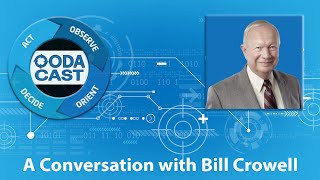
Bill Crowell, former NSA Deputy Director and Alsop Louie partner, breaks down his three-part framework for evaluating tech deals: technical viability, team integrity, and market dynamics. He warns that founders downplaying competitors signal trouble, and explains why he prefers IPOs over acquisitions that strip product value.
Chapters
Informing your decisions with intelligence analysis and insight brought to you by the team@oodaloop.com.
Hello, I'm Bob Gourley, the chief technology officer of OODA LLC. On today's Oodacast, Bill Crowell, a highly regarded national security expert, CEO and investor. Hello, Bill Crowell. Welcome to the Oodacast.
Hello, Bob Gorley. Good to see you.
Good seeing you. Hey, Bill, before we get started, I want to tell people a little bit of what I think of your bio and then of course give you an opportunity to correct the record for what I get wrong. But I've run into you multiple times through the years and my partner Matt Devoe also knows you very well. He's also long considered you a mentor and a friend. You had a background in the National Security Agency where you were a leader there for a long time and rose to the position of Deputy Director of the National Security Agency. You retired and then worked in several corporations, built successful companies as a CEO and led them to successful exits. You remain engaged in that capacity, helping companies on their board of directors or as chairman and other leadership roles. And you're also now with Allsop Louis as a partner there. Did I get that about right? As the short version?
That's about right. I did leave NSA in the middle of my career there and went to the aerospace industry to design satellite intelligence systems. Other than that, you got it about right. Awesome. I was a public company CEO in.
Silicon Valley and I think that's when we first met. That must have been. Was that the late 90s?
That's correct. I joined Silent Corporation in 1998, early January 1998, and I became their CEO in November 1998. Kind of a quick ascent. And Six Three was a successful effort to build a company and have an exit in three and a half years. That was $850 million exit. So it was a kind of a good ride. And then I was on the board at ArcSight, which was another billion dollar exit, and on the board at SafeNet who had acquired Silink when I was CEO and had a billion plus exit. So that's a good exits. In fact, I was less than I had. Out of 15 companies I was on the boards or on the advisory boards of 15 of them had exits. Not all of them great, but they all had positive exits.
That's good, that's great. And I tell you, I sure have enjoyed learning from you through the years, including having an opportunity to sit on a board with you and be advisors to other companies you were working with. And I Want to share some of those lessons with others in this video to spread a bit of Bill Crowell around. But first would you tell us a little bit about your foundational story? What motivated you to go into government in the first place?
Well, it's kind of interesting. I actually was hired right off the campus by and I say I had taken their qualification test which was a really hard task and I guess I did well on it because they hired me off the campus and gave me a good job. Not the one I wanted, but they gave me a good job. And as soon as I could after joining them I went overseas and got my feet wet in the deep business. I was in Japan during the Huevo Crisis and the EC121 shoot down. So I was thrown into the operational side very quickly. And from that point on I mostly went the technical route. I ran an R and D organization for military systems. I ran the science and technology organization for space missiles and weapon systems. And I ran the Soviet problem during the height of the Cold War. So I had really, really good upbringing. Yeah.
And Bill, I know you've had the hard jobs and you've always smiled as you've done it and I've seen pictures of you in some of the most interesting places. I've seen a picture of you, it looked like you were fast roping onto a submarine. I've seen a picture of you in a U2 flying in outer space.
Yeah, I guess I would describe myself as a tire kicker. I believe that the way you do leadership is that you get out in the field and meet the people who are actually doing the job. So yeah, I did a Nazi transfer at night to a 688 class submarine from a surface ship. That was an experience. And I did get to fly in the U2 and I actually had six hours at the controls. So yeah, see.
And did those kind of leadership lessons help transition you to leadership roles in the commercial sector? That hands on kind of approach?
Actually, yes and no. Okay, let me describe that. Working in the intelligence field, and I don't have to tell you this because you were there as well, working in the intelligence field has a tendency to reinforce people looking inward because everything you do is plastic. That didn't describe me. I started going to Silicon Valley and looking at technology companies very early in my career. And when I was running some of the bigger organizations and actually had a checkbook, I would take the checkbook to Silicon Valley, find companies that were doing things that we needed to be able to do and I would pay them to convert their products into useful things for us. So I was, I was always outward looking during the time that I was at nsa and I made a lot of friends in the commercial world. I got to know people like Scott McNeely and Steve Jobs and I even got to know Bill Gates while I was still in the government. So it was pretty natural when I left NSA that my mentor, Bill Perry, the former Secretary of Defense, would invite me to come out to Silicon Valley and join a company out there, which was a really great opportunity. And you know, the stint that I spent in the, in the aerospace industry, even though it wasn't a long stint, I got to learn the fundamentals of P and L, dealing with customers and being able to sell products and market your products. And so I had a head start. Great.
Thanks, Bill. Now, at Allsop Louis, would you describe what Allsop Louis is? I think everybody knows they're a venture capital firm, but all venture capital firms are different. Am I correct? How would you describe it?
You're absolutely correct. And I think Elsa Fu is one of the more different ones. I think you'd have to say first of all that we look for crazy deals. Just as an example, one of our early deals in Fund one was called Justin tv. And it was a young entrepreneur who put a camera on his cap, walked around campus and around his dorm and so on, filming his life and streaming it onto the Internet. He built a team around him and they were smart enough to pivot all of that technology into what became Twitch tv. Twitch TV is now owned by Amazon, and it is the product that allows gamers to showcase their gaming skills to people who just want to watch. And they have hundreds of millions of viewers at any given time. So that was a very strange and disruptive deal. We are an investor right now in Niantic, which is Pokemon Go, which is augmented reality as well as gaming. And the CEO of that is the guy who built Google Earth. It was a company called Keyhole before it became Google Earth. So we look for really high tech fields. We're technology folks, but all of the partners are former operators. I think all but one are former CEOs and that one has a lot of operational experience. So we're very hands on and that makes us quite different. We have things in databases and augmented reality and virtual reality and rocket motors, spacecraft engines. We are very diverse in our technology.
Bill, another thing I want to ask you about is how to assess deals. And I don't just mean in a VC context, although that's very important. But how should anybody think about technology and the value of technology in a company? And how do you know what you're buying? How do you do technology due diligence?
Well, you do deep dives. And that means you have to have people like Gilman, Louie, Jim Wims, Bill Coleman, myself, who actually still enjoy being geeks and were willing to ask the hard questions, how does it work? Why is it valuable to anyone? What's the return on investment for the customers who take this technology on? How friendly is it to the customer? So we do deep diligence on three aspects. The technology, is it protected intellectual property? It's very important to us. Is it understandable by the customer set that you're going to address? Does it work? It just plain has to work. And the second and third things that we do is due diligence, deep diligence on the team. And we do that not only in face to face sense, but we also do it in terms of having investigations run to determine if there are any dark secrets that we don't know about that could impede their ability to execute. And the third thing is we always have to take a look at the market and that's where our experience comes in so handy. You know, people that have an MBA but no operational experience, they don't know much about markets.
Right. And when you take a look at the market, that's when you're also looking for like competitors and what differentiates the firm. Is that correct?
Yes. And in fact, one of the, one of the clues to maybe you don't want to touch this deal is when the, when the entrepreneur, the guy pitching the deck, he doesn't want to talk about competitors or when he talks about competitors. They're all bad. They're all their customers hate them. Well, that's not true. They're competitors. There are some customers that love them. And so you have to dig deeply on the competitors because it will give you insight. Most companies products will only allow them to be number one, two or three in the market. Number one will have 60% of the market. Number two will have 30% of the market. Number three will have 9% of the market and everybody else shares that last 1%. That's generally true. It's not true exactly in the cyber world, by the way, because there's just so many companies and they're all point solutions and they're all competing with each other and they all attend RSA and make lots and lots of noise. But nevertheless, you do have to look at competitors and why they are succeeding as well. As how your company might succeed.
You know, I'm smiling, Bill, because we do that kind of diligence frequently. And we just did an assessment on cyber deception platforms. There's a lot of great ones you could. I can give you a list of 40, but the market is dominated by four, and then about 20 of that 40 are fighting for that bottom 1% of the market. And so you really have to be careful.
One of the questions I always ask people is, can you name 10 cybersecurity companies that are profitable that are not burning money? And depending on the portion of it that you start talking about, the answer usually is, no, you can't. It doesn't matter whether it's malware detection and response like Firearm or. I guess the only ones that are fairly profitable are the firewall and antivirus companies, because those are commodities that people feel like they have to have that sorts out into a few top players.
You know, it reminds me of another lesson you gave me years ago about security and the security business, which is it can be very hard to sell security. Compliance sells.
Yes.
If someone has to do something, I have to have this device.
Well, there's no return on investment for security. It's like insurance. It's a cost factor. And really, you know, how many people would have directors and officers, insurers, if it wasn't a requirement in order to get directors and officers into the company? I mean, so compliance is the biggest driver in security as far as I'm concerned. And unfortunately, even that won't work if the rules are set up wrong. I contend that the SEC has put in place the wrong set of rules for compliance by requiring public companies to report intrusions or breaches, no matter how small. What that does is it forces people to ignore or hide breaches. Interesting. Bill.
I want to keep asking questions about due diligence, but now at like, a bigger scale, let's say Allsop Louis invested in a company. It's grown, it's nearing a big event. A private equity firm is going to acquire it or put even more money in it. And that's a different kind of due diligence, isn't it?
Absolutely. You know the best kind of acquisition? Well, the best kind of acquisition is an ipo, because then you get to continue doing your business exactly the way you were doing it and grow the business, make money for your investors. The M and A is the second best, and it's only really, really good for the company if there's an option. There's more than one other company who wants to acquire you. And then the diligence is are you going to be able to continue to do what you were doing and grow the business or are they buying you in order to take you out of the market or to take you out of the market or one of their competitors? I contend the most difficult thing about east coast companies that are entrepreneurial is that there isn't the same long term history of entrepreneurship on the east coast that there is in the Silicon Valley area. And the net result is that a lot of founders are wanting that exit to be early. And I recently I was about to give a company a term sheet and they got acquired by a very big company for $40 million. Early in their lifetime they had $20 million in debt. So take that off the top. They had investors. So you take that off the top times a multiple and by the time it was over, the founder got about a million and a half dollars. He was happy, the investors weren't. So we look for companies where the founder and the other entrepreneur, entrepreneurs on the team are in for the long haul and they want to grow something and they want to have a big exit. Great.
Bill, is there anything that a company can do to better prepare themselves for a private equity event? Any advice there?
Just beware. Private equity firms tend to be buyout oriented. They tend to go in and then prune things out of the company that are cost centers and try to build up the financials surrounding the company and often don't have a lot of interest in the products and the customers and so on, except as they may reflect into the financials. And so, you know, you got to be careful who buys you. If it's a private equity acquisition, you know, that's not going to be the same kind of event for you that going into a company where you add value would have.
Bill, I really appreciate the time today. I have another question for you before we go, and that is I've seen the way you operate and I want to ask you about how you stay current. Now, I believe the way I have seen you staying current is you seem to read everything you get your hands on, but you also do a lot of work directly with these companies and it keeps your finger on the pulse of the market, at least that's what it appears to me that you do. But can you tell us, what do you do to stay current?
Well, that's pretty close to the truth. You know, I would contend that in this day and age, in the day and age of the Internet, there is no reason for anyone to want to know something and not be able to know it. So I spend a lot of time on the Internet doing research. I also try to get my hands dirty. When I started getting interested in AI and machine learning again, because I was interested back in the late 70s and early 80s, in the last height of AI machine learning, I went to the Google training site and took the training course for machine learning and deep learning. So that's one of the ways that I stay current. The other is that I engage with the technical people. Well, technical people. I engage with everyone in my portfolio companies that I can. I spend. One of the members of my board at Silink was Regiskenna, who was the guru of marketing in Silicon Valley. He developed the apple symbol, the Apple logo. He developed Intel Inside. He's written seven books on marketing. My first job there was as a product manager. I had to know something about marketing because that's really what product management is about. And so, you know, I just engage with the people who do know and some of it rubs off on me. Awesome. Great.
Bill, it's great talking with you today. I really appreciate it.
My pleasure, Bob. Always a pleasure to spend time with you. All right, well, thanks. Thank you. Thanks for listening to this OODA Loop production. For the latest analysis on cybersecurity technology and global risks, please visit www.oodaloop.com.
More from Matt


Leading Cyber Change: Allan Friedman on the Revolution of SBOM & Future Cybersecurity Initiatives


Revolutionizing Medicine and Tech: Joe Tranquillo's Journey into Complex Systems






Bob Zukis and the Digital Directors Network: Helping corporate boards mitigate systemic risk

Adam Shostack on Cybersecurity and What Every Engineer Should Learn From Star Wars