Ben Dubow on Detecting and Countering Malign Influence Operations
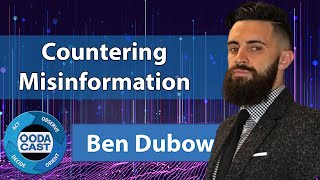
Matt Devost talks with Ben Dubow about how Russia and China run influence operations to spread misinformation. Dubow founded Omolas to detect and counter propaganda from authoritarian states, and explains how these operations have evolved and what it takes to fight back.
Chapters
Informing your decisions with intelligence analysis and insight brought to you by the team@oodaloop.com hi, I'm Matt Devoe. Welcome to the Oodacast. And today we have Ben Dubeau from Omolas here to talk to us about misinformation and a lot of other interesting topics. So, Ben, welcome to oodacast. And I would love to kind of get your background and your career journey that led you to starting a company focused on countering misinformation.
Yeah, definitely. Thanks for having me. So I started my career tracking jihadi and white nationalist propaganda online with an intelligence contractor. I hadn't really before that been exposed to really kind of the depravities that go on on those sorts of forums. And to see marketplace bombings, hospital shoot beheadings, and see people respond to it not just by kind of framing it as a necessary evil to a greater end, but as a moral virtue in itself, really challenged a lot about what I thought I knew about humanity. Really kept me up at night for my first couple of weeks on the job was how could something, it was so repulsive to me be viewed as a moral obligation to somebody else? So throughout my time working there, I talked to a lot of the more senior staff to try to get an understanding, but also read a lot about psychology, about morality, about ethics in general, to try to really get out of my own kind of head, my own framework, and understand how something that just seems so impossible to me could be possible to somebody else. So that was a big question that would really kind of follow me for the rest of my life. But as an intelligence contractor, it was kind of just day in, day out monitoring those activities. I got an offer from the Open Source center within six or seven months after graduating. And throughout that time, I was also taking the Foreign Service Officers Exam. I wound up passing the Foreign Service Officers exam, which was one of the proudest moments up to that point in my life. Actually. After I passed it got into the car and I had NPR on, and apparently it was the 50th anniversary of JFK's Ask not what you could do for your country speech. So that was playing the moment I got out and left me pretty choked up. So I told my contacts at the Open Source center that I got the offer and said I didn't know when I would actually get my assignment. Would love to work with them until then. They said that was fine. They love to accommodate me. And then three days later, my offer was withdrawn, which wasn't the happiest day. But at the Same time thought at that point foreign services where I really wanted to go, so didn't take it too hard. I also grown up in Philly, I went to school there, still lived in Philly and thought if I was going to spend the rest of my life going around world capital as I wanted to give back to my hometown the last few months I was there. So I left the intelligence job and I took up some work where I was setting well for eligible kids up in Philly with summer internships, I found it incredibly meaningful work, but it was just for summer internships. So once the summer ended there was really no job left. And a week before that happened the foreign service sent me a letter saying that they were withdrawing my offer and couldn't provide any explanation for why, but that you know, seven years I could file a FISA request to understand or freedom FOIA request. So a year and a half after graduating, speaking Arabic Farsi, having published a senior thesis on Afghanistan, I was living in my parents basement and delivering pizzas to make ends meet. So that point I kind of thought foreign policy wasn't really for me, swore it off. I had taught myself some web design in undergrad and thought I could parlay that into a job in tech, which back in 2011 wasn't still new, but it was much newer and kind of more frontier than it is now. So got a job working at a small legal services software company in New York, mostly actually doing sales as opposed to anything tech related. After that went to another marketing firm and then went out on my own to be a freelance web designer. Did that for about six months until I landed a contract position at Google. So Google really was like summer camp for adults. It really was paradise compared to working in intelligence or in small nonprofits or going out on my own as a web designer. Just, you know, they shower you with free stuff. The, the offices themselves are a destination. You know, when anybody came up to visit me, I would bring them through the office. We played Mario Kart or ping pong or whatever for an hour. And you know, obviously the cafeterias too, their reputation precedes themselves. But on top of that I really was working with up to that point some of the smartest, most motivated people I'd ever worked with. So first couple of years there really was as close to paradise as I think you could get working for a large bureaucracy. Then I was really shook out of kind of that contentment and complacency in 2015 during the body Klan attacks. So one of my best friends at Google was from Paris. And he starts texting me, asking me if I saw what was happening, telling me how he's trying to get in touch with his friends. And I decided then to go back onto the forums I used to track when I was in intelligence and, you know, saw everybody there celebrating it, praising God for what had been wrought, and, you know, claiming it was ushering in new golden age, what have you. And the same time I was getting these texts, these panic texts from my friend who didn't know what was happening with his family. And as kind of facing that, I get an email from one of my clients saying, hey, are you keeping track of what's going on? How do we make sure that none of our ads show up on stories about. On stories about this and that juxtaposition. Knowing that I had background in training that could in some small part help prevent these attacks, but knowing that my reaction right now was to protect some company's brand from being damaged because of the attacks really, really stuck with me. And at that point realized that I had an obligation to do more than just sell ads for whatever luxuries that afforded me. So I wasn't totally sure what to do with that. I started volunteering with a nonprofit that teaches Afghan women to code and started looking for kind of side projects at Google I could do that would be a bit more meaningful. My full time job was eventually found, found one, and wound up leading it to deliver counter messaging on search terms that jihadis would use to get to their forums. And that work was by far the most meaningful work that I had done while I was at Google. But the only thing we were looking at to see whether or not it actually was working was what share of people who saw those ads were clicking on them. I would then go back to my full time job and the expectation was that I could tell you the lifetime value of a customer over cost of that acquisition for every single line item in every single region. And that's something as trivial as selling weekend getaways or burgers. Was generations ahead of stopping terrorist recruitment. Really did not sit well with me, but had no idea what to do with that righteous indignation until with that nonprofit that I had started volunteering with. I went to a conference in Alexandria, Egypt, and that's where I met Ivana, who, you know, and she was living in Kandahar at the time. And I was there on behalf of a school based out of Herat. So we got to talking, realized that she, through her work had actually come to a similar conclusion, that countering violent Extremism was, you know, generate, trying to do something very similar to what advertisers are doing, but just generations behind what they were doing. We started sketching out what we could actually do about that. And a little less than a year later, Omolas was born with the idea that we were going to take the technology that advertisers use to understand loyalty to brands, to understand loyalty to terrorist groups. That was 2017. That's the founding of the company I've been going on for a while now. So I could either go into kind of what's been going on with the company for four years or kick it back to you.
Yeah. And I would like to talk about the shift, you know, because I know that you also started to focus on misinformation. So I'd like to pull on that thread. But first I'd like to ask a question that I've seen over and over, and I experienced it myself and with my staff at the Terrorism Research Center. We're probably watching a lot of those same videos, is did you come up with any kind of coping mechanisms personally for being exposed to that violent extremist content online? I remember being very impacted by like the Daniel Pearl video and things of that sort. How did you deal with that on a personal level for those who are kind of confronting that type of content on a daily basis?
Honestly, not. Well, I would get nightmares about it pretty regularly. Really wouldn't talk to anybody about it. You know, a lot of the people in my office had been over there, had experienced a lot of this stuff firsthand, so got the feeling that, you know, it was a shame. You know, they were the ones that I really could have talked to about it because they were watching the same stuff. But it just seemed like it would come off as almost selfish to be complaining about having to watch these videos to people who had seen it in person. So that definitely, that mindset definitely did not do me any favors psychologically. I think really trying to understand the motives behind it and really trying to explore that psychology wound up helping and, you know, helped to just understand why something like this would happen. But honestly, I don't think my coping mechanisms were very effective and definitely would not recommend the way I coped to other people.
Got it. No, no, that makes sense. Like I said, we were kind of all confronting that challenge in the early days. Cause it was still relatively new with regards to just content being distributed and then to see it being mass distributed with that type of graphical, you know, really just obscene level of violence. I think was very impactful for us all. And I know some of the big companies today that are, you know, have contracts of tens of thousands of people that are monitoring to try and keep this content off the platforms, are facing some of those similar issues, you know, around mental health and coping, et cetera. So yeah, thanks for sharing that. So 2017, a company gets formed, you've got this kind of focus on extremism, but there is also kind of another, I don't want to say it's emerging, but amplifying global risk around misinformation. Can you talk to us about the evolution of the company from that kind of founding thesis to the type of stuff that you're doing today?
Yeah, definitely, yeah. So initially our real focus was jihadi propaganda. But to understand whether jihadi propaganda is actually effective or not, you really do need some comparison. So, you know, we can look up. So Dash was really huge on Google when Google was still around. So, you know, we can look up how many shares plus ones, whatever it's getting, but if we don't have the context of what kind of competing messaging is getting, it doesn't really mean much. So we decided that we weren't going to just look at jihadi propaganda, but we would look, especially in Syria and Iraq at some of the kind of competing messages of seeing how some of the more moderate groups like you know, Free Syrian army were doing compared to Jaysh Al Islam, compared to say Al Qaeda associated Nusraf Front, compared to, you know, Daesh. And so we started expanding that. We real, we realized like, we really need to look at kind of the Syrian, Iraqi, Arabic speaking community as a whole. And what we wound up discovering was after Daesh, it was a lot of the Shiite militias that were really effective and really doing the best job of driving engagement online. And they had just absolutely incredible production values. Some of these video and they would have credits at the end, you know, especially harsh. They were semi formal at that point, so nobody's hiding their involvement. But you know, you would have credits with 100 people on the production team. And we started kind of pulling the thread of where all of this money for propaganda would be coming from. And it led back to Iran and it led back to Russia. And Russia, you know, RT Arabic was the number one Arabic language YouTube channel then. I think it's number two or three now, but still up there at the top. So it really started with just getting an understanding of how propaganda from jihadis was affecting the information environment as a whole. That technology wound up being really applicable to Propaganda of all kinds. And to really get an understanding of where jihadis fit into the media environment, we just wound up having to look a lot at state media as well. Ultimately realized is there was this overt state propaganda, especially outside the United States, in countries where the state traditionally has a very significant role in public life, like Russia, like the former Soviet states, like former or current Baathist states. We found that nobody was tracking that specifically, or if they did, it was just incidental. They weren't really giving any idea about why it mattered that this was state propaganda. How that state propaganda fit into the larger picture of what was going on about two years ago is when we started to really make that shift to focus on getting a full understanding of how states, especially authoritarian states, are manipulating the Web. When we built that out, what we found was definitely unsettling. The Russian government is the number three or four publisher on YouTube in terms of view count after, I think the WWE, Sony Entertainment, and an Indian music producer. And when I say the Russian government, these aren't sock puppets. These aren't bots with names like American Joe 1776. These are channels with names like the official channel of the Ministry of Defense of the Russian Federation. So very overt. They're not trying to hide anything. But they are absolutely dominant on a lot of these social media platforms. We found, too, is that the Chinese government. So two years ago, they had four, but now they have the five leading news pages on Facebook, all of which are in English. So number five is BBC, but the top four are all owned by the Chinese government. And again, these aren't sock puppets. They're not trying to present themselves as if they're American. It's cgtn, it's People's Daily, Xinhua, and China Daily.
Sorry to stop you. Yep, okay, sorry. I heard a buzzing sound on my side. That's fascinating. Just with a little bit more granularity on that. Are you saying that these are the sources that are showing up for viewers in the US Market, or is it global?
Both. So if you go on Facebook and you look for news, one of the big signals that they look for to recommend to you is how many followers different news sources have. So you're very, very likely to get content from the Chinese government. If you go on YouTube, RT is still number four or five in English, number three in Spanish, number two in Arabic. Their German account actually just got suspended, but was number four in German. So both in the United States and globally, China's actually struggled a bit outside of English and Chinese But Russia has a really strong global presence across social media.
It seems like there's kind of two parallel technical tracks to kind of countering this at a very high level. The first is a little bit of a kind of a Balkanization of these networks. Is there a reason why US citizens need to be exposed in such quantity to news sources from overseas? So, you know, maybe there's some content controls and I know that that's kind of counter to maybe some of the ideals that we hold, but in some, in some cases you might want those technology controls. The other is the identification of the syndication and amplification where you have, you know, effort being put into creating a single article, but then it's amplified across hundreds of content platforms to make it seem more legitimate, you know, or expose the number of eyeballs that it gets or people that are reading it or number of people shar it. What are, what are your views on kind of those two strategies? And my guess is that on the latter, you guys are kind of directly involved with some of those initiatives of identifying those content sources and helping platforms sort out this kind of, this credibility around some of these syndication channels.
Yeah, well, so for the latter, you know, to RT's credit, the content that they make is very compelling. It's, they really have nailed down sensationalism perfectly. Actually, one of the interesting comparisons between the Chinese and Russian domestic media markets is that China, everything is top down. Russia had a little bit of a flowering of a free press in the 90s and there wound up being all sorts of media organizations that developed competing within cities. Putin would ultimately take those over. So they are ultimately linked back to the government, but the government kind of just looks over them, make sure that they don't get out of line. Whereas in China it's very top down. Here's what you're going to publish. And so what you have in Russia is a lot of experience with sensationalism conspiracies, the type of content that really drives eyeballs and drives attention coming out of that kind of quadrant of competition that they had where they weren't really able to touch on significant political issues, weren't really able to say anything anti Russian, but could say whatever they want that was anti Western. So Russian media by the late 2000s was basically primed and ready tailor made for what recommendation engines would become. So already RT was creating content that was incredibly sensationalized, incredibly conspiratorial, but incredibly engaging too. Just the most bizarre, perfect tabloid content. I remember this one from a few months ago about the Blink 182 guitarist broke into Area 51 and has alien remains or something. But it was just, it was so. But like I had to click on it. It was just so bizarre and they're so effective at that. So a lot of like RT's growth, it's organic in the sense that, you know, the content itself is the type of content that recommendation engines were built to promote. It's the most attention grabbing content that you could imagine. So there are these content farms that definitely promote it and spread it. But on the Russian side at least a lot of it is just that what they were making was a perfect match for what big tech was already doing. Whereas for the Chinese side, it does seem like most of those English speaking followers are in Africa. Seems like a very large portion of them are very passive bots or just passive accounts that maybe they were recommended it as soon as they signed up, but they have engagement rates in below 0.1%. The leading one, which I think is CGTN, has about 110 million followers and they'll get under 100 likes on their average post.
Interesting. Do you see different production values based on the target population for the content? I remember having this discussion probably like seven or eight years ago with one of the large platforms that you could build some robust technologies around, for example recognizing image manipulation. But the algorithms were designed for maybe a US consumer who has a conception that Photoshop exists. So you're looking for the deep fake type technology where it would fool the average person, but then it would ignore something that was blatantly obvious, Photoshop because they would interpret it as satire. Right? This is so obvious that the person must be able to recognize it. And maybe that was okay in the US market, but then again in some of these emerging markets, Africa, as you mentioned, where the culture didn't have a preconception of what Photoshop was, the Photos could be very low production values, obviously Photoshopped to you or me, but interpreted as real. So do you see them making varying levels of investment in the production based on the target audience with the misinformation campaigns or influence campaigns that they're launching?
Yeah, yeah, definitely. That kind of native fluency is really one of the places that Russia excels and that China still struggles a bit at. So obviously both of them, their largest investment is into the English speaking market. And that's not just specifically because they're targeting the US or the uk, but because, you know, English is the language of international commerce and international diplomacy. So huge, huge investment there. And then it's definitely A sliding scale, fairly proportional to, you know, GDP per person in each country, as well as kind of its strategic value to them. So as far as manipulated images, I mean, one of the effective things about images is that they're not linguistically reliant. Right? So if you're going to use a manipulated image on an English language article, you can use the same one on a Swahili language article. But what Russia is very effective at is, and China is getting better at this is instead they very, very rarely use Russians outside of Russia. And the Russian state as a whole has managed to maintain a lot of the diplomatic ties and personal connections that existed in Soviet times. So they do a really good job of finding kind of local advocates and giving them a platform. And again, not telling them necessarily exactly what to say, although that does happen on occasion, but rather just making sure that they're kind of balance that they have to stick within. Going back to the US Example, RT has both specific channels for right wing audiences within the US and left wing audiences within the US on the right wing one, they'll just find the most extremist Americans that they can. So Richard Spencer of the alt right was a very common, very common fixture on RT America, which is the right wing focused one. And then RT going underground has all sorts of leftist radicals and kind of more fringe academics that they'll give a platform to, to denounce the evils of the United States.
So in your viewpoint, kind of what is the optimal solution here or what approaches should we be pursuing? Because it seems like this has been an increasingly dangerous issue over time. And I see it just, even on my own Facebook feed, there are people on both sides of the equation, as you mentioned, whether Republican or Democrat, even highly educated people that I see sharing content that is blatantly misinformation or content that is false. So are there technology solutions that are here? Do we need to focus on building up our cognitive infrastructure and make people more aware around these campaigns that are being run and engaging in kind of critical analysis of the stuff that they're reading. What is your perspective on kind of the road ahead?
Yeah, I mean, so investment in cognitive infrastructure just pays dividends so far beyond just misinformation. I think it's always worth the investment, just kind of familiarizing people with the basics of fact checking, of controlling for variables, of understanding statistics, of, you know, actually following citations, seeing whether it says what the author claims that it says. Not just reading a headline, not just, you know, reacting based off an image. Those are, you know, life skills Everybody should be imbued with, we should continue to invest in, regardless. That doesn't just help with social media and misinformation. That helps with everyday life. That helps with, like whether you should actually make a business decision, whether, you know, you should make a particular investment. Actually being able to control for variables can make all the difference there. But yeah, I think so. We, yes, I think we really need to approach this with the idea that the content itself isn't the problem. There's always been really bad content out there. There's always been kooks and there have always been Russian propagandists, Chinese propagandists. But what's happened is we've had a radical change in the media environment over the past 15 years where system that was really designed to take in a whole bunch of information and bring out the truth, even if that's more boring, even if that's less emotionally evocative, less, less, more discomfiting to the audience's preconceived notions. That was what it was going to present in the social media era. That's really changed to really focus much more on just capturing attention, capturing eyeballs. And there's this quote from Nikolai Bordja, who is general or was general secretary of csto, which is Russia's equivalent to NATO, that in an information war, the one who tells the truth will always lose, for he is limited by the truth, while the liar can proclaim whatever he wishes. And I like that quote. There's some truth to it, but kind of the whole scientific revolution the whole past 300 years is moving past that, figuring out how do we build these systems of knowledge production that can address our biases, that can address the advantages that untruth has over truth, but we've really lost that. So, you know the Facebook files that came out, one of the more stunning revelations there was that Facebook changed their algorithm of what they promote so that if somebody responded with one of the react emotions, including anger, that would get five times the weight of if somebody liked something. So when we have a system where the audience saying this makes me angry means it's five times likelier to be shown to somebody than somebody saying, this is something I like, you're going to wind up with a lot of content that makes people angry. Content that makes people angry is going to outperform content that people just like, or that is the truth but isn't emotionally evocative.
Yeah, definitely. There's a misalignment of incentives with regards to getting the truth out there because people tend to react to the stuff that's more sensational or aligns with a particular predisposition that they hold. I've joked with folks around the cognitive infrastructure that if somebody posts something that is misinformation or I have friends who've been put in what they call Facebook jail, maybe the response is in Facebook jail, maybe the response is you have to take this 15 minute course on identifying misinformation before you're allowed back on the platform. Just to increase that base level awareness of how this content is being produced, to manipulate them and maybe build up a little bit of resiliency in how they evaluate and look at what's being presented to them.
Right.
As it, as it relates to kind of this topic area, what's your worst case scenario? What's the thing that keeps you up at night where we have a deterioration instead of improvements and what's the impact of that?
Yeah, I mean, so what really scares me is the rise of natural language generation. So you look back at the 2016 election, which is probably when we had our worst fake news problem with think 14 out of the 20 most shared articles being fake news. And you know, not in the sense that it's from the opposite partisan one. And I don't like how they framed xyz, like the Macedonian team saying that the Pope endorsed Donald Trump. Like those type of stories.
Sure.
And you know, we can do whatever we want to detect deepfakes, to detect Photoshop, but you look at these articles, it was very clearly not written by a native English speaker. So, you know, if you approach it with any sort of skepticism, you would be able to tell right away that this was not a reliable source. So what worries me is being able to do what those Macedonian teens were doing at scale, being able to create a thousand variations of the same story, being able to target multiple audiences, basically run a B split test on those audiences, figure out which one is actually going to get the most shares and automating that entire process. So really just the ability to kind of flood people with the content that appeals most to them and being able to tell what appeals most to them far beyond what anyone is able to do today. And having that just readily available, you know, natural language generation, I think right now it's already so effective that it's like $10 for 1,000 words to use Google's version. And that's down from maybe $1,000 a few years ago. So that's going to be free and readily available pretty soon. So that certainly worries me.
So just have take the human out of the loop. You basically would get custom articles proposed to user populations based on social media profiles and what we know about what they like or the types of content that they're sharing.
Yeah, exactly. Wow.
Fascinating. So how do you stay up to speed on all of these issues? Are there sources of information for you that are valuable and kind of tracking what's happening in this space?
Yeah, you know, what my company does is we track all this propaganda around the world. So that's actually where I get the bulk of my news is actually directly from Russian and Chinese propaganda. So that certainly helps, you know, give me a very good idea of what they're doing it also, and this was a really important point, you know, when I was kind of struggling with how Jihadis justify what they do. It really does force you out of your own mindset. A lot of the journalists that are working on major Russian news, newspapers, TV channels, they genuinely believe what they're putting out. Same in China. And so reading what they're putting out really does help to understand kind of the narratives that they tell themselves. The world as they understand it. And by understanding how they see the world and how they see us and how they interpret our actions, definitely makes you better prepared to not only predict what they're going to do, but come up for, be able to respond appropriately and respond effectively.
Interesting. So what's the business model with the service that you guys provide? Are you also providing that content to individuals that want to stay aware of what's happening in this space, or is it to platforms only? Kind of. How do you, based on what you collect, how do people consume the content to derive value from it?
Yeah. So we have a dashboard that provides not just that content, but all sorts of analysis to understand what's being talked about with the major narratives in a given region are, and who's doing the best job controlling it, as well as kind of a slew of metrics to understand who really is doing the best job controlling those narratives. So our dashboard is mostly used by information warfare fighters to get a full understanding of what's going on in the media environments where they're focused. And then we do offer kind of simpler versions that are more targeted to say, NGOs or to journalists in foreign countries that want to get a full stream of what's going on there. Also, in the pursuit of really getting a full view of some authoritarian states, we have access to all sorts of data from really hard to reach social media channels that will provide to clients for their own use.
Excellent. Yeah, I can see where that would be valuable. And we're seeing some of the most savvy enablers of some of these misinformation campaigns have been these authoritarian states, and being able to combine it with other measures, as around suppression of information or even targeting of journalists and dissidents and other members of the population that maybe we'll try and do any sort of counter messaging.
Yeah.
Cool. Excellent perspective. I've enjoyed it. I always like to ask as well, since I'm an avid reader, what's a great book that you've read recently that you would recommend to the audience?
Yeah, well, so a really good one on kind of systems of knowledge production is Defensive Knowledge by Jonathan Rauch that came out maybe three or four months ago. But probably my favorite recent book is called the Invention of Russia by Arkady Ostrovsky. And he does just an incredible job of showing of kind of like creating a social history of how the people and the state and media unintentionally come together to create these notions of statehood and nationhood. Really, really good kind of meditation on identity and how it develops and what the contributing factors are. So it is specifically on Russia, but I think it's broadly applicable.
Excellent. I haven't read either one of those, so I have to add them to the reading queue. Is there a notable. The second book Obvious has me ask the question. There's been a notable transformation in the sense of identity within Russia. Any insights there?
Yeah. So his focus is on the 90s. So it's really kind of the transition from a Soviet identity to a Russian identity. And I think it came out in about 2010 or so. And around that time there's another big transition where the identity of Russia is really based on kind of a defense fence of Christian traditionalism. And there were hints of that in the early 90s of, you know, kind of the revival of the Russian Orthodox Church, but especially with Putin reestablishing Russia as the bulwark against Western incursion that then extends to culture, too. And so internationalist progressivism that's espoused in the west is met in Russia with localized nationalist traditionalism. So that's become, over the past decade or so, a huge component of Russian nationalism.
And this kind of reemergence of kind of the strong Russian at the individual and the national level, at least anecdotally, is a trend that I've noticed with colleagues that I had that even were Western educated and engaged on a lot of issues. I saw this transformation, whether they did it out of their just own self interest for safety, or whether it was something where they truly went through this transformation saw a complete shift towards us being weak, Russian being strong, just that kind of the foundational nationalism seemed to have reemerged over the past decade as well.
Yeah. Yeah, definitely. Yeah. It's actually a very good pivot. If you misgovern a country enough so that things are tougher, everyone then take pride in how tough you are and call everybody who's governed better to little weakling.
Yeah. And absolutely it comes into play. I've used that analogy a few times as it relates to attacks on critical infrastructure and just resiliency of the population. If the power grid goes down in Russia, they'll drink more vodka. If it goes down in the US In a week, you're eating your neighbor's children. That's the kind of the perspective that we have on our resiliency and the impact that these infrastructures would have. And certainly the mismanagement aspect allows them to portray this. Well. It doesn't matter because we're so strong.
We can handle anything. Yep.
Interesting. Okay. This has been a fascinating discussion. Thanks for joining. Really appreciate it. Any parting thoughts before we close out the session?
I think that's basically it. Kind of one word of caution about disinformation is when you're seeking out disinformation, disinformation that does not reaffirm your existing beliefs is not going to have an effect on you. So pointing out how the opposite side of a political debate is falling for misinformation really isn't doing much good. We really need to kind of reflect on what supports our goals and what supports our worldview to find the misinformation that we would actually be susceptible to.
Interesting. Yeah, that sounds like be careful when seeking out misinformation because misinformation will also seek out you.
Right.
Because there's a reinforcement element of that based on your behavior there.
I'm going to switch that little speech to that line. It's much pithier.
It's a skill of mine to make things much more pithy. Excellent. All right, well, thanks for joining.
Yeah, thanks so much for having me.
Thanks for listening to this.
OODA Loop production For the latest analysis.
On cybersecurity technology and global risks, please visit www.oodaloop.com.
More from Matt


Leading Cyber Change: Allan Friedman on the Revolution of SBOM & Future Cybersecurity Initiatives


Revolutionizing Medicine and Tech: Joe Tranquillo's Journey into Complex Systems






Bob Zukis and the Digital Directors Network: Helping corporate boards mitigate systemic risk

Adam Shostack on Cybersecurity and What Every Engineer Should Learn From Star Wars