CEO of Perhaps The Earliest Open Source Intelligence Firm In The World: Janes
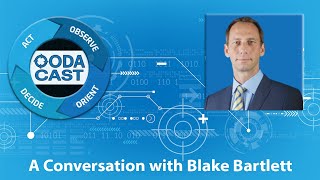
Blake Bartlett, CEO of Janes, talks with Bob Gourley about how the company evolved from a media business into a tech-enabled defense intelligence provider focused on open source data. Janes has been gathering and analyzing publicly available information about global threats for decades, turning raw data into intelligence that governments and militaries rely on.
Chapters
Informing your decisions with intelligence analysis and insight Brought to you by the team@ooda.
Loop.Com hello, I'm Bob Gourley, the Chief Technology Officer with OODA llc. Welcome to the oodacast. Today on the oodacast, Blake Bartlett, the CEO of Janes. Hello, Blake.
Hey, Bob. Great to see you. Thanks for the opportunity today.
Yeah, good seeing you. And Blake, I always enjoy talking with you for a lot of reasons. One is you have great savvy business insights. Another is you're always upbeat and optimistic and frankly, we need a dose of that in these days. So I really appreciate the time.
Well, I feel the same way. It's mutual. So thank you, Bob.
You know, another thing I think I want to mention is I think you have the best background for any of these kind of zoom video sessions because it says so much about you that you have this world map and you have this global perspective personally and you pick this background that just says so much. So I appreciate that. It's like a calling card in the modern age.
It's great. It's a real talking point with anyone I speak to. My dad tells me I look like I've got the world on my shoulders. I like to think of it as a plan for global domination.
Blake, before we get into Jane's, I wanted to start with a personal anecdote and say, you know, gosh, so many of us know your brand. And like many others in the national security community, I was exposed to Jane's at a very young age. I back then in the 80s, the big platform was, well, there was of course the Jane's fighting ships, the Jane's aircraft, the big books, but also Jane's Defense Weekly, a periodical that kept us in sync and in a good battle rhythm with what's going on internationally. And that was in the 80s. Of course, I was there as that all kind of modernized and we saw you guys move into the digital era and become more Internet based and provide stuff online. And I watched that mature and now, decades later, to see you as a even more digital company and just to continue to improve its really neat. And I mention that because I think most people I know have a similar story. They know this wonderful brand of Jane's from years and years ago. Although I have to say I was surprised at the full scope of things that Jane's does. And I hope we'll be able to get into that a little bit later.
Yeah, absolutely. And it's funny you say it, Bob, and I'll tell you a little bit more about the incredible affection that people seem to have for Jane's. You know, pretty much everyone I speak to these days has a Jane story and. Yeah, well, I'll tell you a little bit more about some of those shortly.
Cool. And now, before getting to that, I wanted to also highlight some of your personal career progression.
Can you tell us?
Absolutely. You know, I enjoy watching the interviews you do, Bob, and always learn a lot from them. And I'm always a little bit envious of the backgrounds of a lot of the people that you've got. I've got a slightly more unorthodox career, I guess, especially compared to a lot of the people that you speak to. And I guess it was really developed at a fairly young age. I developed what I would say a keen competitive spirit at a young age. And that really manifested itself at school. I was big into team games, whether that was soccer or rugby. But what really got me excited was individual sports. So I played a lot of tennis, I played badminton, squash, anything with a bat and a ball, essentially, but things that pitted me against somebody else. So I really worked at that, sort of. In fact, I've had to work at harnessing that competitive spirit over the years. But then after college, I decided that I wanted to pursue a career in sport. And I realized I wasn't going to be a tennis player, but I decided that I would be a teaching professional. So I left college, I took some exams, I started to teach, and soon enough the opportunity came to teach in Europe. So each summer I would go to Europe and play and teach tennis. And then, of course, at the end of the summer, there's nothing to do, of course, but to go skiing. So I would then go to Switzerland and do a bit of ski guiding. So I had a great life as a youngster. Bob. I was playing tennis in the summer and. And skiing in the winter. And I look back on that and sometimes I wonder why I stopped it. But believe it or not, it seemed like hard work at the time. But I came home eventually, taught some tennis some more, and then realized I just can't play tennis forever. So I kind of fell into sales, actually, and sales is the perfect environment for someone with a competitive spirit. And I joined a small company that provided country risk intelligence. And really, I don't think I was the most gifted sales guy, but I was certainly the hardest working. I was in first and last to leave and had a real desire to win in sales and beat everybody else. And I was blessed with a great boss. Gino Yousse helped me a lot. He's A magnificent leader, taught me so many things, especially about sales leadership and really gave me a chance to run sales teams in APAC in the US as well as Europe. So really gained invaluable experience of global sales teams and sales cultures. And that followed me through my career, really. I ran various commercial teams across multiple sectors in economics and country, risk and chemicals and technology and others, and then really leading commercial organizations until I got the opportunity in 2014 to lead James as a business. And you know, that, that, that even now I feel the weight of responsibility of that. You know, James has been around for 120 years and it's an incredible company and I think probably one of the, the most sort of famous companies in the business information world. Even though we're not the biggest company, we certainly got one of the biggest brands.
Right.
So, so yeah, I'll tell you a little bit more about that. But you know, I think it's a different career path to many people. But that sort of early career in sport gave me the sort of people skills, the communication skills, which has led me to this point today.
Awesome, thanks. And sales is so critically important. And I've noticed from my perspective, you can either sell or you can't. So some people are not cut out for it. But then within that group of people who can sell, some are just incredible at it and they can really succeed in growing a company and growing a brand and selling a product. And I'm just wondering, based on the story you just told, how much of that do you think was because of your early competitive spirit and the sports background? Or maybe another way to put it would be is this something that can be taught and learned or is it something that you just grow with, you're born with?
It's a good question. You know, sales is a people sport, right. It's also a performance sport. So there's no doubt that that kind of competitive spirit that I had helped me in sales, but also my early years as a tennis teaching professional, just dealing with lots of different types of people, dealing with different races, different cultures, really I think helped me just to get an understanding of people. And I think that sales is about resonating. Now, of course you need a great product and you need a product that you can believe in. And I think if you talk about a product with confidence and enthusiasm, then that also gets you a long way. And certainly at Jane's we're blessed with great products that you can take to the market with your chest puffed out and really sell it.
That's a Fact.
And I do want to talk a bit more about that. I mentioned my early exposure to you guys and like so many others, we know this is a great brand. I got lucky. I got to dive a bit deeper into what you guys are doing and. But I would like to ask you, if you could tell us, please, what is Janes today?
Yeah, well, it's a good question. I mean, I would say that when I first joined Janes, the most important thing that you need to do is really immerse yourself with customers and get an understanding of the voice of the customer and how they feel about Janes. And I think that I learned really that there were three things that people would tell me. The first, and we touched on it a little bit earlier, is just that incredible affection that people have for it. Yesterday I was speaking to someone who was at college and he had to learn the silhouettes of aircraft in order to be able to pass his exams.
I've been there, I've done that.
There you go. And they were provided by Janes. I've had senior people tell me that they remember getting their pocket money from their mom or the dad and they would go and buy the Jane's was the first thing they bought. And even I remember talking to a very senior guy in Japan, a naval guy who told me about his bedtime stories when he was a child would be Jane's fighting ships. Amazing Jane fighting ships. So, you know, everyone's got a Jane story, which is great, and talks to the strength of the brand. The second thing I learned, Bob, was that there's an incredible feeling of trust for Jane's. So it's the Bible, right? We trust it. It's a gold standard. You know, if something has got Jane's attribution, then it doesn't get questioned. So when you put together that trust, which is such an important currency in the world that we operate in, and you put together that incredible brand, you know you've got something powerful. But the third thing I would say is that I also heard that our hard copy publishing legacy was holding us back. So, you know, I heard a lot that you're in danger. And I thought this was one of the best quotes and stayed with me for the last six years. You're in danger of becoming the BlackBerry of the information industry. You have the best information in the world and it's the hardest to find. So that was really useful feedback in those early days. So I spent a lot of those early years refining the value proposition, improving the customer experience, making Jane's more Accessible, making our information, our content, more digestible. And we quickly turned the story around from I kind of don't really, I can't ever find what I'm looking for to I had no idea that James does all of that. Right. And that is the thing that I hear most today, and I think probably even heard it from you, Bob. It's just that I had no idea that you do that much. So we really had to work hard, and we are still working hard to reposition James as more than books. And that won't happen quickly. And it relies on product innovation. And we'll talk a little bit about that, how we're taking that incredibly rich set of content and turning it from unstructured information into structured information. And I guess that comes on to really where James is today and how I would describe them. I would say that JANES is the trusted global agency for open source defense intelligence. And there's two important terms there. I mean, one is trusted. We have 200 analysts, we have a network of over 600 contributors all around the world that contribute open source intelligence to James. And all of these people are trained in what we call the James tradecraft, which is our own process for taking open source information and delivering trusted intelligence. And we've honed that over the last hundred years or so to deliver data and analysis that our customers can rely on. And yet the other important point there, of course, Bob, is that open source piece, right? So we only present information that is available in the public domain. Now that doesn't mean that it's easy to find, but what you can be sure of is that Jane's analysts know how to find it. So that's how I know that we built a unique proprietary data asset within our business that is unrivaled anywhere else in the world. And when I say that our tagline really is assured by James. So when you get it from James, it comes with the James stamp of trust. And that means that it's been through that human tradecraft process.
Blake, you also said the words defense intelligence. So that says what you provide and frankly it also says what you don't provide. It's some of your focus. You focus on defense intelligence, right?
Yeah, yeah, exactly right. So open source defense intelligence and our primary customers, as you would imagine, Bob, are in that sort of government and national security world where again, this foundational intelligence that we provide is used across threat assessments and scenario planning, war gaming applications. Some organizations will ingest our content into their own systems and really those customers around ministries of defense mods the military, homeland security organizations, national security organizations, defense universities we talked about. That's where a lot of people get their initial exposure to Jane. So very much on that sort of government and national security is where I would say the majority of our business lies. But we also sell into the defence manufacturing community. So organizations who are looking to identify and win new business opportunities, and here is a good example, we provide 20 year view of defence spending across 99% of all defence spend. We provide market opportunity analysis, market sizing, competitor activity, detailed inventories across 190 countries. So everything that organization really needs to think about its future capture strategy.
Okay, so then it sounds like you're. Do you segment the market into categories? It sounds like you described several. There, there's government, there's industry. Is that kind of your segmentation?
Yeah, there are major markets. I mean we sell as well as you can imagine. There's a lot of sort of academic institutions that buy our content. There's some financial institutions, not as many. We don't really present ourselves today to those organizations. In a way they like to consume content. Which is why really I would say about 95% of our business is in those two categories, government and defense manufacturers.
Well, let me transition and ask another question because the way you just described Janes, and from what I've seen, you're different now than you were just a few years ago and maybe 10, 20 years ago. We would describe Janes as a media company and you're certainly still in media. You have these researchers, reporters, analysts, you produce content. But I've seen increasingly the tech dimension of what you're doing. So it's like you're also a tech company. You provide data and data as a service, you integrate data. Are you becoming more of a tech company than a media company?
Yeah, that's certainly the goal and certainly the path that we're on. Bob, I think we used to be much more media like our website and our magazines were supporting by advertising revenue. Now that sort of hard copy advertising world was in a systemic decline. So we closed that advertising piece last year. The advertising business as well was very centered around defense exhibitions. And of course they took a massive hit for Covid related reasons last year and continue to take a hit this year. So our timing on that was fortuitous, but it was the right thing to do for our business. And today, believe it or not, our magazines and our books, the things that we're most known for, account for less than 5% of our total revenue. So really our business is centered around delivering Jane's content to customers through two primary channels. The majority of that is online. And we also deliver content to some customers offline. And it's the online version that you've seen, Bob, which is really that rich user experience. So visualizations, dashboards, maps, interactive tools, satellite imagery, analysis, these are the kind of capabilities that most of our customers consume today through James Online. But there are still some customers who prefer to access our content offline so that our information sits on the other side of an air gap. And so we still deliver content to customers in formats that they want to receive it. And that could be through API, it could be through secure FTP. Believe it or not, we still do burn a lot of DVDs because that's the way that customers want to consume our content. And now you do lose some of the user experience, but it does enable you to integrate Jane's data into your own internal systems.
Right.
And I think you also hit on.
What is so unique about this is not just that tech piece, but your human element. You have people who are researching, writing, interviewing. In the age of conferences, you would send people to conferences. Now, I assume you send them virtually, but you have a large cadre of analysts, thinkers and writers who produce this content.
Yeah, exactly. At our core, we're a people business. It really comes back to that incredible intellectual capital that we have 200 analysts in house, 600 plus contributors all around the world, collecting, validating, processing data to deliver the intelligence that you can trust. But what they all have in common is the adherence to the James tradecraft, those quality guidelines. I think it was Henry Ford who said, quality means doing it right when no one is looking. I like that. And that's really what you get from James. Assured by James. And those analysts come from a variety of backgrounds. You know, they come from the government, from the military, they've worked with, they've maintained weapon systems. They could have come from geoint backgrounds, a lot of colleagues from intelligence communities. And then on the industry side, we have colleagues who were involved in platforms or systems manufacturer or strategic planning. But also on top of that, we also have a really talented team who populate and maintain the JANES data model, which is our proprietary system where we, where our validated data is maintained and updated and structured with unique JANES identifiers, and where we house the millions of connections between the platforms, the systems, the weapons, the units, the installations, and so on.
Right, Great, thanks. I'd like to also ask a couple questions about the tech dimension of this because frankly, I was treated to some Demos. And I would encourage anybody watching this to try to get a demo of the current Jane's. Or maybe I can find a YouTube clip out there that I can put in the show notes here to give people a feel for this. But I found that your content is very richly interrelated.
I can read an article and maybe.
I see the name of a aircraft. I can click on that and then get all of the content related to that aircraft and it's further interrelated to who built it and what their financials are, et cetera, et cetera. Or I can discover that through reading a news story of a country and read where their bases are and find what aircraft are at that base is. For example, I also found and was treated to a demo that just blew me away. I mean, especially a guy like me coming from the old days of computers, where if I want to do any analysis, I had to have a massive computer on my desktop. I saw through the James interface that I could do imagery analysis. I dove into a port that I picked, it was Vladivostok, and I looked at the imagery, I saw some chips there. I zoomed in and using tools that you provide, I was able to measure and see how long a ship was and then search your database for all ships of that length and then compare and say, oh, that is this. And just amazing rich wealth of tools. So getting back to this, you are more than just a media company there. You're providing technology and tools to help people get their jobs done.
Yeah, that's exactly right. Bob, you talked a little bit there to that rich user experience that you get when you. When you buy by the James Online capabilities. Right. And all of this really based on that sort of foundation of unrivaled depth and breadth of coverage. Now, I'll give you some numbers. In terms of equipment profiles. We have 67,000 with incredible coverage of platform systems and weapons. We cover 40,000 manufacturers, over 18,000 military units, and 22,000 installations. And we've got a database of over 300,000 events. Now, just think about that. This is not big data. This is one of the questions I often get asked, do you play in the big data world? We don't play in that. And we have no desire to play in the big data world. What we deliver to customers is curated data. It's assured data. I'd say that we don't have a data lake. We have a data pond. And we're very proud of that. We have no desire to deliver a data lake. We're not an AI Company that scrapes information from the Internet and then sends it straight out to customers. When you get something from James, you know that it's gone through that progress, that process rather. And you know every data point within those categories that I just gave you has been through a human intelligence process, the human tradecraft process. It's trusted foundational intelligence at scale. Historically, that data has been contained and delivered, I would say in product silos. We've had some very distinct product silos. What you've referenced there, Bob, is that connection between the silos that we're building and the work that we've done over the last few years to structure our data has really enabled us to utilize technology in ways that you can't with unstructured data. So for example, one of the things that we showed you, which is something that we're going to launch in the coming months, we're very excited about. I think it's, it's going to really help to raise awareness of Janes as a data tech enabled data provider is that we're developing an interconnected intelligence capability where equipment manufacturers, units, installations, inventories, forecasts and so on are all interconnected, creating knowledge graphs of millions of connections, all of which come with the Jane's assured stamp of assurance. And you think, you think about the number of people that are doing this within our customer organizations that can really sort of benefit and turn their attention to more profitable endeavors instead of having to create their own foundational intelligence. But in addition to consuming Janes interconnected intelligence, we're also developing, we've also developed artificial intelligence to enable customers to integrate their own information, their own intelligence into the Jane's data model. And this is something that we really think is groundbreaking. I mean just imagine the ability to integrate what you know about a weapon system with everything James knows. And using James to navigate through the weapon system to the platforms, to the manufacturers, to the units, to the installations, to the future demand, to the economic forecasts and so on and so forth. That, that is incredibly powerful and something that we're going to be launching in the next few months.
Yeah, and Blake, I, I get that and I think it is incredibly powerful and I can think of a couple use cases. One, commercially, there's all of the major competitors out there who want to understand how they need to continue to improve or how they need to change in order to face future threats. But in the government I see an incredible demand for that. But I wonder, isn't that going to need to be on classified networks to really be of its fullest potential. And do you have a plan to provide your tools and capabilities into agencies that can operate it themselves on their networks?
Yeah, well, absolutely Bob. You know our vision is really to be at the very center of our customers systems and to enable increased and improved learning at a faster pace by utilizing this sort of Jane's capability, this Janes data model. So absolutely. You know, I think initially customers may sort of consume or will consume this data via API, but absolutely in the future we want to sit at the very heart of their systems allowing them to use the incredible knowledge and capabilities that Jane's developed over the last hundred years so again they can think about, they turn their attention to other problems, other threats and so on.
Cool.
So while they're currently using Jane's data via API, for them to get a glimpse of this, once you roll it out it'll be easy thing for them to do is to go to the Jane site and see what it looks like. Then I imagine all they're going to need to do is say hey, I want this and you and your team will figure out a way to get them that interface and the data and.
The data model 100%. One of the things that we're currently doing is creating a bunch of demonstrators so workflow tools that customers can see how will expose the incredible richness of Jane's interconnected intelligence to the customers. We'll present that through a geospatial interface, we'll present that through a user defined dashboard. Those sorts of things will take to market in the near future will also present that ability to be able to integrate their own intelligence, whether it's classified intelligence or open source intelligence into that Jain's framework. And I think that's going to be a real light bulb moment for a lot of people.
Right, cool. Thanks Blake. That's a lot to think about. I have another question to ask if you don't mind. And I know you track world events closely, I know you focus on defense intelligence, but I wanted to ask if you have any views about the current threat situation or perhaps the future threat situation and things that we all ought to be tracking at this time.
Yeah. Every year I think to myself that this is the most diverse threat environment that I've seen and this year is no exception. I really think it's the most incredibly dynamic threat environment probably of my lifetime. When I think about the US as an example, the situation or the potential for domestic terrorism, the emergence of new movements with violence at their core. And I think there are two key ingredients to those movements that could potentially accelerate their growth. And that is the masses of people who are disenfranchised by the results of the election who believe their election was stolen. And then secondly, a leader with demonstrated support for illegal activities. So I think those could potentially really increase the prevalence of domestic terrorism. But that's just one issue. I think on top of that, obviously you're well covered by the UDA team. Cyber risks with the solar wind situation, pretty chilling reminder of the threat of cyber attacks. And I suspect that the fallout of that will be with us for quite some time. But then if I think more along the sort of things that James covers around the geopolitical threat environment, clearly Russia is still a concern. I think that the situation with Putin is really interesting right now, particularly with the domestic pressures that he's facing and, and will he be looking for ways to divert focus away from that domestic situation and project onto the international stage. China, Taiwan, volatile situation. I think that we've seen some escalation in recent weeks and there's certainly risk there of miscalculation. There's the continued and increased isolation of Iran and their continued pursuit of nuclear weapons. North Korea appear to be still building bigger, more powerful ICBNs. So that's another issue that isn't going away. And we haven't even mentioned the global pandemic and the fallout in terms of economic growth, the impacts, I think the future impacts on education and future impacts on mental health as well. So, yeah, I mean, we touched on a few there, but just a remarkably dynamic threat environment right now. And you know, it's hard for any, I imagine, hard for any intelligence organization to know how to best divert their resources and where to divert resources to the, to the major or the biggest issues.
Right, that's very well put and that's a good overview. And I think in the old days.
Perhaps it was chaotic and dangerous, but you might have a list of five threats that you need to track and mitigate. Now it seems like it's a menu of 100 threats and you still have to be aware of the unknowns out there that you just are just going to surprise you. And it's a very chaotic, dynamic environment of risk.
Yeah, really is. Yeah.
But one thing's for sure, it's important that we're all getting a handle on the open source components of understanding this complex dynamic world and very glad for the contributions that you and others are making in that open source world.
Yeah, well, thanks, Bob. We're plugged into it and we're committed to helping our customers to understand the environment and to mitigate threats in the best way possible.
Well, Blake, thanks much for the time today. I really appreciate it. It was good hearing your background. It's good hearing your stories about sales leadership, good understanding your approach to markets and how you segment the market, and just great learning more about Jane. So thanks, Blake.
Well, thank you Bob. It's always great to talk to you and really appreciate the opportunity.
Again, thanks for listening to this OODA Loop production For the latest analysis on cybersecurity technology and global risks, please visit www.oodaloop.com.
More from Matt


Leading Cyber Change: Allan Friedman on the Revolution of SBOM & Future Cybersecurity Initiatives


Revolutionizing Medicine and Tech: Joe Tranquillo's Journey into Complex Systems






Bob Zukis and the Digital Directors Network: Helping corporate boards mitigate systemic risk

Adam Shostack on Cybersecurity and What Every Engineer Should Learn From Star Wars