Congressman Will Hurd on Skills For Success In The Modern Age
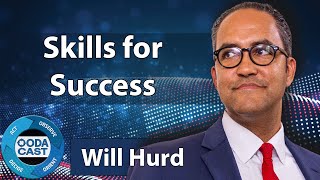
Jen Horn talks with former Congressman Will Hurd about what actually matters in business and leadership. Hurd draws on his time in government and the private sector to explain why sales skills matter more than most people think, and what separates people who move up from those who don't.
Chapters
Informing your decisions with intelligence analysis and insight brought to you by the team@ooda loop.com hi everybody.
Welcome to Oodacast. You may be familiar with my voice by now. My name is Jen Horn. I'm here with my very dear friend, former Congressman Will Hurd, known to me as just Will. Hi Will. Welcome. Thank you for joining today. I know you've been on this before. I have.
But I'm glad that I've been able to upgrade to the proper talent this time. So it's great to be on with you and all the OODA listeners.
Thank you, Will. Well, I know you've been on oodacast before and you've talked about a diversity of technology and national security related subjects. And I have great news for you. We're not going to talk about politics at all because you know, I'm allergic to that. Today we are going to talk about something that people may not associate with you and that is the broad topic of business, sales and entrepreneurship. And actually I very much associate you with that. I've learned a ton from you over the years, both when we work together and afterward about the skills and talents that go into being a successful entrepreneur. Now, you've had a very diverse career. You've been an elected official, you've served in the US Government in the intelligence community, and you've also been in the private sector. So I wanted to start by asking you what skill has translated across all of those chapters of your diverse career?
Well, I have to say one, I think that was a very polite way of you saying that it's hard for me to keep a job. So I appreciate that. I appreciate that, Jim. Look, I think at my core I always consider myself a professional intelligence officer and my job was to recruit spies and steal secrets. And the things that we learned in the, what we would call the agent recruitment cycle has translated to developing sales pipelines that Crumpton Group or Infusion X or fundraising in Congress or, or doing a vote count on an important piece of legislation that requires over 218 people. And so that skill set is probably the thing that I have used the most and have probably translated that to different parts of my career.
Right. And I know we've talked before about the skill and talent that you have of selling. And I'd like you to talk a little bit about what you've learned about what works and what doesn't in sales.
Well, the first, and I'll equate this, in the CIA we always start with access. Right. Does that individual have access to the thing or the individual that you need. If you know there is a safe in one room, who has access to that room? Now, that may be a broad group of people, but can you figure that out? So understanding the access. So for me, going into sales, you gotta make sure you're talking to the right person who can buy your widget or your good or service. Right. And we've talked about this before, Jen. The goal of a first contact, the first meeting is to get a second meeting. Right. Like, that's rule number one. And so it starts with having a very clear understanding of the reason for that contact and how that person can be valuable. Oh, and by the way, what can you bring to the table? And I'm shocked by the number of people that don't do some very basic stuff before first meeting. And I can tell you the time, when I was in Congress, you would have people coming in and advocating for, you know, I need your support on HR 5757. And it's like they don't know anything about my background or they haven't, they haven't read some basics to try to understand why HR5757 would be valuable to me. And so that's something that you learn very well. It's literally beat into you in the CIA and how important that first contact is. But. But you gotta make sure you know what your plan is when you go into that meeting.
I want to share a quick anecdote about how you taught me about this and how in reference to the little quote you just gave, Will and I did a meeting, a lunch once with a potential client when we were working together. And we got out of the meeting and Will turns to me and says, what were you doing in there? You were like a junkyard dog. And that's when you taught me that the point of the first meeting is to get a second meeting and to start to develop the relationship. I want to ask you about the continuation and the cultivation of a relationship for whatever purpose, whether it's to sell a product, to develop a relationship with an asset, fundraising, all of the things that you've done in your career. Tell us a little bit about your best tips and tricks for continuing a relationship with someone you want to get to know and work with.
Sure. And you know, again, I always start, I always start with my experiences in CIA because that has impacted everything I've learned and I've had little tricks on top of that. And you know, the. You do not recruit somebody to commit espionage unless you understand their Motivations, like, what is their reason for working with you, Right? And so whether it's going into a company, you got to understand their pain point and figure out exactly how you can. You can solve their problem. Now, you may learn that your opinion, you know, you have your own preconceived notion of how you might be able to solve that person's problem, but you also have to better understand that individual, because there may be three or four other ways that you can. You can solve that problem. So always have an arrow in your quiver when you go in, because if a meeting goes well, then you could be a junkyard dog and. And make the pitch, right? So we always had an agenda for our meetings, whether it was a developmental. That's someone who you've made contact with but may not have shared intelligence or a recruited asset. And you always start off, if it's a recruited asset. We have this thing called the Mad Minute. It's all the things you have to get accomplished in that meeting just in case something happens, right? But then you always start with rapport. And rapport seems so basic. But you got to get to know the other person and establish some kind of working relationship. And through that is where you clarify that person's motivation. So whether I'm raising money, you know, I know who, some of my big donors, what their personal pet projects are, right? And making sure you understand that. So you have to know something, and it seems pretty basic. You got to know something about the individual you're working with, because if you're going to be spending time together, you got to have something to hang that relationship on.
Well, not to pry too much into your trade craft, but how do you. And how would you recommend our listeners do research, learn about the party with whom they're meeting, and develop knowledge without being creepy in presenting that knowledge.
So I wish I had access to what's online now. When I was back in the CIA, you got to remember, I was in the agency. My first day was the day of the USS Cole bombing in the Gulf of Aden in October of 2000. And then I ended in August of 2009. And so for pretty much half of my career, we didn't have access to things on social media. So do the basics, okay? If that person has a bio on their website, make sure you know that. Right? Like, make sure you know what school they went to. Make sure you know what companies that they had previously worked for, right? Like, these are some very basic stuff that's not being. You know, you don't need to get in and hire a PI and get information, just read what's available and what people put out about themselves. And if you, if you do that, you're going to go in and refer to that, make sure that they know that you've done that. You've done that work. You know, I was, I was. I was having a call with the business leader yesterday for our first meeting, but I asked him a question about something he did at one of his previous jobs, and he was kind of shocked that I knew that level of detail. But do your homework, and because it's good, you're going to have a more robust conversation when you have that perspective. And look, you can make some assumptions about people based on where they grew up, what schools they went to, is what they majored in in college drastically different than what they're currently doing in their current job. There's a reason behind that, and that's interesting. And also, when you ask some of those questions about the individual, it improves rapport.
And integrating that knowledge into conversation naturally so it does not come across as intrusive. That's a balance between showing that you've done your homework but not saying, oh, how was that yoga class you went to on Tuesday at 6 and that they posted it on Facebook. It's a balance between showing that you are assiduous in your preparation, but not intrusive in proving that you know something about them.
Yeah, if somebody asked me about my yoga class, I'd be like, okay, weirdo. So, yeah, you're exactly right. But it's knowing facts and incorporating that and synthesizing that information are two very different things. And so if you've done your homework, you should understand. And when that thing pops up, you then can. You can take the conversation wherever that.
May go right Now, I also know, in addition to being a strong salesperson, I see you very much as a closer. You're one of the most successful closers in a number of contexts that I've met in my career and of my friends, and I hope that doesn't offend other of my friends.
I'm going to tell them all. I'm going to tell them all.
What's your secret to closing? How do you execute? How do you close? How do you turn a promising meeting, an exciting opportunity, into a real deal?
You got to make an ask, right? You have to have a clear ask. And it needs to be whether it's, you know, so in my almost decade in the CIA, I literally only said those three letters, CIA, when I made a recruitment. Because you have to make sure the other person knows exactly what they're doing. And it was very clear what I was asking. In business, you have to say, look, if you're trying to sell a good or a service, you got to know how much it is and the requirements around it. So always make an ask. There has to be a dollar amount. Same thing. When I was in fundraising, a lot of time people raise money, they're like, will you help us? And they say, yes. And then you leave it at that. No, will you help us by giving us X number of dollars? And you make a very specific request. And once you make the ask, stop, be quiet, let the other person respond. Once you make that ask, and it's uncomfortable, but you have to be quiet and let them respond. And then once they respond, now you're in negotiations, okay? And then, you know, one of the things I think a lot of people mess up is if there's a reduction in price, there needs to be a reduction in scope of the project. So you have to know that whatever you're asking for, if the other side comes back with the counter, you can't give them the same thing for a lower price. You have to reduce the scope of the work that you're doing, but you can't be afraid to make the ask. And I think that is the biggest mistake that most people make is not having a clear ask and then be quiet and let them respond.
I like the concreteness of that and the specificity, because a lot of times people say, great meeting, looking forward to working together, and neither side has provided a specific actionable thing to respond to. And obviously, as you've shared, there's a certain juncture at which it's appropriate to make that concrete ask. It's not over the cheese board at the first lunch.
No, no, absolutely. And guess what? The other side's expecting it. Right? You know, and that's what you have to. That's what you have to realize. And usually at a certain point, like in fundraising and politics, if somebody is taking my call, they know what it's for. So they've already accepted that. They know that there's going to be an ask. And then. So the next step, right, once you make the ask and they respond, you have to be ready to follow up with that. Slide that statement of work over or later that afternoon, you send that document over to the individual to make sure that if the close goes well, you have to solidify that right away. And that is the next thing about being able to follow up, because someone may Say they like the idea, but yeah, that's good. But until you have signed piece of paper, you can't stop.
A lot of people find making the ask very uncomfortable. What can you recommend and advise to destigmatize that and make it more accessible?
You just got to do it more often. And look, I believe you should have your line, your pitch ready to go and you should have said it out loud like I, you know, you should role play with somebody. And that's something that, again, I learned from the CIA. Most of our training is role play. And that experience, saying it, getting it, getting the words out of your mouth, making sure it sounds good and delivering it. And so when you're nervous, when you're nervous or you don't want to do something, if you're having to think about it and that spot, you're going to mess it up, right? So have your line already rehearsed. So when it comes time and you're, and you may be nervous about it, all you're doing now is delivering a line, a pre rehearsed line, and then deliver your line and shut up and see how, see how the other side responds. And so that is the, that is that, that's, that's the way I think you get over it. And then when you do it enough and you're successful, you realize how valuable it is and the other side appreciates it too. That's what I've always found is it's clear of what you're asking and everybody knows why you're sitting there. Because I think the worst thing you can do with somebody is waste their time. And if I meet someone and I'm like, if I'm 15 minutes in and I'm like, what the hell is this meeting supposed to be about? Right? What are they asking me? Or like, what are they building up to? You know, you've wasted my time. And I'm like, okay, I can't wait for this to be over.
I'm sorry to put you on the spot, but could you give it, since you're well rehearsed in this regard, could you give us some language or an example of how you might make that ask and how you navigate into it?
Sure. And let's say, let's take fundraising, right? Fundraising is hard, is because the other side literally gets nothing in return. Right. There's no product. It's this, the idea of helping someone they believe in. Right. And it would go something like this, Jen, you know, you know I'm running for reelection. You know how tough my election is my election's tough. Every two cycles I have to raise $8 million this cycle. I'm hoping I can count on you to write a check for $5,800.
It's that clear. And that's.
I was asking, are you going to donate, Jen? You know, I'll think about it and.
Get back to you.
All right, I'll send you an email. Right, so that's, that's one line. And so in business, you have something very specific and you're trying to hit on whatever their pain point is. And I'm trying to think of. Okay. In the cybersecurity business, Jen, I recognize how large your digital footprint is. And based on some of the conversations that we've had over these last couple of weeks, I think what you need and is going to make you feel and go to your shareholders with what you need is you need to do a technical vulnerability assessment of your entire network. Now, I have guys whose perspective and gals who come at this as an apt. Right. An advanced persistent threat. And we're the best in the business. And in order to do this engagement, it's going to be $100,000 and that's going to take X number of weeks, blah, blah, blah, period.
I'll think about it and get back to you.
Great. And here's the statement of work with some of the information of how that breaks down.
Right.
So you got it. You have to have a dollar amount and you end with the dollar amount and let them see how that feels.
Right.
Because a no is as good as a yes. Because now you know, you can waste your time, you can stop wasting your time trying to pursue somebody.
And that's something else that we've talked about before and I've specifically asked your advice on, which is when do you know when to stop pursuing something? And apart from the specific response of no, sometimes you think that there's an opportunity that's maybe just stagnating, but there's still a possibility. Could you tell us a little bit more about when, when to stop and pursue alternatives and new opportunities?
So I've always thought that, you know, 10, 10 leads, leads to, leads to two sales. Right. So, so you should always be working on, on new business and, you know, contacts matter. Right. So you're not going to increase leads if you don't increase contacts. Right. That's basic. And so in the course of a day, you also can't take things personally. And somebody may have just forgotten to respond to that email. Somebody may have forgotten to respond to that Text. And I know that look, if I don't respond to a text right away, it's probably not going to happen because of the volume that I get in the course of the day. And my email is the same way. And so I appreciate a second touch. And so this notion, if you've already had an exchange with someone via email or text, you know that line of communication is working. So it's not, you should never think, oh, my email went to their spam or they didn't see it. I think two or three contacts, no more than three contacts after something's over, and then drive on to something else because it's just not, it's not worth, it's not the mind share you spend thinking about that and trying to think of some way on how to, how to trick someone. But also depends on what good in the service you're selling. If I look at open rates on emails or trying to get someone to a small dollar donation on a campaign, that's a little bit different than a sales call with an individual that's going to require a contract. But that kind of work, three may be too much. One follow up and then one follow up to the follow up.
Right. That kind of persistence does showcase an attentiveness, a tenacity to want to get something done. But at a certain point, as you're saying, it takes up energy and time that could be better devoted to a greenfield opportunity that's going to return quickly for sure.
And if you've already given some, if you've gotten to a point where you know enough, where you can write like a statement of work and that's been delivered in some form or fashion, whether orally or in print form. They like if something, the environment may just not be right and that person may not want to just tell you no, but that when something else pops up, they're going to be, oh, I remember that thing, maybe they may be able to help you. Right. So that's why leaving a good feeling matters. But if somebody is like, you know, being too persistent, then you're like, that's annoying.
Right?
And you don't, you don't, you don't have that, you don't, you don't, you don't remember that. You don't remember that person fondly.
Right? Exactly. I would be remiss if I didn't ask you about when you help to build a company, which is Fusion X, through which we both indirectly met, and you work with Matt devoe, the co founder of ooda, I'd love To hear from you what that experience was like from a creative perspective, Meaning you were helping to develop something that didn't exist before. Truly. Truly an entrepreneurial endeavor. Maybe the first for you. I'm not sure. Tell us a little bit about what you learned from that experience. What worked and what didn't.
Well, I learned how to sell from selling beauty products. My parents, when I was in high school, my dad retired from the notions. Notions are like zippers, threads, buttons, you know, all the things that go into sewing and textiles. And they thought. My dad thought, hey, there's a $4 billion black hair care business. Let's get into it. He didn't know anything about it, so he. He sent my white mother to school. My. My white mother decided to go to cosmetology school to learn how to style black hair. Right. And so how weird was that? This white lady coming in, you know, to expertly style black hair. But. But it worked. And so my. So I basically sold beauty products to individual salons and beauticians. And so that's where I first. And I didn't know anything about it. Right. But what was great, working with Matt. Matt's one of the smartest guys. I always tell people, if anybody doesn't like anything I say or do on cybersecurity, talk to Matt DeVoe, because I learned everything from him. And while I had a computer science background, I understood some of the technical elements. I understood enough to translate what we were doing to talking to the business leaders. And really the partnership with Matt and I, it was. You know, Matt always knew and could understand how. What this company needed. And it was my job to go and do the work and build a relationship with the people that make those decisions. And so it was fascinating because we knew we had the best product out there, and we had to put an infrastructure in place to generate sales. And it wasn't just making the sell. It's also taking care of your client. So I was engaged at all that level and to make sure the client was happy with the service that was delivered so that we can move them from one specific tasking to a retainer relationship so that we can ultimately grow the business. And it was fun. And DeVoe is one of my closest friends and somebody that I loved working with because we really was. It really was he and I, you know, at the very beginning, and I learned so much from him.
What surprised you in the process of learning of building that business? What surprised you that you didn't think would be the case in building a company and a team and getting retainer clients and all the things that you did over the course of that growth period.
So for me, the hardest thing, and it goes back to one of your earlier questions, was the dollar amounts, right? You know, I had come out of the government, you know, I was a GS13. I had just ran for Congress, you know, and I lost. And so I had not done this kind of thing. And again, my experience is in the beauty supply business, right? You know, a relaxer is like, you know, a high end relaxer is like $47, right? And so when I made my, I was like, that's how much we cost, right? And I learned this, I learned this from Matt Devoe. If you want a premium product, you got to pay a premium price, right? And so, so look, I had delivered lines and that's where I learned. I was like, man, are they going to bulk at this number? And so I delivered it stone face. And they're like, okay, yeah, sounds good. And I'm just like, wow. I was like, we can, we can do this.
It felt like Dr.
Evil, right? And so, but it was worth it. Every dollar they paid that was, it was worth it, as I learned. And so, so that was just, it was early on. That was what was, was probably, was probably the hardest. And then, and then the, you know, everybody talks about how government is, so is, you know, the inertia and government getting anything done, any business of a certain size, you have the same kind of inertia. And so dealing with, dealing with, with, with the speed, right, or the lack thereof was always frustrating because when you're building something, you know, looks like we got things to pay and this is a big client. And so sometimes you get so focused on that one big thing that you don't want to, you don't want to lose it if it doesn't go well. And sometimes you have to walk away if the situation's not right. And so that's something we learned early on, you know, helping Matt build a.
Few Fusion X. I want to move on and talk to you about leadership because that obviously is part and parcel about, that is part and parcel of talking about entrepreneurship and success in it. And I've learned a lot about leadership from you. One of the things that I take away from watching you in a leadership position is the way that you solicit input genuinely from those with whom you work. How do you get to that point to be able to seek the input and potentially negative feedback of those that you work with? And what has that done? What impact has that had on the way that you've led and run a business.
Look, I appreciate the question. And I would say one of the things I loved about the CIA is that you got real responsibility, real authority at a young age. I was 24 years old when I delivered the equivalent of a million dollars to somebody in a bazaar. And I was the only person who had ever met that person, right? Like that's real. That's trust, right? And it was empowering to me. And so I've learned in positions, look, the buck stops with me. And I recognize that. And so I'm going to make the decision. But I want everybody's input. And my biggest fear is, yes, people, I don't want someone telling me what they think they want me to hear. I want them telling me their opinion, right? And so sometimes you have to ask, and sometimes you have to push people in order to make sure that they're giving you their honest opinion. And look, I always don't. I don't always take it. I don't always agree with it. And sometimes I push back with that individual. But they've seen it happen enough times where they know that I'm actually asking for their input because I value it, right? And so, yeah, look, I know what I know. I know what I don't know. But what I don't know, I don't know is the largest of those three categories. And I'm always trying to reduce that third category. And the only way you do that is with the people that you surround yourself with. And then the thing I've learned also is hiring matters, right? Like, do you have a clear reason of why you bringing this person on the team, do they have the skill sets that you need? And one of the questions I always ask them is, what do you want to accomplish? Because if you know what they want to accomplish, what they want to do and what I needed them to do, when that overlaps, that's when you get operational success. And I've tried to do that. And be honest. Be honest with people.
What do you think is the most important leadership behavior?
You got to set a vision, right? For the organization. It's got to be clear. Everybody needs to know why they are there. And for me in Congress, it was real simple. Be a leader in national security and the gold standard of constituent relations. And we looked at every decision within that matrix, and I've probably had, let's call it 60 people that have probably worked for me over my six years. If you ask every one of them now, even now, after they May not have been there. They'd be like, what was the purpose of Yalls office? They will all say, and they will all say it this way. Be a leader in national security and the gold standard of constituent relations. Everybody could repeat that exactly that way. And so that gave us a. We all knew where we were trying to go. And I think that is the. One of the most important things, I think that a close second is making sure that the culture within the organization is conducive to success. And some areas people forget is when you have low performers that bring down other folks. I learned this the hard way when I was in the agency. And you know, sometimes, you know, you can give a little of attention to help someone go from good to great, but a lot of times what where management spends their time is trying to get terrible to bad, right? And that's a colossal waste of time. And it's actually demoralizing to the other, to the other folks in the organization because you're like, man, I need some help or I needed this, but I'm not getting. I'm the kind of support that I need. And so, but that one's. That's hard. That's hard to come to that realization because I think everybody wants to believe in the best of people. But there comes a point in time where you know, you've done everything you can and you need a zig instead of zag, right?
I know you're highly capacious and multi talented, but I know you always want to improve. So I would like to know, as would probably many people in America, what are you working on right now as far as what you're trying to get better at as a professional?
So as a professional, honestly, social media, right? Social media is here to stay. And for as much as I think social media is one of the causes for a polarization in our country, however, it is a tool that you have to leverage and use. And how do you use it in a way that is going to do those good things you want and not the bad? Look, my social media footprint would be 10 times larger than what it is now if I said crazy things. Because I know when you say crazy things, that's what people share and click on. And so for me it's even, you know, how do you write better subject lines and emails? How do you improve click rates? Like it's that level of granularity to understand this medium which is going to continue to grow and improve. And so that's something that I actually spend time and I do a lot of Reading on. And then that's on a super technical detail level. I'm also reading more about the values of our country. And while my goal was to be a leader in national security, when you look at our foreign policy and national security strategy, it's ultimately based on the values of our country. And we talk about values, we talk about morals a lot. What does that actually mean? And how has that evolved since the founding of our country? And so it seems super basic. It seems super basic and specific, but I feel like sometimes having to get back to basics is important.
Is there a quality or a behavior as a professional that you're trying to cultivate?
So, yeah, look, I always try to be a product leader, meaning be thoughtful, put forward ideas that move a conversation. Right. And be thoughtful in that. I also. Honesty is important. One of the things I Learned representing a 5050 district is no matter what I do, half the district's upset with me. And so it's actually very freeing because that allows me to be honest and explain myself. Right. And so people talk about authenticity. I think honesty is key in that. And so that's something. It takes work. Right. Because there's consequences of being honest. And a lot of times the older we get, the higher those consequences or the larger, the more impactful the consequences are. However, when you're honest, the more you're honest, the easier it becomes to be honest. Right. But that's something I constantly. I constantly strive to strive to reflect in all that I say and do.
What are you reading these days or what podcasts are you listening to? Especially as you prepare for the next chapter of your career and the new endeavors that you'll be undertaking. What's inspiring, what stimulates creativity for you in terms of listening to interviews or reading magazines, articles, books, what's in your, dare I say, media diet right now?
Sure, sure. Look, I'm pulling my phone up and, you know, so right now I'm reading a book on President Eisenhower. I think it's like, three days before Bret Baer wrote it. And it's a pretty fascinating explanation of Eisenhower. And I feel like he's somebody that has been. That has often been misunderstood. I'm also reading Just Mercy by Bryan Stevenson. This is, you know, recently turned into a movie. It is fantastic. And I just finished reading this fiction book called In Five Years. It was so good. Rebecca Searle. So good. Like, he didn't expect how it was going to end. And so that's something that I've enjoyed. And I will say on the podcast front, I'm in and out. Like I like some of those that talk about moments in history that, you know, I recently read, listen to some about the founding of the national parks. It was like a five or six part series. I had nine national. I had nine national parks and in my district. But. Oh boy. From the Today show. Has, has, has a, has a podcast and he did one with Shaquille o'. Neal. Like Shaquille o' Neal has like three degrees and he's, he's super involved in business and he's a, he's a fascinating. He's a fascinating guy. And so Willie Geist. Willie Geist. Willie Geist has a podcast that's pretty good. And then on movies after Truth. So good. So HBO documentary. And there's one called Phenomenon that's about the history of UFOs which is pretty fascinating about how the government's role and some insights there. But after Truth is about disinformation and some of the issues that they addressed. I was involved in Congress, so that's some of the stuff that I've been.
Recently consumed or currently consuming that's very diverse consumption. And then when you're done with that, then you watch so youo Think youk Can Dance.
Yeah, exactly. No, I'll be honest. Zoe's Extraordinary playlist. That is my current.
That's your brain candy.
Yeah. I may have, you know, look, everybody's doom scrolling now, right? It's like, it's like so many. And yes, there are some serious challenges and there are some generational defining problems that we have to address in our country and in our world. But if you, if you, if you only consume that. Right. That has a, that has a mental health effect. And so having inspiring and fun things to watch. And, and really that's why I love, that's why I love this thing I'm watching on the Peacock. And it's a pretty good. It's pretty good.
So.
Yeah, look, I believe you should. I didn't start reading fiction until 2008. Really when I started when I was in Afghanistan. I need to turn my brain off. And I think it's important to be. To have diverse interests. And it goes back to that third bucket I was talking about the things. I don't know, I don't know. When you have diverse inputs, you can restrict that.
Well, I want to kind of encapsulate this whole discussion by asking you what advice would you give to entrepreneurs as they consider starting a business or improving their sales capability and business development acumen or what would be your key piece of guidance.
Figure out what you can be the best in the world at, right? And focus on that. Narrow your focus on whatever good service you can provide. And then number two, the thing you should keep track of is touches contacts. If you are talking to people about your good or service, the more people you talk to, the better off your sales are going to be. And there's the concept between lead and lag measures, right? A lag measure is how much money you made in a year. A lead measure is something that you can replicate over and over that increases that or you know that lag measure. And in the case of sales, lead measures to dollar amounts is contacts, right? And so increasing when you increase those other things will follow. And if I think if you do some of those things, you can improve success.
Thank you Will for this. As always, robust, entertaining, lively discussion. I always enjoy our conversations and I'm certain that the OODA audience will benefit from all of your wisdom, as I always have.
Well, I always love your questions because for as many conversations we have, you always make me think about things I've never thought about before and that makes me a better person. So I thank you for the inspiration and the friendship.
Likewise. Thanks for being here.
Thanks for listening to this OODA Loop production. For the latest analysis on cybersecurity technology and global risks, please visit www.ooda loop.com.
More from Matt


Leading Cyber Change: Allan Friedman on the Revolution of SBOM & Future Cybersecurity Initiatives


Revolutionizing Medicine and Tech: Joe Tranquillo's Journey into Complex Systems






Bob Zukis and the Digital Directors Network: Helping corporate boards mitigate systemic risk

Adam Shostack on Cybersecurity and What Every Engineer Should Learn From Star Wars