Follow The Money: Bain Capital PE on The Megatrends Driving Future Tech Enabled Investments
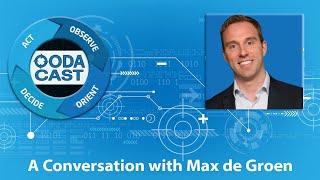
Bob Gourley and Max DeGrohn from Bain Capital Private Equity discuss what's driving tech investments right now. They cover cloud computing and cybersecurity as key sectors, and what leadership looks like when you're betting on technology-enabled businesses.
Chapters
Informing your decisions with intelligence analysis and insight brought to you by the team@ooda.
Loop.Com hello, I'm Bob Gourley, the Chief Technology Officer with OODA LLC and on the oodacast today, Max DeGrohn, a managing director at Bain Capital Private Equity. Max is in a great position to help us all understand a bit more about the future of technology enabled businesses. Max joined Bain Capital private equity in 2010. Max focuses on investments in infrastructure, cybersecurity and application software, as well as Internet and digital media. Prior to joining Bain Capital Private Equity, Max was at the Boston Consulting Group where he consulted in the technology, financial services and healthcare practice areas. Max received an MBA from Harvard Business School and graduated with a BS in Finance from the University of Minnesota. He also serves on several boards of directors, including the Board of Directors at Nutanix and Rocket Software, and has also previously been involved in Bain Capital's investments in BMC Software, Symantec and Norton Lifelock, among others. Welcome Max to the oodacast.
Thanks Bob for having me. Excited to be here today.
It's really great having you, Max, for a couple reasons. One, several of these firms that we just mentioned, Symantec, BMC Software, Nutanix, I've worked with a lot in the past as an enterprise cto and these are great firms, but also just looking over the portfolio of companies that you guys have, it seems like every other company you have is technology enabled in some way or another. Which means you're, I think the perfect guy to ask some very hard questions of in this space. But first, if it's okay with you, I'd like to start at the beginning before we get into those hard questions. Like you have a BS in Finance at University of Minnesota and I was just wondering, did you have any idea where you would end up with that finance degree? How did you get into this field?
That's a great question. Candidly, I did not. And my journey, I think like many, has been a little bit of a winding one. I mean, but I had a lot of interests during undergraduate. I appeared for a period of time. I was interested in pre med, I was interested in studying Spanish and French, I'd done economics. But in the end I settled on a focus on business and finance. And that was really with a focus of really understanding business strategy and really being drawn to the more quantitative side of things over time. And I actually didn't start my career in investing explicitly. I actually started in consulting more at the Boston Consulting Group with more of a focus around how do you build and develop great companies, really what's key to business strategy. And found myself while working there at bcg, as you said, really gravitating towards healthcare a little bit, but technology in particular. And those industries were of interest because one, I'd say just that's where the world is moving. As you think about just two places where industries are really seeing a lot of tailwinds and there's a lot of growth that was certainly areas of interest. And two, I think just the companies that were being built in technology in particular, just the business model and the quality of companies and just what was happening in that world really attracted me. And so that's been why I've really chosen to focus in tech in particular over the last 10 or 15 years of my career.
Great. And now you're at Bain, Bain Capital. So first, Bain is one of the most famous names out there and I would appreciate context from you on what is Bain and what is Bain Capital private equity?
It's a great question. And there's a couple of different Bains out there. Right. And so there's, you know, there's, there's a world class consulting firm by the name of Bain & Co. That's actually is a competitor where I started my career at the Boston consulting Group. Bain Capital, the investment firm where I work is actually a totally distinct organization from that Bain & Co. Consulting firm, a spin out of that organization that started at this point 37 years ago. Bain Capital was founded with the premise really of taking the approach that consultants and operators took to building great businesses which were focused on business strategy, competitive differentiation, really driving value for your customers and applying that to the investment arena, which was actually quite a novel idea in the 1980s where most of the investing that was happening was really centered around financial focus, balance sheet investing, things like that. This was really about company building and general strategy. And so that's the focus of our firm. We've grown from a small firm that was founded 37 years ago to a large global multinational investment firm with more than 100 billion of assets under management today. And where I have a chance to spend my time and help lead our team is investing in technology at the private equity end of the spectrum. And we're looking to make really large scale investments of 500 million to a billion plus of equity into leading technology players like some of the ones you mentioned today and have the privilege of partnering with teams to do that.
Okay, so you're focused on the technology domain there at Bain Capital and that includes cloud computing. Correct. But maybe I Should ask first, how do you look at how does Bain Capital private equity segment that market? You have invested in so many firms.
Yeah, it's a big space. I mean, and it's becoming bigger by the day. Right? I mean, technology is permeating more and more of our economy. And so the way we look at it within the private equity space is we really look at it across a few different segments. We look at it, we look at infrastructure and cybersecurity, which are two areas. And within infrastructure, cloud computing is a very big part of what we think about in terms of infrastructure technology investing. We look at application software, so purpose built applications for either a specific vertical. So that could be healthcare, it, financial technology, education technology, or horizontal applications that are more, if you will, general purpose software that serves a particular function. So for sales and marketing or things that may be on that front. And then we've got a significant effort in Internet and digital media as well. And so we're really looking across, those are the three lenses we look at. And then each of those have specific sub foci that we have teams really drilling deep and building strategies around.
Great, thanks, Max. And I want to ask some questions about that, but first, maybe a broad general one about technology debt. Do you have an opinion on technology debt?
How do you.
We use that term a lot in this field and I find it's used differently by different people. And I would like to ask your view, what is technology debt and how does Bain Capital evaluate that prior to an investment?
Yeah, look, I think as you say, the term technology debt has a, you know, has a lot of different connotations and meanings and use cases. I think, you know, as we look at it, we're trying to, in any technology business, we're looking at, we're trying to understand just how modern are the development practices, how, you know, as you say, what's the architecture, what's the, you know, kind of build, what's the debt, you know, that's associated with the latest products, how many versions of those products are out there, you know, where do we think that product, you know, needs to get to over its time with its product roadmap. And so we do spend a lot of time, you know, really trying to assess and understand what's the quality of this product and what's the quality of the vision as to where it's going. Our goal is to invest in companies that we feel like have products that are well positioned in those aspects, but then also to help a lot of our companies retire technology debt progress where they are on their journey in terms of modernizing and building and enhancing their product portfolios over time. So I think every technology firm and every technology company has, you know, has some technology priorities that they're working on and probably some backlog of things they're building. And so our goal is to, you know, invest behind and help companies accelerate what they're doing on that front. Cool.
You know, I think that kind of relates to this whole cloud computing megatrend. In fact, I know it relates to cloud computing because I've seen in so many instances a company is able to retire some technology debt because they decide to move faster to a cloud approach, re engineer processes and use totally different approaches and new technologies as they move to the cloud.
No, absolutely. Look, I think cloud is a powerful enhancer oftentimes to many organizations, modernization of their IT infrastructure. Now, I don't think it's a universal answer. I think there are use cases and purposes where, you know, public cloud is the right answer for what things are doing and moving, you know, to SaaS. But there are use cases where, you know, private cloud is the better answer, where on premise is the better answer. And so I think, you know, it's a, it's certainly a megatrend that, as you said, is in the early innings of, you know, of adoption. And it's a powerful enhancer to what people are doing on the evolution of their technology. But it's not the answer necessarily for every workload today.
Very good point. All right, so speaking of which, let me try a slightly different thesis out on you. I think like a lot of us, I've been watching cloud computing. It's been exciting for years and I would say 100% of the mid sized to large businesses I know of are doing something in the cloud. Either it's a proof of concept or they're using SaaS or they're using cloud delivered capabilities. And another percent, maybe it's 10%, have actually moved core workloads into the cloud. But my sense is this is just the beginning. The wave has yet to hit. What do you think about that?
I think you're right. I think, look, we're in what I would probably call it in maybe the third or fourth inning of that wave. I think a lot of companies are trialing, a lot of companies have moved a lot already to the cloud. And I think people will continue to look at and evolve their, their infrastructure over time. But I think you've also seen companies, you know, try things in public cloud and say, actually, you know what, I can Try this on private cloud as well and actually get a lot of the benefits of public cloud by using private cloud as an option for what I'm doing as well. So I think you'll continue to see a journey to the cloud. I think that's unambiguously going to be a megatrend for the next 10 or 20 years. But you're going to see, I think a very hybrid world where people are, you know, trialing and really using a multi cloud, you know, approach to what they're doing, which is multiple public clouds, private cloud and even on premise, you know, traditional on premise. What I'll say for their workloads, depending on what the needs are for for that specific use case.
I tell you, almost said every day, but at least every week I talk to some large organization where they're doing more on prem, but they want to do it in a cloud way. So it's either hybrid or it's totally on prem because they have, you know, stuff they want to keep inside their own networks.
But.
But they want all the benefits of the cloud.
Exactly. No, I mean, look, and actually we believe in that importantly actually as an investment theme and a number of our investments, one of which maybe Nutanix will speak about here in a moment, actually play on that, which is to say how can you bring the benefits, the use case, the features of public cloud, how do you bring those to a private cloud on premise environment?
Okay, when you know. So I do want to ask you, what is nutanix today? Because I did used to know Nutanix, but these companies changed so quickly. When I knew Nutanix was all about storage and really the most powerful cloud enabled storage kind of capabilities. And then it seemed to move and migrate and change and evolve to be more about converged infrastructure, hyper converged infrastructure. Did I get that about right?
You got that. Look, that's certainly the core of what the business today is. It's the leader in hyper converged infrastructure where basically they are virtualizing the combination of storage, compute and network and offering that in a consolidated software package to their clients today, enterprise and mid market. And that's been a really important part of what the company's done. And it's really the leader in that space and really helped pioneer that since its founding over a decade ago. So that's really kind of their starting point. And then they're now increasingly also moving to the world of hybrid cloud management and so then enabling you to use that same set of technology to drive workloads regardless of where they're sitting, whether that's on premise, whether that's in private cloud, whether that's in the public cloud. And so the company continues to evolve and be really growthful on that front.
That sounds smart because I think hybrid is our future. I really am sure so seems smart. So does this mean that, is this the kind of thing that Bain wants to continue to invest in? Are you looking for companies in this space of cloud computing?
We are look, I think, but we're looking for interesting places to invest in technology across the spectrum. But certainly companies within the infrastructure, software space and cloud in particular are places that we think will be really interesting areas for further growth and further potential investment. Cool.
Now, I think I want to ask this from the perspective of a CEO of a large company that feels it's time for an investment from Bain. They may have options on who to turn to for investments. And I'm just wondering what would you say to them? What differentiates Bain Capital from others in this space when it comes to investing firms?
I think it's a really astute question, Bob. And look, there are a lot of options out there in terms of investment types. And so just like an average technology company is focused on how do they win and how do they differentiate the market, we as a firm are continually focused on that as well. I think for us, as we look at it, we bring a really unique set of capabilities to the technology ecosystem. We're one of the only firms out there that really is investing in technology from early seed stage. So we've got a leading venture capital arm that will do very early seed stage investing to growth equity investing. We've got a fund that does that to really late stage scale and size growth and buyout investing, which I do. And that gives us an insight into this ecosystem, which is really important. The technology landscape is so dynamic as an investor. Having connectivity and insight as to what's happening with new startups to late stage scale investing, I think allows us to really play and be effective partners to management teams across the spectrum. The other thing I'd add for us as a firm is given that heritage of consulting and operations and strategic focus I started with, we come in as an investment partner really in a different way than a lot of other investment firms is that we're really seeking to be inflection capital for companies. Which is not to say we're not just providing our capital. We also want to provide expertise, advice, guidance and strategic resources that are helpful to whatever is next in that company's growth journey. And so we've Got a deep bench of portfolio executives and advisors that are available to help companies go through whatever the next big part of their growth journey is, whether that's international expansion, M and A acceleration of sales, marketing and go to market. And we've done that with countless companies across our portfolio over the years. And so bringing that expertise, bringing that set of capabilities, we think is really important to why companies should want to choose to partner with Bain Capital.
Yeah, that sounds awesome. So like if I'm in a company and I have some sort of HR need, I can turn to someone to get advice there on what's the right way to structure my HR department or is correct or I need, I have this hard legal issue. How do I find the right, right external legal counsel? I could turn to someone there and you guys could walk me through all of that.
Absolutely. Those are great examples. You know, on the HR example in particular, maybe I'll just pick that we have a global head of talent, you know, who basically helps, you know, understand and think about how should we be building, you know, diverse and inclusive teams. You know, what does the pipeline of great talent look like across the spectrum of technology? How do we, you know, structure our organization to be making sure we're building great teams and enabling learning and how do we find the right candidates to add, you know, to that organization? So we've got somebody at Bain Capital who just thinks about that full time in her role and make that person available. Person available across our portfolio. And our portfolio companies love that because as you say, like that's a critical challenge for them.
Awesome, Great. So I think that makes my next question maybe a little easier. I wanted to ask you about cybersecurity because another thing we already talked about just about every firm I saw in your portfolio, I just know they're at least technology enabled. Everybody is these days. So there's issues with cybersecurity and technology, whether it's protecting your customer data or protecting your employee data, or maintaining compliance with the GDPR in Europe or the CCPA in California, or just keeping your trade secrets secret. And I'm wondering what kind of help you give your firms when it comes to keeping them cybersecure, if any.
Yeah, look, I mean, I think, you know, we think about this question a lot from a day in and day out basis. One, just investing in cybersecurity. You know, we think about it, we recognize the importance and the tailwinds that are there. But two, just as we look at our companies, especially the technology companies, you know, we're investing in cybersecurity is of utmost importance. And so we have, you know, a Chief Security officer, a ciso, you know, at Bain Capital, who, you know, we help aggregate best practices across our portfolio and share those, you know, with all of our other, you know, CIOs and CISOs at our companies and just help them understand across the portfolio of 50 plus Bain Capital companies, what are we seeing as best practices? What are we sharing on that dimension, which is a great tool for others to see around? How are others that are in similar situations or maybe slightly ahead of me, thinking about this policy or this aspect of their business? So we're doing that on a very regular basis. And then we're also elevating cybersecurity to be not just a topic we talk about when something goes wrong, but a topic that we're proactively talking about at the board level with a company to make it a strategic priority for their growth, for their business. And so making that a regular part of the conversation, understanding how we turn cybersecurity into an advantage for the business and help them kind of grow that over time and be ahead of things rather than just simply being compliant is something we're very focused on with our companies.
Yeah, absolutely. Clearly in my mind, a best practice thinking about that stuff at the strategic board level. So good on you guys. I want to meet your CISO one of these days. I think he'd be another great guy to talk to. Probably lots of lessons learned on this.
Happy to make the introduction. He's a tremendous, tremendous guy.
Right. In fact, I'm going to skip the next question because this is a question for your ciso. I was going to ask about some best practices in cybersecurity, unless you want to share any. But I would love to dive deep with your CISO one of these days on that.
That's great.
Let me move into other common challenges or obstacles that founding CEOs or CEOs before you invest in them face and any advice you might have for them. What kind of challenges do these CEOs face as they scale?
Yeah, I mean, look, I've been lucky enough to partner with a broad array of talented executives and CEOs and founders over the years. And having. Having never founded a business myself, I find it a bit disingenuous, you know, probably giving too much advice to them. But I'd say what I've. The advice I give and, you know, I'd say what's. What I've really been impressed by over time is, you know, those that have built a culture where they are. As a founding, you know, as a founder, it's quite important to, to really build a team around you that you're entrusting and empowering, to help drive and extend the company beyond just you. Because oftentimes companies are built around the founder. Their personality or their strengths can really help define the company in its early years. But I think really scaling the organization means building a team and building a set of capabilities that really extend what you do and give you leverage. And so the executives I've seen be most successful in that dimension have really excelled at that.
Great. Well, I appreciate that, Max. I kind of have a follow on question. You've been in a great position to meet a lot of people in business, a lot of leaders, and I wanted to ask if you had any examples of great leaders you can share with us from your experience with these guys. Who's the best leader you've ever worked with at Bain?
I don't know if I'm in a position to answer that question, Bob. That's a very, as you say, it's a tough question to answer. I mean, I've been so fortunate to work with a wide array of leaders. I'd say maybe if I were to reflect and think about it. Some of the leaders I've been most impressed by are those founders, as we were just talking about, that have been able to stay with and evolve their business over the course of decades. I think if you look at people like, you know, and I haven't spent time with Jeff, but at Jeff Bezos at Amazon and what he's done there, I think that's obviously incredible. You know, the people I've had, you know, a chance to spend time with who have founded and evolved businesses over the decade decades are people like Andy Yunus, the CEO of Rocket Software, who took a business that he started at this point 31 years ago and has really excelled and grown it over, you know, time and seen it through many different dimensions of its life cycle, many different iterations of where the company is focused on, how it goes to market, how it's grown, and where it's been focused on its product. Aaron Aim is another person on that front who I think has been. That is the chairman and CEO of Kronos Ultimate Software. I think he's been with that business over four decades. I've gotten a chance to know Aaron over the last number of years as well. I think when you look at people like that, who have not just taken a technology business through so many different iterations of technology if you think about how tech has changed over all that period of time, but been able to successfully evolve business models, build teams that are inclusive and diverse, and set organizations up for long periods of time, to me, that's more impressive than a lot of what I've seen, just because it's such a hard thing to do. And those are the types of leaders that I probably particularly look at and say, that's really impressive. But honestly, being the CEO of any tech company in this environment, I think is a really stunning thing to do.
Yeah, that's a good point. And it is impressive to see a CEO do this, do that kind of thing. I'm curious, do you see any common traits among these CEOs? Things that would be good lessons for the junior CEO to think about, to say, I want to be a leader like that. Well, if you're going to be a leader like that, you have to do X. What sets these leaders apart? What makes them so good at leadership?
Yeah, look, I think oftentimes, and I thought this way, particularly early in my career as well, we think of CEOs or leaders as being the smartest or most strategic thinkers in the room. And lots of CEOs are extremely smart and extremely good strategic thinkers. But what I've seen is really the most effective CEOs are the ones that are focused on the people element of what they're doing, which is to say, how am I building an organization where I've got great people who have a learning mindset, who are focused on collaboration? How am I building that next generation pipeline of leaders and creating an inclusive culture where I've got people of all kinds of diverse thought processes and perspectives that are adding to the narrative of what we're building in this business. And so the leaders that I've really seen be most successful are the ones that are most forward thinking on that dimension. And so that to me is, you know, don't underestimate that kind of human capital element, you know, of the job.
Cool, Great, thanks. All right, so I have a final question for you, Max. And first of all, I really appreciated all this. Very insightful. And it's interesting hearing the way you think. Frankly, I wanted to ask about reading, if there's any books you have you could recommend to us, anything you've read recently that really left a big impact on you or anything you would recommend for any of us seeking to grow and learn more about business or life.
Yeah, look, I think I've been doing less reading recently with everything going on than I would have imagined. But I'd say a couple of books that I've enjoyed over the years or recently, if you will, that have helped me just understand and think about just the world of technology and business and investing and how, you know, things in a, in a, in a hype cycle, you know, you can really get caught up in certain things. I think, you know, particular favorite of mine is Bad Blood, you know, which is the story of Theranos, which was, you know, I found really insightful in just the human psyche and the development of how that all worked. I also enjoyed the new new Thing a number of years ago, which is a picture of Silicon Valley in a couple decades ago at really the peak of the cycle. And so I think both of those books to me were just insights into how when things are very exciting at certain points of time, really kind of stepping back and having the ability to have judgment and independently reflect on things can be important, which is the technology ecosystem. I think in particular a valuable thing to be doing.
Yeah, thanks. Those are good book recommendations. And the Theranos story I barely dove into, but I think that's an important one for us to all digest more because clearly Elizabeth Holmes was a leader because people were following her, but something went wrong. Was it the narcissism? Was it the one person? What was it? And I think it's very important to study this because maybe she was a great leader, but she let everybody, like lemmings off a cliff. I appreciate you mentioning that. I will definitely be diving into that.
Thank you.
Well, Max, thanks for the time today. I really appreciate it. It's good getting insights into Bain Capital, private equity and what you guys are doing and how you guys think. So thanks.
Thanks, Bob. I really appreciate the chance to connect with you today. Thank you for the thoughtful questions and look forward to being in touch.
Thanks for listening to this OODA Loop production. For the latest analysis on cybersecurity technology and global risks, please visit www.oodaloop.com.
More from Matt


Leading Cyber Change: Allan Friedman on the Revolution of SBOM & Future Cybersecurity Initiatives


Revolutionizing Medicine and Tech: Joe Tranquillo's Journey into Complex Systems






Bob Zukis and the Digital Directors Network: Helping corporate boards mitigate systemic risk

Adam Shostack on Cybersecurity and What Every Engineer Should Learn From Star Wars