Former Head of National Intelligence Council and Deputy ODNI Neil Wiley on Intelligence Analysis
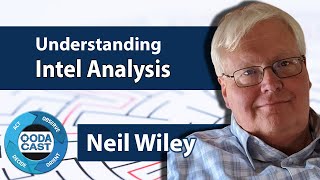
Bob Gourley talks with Neil Wiley, former head of the National Intelligence Council, about intelligence analysis methods and the ethical foundations that should guide the work. They cover Wiley's career, what the National Intelligence Council does, and the Global Trends report.
Chapters
Informing your decisions with intelligence analysis and insight brought to you by the team@oodaloop.com.
Hello, I'm Bob Gourley, the chief technology officer of OODA LLC. And today on the Oodacast, Neil Wiley. Neil, thanks for joining us.
Thank you very much, Bob. Good afternoon.
Neil, you're a bit of an icon in my community. I know you well and the entire community knows your reputation, but I wanted to ask for your take on your bio. We know that you were the principal executive in the office of the Director of National Intelligence. You were also the chairman of the National Intelligence Committee Council, and you were the Director of Analysis at dia. But how did you get your start? Neil? What was your career arc like?
Yeah, so, so my career arc was not standard. In fact, I backed into pretty much everything I ever did. And when I finally got to the position where people thought I could give them good career advice, they were generally disappointed when they found out that I, I, I, I lucked or backed into pretty much everything. So I was very much a creature of seizing opportunity when it happened. I started off, I grew up in Baltimore, and I started off with the intention to be a doctor. And the way you became a doctor in Maryland in the 1970s is you went to the small commuter school, the University of Maryland, Baltimore county as it was, and you enrolled in the molecular biology program. And if you survived that, you had a pretty decent shot at Maryland Medical School, which is what I did. And so three years into that, it dawned on me one day that I actually didn't like people very much. And I thought about that and realized that that particular peculiarity in my temperament was probably not well suited to be a medical professional. But I had taken classics courses as part of my general distribution requirements. So I finished the molecular biology degree and I stuck around for an extra semester and finished a degree in ancient history and classical languages. And the university sent me after that to Israel for nine months on an archaeological dig for which they were part of a consortium. And this was in 1982. And we managed to be on the Lebanese border the day the Israelis invaded for peace for Galilee and got shelled by the PLO and saw the dog fights over the Golan. And it was actually a pretty exciting time to be over there. But I got back and I was going to start grad school and then realized that my person who was going to be my graduate advisor didn't get whatever grant he wanted, which meant I wasn't going to do whatever I was going to do. So I did the one and only impulsive thing I did in my life back then is the Navy recruiter was on campus looking for students. And I said, well, how about me? And the guy said, well, what can you do? So I told him and he said, great, if we ever capture Caesar, we'll know who to call. And so that was an inauspicious start for my Navy career. But I finally went back to the Navy on a day they didn't make quota or something, and I got in. So I fully intended to use the Navy as a four year delaying tactic to figure out what I really wanted to do with my life. And 20 years later I got out. My first, my first five years was a surface warfare officer, which I thought was great, but I realized that that wasn't really what I wanted to do. So I applied to be an intelligence officer, which I thought sounded nice. And at that point you had to go through something called the lateral transfer and Redesignation Board. And so I tried twice and they said, you're a nice kid, but you don't have any experience. So thank you very much. No. And so I was about to. I had one more shot at the lateral transfer board before my obligated service was over. And I broke my ankle two weeks before a deployment. And my captain, after yelling at me for breaking my ankle two weeks before deployment said, okay, here's your shot. A friend of mine is the XO at some place called Fosik Debt Sinkland Fleet. So I have arranged to get you time to do your limited duty till your ankle feels there. And. Which was very kind of him. So I duly showed up at Fosig Sinclair Fleet and clomped around on the watch floor for eight weeks in a cast and got some experience in Naval intelligence and the lateral transfer. God smiled on me on my third shot.
What year?
That was 80, then 86. That was 86. And so I became an intelligence officer, which I did for the next 15 years. So the proximal cause of my being in the intelligence community was a broken ankle. I have no idea what I've done besides that. And then I retired from the Navy and I went to the civil service again as an intelligence analyst. And I really spent my time since then in the intelligence community as a civil servant. Almost all of that time was either as an analyst or a manager of analysts.
When did you retire from the Navy?
So I retired from the Navy in 2003 and I got a job with EUCOM as a Department of the army civilian, which all of the civil servants at EUCOM were At that point, Department of the army, as, ironically, the Naval Intelligence Analyst at Molesworth. So I did my time as a Department of the army civilian until 2008, when everybody @ the Combatant Command GIOX woke up one day and found themselves DIA officers. And so I backed into becoming a DIA officer that way. And I was still over in England until 2012 when I applied for an SES position with Big Dia. And, you know, I don't know what happened. Nobody else applied, Bar was low, whatever, but I got it. And so that's how we ended up back in the United States. My first job at DIA was running an office called Military Forces Analysis. And then I moved on from there. Cool.
Well, thanks, That's. I want to dive a bit deeper into the analytical topics at DIA, but I also wanted to mention that NH95 there at Sink Lant, I spent a lot of time in myself. And that must have been a great introduction to Navy and joint intelligence at the time. The all source correlation of many data feeds to figure out what adversaries are doing in a very dynamic environment where you're shaping Blue Force decisions based on what the adversaries are doing.
We didn't use the modern analytic lexicon. I don't think the word tradecraft showed up at all while I was there. But every principle that carried me through my entire career as an analyst, I learned on a fosif watch floor. On a fosig watch floor. Navy opintel was a great place to start because we did learn all those principles. We learned that all source really did mean all source. You had to do your due diligence on an assessment, taking into consideration everything that was potentially relevant. You learned to create a very close partnership with the intelligence collectors and the disciplines. You know, this was not just you going off into your cube and coming up with brilliant ideas. You worked in a vibrant community of analysts with your colleagues at nsa, with your colleagues at the imagery support organizations, with your colleagues in the Defense Attache office. You really did learn the value of collection, because if you didn't know where your information came from, it was very hard to understand it fully. And it was very to fill your intelligence gaps. We learned that analysis goes far beyond your own opinion. Everybody got challenged at a fosig. The morning standup briefing was a full contact sport, and it was meant to be. And that's how the assessments were refined and burnished. And you also were very, very aware that what you were doing was in support of something that mattered. And it was in support of the operational forces because the Sinkland Fleet Command Cent was right across the way. And if, and if a P3 launched with 12 souls on board in bad weather, based on your assessment, you knew that mattered. So that customer focus, that focus on operational relevance, focus on all source intelligence, focus on the close nexus between the analysts and the collectors, we all learned on that Fosek Ops floor. It was a great place to start.
I think you put that very, very well. And it jives with my learning experience a few years after you left the building and I was there working with people who would go on to lead large swaths of the organization like you did. Like Ellen McCarthy was there on in our analytical cell doing analysis on north fleet submarines and she went on to lead a large swath of our community. Lynn Wright was there running very special programs for us and of course went on to a historical legendary career in Naval intelligence. And Admiral Wilson at the time, Captain Wilson went on to lead a large part portion of our community.
Commander at that point. Rick Porterfield was the officer in charge when I got there. So he was my first experience with a senior naval intelligence officer. And you know, you couldn't get a better start than that. I'm, I, I was privileged to work with the people I work with and I'll tell you if I'm giving a shout out. The person with whom I was the most privileged to work was a Navy Lieutenant JG Intelligence officer at the time named Paul Krstansky. And Paul was the poor unfortunate who was saddled with running the watch team I was on and to find some meaningful but not too dangerous employment for somebody who didn't know anything about Naval intelligence and to try to, to bring him on in a short period of time in the, in the ways of, of good intelligence. And he did a wonderful job and he was terribly patient with me and I owe a lot to Paul.
Cool. Well, thanks Neil. And Neil, those lessons of operational intelligence I, I know are extremely relevant. But I also want to ask lessons from your time at dia, where there's a lot of need for analytical rigor and more formal thoughts at times and production of important assessments and analysis there is, can drive critical policy and impact military decisions. And I wanted to ask if you have any lessons there you can share with us on analytical methodologies and what organizations should think about when creating their own intel capability. Say a large business.
Yeah, so, so that's a good question. So DIA as a large IC agency that is subordinate to the Defense Department has an interesting set of responsibilities because it is on one hand part of the intelligence community. And it does serve a national role, but as a departmental asset. Its existence, first and foremost, is to provide that very broad rang of, along with its colleagues in the defense intelligence enterprise, by the way, it is very. Defense intelligence is very much a team sport, but it's to provide that very granular, focused understanding of an adversary's capabilities, order of battle, supporting military and civil infrastructure characteristics, performance of equipment, as well as their national goals and intentions regarding military activity and capabilities and plans that are designed to enable the transition of a national policy decision into an executable military action. So you need a certain kind of intelligence to make a national policy decision on something that involves the military. You need a completely different set of intelligence to translate that decision into something that people can actually plan and do. So dia's principal role is, is to produce and manage the production of that kind of analysis. And you're right, it requires rigor, requires focus and on. And in some cases, it's there to enable very large policy decisions. On other cases, it's there to enable very specific tactical outcomes. And so one of the challenges that any organization that has that broad set of responsibilities in the analytic world has to deal with is how you approach very different kinds of intelligence with the same rigor. Because that tactical commander at a JTF or that tactical commander in an Air Force squadron or that tactical commander on an aircraft carrier needs the same kind of rigor, deserves the same kind of rigor that we would put into an assessment that was going to the President or the Secretary or the National Security Council, but we just produce it and translate it in a different way, but the rigor is still the same. So in crafting an analytic capability, whether you're in an agency or whether you're in a business, I think the first thing that you have to maintain in your sites is why you exist, what you are there to do, and what outcomes you are attempting to enable. And then your processes need to.
Be.
Constructed to enable your output to do that thing. But before you get anywhere, everything you do in the intelligence world has an ethical underpinning. We are an extremely ethical profession. There's a lot of research and exposition professions out there. Academia, journalism, the legal profession is research and exposition. Businesses do business intelligence. But intelligence, particularly government intelligence, relies ultimately on creating trust. I used to think I was in the brilliance business, or I used to think that my whole contribution was, I know something somebody else doesn't because I have a secret and I would like to be brilliant all the time, or I'd like my organization to be brilliant all the time. We try. We can't guarantee it. I would also like to be uniquely informed, which is code word for I got a secret. And we do spend an awful lot of money in the IC trying to be uniquely informed, and we frequently are. But we don't get to pick the problems we work on. God throws curveballs all the time. And those problems arise quickly in areas where the intelligence community may or may not have a lot of resources dedicated. The intelligence community is neither omniscient nor omnipresent. So you actually have to kind of figure out where you want to know things about and posture yourself to know things about, you know, things that are high priority. But again, God could throw you a curveball and you're in some place you, you don't have a lot to work with. Even then, though, we have to provide intelligence. And what I have to be able to provide every day, all the time, is that confidence to a decision maker in the probity and integrity of the process that gave him or her that assessment they're going to read. So they have to know that we've done due diligence, that we're not trying to manipulate them, that we're as objective as we can be, we're not trying to push them into some policy decision inappropriately. They have to just believe that. And it's that trust in the, the intelligence process that gives a decision maker or a commander the confidence to act, even if what we said that day is no different than what the Economist wrote. So the ethical underpinning of everything you do has got to reinforce that trust. So ICD 203, which, the Intelligence Community Directive 203, which is the thing that all analysts read or at least should, is the Intelligence Community Directive that lays out what a good assessment looks like and what characteristics it has to have. And it talks about the ethical characteristics that it has to have. It has to be free of political influence, has to be, no kidding, all source, or at least it has to be created using the consideration of all potentially relevant information. It has to exhibit tradecraft characteristics that allow you to explain yourself. And then it has a set of tradecraft elements in it that are how to translate those ethics into a, into a tangible outcome. And so ICT203 should be the basis on which every analytic organization builds its training program and builds its analytic processes, because tradecraft is simply the tactics and techniques and procedures we use to bake those ethics into something that's real. Tradecraft changes all the time. But the Ethics don't. The medical profession is a good, good example. The medical profession operates under a 2,500-year-old ethic, do no harm. But their tradecraft, their tactics, techniques and procedures have moved on a lot in 2500 years. The same is true with intelligence. Your ethic should not change, but the, the ways in which we apply that ethic should. So when we built analytic training at dia, we started off with ethics. We started off with what makes an intelligence assessment unique and different from everybody else who's writing an op ed piece in the post and then how do we structure our processes, our training and our personnel development in order to get there?
Fascinating and helpful and just kind of a follow on question. I know the ICD203, I've read it and I know the big intel agencies like Diagnosis and others. And there's this guy, Sherman Kent, very influential analytical thinker who helped shape a lot of methodologies years ago. It's to me though, it's a little bit different than what you described occurring at Fosig land at the fosig lamp watch floor. You're so close to the operators and of course that helps with the trust piece and the ethics piece and they know your processes, but you know, that's a dynamic interaction with your decision makers. By the time you get up to these big intel agencies like DNI and other ODNI subordinate organizations, it's like the old, you know, we speak truth to power and you will not influence me with your questions. And you know, it's a lot of separation between the two is. Am I getting that right?
Yes. And they, so there is, there's greater separation, I think the farther up you go in the intelligence and policy making institutions. But it doesn't have to be completely divorced. So that the intelligence community walks a fine line between being an independent and quote, unquote, objective assessor of the human condition, which is what it has to be, and being policy and operationally aware, which is what it must be in order to be relevant. A lot of the responsibility for operating in the interface between your policy making clients and by policymakers in this case, I mean very, I mean that is a very broad church. Whether they're uniformed or they're civilian, it doesn't matter. They're all making decisions based on intelligence falls on the, on the briefers and it falls on the senior intelligence officers. So we don't expect, and this is where a lot of junior intelligence analysts don't fully appreciate what happens to the thing they write. We do not expect to Throw an assessment over the transom, have it read by somebody on the National Security Council and then, you know, talked about in a room. We expect to be in the room when that discussion's occurring. And what happens during that discussion. And I don't care whether it's at a combatant command or whether it's on a ship or whether or not it's in the sit room. What happens is then a pretty robust full contact sport between the policymakers and the intelligence people. The, the policymakers have their own instincts, they have their own intellect, they have their own experience, they have their own background, they have information that we may or may not have. And so they are going to poke at you, they are going to push back. They absolutely will. We want that. And it's in the interchange, once the assessment's written, it's the interchange between the intelligence people and the policy people that actually give the policymakers the trust that there's something underneath that piece of paper. The same way I can pick up the phone and call my NSA SIGINT analyst and really kind of drill into a report, it's the same way the policymakers drill into our assessment. So the more that personal interchange between a commander or a policymaker and the intelligence people happens, the more confident if we do our jobs right, those policymakers become in what's coming up to them. But it doesn't mean, doesn't mean that we simply become an extension of the policy making arm. There has to be a little bit of standoff between the intelligence community and the policy and operational community. We can't just be completely homogenous with them. The way I used to describe that is our lamps burn brightly at two in the morning alongside of the operational commander of the policymakers. But they're not in the same office, they're right next door. And so a lot of that happens at the interface between the senior intelligence officers and the Bravers. And we train our briefers, we train our PDB staff, we train the executive support office people at DIA very carefully to be able to handle those exchanges, then come back for clarification and discussion. And then ultimately, sometimes it really is the DNI or the deputy DNI for mission integration or somebody who's really the DIA director or somebody else who gets on the phone and talks them through that. But it's all about building confidence. And that human to human relationship is what makes that confidence. One of the things that I do not like, and you mentioned it earlier with Truth to Power, we say that all the time in the intelligence world. And I hate it because, yeah, I hate it. And in fact, one of my great colleagues, Beth Sanner, who is the Deputy DNI for Mission Integration and the President's briefer when I was at odni, that's the thing that probably frosts her cornflakes more than anything else. Because truth is a tricky thing. Truth is rarer than you think it is. There are facts and there are judgments derived from fact. And those judgments are held at some greater or lesser degree of confidence. So just because we have an assessment, that assessment. And that assessment can be as well founded as we can possibly make it. But it has holes in it. We had to put frog DNA in it. It's based on as many facts as we can get, frequently fewer of them than we like. But ultimately those assessments are judgments derived from fact. And judgments are always debatable. Truth is not debatable. Truth has some, some element of indisputability in it. And where analysts sometimes go off the rails is when they confuse an assessment with truth and then when they get pushed back on, they think they're being ill used or politicized or something like that. Not, it's, it's, it's a, it's a no kidding fulsome debate over a judgment and we should welcome that.
Yeah, that makes a lot of sense. I think that's very, very well put. It's. And truth to power is this absolute oversimplification. It doesn't really describe the process. Right. Another way I've heard it put is there are secrets and mysteries and secrets. Sure, you can go in and steal the mysteries. You know, they're going to unfold before us.
And that's right. The mysteries are mysterious for a reason. And you know, we do the best job we can, we provide the best assessments we can and, but you know, at the end of the day, the commander will make his or her own decision, factoring in what we've said plus 25 or 30 other things that we weren't involved with. And they'll come up with a course of action. That's the way the process works. The policymaker will do the same thing.
All right, Neil, can I ask about another organization you were with and led? You were chairman of the National Intelligence Council and I've heard of the Nick my entire career and read some of the things come out of the Nick. But I wanted to ask you directly, what is the NIC and why does the nation need a Nick?
So the National Intelligence. That's a good question. And actually my intention was to retire out of DIA as the Director for Analysis. And then about a month before I was due to walk out the door, I got a phone call from ODNI that asked, you know, do you want to be the Nick chairman? And, and I'd always dealt with the Nick and I'd heard about it ever, you know, since I was, I was a youngster. And I thought, wow, that's, you know, and it was a place I never thought I'd be. And I thought, wow, it's really hard to call yourself an analyst if they offer you the Nick chairmanship and you say no. So I said yes. And so I arrived at the NIC not entirely sure what I was going to do or how this was going to work, because the NIC was still sort of a storied and kind of a legendary place. But actually I found it one of the most satisfying and enjoyable jobs I ever had. I think I have the dubious distinction of being the shortest tenured Nick chairman in its 42 year history. But. But I very much enjoyed it. So the National Intelligence Council is the senior intelligence community analytic body. It's not very large, it's just north of 100 people. So it's a fairly small organization. And the distinction between the NIC and other parts of the IC that write analysis is that the NIC writes the intelligence community's perspective on a problem. So CIA can write an assessment under CIA seal and that will be CIA's position. DIA can write an assessment under DIA seal, and that's DIA's position. NSA, NGA, State, all those folks, they all get to write because that's what they do. But a lot of times a policymaker, particularly the civilian policymakers, but increasingly in my experience, the uniformed decision makers as well will say, okay, that's fine. I've read CIA's piece, I've read Diaspories, I read INRspace, I read Energy's piece, I read all these kind of things. But what does the intelligence community think? You know, stop handing me 30 documents. I really want to know what the IC's position is on a thing. And so the NIC is the organization responsible for crafting the intelligence community position on an analytic effort, on an analytic issue. And in that regard its real job. And it and the heavy lifters at the NIC are the National Intelligence officers. They have a national Intelligence officer for, you know, you pick the regional or functional portfolio. There's usually about 14 or 15 of them. But the number and types of national Intelligence officers can change over time. They're not, there's nothing written in stone about them. And the national Intelligence officers and their staffs are responsible for coordinating the view of the IC and crafting a document that says, here's my position on North Korean nuclear weapons testing, or do the North Koreans have an ICBM that can hit the continental United States? Or questions like that. That process involves a lot of diplomacy because the experts on those topics will generally not be in the nic. The NIC has, has deep expertise on its portfolios, but again, it's a small organization and intelligence analysis is a team sport. So you have to bring together that team, you have to bring together those agencies, and then you have to work through what the community's position is. And so the result of that will be an IC position. And that will show up in one of the many Nick products ranging from National Intelligence Estimates, which are sort of on the high side, down to a National Intelligence Community memorandum, which is usually a quick response to a question, and any number of other different forms of art in the middle. And the real key to doing that is to try to ensure that what comes out of the NIC is meaningful, it's useful. It's not just some lowest common denominator set of words we can all agree with, because if you don't, if you're not careful, that's what you get. And in order to do that, you have to coalesce onto an intelligence community's view. And then you have to accept that some elements of the IC may not agree. And in that regard, you have to be very clear in your product about where the dissent is and why burying dissent is a bad thing in our business. And that's particularly, that was particularly highlighted in the Iraq WMD commission and in some of the other reviews of previous intelligence performance is that it's really very, it's important to the decision makers to understand where the dissent is. So the next job is to produce the IC position on a thing, because again, frequently the policymakers will want to know what the IC's view is without, without being completely lowest common denominator and also without burying the dissent where the dissent is.
Right. And without being influenced by the policymaker who wants you to say that there's, there's 10 warheads on this missile, not eight or whatever. Right?
Yes. And you have got to. And again, that's why your office is next door to the policymaker, not in, you know, that's why you don't share a desk with them. Because there is, you know, there's a, there's a natural tendency to want to just become part of the Solution. Right. So the closer and closer you get to the commander or the policymaker, the more danger there is of inadvertently, you know, succumbing to a Stockholm syndrome. So, and again, that's a lot of the role of the senior analytic managers is to ensure that what they're doing is relevant and meaningful, but that there's. That objectivity is still in there. There's just enough standoff that. That. That objectivity is maintained.
Right. I have another question about this, Neil. That's okay. And that is there's this guy, Daniel Kahneman, who started writing about cognitive bias and how all of us humans have cognitive bias. And I think the intel community was one of the first communities to really make his stuff actionable. Jay Richards, Hoyer and others started writing about how to apply his work to our craft of intelligence analysis. And I know this stuff is still taught today in the intel community how to avoid cognitive bias and mitigate these cognitive traps. And so I want to ask your views on this. How do we avoid falling into these cognitive traps that all of us humans so frequently fall into when it comes to analysis and decision making?
So that's a really good point, Bob. And I think the first step in attempting to avoid and mitigate it is to recognize that it exists. And I mean, you said it very well. We're all human, and humans have inherent biases. And that doesn't. That's not a bad thing. Right. Biases are actually a feature, not a glitch in our thinking. You know, they're the. Those heuristics we have allow us to assess complicated situations in our lives very quickly. And, you know, they allow us not to be eaten by a lion when there's sort of rustling in the tall grass. You know, that rustling in the tall grass could be an awful lot of things, but lion is the worst one. And so let's run, you know, I mean, 30,000 years ago on the savannah, we probably didn't have time to do some structured analytic techniques on trying to figure out what that rustling was. But the challenge that those biases and heuristics make for intelligence analysis is. Sometimes, and actually, I'll say frequently, the conclusions that our heuristics bring us to turn out not to be accurate in complicated situations, and they blind us to alternatives that we really should consider. So a lot of intelligence analysis, a lot of the way intelligence analysis is taught revolves around how to think counterintuitively. It requires how to slow your thinking down so that you do start to look at additional possibilities. You look at low Probability events, you, you look at other potential causes or other potential explanations for your source material. So it's a really, it's a really counterintuitive way for humans to think. Now I do not believe it's Neil Wiley's personal opinion, so you know, that and 25 cents will get you a tenth of a cup of coffee at the cheapest Starbucks you can find. But I do not believe that any one individual is capable of writing a tradecraft compliant intelligence assessment single handedly. I don't believe it because none of us have the distance and perspective on that problem necessary to do it by themselves. So the way you train analysts and then the way as a, as an analytic manager you structure your production process is such that you train your analysts to be aware of their biases, you train the analysts that they have to take account of them. And then you structure your analytic process such that the review cycle and the review process for that assessment as it goes through its various stages has other people involved in it who will look at the problem from a different orthogonal perspective perspective, or will look at it in terms of tradecraft elements that you're probably too close to your problem to see yourself, the review chain, you know, as an analyst, right, the review process is something every analyst loves to hate. And, and as an analytic manager, you, you get, you know, tales of drunkenness and cruelty coming up from the analysts about their review process all the time. And, and if the review process isn't properly structured, if it isn't properly managed, and if everybody in the review process doesn't understand why they're really there.
It.
Doesn'T help and it really just becomes a problem. And then people look at it like, well, they just changed my deathless prose and added no value. And so the junior analysts really need to understand what the production process is and why all those various layers are in it. And the people who are in those layers need to understand why they're there and what tradecraft elements they're actually meant to inject. And then there has to be feedback all across, up and down that process, because if there isn't feedback, then the drafting analyst will, you know, wonder why something got changed or why something got pushed back. And particularly these days when our national political discourse has become very, very, very partisan, it's unreasonable to expect that some of what's going on outside won't seep into the intelligence community's hallowed halls. And so people are inclined, some people are inclined to go to their dark place and assume that their manager changed something for nefarious or political reasons, when in fact their manager may or may not have changed something for a completely different trade correct reason. But if, but if that's not communicated, then that's not understood. So the short answer, which I didn't give, but the short answer is I don't think you can train people to be non biased. I do think you can put processes in place within an agency or an organization that across the agency or across that analytic process can try to mitigate those biases reasonably well. So you can train your organization to produce a good tradecraft assessment. I don't think it's possible to train individuals to do it from soup to nuts. Neil Wiley can write an op ed piece, but I cannot myself write a tradecraft compliant assessment.
Yeah, I think this is very relevant, not just in government and intel agencies, but any business that wants to stand up a capability to understand their situation is to have good, formal, rigorous processes to make sure that the bias doesn't creep into their work. Yeah.
And it's also, it also goes back to creating that sense of trust because if you're in a business, if you're in government, the end of the day, your client, your policymaker, your commander has got to trust the process that's underneath that. And the, you know, the old days, you know, where the, an analytic assessment would essentially be based on I'm brilliant, you should trust me, I'm the expert isn't good enough for trust. Making that assessment might have been brilliant and it might have been absolutely right. The expert could have had it spot on. But if you can't explain it below the I'm brilliant, you should trust me level, then, you know, that doesn't engender confidence in the overall system. And a lot of the tradecraft elements now that exist in intelligence writing exist to help the consumer understand what we did and what we didn't know, what confidence we have in our assessment, where we stuck frog DNA in it, what the alternatives were and where the dissent is. So being very clear about where you're uncomfortable with the thing you just told the client is actually really important. And that in my experience, makes them more confident in you than if you just gave them something wrapped in a bow and said, here it is. Because there is, you know, judgment derived from fact in there and your client better know where that judgment is and how confident you are in it.
All right, thanks, Neil. And I also, I want to talk about the National Intel Council again. Something else that I think everybody should know about is that the NIC does produce things for the public, there's the most famous one I'm thinking of is the Global Trends report which comes out every four years. Correct. Can you walk us through what this report is and what it's, what it's for?
Yeah. So Global Trends is the most estimative work that the National Intelligence Council produces. And you're absolutely right, it comes out every four years and it's set every four years because that's when you will either get a new administration or you will get part two of an existing administration. But it's at the right periodicity to allow very senior policymakers to reflect and consider on the direction that we, you know, the potential directions that the globe is going and reflecting considering whether their policies are still, you know, consistent with what the is in the U. S National interest in these various futures. We try to look out about 40 years in the global trends. So which means, you know, immediately we are not making predictions. Our crystal ball is fogged up. We're not going to tell you in 40 years it's going to look like X because I will guarantee you in 40 years, whatever X we said it was going to look like, it won't look like that. So what we try to do is look at potential trajectories and trends for major global issues over that three to four decade time frame. What some of the alternatives could be, and most importantly the signposts and indicators we think you're likely to see if in fact the global trajectory is moving towards one of those potential outcomes. And we do produce it completely at the unclassified level. There is no classified version of Global Trends because we think it's important that Global Trends gets as wide, gets as wide a viewership as, as it can. The other thing, the other thing we produce that, that the public will see, although it doesn't have a big nick stamp on it, is every year more or less the DNI and the intelligence community leadership give an annual threat assessment to Congress. And that annual threat assessment document is ultimately crafted by the nic. And again it's a national, it's an intelligence community assessment. So the NIC does it. And so the process of creating the, the submission documentation for that ATA is also a nick product.
Okay, I read that every single time and watch the testimony when I can. And then of course we post that on our website and I think extremely important for anybody who wants to track global trends. Two criticisms of the global trends document. Well, first a compliment. I love the approach of here's scenarios because nobody can predict the future. We need to look at multiple scenarios and then track which ones of these may be coming true. Which do we want to shape and try to, you know, push things in this direction. But yeah, I love that approach and it's so very helpful. The criticisms are, it's. I don't think you guys publicize it well enough. I wish there was some way of getting that to every high school in America as part of the curriculum or every college in America, not just for the political science department, but for every student. I wish there's some way of pushing that further. And maybe that's hard to do, but another criticism that maybe you want to push back a little bit on me with is you write about all these trends, you write about all these regions, you stay away from North America for some reason. Why is that?
Yeah, so. So I'll deal with them in order. Yeah, I think, I think you're right. I think we don't do as good a job as we should in at least making sure that there is greater awareness of Global Trends. I mean, you can find it if you're looking for it and if you're in the business, you know that, that deals with this thing all, all along, you know, it's there. But you're right, I think if you're, you know, Towson Senior High School in Baltimore, you probably don't know where it is. You've never heard of it. The. My predecessor, my apprentice had two, two Nick chairmans removed Greg Treverton, his kind of final swan song as the Nick Chairman. And I think it was him or it could have been Amy McAuliffe. They actually had a big launch of global, of the previous Global Trends with a media event and a number of other things to try to highlight the fact that Global Trends was out. We thought about doing that for the most recent Global Trends, but it was stuck in the middle of COVID and all kinds of other things that just made life weird. So we considered doing it, but it got in the too hard department. And I'll take the hit for that one. But you're right, I think Global Trends deserves to be more broadly, more broadly appreciated or at least more broadly understood that it exists. You can appreciate it or not. We stay away from North America and we particularly stay away from the United States. The intelligence community's role is not to assess us the. And that's been a fairly long standing philosophical position and one at which, by the way, I hold because I think it is, I think it is nigh onto impossible to assess something that goes on within the domestic confines of the United States without crossing a political line. And again to me, the foreign intelligence community and then the vast majority of us are foreign intelligence officers. The foreign intelligence community's job is to assess the globe or foreigners. As soon as you start assessing yourself, you immediately step on any number of third rails within the, within the, within the US system. And there's no way out of that with your reputation intact. Furthermore, the intelligence community isn't really set up to assess the United States. There's a whole bunch of reasons why we don't look at us, we don't have the expertise to look at us. And applying intelligence sources and methods to us is problematic on a whole bunch of levels. So there's a black spot in global trends on the United States. And on one hand it does leave a sort of a gap in the, it leaves a sort of a, it leaves a gap in the document. But I think it leaves a gap in the document on the whole for a good reason.
Right, I see. It's a good reason. And I think, Tom, it's up to others to fill that gap. And there's a lot of people that look at the trends in the US including me. So how about if I give you my assessment of a major trend, my thesis of the future in North America and see if I can get you to react to it. Is that fair?
I've had it.
My thesis is this. Right now we're in for some economic hard times. Some people are saying it's a recession, some people are quibbling over the definition, but it's, everybody's agreeing it's a hard time economically. A lot of companies are laying people off, others are reducing their spend on supply chain. So for a lot of parts of the sector of the economy, certain sectors of the economy, it's definitely a recession. Is the whole nation in a recession? We'll see. This economic hard time is brought on for a lot of reasons. The printing of money, causing inflation, global supply chain issues, lockdown of China, the invasion of Ukraine, so many reasons. Plus some of this is just a super cycle. But things are bad right now. Who knows how long it will last? My thesis is this. We are about to enter an age of abundance in North America. I don't know when. It could be two years, it could be four years. But the trends are unmistakable for people who look at these things. For example, the trend in reliable electricity. Right now, 20% of the nation's electricity comes from nuclear power. Very inexpensive. And that's the old fashioned nuclear reactors designed and built in the 70s there's new modern nuclear reactors which have just been approved by Nuclear Regulatory Commission which are small modular reactors. Much lower cost, even safer, more energy output for example, so we can have more clean, abundant electricity. For lower cost. You can look sector by sector. Health care, there's a revolution in biology underway and you captured a lot of that for the global trends. Well, here in the US that is translating to better healthcare outcomes and better manufacture of pharmaceuticals through biological science. In computational science, the computers continue to improve and, and there's new ways of doing computation with breakthroughs really close in quantum computing which will allow for real impact on manufacturing processes. In manufacturing there's been business decisions to reshore a lot of supply chains into the US and when you can't reshore, Friend Shore Apple, for example, has moved 20 new factories to Vietnam from China. They still have 150 in China, but still they're friendshoring more and so are many other companies. So you go on and on and on, sector by sector and I see just a great push towards what I think is going to be an age of abundance for all of North America. For food, agricultural productivity is up even in a drought. It's amazing. And now there's vertical farming and floating farms which is going to help there. I look at all these trends and I feel as soon as we are rolling out of this recession, it's going to be a wonderful world. Pushback or thoughts on that thesis?
So, so my opinion again, which again that and Starbucks won't get you much. I think it's a perfectly reasonable thesis to have. I mean, my crystal ball's fogged up on the direction of, you know, the predictive world. But I think North America has the potential to be very resilient going forward. And I think North America has the, the ability to, to prosper in most of the potential future scenarios. I do think that that ability to prosper must be underpinned by energy availability. So you started off with energy availability and I think energy availability is absolutely essential. I am not an energy specialist, but I think any administration must consider how it will secure a reliable and resilient energy infrastructure for the United States, for North America, for whatever geographic construct you want to take, I think it can do that. I think the technology is there, I think the will and the policy needs to accept that whatever it is we're going to do, whatever implications of climate change there are, you will need energy to mitigate and prosper in the future. So this notion that any notion that you can get by with less energy Requirement with fewer energy requirements or a smaller amount of energy generation, I think is just not going to work. So everything rests on our ability to have a reliable or resilient energy infrastructure. I think from a resource perspective and a resource competition perspective, North America is better placed than a number of other places again to prosper in that environment. I think globally the future will see, I think, greater regional instability and greater regional conflicts that smolder on potentially over resource competition. And some of those conflicts will smolder for a long time and then occasionally burst into flame. And the, and that's not unique to the future. It's occurred in the past. And I think one of the things that the United States will have to come to grips with is the extent to which those, how we wish to view those regional conflicts, they will occur. We have to decide how much we care about them and why and, and, and I think the sole notion that stability is good is probably insufficient. So we'll have to have a very. Well, I think we'll have to take a more nuanced judgment towards what instability is acceptable and what instability isn't. But I think your thesis that North America is well postured for the future I think holds true in most of those scenarios. And so in the, for what it's worth department, I agree with you that if properly managed, I think the United States and North America in general is in a pretty good position also. Human beings are. One of the great fallacies of modern thinking is that our species is stupid. You hear this all the time, that people are stupid. Actually, they're not. We're a very cunning species and anybody who's dealt with our adversaries over the years understands full well that you do not require academic credentialing or indeed running border in order to be scary smart. There's an awful lot of intellect and a lot of imagination across the world. So particularly for challenges that are slower to manifest themselves in a lot of the potential climate change issues, we'll have time to put that cunningness and inventiveness to work. So the bigger challenges, I think that the things that could be bigger challenges for us are problems that happen very, very quickly. So, you know, and again, my crystal ball's fogged up. But if we had some catastrophic problem with the power grid that we ended up with a large scale power outage that lasted for a substantial period of time, that would be very hard to bounce back from because you don't have time to mitigate it, you don't have time to work around it. So the challenges for the United States, just from an environmental and infrastructure standpoint that worry me most are the ones that happens fast, not the ones that happen slow.
All right, thanks, Neil. I have another question for you. Kind of in wrapping, I wanted to say I, first of all, really appreciate all of this. I detected something in this conversation. One, you started out talking about your early foundational career, and you were on a path towards being a doctor, and you jokingly and smilingly said you realized you didn't like people. Well, somewhere along the way, clearly it is dawned on you that this is all about people, because about 90% of what you've been talking about is people. And I can just tell you love that. People driven interaction. Did I get that right?
Yeah, you did. I've, you know, I've learned a lot about myself that, that, that I. What I thought was true, and when I was 20, it turns out not to be true when I'm 62, so. So. And that's one of those things that actually realized that I like people a lot more than I thought I did.
So as a help to people, there's a lot of books behind you there, and I wanted to ask if you have any recommendations for us, to those of us who are on a continued learning journey, what books would you recommend we read to help us continue to improve our analytic abilities?
Such a good question. So I don't know if I would recommend these or not. I'm not nearly presumptuous enough to do that. But I will tell you that there are two books I have carried with me for 40 years. Anytime I travel or, or go anywhere, I still have two books, and they're real books. They're not Kindles that go along with me everywhere. And one of them is, and I'm a classicist, so I apologize for this. So one of them is Caesar's Commentaries on the Gallic wars, which was a set of writings that Julius Caesar sent back to Rome in installments while he was pro consul in Gaul in the 50s BC. And it's his account of his actions in essentially invading and subduing a set of independent peoples. You know, he probably wouldn't get the Humanitarian of the Year award for his commentaries on the Gallic wars, but the reason why I keep them and the reason why I read them, reread them all the time is a couple fold. First off, unlike a lot of the Roman writers, Caesar writes very clearly and very directly. And he writes clearly and directly for a reason, because he knows why he's writing his commentaries. They're going back to Rome, they're providing a backdrop for his own exploits. And they're meant to be understood very broadly. So as an example of clear and concise explanation, expository writing, Caesar's commentaries are superb. And actually, if you read them in Latin, it's even better because his, his Latin is, is extraordinarily direct. And I think that's all that's. Being able to write in a coherent and a concise way is important. Whatever you do as an intelligence professional is absolutely essential. The other reason why that's an interesting book is there was a political overtone to what Caesar was writing. He, you know, he did this to further his own political ambitions and to further, you know, his associates and his allies. So it's a good study in political manipulation. The other book is Machiavelli's the Prince. I mean, you said it, Bob. Everything in the intelligence world is ultimately about people. We get focused on technology, we get focused on gadgets. We get that right because it's interesting. But in our business, everything is ultimately about understanding how people will employ that or how people think about employing it, or how people view the world and how people view their own context. Intelligence analysis is the most human of human endeavors. And I think for the proverbial slim volume, the Prince is the best 98 page press A of human nature. And whether you agree with it or not, and a lot of. And he's, he's, he, he wrote it for a reason, too. But an awful lot of human nature can be summarized by what Machiavelli has in there. And human nature, I firmly believe, does not change.
Cool, Neil, thanks. I really appreciate those recommendations and I appreciate all this time it's been a masterclass in intelligence analysis.
Thanks for listening to this Ooda Loop production. For the latest analysis on cybersecurity, technology and global risks, please visit www.ooda loop.com.
More from Matt


Leading Cyber Change: Allan Friedman on the Revolution of SBOM & Future Cybersecurity Initiatives


Revolutionizing Medicine and Tech: Joe Tranquillo's Journey into Complex Systems






Bob Zukis and the Digital Directors Network: Helping corporate boards mitigate systemic risk

Adam Shostack on Cybersecurity and What Every Engineer Should Learn From Star Wars