Jahon Jamali On Bitcoin, Ethereum, and the Coming Metaverse
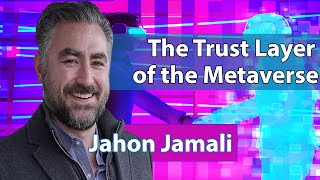
Bob Gourley talks with Jahan Jamali about Bitcoin, Ethereum, and building a trust layer for the metaverse. Jamali discusses financial freedom, digital assets, and how crypto aligns with American values.
Chapters
Informing your decisions with intelligence analysis and.
Insight brought to you by the team@ooda.
Loop.Com in this Oodacast we talk to Jahan Jamali of Sarsen Funds about a range of cryptocurrency issues, including his coming book, Deep Crypto. Listen to what he says about Bitcoin and Ethereum providing a much needed trust layer to the Internet. Also think about this trust layer in the context of the coming metaverse. There's been great visions for the metaverse for years, but something has been missing that trust layer. And when you think of the need for a trust layer in the metaverse and you see what cryptocurrencies can bring, it just really makes it even more important that we all understands what ha. Understand what is happening in the world of Ethereum and Bitcoin now. Jahan also builds a very compelling logical argument that free loving countries, open societies, should really embrace cryptocurrencies like Bitcoin and Ethereum. Dictatorships and kleptocracies hate cryptocurrencies. Cryptocurrencies in this context, he says, are as American as apple pie. Hello, I'm Bob Gourley, the Chief Technology Officer of Ooda llc. And today on the oodacast, Jahan Jamali. Jahan, welcome.
Thanks, Bob. It's a pleasure to be here.
Yeah, I'm so excited to talk to you about a wide range of topics. I want to get into your background. I think it's very important. And I also want to talk about Sarsen Funds and what you're doing there. And I really want to dive into your views on crypto and your new book, Deep Crypto. So to get us started, can you give us a feel for your background? And let's start at the early days. You went to Johns Hopkins University.
Why? I did. I did. You know, I grew up in the Boston area and even backtrack a bit further, you know, so my, my mom is from Vermont, my dad is from Tehran, and I was actually born in Tehran during the hostage crisis. And my mother was trapped there for two years from 1979 to 1981. And when she came back, we settled in New England and I grew up in the Boston area. I grew up bilingual. I spoke Farsi growing up and never really realized it would be viewed as a valuable skill set. And I was always fascinated by international relations. I grew up in a multinational household and Johns Hopkins had such a strong program. After high school, I was sort of drawn to it. Luckily I was accepted. So I got to Hopkins and I was an Army ROTC. And I was a junior when 911 happened. And. And it was not too long after that I was asked by the army to maybe consider a different agency within the national security apparatus to best utilize my skill set. And that process took a while, but I stuck around at Hopkins, got a master's degree too. And then I entered my first career, which was in the intelligence community.
That's neat. And I know that branch of the intelligence community. I spent 20 years in the Navy myself as an intel guy and worked quite a bit with those folks. And then I went back to government as the chief Technology officer at DIA and got to work even closer. And so I have a deep respect for that branch. And for those folks who don't know, it takes a serious professional to do that. Someone who can be trained in analytical methodologies, but also have a good emotional intelligence and an ability to understand other people and convey information to other people. So I'm sure that was a good foundation for what came later in your career.
No, absolutely. And, you know, I was called a human intelligence officer, and that's really what it was about, was understanding people and being able to establish trust and rapport and, you know, be able to convey information in a way where. And sometimes in a dynamic where trust and language were barriers. So being able to understand what somebody's motivations were, what their vulnerabilities, what their emotions were was critical to that. And I think I've been able to tap into that in some of my other endeavors afterwards.
Right, and then later in your career. We met when you were at kapow, a high tech firm that was a master at this need to extract information from multiple places and including websites and other unstructured data sources, and then parse it and provide it to other capabilities and help drive decisions. And after that, you worked at another high tech firm. You were part of a startup. What's fast lane?
The appraisal lane? It was appraisal lane, yeah. It was an automotive technology startup. You know, in both of those, you know, I served in a partner marketing role and I was working to develop communities of trust around high technology to business users. So that gave me a good feel for what it took to be able to convey something that's rather technologically advanced in a way, and in a language that a end user could understand the value.
Right, and then your last company was acquired by Reynolds and Reynolds, and as we were mentioning, you know, that is not necessarily a household word, that company name, but I'm familiar with it because of several key clients Use Reynolds and Reynolds. It's a key core capability in the automotive world, especially for the large dealers.
Absolutely, yeah. They're within the dealer community, they're rather well established and they have a platform of products that serve dealer needs. So it's a big name in that industry.
So now tell us about the journey from there to Sarson Funds. How did.
Well, it was rather fortuitous. Sarsen Funds. I was one of the co founders along with the eponymous John Sarson. So John and I actually went to high school together, believe it or not. We went to a Jesuit all male Catholic high school outside of Boston, went to Boston College high school and we met freshman year. We became fast friends. Both of our parents were small business owners and we ended up on the wrestling team together. So we had a lot of camaraderie and we had a lot of shared values too, of what it was like to live in an entrepreneurial household. And John ended up, after high school he went to Notre Dame and then went off and had a great career on Wall street where he worked in the wholesale side of Wall street, working with RIAs and wealth managers and educating them on new product structures and helping them get access to different types of investment vehicles. And when he left that, he had 15 years on wall street, he went back to Indiana to raise a family and started his own registered investment advisory firm. And it was within that that he, out of one of the quantitative strategies he had developed that he first discovered maybe we should put in this non correlative asset that's been popping up called Bitcoin. And that's where he first sort of went down the rabbit hole. And really, once he started to understand the mechanics behind digital assets, really, really started to love it. And that was right around the time that I was the appraisal lane had been acquired and that journey for me had ended and we started to reconnect on that. And you know, one of the things that we decided on was, hey, look, John, you're creating these very innovative strategies that have a look and a feel that's very familiar to Wall street, but they're digital assets within those products. But I think what we need to do is, is we really need to spend a significant amount of time building up our educational capabilities. Because I still, we both came to the same conclusion that nobody really understands this correctly. And in order for us to win mindshare and get folks to understand, it wasn't going to be a sales process, it needed to be an educational process. You know, money's a belief system, right? Bob. And like, at the end of the day, nobody wants to be sold on a belief system. They need to get there themselves. So we figured rather than a hard sales pitch, rather be mercenaries, we needed to be missionaries. We needed to find ways of explaining this in a way and in a language that people understood and would spark that seed of interest within themselves so they could do their own discovery and come to their own conclusions. So that's what we spent the first, better part of our first year, year and a half doing, was educating investment advisors and educating investors on what this was all about, and doing it in a way that was understandable, digestible, and had enough context that was familiar to the end user rather than being technologically intimidating like a lot of high technology enthusiasts are. They're very fascinated and very excited about the technological aspects of a new development. But we needed to explain what does this mean for me, you know, guy on Main street or, you know, Wall street investor, how does this change the dynamic on my end? Yeah, yeah.
And, well, I can only imagine your customer sets. But I've seen over the last couple years a slight and slow but steady shift in perceptions by the big financial institutions, including some right there in Boston. And it's been a very positive shift as these large financial institutions are starting to wake up and realize that, hey, maybe there's something here. And I think it's a, I believe it's a positive thing.
No, I think so, too. And, you know, at first it was dismissed and then it was scoffed at. Yeah. But as the, you know, as the space started to grow, develop and mature and as other events were happening around the world that started to expose the vulnerabilities of, of a centralized financial architecture and of mistakes that can be made very easily in central banking and in monetary policy, that the current status quo of the financial system, the post Bretton woods era that was really designed for a true nation state system, wasn't really working well in this new transnational reality that we live in. And this is, you know, as those faults started to get exposed and as the benefits of blockchain technology and immutable data transfer started to become more appealing, I think that's when a lot of folks started to warm up to, at least conceptually starting to see that blockchain technology was perhaps a way to solve the global trust deficit.
It's interesting the way you put that. What do you mean by solve the global trust deficit?
Well, you know, we have previously, up until, you know, the last, you know, 10, 20 years, information has been siloed either you had to get it at a university or you had to get it from, you know, a small group of media outlets. But you know what the Internet did? The Internet connected us in ways like never before. And a lot of people sort of take that for granted. They can go online, they can communicate and chat, but what it did was it liberated data. And all of a sudden, people have more access to more data every day than they've ever had before in human history. And that's allowed us to connect in different ways across the globe, where physical borders really don't mean as much as they used to. And the Internet itself has really connected us in a way which we share this data and access data on our own. And that's created this flood of information. And people are starting to say, oh, how do I know this is valid, right? Fakenews became very popular moniker. But blockchain, in the way in which it works, has trust built in to the technology, right? There's the consensus mechanisms that whatever blockchain application uses has to pass through. So I believe that verifying source and verifying an immutable transaction and being able to have transparency into the chain is a possible way of solving this global trust deficit. And one of the things I always find interesting is we had this explosion of connectivity where I can sit here on the zoom with you now and I could do the same with somebody in, say, Nigeria, but I haven't been able to freely move money or freely move value. And what blockchain and digital assets allowed was to, without a third party in the middle, be able to do that. I can have this conversation with somebody in a developing region, but I can't send them $2. It doesn't make financial sense. Transactional costs and the third party layers in the middle and they might not even have access to the financial system like you and I take for granted every day. There's a billion, over a billion people in the world are unbanked. They don't have access to the financial system either. They don't have enough money to open a bank account, or they live in a place where there's despotic or dysfunctional regime that's destroyed or debased their currency, or they don't live near a bank. But I'll tell you what they do have. They do have a phone and they usually have Internet connectivity. So now what I can do is I can send that $2 and it's peer to peer, peer to peer. That's human to human. That means something that's critical. We're about to have a billion people be able to access the financial system in a way that they've never had before. And if you looked at the Internet as the beginning of this greater connected human network where we can share info, you can almost look at cryptocurrencies and digital assets as the completion piece to the Internet, where now not only info and data we can share, but we can transmit value peer to peer, human to human.
It's dawning on me now why you wrote the book. I'm very glad you did. And when will the book be out?
The book will be out right around the new year. It's getting through final edits now. And if folks want to check it out or pre order, they can@discoverdeepcrypto.com but what John and I did, we gave it and wrote it in a historical context. I think what a lot of people don't understand, or at least even a lot of smart people ask them to define money. What's money? What makes something valuable. And it's actually not that difficult. It really comes down to a few things. One, it needs to be relatively scarce or rare or difficult to obtain. You can't just grow on trees. Two, it needs to be in circulation, it's moving around. But three, people need to believe in it. They need to trust it. And right now having an immutable trust layer is significant. And it's that trust layer that's really going to push it over the finish line. So we gave people historical context of money throughout ages and talked about Rome and talked about how really the fall of the Roman Empire had less to do with political chaos and more to do with financial chaos, where central bank spending on vast projects and empire expansion really caused a couple instances of a credit crunch and where that every time there was a bailout in ancient Rome, it just further widened the wealth gap. And that caused assets and money to flee Rome. And eventually they had to print more coins that had less concentration of silver. And little by little it went from 90% of your coin was silver to about 10% of your coin was silver. They had a massive inflation problem and that's what caused political upheaval. And you can see the same thing happened in the Weimar Republic in Germany. But we gave a lot of those historical examples and we did it in a way that really started to mirror a lot of the things people are seeing today in the news. With that context in mind, we brought them to the Internet age and talked about that data transfer and that info transfer and liberation. Like I Just mentioned and then talked about the difference between a centralized architecture where you have a central point of failure, where you have gatekeepers, where you don't have a lot of transparency. Then we talked about what a decentralized architecture looks like in a way in which people can connect peer to peer, and in which the transactions are immutably valid and can be confirmed without having that middle layer, without having that weak point in the middle. And that's where we talk about the value of cryptocurrencies and how that started to emerge and arrive. The birth of Bitcoin was right at the financial crisis of 2008, and it was in direct response to that. That's where we take the book and then we break it down a little bit further and go into examples of how this is affecting finance today and really liberating a lot of locked up value for folks. And we did it in a language like was understandable, digestible, easy to read. We didn't want to be technologically intimidating or get too much into the nuts and bolts of the mechanics, but we wanted to talk about the value proposition more than anything else in a way that everyday folks and everyday investors could understand.
Great. That's so important because there is a lot of FUD out there. And I want to ask you about a bit of that too. One is. Well, I started hearing early on in the crypto revolution that we've seen this kind of bubble before. These are tulips. Everybody gives this some imaginary value, drives the price way up, and then just like tulips, the rug will get pulled from under it and it will crash because it has no intrinsic value.
Well, to that I say, how would you value the Internet? It's a lot of value that passes through the Internet. But this is not a stock. It's not. So it's not even really a commodity, although it certainly trades like it at some time. This is a network. And you can value a network utilizing something called Metcalfe's Law. Metcalfe's law, I'm sure, Bob, you're very familiar with Metcalfe's Law is the value of a network is an exponential function of how many connections the network has. And you can see the same trajectory of growth using this methodology in any type of network that's been created throughout history, whether it's the fax machine, telephone network or the Internet itself. Cryptocurrencies follow the same path. And that the value of the network isn't so much in the independent price action of the cryptocurrency but if you look at the growth rate of how many new wallets are being opened, how many new people are participating in this network and nobody's forcing any. There's no CEO of Bitcoin. This is a voluntary payment network in which people can easily convert to a good or service or, or easily convert back to their own fiat currency or exchange value to a digital asset like an nft. So rather than the tulip, this is a network expansion. And I think that's the distinction that a lot of folks need to make. There's no limit here. There's no cap on number of shares, so to speak. There's a cap on the number of Bitcoin, but it's divisible by a significant amount. But you can fractionally own it. But this is not like investing in a tech company. This is like investing in the protocol. This is the protocol layer. And this is like being able to invest in hypertext when the Internet started to come out. If you were able to do that. This is investing in the rails of a new financial paradigm.
Yeah, I like the way you put that. That was very helpful to me as I explained to people why this stuff is worthy of attention. Another though is this comment about there's no intrinsic value. Actually, I believe there is intrinsic value. You just named one the Metcalfe's Law all being connected, it's a network. Another is the fact that this network believes in it. As you mentioned, money you have to believe in. Well, every day more people believe in it, more institutions believe in it. Now more cities believe in it and countries believe in it. So this is, it does have intrinsic value. Another I make is when somebody pushes that at me and says it has no intrinsic value. And I make those comments. I usually also follow up with well then what's the intrinsic value of the dollar? And they say things like, well, there's an army that backs the dollar. And I said that's an extrinsic value. That's something else. The intrinsic value of the dollar is right now people believe in it, but if more and more and more of it's being printed, you believe a little bit less.
Yeah, you can also look too, there's another argument too that says the intrinsic value of a currency oftentimes is better based on what is fueling that era. Once we left the gold standard, we ended up pegging because we pegged the world's energy source, the predominant energy source to the dollar. And with our agreements with opec, made sure that the dollar was traded, the oil was traded with the dollar, the intrinsic value was that that was the only currency that was really valid to transact and gain access to the world's fuel supply. And what's powering the world? What's powering the world today? Data. Data is powering the world today. And data has a very interesting paradigm because unlike diamonds, if you had a flood of diamonds in the world, all of a sudden they'd start to lose their value. The more diamonds you have, the less valuable each one becomes. It's actually opposite with data. The more data you produce, the more valuable and usable it is. And data is what's powering this change that we're seeing in the world. And being able to transmit and interact with that data in an immutable way that has trust built into how the data is passed, that is the intrinsic value behind digital assets.
Well put. That's a good way to put it. You remind me of another question I want to ask you because I think there's a crypto point here too. Have you noticed? I mean, data is absolutely fueling the world. Governments, big businesses, small businesses, but us as individuals also in a way like never seen before. And I, like a lot of other people, worry about my data. So much of it is protected by some third party, some bank or insurance company or a business partner that I buy from. Whereas with this crypto revolution, it seems to give more tools for me to take charge of my data and my finances and, and cut out more middlemen, which I think should make it more secure or mitigate some of my risk.
Yeah, and you know, the, if gold wasn't protected, if we didn't have like a Fort Knox or if you were just like leaving your cash out on your front lawn, it wouldn't have much value. The value is really in your ability to secure it. Same thing with data. And I think what a lot of folks don't realize, and they probably realize that at a high level, but they really don't understand, is how much valuable data they are producing individually every single day, and the level at which it's being monetized in ways that they don't really fully understand. And I think one of the big advances that I'm hoping to see is the ability to manage and have data self sovereignty and to be able to be able to capture the value of the data that you're producing just by your daily interactions. It's not just like because you liked something on Facebook or because you subscribe to certain feeds, it's your very interactive data, which has an enormous amount of Value how long you're on a page, what time of day you're on it, what are your friends connected to. And I think that once people start to wake up to this, there stands a good chance that folks will realize maybe I should be monetizing in my own way and be able to with blockchain, perhaps sell what I want and keep what I want and provide access in a way that I can control. If you really want to like figure out where a, you know, a base level of like income, right, we've talked about this has been politically very hot to talk about was, you know, having this, you know, provide government provided income. Really it should be your data provided income because every day you're producing data that has a value and an exponential function compared to probably what you think it does. And I think our ability to capture that value and bring it right back home to the individual producer is going to be very important. So I think it's important for governments to realize that owning your data is a human right. It belongs to you, you produce it and it's yours and your niche. And I think that we need to really drive that home with our policymakers. And there should be a data bill of rights. Robert Grant, he's the head of Crown Sterling in California, he's a philosophical mathematician, has been working on this problem and I advise folks to check him out as well. But having a data bill of rights and being able to drive home this notion of data self sovereignty I think is going to be paramount as we start to navigate the digital asset spaces expansion.
Another topic that I hope you cover in deep crypto is some of the comments I've seen you make about cryptocurrency being as American as Apple pieces, how it supports freedom. And I'd love to get your comments there because I think not enough people are saying that. And I wanted to ask, what do you mean when you say cryptocurrencies are as American as Apple pieces?
Well, it comes down to financial freedom and financial independence and financial self sovereignty. Financial freedom is at the heart of American values. Dictators hate bitcoin. It completely undermines what they're doing and they should hate it. Bitcoin is liberating. It's providing a way to liberate folks that were otherwise cut out of the financial system. And what's more American than financial liberty and financial independence, and that's where I think bitcoin strikes home, is really being American. I've been thrilled with the developments internationally with bitcoin mining. China's been hot and cold with it. But I'll tell you what, at the same time that they were going back and forth on banning bitcoin mining, they were also accumulating their own central bank storage of it, because they view it as a hedge to the dollar. And they were doing that in parallel with creating their own centralized digital currency called the digital yuan. And the digital yuan represents really how this type of technology can be used for evil. What it does is it completes their state surveillance program where they can control and have complete visibility into every single transaction that their citizens are making. And what they didn't want was capital flight through bitcoin with the digital wand. And they didn't want an internal competition that they couldn't control. But what happened for us is that that infrastructure of the digital asset era started to move here to states like Wyoming and Texas where it could be housed, where we have carbon tax credits, where we care about the environment here. And we can do this in a sustainable way. And nowhere else in the world should the architecture for bitcoin and digital assets be built in right here in the United States. One of the things I like to think about, I was a political science guy and I'm always fascinated with the concept of American exceptionalism, right? What makes us different? What makes us. What makes the American experiment so different? And there's a lot of theories for this, right? We didn't have an inherent aristocracy class like in Europe. We had dukes. And if you're a noble family from 800 years ago, you're still a noble. And that nonsense. We had westward expansion, right? But I think really what hits home, and Alexis de Tocqueville talks about this in Democracy in America, is this concept that America was an idea first before it was conceptualized and created as a nation. And that's very distinct. And I think that in this era of transnational identity, where we see transnational groups that are attached and tied together via ideas across borders because they're connected online or in various other ways, or connected by other types of philosophies or shared interests, that because America was born as an idea, it will thrive in the post nation state era. And we need to be able to fully embrace and adopt the currency of that era, which are going to be digital assets. And whether it's the dollar or not, the dollar is going to ride on digital asset rails. Stocks are going to be tokenized and stock ownership will be represented on the blockchain. No one wants to hold their paper stock certificate or just make sure Morgan Stanley keeps a hold of it you're going to want to be able to liberate that value and you're going to be able to do it on a digital asset or a distributed ledger system.
What's more, comments on this from this perspective, this concept of America, the idea no one's in charge of that, that's US working together. US, the big US 330 million Americans. What do we want this nation to be? Then there's also the government. And the government's a big complex thing, as you know. And we try to manage it by electing people and there's appointed people, there's a judiciary, but it's the government. And cryptocurrency was not invented by the government. It's not controlled or commanded by the government. But is there a role for a government strategy? Or maybe I should ask it this way. What should the government strategies be regarding cryptocurrency? Because there are national security issues and probably a need for a national security strategy with crypto. But then there's monetary and fiscal strategies and oversight that should probably be in place without stymieing the innovation. How do we find balance there?
Well, unfortunately, over the last several years, the detachment of a government apparatus has really grown with the rest of the population. And I think it really starts with education at the grassroots level. Everything great here in the US starts from the bottom up. And I think it's fantastic that we starting to see local city and state officials starting to embrace Bitcoin in digital assets. And I think that's where it starts. It's not going to come from the top down. What the federal government needs to keep in mind is that yes, we need to have some basic consumer protections. Cryptocurrency exchanges should have KYC and know your customer or anti money laundering processes and policies, that's fine. And nobody wants to fund malicious activity. And I do like to point out that the currency of choice for crime worldwide is still the US dollar by a wide margin. And Bitcoin is the most transparent payment network in human history. And you'd have to really be an idiot criminal to use Bitcoin for crime. But as long as some basic consumer protections are put into place with exchanges and with custodians, that's a great start. And we need to really feed the ecosystem. We need to let it thrive, we need to let it grow. It's not going to be mandated from the top down. It's going to grow from the bottom up. I think the more we start to see local municipalities start to have success and different types of offshoot industries start to thrive. I think that's going to really build up the pressure so that at the national level, at the federal level, we really embrace it rather than fear it.
All right, I like that. What if we took a more proactive approach? Things like tax credits for anyone mining bitcoin, something like that.
Oh, I'm a big favorite. I'm in big favor of that. You know, one of the tough things though is here's. I mean, this is the down and dirty. There's a lot of folks that are legacy elected officials. Those legacy elected officials have a significant group of lobbyists and influencers that are tied to traditional finance and tied to business lines and verticals that are very much threatened by this because they're powerful organizations and they think they have a lot to lose. And they're organizations that are big and they're hard to pivot. So I think that the more active our younger members of Congress get, the more educated that they become, the easier it will be for regulatory bodies to help navigate the space. But so long as we have some stalwarts in there that are, you know, don't understand it, I think that's where we're going to run into some challenges. So ultimately it's, it's, it's about education so we can tone down the fear and start to see the benefits behind this so that we can craft a national strategy where we can really foster growth.
Right. So I like that. I do. And also this point about education I want to talk a little bit more about. But another influence we can have on these elected officials is the more of us involved as citizens, the retail proponents who like crypto, I think that is an influence on them too, because, I mean, we're the voters and I, maybe I'm just still naive, but I hope that has a positive influence on their approach to cryptocurrencies.
I think it will too. But here's the other thing the government should take a look at. We had a lot of stimulus money get sent out. Most people got it via check. A lot of people, then they got it via wire. It's a lot of cost in that. And it's not really efficient to mail somebody a check. What if it could just be dropped into their wallet? Wouldn't that be a bit better? Isn't that a better way of delivering citizen services and delivering aid is through a blockchain based system? Whether it's the dollar riding off of bitcoin rails or a stablecoin, that's a much more effective way for the taxpayer to get a return on their investment.
You know, I made the exact same point a couple years ago via Twitter. Just threw a thought out there and it was amazing the number of people who replied saying, oh, you want everybody to lose their money and you want to perpetuate this fraud of crypto, which gets back to your point about education. We really need to help people understand that what we're talking about here is math and trust and something that it works. It's an education issue.
It is. And unfortunately it's going to take some pressures on the financial and the traditional system to start to really turn people to looking at it seriously. And that's what we're seeing now. I mean, if you really want to look at what's been failing, purchasing power of the US dollar has been declining significantly and at an increasing rate. Especially, especially we just had the last inflation report something over 6%, which is outrageous. We can't just keep printing money. It's going to devalue and we're not going to raise interest rates because our interest payment on our national debt is so high we're not going to be able to pay it. If we raise the rates now, we have a bond yield that's negative. If you really want to look at what your risk is. I'm glad that people's stocks are going up, but they have to be cognizant of the fact it's going up because their currency is worth less and the cash savings they have goes a little bit less than it did the day before. And that's not sustainable. We're going to run into a serious problem and then we're going to have big time issues in leading the financial world internationally. And if we want to compete with emerging competitors like China and other types of state actors that maybe not be so friendly to us, we need to have our house in order. This is a good pathway to start looking because we can't be making monetary policy like the Fed does in closed door meetings and then get it dictated to back down. That's not effective and that's not consistent with the trajectory of the world. Right.
It must have felt good yesterday when I'm sure you saw Tim Cook was saying that he owns cryptocurrencies, Bitcoin and some Ethereum and he considers it just a part of a good balanced portfolio. And this is a message you've been on for years and it must have felt good to see a guy like Tim Cook making that kind of endorsement.
Oh, it certainly does. And it tones down Some of the more like fanatical endorsements, right? People like, go on Twitter and they see sports celebrities or other types of celebrities, like getting behind cryptocurrencies. But it's good to have somebody that's an economic mainstay, that has a reputation, because I think it provides validity, the space, which is important, and it's good. It should be part of a balanced portfolio. I'm not saying put every penny, you have value added into cryptocurrencies, but at this point in time, you'd be really irresponsible not to have some type of allocation. And there are now firms that you can invest in, firms that a lot of people might be investing in, firms that are in crypto or hands up, maybe one hand away from crypto and don't even realize it. But microprocessors, the picks and shovels of this type of stuff. There's other types of ways, or mining companies that are publicly traded. But if you're invested in Square or Twitter, they're integrating cryptocurrency into some of their other applications. So by default, you already got a little bit of investment in crypto, whether you realize it or not.
Another thing I want to ask you about is an exchange I saw with you on Twitter regarding education. And there's definitely, as you've mentioned, a need for more education. And I've noticed in my area here we have some of the best high schools around, but when they teach economics or history, the finance, it's all from the last millennium, especially personal finance and economics. And that has just got to change. And I don't see it changing fast enough. Do you have views on this? How do we change the education system so that our youth is learning about cryptocurrencies and the math behind it?
Well, I still think we've got a lot of catching up to do and how we educate on computer architecture and data architecture, and, you know, that's kind of where it starts to be able to conceptually teach folks what the difference is between a centralized network and a decentralized network. You can teach that to a middle schooler and without getting too much into the weeds technologically. And they'll see it. They'll see it conceptually in a visual of why that's better. And starting folks to understand how information moves from one place to another is really a good way to start in teaching them about how blockchain technology works, not only in terms of cryptocurrencies, but in terms of the applications that you can build on top of it. And some of the other use cases. That's why I love Ethereum so much, is because really the value of applications and protocols like that are in unleashing and unlocking all that trapped value in those middle layers and being able to build things in a decentralized way that makes it far more efficient to transact and communicate and interact. That's where the value comes from. I've always felt too that even with non fungible tokens, NFTs, people think NFT is like just art and pictures, but it's so much more. There's already a layer out there that is not really tapped into. It's consumer rewards. And I think that most people can agree that brands and companies are finding more and more value in being able to retain and cultivate a community because there's opportunities for reselling and just having that community of customers is very important. Like your CVS card for instance. You get these cash back and they spit you out a mile and a half worth of receipts. Now wouldn't that make more sense if that was all kind of on a blockchain and that you could utilize a CVS token to interact with that type of discount? That value is already there and it's not being captured. So if you want to know where the intrinsic value is, it's in capturing that value that's sitting out there in the ether and being able to monetize that in a way in which the brand knows that they can connect to you and you can connect to the brand in ways of that you choose.
Right. So you mentioned efficiency. And I want to ask now one other thing. You hear from the people who try to denigrate cryptocurrencies, especially Bitcoin is about the energy consumption. And the argument goes like this. Oh, you use Bitcoin, that uses energy. You must hate the planet and all mankind. And the general pushback I give is that yes, it takes energy. Far less energy than it takes to mine gold, store gold, move gold. Far less energy than it takes your bank and all the middlemen there to manage your checking account and savings account. Do you have thoughts on this argument?
Yeah, I don't think people take into consideration what the true energy expenditure of the traditional financial system is. You want to add up the buildings, you want to add up the AC, you want to add up the ATMs, you want to add up the gas and the fuel costs of the armored cars. And if you take the entire architecture of finance in the world and the energy consumption, it's four to five times that of bitcoin. And another thing a lot of people forget is that 80% of Bitcoin mining is done with renewable energy sources. You don't have to burn it off like a power plant does. That's the thing about power plants that people don't realize. Power plants don't make exactly the amount of energy that's the demand is calling for. They often make more. And what do they have to do with it? They usually shoot it down on the ground. There's an enormous amount of waste, wasted energy that gets produced by power plants. And a lot of savvy bitcoin mining operations are putting themselves right next to power plants and capturing that lost energy that otherwise would just go nowhere. So it's really another piece of FUD out there and this disinformation about proof of work stake proof of work consensus like bitcoin has. Great.
Well, thanks, Jahan. I really appreciate this. I can't wait to see the book Deep Crypto. Any final thoughts for us on the future of crypto and what we should all know about the next few years?
Financial freedom and financial independence are at the core of American values. It always has been since the birth of our country. And digital assets like bitcoin and cryptocurrencies represent that. Dictators hate it and of course they should. But freedom loving people worldwide and right here in the United States should look to digital assets and cryptocurrencies as being consistent with the American dream. Bitcoin is as American as apple pie. The future of digital assets is very bright and it's remarkably consistent with American values. And I encourage people to start doing their own research and their own understanding of of start with bitcoin. That's the best place to go. But to start to consider all the different use cases and they can go to our website sarasonfunds.com we have a variety of videos out there that talk about this in a very straightforward way and they can also get our book Discover Deep crypto dot com. But it's time to start your journey and it's time to look past some of the fear, uncertainty and doubt and look at this at a macro level and see this as really the completion piece of the Internet.
Thanks, Jahan.
All right, thanks very much, Bob. Thanks for listening to this. Ooda Loop production For the latest analysis on cybersecurity technology and global risks, please visit www.oodaloop.com.
More from Matt


Leading Cyber Change: Allan Friedman on the Revolution of SBOM & Future Cybersecurity Initiatives


Revolutionizing Medicine and Tech: Joe Tranquillo's Journey into Complex Systems






Bob Zukis and the Digital Directors Network: Helping corporate boards mitigate systemic risk

Adam Shostack on Cybersecurity and What Every Engineer Should Learn From Star Wars