Jen Hoar on Corporate Intelligence and Investigations
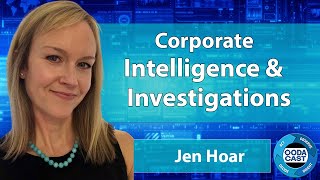
Jen Hoar talks with Matt Devost about her work in corporate intelligence, moving from journalism into investigations. She covers how to gather intelligence properly and why due diligence matters when making business decisions.
Chapters
Informing your decisions with intelligence analysis and insight brought to you by the team@oodaloop.com.
Hi, I'm Matt Devoe and this is the Oodacast. And today we're joined by a special guest, Jen Hoare, who you might recognize as having actually conducted some oodacast interviews, particularly myself and Will Hurd. But we are turning the tables on Jen today and I'm going to interview her. So, Jen, welcome back to the oodacast and welcome to the other side of the equation. I'd love for you to kind of give the audience a background as to kind of who you are and how your career progressed and what you're doing now. And then we'll dive into some additional details.
Thank you, Matt. Great to be back. Very uncomfortable to be the question receiver than the question dispenser, but I always enjoy talking to you. So I'm excited about this. I identify as a recovering journalist who found a professional home in the corporate intelligence and investigative world where I get to continue talking to smart people, interviewing them, learning from them for the purposes of helping executive decision makers get all the information they need to decide whether and with whom they should work and why and on what terms. And that's been a very rewarding career path.
I'm going to force you to go into more details. So you were a journalist where kind of take us through the career progression of the places that you've worked?
Sure. I worked at ABC news in the D.C. bureau on a variety of shows you may have heard of, such as World News Tonight, then with Peter Jennings. And then I went to a political publication that was part of National Journal called the Hotline, which and then I worked@cbsnews.com and I also got the opportunity to work as a researcher on Martha Raditz's book the Long Road Home, which was really very exciting. Opportunity to work with Martha and again burnishing my experience finding and interviewing people and hearing about their lives and their experiences in that case related to a particular niche of the early Iraq war. But the through line of that was I saw from an actually identified in college at Georgetown when I took a journalism course my senior year as an English major that I really liked that there was an opportunity to fuse writing about what you learn from talking to people. And that is at the heart of what I do now is that the substance of the intelligence and insight that I collect is crystallized in writing, but the material comes from people and from conversation and as an unapologetic extrovert who is consummately curious and I love to learn from people no matter what the topic. I find that very rewarding and I should add, for our own nostalgia as well as for the audience's benefit. The employer that helped me to see the applications of my skills and tradecraft as a recovering journalist was at Crumpton Group, which is a corporate intelligence due diligence firm, geopolitical risk analysis firm in D.C. where I learned and had the opportunity to see that the skill of talking to people to develop information is a really, really valuable modality for doing research. And that's what enabled me to find the corporate intelligence and investigative career I've been in, gosh, 14 years now. And that was where thankfully we met.
Yeah, excellent. So journalist off the ground, Crumpton Group. And then what did you do in the intervening years after Crumpton Group?
Yeah, I went to work at another corporate investigative firm called Investigative Group International, led and founded by the late and formative or formidable as well as formative for me, Terry Lenzner and their same thing. Lots of interviews, lots of in depth research and public records, of course, were working for law firms, a variety of corporate entities. And then I realized, wow, I want to focus on, as you might guess, this talking to people interviewing approach to my career. And I started my own business where I did that exclusively for several years. And then as you know, I went to work at Facebook where I was one of the early members of an investigative team. And we worked on a variety of issues you may have heard and read about related to election integrity in a variety of countries. And that took me all over the world, interviewing people in countries I never visited on topics I had never discussed. And that was especially exciting because that's what really energizes me because the skill of what I do and the fun of it is that it's topic and location agnostic. My, my job is not to know everything, is to find people who know everything and access their knowledge through good conversation. And that's very much predicated on listening and asking good questions, which I find really, really fun and actually even relaxing, which is why it's weird for me to talk this much.
So it's like Zen meditation. You just ask questions and go into the zone, get into the flow.
I do, I do. I mean, of course when I'm working I have to be listening very carefully because that is where leads come from. It's in the responses to open ended questions and you don't know what another human being is going to say and that that means you give up A lot of control, but that's control I'm perfectly happy to give up because it's deferring to the knowledge and expertise of another person. And as. As we often say, pulling the threads of. Of what we hear. And that's been a really exciting way to go about a career because you don't know where it's going to go. And it really. It's incredible what people know and also how generous they are in sharing. I like to say that I think it's cliche and a little bit reductive to say that people like to talk about themselves. Sure, I suppose that's true. But what is at the heart of the work that I do and Joy, is that people really like to talk about what they know and their work, especially if they like their work. And who doesn't want to be an expert and have somebody listen to someone, share their expertise? I was the daughter of a professor, so I had to listen to that a lot. Gave me some very good training. And I just. I find it really fruitful for the work that I do. I think clients find it really responsive, but it's also, in a way, very relaxing. I was listening to your interview with Jim Lawler, and he talked about one of his secrets in tradecraft is that he has kind of a hypnotic voice. I don't think I have a hypnotic voice, but I do think that there's something in the flow of conversation that I tend to try to achieve, of something very, very friendly and disarming, which is both for the benefit of my interlocutor as well as for me, because I really don't like any adversarial dialogue.
One thing that's always struck me, and, you know, the acknowledging we've worked together for a while and have worked on projects, and we can dive into that a little bit a little later, is that when we think about human intelligence or the interactions that I've had, even with somebody like a Jim Lawlor, or the colleagues you would have had at the Crumpton Group, when they talk about human intelligence, it's the. The process is a little bit manipulative. It's a little bit secret. And one thing that I think has been enduring and honest about your approach is that you are really kind of more genuine. You're upfront and eliciting the information directly through conversations. Can you step us through? You know, what is your process? How do you approach if you're calling up somebody to learn about a particular business, kind of what would the steps that you would take and how would you approach the conversation?
Thank you for broaching that. That's super important to me because there's no other way in the work that I do and have done than to be fully transparent, upright and genuine. And that is not mutually exclusive from the maintaining confidentiality of clients and what they're doing. I think the two can work in concert Again, recovering former journalist. That approach is extremely straightforward when you interview somebody for a story. I was Jen Whore from CBS News calling someone because I'm working on a story about X. That is the template for what I do now. Except I'm not a journalist. I'm Jen Hoare of Forward Risk and intelligence in Washington, D.C. and I'm working on a project for a client that's trying to understand X or Y, which is the reason I'm calling the source. And I fully explain how I found them and what I want them or what I would like to speak with them about. That is both the ethically, morally right thing to do. That is also the only effective thing to do. This is the private sector. This is not espionage. And it never will be and ever should be. It is information and intelligence gathering that is deferring to the expertise of knowledgeable sources. And that is almost always sufficient to be the impetus for a very productive conversation. I feel very strongly about the maximizing the disclosures to a person who's going to, in some ways, out of the kindness of their heart and the generosity of their time, share their thoughts and insights for the purpose of helping me and in turn, my client make really informed decisions.
Do you ever feel. No, obviously, you know, love that approach, but do you ever feel like because they understand the intent, that maybe they try and manipulate you or give you information that isn't the most forthcoming? And how do you. You manage that risk? Have you just developed a good knack for. For figuring that out or, you know, what is your approach with regards to somebody who. Maybe it says, sure, I'll talk to you, but knowing what your intent is, knowing that it's overt maybe is not completely honest or transparent in what they tell you.
I might be naive and I am mostly an optimist. So I. I don't go out in the world assuming that anyone's intending to deceive me. I haven't. I'm not looking for that per se. What I am looking for is understanding bias and potential conflicts of interest, inconsistencies, deception, not of me, but maybe kind of a lack of clarity from somebody for their own reasons. I definitely look for the Atmospherics, the texture of the person's background and context in which they're giving the information. That's extremely important. And I need to provide that to clients. When writing up interviews and explaining what a source provided, I think that it's important to look out for inconsistencies more or that's been more relevant in my work and in the conversations that I have. More than any kind of concern, I have about purposeful deception. Because if a person doesn't want to talk, if a person's going to deceive, they probably just don't want to talk. So usually when somebody agrees to speak with me in the context in which I contact people, they're usually, in my assessment, motivated to be able to want to help. So I haven't really come across that. That's not to say I'm not wise to it, but I haven't really detected somebody intentionally trying to give me the run around for whatever reason.
And maybe that's just an artifact of the outright approach to begin with. Like you said, if they're talking with you, they probably are trying to be helpful, so.
That's right.
Give some context. I know you know, or maybe you could do an anonymized case study. I mean, this is useful from kind of multiple layers. One, clients trying to understand a particular problem set or a particular opportunity, but then also from a due diligence perspective. Right. Trying to get great ground. Gr. Ground truth, sorry, on a. On an operating environment or a company or a person. So can you step us through kind of what a typical engagement might look like?
Yeah, a typical engagement usually relates to a company, a CEO or management team, or a combination of the two. And a client, usually some form of investor, private market investor, say, wants to understand the background and reputation of a company and its top executives before they enter some into some sort of partnership or relationship with that company. And typically, two things come to mind when I talk to former employees, former investors, peers, industry peers, or competitors of that company, usually on a discrete basis, meaning the subject does not know that the due diligence is happening, or if they do, they certainly don't have control over who I, as a, or my firm forward risk as an independent third party will speak with. And therein lies the independence and rigor of the research. I find it interesting that. And very productive when hired to understand, for example, why did a CEO who was in a previous executive role, why did they abruptly leave a position with a press release that has one line that this person left? And my client would like to know why did that CEO left, leave that role? Human intelligence is really valuable in trying to understand that. And there are all kinds of reasons. There could, there could be financial or other operational malfeasance, there could be a personal indiscretion. And it's fascinating to me how that really does come out in the source interviews. Another really useful application of these interviews is to understand, I think you alluded to this corporate culture, especially sub questions like, huh, there seems to have been a lot of turnaround at this company, especially at executive levels in a short amount of time. Why is that? I've had some specialized even follow up projects to look into questions just like that because that can be indicative of something going on within the company, especially at the higher levels. So that those are examples of corporate culture. Answering a question about a CEO's past. What is it like to work with somebody? Maybe the, the investor client is certain they're going to proceed with an acquisition, for example, but they want to know what is it going to be like to work with this CEO, what are his strengths or her strengths and weaknesses. In one case I did a couple of years ago, there was no particular issue with the CEO that of the prospective partner company. But some threads emerged or narratives emerged in the conversations about how the CEO may need some coaching or would, you know, in certain aspects of collaboration would need to improve in some regards. And that ended up being a bit of a character study for the client about what is it going to be like when you work with this company and retain the CEO and what are some things that you're going to need to prepare for. And they ended up finding that very informative. And that's not something that, that you're going to find in media articles, litigation or corporate records.
Yeah. How do you determine who is the or who are the most appropriate people to talk to? Obviously you don't want to go on Facebook and pick the person that's the godfather, godmother to the target's child. How do you kind of untangle that web with regards to the most valuable conversations that you can have about a person or a company.
That is important? The answer is yes, you do some initial research, but there always is some risk that somebody who's going to be knowledgeable is also potentially close enough that there might be some sensitivity like what you described. Of course, open source research can help develop an understanding of that person's proximity to the subject of the research. But I like to say that typically anyone that's a former fill in the blank, former employee, former direct report former investor, partner, etc. In a professional context, of course, is going to be sufficiently distant so that there isn't that, that sensitivity you described, but sufficiently close that they would have something to say. Now, there are instances where someone would say, oh yes, I just talked to him last week. Well, I can't help that. There's no way for me to know that even through researching on any number of platforms or any particular venues, people could be close. And that's not necessarily. I don't see that as completely imploding the discretion of the project that may then shape how I proceed and what kinds of questions that I ask given that proximity. But the answer is there's no way to fully avoid it. But there is a delicate way of approaching asking questions when you think that there might be some familiarity that you don't want to risk notification of the subject.
What are some mistakes that you think folks in your line of work make in these engagements?
The main one is not providing enough information to their sources about what they're doing. I think that there's a, A, a real, it's probably counterintuitive, especially when people think of. Watch too many TV and movie, too many TV shows and movies about interpretations of this industry, a false assumption that you have to be secretive. And I think I found the sweet spot of being very sharing and explanatory about what I'm doing, who I am, where I come from professionally, what I do, what my firm does, and that's what enables the conversation to proceed. And I think that there's just a misunderstanding from maybe others in my industry, though I certainly am not pointing any fingers, but a misunderstanding even of those who might come to hire firms like mine, that the discretion can be and confidentiality can be maintained while also being appropriately sharing with sources. And that's what enables rapport and a semblance of trust to develop, which is the predicate for a real conversation that's going to go somewhere. And I tend to be an advocate with the clients that I've worked with in the past and now to try to share as much as we can. Certainly never any names, but sharing as much as we can about what are we doing this for and how is this going to be used. And somebody called me and said, hi, Jen, I want to talk to you about Matt DeVoe. Can't tell you anything else. I'm not going to answer any questions, but if somebody explained to me I'm looking to work with Matt DeVoe on, you know, I'm going to invest in The Udacast. And I want to know what it's like at uda and what, what is Matt's reputation? And I'm going to fill in the blank, work with him in whatever context. Maybe if I understand that person, then I'd be willing to share some thoughts on Matt DeVoe. Don't worry, I won't.
You're welcome to. No ghosts in my closet? No skeletons?
No.
That's fascinating. Can you kind of, you know, relay the role that these types of investigations can play in due diligence or preventing people from making mistakes in transactions or investments or in hiring?
I'm thrilled you'd ask because as we've talked before, there are a lot of high profile examples currently and in the past few years of CEOs that are founders of major companies that were not properly vetted in terms of their character, integrity, reputation, done on a kind of comprehensive, qualitative basis. I mean, numbers and data are not, certainly not the whole story. And I've just seen so many instances in the body of my work over the past, let's say, 10 years or more of doing interviews of how detailed and responsive what sources say flesh out what you can't learn in public records. So, I mean, I obviously have this bias toward wanting to do human intelligence work as it relates to due diligence, because I've just seen how it fills out the story about a person. And you really. Even if somebody checks out on paper across various records, and frankly, even if somebody checks out through references, those are biased. And as we saw in a case like Theranos, where she developed advisors and a board of luminaries, all of whom knew each other and said, oh, this is a great opportunity. But no one was ever cross referencing or checking what they heard with an independent third party. And to me, that's probably the most salient and egregious cautionary tale about did anyone really look into what is her character, her background? Does, does she have a proclivity for deception? What is her actual track record for? Not just what she was doing with the blood tests and the science of it, but her track record for integrity and how she related to other people. And that is where talking to former affiliates or affiliated people is. Is just indispensable.
Yeah, I think that seems like an instance too, where, you know, there are two angles people are kind of buying into the image, right, of the young CEO, the new Steve Jobs, you know, kind of. And there was direct manipulation to kind of, you know, facilitate that. And then the second piece, I feel like is that there becomes, when you get those types of luminaries involved, for folks that want to speak negatively, there becomes a pretty interesting cost associated with that. Right. Because you're seen as the, the outsider, you're seen as having the difference of opinion, which must mean that you're wrong. So it would likely make people, I would think, hesitate, at least publicly. And I think that's the issue here to counter that narrative because then you're going against a Secretary of defense and you know, former Secretary of State and, and all these people that were backing the company and backing the entrepreneur. There's, there's a, there's a net reputational cost if you're taking the alternative picture there.
That's right. Yes. And, and we've seen another instance of that more on a public platform in this recent story about Dan Price of Gravity Payments. I mean, he was celebrated and cultivated a Persona across social media which provides a bit of a, of a mirage under which he did whatever he wanted. And of course, when you have this very positive public or social media Persona, it's, it's hard to, I guess it was hard for investors or partners or even employees maybe to challenge that or anyone who's followed his page on LinkedIn and liked his $70,000 a year base salary plan. It's, it's just hard to poke holes in something like that when, when somebody's elevated so broadly. And I guess, I guess my, what I preach is, is really independent thinking, especially when somebody, an investor, whether it's an individual or an entity, is looking to get into a long term business relationship with a person and his or her company to, to think independently about. Okay, well, I understand that there's this prevailing view, but I need to find out and ask for myself what, what this is really about and what's behind this and, and being unafraid to look for that. And I would also add that it's, it's not irrelevant the timing at which you do that. It's much harder to be willing to accept adverse information when you're advanced in a deal. If you engage due diligence at the 11th hour when you're all but confirmed to proceed with the deal, and then you hear, oh wait, this founder has a very bad reputation or that we missed something vis a vis their decision making, treatment of employees, alignment of words and deeds, you name it. Certainly anything, any kind of professional financial malfeasance, it's really hard to take that in and incorporate that into decision making when it's, the ink is about to. If not dry. Then the signature is about to be placed on the paper. I mean, it's just, it makes it real. It's just psychologically hard to take in that information at a late stage. So I really encourage anyone who's considering engaging due diligence, and it should be everybody, of course, to, to do it early on so time and money and grief are, are not wasted.
Yeah, I feel like, you know, from a charlatan perspective, you know, the onset of social media and kind of the prevalence of that has made it easier and we see case studies. You know, you just articulated too with Theranos, Theranos and Price, but you know, did there's a billion dollar whale. I don't know if you've read that book, you know, which was the same type of thing, you know, manipulating people and having this image. And I did a great author interview with the author of the book, the Key Man. Similar situation getting on stage, you know, with Bill Gates was something that he was able to use to manipulate people into making other decisions or to develop some legitimacy and people weren't digging kind of behind the surface. Interesting thing I also would point out is, you know, we talked about the due diligence on the founders and the executives, but there's also value for those founders and executives to do due diligence on their investors. What companies have they invested in that are not still listed on their website? Maybe there's an interesting story there. You know, the bad decision making can apply not only to the investors investing in founders, but to the founders and their decisions with regards to who they take capital from.
Amen preaching it converted. I think I'd done a LinkedIn post a year or two ago about exactly that after having seen an article, maybe in TechCrunch, that founders should vet their investors. Not every dollar is a good dollar. And that while it's tempting, especially if you've got a promising startup and you have a very alluring offer, it's tempting to just accept whatever comes at you. But the, the, the negative consequences of accepting money from the wrong source can have cascading effects over the years and can derail really well thought out plans. And I think that's a, that's a counterintuitive thing. I'm interested to see in the coming years. What in both directions. Venture capital, for example, vetting the companies they invest in. And the other way around. If with the Theranos cautionary tale, if there's more attention paid to this holistic, qualitative look and analysis of founders in my, in My limited purview, I don't see a huge uptick. But I'm optimistic or hopeful that maybe there will be more interest in that. And God knows I would certainly like to get involved in providing that given this, this cause celeb I have.
Yeah. Or you might see some investors doubling down on some of these interesting personalities which we saw last week. I can't remember the name. The founder of WeWork, you know, was big news getting $350 million for a new investment despite, you know, gosh, how many books I have in my queue and articles that I've read with regards to just what a disaster the management and culture, you know, etc. Were around his prior operation. So it makes you wonder at times where even when that information is available and in the public domain, you know, it's not always going to influence decision making.
That's right. And in the, the, the whatever the person from Andreessen Horowitz, I forget who it was, posted on their website about why they were going to be funding Adam Newman. Again, it was very much about. We like when founders that are proven learn their lessons when they fail or fail fast or fail slow, and they learn lessons from their prior iterations of companies. That must be nice. I mean, it's nice to have a second act and, and get that kind of largess behind you. But I would ask the question, how do they know that he learned his lesson? I don't know the answer to that. I. Maybe it was just through conversations with him, but that still goes to my point of third party independent rigor to look at what a person has been doing since their last either successful or failed venture. What are they like to work with, what are they doing now? And I, I would add that when I do interviews with sources who are former affiliated colleagues, business partners of a, of a subject, it's not really fair or accurate to go back super far, you know, to talk to somebody who last worked with a person even 10 years ago, 15 years ago. Because, you know, people do change. However, looking at a continuum and talking to a continuum of people who worked with somebody, a narrative can emerge about qualities and traits of a person, an executive, and how they work and how they lead. And if you, if there is a progression of change and improvement, well, that's a compelling story. But if everything remains the same, that, that is, that is relevant. Of course, you can't just take the word of somebody who worked with somebody 20 years ago and call that a story. But I think it's really valuable to look at what sources say over time.
Yeah. Well, we can only trust that Andreessen Horowitz are great custodians of capital, and they obviously have the confidence of their investors. So be curious to see how that plays out. Um, are there any points in your career that you can highlight where, you know, you learned some lesson, either through something you did that worked or something that you did that that didn't work? You know, I would love for you to share, you know, maybe some tidbits from lessons learned over the course of your career.
I think something I continue to practice that I did right out of college, that has really served me and in a variety of contexts, is the persistence of being unafraid to be rejected or not hear back and just go after talking to people that are interesting, regardless of what it will do or whether there's a point, maybe there. Maybe there's something, you know, a job or an opportunity connected to talking to somebody, but being unafraid to contact people and, and seek their guidance, and in the cases of the work that I do, you know, their insight for a project and, and not being hesitant to not hear back or hear. No, because some of the greatest outcomes that I've had, whether it's a source interview or a job or just something. Something fun in my life, personally or professionally, has. Has been from that. From that kind of, as my dad would say, gentle persistence or as I would say, ruthlessly diplomatic approach to talking to people and being unafraid. What I'm going to hear back, yeah, great.
No, that's, That's. It's useful, I think. You know, obviously different fields, but when I talk with successful salespeople, they articulate some of the same thing, right? That not being afraid of rejection and pulling different threads and not knowing where it leads and kind of just movement forward, I think not. Not getting yourself stalled or, or discouraged. You know, one of the last things I'd love to chat about is you and I have worked together closely, you know, with regards to the blend between the kind of the. The human intelligence that you're collecting and the cyber intelligence. And how do you view that dichotom. Those kind of two fields work best together.
When we first met, I considered myself unqualified to talk to you because, as you know, I'm not a super technical person. And I didn't see the. The complementary nature of our work until we worked together. And then I saw how there. As we've talked before, I think there are human actors behind technical problems and intrusions and misdeeds. And I Think we worked on a project, gosh, a while ago now, where there was a cyber component, but there was a human being behind it that we wanted to understand who he was, what he was doing, what his reputation was, a number of questions about him. And, and that was a really cool and productive pairing up of those two skills. And I don't see it as a dichotomy. I see it as very much a complimentary pairing of skills that I would like to think that more clients that come to you or that come to me when they, when there is a relevant cyber security concern or problem that's emerged that, that they think holistically about, there is, there are people behind those actions. And let's understand what's going on there. Whether something has gone wrong or we anticipate something could go wrong. Let's understand the, the entity, the executive management team behind whatever the concern or the, the opportunity is.
Yeah, I think that's good. I mean, when you talk about managing risk in that context, especially the cyber context, my friend Jay Healey has a, you know, two decades old quote that the attacker is not a one or a zero. Right. There's a living human being on the other side. They have goals, aspirations, aspirations, motivations, way in which they work and understand kind of what's at risk and how you're being targeted and by whom. You have to understand that. So I think that's a kind of nice complement to the two fields. And, and we've seen that obviously manifest itself in the years working together where there is that great compliment or some of the cyber investigations work might uncover nuggets that represent threads that you can pull from relationships or entities or whatever it may be. So definitely complementary field sets, as we've demonstrated multiple times in the past. What about your work, you know, you think is compelling or important that we haven't covered? Is there a question that I haven't asked that you think would be important for, for folks to understand a, about the importance of what you do or kind of lessons from the field.
Well, thank you for taking a page from my book and asking what else we have learned. Well, yes, I appreciate that. Well, what's going, going back to what you just said about different fields or different dimensions of investigation working together. I work for a firm called Forward Risk and intelligence based in D.C. and there are about 35 or 36 of us. And what's really neat is the bread and butter of the firm had been and to a large degree still is the open source, public records, research, analysis and harvesting of what is available in the public domain. And that has been now harmonized with the work that I do since I joined the firm in February, which is the human intelligence side of things. So the combination of public records research with talking to knowledgeable human sources is a really cool fusion and we've seen it now in the time that I've been working at forward risk, how beneficial it is both internally when working with those on the open source side to say, oh, I just talked to a source, I've got a lead about this thing, here's a name, look into this, look into this company. We didn't know about it before. And the other way around where I learned from my colleagues doing the open source research who then give me names and leads, maybe there's litigation that they learned about that I could delicately bring up to try to learn more about in talking to sources. So that to me has been really cool because there are very few firms that, that I've seen that have an in house open source capability. I'm sorry, human source intelligence capability. Going back to what you asked at the beginning of our conversation, which is about, you know, what, what, what do I want to debunk in my field or about my, my work and, and in my industry and that is that you don't have to be obfuscating secret or first names only and I can't tell you that kind of approach to things and I'm thankful that I work in a company where that is the approach that we adopt and it's extremely effective and it really does go along really well with the open source research and ends up being really potent. So thank you for asking about that.
Awesome. Well, you're familiar enough with Udacast to know what my very last question is going to be. And that is what are you reading right now that is interesting, compelling or that you would recommend, you know, related to your field. So what is your book pick for me?
Sure. Well, I'm currently reading one fiction and one non fiction because I got my English major background and then I've got, you know, my social science, international relations kind of dimension of myself. I'm actually reading Black Edge by Sheila Kolkatar.
Yeah, it's a great book.
Yep, from a few years ago. Very interesting about Steve Cohen. I obviously love the show Billions based on his character and his story. Very interesting to read the whole heritage of him and SAC Capital that also has some applications related to my industry about information and intelligence collection. So I, I've taken a lot of interest in that. And then a dear friend of mine gave me a good fun beach read that I already started called Lessons in Chemistry, which is about a very strong female protagonist and she's a chemist and there are some other applications in her personal life. So that's been kind of fun.
Excellent. Did you pick up the the Cohen book because of the Global Frequency or was it on your radar already?
Oh, it was already on my radar and it was also quite conveniently already on the bookshelf at work. And so I, I took an interest in that. We've got a, we've got a whole genre of intelligence industry related literature at work, so I've got a library right there. But I do love I will make a plug for Global Frequency, which I read every Sunday morning because it's a great digest of it's not just cyber news for everybody listening, it's all kinds of other stuff related to geopolitical news and risk news. You need to know. And it's very pithy and very easy to read. And Matt has a book recommendation and a quote at the end and I love his reservoir of quotes.
He's got, yeah, the never ending reservoir. Although sometimes it's a challenge. I have to search my own archives to make sure I haven't listed a quote before. I've had to do that with book reviews too. Like, oh, did I review this book already? One of the issues of having too many things going on or reading too many books at once. Jen, thank you for such an insightful conversation and thanks for being willing to let me turn the tables and actually interview you. And I look forward to seeing you in person. And hopefully you can join us for our Uticon as well on October 18th because it'll be a lot of interesting folks and players and conversations happening there as well.
Matt, thank you. I've often said that our conversations should be a podcast, so now this one is.
It is.
Thank you for having me. And I look forward to seeing you in person as well.
Excellent. Thanks.
Thanks for listening to this Ooda Loop production. For the latest analysis on cybersecurity, technology and global risks, please visit www.ooda loop.com.
More from Matt


Leading Cyber Change: Allan Friedman on the Revolution of SBOM & Future Cybersecurity Initiatives


Revolutionizing Medicine and Tech: Joe Tranquillo's Journey into Complex Systems






Bob Zukis and the Digital Directors Network: Helping corporate boards mitigate systemic risk

Adam Shostack on Cybersecurity and What Every Engineer Should Learn From Star Wars