Jim Lawler on the Art of Espionage and the Perfect Intelligence Operation
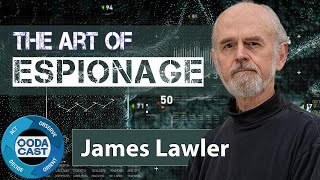
This content was created by Matt Devost. This content was uploaded by Matt Devost. This is a YouTube video titled "Jim Lawler on the Art of Espionage and the Perfect Intelligence Operation" created on April 1, 2022. It features a conversation between Matt Devost, CEO of OODA LLC, and Jim Lawler, a former CIA officer with a 25-year career focusing on counter-proliferation and intelligence operations. They discuss Lawler's career, his experiences in espionage, lessons learned, and his book "Living Lies." The conversation covers topics such as recruitment techniques, the role of technology in espionage, and the challenges of modern intelligence operations.
Chapters
Informing your decisions with intelligence analysis and insight brought to you by the team@oodaloop.com.
Hi, I'm Matt DeVoe, the CEO of OODA LLC. And thanks for joining us on the Oodacast today we have Jim Lawler, who was introduced to me by several longtime friends and colleagues in the intelligence community and who happened to be the author of a book that I had already purchased and had on my reading list. So Jim had a 25 year career at the CIA, a variety of positions including focusing on countering the proliferation of weapons of mass destruction. Recipient of numerous awards, and led one of the, you know, if not the most successful nuclear takedown team from an intelligence operations perspective in the history of the CIA. So, Jim, thanks for joining us. And you know, with all of our guests, we like for them to give us an introduction to themselves and kind of their career trajectory. Where did you start and how did you get to this point in time?
Well, thank you, Matt, for asking me on the program. I kind of backed into this totally by accident. I was in my last year of law school at the University of Texas back in 1976, and as anybody who's a graduate student or a college student or last year of school, there's only one thing on your mind and that's I need a job. CIA was coming to the law school to interview for attorneys for the Office of General Counsel. And so kind of on a lark, I decided, well, I'll go interview with them. I was interviewing with law firms, why not with the CIA? And the interviewer was a former case officer named Bill Wood. And we chatted for maybe three or four minutes. And mind you, he's there to hire attorneys. But he looked at me and he said, jim, have you ever thought about the clandestine service? And I said, no, I don't know what that is. And he said, well, I can't tell you much about it, but I think you'd be good at this. Well, I did think about it for 24 hours, but the reality was my wife's mother at the time was ultimately terminally ill and there was no way we were going to be moving away from Texas to Washington D.C. and then overseas. So I returned the application to him with some regret. But I was facing reality that there was no way we were leaving Texas ultimately. And sadly, my wife's mother did pass away about 18 months later. But in the meantime, I made a crucial decision to join a family owned company. I don't know if you've ever been in a family owned company, Matt, but There's a big problem with family owned companies, and it's that F word, family. And I love my dad and I love my two brothers, and I was making a lot of money, more money than I would ever make again in my life, probably. And I was so unsatisfied. I'd come home at night and it was just so empty. There was no meaning to it. I boosted the company sales. I probably more than tripled it in two or three years, but it was just absolutely valueless in my mind. And so I came home, I would complain at night, and my wife, who is a real sweetheart, she stood for that for about three and a half years. And then finally she said, jim, either do something about this or stop your belly aching. Well, I had kept Mr. Wood's card, and I jokingly like to say this was before Al Gore invented the Internet. So I had to write him a letter. And I said, three and a half years ago, you and I spoke. And I was interested at the time, but couldn't really pursue this opportunity. Now I can pursue it and I'm very interested in chatting with you. It wasn't but about three days later that I got a phone call from a young gal. And she said, never use the letter CIA. All she said was, Mr. Wood got your letter and he was wondering if you could meet him next Thursday at 3 o' clock in the afternoon at the Holiday Inn out on the Gulf Freeway. I said, yes, ma', am, I think I can. I went to that interview. He said, jim, I'd like to fly you to Washington. And about two weeks later, I flew to Washington for about three days, came back and waited another, I don't know, two or three months. Then they had me come back for another two or three days. The polygraph test, a physical, the shrink exam, Lord knows how I passed that, but I did. And a few weeks after that, really pretty short order, I got a phone call offering me a job as a GS11 case officer. Now, the bizarre thing was I had no idea what a case officer did, none whatsoever. But I was so unhappy with this family business. They could have offered me a job on the moon and I would have taken it. And so I said, fine. And so a couple of months later, we packed up the car, my wife was pregnant with our first child. We moved to Washington. And again, Matt, I have to stress, I had no idea what they wanted me to do. What does an operations officer do? I have no idea. This was really before CIA had a lot of publicity. There weren't a lot of programs out there. I think the only movie I'd ever seen was Three Days of the Condor. I figured it might not be like that. Maybe it would, I don't know. But I was wanting to start this job. And over the next two or three weeks after I started in February of 1980, then I discovered exactly what they wanted me to do. They wanted me to manipulate people, to exploit people, to subvert people, to suborn people, to convince them to betray a trust, to commit treason, to become traitors to their country or to whatever group they were a member of. And I found out that not only was I pretty good at it, but I loved it. I loved every bit of it. And in fact, they. They jokingly say that when they hire case officers, they. They always ask, so how much sociopathy do you want dialed in? And I've had one of my. One of my shrink friends, he says, lawlor, you're nothing but a sociopath. But one within lanes. Those lanes are US Laws. Anyways, that's how I got started in this business. Went on five overseas tours consecutively, and finally, that was in 1982, came back in 94. After that, 12 years abroad, and I had gotten involved in counter proliferation operations, basically stopping the spread of nuclear and biological weapons and missile technologies. And I really found that to be psychologically righteous, if you can stop another country from acquiring a nuclear weapon, something that could kill hundreds of thousands of people, that's really worth your time. It was very, very righteous, in my opinion. So that's how I got started.
Matt, excellent. And what are you up to today? Kind of. What was the career trajectory once you get out of the CIA?
Well, okay. So I came back from my last overseas posting. They asked me to run the Counter Proliferation shop in European Division. Then we were melded into the Counter Proliferation Division. And I spent the next 12 years or next 11 years doing that. Retired in 2005. And my first year I was an advisor to Rob Richer on the seventh floor when he was Associate Deputy Director of Operations, and to my best friend, Ralph Moat Larsen, who is Chief of European Division. Well, after about a year of that, a gentleman who ran the agent of the intelligence community's bioweapons program, Counter bioweapons program. He asked me to put together a curriculum to teach young case officers and young FBI special agents how to go after weapons of mass destruction scientists and recruit them and, and again, try and prevent the spread of nuclear and biological weapons. And so I've been doing things like that just about ever since, in retirement.
Excellent, great. You know, a lot of the viewers of this podcast are interested in decision making and lessons learned, you know, especially from someone as much experience as yourself. So were there some lessons learned around decision making or interacting, you know, doing your core mission that you learned from operations over the years that you can share?
Well, there were some specialized lessons that I learned. An asset that I had recruited once told me, he said, jim, if you want to disrupt a WMD facility, you have to look for choke points. And by that, he meant you need to look for technologies that are not easy for them to get, but yet something that they absolutely depend upon to run their plant. For instance, a uranium enrichment plant. Now, there's thousands and thousands of components in a uranium enrichment plant, but there's only maybe a dozen or so that are so specialized and unique to that type of operation. My asset said, focus on those. You don't have the time or the resources to look at everything, but focus on the choke points. I've used that same methodology of focusing on choke points ever since in various operational endeavors that I've made. Another lesson that I learned early on was really one that my great grandfather had used. He was a general in the Union Army. He led the charge at Big Black River Bridge, Vicksburg, and he was basically following General Grant's triple strategy for success at Vicksburg. And those three lessons were, move swiftly, do the unexpected, seize every opportunity. And if you do that in operations or even in business, you know, moving quickly, moving swiftly, doing the unexpected, seizing every opportunity. People like to say sometimes or jokingly say, lawler, you're lucky. Well, I don't believe in luck. You know that old joke about the harder I work, the luckier I get? Well, there's a lot of truth in that. And I think that during a lifetime, almost everybody gets equal chances, equal opportunities. It's just part of life. You get these opportunities. But there are a lot of people who either don't recognize an opportunity when they see it, or they'll run screaming from it. I've known case officers like that. Well, they must be out to get me, giving me this chance. You know, it's like, no, they're not. This is actually an opportunity. But there are a small number of people who they not only recognize an opportunity, but they're not afraid of it. They seize it and they run with it. I won't say I've run with every opportunity. I haven't. But I honestly think that successful case officers and successful businessmen, it's all that you. Basically, you make your own luck. You make those opportunities, you're networked, you're out there, you're meeting people. So that's my philosophy.
Yeah, that was one of my core tenets. You know, one thing that has spanned my career has been my work as a Red Teamer. You know, first red teaming cyber systems for military and intel in 95, and then on things like the Defense Adaptive Red Team, where we looked at WMD proliferation and all these other complex issues, and then business red teaming. And one of my core tenets or lessons learned is don't call it luck. Really. You know, it drives me crazy when somebody says in an operation or in a red team, and then we got lucky. It's like, no, you didn't get lucky. You drove yourself to a point through the decisions that you made and the actions that you took that allowed you to take advantage of the situation that was before you. It wasn't luck. It was the prior work that got you there. So definitely share that conviction with you. I also like the discussion around doing something unexpected. Can you give us an example of a time when you did something unexpected that kind of changed the outcome of an operation or made it more successful than you anticipated?
Well, okay. I'm kind of a contrarian thinker. In fact, Jim Pavitt, who was the deputy Director of operations for a number of years, he had been my boss when he was chief of the Counter Proliferation Division. And then when he became ddo, ADDO and then ddo, he used to call me into meetings and we'd have a big meeting, you know, five or six or seven of us sitting around discussing an operation. And many times he would turn to me and say, jim, give me a different point of view. I thought that was good. You know, he knew that I had kind of a different perspective on things sometimes. And it wasn't that I wasn't negative. But just give me another viewpoint on something like that. The, you know, trying to. To turn a. What could be a failure into a success is always something that I'm looking for. I'll give you an example. I was posted in an article, European City. One of my cover positions was that as a consul, I mean, I was. I had had to take the consular course and was legitimately. I have a certificate that says I'm a consul, consular officer, United States government. Well, in this particular city that I was posted in, we knew that there was a guy who was a member of Hezbollah. In fact, he was the chief of Hezbollah for the entire country, for that particular country that I was posted in. Now, what do you think the chances are that a guy who has a Texas accent, white guy like me, can recruit a Hezbollah guy? I think not a lot, but how do I turn a failure into a success? And so I thought, okay, I'm going to write to headquarters and see if I can find a case officer or non official cover officer who is basically fluent in Arabic, basically from his ethnic group. And what we're going to do is I'm going to have this guy come here because I know that this Hezbollah guy, believe it or not, he was applying for a US Visa, he wanted to go to the United States. Now I also know there's no way in the hell that the FBI or his State Department is going to allow me to give him a visa to go to the United States. This guy is the head of an Hezbollah cell in this European country. So how can I turn this failure into something that's unexpected? So I got the CIA officer, the deep cover officer who was an ethnic Arab, to come in. I had a picture. This guy had already submitted a visa application, so we have his picture. So I set up an appointment with the Hezbollah guy to come at 9 o' clock some morning. And I told the non official cover officer, I said, I want you to get in line right there with him and this is what we're going to do. Well, okay. So the, the Arabic case officer, he goes and he stands right behind the hisball a guy, he doesn't say anything to him, but he pulls out this passport that's very distinctive from a certain Arab country. And he's just holding it there right behind the guy. Well, the guy's just kind of looking around. He kind of looks down, he sees the case officer there with his Arabic passport. And so he knows that it's a kind of a fellow countryman. So he starts chatting with him. So they're chatting for the next 20 minutes in Arab as they're going up to the, to the embassy, I mean, up to the consular office there. By the time they get to the front door, they're best buddies, okay? So they come in. And then this was where we scripted it. I was the interviewing officer. So the first thing I do is I turn down the hisball a guy, you know, reject. Then I took the, the non official cover officer and I rejected his as well. So now they're both pissed at me and they go out there, you know, you know, oh, God damn it. You know, and it's just cursing up a storm. But that's bonding the two of them. Guess what? Our knock Officer ends up recruiting the Hezbollah guy because now they, they both detested me and they're going out and he ran him as a source and I'd like to say he was one of the ones that helped prevent a big bombing in South America. You know, they were. Hezbollah has had some real atrocities in parts of South America.
Sure.
Well, this knock officer was managed. We turned basically a failure into a success.
Excellent. Cool. I love that story. A lot of fun. You also got some awards for being the chief of the AQCON nuclear takedown team. Can you explain for those that aren't familiar, based on what's publicly available, kind of what happened with that team and what you're able to accomplish?
Yeah, I can try and compress this. It was a long, long story. In fact, the project took about eight years, eight or nine years of my life. But initially we didn't start out looking at Dr. A. Q. Khan. A Q. Khan was a metallurgist, Ph.D. metallurgist. He was employed in the Netherlands in a European consortium called Eurinko, which stands for the Uranium Enrichment Corporation, which is a joint company of the Dutch, the British and the Germans for the express purpose of enriching uranium up to a light enriched stage for nuclear power reactors, peaceful nuclear power. But you need fuel. And that's what they do. They would enrich the uranium, the U235 content, the fissile part, up to what we call light enriched uranium. Well, if you run that, that uranium hexafluoride through the centrifuge piping enough, you can get it up to highly enriched uranium, which is what you use in a nuclear weapon. And so you just run it through again and again and again. You continue to really enrich. When they say enrichment, they mean raising the content from say 3 or 4% up to 85 to 90% highly enriched uranium. That's what makes a bomb. In fact, if you don't have the fissile material, you don't have a bomb. Well, we knew that Dr. Khan, in retrospect, he basically was very sympathetic to his home country of Pakistan. And Pakistan had sat and watched India detonated nuclear weapon in 1970. And the head of Pakistan had said, we will eat grass, but we are going to have our own nuclear weapon. Well, Dr. Kahn provided them with, with the means to do that by stealing the plans for the uranium centrifuges out of the Renko company and they took it to Pakistan. He was also an incredibly charismatic and networked individual and he left a lot of European citizens that were his Buddies, he paid them basically to supply him with this high technology equipment that he needed. Consequently, they set up a company in Pakistan. First was called Engineering Research Lab, and then they changed it to his name, Khan Research Laboratories. And they were the ones that provided Pakistan with the fuel, the highly enriched uranium for nuclear weapons. Now, what the Pakistanis didn't know was Dr. Khan, who had a tremendous ego, decided to take nuclear weapons private. And so he had found customers overseas. And my operation discovered what he was doing, much to the amazement of a lot of people who thought that this couldn't. Nobody would ever take nuclear weapons private. But he did, and he found Libya as one of his first customers. And I still remember when we got the information that showed that basically Libya was acquiring a nuclear weapons capability. A senior officer said, that's impossible. If Libya were acquiring a nuclear weapons capability, we'd know about it. Well, three or four weeks later, I had the smoking gun. Proof that what I told him was right. And so we were positioned overseas, strategically positioned, shall we see, shall we say, to penetrate his network. I got this idea from a counterintelligence course I had attended. I don't know if you're familiar with the name Felix Dzerzhinsky.
Not.
No, no. Okay, well, every intelligence officer should know that name. Dzerzhinsky was the man that Lenin appointed to run the first Soviet intelligence service, the Cheka. And Dzerzhinsky was a Bolshevik. He was actually a polled. He wasn't a Russian, but he was faced with an existential challenge in the Soviet Union in 1917, 1918. And that's the fact that the revolution had succeeded, but certain countries, like Great Britain and the United States, were financing the counter revolutionaries that were infiltrating and trying to overthrow the revolution. Well, Dzerzhinsky struggled with this challenge. And he said, you know, in order to defeat the counter revolutionaries, I'm going to become one. So his Chekist agents fanned out across the Soviet Union pretending to be counter revolutionaries. And they systematically identified every one of them and they annihilated them. They even controlled the bank through which all the money went through. I thought, okay, if this old Bolshevik can do this, I can do that. So if I want to defeat proliferators, guess what? I have to become a proliferator. So we put little companies overseas, you know, trying to sell supposedly, ostensibly going to sell things to bad guys. And by doing that, we penetrated their. Their lines, we penetrated their supply lines, their supply chains, we identified their people. And over that eight or nine year period, we were finally Able to bring them down.
Excellent. Cool. So the one part of your career trajectory that you left off was that you became an author and wrote a book called Living Lies, a novel of the Iranian nuclear weapons program. So I want to ask you a couple of thematics from the book, but first I'd like to ask, why write a book? What impassioned you to put word to paper and kind of tell this story in novel format?
Well, I've always had an aspiration to write a novel. In fact, in my initial interview with the agency, way back in 1979, one of the officers who was interviewing me, he said, well, you know, what are some of your aspirations? I said, God, I'd love to write a novel. And he says, oh, Lord, that's all we need is another author. Well, I mean, he was reacting to some guys who had, like Frank Snapp and some others who had divulged classified information. Philip Agee was a real. You know, he wrote a lot of. He exposed a lot of CIA officers. That's not what I meant at all. I just wanted to write some fiction, some espionage story. And they say, write what you know about. So long. About 2015, during the first set of nuclear negotiations with Iran, I was chatting with a friend of mine, Ralph Moet Larsen. I mentioned earlier, and I said, you know, this is all well and good, but what happens if they cheat? And then I started thinking, gee, that'd make a pretty good novel, you know. You know, the Iranians, they convince us to come back to the table, and they decide, okay, we want relaxation from all these sanctions. Well, then we're going to pretend that we don't need an enrichment program. And in the book, they don't need an enrichment program because they get the fissile material elsewhere. Basically, if you've got the material, you don't need to go to the expense and trouble of enriching uranium. So it turns out to be a win. Win for win for the United States, A win for the Iranians. Except what we don't know is they really do have a covert weapons program that they've hidden. And it's run by a very narcissistic, brilliant Islamic Revolutionary Guard Corps general who has basically ridden his uncle, who's a grand ayatollah, his robes, his coattails, he's ridden him up all the way into the senior ranks of the irgc. And then he proposes to his uncle, who he's also engineered into becoming the supreme leader. He convinces him, we need a whole card. We need an ace, you know, in Our cards here. I need to run a covert nuclear weapons program. So it's a story of at least, you know, a couple of CIA case officers, an FBI special agent, and how they recruit some sources inside of Iran. But there's the Iranians are not stupid and they run a very, very bright double agent at us. And this double agent convinces a lot of the negotiating team on the American side that the Iranians have come clean and everything's well and good, let's relax sanctions. Well, in fact, they haven't. But they've manipulated one particularly gullible case officer. And the White House is wanting to hear this. They want to know that we've got peace in our times. Well, but we don't. So that's kind of the theme of.
The book, the confirmation bias of it. There's a couple aspects of the book I'd love to ask you about a, that you and I have met a few times over the years. We determined that. I'm probably thinking that Rob Richards retirement parties maybe the first place. Now that we start talking about it. There is one character, though, he starts talking about the magic of recruitment and running an operation. And that was kind of one point in the book where I felt like this is something that's deeply personal to Jim, that is a kind of a deeply held belief or something that he connects with based on his career. So can you step us through what is meant to be implied by kind of the magic associated with recruiting these human assets?
So I based a scene early in the book. There's this case officer named Elaine Andrews, and he believes, as I do, in what I call the metaphysics. And the metaphysics is a certain indefinable quality that some top recruiters have that you can't explain it any other way, how they actually make that connection with a recruitment target. But I've experienced and I know a number of a small number of really top class case officers that know what I'm talking about, where you can make a mental link with somebody. And it's partially. It's like hypnosis. Part of it is suggestion, but then there's part of it I can't explain. A narc officer who is a student of mine once asked me if I was familiar with Dr. Milton Erickson. I said no. He said, well, Milton Erickson was the guy who developed hypnotherapy. He says, you don't know it, Jim, but you use a lot of his same techniques. I think that explains part of it. I have a soft voice. It's a reassuring Voice. At least one of my assets told me that when they talk to me and they listen to me, it's like their brain is in a warm waterbed. I'm a non threatening person and I relax them. But there's something more to it than that. One scene in the book actually happened to me. A couple of neuroscientists, these are PhD neuroscientists over at the agency, wanted to talk to me about the subject of the magic of tradecraft. Now, unfortunately, by magic they meant, I found out they meant trickery and deception. And I said, but I don't trick people. I don't deceive them. And what I meant by magic was literally magic. And they said, well, that's not possible. And I said, okay, let me give you an example. If you had been living in the 1880s and you had seen a jet aircraft go overhead, you might have said that was magic because you didn't know the aerodynamic principles that would justify, you know, an airplane flying or a jet airplane flying. And yet, 20 years later, in 1903, the Wright brothers flew a plane that wasn't magic anymore. So I said to them, these two neuroscientists, I said, so it's possible, I think, that 20 or 30 years from now, neuroscience will actually identify what I'm talking about, that there are some people that can metaphysically somehow connect with another person and get them to do what they want them to do. And they looked at me skeptically and then I said, okay, so you're telling me that the field of neuroscience is complete? Well, no, no. And then one of them said, well, it'd be kind of fun to watch you work a cocktail party. And I said, I'm sorry, but I don't do parlor tricks. But I honestly do believe that there are, there's a small. Otherwise, how do you account for a small fraction of case officers that do most of the significant recruitments? And so in my book, Blaine and a few others are part of what I call the Guild. And the Guild are these people who are absolutely top notch ace recruiters. And their recruitments are the ones that change history.
Excellent. Cool. Yeah, I had the feeling that that was a highly kind of personally held belief about your work. When I read that section of the book, there's also another. A couple other themes that I found interesting. And I don't want to give away given it's a work of fiction. I want people to read it. So I don't to give away the plot lines. But from a recruitment perspective, you know, both the person that's recruited and one that volunteers both kind of come out of an affinity for Western culture. They've been to universities in the United States. One is a, and is a jazz musician. And I'll do the reveal and show you Miles Davis over my shoulder there, which I know you'll.
That resonated with you.
Yeah, that resonated with me for sure. So what do you think that this, you know, the role, you know, of the United States as kind of a global cultural leader, something that people aspire to come here and study and absorb our culture. What role does that play in the successful recruitment?
Well, I think it gives us a tremendous advantage. We have all of these foreign graduate students coming here and yeah, there is maybe a bit some CI issues with some of that, but I'd say 99.999% of these people, they really add to our capital base. A lot of them become scientists or doctors or contribute a lot to the United States. And if nothing else, creating a very positive view of the United States. They get culturally, you know, they have cultural affinities with us. Like you said, one of the Iranians in my story, he's a jazz musician. He just loves Miles Davis. I mean, he's an expert on Miles Davis. And so that's something that the case officer uses as well. In fact, I actually used that in a recruitment of a foreign target. This foreign target had been surrounded by some non official cover officers who were not in a position to risk their cover and try and recruit him. But instead they told me all about how this guy, he likes Chet Baker, he likes Miles Davis, you know, he likes the, the Stan Getz, he likes all these people. And I had not at that time I was not a big jazz fan. But I thought, okay, I'm going to try and steep myself in jazz and then I'm going to approach this guy obliquely, which I did. He gave a talk, a publicly publicized talk that I then went up and congratulated him on the talk and asked him if he would join me for lunch A couple of weeks later. I knew he was a gourmand and so I took him to a Michelin starred restaurant and during dinner we're talking about hobbies and things and so I just brought up jazz and the guy's eyes lit up and I mentioned, you know, the Kind of Blue album by Miles Davis and some of the things by Chet Baker. Chet Baker lived in France for a while. Things that I was able to find out he was a big fan of the movies of Woody Allen. Well, I happen to like a lot of Woody Allen movies, certainly the early ones. And so we chatted about that. By the end of the lunch, it was like, you know, he had found his long lost brother. And so to be able to, you know, resonates with people, a common ground, you know, something that you can. You both enjoy or maybe a book by an author you both enjoy and more peeks at somebody's cards. Something like that. Well, then, you know, okay, I'm going to bring this up. I'm not. I'm going to something that he can identify that I'm not just an American Embassy officer, but somebody who's got that same soul, that same passion that he does.
Well, I can attest that Kind of Blue makes for a great soundtrack while reading the book. So definitely once I encountered those passages, I couldn't resist those interesting thematics around kind of technology and the vulnerability of technology. What is your take on our increasing dependence on technology and the susceptibility, again, I don't want to give a lot of away a lot of the plot, but kind of the. The keys to the kingd with regards to intelligence material being contained on these systems and under control of some of these super users. Any thoughts with regards to kind of the risks from a cyber perspective of our emerging dependence on technology?
I absolutely believe in the fact that the most vulnerable spot of any organization is the insider. If I recruit one insider, be it conscious recruitment or somebody who's an unwitting useful idiot, then it doesn't matter what kind of encryption you have, what kind of protections you have, you can even not be connected to the Internet, not be anything. But if I've got a good insider, I guarantee you I will disable your systems. He will give me everything I need to know. I know this for a fact. I had a course that I used to teach with some very capable instructors and myself called the Cyber Recruitment Course. And the whole purpose of the course was to go after the guy inside the IT specialist I used to work after. You know, part of the time after I retired was I was a consultant at Department of Energy, Office of Intelligence and Counterintelligence. And one day I'm sitting in my office there, riding on the classified system, and one of the IT guys who I had become friends with, he comes in, he says, jim, you may not know this, but there's 35 guys in the back room who read everything you write. So we've got 35 people that are reading what I write. And. And, yeah, they're all Cleared. But you know how that just multiplies your chances of being able to recruit somebody on the inside. And then he gave me some remarkable insights as to what makes an IT specialist tick, what pisses them off, you know, how they don't. You know, they. I mean, he said, how often do you go up to an IT guy and say, thank you for my system's working so well? No, you bitch and moan at them when they're not working well. So he says, you know, we're usually the least paid people in the building, and yet we have our fingers on the pulse of this place. He said, there's something wrong here. And he said, you know, a lot of us, rather eccentric a little bit, you know, and we've got contrarian personalities. Look at Ed Snowden. Guess what Ed Snowden was. He was an IT specialist. Let me recruit one insider, and that can enable 100 or 1,000 technical penetrations. And that's what Ed Snowden basically did. He wasn't a technical failure. He was a human failure, as I.
Like to say, in the cybersecurity domain, we talk about endpoint protection. And for the community, the endpoint is your mobile phone, it's your workstation, it's your server. And I always like to remind them that the ultimate endpoints, the human being.
Absolutely. And that's the game changer, is the human being. If I go, if I want to penetrate an organization or a country's defenses, I'm looking for the person that I can recruit, the person who doesn't feel appreciated, the person who is. I've recruited more people because they were pissed off at their boss than for any other reason. They're going through stress. I like to say I never, ever recruited a happy person in my life. You don't recruit happy people. You recruit unhappy people, people that have got an ax to grind. And the reason they do this, Your parents? My parents. Most people grew up where you're taught, don't betray your family, you don't betray your country, things like that. But I've had at least several of these people tell me that they felt like they were betrayed. First their boss stole credit for what they did, and so now they can't stand this guy. So, no, I'm not betraying. They betrayed me first. I'm just evening the score. That's how you. That's how they justify this. Unless they're a pure narcissist or a psychopath or pure sociopath.
Sure.
That's how. That's how they balance this. You know, that you know, they started this. I didn't.
So obviously, given the book, demonstrated some familiarity with the technology landscape, but also just this job of espionage is changing as we tend to migrate towards having our relationships over technology. We're doing this call over zoom. People are building and operating in the metaverse. What kind of challenges do you think that the intelligence community is going to have to overcome to be able to engage in recruitment of assets in this new land landscape where most of the interactions might be in a cyber domain?
Well, it's funny you asked that, Matt, because I've been asked. I'm a member of an organization called afc. It used to be something like the Armed Forces Electronics Association. It's a huge organization. A lot of DoD people, intelligence community people. Well, I'm chairing a panel at our intel symposium in the spring on something called ubiquitous technical surveillance, which means all the cameras, all the biometrics, everything that' out there, that makes life for me and my fellow case officers very difficult. Well, we've. I've invited three. Three people. We're going to have four people on this panel, and three of the people are personal friends of mine. One of them is Paul o', Doyle, who is the former Associate Deputy Director of Operations for Technology. Another one is FBI Supervisory Special Agent Ed Yu. Ed is just a brilliant special agent. He's now at the dni, and he's the National Intelligence Officer for Emerging Technologies. And then my third choice was Doug London, who just wrote the book the Recruiter. And Doug is a really crackerjack case officer, served multiple tours overseas, and he's an excellent street man. And so we're going to discuss in a classified environment, what should we be doing? What are our greatest concerns? What are our nightmares about ubiquitous technical surveillance? How do you overcome this? How do you spoof it? How do you disrupt it? How do we develop our own systems to disrupt their operations? So you have to look at it from both a defensive and offensive point of view, but don't let it shut down operations because, you know, the Israelis have a cardinal bedrock counterintelligence principle, and that's swiftness. Swiftness is your best. Your best defense. A good, good example of this was, you may recall, I think it was about 10 years ago, there was a. I can't remember if he was his. No, he wasn't Hezbollah. He was. Another maybe was his bala. There was a terrorist in Abu Dhabi or Dubai, and a Mossad hit team went in and they got the guy. Okay? Now, in doing that, there's five or six or seven of these guys and their faces and everything were on all these cameras and things like that. And so some of my colleagues were saying, ah, this was just a, you know, big failure. You know what a what? It was a blown operation. And I said, no, wait a moment, hold off. Okay, I've run teams, not a hip team, but I've run entry teams. And right now, your biggest. Your biggest goal is get your team in and get out safely. That's your top commitment, right? Number two, get the target. Okay, they did that. They got the guy and they got out. Sure, they blew their aliases. Maybe they can't go to certain countries anymore, but they moved swiftly. They got in. They were so focused on this guy because he was a terrorist, and they got him. They got out. Sure, they had the cameras and everything there. But by getting in and getting out quickly, they succeeded, and I would have been very proud of them.
Something to be said for continuing to operate given the changes in the domain of operation where some people might be crippled and be like, we can't hit him at the hotel because we're going to be on camera. Whereas it seems like with that Israeli operation, the operation continued despite the changes in the domain where they knew that the assets would be blown, people would be photographed, and there was the inevitability with regards to that being discovered and analyzed and posted on YouTube, but they went forth with it anyway. Was that kind of continue to operate instead of finding excuses not to operate, given that the landscape has changed?
I mean, there are some targets and some operational objectives that are so great, you just have to accept the risk. You have to try and minimize the risk. In fact, a lot of what we do in the world of espionage is being able to properly appraise how much risk is there. Minimize the risk to the extent possible, and then move swiftly. Get in and get out. Make sure you protect your people.
And don't like the Russians. Put them on TV saying that they were just tourists walking around.
Well, you have to hand this to the Russians. They never let anything stop them. They don't. Back in the 80s, I think the French expelled. In the farewell case, I think they expelled like 85 Russian intelligence officers. I guarantee you they never ceased operations in France. They kept going. They had their illegals there. They had their deep network people there. So the one thing you got to hand to the Russians is they don't give up. They just keep coming.
Shift gears here just a little bit real quickly and ask you, what do you think is the greatest threat facing us here over the Next decade.
Well, I think we've been facing it ever since 9 11. We let 911 dominate our focus for far too long. I'm not saying we shouldn't have been focused on it. We should. 3,000Americans lost their lives. But while we were consumed with the terrorist target, I guarantee you that the Chinese, the Russians, the Iranians, everybody else is having our lunch. And so I think we are. You know, and they never stopped. In fact, they've increased their presence. The Chinese, I like to say it's almost like in the Korean War. They're running human wave attacks at us. It is just, you heard Director Ray the last day or two saying he just can't believe the amount of Chinese espionage. Well, it's true, it's right. They're, they're running at us. But as far as the biggest challenges. Yeah. Being able to justify to an American public budgets for the intelligence community, they, you know, they were willing to give us anything we wanted after 9 11. Well, things start to fade into the rear view mirror after a while. We haven't had a serious terrorist attack really on the United States since then. So it's been 20 years and they're going to start thinking, well okay, we've got this under control. And so therefore the intelligence community budgets might sink. And I'll be the first to tell you, there's probably been a lot of fat, there's a lot of waste. But we don't sometimes focus on the right thing. Okay, I'm a human guy. I strongly believe in humint, but I also believe in what we call blended operations, meaning all source intelligence. I used to see my job in my last position running the Counter Proliferation Project that I did almost like a symphony conductor. I'd have the, you know, the chorus, that's the Hume it. I'd have the woodwinds, I'd have the strings, I'd have all these other things going on and I had to be able to bring it all in. The sigint, the human, the, the cyber int, all of these ints together and not at the expense of one another, but blended. And they each became stronger because of, because of the fact that now they could, you know, we recruit somebody on the inside, we've got somebody there. Not only do we have their computers penetrated, but we say focus on this, focus on this part. You can have access to somebody's computer and be so overwhelmed that you don't know how to prioritize, how to triage. But if you've got somebody who says, now look at these folders look at this here. And by the way, it may say this, but that's not what they're going to do. That's their goal. But in fact, they're going to fall far short of that and they're only going to go after these fallback things. So having a human that knows, okay, here's what the, here's what this really means. Here's what we really are going to do.
Contextualize it right Is what becomes important. Excellent. Love the insights. Appreciate you taking the time to chat with us. I always like to close out with one question. Since I'm an avid reader and you're an author, what is one book that you've read recently that you would recommend people check out?
Oh, that's a good question.
You just mentioned the recruiter saying it to that nonfiction.
The Recruiter is excellent. I'm reading a book by, I'm currently reading a book, the book called First Casualty about the losing mic Spanish. Excellent book. One of our. He was our first casualty in the war on terror. The author, Toby Harkness, I believe his name is. Excellent, Excellent book. It's an easy read for fiction books. I, of course, I'm a big fan of Jean Le Carre. I really like, I really like his books. There's a British Mick Herron, H E R R O N who has written a book. The first book was called Slow Horses and it's about members of MI6 that are not the swiftest horses. But it's pretty good. This whole series that he's written. I'd like to read some books by Charles Cumming. I've got him on my list. I want to read some more of Alma Katsu. She's a former agency officer and has written a number of books. I'm always, I'm always interested in more books, not just espionage, but all kinds of, you know, all kinds of fiction.
Sure, yeah, absolutely. Those are great. And as always, we'll put links to those recommendations, you know, when we publish the podcast. So, Jim, thank you so much for joining us. I enjoyed the conversation. Lots of useful insights and great stories. And obviously the, the best lessons learned to pass on are the ones that were actually operationalized in the field. So I appreciate you sharing some of those direct experiences with us. That always makes the lesson behind a little bit more meaningful.
Thank you a lot, Matt. It was a pleasure for me to be on your program. Thanks for listening to this Ooda Loop production. For the latest analysis on cybersecurity technology and global risks, please visit www.oodaloop com.
More from Matt


Leading Cyber Change: Allan Friedman on the Revolution of SBOM & Future Cybersecurity Initiatives


Revolutionizing Medicine and Tech: Joe Tranquillo's Journey into Complex Systems






Bob Zukis and the Digital Directors Network: Helping corporate boards mitigate systemic risk

Adam Shostack on Cybersecurity and What Every Engineer Should Learn From Star Wars