John Spencer on Connected Soldiers, The Future of Conflict, and Lessons in Leadership
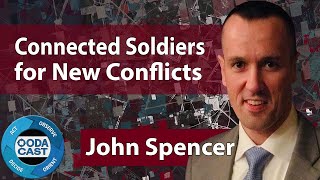
Bob Gourley talks with John Spencer about his book Connected Soldiers, how connectivity is reshaping modern warfare, and what the Ukraine conflict reveals about leadership. Spencer draws on his military career to explain why education and writing matter for officers.
Chapters
Informing your decisions with intelligence analysis and insight brought to you by the team@ooda.
Loop.Com hello, I'm Bob Gourley, the Chief Technology Officer of OODA llc. And today on the oodacast, John Spencer. John, welcome. I really appreciate you being here.
Hey, thanks for having me. It's a huge honor, really.
Well, John, thanks for saying that. Now I really want to talk about the book Connected Soldiers. But I also want to talk about you and something I was thinking to myself here after reading the book, I feel like I already know you. It's that kind of book where you really bring the reader along on your journey. But this is the first time we've spoken and I wanted to ask if you could give our viewers and listeners a little bit of your background. Who is John Spencer?
Sure. Absolutely. And I really appreciate you saying that about my book because it is a very vulnerable memoir of the good and the bad of the journey. So I joined the army at 17 out of a small town in Richmond, Indiana, and then went straight in as a private. And was I, I tell people sometimes that I was re raised in the military. I learned what respect was, discipline, I mean, everything to personal hygiene. I owe the army so much, you know. So then I spent basically eight years enlisted from private to sarm first class, then went to Officer Candidate School and switched over. It was actually before 9 11, but then I basically had to wait for my turn to go to school and went to school, became a lieutenant and then went straight to a unit I'd already served in as enlisted. I went back to Italy to the 173rd Airborne, which is stationed in Italy, which has a long history that I was extremely proud to be a part of. And then within three months later, I was jumping into Iraq during a combat jump, which I had been an Airborne, either an Airborne or an Airborne Ranger all my whole career up to that point. So it was extreme honor to me. And then I spent a year basically as a platoon leader in Iraq in an invasion. A very unique experience I think to really this generation. Just an honor to have that experience leading men in combat, especially in an invasion, where you're going places that no American had ever been. I mean really the autonomy we give our, our leaders, it's amazing. I left there. I went actually it came back from Iraq, went back to schooling because our program at the time where you could be an enlisted soldier, do some college and then become an officer, do you platoon leader time and then go back to school to finish it. So I did degree completion, went to The Catherine's course was a Ranger instructor in our Ranger school, which is another from a small kid from Indiana who's watching videos about Rangers and Special Forces. It was almost like self actualization. I had made it. So while I was a Ranger in Ranger school, I actually got the call from really a big army, said, do you want to command in combat? And there's no answer to that. Then yes, immediately they told me to drive to Colorado, deploy into Iraq in 2008, because our army was really struggling with manpower and the surge that we were trying to do for the President. So I went straight into combat and within a couple months took a company command in Iraq in 2008 during the battle of Solder City, during really the culmination of the insurgency in Iraq and redeployed. And then I did some time in the Pentagon and some amazing opportunities to work for the Chief of staff of the army. Moved to West Point, stood up a research center, found a love of writing, which I think is important in my career. I found a love of writing and what it can do to your thinking and your, your ability to communicate leading me until now where I, you know, I have a dream job where I retired in 2018 after 25 years and became a scholar really. So I still work for West Point doing research and an extreme passion for books, for writing, for thinking, you name it.
Thanks for that overview. And I want to dive a little deeper into a lot of those topics. And one is you mentioned Ranger. And I've worked with Rangers for years, but I've never had the opportunity to slow down and ask somebody what is a Ranger.
So that's actually a tough, complex, not tough, it's complex question. It can depending on the. Like any word in English language, the way you use it, it means a few different things. So the US army has a Ranger regiment. So that's a very small organization within the special operations community of our most elite infantry with a long history really going all the way back to the 1700s before the United States and the American Revolutionary War. Some units who would do ranging as in reconnaissance and attacks deep into enemy territory. But the unit today is our premier elite infantry. Within the Special Operations command, there's only three battalions. So 1st, 2nd and 3rd Ranger Battalion. So if the soldier makes it through the program in order to get into the Rangers, then they can call themselves I am a Ranger. I'm a member of this elite organization. Now we also have the toughest, hardest school as been published, the hardest school in the military, the US Army Ranger School. Which is a school in which you learn many of the tactics from Rangers that especially the Korean War. It was stood up after the Korean War. And when you graduate that school, you get to wear a Ranger tab on your shoulder. And then from then on, you can call yourself a Ranger. So there's a. There's a couple nuances, but it means somebody who is highly trained, highly disciplined, and follows a creed that's very important to us in the way we live our lives and do our job as soldiers.
What is the creed?
So the Ranger creed is. I mean, it's pretty long. I'm not going to repeat it for you. It's actually really interesting because there are a couple of books out there about how important things like that are the creeds are to a profession. Right. Professions are, you know, special people that are given autonomy and authorities to do things. So the Rangers live by a Ranger creed. So it's things like, I'll never leave a fallen comrade to fall into the hands of an enemy. I always keep myself mentally fit, physically strong, and morally straight. So there's basically things that says that if you're a Ranger, you're going to abide by these rules. You know, there's so many of them, but they're. It's short enough to. To be a creed in which the Ranger says that every individual will live in the spirit of that creed.
Right. Thanks. And because I mentioned that I have been around a lot of Rangers and I had sensed a lot of things that are unique about Rangers. Now, when it comes to the military, all military should have a good sense of discipline and are used to hard work and are used to persistence and achieving goals. But when I would see a Ranger, I would see that to the extreme, especially the persistence. If there's a goal, it's going to be accomplished and you don't just say it probably won't work. And I back off. And I wanted to mention that because I've even seen that in you today in social media, because it's things like at the beginning of this Ukraine crisis, there's a lot of folks who said this war was going to be over in a matter of weeks and it's going to be done, and the Russians will just totally run over everything. And when you start hearing that, it's easy to say, well, then I don't need to do anything. But there's thousands of people like you who said, well, I am going to do some stuff. And one example I'm thinking of for you was you came up with this list of Best Practices for Urban Conflict. And you produced that list. You had it translated, and you had it built into a handbook in Ukrainian. And I thought, yeah, there's something about the Ranger in you that had you do that.
Yeah, absolutely. And to be honest, I mean, I, you know, it's. The quote's escaping me, but there's some Ranger in that book. So the Rangers also carry what's called a Ranger Handbook with them, and it's part of the school, and it's basically the lessons that have been passed across time that the Rangers passed on. I even put in my book that mini manual for the Urban Defender, Spencer's Standing Orders for the Urban Defender, which is a direct correlation to what's in the Ranger Handbook to this day. Ranger Rogers Standing Orders, which were orders that he gave in the 1700s to men that served with him. And I do think so, that it's a very basic manual of stuff that if you're in the military, be like, yeah, this is really elementary stuff. But in situations like Ukraine, there were civilians trying to help with no training. It's something I learned early in my career, and I carried it forward in my leadership. You had to be able to communicate clearly and really in very short sentences, which is another lesson that came from writing, but also as a, you know, a young soldier. I mean, the guidance has to be very clear and simple, especially when under stress, which is what I learned in Ranger School. Right. As a one suffering through it as a Ranger student, but also as a Ranger instructor. I mean, when you get sleep deprived and in really the worst places, you need your instructions to be very simple but very clear. Right.
You know, in the Navy, we would call that sailor proof, but it's very simple, very clear, and needs to be followed. And so that's. I did want to ask you about a few other things from your early part of your career, and so that's one of the things that you brought forward. And are there other leadership kind of lessons from your early days that paid off?
Yeah, absolutely. So, I mean, everybody who's in the military or in a business, whatever, is learning something from their leaders, and it could be what not to do. So I learned a lot about. I just don't like following this person. So, of course, we teach leadership in all throughout the military. It's our strength, really, at the US Military is our small unit leaders and really all of our leaders in the system that we built, which is just unique, and we invest in people. I mean, I learned early on about the autonomy that we give each other I mean, it's not, you know, some people who haven't been in the military, I think it's very, like, straightforward. Like you follow the orders you're given. You give orders and you move out. And that's. That's really far from the truth. There is discipline, but really one of the definitions of discipline that I learned early on wasn't following orders. The other part of it is doing the right thing in the absence of orders. Um, and we built that. I was. Built that into me day one. You have to be able to translate that into the soldiers you're leading. So I. I took that really from early on, you know, and I took lessons from every person I served under, both. Both the things I want to be, because that's where you learn leadership is when you're following. A good leader is a good follower. And I learned that. So when I became a leader, I tried whatever level I was. 1. Some people say I had an advantage. Right. So I came in and went through the ranks so I could both sympathize and empathize with what I was telling people to do. Other people might think that was a disadvantage where I might have been in their business because I knew what the things that certain groups are supposed to be doing. And then I would do a rudder correction middle, mid flight, you know, so there's. There's a lot there. I mean, I. I tried to be a learning person. My. And I still am. I call myself an urban warfare student, not an expert. And the book is, you know, it's not about urban warfare, but I ask more questions in my book than I give answers.
Yeah. And one other thing, I want to get into some of those questions and answers, but I also wanted to get a sense of this company that you took over command of. The way you write about it, it seems to be a very unique situation. And can you describe that situation? What was the company like as you were beginning to take command? And what was the whole experience like there?
Yeah, so there's lots of good and bad memories in that experience. One, I knew I was going into command to take a company because they had basically left company commanders in for so long. I mean, beyond the time that we would normally lead. Because to be truthful, command is hard. It is. So we like to rotate people through. Wanted to get lots of leaders. The experience I showed up to my company, knew I was going to take it, and usually get a little bit of time to count all the equipment and check the equipment. In the army, you get like a month to do that which is a great opportunity to get an assessment of the people you're about to lead. And as soon as I met my company in combat, all there was a bunch of red flags going off and alarms based on my own experiences up to that point. I had served over 15 years by that point. So I had a good sense of the things that individual soldiers are supposed to be doing. Non commissioned officers supposed to be doing some of that range of creed. Right. About taking care of your equipment following orders of the officers appointed above me. It's all in there, but it's just soldiering. So I took the company. They were in a really dark place in a place called ur, which is right outside Sutter City, which at the time was a really dangerous place. Really you couldn't even go inside of. Americans couldn't go inside the city. So they were in heavy combat daily, like mortar rounds landing on their base, things like that. But I just saw a complete breakdown of what we call a military organization. And I have a diagram in my book which I think we'll talk about, but it was just all not present. It was more analogous to Lord of the Flies, to be honest. And there's a really good book that influenced me called Black Arts, which it's a book by actually a reporter who is embedded earlier in the Iraq war with a unit. And he details like some of the issues that led to this horrific crime in Iraq. But as I read that book, I saw all these red flags going on. So I saw all these red flags. I was basically making a list before I took the company of like, oh man, I got to address these things. Or this is not right. Right. The soldiers are talking to their leaders. Wrong. Or they're not keeping their equipment clean or not not giving out orders before they go outside the base. They don't know what they're doing. I mean the list was huge. But before I even could continue observing them, the company was attacked by an improvised rocket assisted munition, which is a fancy term for a really big rocket bomb launcher that at the time a very, very sophisticated type of entity would park next to a military base. It doesn't matter if it was, you know, a single house surrounded by walls. And then it would launch rockets over the top of the walls into the base. So actually while I was away that day, 950 to 200 pound bombs landed inside where my company that I later take was sleeping or guarding. And it really rocked them. At one point, one of the soldiers, the concussions were so bad, one of the soldiers lost all the teeth in his mouth, because the concussions fractured every tooth in his mouth. I mean, that's the level of concussion that this unit took. But our units, a military unit is really. I call it a complex system. And there are some things that matter more than others, and some things that can be kind of loosened. But with a system this broken, when it got hit by something that bad, or really a devastating blow, it was terrible. So then I was brought in that night, in the middle of the night, dropped off by my senior leader and said, fix it. And it's a real moment in the book. And it was a real moment for me. And that was the order I was given. Fix it. Fix what? Fix everything. And that was what they asked me to do. It was a huge task because I already knew that there were lots of things I needed to fix. But they didn't care. They wanted me in. They said I could fire anybody I wanted. I could rebuild platoons and rebuild squads. They wanted me to fix it, really. To build the airplane in flight while fighting a war against a vicious insurgency.
You know, this is a very important section of the book, and I would just strongly encourage everybody to get it and read it because it's also very. It's many, many, many human stories, not just yours, but the many other people you write about. And it was very telling. And I want to also ask you, though, about the connected nature of the group already. I mean, early in the early 2000s, the militaries were starting to get connected. Now, the army had been deployed to Iraq for years, about eight years, and there was plenty of connectivity. I mean, you mentioned earlier, you see video games and people chatting with each other, and there's connectivity back home and people using Facebook to describe what was accurate there. And also you mentioned some were describing what was not accurate there. So there's. This is where the book really starts to transition, in my opinion, into this connected world of. And the impact that connectivity has on command in an organization.
Is that about right? Yeah, absolutely. And I'm glad you. I mean, that's the reason I wrote it, the passion I wrote it. I mean, one of the reasons I wrote it was just as I went on later in my career, to unpack some of the things that I was experiencing, not realizing the really this second order effects of the new world we were living in. Right. So after that attack, and I put this in a book, and I really didn't realize what was being asked of me. The command who came in the next day said, make sure you get the Internet Back up, which was really jarring to me. And at last it stayed with me. So from the so throughout history and I put this up front and I had to do a lot of research. There's been lots of research into why soldiers fight and how they can fight in wars like this and really defy human logic of moving forward and trying to kill an enemy that's trying to kill them. Without a doubt, the number one reason that soldiers fight in wars proven by research is for the people to the left and right, people that are willing to die for. Because there is a. I call it a brotherhood, you can call it. It's not just a male thing, it's a sisterhood. It's more than liking somebody, it's loving somebody that you're willing to die for them. And as I unpacked my own life and career up to that point, I found out that that's not. That just doesn't happen. It has to be built, it has to be monitored. Has to be. And one of the reasons that that, that of course happens, right, I call it the Band of Brothers effect because that's a really good miniseries in showing the point where you build this bond with somebody that you're willing to die for them. Where connectivity started to play into that is we know that there's a couple of things that build that in soldiers. One of the things we know is experiencing hardship together, right? And that's why, you know, all training is hard and we do all kinds of things in the military to make training really hard. One of the reasons is that it bonds the people who have suffered through it together. But you know, suffering can also be a double edged sword and cause trauma. But when you're in combat and experiencing lots of adversity and high intensities of fear and all that, and you're doing it together, it actually bonds you to the other person. But research also shows that, you know, war is really a lot of boredom punctuated with extreme fear and chaos. So there's a lot of downtime in wars. And that's where actually research has showed is where people start to bond with each other. And that's where I think connectivity comes into play. So in the mindless hours that are combat and it doesn't matter, like, right, so 2003 invasion, even then there's a lot of mindless hours of just being together, talking to each other. Where connectivity gets into that, is that into. You know, as the wars developed, we also developed bases. And I wasn't in a really improved base, trust me, I wasn't in a big forward operating base with like, Burger King and things like that. And those existed. I was on a. I was in a very austere base that was literally just walls in a. You know, put up. Put up around a sand pit, and then you're basically vehicles parked inside of it. But even in that world, because of the connectivity, soldiers could constantly talk to their loved ones, which is what soldiers yearn to do. And like I show in 2003, we're a complex social being that has many social networks. So we want to talk to our wives, our mothers, our children. And in 2008, after that trauma, that was the number one concern of my command, was make sure you get the Internet back up. Because we know morale is important to soldiers. Motivation, you know, cohesion is separate than soldier motivation. Cohesion is a group function because all war is not an individual act. It's actually a group activity. That's how we know. That's why we sometimes do things. We don't even know that why we're doing them, like eating together or, you know, everybody's sort of the battle buddy system. We call it the Ranger buddy system in the Ranger world. But you put somebody next to them in a foxhole or in life because we know that that's human nature and very important in war. So this connected world means that the soldier will have basically equal time with his life back home, that he will with his life in war. And there's important moments where you don't have to. You can't control that. I honestly don't think you can. And we're seeing that even in the war in Ukraine, where actually having a cell phone is dangerous for multiple reasons, but soldiers yearn for it and they'll find a way. And I can tell you about 2003, where we found a way to talk to home. We want to. But it's also important at certain moments where you have to ensure that as leaders, you're doing the right thing to allow cohesion, coping, bonding to happen in this connected world.
Right, thanks. And let me ask about a couple other aspects of that. John, you mentioned a couple times in the book gaming, and there's been a lot of gaming in the military, but nowadays, of course, the gaming is connected. That's the most fun gaming when you're playing with big teams of people. And there's a lot of people play games through high school and they graduate now, they get pulled into the military, so they're already gamers. And I'm just wondering what you think about the impact gaming has had on the recruits coming into the army. And is there any impact at all? Does it help? Does it hurt?
So, sure. I think there's lots of impacts. I don't always agree with people that try to make a jump to the full impacts of it. So it is contextual to the person we know. Like I talk about that online forums, you can build friendships. We know that in like military gaming, which soldiers like to have fun. Right. So. So having fun together is a part of bonding. You know, whether it's, you know, an organized sports day or in this case, I can communicate, you know, it's all about how many hours are in the day. If I can form friends online, then of course that's a beneficial. I mean, there is some transfer of military skill development that we have found out through gaming can be done. Now, I don't think that if you play games like Call of Duty, are you. Can you go straight into Special Forces? If that was the case, then every soldier who joined the army would be really tactically proficient. There are limits. And I did some experience minutes at West Point actually with cadets. In gaming, there is some transfer of basically the ability to take in a lot of information. Right. As you know, from my experiences, some of my own personal trials were cognitive overload, where I was trying to learn things as I was doing things. But then there were multiple dilemmas being presented, or even if I was fighting myself. In this new world we live in, there's multiple information feeds coming in. Well, the human mind can only hold so much. So gaming, we have seen that, like, okay, if I'm talking to a lot of people while I'm playing, it can aid in basically dealing with different information feeds at the same time.
Interesting.
But there are limits. Like I said, like, and I'm a big believer in science, as in testing. So, like, we know for a fact that playing video game, or simulations, we call them in the army, not video games, but we've developed simulations where you can learn to shoot. And if you use that simulator, which is a game, it's directly shown to increase your proficiency in actual shooting. So that's a fact. But that's the kind of research I like to see as a. As an academic. You can set up a hypothesis, you can test it, control groups, blind control group, and then you get your results. But sometimes people like to go a little too far and go. You basically call it duty.
Yeah, right. Let me ask another aspect of this connectivity you mentioned. I mean, people want to connect with their families and they wanted to do that for decades, as you mentioned, for. For centuries, as you mentioned in your book. You have some examples. But nowadays, Internet's everywhere. Soldiers want to connect with their wife, their family, their mother, their brothers. You actually saw that from both sides. And maybe I'm fast forwarding a bit too much here, but I think this is an important thing to talk about. I think this really adds value to the book. The fact that you were also the connected spouse back in the US as your wife deployed to a forward area. And I think that adds a lot to the conversation on the importance of conversation connectivity, the fact that you saw it from both sides.
Yeah. And to be honest, I couldn't really finish this book since the thread is this. The development of cohesion, morale, the fact that soldiers are complex social organization with multiple social support networks. Couldn't really finish the book until I had experienced the other end of that, where my soldier, my wife, deployed to Kuwait with time in Iraq and Afghanistan throughout, in even a more connected world than I had experienced in 2008, to the point where our three children at the time, eight was it. Seven, five and three, could talk to mom almost every day. And not just talk to her, but FaceTime her everywhere. Even to the extent of Christmas, setting up a chair while the kids are opening presents with this weird futuristic face of mom. And because she wanted it, right? Because this is what soldiers want. And I actually didn't. I actually personally didn't agree.
I'm.
I'm a very compartmentalized, stoic. Like, I wanted her to go off, you know, write letters, you know, talk and then come back. But she didn't want any of that. She wanted to be a part of a daily life. So a really good visualization for me, and it was a really rough day for all of us was Christmas Day. Because holidays are important, family rituals are important. She wanted to be set up on a chair, you know, on FaceTime, so we could see her face. And every kid would open a present, go, look, mom, look what I got from Santa. There's a lot to that moment. And it really. So you know this. So there's, There's. There's so many benefits of this, but there are really cautionary drawbacks, right? Because if a soldier's like my wife or when I was, or my, my own soldiers, if they have a foot in both worlds, it does change things a little bit, right? So the immediacy of. In connections between the soldier and their loved ones is not. No longer. There is. You can't control it. There is no more Time lapse. There's no more, you know, barriers. I mean, we were talking to her every day, so every. And she wanted to know every problem. And there were many, actually. There are, of course, problems. Everybody faces challenges. But even that night of Christmas, it hurt. Now she makes sure I one, I don't speak for her, so she makes sure. I caveat this, that she had to go back to work. But it really emotionally hit her not being able to be there with the family at that point moment. And it happens, right? It's what happens for soldiers who need to go off and fight our wars for us. But it really impacted her. So I really, in, in the book, I'm like, that had an impact on her then hanging up and then going off and being a leader for sure.
Right. So a couple other questions about that. John, there's a word you mentioned throughout your book, cohesion, as in unit cohesion. And that's an important thing to talk about when it comes to this connected military. And to get to what connectivity means for unit cohesion, I wanted to pose a hypothetical question to you. Imagine there's a major cyber threat and Cyber Command, or the DoD CIO or the President says we have to cut off all operating forces from the Internet. There'll be no more communication back home. What do you think that would do to unit cohesion and mission effectiveness?
It's context driven, but I don't think I have to go hypothetical. That happens. We've had soldiers deploy last year, and all their phones and all their laptops were taken for operational security reasons. I'm telling you, soldiers find a way. One, even in 2003, I ordered a satellite phone and be mailed to me so that I could, you know, that cost a little bit of money at the time. I just had it so I could take a satellite phone, call my wife, and then pass it around my soldiers, so they could call because we were in a remote, austere environment. I'm telling you, soldiers find a way. I think another aspect to that hypothetical question that we're seeing in Ukraine, it's not always the soldiers experience that meets the family. It's the live aspect of war. You can fight. I can watch live feeds in Ukraine right now of fighting in cities, or if something happens, it's uploaded before anybody else knows, before the, you know, the. You can't control this new connected world. That's really my point. So even if I wasn't able to talk to my soldier immediately, one, I know if that soldier will want to. So it impacts cohesion. Because there is a desire to reach out, and it's always been a part of war. But if I'm at home as a family and I can watch the war going on and I can't talk to my soldier, that's a part of the equation. If I can watch the war unlike any other point in history, in real time.
All right, so it makes me wonder. I think you're tapping into something that's human nature across, I think, all cultures on the planet. There's something about human nature here. And if so, are there things that we should be doing to disrupt communication between adversary soldiers and adversary families? Interesting. Hypothetical, I think.
I don't think that's a hypothetical either, to be honest. I mean, that's. You know, even Sun Tzu talked about, you know, attacking the enemy. Strategy is the best strategy. You know this. I know this. So disinformation, deception, what we used to call psychological operations, now we call it information operations are a huge part of war. And the Russians are very good at that, although they've been showing they're not as good as they used to be. But absolutely, if you can disrupt rich. Just enemy communication in general, but also some of this is about connecting the soldier that their unit tried. So I don't know if you've seen, but one of the ways that Ukrainians have fought the information fight is to set up hotlines for Russian families to call them to find out about what's going on. And then they've also done is any Russian soldiers that they've captured, which they treat in accordance with the jeeping condition, one of the first things they give them is. Is a phone to call home. Which is, I think, connected to the book.
Yeah, very much so. John, let's transition and talk a bit more about Ukraine. I think recently there's just been so much horrible news coming out. The massacre at Bucha and other horrible massacres, it's tough to process. And for me, anyway, no matter how much history I've read and how brutal I know people can be, it's just so hard to process. But I wanted to ask if you can process and give us any of your lessons learned at this stage in the conflict. Because a lot of it seems to be consistent with lessons learned throughout history. And I just wanted to ask your views on that, John, what are you taking away from this?
There's so much. Yeah, there's so much that has to do with my own work. To. To be honest, that's about urban warfare is the future. There's no avoiding it. But Honestly, I've gotten so much questions that are directly tied to my passion of looking at. We know. And Napoleon said, you know, the moral is three to one to the physical. Right. Some people say, well, don't quote Napoleon. He didn't, it didn't end well for him. But I mean he, he learned lessons that everybody across war from antiquity until now know. The individual morale, motivation, will to fight, why they are fighting in the soldier is more important than their weapons. And to be frank, the size of their. And I think Ukraine is something that just keeps coming up like the Russian soldiers are. They didn't know where they were going, they don't have good leaders, their morale is low, they're taking high casualties. You know, that's an age old lesson that we know, right. So Ukrainians have shown that, hey, if I have the motivation, I have the will, I have leaders that are communicating messages that inspire, that all transfers what we call relative combat power. And it'll be more important today and it'll be more important in the future than anything that's ever put on the battlefield. We know that the nature of war is enduring. It's a human activity, it's a political activity. I mean, they're just, you know, the weapons change and they always change. And there's some people that believe in revolutions and military affairs and I believe in a few. But you're not going to change the enduring nature of war and how much that is important to everything.
If that's true, and I believe it makes sense, I think that's true. Then what should the US be doing to prepare for future conflict? Because I mean, some other lessons that jump right out at us. Are the Russians not having well trained forces, not having a strong NCO corps, not paying attention to this moral component. We do pay attention to that. Does that mean we're doing everything right or what do we need to do things differently?
I think we have to be reminded. Everybody does, right? So history does echo, it doesn't repeat itself. There are some great lessons on this is why we're the most powerful military in the world. It's not just our size, it's the fact that we invest in people and people is very expensive. But Russia is teaching with a conscript system without an NCO core. And they've known about our professional education and they basically reject it in their modernization program. I mean, soldiers don't fight just because they're told to. We know that in the military, sometimes we have to be reminded. And that's why I think my book is maybe will play a small role in remembering. Some of the things that we do are we do them for a reason and we've got to make sure we keep those. And that can be as simple as of course, we know to invest in leaders. And we haven't the most effective leader development system in the world. And that's our power. And we know that, that it doesn't matter all the way down to the corporal, if not lower. That person has been developed to take initiative and execute missions without orders. Russian system is not that way, but it can go all the way down to how you communicate to this to your soldiers. Right. We don't. We have many forms of leadership and the most, there are many that are powerful. Like I talked about in the beginning, the best kind is the one that where your leaders are who you want to follow. Not very directive leaders that just tell you what to do. It's the ones that you inspire. Right. We define leadership in the army, in the military as somebody who provides purpose, direction and motivation. It seems that the Russians forgot about motivation. We don't. But sometimes we got to be reminded that develop unit cohesion, you got to make sure they're together a lot. They got to eat together, they got to develop those bonds that become under adversity. Really the glue that holds it all together.
So you mentioned education. And in the US Military there's a lot put on education. There's a lot of Command and Staff College. I went to Marine Corps Command and Staff College and I got really fortunate. I ended up after a 20 year career with three master's degrees because the military just really likes that kind of stuff. But there's others in the military that will tell you that if you've got time to read, if you've got time to write, you're not doing your job. In fact, it was a brigadier promotable that told me that. And there is that attitude. Now I know you have a different attitude because you absolutely write and you believe in the importance of education and you co founded this thing called the Modern War Institute. And I wanted to ask if you could take a minute and tell us what this Modern War Institute is. Right.
So it's a research organization which is unique. The United States Military Academy is the preeminent leader development spot in the world. Of course, we in the US Military have many forms of leader development, many off basically what we call commissioning sources. But that one I think is very unique in the world for a bunch of reasons. But one of it's the curriculum. Like what are you teaching people Everything from how you train, educate and inspire them. Well, the research center that I helped stand up was because we had an amazing three star general leader who agreed that we weren't canvassing the lessons of modern war fast enough or in great enough depth. Modern wars, which has a very small definition, and then immediately injecting it into the curriculum in the education system. So it's a research center, literally, like the name says, dedicated to studying modern wars, as in we will travel during the summers to the most recent battlefield we can safely get into and then glean the lessons that we think that are there from the tactical up, the strategic, and then bring them back to West Point and infuse them into the curriculum. And oh, by the way, while we're doing that, since we, the institute is a very big publishing platform. So people from across the US Military and civilians write articles and then we publish them so that the cadets get the benefit of that education, but also the army, our national security leaders, everybody. So it's a really interesting fulcrum that's very military and war focused. Right. So war has its own definition. There's, you know, war is all, you know, politics by other means. It's, it's very big arching and includes multiple disciplines. Like, like you said, I have a passion for education and learning. I'm a lifelong learner, I learn every day. But war has a very, very large umbrella of what that encompasses. Now warfare, you know, I define that as fighting armed resistance between two groups. So we were really careful on how we build it and what it would study. But I mean, I agree with you on the education and sometimes it's not measurable. But leaders are readers and I'm sure you've heard that I'm a big believer that leaders are writers because I think writing is a unique form of thinking in the military. As you know, whether it's the OODA loop with John Boyd or other mechanisms, we take great pride in studying how to think and then how to learn more, to think better. Because if you think better and make decisions faster and better, as you know, that's the whole point, is to outdo that faster than your opponents, then you're going to be more effective.
John, I believe everything you said. Absolutely. And for me personally, and maybe everybody's different, but for me personally, I feel like sometimes I can't think unless I'm writing. Someone will ask me a hard question or want a concept and I'll tell them, let me write about that and then I'll get them something. And that I think that Approach helps me think and maybe everybody's different, but for me I just, I've got to.
No, I agree. I mean, leadership is about communicating. Writing makes. There's so many reasons to write therapy to tell your story, to think better. Right. So it's about organizing your thoughts and then communicating them. And the greatest leaders in the world are once you communicate effectively. And what does writing help you with Communicating.
Right. Thanks, John. I do have another question for you about. You mentioned communicating and writing and I wonder what you're reading these days. You have a good book you can recommend to us other than Connected Soldiers, which I absolutely recommend to everybody.
Wow. So that's a. So, you know, I have one bookshelf behind me, I have six other ones in my library because I mean, I just love books. So it's really hard to say. Like, you know, I read now kind of in the vein of Urban Operations. So I'm reading everything from case studies and great books that I would recommend that are, I think, unique and that most people wouldn't even think about. There's one called World War Z. It's a book by a guy named Max Brooks who just happens to be the famous. I mean, he's famous in his own right. He's written multiple best selling author books. But his dad is Mel Brooks, the famous actor. He writes a book called World War Z which is about fighting a zombie war. But most people don't realize is that he's also an amazing historian. And every event that's in that book, which is a lot different than the movie has happened in real life against some other challenge and zombies. Just the kind of the safe challenge that he puts into the book. But as a military guy, I found it fascinating his accuracy, but also then to learn that every scene is actually something that's happened in history.
Right. Fascinating. Yeah, great book. I've enjoyed it. And I think, man, I want to get Max on the oodacast here and talk in detail about some of those things. And I also noticed right over your shoulder there is Boyd. I love that you're a Boyd reader.
I am a Boyd leader, Boyd fan. And also his journey for me, you know, as a, as an old guy and you do have to keep going when people tell you no. And John Boyd was really big on that. So even like your experience of somebody telling you you shouldn't get education, like, hey, I believe in it. I think it's important. And knowledge is power. And I think that's why I'm a big fan of Boy was also his journey not only what he taught people.
Hey John, thanks for this. I really appreciate it.
Thank you. Thanks for listening to this. OODA Loop production For the latest analysis on cybersecurity technology and global risks, please visit www.ooda loop.com.
More from Matt


Leading Cyber Change: Allan Friedman on the Revolution of SBOM & Future Cybersecurity Initiatives


Revolutionizing Medicine and Tech: Joe Tranquillo's Journey into Complex Systems






Bob Zukis and the Digital Directors Network: Helping corporate boards mitigate systemic risk

Adam Shostack on Cybersecurity and What Every Engineer Should Learn From Star Wars