Maury Rogow: Every Corporation Will Have A Metaverse Strategy
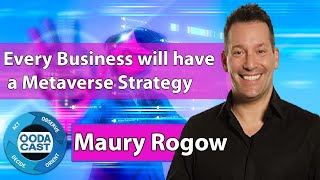
Maury Rogow, CEO of RIP Media Group, talks with Bob Gourley about why every corporation will need a metaverse strategy. The conversation covers storytelling in virtual worlds, digital marketing's evolution, and real applications in retail, medicine, and military training.
Chapters
Informing your decisions with intelligence, analysis and insight brought to you by the team@ooda loop.com.
Your brand will live or die based on the story you tell in the Metaverse.
Hello, I'm Bob Gourley, the Chief Technology Officer of OODA llc. And today on the Oodacast, Mari Rogo. Mari, how you doing?
I am great. Thanks for having me here.
Mario. I'm so excited to talk about, talk with you about a lot of subjects today. One, your company, RIP Media. But also I want to talk about the Metaverse and I want to talk about your story. It's so interesting getting to know you, where you started, how you got into tech, how you got into storytelling, and how you came to be the CEO of RIP Media Group and then get into the Metaverse.
Sure. Happy to. You know, I was in technology in the early days, in the 90s and the 2000s, and you know, what I found is companies were our company, but other companies as well were losing deals. They were losing leads because they were focusing on their features, how many ports, the data, the speeds, the feeds, all this sort of thing that customers and the IT group, they needed to know, but they needed to know that down the road. So they lost the opportunities. They didn't even get in the door. And what they needed to be doing was talking about the business problem and the story that they needed to be telling their customers. So I took a big risk. One day I just said, I'm going to throw the 80 point power, the 80 page PowerPoint, you know, to the weeds, and I'm going to just stand there and tell a story. It was 30 people in a room as a huge bank. And I started off with, this is the story of your customer when they pick up the phone to call you. And I went through what happens when they pick up that phone to call, how they're treated and then dropped, versus what can happen if they have the right systems in place. So I told the story of the customer and everybody said, yes, that's exactly what we go through. How do we fix it? And that's exactly what you want to do. You tell the story so that people say, hey, what happens next? So I created this little narrative, I created this story, and a couple of my own teammates saw me do that. And they adopted it. We adopted it as a company and we ended up selling for over $2 billion to Cisco Systems. Now, I'm not saying that I sold us for 2 billion, but I think it was a factor.
What made you think of storytelling as the answer to this? Challenge.
What was happening is I was watching people lose, and I just said, there's got to be a different way. So I think what inspired me, it really, when you get back to it, is I loved comic books when I was a kid. I loved watching tv, I loved watching movies. So I had no idea I would end up in Hollywood one day. But it was always in the back of my mind that telling a great story and even the friends that I had when I was, you know, in college especially, who could tell the better story was the one that sort of, you know, they got the free drinks, you know, and that kind of thing. So just kind of built on top of that. But it was frankly that I realized if you confuse, you lose. So if you confuse these customers, if you confuse them, or you're just getting into a battle of numbers, somebody that has 24 ports, when you have 18 ports, well, they're going to win. And that's not what it was all about at all. It was about, just as I said, finding how are you relatable? How do you connect? What's the journey the customer is going to go through? And make them cool, make them the hero. And it turns out that's the hero's journey. Take your customer on the hero's Journey, a classic story, and they will appreciate it.
Yeah, Mari, this is pretty interesting. And you yourself have been on a hero story because, I mean, look at you now. You're CEO of Ripped Media Group. You've succeeded in Hollywood, but how did you get to Hollywood from you were in the D.C. metropolitan area working with high tech firms. What made you want to make that leap?
So thanks for asking. I, you know, I was there. I was right in Northern Virginia, people, I don't know, if not people around the country know that Northern Virginia has a very rich technology hub out there. I mean, America Online popped up there and grew to, you know, just a huge campus and, you know, all the things that came around it and Cisco and lots of hubs out there. So it was amazing. But as I said, as I was going through and I was. I was telling these stories for some of the different tech companies I was with. I was with each for, you know, multiple years. And I started thinking, can I tell the story on the big stage? Can I switch this over and tell a big story on a big screen? And it just, it finally hit me and I said, you know, what if I don't go this year? I'm always going to stay here on. Always wonder, what if? What if I could have done that? What if I. And I just said, that's it, I'm going. So I, I sold everything and I drove to California with, you know, my suv, came out here, you know, luckily, because I was in tech and I did a good job. I wasn't a barista, right. I wasn't trying to sell coffee or anything like that as I was trying to kind of make my way through. So as I, you know, as I got out here, I just, I started taking everybody to lunch. I mean, my goal literally was one meeting a day for the whole first year, minimally. So they're an actor, they're a director, they're a producer, they create commercials, they write, they. Whatever it is. So I got just a blitz course of how does Hollywood work? Where's a niche that I could fit into? And you know, I did everything I could to just dive in. So I started writing comedy. I started working with the producer of Batman, the the Dark Knight, started doing script notes and he taught me a tremendous amount how to move the story forward. If you think about the Dark Knight, that was the first, you know, over two hour superhero movie ever. It was 2 hours and 45 minutes and there was nothing you could cut out of it. You had to keep telling this story to push it forward. So it all made sense. So did that. Produced a couple of my own movies and they were on HBO and at theaters and things. But that was now I'm looking back, it was six years of that. Way too long for my attention span. So I said, what can I do to bring Hollywood back to these companies? Can I bring storytelling back into the tech companies and the biotech companies and tell their stories? And the answer was yes. They opened the doors. Please help us tell these stories. We're having a problem doing it. So I, we did a whole series to story branding and videos for Cisco, for their optical routing to Ben and Jerry's ice cream. You know, how to tell their story and their history. You know, it's been very fun. I mean, for the past decade, it's been a lot of fun to tell these stories.
That's cool because I mean, storytelling, I know, is so very important for tech and getting people to understand the essence of it or any other major capability like that. But I think it's. We need it even more today because it seems like we're at another inflection point. And also I wanted to say, looking at your background and your LinkedIn profile, it seems like you caught a couple important waves there. You started out and you very successfully seemed to grasp the fact that the Internet is changing things and you work with some high tech companies who were behind that revolution, then you were there as the Internet went through this big wave to mobile and even more digitization about 10 years ago, and you seem to have done very well there. And now we're in another transition as the Internet is now enabling this thing that people are calling the Metaverse. And would love your thoughts on this because it seems like you're perfectly poised to be still storytelling as we transition into the Metaverse.
Thank you. Thank you for saying that and thank you for seeing that in my profile. As I said, you know, earlier, just even growing up, I was always attracted to the new shiny object. And one of my, one of the, one of the faults about that is I'll chase the shiny thing. The, the good part is when I get to focus, I get to really see what's coming around the corner. And, you know, one of my, one of my employees has said to me, you know, your superpower is seeing what's around the corner. You get to, you somehow see what's happening in two years. And I, I thought that was an amazing observation and a huge compliment. So it was really nice and it's nice that you said that. So I did catch those waves. Well, and this is Internet 3.0. I think this is web 3.0. And when you have a company that just announced recently they're going to put 10,000 employees into building a metaverse, one of the most profitable companies on the planet, which has now changed its name to Meta, we can see that the trend is there. We've had backing up just a year ago, six months ago, had companies that were, they're getting into crypto, they're getting in there, you know, they're selling NFTs. And then one which is Red Fox, that we've worked with for a good amount of time, now they are creating their own Metaverse. And we did all the, you know, the promotional, the marketing, the telling their story and doing the videos that are like movie trailers to get people into the metaverse. And we started talking about it. I was extremely excited for them, but nobody ever heard of this thing as far as people were, you know, there's the Internet and there's zoom. What do you mean, I can go inside of a world, how am I going to interact with people? So I said, this is it, this is the next trend. I mean, there's a lot of trends out there, but this feels like a megatrend and certainly has been proven, you know, with that Recent press release and funding and so forth.
Right. So let me step back and ask for your definition of the metaverse. What is this thing?
What is the metaverse? Well, right now, I'll say this. The metaverse right now is an infant. Right now, you know, the metaverse is, it's in an infancy. It's just learning how to, to, to crawl. Maybe some words are coming out if you compare it to a human. So it's so new. But what the metaverse is, is the next wave of a much more deep, much more immersive Internet. So don't think of it too much. Don't think of it. Some crazy world you're going to travel to, that kind of thing. I think the people that can grasp this first are really the target clients right now. The target customers, the target markets that are, that is, gamers, people that are okay with putting on virtual reality headsets, People that are in front of screens for a long period of time. They're playing Call of Duty. They're, they're, you know, they're, they're kids. They're, you know, building roadblocks or, you know, sim and things like that. Those are folks that go in there. There's a lot of users inside. They're building things, they're creating things in the market. Opportunity to go into a world where there's, where there's hundreds, thousands, and soon to be millions of people that are consumers. That opportunity is humongous. And again, I'll lean back on, you know, our client Red Fox. They went and they built a retail metaverse. This is an example. So there's different metaverses being built, but what did they build? A shopping mall that you can go in. You can go in, you can watch a movie, you can collaborate with friends, you can watch a movie with friends, even if you're across the planet from each other. But you can also go to shops and purchase, interact and purchase. And guess what? At your doorstep the next morning or even a couple hours, that food is going to arrive. Right. I ordered something at a kiosk, and then my doorbell rings 20 minutes later and that burger arrives. So they're really blending together, purchasing with the real world from the metaverse. So it's an, it's an immersive Internet where you're inside and, like you're inside of a game.
Cool. Cool.
Yeah. Long answer is that. Is that okay?
That's very good. And I think you hit on several angles of the metaverse that we need to talk more about. One is, you said it's an infant stage. But you also described a world where already there's millions. So maybe we can draw some analogies back to the Internet in mid to late 1990s. Back then there were already about 200 million users of the Internet. And people like you saw that and said, this is the next big wave. And now there's almost 6 billion people on the Internet. Well, now we have the metaverse, and maybe you can count in the millions the number of people that are in the the metaverse, but clearly it's the next big wave. And then you hit on retail. And I think this is critically important because people will interact and there will be commerce and there will be business to business commerce. But I think retail is going to be huge. This is where we can go and look and in a virtual world, try on clothes and look in a mirror and decide if you want it or not, try it on faster than in the physical world and then order it. And I think the sky's the limit. But there's issues here. And one issue is, let's say that you are a store and you put your 3D virtual environment up in some metaverse. How does anybody know you exist? How do you tell people where you are and what you have? Why would anybody come to your virtual 3D world?
That's great. What a great question, right? So I do think that this is the same way as, you know, think about the folks that didn't get on board in the mid-90s with the Internet and now are, you know, turned to dust. Think about, you know, Netflix versus Blockbuster. Think about, you know, the, the, you know, the SaaS companies, the software companies that said, we're not going to get on the App Store. We don't want to spend that money. We don't want to do that. And they got left in the dust. You know, some of them are, you know, many of them are gone now. The early adopters got to stake their claim, get their real estate and grow and grow as this happens. So to, you know, to answer part of the question, how's retail going to grow in there and why would people go in? It comes down to M and A marketing and advertising. You've got to tell the story of why it's great to be there, of why people should visit and how they can do it easily. So the way I kind of, you know, talk about storytelling for a brand, you know, brand marketing is why, what and then how. So it's why do we want to be there? It's the exciting. It's the new it's the sizzle. And I'll even. I'll even break into some of my. My ten commandments of story. So one of them is it's. It's the stuff. So if you're a brand marketer, you're marketing, you're in sales, here's how. Here, here's some elements of the story that will make people move. So I, again, I, you know, made movies. I've done a thousand, you know, commercials. You know, create a thousand commercials. Here's the five elements that will make people take a step forward. And that is, is it sexy or does it sizzle? Is it touching? Touching? Is it, you know, nostalgic in some way? To me, again, I'm talking about the story, not the product. People buy the story about the product. They don't buy the product. People buy the transformation in their lives. They don't buy the widget. They're buying something that's a vision of a better future, and that's what you can do with Metaverse. So S T U F F I call it the stuff. Sexy, touching, unique, funny, or fear. So fear is an easy one. We see fear of missing out FOMO all the time with technology companies. You don't do this, you're going to be left behind. You don't do this, you're going to lose your job. So you can go with fear. You don't get on board, you're going to be left in the dust. Funny is just, you know, it can be a great ad, it can be a great commercial. Or there's maybe there's places inside the metaverse, maybe there's a comedy club in there. Maybe we can go see your favorite comedian, whether it's, you know, you know, Bill Burr, Dave Chappelle, or whoever it might be, it. But make it, you know, make it funny. Those are the five. Those are the five emotions that people will move forward with. So that's how we're going to attract people to get into the metaverse. Go with the why go with an emotion, and then you can talk about what it is. We're talking about what is the metaverse right now, and then how you get on board. We're not sitting here talking about the Oculus or the this goggles or that. Whether it's AR or VR, we might get into that. But that's all how. And that's down the road. You want to get people to hooked first.
Yeah, yeah. All right. Very insightful and frankly, exciting. So given that, what would you say is kind of the state of Metaverse marketing today, I've heard very few people other than you talking about this, frankly.
So there's. So thank you for asking. So the state of the Metaverse marketing right now, again, I think is an infant, right? So there's so few people doing it. And what's happening right now is the metaverses themselves are doing most of the marketing. And then you have the people that are buying in. So you do have brands already buying in. Again, if we use the, if you use the example of the retail Metaverse, think of it as they built a huge mall. Now, it's not going to be some boring mall. You're walking along in the example that we helped, you know, we're helping grow and we help grow. You're actually, when you put on the goggles or you open the screen, you're transported to a space station out circling Jupiter. So it's incredibly sexy. It's incred sizzles. I mean, there's incredibly futuristic things, there's flying cars, there's all these things because you're in this amazing world of the future now. Who's there when you're kind of moving around, walking around. The stores are there. There's, you know, there's going to be a Nike, right? There's going to be a this, and your avatar can go ahead and do what you said. It can go try on those shoes or have a look at itself in the mirror. Do I like how that looks from this angle? This angle, you can map yourself and put it in there. You can also create a completely better version of yourself avatar and go that route. But that's where it is right now. So the marketing is really about getting people into the metaverse. The next wave of marketing is all the people that are in there, all the brands that are in there that are going to want people to come and interact with them. And I think the biggest opportunities now are to those markets. And again, one of the rules of the story I mentioned before is know your audience, the Metaverse audience are gamers. They're people that believe in, you know, in defi. Right. Decentralized finance, crypto, right. NFTs. These are the folks that are looking out five years, 10 years at a very different financial future. So I feel like those are the folks that they're being drawn in first. How do we want to market to them? What products do we have for those folks? And it'll grow more and more and more. Awesome.
Speaking of growth, it seems like the pandemic kind of accelerated a lot of this kind of activity. Would you agree?
Oh, absolutely, absolutely. I mean, what a dream for the people that are the creators, you know, of online worlds to had to have billions of people at home instead of going out and working and driving and that kind of thing. And what are they going to do? They're going to log in and start to learn more, interact more. And, you know, we saw the growth of Amazon even more and all the online platforms, you know, explosive. And if you look at Nvidia, for example, that makes the chips that are for VR, AR, you know, AI as well, you know, they're, you know, they've, I mean, quintupled at this point. So everybody around this world, they're getting wealthier and wealthier. They're doing great things, they're producing new things. So I think the pandemic, in all the horrible things that happened with it in this instance, I think it accelerated the growth of Metaverse, the growth of online activity, for sure.
Well, I think again, retail is critical. Business to business is also critical and is going to be a very early adopter of this. But I wanted to ask if you have views about other industries. I mean, it seems like there's so many other use cases for Metaverse kind of capabilities.
Absolutely. So it's not. I love that you asked that. Thank you so much. So think about medicine, think about medical, think about treatments, think about remote care. How amazing would it be if you can, you know, attach, but now you're actually in a virtual world with your physician, but you happen to be in the middle of Brazil in, you know, deeper in the rainforest or in a smaller town, but you have a heart condition and you can see the specialist at Cedars Sinai Hospital in Los Angeles that knows, you know, cardiology like nothing else. So you can now, you know, not just remote medicine via zoom and some vitals, you know, there's a deeper interaction. And what's amazing, the learning on both sides, I think is, is enormous because what you can do is if you know what this person's heart condition is, let's say there's after the diagnosis, now pretend I'm in the Metaverse. I happen to be the brilliant cardiologist. If I know the condition, let's say there's a hole in a valve. By the way, my wife is a cardiologist. I do know about these things. So I don't mean to get too deep. Let's say there's a hole in a valve, though, and I know that that's the situation right now. I'd have a tiny little model, or we'd arrange for surgery. I'm in the metaverse, or I'm in a virtual world. I could take that, model it, map it, blow it up to 10 times the size, spin it around, look and see. And this is how we're going to do the surgery in a whole different way, in a new way that's never been done before, because you can take this virtual world and expand what's real in an amazing way. So I think for medicine, for care, for treatment, there's amazing potential to help entire societies that haven't even been able to be helped before because just geographic access.
Yeah, Maurice. Very, very helpful. And that I just read about a week ago about the Veterans Administration investing a huge amount of money in virtual worlds to experiment with this kind of interaction. And now that you describe it that way, I understand why they're looking at this.
Oh, yeah. Well, there's. I mean, I'd say. I'd say two. I'm going to go with both sides because the Veterans Administration is actually a client, but I'll go with both sides. So think of war games. Think of keeping our troops safe. Think of keeping all troops safe, right? So you can enter into a VR world and you can do, you know, you can do testing, you can do training, you can, you know, without having to have live ammunition, without having to bring in the helicopters, that kind of thing. I think you can do real war games and strategy to, you know, maximize results, but hopefully lower casualties. Right? So I think that's. That's a really positive thing on that side to hopefully help humanity, because there's not everywhere in the world where there's peace, right? So sometimes, you know, things have to be done to get to peaceful times. The other side of it is the ptsd. The other side is when these folks come back, when these. And again, it's not just veterans, but everybody can go through, you know, ptsd. It can be from a car accident, it can be from different trauma. We did a whole marketing campaign and video series for the Veterans Administration, like I mentioned, where the treatment for ptsd, when these folks come back from battle or a few years later, they're finding by putting them in these virtual worlds like a metaverse and doing treatments there. There's different light sensitivity, there's different sounds, there's different types of treatments that really can help accelerate healing and make people healthy again and put the past in the past where it needs to be so they can live a really good life.
Mario, I have some follow on questions I want to ask you but first, I wanted to ask other thoughts about other industries where the metaverse can really take off.
Honestly, I'm going to go with name one. You know, we were. Side note, right, because I was, I was, I was talking with my wife this morning just, you know, about an attorney and. Oh, boy, attorneys. I was like, yeah, any part of life, you know, an attorney can be there, be help with contract negotiations, help with real estate, whatever it is. So, you know, I just said real estate. So let me just go with that. I think the really interesting thing is the real estate industry has sort of been untouched in many ways by the revolution in, you know, online everything. Right. And in the Internet, you know, people still have want to go, they want to walk through, want to touch, want to get a feel for the home. You know, that kind of thing we have. Yeah, mediocre, you know, quote, 3D tours or Zoom tours, that kind of thing. Well, imagine if you can go and you can map the house and then you're in the metaverse. Okay. So I put on the goggles or the glasses. I can walk around. I can actually feel, oh, that this is what the 10ft bedroom is like. This is where I could put things. In fact, let's see how my bed would fit here with my, you know, my desk in the corner and, and this kind of thing. Oh, can we renovate this? What would that look like? So all of a sudden, I feel like real estate, you know, every, in every facet around it. Not just the sale of the home, but renovations, remodeling, you know, beautification. That kind of thing could be so much simpler and could be done virtually until the people show up to do the work or move in. But I always found real estate is really interesting that, as you know, people are buying cars online, people are buying books. You know, we buy everything from Amazon. Real estate's okay, great, there's Zillow. We can take a look around these different things that have been done in different sites that have come up, but we really haven't had the immersive experience. And this is, this is a way that that could happen.
Right. So very helpful, thanks. And now the question you reminded me of as you were discussing simulation in Militaries is some of the great stories coming out of science fiction associated with this kind of thing. Of course, the very. The concept itself came out of science fiction with Neal Stephenson's Snow crash in 1992, where he coined the term metaverse. Since then, there's been so many other great descriptions of these advanced virtual worlds. And what it could be like. And you reminded me of Ender's game, where the young people who they were training as warriors and decision makers and leaders first were put through realistic squad training, and then it was all virtual. It was all virtual reality. And until it wasn't. And so it was great simulation and great training until they're ready for the real thing. And I definitely think there's example after example of things coming out of science fiction that can inform our decisions when it comes to the Metaverse. And so I wanted to ask you about that. You know, this relates to storytelling directly. The great storytellers like Neal Stephenson or Ernest Klein telling us this story of. In Ready Player One of a dystopian future where the metaverse is maybe the only place you go for any enjoyment whatsoever. Any thoughts on this connection between storytelling and science fiction and what we're building in the metaverse today?
Absolutely. You know, there are so many. There's so many parallels. You know, again, I think of. I think I can't get Ready Player One out of my mind when I think of the metaverse. You know, that just as you said, the only pleasure that they have in their life, the real area that they. That people truly interact, is in the metaverse. You know, it didn't have that name on it, you know, but everybody logged into their games. They made incomes there. They could make a living. They could, you know, again, you know, they could come out of there with a small fortune, no fortune, they could lose everything. But they were always connected. I'd say that was very much a dystopian future. That's very scary. I don't necessarily know. I flat out don't want a future where, you know, my daughter and I are plugged into something else and not interacting with each other. But as an augmentation, as a. As an addition to what we're, you know, experiencing in life right now, it definitely has a place. But certainly, I mean, if you look at, you know, the authors you just said, and, you know, and so many more, you know, you can see the scary future, and there are some positive futures out there as well. I think it's, you know, it's up to. Honestly, like, this is one where it's up to humanity to decide how it's going to be adopted. So, you know, we kind of touched on, you know, security. We can touch on, you know, who's inside, what's happening in there, and that kind of thing. And there are concerns wrapped around all of that that I think we got to be Mindful of as we create something that sounds so sexy, so cool, but so unknown.
Yeah. So you mentioned security. Let me mention two favorite scenes from Sci Fi. We mentioned Ready Player One and also Star Trek multiple times. In the Star Trek universe, we hear the story of the Kobayashi Maru, a unwinnable scenario, a virtual world where a young cadet, Kirk, was the only one who was able to emerge victorious from that scenario. He said he didn't believe in no win situations, but what he really did was he hacked the scenario.
He hacked it.
So there was obviously not enough security on that. And then let's look at Ready Player One. There's a key. A part of that plot is Wade Watts had to trick Nolan Sorrento into thinking that he was in the real world, but he's still in a virtual world. And how did he do that? He saw the password that Wade Watts had written on a sticky. Nolan Sorrento had written on a sticky note and so was able to log in with his credentials. So there's another security issue in a Sci Fi story. To me, that's a useful example of storytelling giving us lessons for today. You know, as we build our metaverse, we really have to think about security and privacy and counter crime.
Absolutely. Think about if anybody can log in as anybody. Right. I mean, again, you can, you can compare it very easily to a very 2D world. You know, right now just, you know, with Twitter, everybody, you know, people are anonymous, you know, can't necessarily track them back. News sources, you know, or, you know, superhero276 said this, right? I mean, and that's what's happening. And they're interacting with people, are interacting with each other. Some are being, you know, quite friendly, some are being horrible to each other. Right. So we have, you know, a huge division in our country right now. It's, you know, kind of seen around the world with different views. And imagine what happens if you can magnify that and you're in this world for a long period of time and you don't have parental controls and you don't have maybe age, you know, limits and things like that. Or the parents say, oh, it's fine if a 6 year old on here and they're using my handle, you know, that sort of thing. But they would have access to every, to credit cards, purchasing people, things like that. It's something that really needs to be addressed. And what we saw recently with the, the, you know, in the real world with this whistleblower, I'm sure people have different views on this, but you know, what that person was saying was there were a lot of security concerns, there's a lot of algorithm concerns, there's a lot of, of venom that was allowed to be portrayed and everybody knew it was wrong. But profits are going up, so let's let it happen now. Believe that person, don't believe that person. It's true. It's not true. That's up to you to decide. But the, the opportunity for some danger is definitely there. So how's it going to be regulated? Do you, do I think that, do I think Congress may knows the metaverse? No, I don't. I looked at some of those trials last year, just talking to Zuckerberg. Most of those folks have never even logged in. Right. They don't have any idea what this is going to be all about. So that's going to be really interesting. That's going to be really interesting.
It really, really is, I think because brands who stumble into this and don't put enough thought into security and privacy, if they end up compromising the security and privacy of their customers, very bad for the brand.
Oh yeah, absolutely. So the, and this is something that I think that people are going to this great subject to bring up. This is, and remember I said fear, right? So stuff, right. What's the fear? This is the fear of getting in, right? Not the fear of missing out. This is the fear of getting in. Gosh, we don't know the security. We'll wait and see. We'll be a fast follower or we'll be when Main street comes around, that's when we'll get in. You know, so brands have to decide. You want to be early in, how do you want to, you know, make yourself susceptible to security concerns in this whole new world that exists out there or do, you know, do you want to dive in? So I do think there's a, there's a cautionary tale to be told and we're certainly telling it. But there is the other side, which is, hey, there is a few hundred million people here. There is a lot of good that can be done. We talked about training, we talked about, you know, medical treatment and literally training of medical personnel, helping people, ptsd, helping people, remote medicine, that kind of thing. There's a lot of positives. So if it's done well, getting in early is going to be amazing and help you be a leader. The other side of this really, you know, it's kind of a three sided coin would be how are you going to tell that story? And I feel like this certainly comes back to you know where we really help brands. But that's, you know, don't get in there if you just have nothing to say and you're going to show a storefront, you know, don't just get, I'm going to own the metaverse. I'm going to throw a banner up. You know, I'm going to put a, literally, I'll throw a storefront up or something. Make sure you're planning out how you want to tell your multifaceted story, because every platform you're on should be a little different. Your LinkedIn story is a little different from your Facebook story, from your Instagram story, certainly to your meta story and a Metaverse story. So certainly have some planning. And you really need to start plotting out the next 18 months of your brand storytelling. And I use storytelling very synonymously with brand marketing. And what I always say is all this, your story is what people say about you when you're not in the room. What's your story? It's what people are saying about you when you're not there, because that's what they remember and that's how they feel about you. So how are you going to affect that in a positive way? I think that's the opportunity and again, the scary part for brands that haven't plotted this path right.
Mari, what other interesting things are you seeing brands look at when it comes to the Metaverse?
The Metaverse is so exciting to brands. If you take a look, you can even find. Nike is hiring for digital designers for their virtual products. I'm going to say that again. So it actually makes sense. They're hiring designers to create virtual metaverse based products. So that means you're in the Metaverse. Your digital clone, your digital twin is in there. Maybe they're living a better life than you out on the outside here on the regular world, you drive up in your Lamborghini, you hop out in your Nike tracksuit with your original Air Jordans. Perhaps there's an NFT that you can of the original Air Jordan, the first shoes that ever came out by Michael Jordan. And you're going to go hang out with Ariana Grande and Beyonce. So that could be the life there. So there's a lot of brand impact. There's huge brand impact. And Nike's already saying, we're going to be involved. They're hiring people to do this. They actually just went through the Patent and Trademark office to protect their brand in the Metaverse, for example.
Yeah, this is great. And it just adds to the excitement and it just underscores that this is really moving fast. You have all the big IT players investing in the Metaverse, of course, Facebook and the Meta announcement. Google has been in 3D and virtual for years. Microsoft just made a big announcement for business use of their virtual world. So that's their Metaverse play. They've been investing in the HoloLens for years and years and digital twins. So you see all that kind of investment. Then you see the investment in the infrastructure, Unity3D and EPIC and others, and Unreal Engine. Now you're describing the retail and what big brands are doing. And to me, it just makes us an unstoppable force.
That's true. I mean, if you think about the big brands pushing us into new markets, into new areas, that is definitely the trend that's happening. But the adoption is starting to gain as well. So the user adoption is growing. But how amazing is it that with everybody behind it, this force is coming and we can see it coming for one of the first times in history. So what's the opportunity for you? And a very old school ready. A very old school example is what if you could go back in time when that first car was being announced, the old gas engine that probably ran on railroad tracks, right? There were no roads, meaning there was no infrastructure. There was no Metaverse yet. There was just dirt roads, and this thing probably ran on railroad tracks. What's next? Well, you could be the one that goes after the oil. You could be the one that goes after and creates the cement for the roads. You could be the one that goes after the tires. You could be the one that. And on and on and on. So where do you want to lay your path in this new world that's coming? Because billions and billions of dollars are coming. And I love what you said about Google and Oculus and all the different investments that have been made. The thing that didn't exist was, where do we go? What are we going to do with it? And this world has hatched. The worlds are being created right now. So it's not just Oculus. So I can go see, you know, what it looks like on the moon or. Or just for a game. But now with it being, you know, going to be, it looks like it's going to be an open platform, that Interlink. We can go and we have a destination now. And the Metaverse is what it is with all the brands behind it.
Yeah. Fascinating. And another theme throughout this conversation has been storytelling. And there's so much great storytelling that's occurring about the Metaverse right now. But part of it I don't like because it's storytelling about a dystopian world for us in the real world. So we go to the metaverse because it's a better place. And I worry a little bit about that. I hope that's not what we're building here. I hope that we're building a great real world where people consume things and enjoy what they're getting, and also a great virtual world, because it just. The dystopian science fiction is a big turn off for me, and I don't want that to be a dystopian reality. And the only reason I say that is not to sound like Debbie Downer, but to say I'm hoping there's real value created for us humans in the real world from the virtual metaverse.
I thought that is the question, and that's the answer. If there is real value, then we'll keep going to it, because it doesn't matter how many tens or hundreds of billions of dollars are invested. If the users don't come and the users don't get value and the users don't stay, it dies. And that's happened before, too, right? I mean, it's that. That's, you know, think about different industries that, you know, went and then, you know, they came and they went. You could think of the Oculus and, you know, the different VR goggles in that for the past decade, right? So it's going to be up to us. And I think that's a, I think that's a great thing. When the consumer really is, you know, turns out to be in charge, that can be great. You got the brands there, you got great things to do, but we can really help this out. And that can help drive security, that can help drive safety and a whole lot of fun. And, you know, another analogy would be, you look at AI, people are scared of AI people. But there's some amazing things that are happening with AI. It's in the hands of the, the creators, in the hands of the developers, in the hands of the users. How's it going to be used? Nuclear power? What happens? What happens? Is it dangerous and terrible, or is it something we should invest in the future? So splitting the atom at the. Excuse me, splitting the atom, fusing the atom, both sides. Metaverse is probably the same, but there's so much good that can be done. We talked about training, we talked about learning. We talked about, I mean, you know, a child in the middle of, you know, the, you know, in India that can take Harvard level classes without having to have hundreds of thousands and travel and all those things. So there's a lot of potential here.
Yeah, I agree. Thanks a lot, Maury. You've given us a lot to think about. You've given me personally a lot to think about when it comes to my brand in the Metaverse. Really appreciate it. Any final advice for us on brands and marketing and storytelling in the Metaverse?
Your brand will live or die based on the story you tell in the metaverse.
Well, thanks, Mari.
Thank you very much. This is really fun. Very interesting. Thank you.
Thanks for listening to this. OODA Loop Production for the latest analysis on cybersecurity technology and global risks, please visit www.oodaloop.com.
More from Matt


Leading Cyber Change: Allan Friedman on the Revolution of SBOM & Future Cybersecurity Initiatives


Revolutionizing Medicine and Tech: Joe Tranquillo's Journey into Complex Systems






Bob Zukis and the Digital Directors Network: Helping corporate boards mitigate systemic risk

Adam Shostack on Cybersecurity and What Every Engineer Should Learn From Star Wars