Quantum Security Practitioner Dr. Jane Melia of QuintessenceLabs On Protecting Your Information
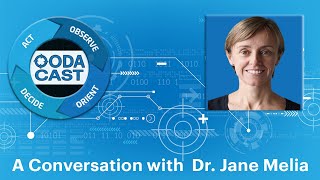
Dr. Jane Melia from QuintessenceLabs explains quantum security and why it matters now. She moved from fluid dynamics into quantum tech and breaks down how quantum computing differs from quantum security, and what her company does to protect data against future threats.
Chapters
Informing your decisions with intelligence analysis and insight brought to you by the team@ooda.
Loop.Com hello Jane, welcome to the Oodacast.
Hi Bob, it's great to be here. Thanks for having me.
Yeah, great to see you. And Jane, I'd like to introduce you to our listeners in our community and give them a bit of your background. And folks, if you haven't met Dr. Jane Melia, she is a PhD in fluid dynamics from Cambridge University and I want to talk to you about that a bit. Jane, it's interesting, your undergraduates in engineering, you go on to get a PhD in fluid mechanics and now you're someone I regard as one of the greatest experts in quantum security and quantum computing. And I want to talk to you about how you made that transition. And I also want to tell people that when, when I first met you, you were already at Quintessence Labs, this company that had established a tremendous reputation for using quantum effects to generate high entropy keys and improve security. And that was maybe 2014. Since then you guys have been innovating and innovating and innovating, building on that ability to create encryption keys using quantum effects to have a very secure, comprehensive offering. Oh, and Jane, I also want to tell people that you've had a background in both startups and enterprise IT companies, steering products and driving strategy at places including some very big companies like hp. That's what I know of your background, Jane. Did I get any of that wrong?
Thank you. That was very flattering background. Thank you for that. And I think it was pretty much spot on. I think what I'd like to emphasize is, yes, I'm an engineer by inclination and training and worked as an engineer for several years. But I have moved over to the dark side of business, so be it. Corporate strategy, product management, analytics, competitive research, and all those fun things about how do you make a company prosper and grow. And that's when I made that transition from HP into the startup world. And I would say that one of my passions has been taking an exciting game changing technology and helping, you know, with my colleagues bring that into the form of a usable product. And that's what I've done in what I had done before joining Quintessa's lab, say in solar energy and energy storage. But I'm really having finding it very exciting with Quintessence Labs taking this quantum technology and now deploying it and sharing it with banks and governments and other companies to help make their security stronger.
Jane, I want to talk a bit more about that, but I Also wanted to ask you about the. Maybe it's just me grasping for an analogy here, but I think of PhD in fluid dynamics, and then I think about how the Internet works. We hear people simplify it as saying, oh, it's a bunch of tubes. And are there analogies between fluid dynamics and how the Internet works? And does that help you in your current position, you know, thinking, you know, does fluid dynamics translate to what you're doing now?
So, sadly, I'm going to say probably not a whole lot, but I'm sure one could find analogies if, you know, if you stretch things a little bit. I think for me, the, you know, obviously I have a passion for physics and fluid mechanics is part of that. My background is not in quantum science or even in cyber security, but I would definitely say that my background has enhanced my interest and my passion for this type of technology. And I certainly find going to work every day is a very fascinating thing when one works in this environment. So I'm really having a blast.
That's cool. And another thing I noticed after I met you, I would see you speaking at multiple events, including some I would organize. In fact, we had scheduled you to speak at our conference that was going to be on the 19th of March that we have to postpone because of the current pandemic. And one of the things I've always enjoyed is how you speak about technology, because you can take a very complex subject and explain it in a way that business leaders can understand, even if they don't have a technology background. And I've always appreciated that about you.
Thank you.
I do my best with that. I want to talk about some of the most complex things that humans have ever thought about the quantum computing and quantum security. But first, can you tell us, how did you make that transition into what made you transition into the world of quantum security?
So the story behind this is actually a bit of a personal one. My son, who is a computer scientist and who loves security, offered me a book called the Code Book by Simon Singh, which I recommend to all listeners. It's a great book. And in there, there is a chapter on quantum cyber security. I was reading this, fascinated about, wow, how quantum. How physics can actually protect data exchange. And it was very interesting, quite challenging. It's the first time I was reading about it and I was very excited. And then, coincidentally, the time I was reading that book, I received a call from a former colleague who had just joined a quantum cyber security company, a leader in quantum cybersecurity, Quintessa Smart Labs, and said do you know anything about quantum key distribution? Would you be interested in applying for a job at this company? And I mean, you know, that coincidence was just too strong. So of course I said yes, and the rest is history. And I've been with Quintessus Labs now for six years.
That's great. That's cool. So I want to ask you a question about quantum computing and quantum security. They're in some ways totally different concepts, but also they're closely related to. Can you help us understand the difference between quantum computing and quantum security?
Okay, I'll do my best. And certainly this is a topic that comes up often. You know, people want to understand this whole complex domain. And quantum computers, we hear a lot about them in the news. We also hear a lot about quantum cybersecurity. So people kind of bundle the two, but maybe let's start by quantum computers. So, quantum computers, I think many of your readers may have know, read articles about them in the past. These are devices that use quantum principles to significantly enhance the performance of computers compared to classical computers. And they do this simply by using bits, which are called qubits, which have the benefit of being in superposition, so that it can be in multiple states at the same time instead of being either a one or a zero, that a whole distribution of those states at the same time. And by using these qubits, and it's obviously a lot more complex than that, by entangling these qubits, the scientists who are developing quantum computers are able to tackle certain mathematical problems by looking at all the potential outcomes. And, and that allows them to accelerate the performance for solving certain problems, not all problems. And we're thinking, for example, problems such as optimization problems, problems such as finding the optimal route of certain airlines, or problems such as trying to do medical research and find different outcomes. So quantum computers, basically what they are enabling us to do is significantly accelerate the solution of certain mathematical problems, and that will have fantastic outcomes in allowing us to solve, say, medical problems that we cannot solve using today's computers. So that's the fabulous side of quantum computers. The challenge from a security perspective is in doing so, they are also able to solve for some of the math that we are using to protect our data today. And that is a challenge that all of us in the security world are thinking hard about, which is how can we maintain security when quantum computers, you know, progress? And they're progressing quite rapidly today. So that's the quantum computer side, which is really the. The solution to many mathematical problems, but also a threat to security and what is quantum cybersecurity? Well, quantum cyber security or quantum safe security, but multiple ways of calling this. This is the, I'd say the suite of, of techniques that can be used to protect our data from the threat of quantum computers. And I'd say in the meantime, many of these solutions are also making our data safer, even, you know, excluding the quantum computer threat, because that's just basically sound security principles. But one of the main aims is how can we be safe once these quantum computers mature. And they include things such as let's make sure you've got really good keys. So what we call entropy, the unpredictability of the randomness that you use in your security. So make sure you have really high levels of entropy in all your random data. Make sure you've got a really good key management capability. And that should be crypto agile, but so flexible to be able to incorporate new encryption algorithms as they are proven and recommended. And then things such as quantum key distribution, which I'd say is the most secure way of how do we exchange key without relying on math that can be broken potentially by quantum computers. How do we exchange our keys using physics instead of maths? And that's what quantum key distribution is all about. So I hope that was kind of a little bit clear. So, quantum computers, there's a promise, but also the threat for security. And then quantum cyber security or quantum safe security is the way that we as a set of tools that we have to protect ourselves from that threat.
Okay, that is, that helps a lot, frankly, I think. But let me ask. There's this thing people talk about called Shor's algorithm and play into that.
Yeah. Peter Shor, very, very interesting person. So before I answer that, I'm going to have to give maybe a little bit of background to help with the answer. So at a very high level, the way we protect our data is kind of split into two main types of encryption algorithm. The first is called the symmetric algorithms. These are protocols such as AES and there are many others. And these are very strong, very secure, actually quite efficient to use as well.
Right. And that's the oldest form of encryption in the world, right?
Right, absolutely. And it's extremely, extremely robust. And what it means is if I have a key, I can use an AES algorithm, protect that data on my laptop or wherever, and it's going to be safe. It's going to be safe. As long as my key is truly random and the key is long enough, my data is going to be safe, and it will even be safe. From a quantum computer, there's an algorithm called Grover, where we were. Grover demonstrated that symmetric algorithms will be able to withstand quantum computing attacks as long as the keys are random and are long enough. So can you. So typically, we may have to double the length of the keys we're using. So that's the good news. Symmetric encryption is safe. The challenge is to decrypt that data. We have to have a single key. And how do I give you that key? How do I share that key with you? And that's something that symmetric encryption cannot do. And that's where asymmetric encryption comes in. And asymmetric encryption is a way for us to exchange data securely using a private and a public key. And that is the way that we are currently using. That's a system that we're using currently to exchange those keys that can be then used for symmetric encryption. Now, the challenge is that while symmetric encryption remains strong, asymmetric encryption is based on mathematics that quantum computers are really, really good at, such as factoring. And the problem is that whereas classical computers would take, you know, hundreds or thousands of years to break asymmetric encryption, which means that we are really, really safe today, quantum computers will be able to break that maybe in a matter of minutes. And so asymmetric encryption kind of falls apart. And that is what Peter Shaw demonstrated in his algorithm back in. In 1994. And I believe that at the time, it was more a mathematical exercise, almost a curiosity, because we were so far away from building a quantum computer at that time that it didn't seem to be a realistic threat in our lifetimes. But now that's changed. I mean, a number of companies have made huge advances in progress of quantum computers. And while today quantum computers are not mature enough, at least to our knowledge, are not mature enough to break this type of algorithm. Progress is rapid. And so it's certainly something that we should definitely not rule out, and we should actually plan towards building an architecture which is able to fend off this type of attack.
Great, Jane, thanks. Let me ask this. I've asked a lot of other people this, and I try to read whenever I can, like, when will a quantum computer be able to use Shor's algorithm to really break asymmetric encryption? And I heard statements from a intelligence community leader about two years ago who said he thinks it's a decade away. I've heard others say that, you know, surveys of the academicians who are working in this field say things like, there's a 30% chance that we'll have a computer like that in the next 10 years. That's all very ambiguous. And I just wondered, what's your thought? When will we have a quantum computer that might be able to break asymmetric encryption?
So for that type of prognostic, I'm not the expert, so I defer to other people. And I, and I have a lot of interest in talking to experts in that field to try and find out what, what do they think? And that there is a range of answers. But one answer I found, which for me was, was quite compelling is, you know, it's a question of risk, risk analysis. Right. You know, would you be comfortable with a 50, 50 risk that your data is going to be all lost within 10 years? Probably not. And so the, the conversations I had most recently at RSA was with some experts in the field where was probably a 30% risk that between 7 and 10 years a quantum computer is able to break this. And for me, a 30% risk is a very high risk and not something I would be comfortable with. And the challenge, of course, is potentially the first time somebody achieves this, we will not know about it because it's such a powerful tool. So I would definitely be planning for making sure my data is safe within seven years or before, and for multiple reasons, and we can probably elaborate on this, but one reason is, you know, data that is being exchanged today is, you know, I think there are signs that is being harvested for decryption later. So even data that I'm using today, somebody could put it aside and decrypt it in that seven or 10 years. And if that data is still of interest, than it is vulnerable.
Right. This is, I think that's a good articulation of the threat. You know, your corporate holdings or if you're in a government agency, your holdings that are encrypted now, if it's being harvested, or if the communications between locations are being harvested so someone can break it later, that is a significant threat.
Yeah. And also, even putting aside the harvesting threat, which is just one we just have to face today, and we have to do what we can to protect our data today. But even then, even forgetting the harvesting threat, if it takes you a few years to update your IT infrastructure, which is not an unreasonable lapse of time, and if your data needs to be safe for a period of years, maybe five years or 10 years, then your data, you have three years to protect your infrastructure. Your data needs to be safe for five years, eight years, you're already in that window. And that's why we're Beginning to work with a number of corporations to understand what is your threat, what are the most vulnerable parts of your data and what are the things that you need to think about and plan for tomorrow. And what are the things that you can start implementing today that will build a secure foundation? I think a number of organizations really are trying to grapple with this problem today and start to put things in place soon as possible, even if they don't have a perfect solution today. Let's start getting that foundation ready.
Another thing I have observed about you and Quintessence Labs is you are deeply engaged with the community standards processes like those underway at nist, helping them understand. And you're also working with the community on things like key entropy and what's the right standards there, and also quantum security and what should be done there. And I understand NIST has out for comment a list of like 22 quantum safe algorithms that they narrow down to a smaller number. More enterprises will be able to implement a quantum secure algorithm for their data holdings.
Yeah, that's actually a really interesting topic. So we have this thread of quantum computers and then there are multiple tools in our toolkit to be safe against it. I think I've mentioned entropy. Make sure we have true random numbers. That's super important. That's something that people can do today. This is commercially available and easy to implement. But another solution, and it's complementary, all these things build on each other. It's not one or the other. These are new algorithms. So remember we talked about the asymmetric algorithms that would be broken by quantum computers? Well, there are a host of other algorithms that people are exploring that would have more resilience against quantum computers. Now there's always a risk because an algorithm can be safe to our knowledge, but then can be broken down the road. So there's a certain vulnerability there. But a host of very smart mathematicians and other folks at NIST are currently exploring that list of 20 something algorithms and trying to determine what will be the recommended algorithm that people will be able to deploy. And I think they're talking of a 20, 23 time frame for getting that list out for people. And so there are a bunch of different algorithms which are contenders for that, and we don't know which ones are going to be the right ones. And so things that people need to think about is a first of all, make sure you have that entropy, because whatever the algorithm is going to have is going to need keys, and those keys had better be random. Because if you use a deterministic method to Generate your key. That's kind of putting a weak link in the chain of security. So think about that. But then also think about your key management capability. Is it going to be flexible enough to be able to integrate new algorithms as and when they become recommended and swap them out with new ones as we find out more about what best practices are? So think about what we're calling crypto agile key management. Not something you should be thinking about. Today. You're implementing a new key management. Ask the question, what kind of quantum safety can it deliver? Is it crypto agile? Can it manage longer symmetric keys? Remember we talked about that for Grover's algorithm? Make sure your keys are longer. And are those keys truly random? So those are important things. So quantum resistant algorithm, it's one of the tools in the toolkit that we have to build that quantum resilience.
Cool. Jane, I am thinking back to some of the things you've told me in the past about Quintessence Labs, and there's. I want to say what I think you guys do and what I know of you and what I hear Enterprises say, but then I would love to get that in your words. I see Quintessence Labs as being a. You provide a device that is incredibly fast. It generates keys incredibly fast. Not just keys, but the most random keys possible. And you do that based upon quantum, quantum effects yourself. And here's the way I think I understand you do it. So let me put it my words, please, and you tell me the truth. It's you look for when at this quantum scale, sometimes matter is just created and disappears and it's just totally random. So you have a diode where a laser is shot essentially through a vacuum and then measured on the other side of that diode. And the difference in how that laser arrives on the other end is measured, and that difference is only because sometimes matter just appears and disappears in a totally random way. And you can then build upon that to generate the highest possible entropy keys. Am I close to saying that? Right?
That was a very great description. And I would say Quintessence Labs, we've done. We have a couple of approaches for generating entropy. And the. So what you're referring to is the shot noise, I think, is what they call it, which is the kind of, you know, when you think of the far reaches of outer space, you think it's emptiness. Whereas what the physics tell us is that in reality you do have spontaneous creation and destruction of particles in a quantity, quantum random way. Now, one of the ways that Quintessence Labs has used to generate entropy. And this is the first way that Quintessence Labs were doing when I first arrived in the company was in effect using lasers to measure that shot noise. And so we would have a device which is about the size of very hard to show, but maybe about two or three sizes cell phones together. And that incorporated lasers measuring the shot noise. And we were generating entropy at 1 gigabit per second. And that is entropy, which is full entropy. So each bit is totally decoupled from the rest from each other. So you have one gigabit of truly random numbers. We've actually developed further technology since then with the goal of making the devices more compact, more scalable. And so what we're doing right now is something called quantum tunneling, whereby you have a diode, which is a forward bias diode, which technically, if you think about classical physics, electrons would not be able to traverse that diode. And in fact, when these diodes were first created, they were finding, well, we actually are getting a signal through this diode. This is very odd. Maybe the device, it's flawed. It's not a flawed device. What you're actually measuring is a quantity physics effect. So classical physics would say no electrons can go through this diode. Quantum physics, which is, I'd say more real, says that there's certain probability that some electrons will go through this diode. And so what Quintessence Labs is doing in our latest instance of the entropy generator is using these effect called quantum tunneling, whereby a certain number of quantum particles will be able to tunnel through that diode in a totally unpredictable way. And so we're then measuring that current at the other side, and that varies, fluctuates in a totally quantum random way. And we're using that to deliver this stream of quantum bits. And the benefits is that the diode is smaller, more compact, which has allowed us to reduce the form factor of our QRNG to the size of a cell phone. It fits very snugly into a one Raku appliance. And indeed, one of the things that we're very excited about is we're also in parallel working on an even smaller form factor, whereby our quantum tunneling device will fit onto a single chip and that will bring it down even smaller. But our current quantum entropy, we're using quantum tunneling, which is the next step beyond the laser approach that you were alluding to.
Fascinating. That's really neat. And then it's also fascinating to think about where you're going in the future if you continue to make this smaller and smaller. And do you see a day when there'd be, you know, those. That kind of effect would be in our cell phones, for example.
My expectation is that quantum random will soon, sooner rather than later, be everywhere. As we're able to get this down to chip size. The question is, why not, you know, why have a weak link in your security chain? And that weak link being deterministic random, which is particularly important as the quantum threat becomes closer and closer. So if we can get quantum or full entropy, that is, you know, bits that are truly independent, each from each other onto the size of a form factor, why not have that in our laptops and our servers and maybe even our cell phones? So I expect that will happen.
Cool. And let me ask another question, because I know you guys also help enterprises manage their keys. So you write an incredibly random number that can be used to generate large quantities of keys really fast, and then what?
Yeah, so that's actually a very good question. So if I said, here you go, Bob, here's a quantum random number generator, most people would say, well, that's very nice. Now what do I do with it? And so Quintessence Labs are really all about. I mean, our mission is securing the world through quantum innovation. And securing the world is really not just about giving you a. A widget that you don't know what to do with, but making solutions that are really practical. So we are very well known for our quantum capability. I think what people don't necessarily know as much about Quintessence Labs is we have a very strong, I'd say, classical cybersecurity practice and classical cybersecurity capability, and we blend both of them. And one example that I think you were alluding to is the key management capability. So we have a key manager, which is very, very robust key manager that implements best practices and key policy management, you know, complies with all the standards and so on. It has built into it a quantum random number generator that streams, you know, bits at 1 gigabit per second. And so that key manager naturally and automatically makes use of that quantum random number generator. So you don't have the problem of what do I do with it? It's built into the key manager. And that key manager also implements best practices, such as hardware security module, which is FIPS142 Level 3 compliant, to make sure that you've got the highest level root of trust to protect your keys. So what we're doing is helping that quantum security become mainstream. A key manager that's easy to integrate, that meets all the standards, that's interoperable, that manages the keys, that is crypto agile. So we'll be able to incorporate those quantum resistant algorithms as and when NIST approves them, but also has a baked in full entropy random number generator. So how do we make it easy for companies to start doing this as part of their daily jobs?
Awesome. Thanks Jane. This has been a great update. I really appreciate it.
It's a pleasure. It's great talking to you.
Yeah. Well, let's do this again soon.
Absolutely. Thank you so much, Val. Appreciate it. Okay, take care.
Thanks for listening to this. OODA Loop production For the latest analysis on cybersecurity technology and global risks, please visit www.oodaloop.com.
More from Matt


Leading Cyber Change: Allan Friedman on the Revolution of SBOM & Future Cybersecurity Initiatives


Revolutionizing Medicine and Tech: Joe Tranquillo's Journey into Complex Systems






Bob Zukis and the Digital Directors Network: Helping corporate boards mitigate systemic risk

Adam Shostack on Cybersecurity and What Every Engineer Should Learn From Star Wars