Ric Prado on Intelligence Operations and a Legendary Career in the CIA
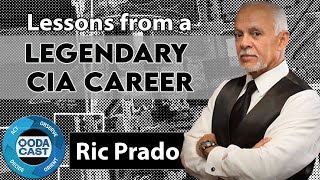
Ric Prado spent decades running clandestine operations for the CIA, from the Castro revolution through 9/11. He talks about what it takes to lead in intelligence work, how the agency responded after the attacks, and what he learned about staying alive in dangerous places.
Chapters
Informing your decisions with intelligence analysis and insight brought to you by the team@ooda loop.com.
All right, I'm @devoe and thank you for joining us on Oodacast. Today we got a very special guest, Rick Prado. Rick, you've got a story that could be a best selling book. You know, born in Cuba, rising through the ranks of the CIA to be, you know, one of the, the best clandestine operations officers in CIA history. Says, step us through, start us at the beginning and step us through that career progression.
Well, you must have been talking to Colfer because he's the one that wants me to write a book. Yeah, Cuban born. I was there during the Castro revolution. First heard gunfire and anger when I was like seven when they took over my town the first time because my dad's business was the coffee roasting business. They confiscated that very early on. And he saw the writing on the wall and he had the courage to send his only child to a country that he had never been in. Not know if he was ever going to visit it. Just for freedom, not economic privileges, but strictly for freedom. You know, that very early on that taught me two things. One was the conviction for freedom, that innate need to provide your family with freedom. My dad had a seventh grade education, had never read Marx or Lenin, but he knew that was wrong. So that conviction of putting your child on an airplane, not knowing if you're ever gonna see them, that, that was, that was very forging for me. And I think the second one was my dad came to this country. When he came down eight months later, I was in an orphanage for eight months in Pueblo, Colorado. So that was my welcome to the United States. First sports event that I ever went to was a rodeo. That's all they had over there at the time. And. But you know, my dad bought into the American way. My dad never wanted to go back to Cuba. He became a resident and a citizen. We became residents and citizens as soon as we could. And until the day he died, he never missed voting in an election. So I think that that's kind of like my grounding, you know, seeing the injustices that we suffered under communism and all the isms, you know, terrorism, anarchism, those are all things that some people have to fight.
So you arrive in the United States at some point, wind up down in the Florida area and take us from there.
Finally came out in late 62. I came out early 62. We moved into a ghetto area in Miami, South Miami area. We were six to a house because we had my cousins and my aunt living with us and no work and it was pretty tight living. But I was 11 years old and had a big yard to play in the common area. So you're kind of immune to until later on in life you look back and you see what your parents were really living through. We ended up moving to Hialeah, which was the boondocks in St. Dade county and went to high school there. And eventually I had a thirst for adventure. I always wanted to do things like scuba dive. Started scuba diving when I was a freshman in high school and one lucky day. I do believe in fate. I think fate dictates, I think fate shows us paths and if you have the courage to take it and be willing to pay the price of admission, you find your path, you have a happy life. And I think that's what happened with me. I bumped into a guy in college, junior college, who had been a pararescue and we got to talking and he started showing me pictures of their training and all this stuff and you mean I'm going to jump out of airplanes, scuba dive, shoot guns and you're going to give me a cool hat to wear? Where do I sign up? You know, so that began that career path. So my first alma mater is definitely Air Force Terror rescue.
Nice. And then out of the Air Force. How do you wind up working at the CIA? Take us through the sequence there.
You know, again, I think that a little bit of effort and a lot of luck and again I believe that I was destined to do what I was put on the surf to do. I when I could not go to Vietnam, I tried when I was a pararescue and after about four years of being down at Homestead, I applied for the agency and I wrote him a handwritten letter as a matter of fact at the time saying, hey, you know, here's who I am, I would love to join Air America or something like that. I know Vietnam is over, but you've got to have other things. And they sent me a real nice note back saying primarily, are you kidding, we're firing people, much less hiring. But I didn't give up. I applied a couple of times later. Again, back then there was no websites to log on to a crap. And what happened was in the late 1980s I was riding rescue for Metro Dade County Fire Department. I was one of the early paramedics. And I got a call from the agency that the Contra program was starting and because of the attrition they did not have a native Spanish speaking paramilitary guy or guy with paramilitary Background. And they pulled me up there and like they say, the rest is history.
Excellent. So that was kind of your first work that you did was around working with the Iran Contra type stuff. What other regions of the world did you work in? And then kind of. What was your progression up through retirement at the Agency?
Well, you know, I. Like I said, I started on the paramilitary side and I stayed home. Based in Sad Ground Branch for the first 10, 11 years of my career. But after my first tour, I was out there in the Contra program for a little over three years, living in jungle hammock Monday through Friday. Best job I ever had. The satisfaction of the people that I dealt with. Everybody had a story. Everybody was there for a reason. Very rewarding. When I came out of that, I finished my college. The Agency sponsored me. George Mason. And then I went through the farm, became a case officer. I have three Latin America tours, couple of Asia tours, one nasty Muslim country that I cannot talk about. I was the chief of station there. That brings us up to around. Oh, back up a little bit. When I came out of one of my pcss from Asia, I went back to the counterterrorism center. My third tour was my first CT tour, which was in 88. And I had just come back to headquarters, back to ctc, when the then chief of operations calls me in. I was a branch chief. They had given me a branch and said, we're starting a task force and we want you to be the deputy of the task force. That sounds great. And he says, well, it's actually going to be a virtual station. So what the hell is a virtual station? Gave me the concept. It was going to be the first time. It was the first ever issue station the agency created. And Jeff says to me that the chief of ops says, and the task force is chasing bin Laden, Osama bin Laden. My response was, who? Question mark. We didn't know who the hell he was. Mike Scheuer, a very renowned agency officer, was the chief since chief of station. I was the deputy chief of station. So I was a senior ops guy. And so being a plank owner, something that eventually gets bin Laden hunting years later, was very rewarding. Well, it brings us back. After coming back for the last time from that Muslim country, I took over as chief of operations at the counterterrorist center. And that was 2001. And you could imagine shortly thereafter we had our 9 11.
Yeah, absolutely. So embarrass you a little bit. A very senior CIA executive told me that Rick Prado is the closest thing to 0.07that the United States has ever had. So kind of step me through, you know, what are the kind of the operator and the decision making skills in particular that contributed to the success of your career?
Well, offline, you got to tell me who that guy is so I can send him a thank you. But no, you know, I never had a career plan. I went. You know, most of us go into the Agency, especially me, because I was recruited from the streets, for lack of a better word. We don't know what the agency really does even nowadays. So for me, it was an adventure with a high moral ground. I mean, that was what appealed to my ethos, you know, being able. I had the courage, I knew that I had the courage to go in harm's way. The willingness. I had my pet peeve with communism and all that other stuff, but I really just wanted to enjoy the fact that here I am, kid, fresh off the banana boat, and I'm at the CIA. So my goal was to do the mission and be a good operations officer. That was my only goal, my only career plan. I know that I took assignments that a lot of people didn't want. They were the hardship assignments. A lot of them were some of my special activity divisions, bosses coming to me and going, this is an assignment that's got your name on it. And I always saluted and went. So I think that as far as the personality, that was it. What drove me was results, messing with the bad guys. I was also blessed with great managers, sorry, great leaders in my career. People that I always said to myself, someday I hope to be looked at as I look up to my first boss, Ray, and subsequent bosses like that. I think on the management side or the leadership side, the hardest thing for people in a federal organization, including the agency, is not to become a bureaucrat as you rise up through the ranks. And I am very proud of the fact that I never did. I mean, I literally ended my career more ways of one on the streets. After nine, eleven, the last three years of my life, I gave up the chief ops job to go back on the street. So. But for as far as leadership, you know, making the hard decisions, decisions with consequences, it's not for everybody. And a bureaucrat is always going to look at how's this going to look like, how's this going to blow back on me? What is my boss gonna think? And those are, that's not the right way to approach a career or a profession or a vocation like the agency. You should be looking at, that's the bad guy. How Do I go after them? How do I take them down? How do I recruit the right people? And I think that that's key also. I always had a lot of luck, you know, recruiting people to do anything that I wanted to go do. And it was empower those, you know, folks that are working with you with both the responsibility and the authorities to do their piece of the cake. You mold it together. You have the vision, you lead it. At the end of the day, you give them the credit and you take the heat for anything that got screwed up. And that's what a leader should be doing.
It seems to be a theme in these podcasts. I think we're 42 into it. We always talk about leadership and decision making. And the great leaders don't suffer from decision paralysis. They recognize that they have to make decisions with imperfect information. And we've seen over time, the bad ones are always waiting for that next data point, almost paralyzed. It reminds me of the old samurai adage that there's no decision worth making that you can't make in seven breaths. And that seems to follow through, particularly as it relates to business, or in your instance, the kind of clandestine operations leadership component.
Yeah, paralysis by analysis is definitely a crucial thing. And in our business, where your decisions have a lot of consequences, the 80% solution is often the only one you're going to have. If not, you miss your windows. You know, you take guys like Hank Crumpton, who was in his choice assignment overseas, just moved in there when 911 happens. And I'm the guy who reached out to him on the phone, on a secure phone and asked him if he would be willing to come back and help us fight the war. And there was no hesitation. Like I said, less than seven threats. He said, absolutely, I will be there. And, yeah, those are the people that I grew up with, and those are the people that I think I learned a lot from.
Excellent. Can you step us? I know it's always a difficult question, you know, given the pedigree of the operations you worked on, but is there an example you can give us of a time when you were working on an operation where something went right or went wrong and it served as kind of an impactful thing for you with regards to your decision making or kind of what you brought to the job?
Yeah, unfortunately, the real juicy ones I cannot talk about.
And wait for the book.
Okay, we'll make it for the book without prior PRB approval, but I think that there are a few notes. You know, one of the things that when I first got into the Agency because of my, you know, being a street kid growing up, I learned to deal with all kinds of people, you know, at all different strata. But to me, violence or, you know, physical, you know, aggressiveness was kind of like my mindset. And then come to the agency and realize that that is the last resort for anything that we do. So I learned really early on, and this was in the Contra stuff, because again, I was the first man, only guy in the contract program. For the first month, 14 months of that program that could go to the camps afterwards, they started bringing in some contractors, special forces guys. And then eventually we had sad guys. But for those three years, especially the first 14 months, I was the only guy living in the camps every single day. And don't get me wrong, we had plenty of kinetic experiences there because we were, you know, getting attacked by the Sandinistas and vice versa and all this kind of stuff. But learning how to defuse situations and management situations came early to me. The fact that, hey, you know, in our business, the idea is not to get into a fight. The idea is not to pull your gun. The idea is to get the mission done. And the one incident comes to mind, there was a revolt from the Contras. There were about six commanders from the east coast that came out because they thought that their leader, their then leader, Mosquito leader, Stedman Faggot, was stealing from them. And because the resupply wasn't coming, they were there fighting the Sandinistas. The Sandinistas had put on a hell of a push because they were very viable fighters, the Miskito. So these guys came out and they literally came in to Lynch Stanton, the guy that we had at the Mosquito at the time. We had put three guys out there in different areas of the camps. He was smart enough to grab his bag, the one time pads and get the hell out of Dodge. When I showed up at the base, my boss tells me what's going on, and I said, let me go out there. He says, what are you going to do? I can defuse this. He says, what do you mean? I know these commanders. I trained these commanders. I have credibility with them. So I literally flew out there in a little private helicopter doing Mach 3 all the way out there and beat Steadman to the camp. And then I told him to stay secure. And that night I called a meeting with the Mosquito Indians. And you gotta understand, these guys were rough. I mean, they got the bandoliers and they got the scars and they got the guns. I mean, and they were not A bunch of happy campers. And I remember that we stopped at a refueling spot and one of my sad buddies came up and he had some extra guns that he wanted me to take. And I go, dude, I got an AR15 and a Browning 9 millimeter pistol. If I can't, you know, this isn't a firefight that I'm getting into. You know, this is an intellectual endeavor here. So here I'm sitting around this bonfire and there's these six commanders with their bodyguards, and they're all giving me the stare down. And I heard their complaints about Steadman. And I had built enough equities with these guys. They seen me train. I had given them all the training they had, from RPG7s to Headspace and timing on 50cals, all that stuff I had taught them. And I told them, I said, look, you're fighting for a democracy. This is not a democratic move. Stedman is the voted leader of this organization. If you guys want to vote him out, we as your sponsors will honor that. But if you harm one hair of their head on his head, I will personally lead the troops to go out down and hunt you and kill you. And there was silence because none of these guys like being talked to that way. But they knew that it was true that if they wanted to do a democracy, that was fine, but if not, there were going to be consequences. And lo and behold, they came around. I made them promises. The next day, Magically, we had four or five C47s come in unloading food and ammunition and medicines, mostly food and medicine for. For what they needed. And it's funny, because after three and a half years of very good evaluations, the Chief of Station's comment on my last evaluation had a little paragraph on just that incident. And that kind of reinforced the fact that of all the things that I had done that were all ninja stuff, all nice and camouflaged and everything else, the one that was most resounding to my boss's boss was that situation I was able to diffuse without ever resorting to anything other than my wits.
I think that's another thing I'd love to highlight. I've been with you on the range, I've rolled with you in the dojo. I know how capable you are from a physical perspective and the ability to bring the kinetic options. But the theme that I'm getting around, the success of your career is being able to engage the mind and the negotiation and the strategy by which you're able to convince, entice, threaten folks to pursue a course of action and frame it in a way that makes sense. People tend to be a little bit irrational. And when you bring the rationality back into the equation, remind them this is the democracy that you're supporting and now you're trying to overthrow that. You can't be committed to democracy and saying that you're going to overthrow the democratically elected leader. So just an interesting thing to highlight.
Not bad for a knuckle dragger to be able to think of that thing. You know, I actually look back at my career and my hairiest and most successful operations were always based on finesse, great planning, good role playing. But not once during those real successful ones did I have to resort to any kind of physical, get me out of dodge kind of stuff. And that that came from, you know, implementing tradecraft and everything that goes with awareness, avoidance, all key things in our business. But, you know, the average person looks at CIA as people that are going to repel from a building crash through your door and put two rounds on your forehead. And I'm not saying we shouldn't be doing more of that, but that is not the nature of the business.
Cool. I'd love to kind of revisit September 11th as well. I know it's one area where it's kind of well documented, the CIA response on 9 11. But you're director of operations at the counterterrorism center on 9 11. Can you step us from your perspective on kind of the chain of events that happened after the attacks?
Yeah, I mean, obviously for all of us, that was a surreal moment. And I was standing outside of Cofer's office and there was a TV there when I was talking to one of the secretaries when the first plane went in. And we all thought that it was just, you know, a big Cessna or something that had hit the building. We had no idea that was 747. Then we had a. You know, CTC has always enjoyed a great fraternity of people. We've always had Secret Service, DEA guys and everything else working together with us on the center. And we had an FAA guy and he came out to me and said, hey chief, we got a problem. Since there's four planes missing and they're not responding to the reverse call sign, when they put a panic button, there's certain protocols and they're not responding to him. And he hadn't finished that sentence when the second aircraft hit. And obviously you go into action mode. I didn't go home for three days. I literally slept in my office. Most of us did. Obviously a life changing Experience. But you know, again, I believe in fate and I believe that we had in CTC at the time the people that needed to be there. The fact that Kofer Black was our director in CTC at the time was godsend. I cannot think of a single individual that could have handled it better than Kofer. His leadership ability, his fortitude, testicular fortitude, his total disregard for career progression because it cost him his career. After that assignment, instead of going up to the seventh floor, he was marginated. And that's where he ended up being at State Department. Kofur should have been a ddl, to say the least. We had Hank Crumpton, Ben Bonk, who was our senior analyst, and he was Cofer's main deputy. Smartest and nicest man I ever met in my life. Even our FBI rep. CTC had three deputies at the time. One was the intel, then second was the ops, myself. And then we had an FBI guy, Ed. Ed W. Was an FBI agent and he was more loyal to the agency in confrontations with the FBI than most agency officers. And we had hundreds of souls that stood up to the challenge. We had people coming from all divisions coming and knocking on our door, trying to get into the fight. And as you may have read and definitely heard, you know, when right after the attacks, my building was evacuated because they thought it was one of the next targets was going to be CIA. And you'd be surprised how many people in CTC stayed put. So we had full functioning capabilities in ctc. So matter of fact, our chief of logistics on the second day, or actually I think that evening, broke the door, the window at the cafeteria and start bringing out food out of the cafeteria because we were stuck in the building with nothing to eat and nothing to drink. So yeah, it wasn't a one man show, but the leadership of Cofer and we had the right team players and just the conviction. And this is, you know, Matt, this is one of the things that bothers me the most about the reputation my agency has. You know, there isn't a movie out there, except maybe Argo that really describes the agency in a positive light. You know, people talk about Jason Bourne. So you have a maniacal assassin with 17 personalities being chased down by his own government for black projects that were illegal to be done. That's the image that I want my grandson reading about what his granddad did. That has always been something that stuck in my crawl because I work with some of the finest people and to this day the majority of my good friends are people that I met at The Agency, the level of dedication, sacrifice, morality, conviction to mission courage, and legal oversight that exists inside the agency is something that most Americans have no clue about. You know, we're that pit bull in the yard that you keep with a chain. You throw them a bone and you let them loose when you need something done. We're not. We're cheap dogs. And it's, it's a very. It's one of my biggest pet peeves is that image that my agency has.
And then there's a huge mobilization effort as well. Right. I mean, talk about the days immediately after. But then the CIA and the team that you put together in particular was heavily involved with regards to engaging in Afghanistan.
That is an excellent, excellent highlight because you figure that the first boots on the ground in Afghanistan was CIA officers, not just ground branch guys. Gary Strohn wrote a book, first in, which is actually excellent. We had people, we had three agency officers that had gotten out early. They had been done like 10 years. I know them personally, all ground branch guys. And they went out to private sector. They were making six figures back then. And they were at our doorstep, coming back to GS12s and GS13s to get into the fight. This is the kind of people that stepped up to the plate and the effort that the agency demonstrated, the capability that the agency demonstrated, our biggest strength has always been flexibility, the ability to do something in short order and quick reaction. And the fact that when we got the money to take to the Northern alliance in boxes, one of the individuals in the process said, you know, not even the Treasury Department could pull this off in two days. And here we were with that kind of money to send up to Afghanistan. Our guys, our first team on the ground is the one that actually vector in the first Special Forces helicopter that came in the movie 12 strong. I went to see that movie not knowing what it was about, really. I mean, not knowing what the plot was. And I couldn't talk when I left, I was so angry because the agency was relegated to a brave guy on a donkey with a bags full of money. And the sad story is that we were there first. Our guys arranged for that first Special Forces ODA to come in. They were there on the ground bringing that first chopper in when it came in. And for every action described in that movie, yes, the SF guys did it. But for every SF guy on the ground, there was a CIA officer with him. One of my classmates literally shot.
A.
Moj from horseback with a pistol.
Wow.
And then you have an opportunity to showcase a movie like that. That would give the agency the credit for the heroic things. We lost first blood in that scenario.
I remember.
So that was very painful for me to see how we don't manage. And I think that's one of the things that the Agency really is lacking is the ability to showcase what we do. How can you recruit talent if the majority of the parents will sway a kid from going into the CIA taking therapy? If you say you want to go into the Agency, FBI has an advantage that we don't. They could broadcast their successes. But there are things out there that we should be able to showcase. Operations that are historical. You obfuscate sources and methods and show what the Agency does. And the other one is, I think that we should have a poster child kind of program. Why can't you have a guy like Kofer or Hank appearing in an advertisement and talking about their careers? And you know, Jose Rodriguez, for God's sake, he took over for right after 9, 11 after, you know, he was moved out and some other guy with a historic, you know, meteoric rise to the Agency and who did incredible things for CTC and as a ddo, you know, so why can't we showcase individuals like that and use that as a recruitment tool? And we have some, you know, incredible ladies. One of them is our DCI right now, you know, so we've had people that should attract the right kind of recruit to the Agency for our kind of work.
Yeah, yeah, that's a challenge. You know, how best to go about recruiting that next generation. And I think you have to be able to showcase the reality of the career and the successes, especially for the stuff that doesn't need to be remained classified or all of the players have changed. Some of the operations that you described, every single player in that circumstance has changed. It is history, but you could still draw some of those experiences and even anonymize them and demonstrate the value that the Agency provides. Definitely a challenge. What are you doing these days with regards to you successfully, that kind of leadership and operations? Are you working with the next generation of students or kind of. What are you doing with regards to helping to train that next generation?
Well, for about seven years I was up at Fort Bragg working with our soft there, working with them. But primarily what I'm doing now is working our SOF through a company. It's called Campex Capex, as you know from history, was the first place that the OSS started training our troops in Canada. In fact, my partner is a guy named Hank Iverson is a legendary South African counterterrorism guy of 20 years during the 80s, so he saw plenty of action. So we teach the gun fighting courses and carbine courses and I teach how to not to use the ninja shit. You know, they. He teaches some phenomenal, some of the best training I've ever had in my life. I wish we had more of that in the agency actually. From hand to gland to gun fighting, real stuff. But I try to teach them how to avoid having to use those methods because we are going away, the whole military is going away from the 20 years of, you know, kick door, shoot people in the face. Great job, well done. But there's an evolution here. So future conflicts are going to be more of the low visibility stuff. So the ability of our SOF Special Operations forces writ large to be able to go into harm's way and fly under the radar takes a lot of tweaking. We don't hire these guys for that quality. And now we're asking them to take out the Oakleys and cover up the tats and you know, don't wear 5 11s and don't look like the Terminator everywhere you go if you're operational. And those are the kind of things that we test them on and show them how they come across. I'll film them and see them. How do they perform a surveillance task or just a snoop and poop task and you know, they all have their baseball hats the same way and they all have their razors on the thing and you know, and the big Rolex or whatever and they stand out how to roll out of that. So it's very rewarding because at almost 70, keeps me going to the gym, keeps me going to the range because I do get involved in the hands on training for Hank stuff. But then what I try to impart on them is the ability to carry out operations overseas under people's radars and not have to resort to drawing a weapon.
Excellent. Cool. Yeah, it's interesting. If I just think about the folks in my network that I know that come out of that Special Activities or Delta Force, some of the most successful ones are the most unassuming. So that's interesting. That's a quality that you want to try and draw out in the students and I imagine in the recruiting process.
As well, it should be.
Excellent. So you know, as it relates to somebody who's not a soft person or just an average citizen that's concerned with safety and security. I know you and I have traveled around and done some training at some corporations on this topic. What is a piece of Advice that you might give to somebody who's just concerned with their personal safety.
In a modern world, you know, that unfortunately, is a huge reality now, more so than in a long time. I think the average civilian copes with stress like an ostrich. They stick their head in the sand and hope nobody bites them in the butt. And I think that's a huge mistake because you are responsible for your own safety and for the safety of your family. Police officers are there to help you when they can and to investigate a crime and maybe deter by their presence. But chances are that if you ever are in harm's way, there's not going to be a police officer within 50ft of you. So I think the first thing a person has to do is look in the mirror and take responsibility and say, I am not going to be a victim. I am not going to allow my family to be victimized. I do not need a police officer to take care of my immediate needs. Carry out on your own. That said, the same thing that applies to low visibility operations applies to the civilian world. Awareness. You see people getting out of their cars and they're texting or they're talking on the phone. They're oblivious to everything around them. Awareness. You know, Colonel Cooper was one of the first guys who started introducing a lot of good tactical stuff to gun fighting. But one thing that I give him the most credit for is he had these awareness levels that he used to demonstrate where a person should function. And white is where a lot of people deal in. They're driving in white. They are oblivious to what's going on around them. They're listening to the radio, they're texting, they're talking on the phone, and that's death. If you are confronted with any kind of danger under those circumstances, you're dead. There's nothing you can do. You're going to die. The first color that he advocated was yellow. You should exist in yellow. And yellow doesn't mean that you're in a state of paranoia. It just means that you are aware what's going. Those two guys leaning against a wall down the street, they look kind of funky. So I cross the street or I walk the other sidewalk or I turn around and go the other way. Maybe nothing, but at least you were aware of it. If you can't, you go to orange. And in orange is when now something is really standing up, like those guys are giving you the eye or something like that. And you have to make a decision of what you're going to do. And your decision may Be fight, maybe flight. It depends on the circumstances. But you cannot make that decision once somebody's got a gun in your face. So by being in orange, you've already said, okay, well, these guys do this. This is what I'm going to do. And it very well must be go in a different direction. And then when something does happen, you execute whatever plan you came up with. You know, you come up to a traffic light people sit at. The first thing people do in a traffic light is take out the phone, check their text messages, right? First thing I do when I get to a traffic light, I look right, I look left, and I go, if something was to happen, which way would I go? Because that's when it's gonna surprise you. So for the average civilian, they need to learn awareness and avoidance. That said, avoidance doesn't always work. And I believe that, like I said, that every individual is responsible for his or her own safety. My kids learn to take care of themselves. From martial arts to guns and awareness.
From age 5, situational awareness is interesting. I just saw a colleague that posted reposted killings that happened over a decade ago with the Rhode island club fire, where 100 people died. And a majority of the people were found dead either from the smoke toxicity or the fire right at the main entrance. But despite that fact, it was a fairly small venue. There were five other exits available to people, but the only one people were aware of were the ones that they had entered the facility, you know, that hadn't scouted out and said, well, if there was something happened in here, what are my options for getting out? You know, they're clearly marked exit signs. That situational awareness, I think, is. Is critical for folks to understand. What do you do to maintain kind of global awareness? Are there, you know, books that you've been reading or particular topics or things that you're focusing on?
Newsletter every day?
And that's always, yeah, I appreciate that.
Here's the reason, because it's very hard nowadays, first of all, especially for guys like us who've been inside, and at one time we had visibility, greater visibility into things. Being a civilian really sucks because all you have is the right and left media, and both of them are tainted as hell. I do not look at the news. I never watch the news on the tv. I read everything that I do every day, and I start out with your newsletter because it does encapsulate things that I'm not even very knowledgeable, which is the technology. And that threat is something that's been very important to me because RSOF is also being taught the dangers of cyber and communications and all that other stuff. So, yeah, I mean, there are some good books out there, there are some good publications, but I just read the Far left and the Far right and make my own decisions and I don't listen to talking heads.
Excellent. I appreciate the shout out to the OODA Loop Daily Brief. We put that together to be almost a replacement of the pdb. Here's a cur. What are the stories that you should be interested in? And then of course, as you know, we handcraft the summaries to just make it as factual as possible. Here's one paragraph on what you need to know. What's happening? I'd like to close on a little bit of a lighter note. I have a pretty extensive knife collection, as I know that you do. One of my prized possessions is the one that you gave me, which is a Crawford Casper knife, which is available online for 30 bucks. I'd love for you to kind of give the story that knife and the meaning that it had has for you as it relates to kind of some of the CIA knife fighting techniques.
Yeah, you know, my knife fighting instructor was a guy named Bob Casper, a renowned marine guy who was instrumental in them creating their combatives. And Bob Casper, I met him when I was working at Blackwater. I had left the agency and I was working at Blackwater and I needed because of some of the training that I was engaging in and some of the people that I was training, like sometimes in the agency you don't have a gun. So you could always find a knife, you could always make a knife. And as a matter of fact, that's one of the things that the Camp X has is called a loan operator course where it teaches you how to make field expedient weapons and how to take guns away from bad cops and all this kind of stuff. So I reached out to Bob Casper, but he was working at Blackwater polishing up our resumes. And somebody said, hey, you like knife stuff? Why don't you call Bob? And you know, he said, he's into knife making is what they told me. So I'm talking about to Bob about knife making. And then I said, what the hell, let me ask him. I said, bob, if you were going to train in knife fighting, who would you go to? There was silence for about five seconds. And he goes, me. Okay, here's a guy that's doing resumes. We have, lo and behold, I trained with Bob. And I describe his training as the Kraff Maga of knife Fighting. You know, there's no wax on, wax off kind of bs. It's very direct. You and I have worked a few of those moves and stuff. And he designed that knife for that purpose. And he's got a couple. He's got that one that you have, and he also has one called the Dragon, that he gave me one. So the one knife that he gave me and the Dragon that he gave me that doesn't leave the house, I've actually bought replicas of them and I will carry them under different circumstances. But Bob Casper was legendary in his courses. Hank Iverson, my partner, is also an incredible knife fighter. He was friends with Bob Casper, they trained together. He says they stole each other's ideas all the time, which is a hell of a compliment coming from both. Unfortunately, we lost Bob to cancer a few years back and prematurely. So there's certain heirlooms there that are priceless to us. I'm glad you still have yours and enjoy it.
Are you the one that introduced that knife to His Majesty the King of Jordan? Because I know there was a special imprint edition that existed as well.
Well, what happened was I was with a mutual friend of ours, Rob, that, you know. Well, we were riding motorcycles with His Majesty in California. This is about 12 years ago, I guess it was. And during one of our lunches, His Majesty starts talking about this knife that he had designed. And I have one for his special forces because I had worked with her, the 72nd guys, a couple of times. And he starts and he's talking to Rob about this. And Rob said, look, I don't know anything about this stuff. Talk to Prado. That's his kind of crap. So he starts debriefing me on the style. And I said, silly me. I said, well, it's, you know, I can only describe it because he said, he said, like Kali? Is it like Screamer? I said, no, sir, this is very linear, very brutal. I said, it's like the Krav Maga of knife fighting. And as soon as it left my mouth, I went. Because Krav Maga is an Israeli based self defense system, a very efficient one. And so. But he just laughed it off. And he said, when are you coming back My way. And I said, well, you know, whatever it is, three months, whatever. He says, I want to train with you. And again, I just said, well, sir, yeah, that'd be great. I've always wanted to stab a king. And we all laugh again and everything else. And I will tell you, he's the real deal. That guy is the real deal. Well, during that, he wanted to make a folder. He wanted me to help him design a folding knife that his guys could carry, like his royal guards and stuff like that they could carry with him. And I told him, I said, look, it'd be pretentious of me to design a knife when what I carry is what my sensei, for lack of better words, had introduced me to at the time. The production had dried out and His Majesty actually contracted the factory to make X number of thousands of those. And. And yes, they're specially marked. That's a great story. I didn't know you knew that one. You got good sources.
Yeah, definitely good sources. I'm similar with my version. I have multiple, and I love the fact that they're so affordable as well. The one that you gave me, along with the trainer, stays at home. But for traveling, if you wind up in a situation where you've got to ditch it, it's a big difference between ditching a $30 knife you can get off Amazon. That's incredibly capable vice. The $250. That is still a capable knife, but a little bit more showy and also trackable.
I mean, you figure a knife that you have custom made or that is something of a limited edition, if you have to use it in some foreign place and drop it, it could actually be traced to you.
Absolutely. So I thought we'd close on that little bit more of a fun story type note. Well, thank you so much for joining us. Definitely was an interesting conversation. I think be valuable for everybody that watches.
Thank you. It's always a pleasure dealing with you, my friend. I'll see you in person soon.
I hope so as well.
Thanks for listening to this. Ooda Loop Production. For the latest analysis on cybersecurity technology and global risks, please visit www.ooda loop.com.
More from Matt


Leading Cyber Change: Allan Friedman on the Revolution of SBOM & Future Cybersecurity Initiatives


Revolutionizing Medicine and Tech: Joe Tranquillo's Journey into Complex Systems






Bob Zukis and the Digital Directors Network: Helping corporate boards mitigate systemic risk

Adam Shostack on Cybersecurity and What Every Engineer Should Learn From Star Wars