Sebastian Mallaby on How Venture Capitalists and Hedge Funds Achieve Success
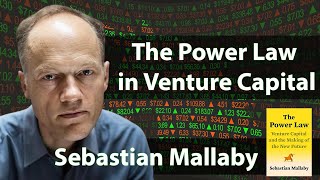
Sebastian Mallaby discusses what makes venture capitalists and hedge funds successful. He covers their strategies, historical examples, and how AI and connectivity are reshaping these industries.
Chapters
Informing your decisions with intelligence analysis and insight brought to you by the team@oodaloop.com.
Hi, this is Matt Devoe and thank you for joining the Oodacast. Today we have Sebastian Mallaby, who was the author of one of my top 10 books of 2022 with the power Law. Also the author of the book More Money than God. And I believe you have a third title as well, which I haven't read. Is that correct?
I regret to admit that I've inflicted five books on the world.
Oh, five, Okay.
I think the one you're referring to is a biography of Alan Greenspan of the Federal Reserve, the man who knew.
Excellent. Well, great. Thank you for joining us. We'd love for you to give an introduction to yourself, kind of your background and how you came about to writing these books.
Sure. So back when I was 16 at high school, I was asked to fill in some kind of form by the teacher saying, what do you want to do when you grow up? I still haven't grown up, but I did write down at the age of 16 that I wanted to be a journalist and a writer. And so it has turned out I left college, joined the Economist magazine, wrote my first book about South Africa when I was the Africa correspondent for the Economist, and then bit by bit I joined the Washington Post. I wrote op EDS and columns for the Washington Post on economics for a while, but books became kind of the main part of my career, with journalism taking a second place. Right around the time I wrote the book about hedge funds, which came out in 2004. I'm sorry, 2010, 2004, I read a book on the World bank that was different. So basically, for the last kind of dozen years, financial history has been my focus. And whether it's a book about central banking through the vehicle of Alan Greenspan or about public markets, that's through hedge funds or private markets. That's the venture capital technology book. It's all kind of financial history in the US between roughly 1960 and today.
Excellent. Great. We've had folks from that community in on the Oodacast. But for those that maybe aren't as familiar with the intricacies, can you kind of give a basic overview of the difference between a venture capital firm and a hedge fund?
Sure. So hedge funds mostly buy and sell what are called liquid instruments. That means stocks, bonds, maybe futures on commodities, anything that you could turn around and sell inside of 10 minutes. And so they are, you know, very much looking to exploit what they see as mispricings in these markets. And when they decide to buy or sell, they simply, you know, call a broker and say, please buy or please sell. It's very simple. On the other hand, the strategies they use are quite complex. They could be betting that one stock will go up, another one will go down. They could be betting that the difference in price between one bond in Japan and a different bond in the US will converge or get wider. And so it's quite mathematical, quite analytical, but it's not very interpersonal, right? You don't have to talk to anybody. You just call a broker and say buy or sell. Now with venture capital, it's a very different game. You're investing in startup companies, which means once you've bought a share in them, you pretty much can't sell them for a long time because it's a startup. On paper, you own, let's say, 25% of it. But until that startup is either bought by another company or by going on the stock market, it becomes a tradable kind of shares, tradable equity. You're kind of stuck with this position. So what you do is you own the position, you can't get out of it, but you become very involved in the direction of the startup. So you protect your downside as an investor not by the ability to sell, but by the fact that you're on the board of the startup, you're advising the startup founder. And if the startup founder does something you really think is a bad idea, you can at least debate and try to, you know, express your view on that. So it's a much more interpersonal thing. You know, venture capitalists roll up their sleeves and help the startup to hire the right people at the beginning to get the companies started. They advise on which customers could be approached, they advise on strategy, whereas. And they're in it for the long term, right? It's not a kind of paper shuffing business. You invest in a startup as a venture capitalist. It's kind of like getting married. You know, you've, you've having children, you've got those startup children. And until they go public on the stock market or they get bored, which could be 7, 8, 9, 10 years, you're going to be worrying about that startup every day.
And the strategies for the hedge funds seem, at least at that moment in time, very narrowly focused. Whereas in the VC industry, they have a little bit more of a shotgun approach because they're trying to make a lot of bets in the hopes that one will be disproportionately successful, which is kind of the essence of the power law that you describe in the book. So can you take us through what is the power law in the VC community with maybe a couple of examples within some of the funds that you had highlighted?
Sure. So the idea of the power law is that rather than kind of the average bet, making an average amount of money, which is what you get with hedge fund investing in stocks and bonds and all that, you tend to get in venture capital, a lot of bets that completely fail because the startup goes bust. Startups are really difficult by definition. They're trying to create a new thing, and new things are risky. So you might make 10 bets and eight of them go to zero, but one or two, if they succeed, will make a ton of money. They'll make 10 times your capital, 20 times more. And so that's like a return of 1,000%, 2,000%. It's huge. So the idea of the power law is that one or two bets out of 10 will more than make up for the losses on all the others. And therefore, in a way, the way to manage risk is not to be fearful and try to make reasonable bets. You sort of have to make unreasonable bets where there's enormous upside, but you might fail. That's how you succeed as a venture capitalist.
Yeah. When you say multiple of capital, you're talking about the capital in the entirety of that fund and not just in that one investment, correct?
Well, I was really saying that investment. So if you put in, you know, a million bucks, you might get, you know, 10 million, 20 million back. But, you know, that also means that whereas you might be doing 20 times the size of that one bet, you would still be doing two times the value of your fund. If you've got, say, $10 million in the fund, you make 10 different bets, $1 million each. A $20 million return on one means that you've doubled the size of the entire fund with that one bet.
So it's carrying the weight of the entire fund, and then thus, the investors are happy with the investment and with the fund itself. It's a great story, and I highly recommend, just for the historical aspect of it, especially given that I think almost all of them are still in operation today in the VC community. Can you step us through a couple of your favorite case studies of a. The formation of a venture capital firm, then some of those risky investments that they made that paid off disproportionately.
Well, we could take the case of Kleiner Perkins, which was set up in 1972, the same year, actually, that another famous fund Called Sequoia started out in business. And Kleiner Perkins was started by a. An engineer called Tom Perkins. His partner was Eugene Kleiner. And soon they recruited a guy called John Dore, who in the 90s became a bit of a legendary figure in investing and made Kleiner Perkins super famous. He did Amazon, he did Netscape, he did Google. He had a bunch of mega hits. And the way that Kleiner Perkins got started was that they opened the fund in 72, they started making a few investments, and basically they all went wrong. The 70s were a tough time for investing and the stock market was going down most of the time. And that was true also. It was time of the oil shocks and stagflation and all that. And for example, they invested in one idea, which was to turn motorbikes into sort of snow capable kind of snowmobile motorbikes. Tom Perkins, the founder, had this idea that it would be cool to have, you know, bikers whizzing around the snow with their girlfriends on the back. And he thought that was great. And he was kind of a bit of a leather jacket, sort of show off himself, bit of a motorhead. And he did this investment. And lo and behold, you know, the first oil shock struck. The gasoline prices doubled or tripled and nobody was buying, you know, expensive to run snow motorbikes. So that went to zero. And there were a bunch of things like that. And then after kind of getting pretty desperate, maybe four or five years in, Kleiner Perkins did a couple of investments. One was in Tandem Computer, which was an idea to make a computer that even if the main engine crashed, as computers do, sometimes there would be kind of a second engine that would kick in and cause the system to carry on running. So if you were trying to run, you know, a stock market based on a computer system or some other financial application where you really couldn't afford to have it go down. This Tandem computer architecture was revolutionary, and that really worked. And they made, you know, huge multiple on their money on Tandem Computer. And the other bet they did right after was in Genentech, which was the first biotechnology success story. And they made artificial insulin. Before, when a patient needed insulin, you literally had doctors or biochemists squeezing insulin out of the pancreas of dead pigs. I mean, it was like a medieval technology. And only in the late 70s, with the advent of Genentech, did these was it possible to kind of create artificial insulin in a laboratory process. And so Kleinia Perkins backed that company and it was a runaway success again. And those two big, big hits, Tandem And Genentech turned Kleiner Perkins from an institution that nobody would have ever heard of because it would have just failed after six or seven bad bets into something that was the top venture capital partnership in the world, circa 2000 or so.
Excellent. What about on the hedge fund side? Are there a couple exemplar or an exemplar case study that you can provide from the book?
Yeah. So, you know, with hedge funds, there's a whole bunch of different strategies. One of the things that makes it fun to write about is that there are some people who bet on currencies, some people bet on stocks, some people bet on events. They think that a surprising event could be like a government policy change or a regulatory decision or a court case, that those events could cause a shuffle in the valuation of different financial instruments. For example, in bankruptcy, you might get a judge who says, okay, this company is bankrupt and it has all these debts to all these people. And I'm going to prioritize that the debts should be repaid to these guys, not those guys. And if that's a surprise judgment, a hedge fund who anticipated the surprise judgment because it understood the law, it knew about this particular judge or what have you, that could, could. Could make a lot of money like that. But to take an example that illustrates this, we could go to the subprime mortgage crisis. So right around, you know, 2004, you know, real estate was just heading up, you know, as if it would never come down. And mortgages were being written to all in all kinds of ways. And many of these mortgages were what they later called liar loans, where people could basically lie about how much income they had and they would still get the loan, and they would use the loan to go buy a house. And then, of course, when they didn't really have the income they said they had, they couldn't pay it back. And so there were all these kind of dodgy practices going on in financial markets. Nobody wanted to acknowledge that because the financial system was making a ton of profits from these crummy mortgages. And then the mortgages were being, as we know, packaged up and sold, and investors were buying them all over the world. And there were a few hedge funds who did the research it took to really figure this out how rotten it was. And those ones essentially made bets that the value of those mortgages would collapse because the mortgages would never be repaid. And the biggest person who did this, you know, who did it in the biggest size was called John Paulson. And as I recall, he made about a billion dollars on that trade, just from one trade, when in fact, you know, real estate prices crashed and the mortgages were unrepayable.
Excellent. Cool. Those are great examples there. You know, we call it the uticast after the decision loop, which I'm sure you're, you're familiar with and have encountered, Observe, Orient, Decide, Act. It's hard to kind of put that framework in the VC world because as you mentioned, they are, they are making risky decisions. It is more of a shotgun approach. But with the hedge funds, with the narrow approach, you know, what lessons from how they make decisions do you think would apply to other business decisions? Is there something there that's notable with regards to the process that they go through or what they use to guide that decision making process?
I think one useful story here is that there was a hedge fund investor called Paul Tudor Jones who specialized in trading very volatile, fast moving commodity markets. Oil futures, copper futures, that sort of stuff. And one of the characteristics of futures is that you tend to put down, let's say 100,000 bucks, but you would be taking a $1 million position. You have this leverage built in. So anytime something goes up 10%, you're actually making 100% because you've borrowed the money to multiply the force of the trade. And equally if it goes down 10%, you're out of your, you're wiped out, you're down 100%, meaning you lost all the money you put up. So it's a very high stress, high stakes business. The markets move around really fast, they change direction. And so what Paul Tudor Jones would do to get ready for this stressful trading day is that in the evening he would sort of sit in a dark room by himself and he would imagine the next day happening. And he would imagine, okay, so I'm going to get to my desk and at 8:30 in the morning, the government is going to release this piece of economic data. It could be like the jobs numbers. And if the jobs numbers is that the expected number of new jobs were created in the past month, that's fine. But if it's higher than the expected numbers, people are going to say, whoa, the economy is stronger, therefore the Fed might raise interest rates, therefore bond prices will go down. So I need to sell bond futures like immediately if that number is not what's expected, or buy them if it's the other way around. And then you would say, okay, that's half past eight in the morning. All right, what happens later? Okay, so at 9:30, because of the time change, there's going to be some news out of whatever Mexico, and then that could affect the Mexican currency. And you go through these different events that might happen around the world that could affect the particular currencies or bonds or commodities that you're trading. And you anticipate already in your head what you'll do if something happens. And I think that's a useful lesson which maybe we could all apply outside of financial market trading that, you know, just, just putting your head in the space where you're going to be the next day or the next week to just like sort of think it through in advance is a helpful tactic.
Yeah, excellent. Yeah. No, I mean, it's a scenario planning or kind of red teaming the different possibilities and thinking through the consequences of those. It seem like in the hedge fund industry also, they're, they have more of a focus on field research. And I did an interview with Kevin Roberts a couple years ago on the Udacast. A former CEO, Satchin Satchi, wrote this great book that I love called 64 shots. And you know, he would encourage clients to go do this. He call it, you know, get your boots on, like, go in the field, find out what ground truth is. Can you step us through a scenario, you know, from the book in which that field research, that ground truth provided the differentiation on the opportunity at hand?
Yeah, and maybe I'll just sort of add a kind of interesting historical point here, which is that, you know, back in the 60s, when the hedge funds industry got going, and that's where my book sort of starts, you know, kind of getting out there in the real world or doing something in the real world that would give you extra information was pretty easy because most investors, frankly, were kind of lazy. So they would sit there and they would wait for the stock exchange or the securities and Exchange Commission or somebody else to literally mail them a release saying what the latest numbers are on particular company results.
Right.
But if you had the gumption to actually get out of your chair and go down to the securities and Exchange Commission office, there was a library at the office which you could go to as a member of the public, and you could ask to see the same documents that were in the mail like two days before they got to you, so then you would know the numbers early and you could trade before everybody else woke up to the news. So that was a pretty easy thing. But, you know, of course people figured that out, and by the 70s or whatever, you couldn't do that anymore because everybody was doing it. So now you fast forward to the 90s and you've got kind of the heirs of that tradition. How do you get better information earlier? By getting out into the real world. And one example was that a fund called Tiger, run by Juden Robertson, who I think died about a year ago, and there are lots of obituaries about him, was a storied hedge fund investor between 1980 and around 2000. He would encourage his analysts to really take this boots on the ground thing to heart. So one time one of them got a tip that a South Korean car company had a model of car that it just released, but there was a flaw with the engine. So rather than just kind of accept that and believe it, the analyst arranged to buy two of these cars in South Korea, get them shipped to a mechanic who they trusted, and the mechanic took apart the engines to inspect the internals. And yes, indeed, there was this weird mechanical error that probably wouldn't manifest for two or three years, but sooner or later, there was going to be a vehicle recall and that company was going to lose a ton of money. And so they shorted the stock, meaning that they bet it would go down. And they waited. And when that mechanical error manifested, of course, the stock price collapsed, and they made money from that.
Excellent. You know, some of the companies that really attract my attention based on personal interest are more around the quantitative side. Can you step us through kind of how the industry changed to make use of, you know, automated use of information? You talked about having to go out and do the field research, but now so much is available. There are multiple funds that have applied kind of computer science and algorithmic techniques to automate the funds that have been widely successful. In particular, I think you talk about Renaissance. Can you step us through the change in the industry and kind of the emergence of Simons and companies like Renaissance Technologies?
Yeah, and it's a good time to discuss that right now, because we're in the middle of this big excitement about artificial intelligence. And what's interesting is that, in a way, I think versions of AI were already being applied in the early 1990s by these algorithmic hedge funds. And specifically, you mentioned Renaissance Technologies. What happened there was you had a famous mathematician, Jim Simons, who was an academic expert on geometric theory, who was the entrepreneur who set up a fund thinking that, well, maybe you could use statistics and algorithms to make money in markets. And initially he failed. And for like two or three years, he was really hitting his head against the wall. He had some other academics. They weren't really making much progress. And then he had the idea of Calling up two people who were then at IBM Research, and they'd been involved with suggesting the idea of Big Blue, the Deep Blue, the computer that defeated Kasparov at chess. And so they were involved in sort of early AI, and in particular, one of them, Peter Brown, had written papers on statistical machine translation. So the use of, of computers to translate from French to English and back again, not by teaching the computer grammar, which had been the kind of what they call GOFI now, good old fashioned AI, but, but rather by just taking the Hansard records from Canada or the parliamentary debate records, feeding in the French version and the English version, because of course in Canada they have both, and then letting the machine figure out the correlations between the French version and the English version. So the machine kind of just taught itself French and English by looking for correlations in sentences which it had been told, you know, were the same sentence in the different languages because they were from the same parliamentary record. And so by this method, they invented machine translation and made it work. And they were called up on the strength of that by Jim Simons and who said, will you come and join my hedge fund and I'd like to see if you could apply your AI techniques to trading. And so the first time this call came in, they just hung up and said, who is this weird finance guy? We don't care about finance anyway, we're very happy at IBM Research, you know, forget it. And then they had another call from a mathematician at Harvard whose algorithms, and sort of his kind of algorithmic methods they had cited in one of their translation papers. And they had enormous respect for this mathematician. And so when he telephoned, they certainly kind of listened carefully to what he had to say. And he recommended that they should take this guy, Jim Simon, seriously. They should go check him out, go interview, think about it. And then one thing led to another and they joined this hedge fund and within a couple of years, you know, it started to work. And precisely what they did to start having a fund that went up 30, 30% a year every year, just like routinely killed it in the markets, you know, precisely what they did is a secret. But, you know, I was able, when I was doing my research to figure out kind of in broad terms that this was about, you know, just basically looking for statistical correlations between all kinds of things and what might affect financial prices. So one example they don't mind talking about is that statistically, if the weather is good in a city, let's say Milan at 9am or something, or 8am when people go to Work the stock market in that city is likely to go up a little bit. I mean, relative to the baseline, it will do slightly better because people are in a good mood. You know, the sun's shining, they're happy. This effect is not actually strong enough for it to be profitable to trade on it, because anytime you trade, you pay a bit of, you know, commission to the broker and there are some friction costs. So that's why they don't mind giving this as an example. But from this, one can infer that they are feeding billions of data points into their model, which could range from economic statistics on how the macroeconomy is doing to weather patterns that might affect maybe commodity production, to aerial photographs of ships carrying, you know, ships full of commodities around the place. So you can kind of track oil shipments or whatever it is. I mean, whatever it might be, they're feeding it into a ginormous model and they're looking for statistical correlations that will allow them to anticipate prices just a little bit before anybody else does. And they don't actually make the trades. The computer makes the trades automatically, but they build the computer that then trades on their behalf. And so this, this particular fund, the medallion fund run by Renaissance Technologies, has probably been one of the most effective examples of any hedge fund ever. But you know, there are lots of others who have now put versions of this tactic into practice. From Two Sigma, which has a large faculty of computer scientists on the staff. You know, an old one is D.E. shaw that started around the same time as Renaissance technologies in the 90s. And there's a, there's a bunch of other ones that, that have done really well out of this.
Excellent. This is the ultimate passive income. Right. Build, build the computer and let the computer make you the money. But, but not without risk. And it seems as we drive towards a data centric world, a, there were a couple of opportunities for them over the past decade. Right. With regards to the emergence of social media as a data source. I remember a graduate student of mine that went on to get his PhD. I was talking to him and asking him what he's up to and he was on retainer with multiple different investment firms based on his research, doing sentiment analysis on social media. Right. So driving that. But you mentioned AI and ChatGPT, and it seems like we're moving into an environment where a, those tools become more accessible, accessible to a broader audience. So, you know, it seems like that could have an impact on the market, maybe at a smaller scale. I've seen multiple tutorials on how to use chat GPT to develop an automated trading strategy, including giving you the pine code to load into trading view. I mean it, there's just, you know, a lot of excitement and complexity there where it seems like maybe smaller players might emerge or you know, small players that become large players over time, which is the story of these instances. But it also seems like there'll be more information that's not human generated, that it doesn't express human sentiment or doesn't have that human ground truth. Do you think that that represents a risk in particular? I noted yesterday, you know, there's a major information outlet that said they were going to make Greater use of ChatGPT at the same time that they announced that they were going to partner with Facebook to provide content into the platform. So do you think we, we run the risk of kind of the machines influencing the machines without the human element behind it?
Yeah, you know, I mean, I think there's going to be all versions of outcomes.
Right.
With AI in general, I mean, I think, you know, AI is a tool and you can use it with a view to cutting your workforce of journalists and just generating content automatically. And you clearly take the risk of AI hallucination, as it's called, where it introduces just crazy mistakes. But if you're willing to take that risk because you don't care about quality too much, you can do that. And then on the other hand, I think AI can be used much more responsibly as sort of an assistant to a journalist, such that the AI might generate a first draft of an article, but the journalist, you know, then, you know, based on additional reporting, you know, makes it better, edits it, checks the facts and so forth. I mean, I'm basically pro. I think that, you know, it's going to be a fantastic tool in lots of ways, but obviously there's potential for people to just, you know, put, put low quality content out there which has been generated by AI. But you know, then again, humans do low quality content.
Sure, yeah. At least the. Yeah. I guess it's just all a matter of whether it can influence people's behavior or the decision making process at all. One thing that seemed interesting to me in particular about the hedge fund environment and then I want to switch over to VC in a little bit more detail, is that there are at times when they seem to operate almost as, you know, quasi government powers that they had the scale and the influence to, to basically influence nation states and their monetary policy. Can you step through, you know, an example of that? And do you think that that represents an increasing risk or decreasing risk. Are they becoming more powerful or less powerful over time?
Well, the canonical example of what you're talking about is in 1992, when the UK had a policy of linking its exchange rate to that of other European currencies. So there was this European exchange rate mechanism, and all of the main European economies kind of put their currencies into this kind of connected basket. And the UK pound was allowed to fluctuate a little bit against the Deutsche mark, which was kind of the anchor currency, but there was a band and it was not supposed to go out of the band. And there came a time in 1992 when the UK economy was in recession. And therefore it would have made sense for the bank of England to cut the interest rate in order to stimulate the economy and get out of the recession. But if you cut your interest rate, it makes it less attractive to hold your money because savers will get less interest payments. And so cutting the interest rate typically means that your currency will lose value. And so because of this commitment to keep the UK pound within that exchange rate mechanism, the bank of England couldn't cut the interest rate and fix the recession. And sort of understanding that situation, George Soros, the famous hedge fund manager, together with his partner Stan Druckenmiller, cooked up this plan that if you, you know, sold a lot of pounds, a lot of pound sterling, you would put downward pressure on the currency. And then in order to defend that currency, the bank of England would actually have to raise interest rates to attract more people to hold it. And that would be so painful to an economy in recession that politically you couldn't sustain that. And therefore the bank of England would give up. And that's what happened. It worked out. The trade worked out, they sold sterling, it put downward pressure and it broke the peg. And once the peg was broken, sterling collapsed by 15% immediately against the German currency. And so George Soros and Stan Brackenmiller were immediately 15% up on their trade, and they made a billion dollars kind of overnight when the peg broke. And once that happened, people understood a very important thing, which is that if you've got a currency peg and you bet that it's going to break, the most you can possibly lose is like half a percent. Why? Because sterling, the UK currency, is not going to go up when it's in recession. And all the basic fundamentals push towards sterling losing value. So you're not going to lose more than half percent, but you could make 15% if the peg breaks. And so sort of attacking policy driven exchange rates became a very lucrative asymmetric bet. And the same bet was played out in the 90s with a bunch of other countries. It worked for Soros in Sweden, it worked later on they made money in Thailand. There was a whole East Asian currency crisis in the late 90s involving South Korea and Indonesia. Later on, same thing in Argentina. So, I mean, this became a kind of epidemic of hedge fund attacks on currency pegs around the world. It hasn't happened recently. This has not been in the news since around 2001, 2002. Why? Because in fact, the central banks got smart and they realized that defending currency pegs of that sort is untenable because hedge funds can mobilize almost unlimited amounts of capital to trade against you, and you won't be able to defend your peg against that kind of attack. So essentially the lesson was learned. Central banks gave up on defending, keeping their currencies artificially strong. It doesn't work. And therefore I think that risk of policy upset from hedge funds has gone down, not up.
Great, thank you. Insightful. Switching over to the venture capital space. One thing, when reading More Money than God, obviously there's great stories in there. You see these instances of these firms being formed and the strategies being set up, but it seems like it's really just about wealth creation, right? It's a return on investment. And when we move into the VC space, you get the return on investment aspect of it. Obviously no one wants to invest in a fund that's not going to be profitable, but there seems to be this compounding innovation component to it where within a hedge fund, year over year, they make more money. They might set up charitable foundations and things of that sort. But within the VC world, there's this phenomenon that I think you reflect upon a little bit in the book that is the compounding innovation. Can you kind of step through that with the longevity of some of these funds and how one success has led to another, has led to another. There's a few that have been, you know, as you mentioned, sustaining for over 30 years. And had they not been in existence, some interesting technologies might not have gotten funded.
Right. So I mean, you know, the business of venture capital, as you say, is to. Is to back these startups that are going to do technologies which you hope will be transformative. And we hope further that this will be transformative in a good way for society, not a bad way. We can get into that if you like. But there is therefore this sort of social impact. And one of the reasons I wanted to Write the power law about venture capital is I do think that there are multiple ways of trying to drive invention and innovation. You can have government labs that do basic science, you can have corporate R and D and in big corporations. But it turns out that the most effective way to turn a basic science invention into a product that really affects how people live seems to be startups. Because with startups you can run multiple experiments with multiple ideas of how you could turn the basic science into a product. And it's just, it just goes faster, it's more effective, and it hits the target more often when you do it in this startup format with venture capitalists backing the startups. And I was trying to figure out why it was. I mean, clearly we see it's true because Silicon Valley, which is a startup plus venture capital driven ecosystem, has outperformed every other place in the world in terms of sort of applied scientific innovation between roughly 1980 and, you know, let's say 2020. So you've got 40. It's not just that there was one technology that Silicon Valley was good at. This went through, you know, semiconductors, through the personal computer, through peripherals for computers, through the Internet, software, you know, E commerce, social media, et cetera, et cetera. One geography in one country has had this weird dominance. So we see this power of startups plus venture capital. But why is it. And the theory that I was persuaded by is that you can have clusters of smart engineers and smart sort of startup marketing people and other talent. And that cluster could have, let's say, you know, 10,000 people, and there could be one cluster in Boston, one cluster in Northern California, but one cluster will outperform the others. Why? If the connectivity within the cluster is stronger, so if the ideas and the money and the people are circulating faster in Northern California, it will be more creative. And there's a bunch of stuff out of sociology, network theory, which sort of argues for this strength of weak ties. The idea that having multiple weak ties puts you in connection with multiple people that you could collaborate with and that will actually generate more kind of professional advance, more innovative experiment than you would get if you had a smaller number of really deep relationships in business, which is what you would have if you were in a vertically integrated big corporation, which was sort of the tradition in Boston back in the day with Wang and Dec and all these other Boston based tech companies. And so it turns out that this startup model, where people work at a startup, it might fail. They go join another startup, they develop a bunch more friendships at the new one, and Then that one fails, and then they go to a new startup and they need to hire some more people into that startup. So they remember the guys from two startups back and then they get investment from a VC who knows a bunch of other people and they put together this team which is kind of mission driven around one particular idea that is the way to drive innovation. And that's a point that I think people don't adequately understand that venture capital is like a third pillar of capitalism. You have the price mechanism and markets on the one hand, you have big corporations with the kind of coordination you get from corporations on another hand, but then in the middle you've got this sort of compromise where you have some strategic coordination from venture capitalists who are backing startups and they kind of see the map and the territory because they're backing several startups and they kind of understand the whole scene. But you also have price mechanism because the VC typically gives money that supports the startup for nine months, for a year, and then the money runs out and the startup has to raise more money from a different vc. And if the price isn't right, if nobody wants to back it because the VC decides it's not terribly promising, the startup fails, goes out of business. So there's this combination of strategy and price signals. And that's a special thing that venture capital brings to the world. And I think it's super productive.
Excellent. That's encouraging for me because I'm on the board of a nonprofit here in the D.C. area where we're trying to drive that connectivity. Right. And our whole approach is to get the right people in the room together to build these networks. And we've increased the size of our cohorts every year. And this year we'll have 75 companies in it. But then also introduced into the, into the process, the money as well, the VCs, the buyers, in this case, a lot of it is US government centric. That's encouraging to see the emphasis on connectivity for certain as you try and drive pockets of innovation outside Silicon Valley.
Absolutely, Matt. So I want to just pick up on that because you're suggesting a great point to me, which is that, you know, of course it's possible to get connectivity through different mechanisms. You can have an association that sets itself up and fosters the connectivity. And there are organizations that I really respect. For example, Endeavor out of New York, which has done this in developing countries. And it started by going to say, a Latin American country and saying, let's have an entrepreneurship prize. And anybody who wants to Be an entrepreneur can come and pitch an idea and if we give them the prize, part of the prize is we're going to introduce them to people who could be helpful to make their idea work. And then Endeavor would bring a Rolodex connections in Silicon Valley, connections in New York, and they would sort of help whichever entrepreneurs they thought were prize worthy to actually make the company happen. So that was not a venture capital model, but it was a different model trying to do the same thing. And it sounds like that's kind of what you're involved in Washington D.C. would that be fair?
Yeah. Yeah. Except ours is a, is a nonprofit structure called Mission Link, where we go identify the entrepreneurs and the technologies that could meet emerging national 30 US government mission requirements and then a get them to understand that those requirements exist and that they might be able to build technologies. The government has helped drive a lot of innovation over the years, especially if you look at DARPA and the formation of the Internet and GPs and MRNA vaccines, et cetera. And now we're adding into the equation the funders for those companies. For a decade we operated where it was about bringing the entrepreneurs in, getting them exposed to the mission. And over the past couple of years we've realized that the, the money component was also a piece that was missing to help with the funding and the connectivity that, that those players can bring into the equation. So that's our thesis is all about the connectivity, bringing the right people together into the right room to, to get them to interact and know each other.
I, I would say that by bringing the funders in, that's a super important move, not merely because you're bringing money in, but, but also because the funders will in turn bring lots of connections. And this is, this is the key thing. I mean, you know, of course you can have people who do connections without a sort of strong profit motive, but it sure as heck helps if you know, the venture capitalist is involved because their entire business strategy is to make this startup enormously successful. And so they're going to bust a gut to make connections, do introductions, spend enough time with a company that they really understand what connection they need next to give really high quality advice. And I think it's that marriage of the money and the incentives, the high powered incentives that go with the money, with the advice on connecting and like how to pivot the company to a slightly different version of the product that's really, really powerful. And I think that's what the history of Silicon Valley tells us, is that because venture capitalist, what is A venture capitalist. So I had different definitions that people told me when I was doing the research. And one of them said to me, it's like at Friday evening, it's 7:30pm, you're about to leave and go get dinner with your family and the phone goes, or your message system pings and it's a founder that you've invested in six months ago saying either they have a health problem or their CFO has stolen the money, or their chief product officer is having a nervous breakdown or something desperate is wrong. And you cancel the dinner with the family and you say, I'll be there in 15 minutes. And you spend the weekend with them kind of figuring out this life and death problem for the company because your own money is on the line and because you've got a choice, you're pregnant. And so that's one definition. But I think another helpful definition is a venture capitalist is somebody who gets up in the morning, has breakfast with one person, maybe an entrepreneur that they might want to back next week, then has 14 cups of coffee, hopefully decaffeinated, before they go to bed with either the people that they funded last year and they're still on the board and they're keeping in touch, or the people that the new person they funded might want to hire. So they meet seven engineers so that they can pick the best two and bring them into this new startup, or they're hiring the new, you know, marketing person or whatever it might be, or meeting with an investment banker to take the company public or. Yes, it's just, it's a people business all about connections. When I wrote about hedge funds, as I said, they just have to call their broker and that's the only human connection they need. Venture capitalists, it's a people business. And so I think this super connector thing and that sort of powering of the network, the strength of weak ties, the fast circulation of money and people and ideas, that is where Silicon Valley's secret source lies. And that is what can be spread outside of Silicon Valley around the world based on the spreading of venture capital.
Yeah, yeah, no, fascinating. And the connectivity amongst their investments. I mean, years ago I attended spoke at a session for Khosla Ventures where he had, you know, all 70 of the CEOs that they were invested in in one spot for two days. Getting them to network, but getting them exposure to speakers and training, etc. That might be helpful in their journey as entrepreneurs. It seems there's a little bit of a bleed over, I mean the obvious case of Founders Fund, which was originally set up as a hedge fund and has obviously taken advantage of the VC dynamics and the power law component with their investment strategy. But then notably you mentioned Two Sigma, one of the firms that is doing the kind of automated algorithmic trading also has a venture entity. So do you think we'll see more hedge funds moving into venture? And as a kind of follow up to that question, is Two Sigma in the venture industry because they want to take advantage of the Power law, you think, or because they want to identify innovation that will help Two Sigma's mission?
I don't know specifically with Two Sigma which of those motives dominates, but I would guess that it's more just about making money in tech. Right. Just venture capital is a good business. They have a bunch of people at Two Sigma who are computer scientists and who are good at evaluating software. And so why not, you know, make investments based on that skill in understanding what's a good software breakthrough and what's a bad one, which won't work. And if you have that edge, you might be able to monetize it through Innovation Filter. Yeah, that's my, that's my thesis there. I don't really know. Sorry, you had another question?
Well, I was going to say, do you think that we'll see more hedge funds verging into VC?
So I think what happened is that around about 2009, when the Fed cut interest rates and did quantitative easing to get the economy out of the 2008 financial crisis, interest rates were on the floor. And along with that comes just a collapsing of the differential between risky bonds and not risky bonds, all interest rates were being driven downwards. So the spread between a risky one and a safe one, which might have been, I don't know, what say 2, 3% before, is now squished down to like half a percent or something. And so if a hedge fund is an entity that gets paid to price risk, they're not being paid as much as they used to be to price the risk. So in a world of kind of very low interest rates and quantitative easing, hedge funds became a very tough strategy to do well at. And therefore they were looking around for other stuff to do. And in the meantime, super low interest rates are very good for tech. Why? Because startups are proposing to become profitable three, five years from now. And so it's a long duration asset. It's not one where you get earnings immediately and anytime the sort of promised profits are off in the future, a low interest rate is good because you're discounting at a lower rate and therefore you know, just mathematically the value of a tech startup goes up when interest rates are lower. So what happened is that hedge funds, which were kind of stuck when it came to public markets investing, said, oh, maybe we can pivot here and do a bit of venture investing, because that's a strategy that profits from this low interest rate environment. And at the same time, something else happened, which was that people invented a thing called growth equity investing. Meaning rather than do Amazon as a startup, get money from venture capitalists, do well, and then in a couple of years, because you've done very well, very quickly, you go public on the stock exchange. The new strategy was after a couple of years, instead of going to the stock exchange, you just go back to venture capitalists. But Instead of raising 10 million bucks, now you say, well, I need 100 million to grow. And they've now got a bigger war chest, a bigger fund, and they say, 100 bucks. 100 million bucks. Yeah, you got it. You don't need to go to the public markets. I will be your public market for you. Except that I will save you the hassle of going on a roadshow with investment bankers who drag you by the hair all around the country to do presentations to pension fund after pension funds. You don't need that. You're busy. Just let me write you a nice check and you can avoid the roadshow. So starting with. And again, this coincides with the financial crisis and the aftermath. Starting with Facebook. In 2009, when an investor called Yuri Milner did a growth equity investment in Facebook, this became the new way of raising money in Silicon Valley. Don't go to the public markets, just raise money from private investors who will, who will write a very large check. 100 million, 200 million. And that sort of suited hedge funds because they were used to writing big checks, because they were not good at going on the board. And sort of that Friday evening call from the guy who's got a health problem is not what they were used to. So they were not good at startup investing, but they were good at scaling up successful startups from the point where they had already some revenues, a good product, maybe a payroll of 75, 100 people, and they want to scale up to be a thousand people and 10x more revenue. And so hedge funds like Tiger Global would be one prominent example, started writing these big checks. And so they, they kind of switched. They were called crossover investors. They crossed over from public markets investing into private technology investments. And that was a big feature of the last 10, 12 years.
And also reason why you can have a company like SpaceX that's still not in the public market. Right. They continue to get access to the capital that they need in the private market.
Correct.
Interesting. So if I go on to pitchbook right now and search for venture capital firms, you know, I don't know what the result will be, but my guess is it's probably somewhere between the 5 and 10,000 of them that exist. Does the venture industry benefit or, you know, is it a negative aspect that there are so many players that are emerging, that there are so many alternative sources of capital? Is there, is there a risk to the lack of concentration given this, you know, compounding innovation component when we had a few really strong players that emerged out of the 70s, into the 80s, into the 90s, or is it beneficial to have 5,000 or 10,000 venture capital firms operating?
Well, it depends if the question is about what's good for investor returns or whether it's about what's good for society. Because for investor returns, of course, more capital chasing deals means that the capitalists tend to get less good terms on those deals because the startups have a bunch of, you know, suitors. Yeah. And they, and they can, you know, operate a reverse auction and, you know, give away less equity in the company for a given amount of money they're trying to raise. So investors don't benefit from there being more investors and more competition. But I think society benefits because it means you've got more risk capital out there looking for entrepreneurs and that's going to make it easier to become an entrepreneur. And entrepreneurship is a good thing. I mean, it does create innovation, it does create jobs, it does cause the economy to adapt and change and it's terrific if it spreads beyond Silicon Valley into other geographies. Since my book came out, you know, one of the fun things is we know we're having this conversation right now on Zoom.
Sure.
And you're in D.C. and I've had similar conversations with people in West Africa, in Bangalore, India, in China. You know, I know a fund that's, you know, specifically trying to operate in the northeastern U.S. and Buffalo and the, and the Finger Lakes, which is a traditionally not well served region in terms of venture. I think it's fantastic that these different funds operating in different places.
Excellent. Cool. That's encouraging to hear. This follows aligns with my belief as well. I mean, I like seeing more venture opportunities in the market and we actually within our company have a small venture fund as well where we just reinvest profits because we encounter so many interesting and Compelling startups over the course of a year. Great conversation. I've really enjoyed it. I love to close out though each of my interviews by asking what book that you are reading or have read recently that you would recommend to the audience.
Okay, so I'm going to tell you about a book which is about artificial intelligence. The book is actually maybe two, three years old. It's by an Oxford professor called Marcus Du Sotoy. It's a French name, although I think he's English. Du the new word S A U S A U T O Y and I think it's called the Creativity Code. But if you give me half a second, I'm going to Google it. Okay. To make sure I got that. But I thought this was a very nicely written explanation of AI by a mathematician who knows how to communicate with non mathematicians. And here he is. Yes, Marcus De Sorto. And the book is called the Creativity Code. I was right. Creativity. And the the subtitle is How AI is Learning Is Learning to Write, Paint and Think.
Excellent. So I've read a lot of books on AI, but I've not encountered that one. So I look forward to personally reading it. We'll make sure we include a link so that folks can get a direct link to Amazon or whatnot and to check out the book themselves as well. Thank you so much for participating in this. As I mentioned, you know I love the Power Law. It was one of my top 10 books of 2022. Enjoyed more money than God as well. I will look at some of the other titles that you've released. Really appreciate you taking the time to chat with us.
Great to be with you, Matt. Thank you.
Thank you.
Thanks for listening to this OODA Loop production. For the latest analysis on cybersecurity technology and global risks, please visit www.oodaloop.com.
More from Matt


Leading Cyber Change: Allan Friedman on the Revolution of SBOM & Future Cybersecurity Initiatives


Revolutionizing Medicine and Tech: Joe Tranquillo's Journey into Complex Systems






Bob Zukis and the Digital Directors Network: Helping corporate boards mitigate systemic risk

Adam Shostack on Cybersecurity and What Every Engineer Should Learn From Star Wars