Simon Clark on Investigating the Key Man and a Billion Dollar Fraud
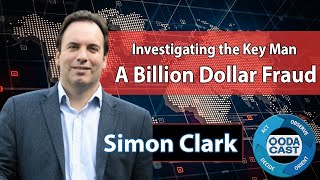
Matt Devost talks with Simon Clark, author of The Key Man, about investigating Arif Naqvi and the Abraaj Group, a private equity firm that committed a billion-dollar fraud. They discuss how the firm operated, its regulatory failures, and what the scandal changed about global investment.
Chapters
Informing your decisions with intelligence analysis and.
Insight brought to you by the team@oodaloop.com.
Hi, I'm Matt DeVoe, CEO of OODA. And thanks for watching the Oodacast. And today we have a guest, Simon Clark, who is the author of the Key man, which was a book that made it onto my top 10 list of the year. So I read over 100 books and this made it into the the 10 that I recommended that everybody take a look at and interacted with Simon on Twitter and he agreed to come on the oodacast and talk about his background, but also talk about the book. So, Simon, welcome to oodacast and I'd love for you to kind of share a little bit of your personal journey and your background.
Hi Matt, good to be talking to you and thank you for reading the Key Man. So to tell you a little bit about myself, I I'm British, I live in the UK but for the last 21 years or so I've been working for US news organizations and I have reported on financial crime, investigated various frauds across the whole world geographically. I've been mainly focused on stories in Europe, Middle east and Africa. And I've been particularly interested in stories that span the rich world and the poor world, stories about development, stories about inequality and the role that the finance industry can play in helping or causing inequality. And those are issues that are very much underpinning the Key man, the story that we've told.
Excellent. So tell us a little bit. How did this story come to you? How did you first, you know, get wind that there was something to be investigating?
So the key man is Arif Naqvi, who was born in Karachi in Pakistan in 1960 and he founded Abraj, which was the largest private equity firm operating in emerging markets. The firm was founded in Dubai in 2001, 2002, and it did some very successful, financially successful deals early on and rapidly expanded over the next decade, opening offices across Africa, India, Pakistan, Latin America, Mexico, New York, London, and raise billions of dollars from banks and billionaires governments with the promise that it could make profit for those investors and help end poverty at the same time by taking that investment capital, using it to buy and build companies in poor countries across Africa and South Asia and help those companies to expand, to provide jobs and services, increase profits, make people happy and healthy and wealthy, and was sufficiently convincing, as I say, that they raised billions of dollars with this promise. Now, some of the deals that Abraaj did were very successful. The trouble is, some were not. And the problem at the center of this story is that money was being mismanaged in quite an epic way. Now, I first interviewed Arif in Dubai in 2007 because one of the things I specialize in writing about was private equity. And as I said, I was particularly interested in emerging markets in developing economies. And so the biggest, most important private equity firm operating in developing countries was particularly interesting to me. So I specialize in writing about KKR and Blackstone and tpg, these big US private equity firms, but also was very interested in private equity firms that were emerging, as I say, in Africa and South Asia and abroad. Was right in the middle of this world. It was increasingly raising money from the UK and the US and taking that money and saying that it was going to invest it in Kenya or Pakistan, make profits, create jobs, sell the companies and then return the profits to the investors in UK or the US. That's what they said anyway. January 2018, my co author Will Louch receives an email from someone who refused to give their name. This person says they're an employee of Abraaj and that there is a problem at Abraaj, which at the time was raising $6 billion for what would have been the biggest emerging markets private equity fund ever raised. They'd already raised a couple of billion dollars for that fund from some of the biggest investment organizations in the world, including the Washington State Investment Board which invests the pension money of firefighters, teachers and judges in Washington State. Louisiana Teachers Pension Fund had invest committed to invest the Hawaiian pension fund to Texas teachers. So money from Americans, regular Americans, had been committed to invest through Abraj. The US government had also invested in a billion dollar health care fund that A. Braj had raised to buy and build hospitals across Africa and South Asia. Bill Gates, the billionaire Microsoft founder, had put $100 million into that health care fund. The UK government, the French government had also invested in this health care fund. Anyway, this anonymous email that will received in January 2018 said there was a problem. And basically Will started an email exchange with this person, who we still don't know the identity of this person, said that $200 million had gone missing from the billion dollar health care fund that the US government, the UK Government and Bill Gates had invested in and the World bank, in effect, it had been misappropriated, maybe stolen and that the investors were investigating. So we started calling people to find out whether or not this was true. Will came and talked to me. We were both specialists writing about private equity. I had a lot of contacts in Abraaj and the investors in Abraaj, we couldn't use the anonymous email to write a story because we can't use information from sources that we don't know the identity of. However, we can use these tip offs as hypothesis which we then go and prove. Right? Someone tells us $200 million is missing from this billion dollar health care fund. We will go and ask people, has $200 million gone missing from the healthcare fund? Enough people told us that this was correct, that investors were investigating this. So we then went to a branch because we have to give the subjects that we are going to write about the opportunity to comment. So the first person that we spoke to about this was a senior executive for the Braj who was an American citizen who had formerly been on the board of the World bank where he represented the United States government. So this is a very senior individual with a long track record, you know, someone who has integrity. So we asked him, is this true? And he said that this can't be true. This is very insulting. How could a firm a broader stature and credibility, you know, have done something like this? The firm is regulated in seven jurisdictions around the world. Of course it's not true. Anyway, it was true. And so we published after vetting it with the lawyers at the Wall Street Journal, sometime after we published, the New York Times published an article which said more or less the same thing. Nevertheless, Abraaj told its investors that this was fake news. Now it's very unusual for the Wall Street Journal to write fake news or the New York Times. It's extremely unusual for them to write the same piece of fake news. Especially when a lot of hours of investigative journalism have been put into like verifying this, it wasn't fake news. And this news making public the problems at Abraj initiated a year in which Will and I and other colleagues, you know, pretty much dedicated to finding out what on earth had been going on at Abraj. It was chaos. And you know, one question led to another problem and another question and you know, it was pretty extraordinary. We went down a very deep Abraj rabbit hole. Anyway, we found out that other funds, money had gone missing from other funds at a barrage. I had been put in touch with someone who said that they had documents which showed that fraud and theft and attempted bribery had occurred at a barrage. And it took me months of talking to this person remotely to finally get their trust and get them to agree to meet me. So they met. I met this person finally in August of 2018. So this is like months later that person had been introduced to me by it was a sort of chain of people. So it was one person who introduced me to another person. Just meet another person who introduced me to this person who agreed to meet me. And they showed me on their computer these documents which they allowed me to photograph, which showed that, you know, what looked like a very complex fraud was taking place, which was the following. A branch raised private equity funds, the billion dollar health care fund, the $6 billion buyout fund that it was raising. Now, in a private equity fund, you're only supposed to call the money from investors when you're going to make an investment. So you say, please send me $100 million. I'm going to invest it in a restaurant company. So the money is sent by the investors. The money is invested in the restaurant company. A few years later, the restaurant company's done really well. The private equity firm sells the restaurant company. The money plus the profit comes back into the fund. And the private equity firm sends the original investment plus the profit back to the investors, minus the 20% that the private equity firm keeps. That's what's supposed to happen. What was happening was Abraaj was calling money from investors for deals and then siphoning money out of those private equity funds into secret bank accounts. And then it was spending that money any which way. The senior executives wanted to, you know, on salaries, expenses, to support the billionaire lifestyles of senior executives. This is what the documents that I was shown showed. So I know who that person was. So we could use these documents, if we could verify them, which we could, then we had to go and give Abraj and the founder, Arif Naqvi an opportunity to comment on what our findings were, which was that more than $600 million had been moved out of Abraj's investment funds into these secret bank accounts. And that from there, more than $200 million had been sent to Arif's companies and bank accounts offshore in the Cayman Islands and other places. So in general, if you're going to write an article that says a billionaire has stolen billions, good practice is you have to ring up the billionaire and ask them, if that's the case, did you steal a billion dollars? And usually when you ask someone that wealthy that question, you hear back from their lawyers, and that's what happened to us. And then you, you know, you listen very carefully to what the lawyers say and you talk, you explain to them why you believe what you believe is true. And then if you're sure you're right and that you can convince your editors and lawyers that you're Right. You publish. And that's what we did for the big front page investigative feature on a barrage in the Wall street journal in October 2018, which laid out what had been going on at this firm for many years then. The article was widely read, but it seemed that nothing had happened, which was a bit shocking to us because it looked like there was a serious problem with this firm which had very famous investors and a very powerful network which we can talk a bit more about. Until April 2019, when Arif Naqvi was arrested in London, he had been criminally indicted by the US Department of Justice along with five of his fellow Abraj executives. They were accused of fraud, theft, attempted bribery, and an Arif faces as long as 291 years in jail if found guilty of all these charges. The US criminal indictment was published and a lot of the documentary evidence that they were using for that indictment was the same documents that we had used in our journalism. U.S. authorities didn't get those documents from us. They probably got them from the same sources that we got them from. So it was a very long, very complex, very intense process of reporting and writing that has gone on to bring this story to public light.
And still only partially resolved. Correct. The charges have been brought out, but Arif has not been found guilty yet, even though some of his subordinates have been.
Yeah, that's right. The story is not over. Six Abraj executives were criminally indicted. Two have pleaded guilty. Arif maintains his innocence. He insists he hasn't done anything wrong and he is currently residing in London where he has a house. He is living on bail. He had to pay £15 million to get bail, which at the time it was the highest bail bond ever requested in the UK. The UK court has ordered his extradition to the US to stand trial. UK government has ordered his extradition. 2 At the moment, Arif is appealing that extradition order and the next hearing in that appeal should take place in the next few weeks. So, and you know, I don't know when, if and when he will get to the US and when that trial may take place. The Dubai Financial Services Authority, which was the primary financial regulator of Abraaj, has fined the firm $315 million for deceiving and misleading investors and is now fining senior executives one by one. In addition to that fine, that fine was never paid because it was levied after a barrage filed for insolvency. So it's kind of a symbolic fine. There's also an incredibly complex liquidation process of a barrage which is ongoing in multiple jurisdictions with multiple lawsuits. Investors are suing. Investors are suing various Abraj entities. Kpmg, which was the auditor of Abraj, is being sued in Dubai. There is a Middle Eastern billionaire who Arif, borrowed hundreds of millions of dollars just before the firm went bust from, is suing the healthcare fund that the US Government and Bill Gates invested in. Because that billionaire believes that Arif gave those investors money to make their losses whole. And he's claiming that that's his money. So it's very complicated, it's very global, it's very messy. What we've tried to lay out the story very clearly in the key map.
Excellent. So, I mean, obviously the book of the title is the Key Man. Can you give us a little bit more background on Arif and kind of how he was able to build this organization, his early success, and most interestingly, kind of catapult himself onto the global stage because he certainly seemed to level up and build on credibility of each introduction or each appearance or each network connection along the way.
So we believe this is very much a story of our times. It's a story of globalization, what happened after the Cold War ended. And Arif, he was born in Karachi in Pakistan, a big metropolis. He went to a school there where he was taught in English. He's a very smart, very charismatic person. He excelled in the arts, in acting, in oratory. At school, he went to the London School of Economics where he studied economics. He then joined Arthur Anderson accounting firm and then went worked for various organizations, including briefly, American Express in Pakistan and Olayan, a billionaire in Saudi Arabia, before starting his own company in the 1990s in Dubai, which was setting itself up as the financial hub of the Middle East. And he flourished in Dubai. Dubai was a place where people and capital were coming together and starting new ventures, spreading across South Asia and Africa and the Middle East. And he did a couple of very smart early deals, made tens, hundreds of millions of dollars for his investors, some good deals. And he then realized that in addition to pitching his skills as an investor, who says to banks, pension funds, billionaires, give me your money, I will invest it. I'll make more money and give it back to you, he realized he could also pitch himself as an agent for positive social environmental change. So he could say to governments and philanthropists, give me money too, because as I invest, I will help end poverty. And this has developed very recently into a massive sort of movement or industry with multiple names. I mean, we call it impact investing. It's part of the ESG movement to Invest in a way that is positive from an environmental, social and governance point of view. Arif was a very early mover in this movement. There are a subset of funds run by governments which are called Development Finance Corporations, which provide investment capital for investment in developing countries to promote economic growth, to invest in companies in Africa, South America or Asia. In the US the US Development Finance Corporation used to be called opic, the Overseas Private Investment Corp. President Trump changed the name to the US Development Finance Corporation. In the uk, the fund is called cdc. It's changing its name now, but France has one too, proparco. And these government funds, taxpayer funds, your money, my money is provided by Western governments to private equity firms to go and make investments in less developed countries. Arif realized that he could pitch to these funds as well as billionaires in the banks to raise more investment capital. And he was very successful at that. He was very successful at convincing people that he was a successful investor who could do good. And the places where he flourished as a presenter, as a picture of this idea, were in the places where the global elite, the financial community, meets, like Davos, the World Economic Forum meeting in Davos in Switzerland, which usually takes place every January each year. The Milken Conferences, the ifc, MPA Emerging Markets Private Equity conferences, which take place each year in Washington. He was brilliant at these conferences and he established very powerful networks. He this is where he met presidents, this is where he met prime ministers, this is where he met billionaires, and where he was able to communicate his ideas and win the support of these people. He became so trusted that he was appointed to the board of the Interpol foundation, which is the part of Interpol, the global police agency, which is supposed to help raise funds to fund global policing. Interestingly, he sat on the board of the Interpol foundation alongside Carlos Ghosn, the former chief executive of Renault Nissan, who's also now in trouble with the law. He was arrested in Japan for alleged financial irregularities. And to escape his day in court in Japan, he hired some former soldiers to pack him in a black box and fly him out of Japan to Lebanon, where he currently resides. So I don't know who's picking the board of the Interpol foundation, but I would have some questions for them. Arif was also on the board of the United Nations Global Compact, which is supposed to advise the UN Secretary General how to how private capital can help end poverty globally. So he was embraced by large organizations which are supposed to help run the world and keep everyone safe. The Interpol connection is significant because Arif would tell people that he's on the board of the Interpol Foundation. So. So trust me, I mean, that was his message when he was arrested in London. He was carrying. He told the policeman that arrested him that he can't arrest him. And so the policeman said, why not? And Arif said, because he checked before he got on the plane whether there was a red notice for him that's an international arrest warrant, and there wasn't one. And the policeman said, I don't need one, you're under arrest. Then he had to hand over his travel bag to the policeman. And the travel bag contained four passports. Two were Pakistani passports, one was a St. Kitts and Nevis passport, and the fourth was an Interpol passport. So he had the ability potentially to travel on an Interpol passport. And now he's facing criminal charges which could put him away for 291 years if he's found guilty. That's quite a turnaround.
It definitely is. A hacker and red team are by trade. And we have this phenomenon that we call social engineering, which is basically deceiving somebody to achieve an outcome. And the best social engineering campaigns are those where the recipient on the receiving end wants to believe the lie. It seems like there was a duality here that helped him establish this credibility. One was his successful past as an investor, so the idea that that would scale. And the second was this impact investing. So not only could you deploy capital and make money, but you could feel good about yourself doing it. Is that kind of a fair characterization of the seam he was able to skate in order to make this such a successful and large scale endeavor?
Yes, that's exactly the situation. I believe. Your traditional financial fraudster, Wolf of Wall Street, Bernie Madoff, their pitch to investors is give me your money, I'll invest it, make more money, give it back to you. What is unusual about this story is that the pitch went beyond that. The pitch was, give me your money, I'll invest it, I'll make more money and end poverty at the same time, and then give you your profit back so you will become wealthier and you will have helped end poverty so you can feel good about yourself, you can have your cake and eat it. It's not a question of having to focus on being wealthy or being virtuous. You can be both. And that's a very appealing pitch. And it is becoming increasingly a big movement that is making that pitch. Now. Personally, I think it is possible to use investment capital to provide services that help end poverty, but it's really not easy it's hard to make money, it's hard to end poverty. It's very hard to do those two things at the same time. But there is a demand out there for that. For people who say they can do that, there is an even bigger demand for people that can actually do that. But that is a much more complex problem than it is often. Than is often then. It's usually discussed in. I mean, you know, I think that if we look at the healthcare fund that Abraj raised, it was promising to provide healthcare services to some of the poorest people in the world, in Africa and Pakistan and India, but it was a for profit fund, so. So it had to provide healthcare services which people paid for. Now, I know what I'm about to say sounds obvious, but I think it's worth bearing in mind the problem with very poor people is that they cannot afford to pay for health care services. So what we now see and what we show in the book is that while on stage at events like the World Economic Forum in Davos, the Abraaj healthcare fund was presented as part of a solution to the problem of very poor people not having access to health care. We also show internal emails from Abraj where the executives are talking to each other and they're saying, we can't provide health care services to the poorest because they can't afford it. So we're going to have to target the sort of emerging middle classes of these poor countries. Now that's fine that you can do that. But that wasn't what they were saying publicly. What they were saying publicly was that they could help provide health care to the very poorest. And internally they're saying, actually we're not sure we can do that. So this is an issue that is emerging with this kind of normative finance, impact investing esg, where financial firms are saying, we can make money and we can do good in principle, that's great and I'm sure it is achievable. But the risks in this movement are that these firms actually don't end up doing what they say because it's too difficult or it's more difficult than they realized. Now, if you do something that's different from what you say, that may be because you miscalculated, you made a genuine mistake, well, then you just need to recalibrate and be honest about it. So the risks we have with this new area of finance is that if these firms end up repeatedly doing something which is different from what they say, then that makes the whole movement, you know, impact investing esg at best a PR stunt and at worst, fraud. So this is. This is why I think that the story of the key man is very, very current. You know, this isn't. This is sort of like the canary in the mine of normative finance. This is a new risk which is emerging. And we've seen that, you know, regulators are now starting to move on firms and asking them to show that their promises about having various environmental and social targets for their investments, that they're actually living up to those promises.
And I think I alluded to this on Twitter. For me, this story is a bit of a tragedy. One, because the potential impact on trust around some of those investments and into those emerging markets, but also with the main player, with Arif, because he did have success. I mean, when you start to read the beginning part of the book, or at least talking about his early career and early successes, he did seem to have the kind of the competence and the ability to pull some of these deals together that were lucrative and were providing economic opportunity in some of these developing countries. So do you think that on his side was the downfall here just simply his greed and wanting to personally gain? Was it that he couldn't accept failure and this was kind of creating this kind of shell take from Peter's investments to pay Paul? Or was there something else at play here that kind of led to. Maybe there was too much complexity and they got too far out over their skis to achieve their objectives, which is kind of what you were talking about a little bit. But what, in your perspective, intimately familiar with this story and the cast of characters, what was Arif's core downfall in the evaporation of this investment company?
So this is a question I get asked quite a lot. And the answer I always like to give is it really is for readers to decide what to make of all this. It's also going to be for a US Judge to decide. I am the journalist, not the judge. But as you say, I have spent rather a long time investigating this, reporting this, thinking about this. And the reporting shows that Arif was a very intelligent, capable investor and communicator. But the firm was not honest with its investors. And as problems got bigger, financial problems within the firm, an awful lot of effort was put into covering those problems up the firm. Arif was continuing with his firm. He was trying to raise this $6 billion fund at the end and to sell other significant investments. It may be that not only were the executives of the Barrage deceiving investors, they were deceiving themselves. You know, did they believe too much the story that they were publicly telling. I mean, you know, if you read the book, there are some pretty specific events where, you know, a lot of effort is being put into covering up problems. So just very quickly, you know, money was being pulled out of funds which should have been kept in funds. And that money, regulators, auditors should have seen that the money was missing, but they didn't. But one of the ways that those holes in those funds was covered up was every now and then, arif would borrow $150 million from an airline, Air Arabia, whose board he was on. And he would, you know, at the end, at the end of a financial reporting period, like, let's say they had to show the accounts of a fund on June 30, they would borrow 100. And there was only $10 million in the fund, and there should have been $160 million in the fund. A few days before the June 30 reporting period, they would borrow $150 million from the airline, put it in the fund, and then so on June 1, if it looked like the fund was full with the money it should have been full of, and then, you know, on July 4th, they would take the loan money out of the fund and give it back to the airline. And that was, you know, just those kind of. It's called window dressing. Those kind of transactions were done to deceive, to mislead. Maybe, I don't know, maybe people at Abraj for, in the end will sort our problems out and everything will be fine. That wasn't what happened. I mean, we can see over years that their problems of money being mismanaged got bigger rather than smaller. I think there was a problem of hubris. I think there was a, you know, there was a problem that, you know, the firm wasn't generating enough money to support Arif's spending. The firm was famous for very opulent parties. Tina Turner sang to his investors at one famous Dubai event, you know, where there were ice bars with champagne, you know, the ice bars melting into the Arabian sands. This was a firm that spent a lot of money. And now, you know, the accounts and the reports that have emerged from our reporting and from US Authorities shows that it was technically insolvent for years because it was spending more money than it earned. And so to cover that mismatch, it was siphoning investment funds to cover up, to make up the difference. So, you know, there was a basic problem of accounting going on here. I mean, it does turn out that if you're going to Be an investment firm and you want to make money for investors and in poverty, you need to do your accounting properly. The accounting cannot be an afterthought. It has to be central.
It seems like there's a transparency issue here. I mean, I've been an executive at an investment holding company that has taken large scale money from state pension funds. The due diligence process is pretty brutal. So was there something about this being an international fund or were they just really good at obfuscation? What allowed them to survive with subsequent investments coming in? Some of these kind of transparency, due diligence and reporting requirements that these organizations would have had.
It's an excellent question. How do they get away with it? And there are some very, very large investment firms which are quietly asking themselves those questions. The investors in Abraaj on the whole, do not want to speak publicly about this. I guess it's embarrassing. There is also ongoing litigation. But I really do think that the private equity industry, in particular emerging markets, private equity industry, kind of needs to talk about what has happened here to learn the lessons. So Abraj had a great story. It had a great reputation because of this story and it had great connections. If Bill Gates is your investor, other investors, they may think, well, who am I to say no if Bill Gates has said yes? You know, Hamilton Lane, one of the largest investment firms in the private equity industry, was a big supporter of Abraj. And it was advising public pension funds like Washington State to put their money into a barrage. Arif had won the trust of some very powerful individuals and, you know, and organizations. You know, people may think, I'm not sure I trust this firm. They can pull out their Interpol connection. People may think, well, I'm not totally sure they're going to help make the world a better place. They can pull out their United nations connection. A lot of effort had been put into creating the appearance of success and propriety. Yes, it is the job of professional investors to see through that and recognize whether or not the reality of the firm matches up to the image. And that's where we think that a number of investment firms didn't do their jobs properly. Because when we started to look into the accounts of Abraj, it wasn't hard to find. Big problems, big questions. What we do know is that Abraaj was very good at rebuffing questions from investors. So before Will was contacted by this whistleblower in January 2018, in September 2017, another whistleblower, maybe it was the same one, we don't know, had contacted investors in the $6 billion fund that Abraaj was raising. And in this email, this whistleblower had said, don't believe anything the Abraj executives tell you. They're using investment capital to fund their own operations, their investments track record is not true. Now we know that this email went to investors including Hamilton Lane. Hamilton Lane did ask Abrar about this email, like, hey, what's up with this email? Arif gave them a sort of indignant response. Of course, this is ridiculous, something like that. And we don't have any evidence that the conversation about the email continued. We do know that Hamilton AIM continued to support Abraaj for a period of time after receiving that email. So it doesn't seem to me that enough scrutiny was was given to Abraaj when red flags were raised. We do tell the story in the book of how an executive at the Gates foundation actually realized there probably was a problem. His name was Andrew Farnham. And he realized that Abraaj kept asking for hundreds of millions of dollars to be sent to the healthcare fund. And then he could see that according to the accounts, the money wasn't being invested in hospitals. And that would be a very odd thing for a private firm to do. So he asked abraj, you've got $200 million that we all sent you. Where is it and which bank account is it in? And he was told, okay, we don't usually tell our investors this, which I think is an extraordinary thing to be told investors money. Well, we're going to, you know, just for this exceptional one off, we're going to tell you because of the importance the relationship between Abraj and Gates foundation, the money is in a bank account at the Commercial bank of Dubai. He was told in September 2017. Two months later, in November 2017, Andrew was talking to the Barrage people again. He asked them again, can you just remind me where's the money being kept? This time he was told it's in Standard bank in the Cayman Islands. And he was like, well, two months ago you told me it was a commercial bank of Dubai. Now you're telling me this, which one is it? And he was told, we'll have to get back to you. We'll get back to you. Which is an extraordinary thing for a money management firm to say, which is like, we don't really know where the money we're managing is. And that was the point where the trust was really broken between the Gates foundation and Abraaj. And the Gates foundation started talking to other investors saying, I think we've got a problem here. Now this is really interesting. I think what happened then was other investors, the ifc, which is part of the World bank and CDC and Proparco UK and French funds, they started asking questions to Abraaj, to Arif, then called up senior executives at the IFC and at Proparco and he said to the senior executives that your junior executives are asking me frankly offensive questions. And he succeeded in getting them to apologize. So the senior executive said, IFC and Proparco apologize on behalf of junior execs. We're very sorry we asked you these difficult questions. Arif also tried to do this with the Gates Foundation. He called a senior executive for the Gates foundation and said, you know, Andrew Farnham is persisting in asking really difficult questions. You know, you know, we're a world class firm. This is really, you know, this isn't good. So the senior executive called Andrew Farnuman into a meeting at the Gates foundation and, and asked Andrew what was going on. Andrew Farnham said, look, I think it's us that should be offended. I'm just asking where our money is. It's not an unreasonable question. And the senior executive supported Andrew Farnham and said, okay, go and find out what's going on. And that was quite a decisive moment because the senior executive quite by giving, gave his support to the junior executive that enabled the junior executive to then persist in the investigation. To me that's like, obviously that's what should happen, but surprisingly it's not what always happens. And that's why, you know, perhaps that's why this went on for so long. You know, I think the heroes in the Key man story are the people who are just doing their jobs properly because so many people were not.
Interesting. I'm glad that this book exists. It's a great story foundationally, but one of my favorite books from several years ago is a book called the Black Box Thinking which looked at the difference between organizations that incorporate lessons learned and build value from those to improve safety. Primarily because the focus was on the commercial aviation industry and the American medical systems or hospital systems. It seems like this book is all that exists by way of a black box around this case. And maybe we need more formal analysis or better interaction amongst the investors. I know, at least in the venture capital space, if you make a significant investment, you're likely taking a seat on the board. You're getting exposed to reportings and the executives. But in the private equity world it's a bit different. You're just getting these reports reporting you're not interacting with the other investors as much, there's that lack of connectivity. So if you're a decision maker looking at similar type of opportunities, what do you think based on this story is the greatest lesson learned that can be applied?
I think you're absolutely right in your analysis. What the story shows is that when investors actually started talking to each other, that's when they actually started figuring out what was really going on. And if they'd been talking to each other more, then it would have given less space for things to have gone wrong. So that is a very important lesson here. Thinking about a question you asked earlier, you know, how is this possible? You know, private equity, an industry, is opaque. There is a lot of secrecy. The industry probably has more secrecy than it deserves. And then international private equity is even more secretive because the money is often flowing through tax havens, through offshore financial jurisdictions, which actually make it even harder to understand what is going on. So you know, as I said, the main regulator of Abraj was the Dubai Financial Services Authority. But it turned out that the core entities of Abraj, like the holding company and the fund management company were actually incorporated in the Cayman Islands. And after the firm collapsed, the, the Dubai Financial Services Authority said that actually it didn't regulate the main fund management entity of a branch. It should have, but it didn't because that entity was in Cayman. It probably should have been in Dubai, but it wasn't. So I called up the Cayman island regulator and I said, well, the Dubai Financial services authorities say they don't regulate the, the Abraj Fund Management Company because it's in Cayman. So do you regulate it? And the Cayman Islands regulator said, no, we don't. So Abraj had succeeded through regulatory arbitrage in avoiding being regulated. And if I was an investor in Abraj, I would want to know from the beginning whether it really is regulated or not.
So again, it's a kind of transparency issue. It's funny, I was actually just going to use the term kind of regulatory arbitrage because I think it's important here and the kind of the multi jurisdiction domiciling of the different entities. Right. It seems from a transparency perspective, maybe one of the lessons learned is to avoid those types of structures if there isn't a clear entity under a particular regulatory authority and staying within that system to the full extent possible. Now obviously with some investments you have to create different legal entities and you need to move money, but there's probably no reason other than obfuscation. And I know it's very common to be domiciled in the Cayman Islands. So maybe that's another red flag in particular around these ESG and growth funds in emerging markets. That's something to watch out for.
Well, I think if there is a complex structure with multiple entities incorporated in different jurisdictions, then that's a reason to ask for a lot more transparency on how those entities work. You know, if you remember when we first approached a barrage in early 2018 saying, we hear some money's gone missing, one of the things we're told was we're regulated in seven jurisdictions as if that was a good thing. I mean, you know, maybe that's a red flag rather than if the jurisdictions are all talking to each other, then great. But if they're not, then it's kind of a problem. It's not a good thing. It's a problem.
Or if each assumes the other is primary. Right. Then it almost allows for them to give this a secondary consideration as it relates to them. This has been a great discussion. I got one last question for you, completely unrelated to the book, but any last thoughts that you would like to share about this story that you think would be important for our watchers and listeners?
I do think that the role of capital in the world is an important thing for us all to discuss. You know, there is great inequality in the world. There are areas where there is an absence of money, and there are areas where there is an abundance of money. And, you know, deploying funds in a way that they can be profitable and useful is important. So I don't think we should stop listening to people who say they want to use money in a way that can solve problems. That would be too cynical. But. But it is hard to do this. And so if, and we. So we need to have much more real conversations about how to actually achieve these objectives. It's not enough for a billionaire to say something which sounds like a great sound bite, and then we all give them a billion dollars to go go forth. The state of the world, the state of the economy is an endeavor that all of us is sort of invested in however much money we have or we don't have. So we need to have a real conversation. And if we have real conversations about what can be achieved and what can't be achieved and what went right and what went wrong, then that makes success more likely. And it also reduces the space for or people or organizations to sort of take advantage of us all.
Excellent. No, that's a great point. Last question, kind of unrelated, since I'm such an avid reader. Is, you know, what book have you read recently that you would recommend to listeners of this or, you know, watchers of this podcast.
I'm reading quite a few books at the moment. One is Empire of Pain. Do you know this book? I Don't Know by Patrick Radden Keefe is about the Sackler family and the sort of opioid scandal in the US that's, that's an important book.
Great. Excellent. Well, I highly recommend that folks read the Key Man. As I mentioned, it was one of my top 10 picks for the year 2021. And of course, we'll have the link below. Simon, thanks so much for joining me on this. This was a great and valuable conversation.
Thanks very much, Matt, thanks for listening.
To this OODA Loop production.
For the latest analysis on cybersecurity technology and global risks, please visit www.ooda loop.com.
More from Matt


Leading Cyber Change: Allan Friedman on the Revolution of SBOM & Future Cybersecurity Initiatives


Revolutionizing Medicine and Tech: Joe Tranquillo's Journey into Complex Systems






Bob Zukis and the Digital Directors Network: Helping corporate boards mitigate systemic risk

Adam Shostack on Cybersecurity and What Every Engineer Should Learn From Star Wars