What every startup needs to succeed: Insights from Cloudera's Amr Awadallah
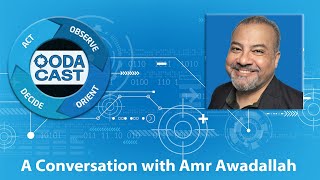
Bob Gourley talks with Amr Awadallah, Cloudera's co-founder, about starting the company, navigating enterprise IT, and where technology is headed next, including the metaverse.
Chapters
Informing your decisions with intelligence analysis and insight brought to you by the team@ooda loop.com hello, I'm Bob Gourley, the Chief Technology Officer of OODA llc. And today on the oodacast, Amer Awadallah. Hello Amer, how are you doing?
I'm doing well, how are you?
I'm so excited thanks to have you on the oodacast.
Me too.
Let me tell people why I'm so excited. First a little bit of your bio. You are widely known as one of the founders of Cloudera. Prior to that you were working on extreme scale data solutions for Yahoo. You were also most recently the VP for Developer Relations at Google Cloud. Academically, your background, you have a bachelor's in double E from Cairo University, also a Master's from Cairo University in Computer engineering and a Ph.D. eE from Stanford. It's all pretty impressive and I want to talk about a lot of that, but let me tell people why I think it is so neat to have you on. In my opinion, few people have touched as much of humanity as you have.
Oh, thank you.
Being part of these big solutions and I know it was a team but guys like you and others at Cloudera created things that have helped billions of people and really touched a lot of humanity. Across multiple different mission areas like medicine and health of course, and finance and entertainment, you have really helped make scalable data systems succeed. And pretty neat, I think.
Yes it is. Thank you. I am very excited. It's the thing that makes me proud the most actually is the impact of the technologies we produce and how can advance humanity in very positive ways. Nothing is more fulfilling than that. So, so yes, I agree with you.
Well, let's. Can you give us a little background on your beginning? I'm wondering how you got your start. How does a young Amer Awadhalla decide? Why did you decide to pursue a double E degree? That's a pretty tough degree to pursue. And what made you set your mind on that course?
I just think ever since I was young I was always intrigued by how stuff works. I think most engineers are like that. They're like, they're like how does this thing work? Like why, why is this like I would open up our TV and I would open up our fridge in the back and see what's in there. And always had that curiosity in me of how stuff works. So I think that's a very big part of it is that curiosity of how stuff works that led me down that path, coupled with encouragement from my, from my family. So my mom and dad were very. Even though they come from accounting and economics, they come from a very different space. My dad is a professor of economic at Cairo University. They still push me towards pursuing my passion. So. So, for example, very early on, when still computers are not widely available as they are today, I had an Atari console, like the Atari gaming console, which is really not a computer, just a gaming console. You put the cartridge for those people that had one of those. Remember how they work? You put the cartridge in and you play a game. But my dad got me this very interesting keyboard that you put on top of the console, and you plug in the cartridge, and then suddenly you have a basic computer and you can start programming in basics. So that. That was my first introduction to programming, actually, was through that Atari console was only 4k of memory, so he didn't have that much to play with. But still, you can do colors on the screen and you can do code that change the colors in different ways with different behaviors. It was pretty cool, actually. So that was my introduction. And ever since then, I really got hooked. Like, I got hooked on how leveraging data and leveraging coding on top of that data, we can do some amazing, beautiful things that can advance our world in different ways. And so that's kind of why I became very intrigued with that. And as soon as I finished my high school, my high school, I right away wanted to join a degree that is along the path of computer degrees. Now, at that time in Carroll University, actually, there was no computer department. The only department you could join is the Double E, the electrical engineering department. There was no computer department at the time. So I joined Double E at Cat University to get my bachelor's. And as soon as I got my bachelor's, literally that same year was the year they opened up a computer engineering department for the first time in Catt University.
So I'm there.
Yeah. So that was back 1993, and I had just finished my degree. So they took me as one of the very first people in that departments that are teaching assistants. So the professors were just teaching the classes for the first time. And they needed. They need the teaching assistants that can help them out that understand computers. So I was one of the very first that got picked for that. And then I got to finish, actually my master's degree in that department. And my master's degree was about animation and human animation. And how do you. How do you procedurally, with a formula, imitate the motion of how a human walks or runs or gates, like, different. And it depends on how tall the human is. Male versus female. And there's lots of characteristics you can put. And then you govern this formula that creates the walking motion of. So that was my master's degree and then yeah, I applied to come to the US and applied to many universities here in the us. Luckily I got accepted in a number of them, but Stanford was my dream. So as soon as Stanford said, hey, we accept you, I came running to Stanford right away. And it was double E department in Stanford. Stanford, I think they don't have an explicit computer engineering department. So they have a double E department and then they have the CS department and then there is a joint like lab between both computer science and electric engineering that's called the computer systems lab. So I was on the EE side, but I was part of the computer systems lab. And so it's more, it's more applied versus folks that come from the science side. It's more theoretical though that has changed a lot these days for sure. So that's roughly kind of how I came to why microsti came in this path and how I ended up at STANFORD Getting my Ph.D. from there.
And what did you focus on at your PhD at Stanford?
That's a very good question. So initially I was very intrigued by networking, actually. So in my first few years at Stanford I was very focused on networking and how to make packet transfer over networks become more efficient and more stable and more fair across many connections happening at the same time. And believe it or not, all the stuff was still very rudimentary back then and improved a lot of course, running forward 20 years. But that was my first interest and I worked on that with a couple of professors. One is called for Add to Badge. The other one is called Nick McCune. Very, very popular, both of them in the networking space. But then while I was working on that networking stuff, I got an idea for my first. My. My entrepreneurial gene was starting to kick in. And Stanford helps with that because Stanford gives you lots of entrepreneurial courses where they teach you about starting companies. And I think the main thing they do is they diminish your fear about starting a company. Like they were very good at that. Like, it's like, hey, starting a company is not a big deal. It's actually very easy. This is how you do it. This is how you pitch to VCs. This is how you make a plan. This is making. Wow. That actually is not the. I thought starting a company something scary that only few people brave enough can do. It's like, no, that actually is something that anybody can do. So they encouraged Me a lot to do that. And so I took a leave from Stanford actually at the time. And I started my first company, which was a company called Viva Smart. And that company specialized in building a catalog of product information. So that includes things like product images, specs, prices across different sources available from E commerce merchants, et cetera, et cetera. And that company was, within one year, was acquired by Yahoo. So I ended up at Yahoo because they acquired my first company. So that was the first company I created. Now I went back to Stanford later on. So while at Yahoo, I told them, hey, I really need to finish my degree because my dad keeps nagging me to finish my degree. That was a very big reason behind it. But I also, I really want to finish my degree. I didn't look at the PhD degree now anymore as something I need for my income. It's more like it's an accomplishment. It's like, you know, when you go to the Olympics to get a medal, you're going there to get the medal. That's why you're going. You're not going for anything else. It's like it's the joint that the enjoyment of achieving that goal. Right. So for me, I really need to go back and finish the PhD. I was very fortunate. I had a new idea that came to me about how virtual machines could be used to allow us to move applications and move services and move code all over the world wherever there's demand. Right. So, and back then there was no Amazon, there was no Google Cloud, there was no Azure. So the concept was very, very new on how you can leverage virtual machines to enable compute services to be mobile across the world where there's hotspots. And that was my PhD. And then I was very lucky. I met Mendel Rosenblum. Mandel Rosenblum is an amazing, humble advisor at Stanford. He's also the founder of VMware for people that know that. So very well known in the industry. And I pitched him the idea and he liked it. And I was able to join him as a student while still working at Yahoo. And I was able to finish that PhD. The PhD was called the Vmatrix. I'm a very big fan of the Matrix movies. So the name of the PhD was the V Matrix. And it's really about this virtual matrix of machines around the world where he can send services where there's hotspots and where is demand, which today we do that today with all of the cloud providers. It's one of the basic features you get with them. Yeah.
All right, cool. And so that you finished your PhD and then did you transition back to Yahoo?
So Yahoo was actually nice. They, they liked what I have done for them. They liked my startup actually was part of Yahoo shopping, which was one of the key properties for Yahoo at the time. So Yahoo was nice. As they told me, we will let you work on the PhD while you're working at Yahoo. So we'll give you enough time to work on your PhD. You don't have to leave us and even more will help you with the tuition. So they helped me with my tuition at Stanford as so Yahoo. Actually I owe them a lot of credit actually for helping me out finish the PhD while I was working. So this way I really got to exercise my research brain and my research kind of inclinations while at the same time working on big data problems at Yahoo itself and helping Yahoo become better at leveraging data at scale.
Right, thanks. Well, let's talk a little bit about Hadoop or maybe starting at Nutch and help me understand the history. Correct me if I'm wrong, but this was, there was really, there was a paper written by Google about this thing they called MapReduce and they published that in a very open way, hoping the community would help contribute to this. And then some great thinkers like Doug Cutting helped turn that into a Apache project of I think Nutch and Hadoop and the related projects. So it was all kind of born out of this white paper and then people like Doug turning it into a live Apache project. Did I get that about right?
Roughly. Roughly. Right. I'll tell the story more from my perspective. So you're absolutely right that there's, there's one more paper. So there's two papers, actually two very foundational papers that Google published that became the foundation. So one is the MapReduce paper that you referred to. That's correct. That was very key. And MapReduce really was about divide and conquer. Right. So how can you take a big problem and then break down the big computational problem into small pieces so you can take these pieces and distribute them on as many computers as you can. Each one of them does the computation locally and then you group back the results at that. So that's kind of a very high level description of MapReduce. And that was the beginning of us being able to attack big problems using normal computers without needing to have a mainframe because mainframes are very expensive, as you know. So that was the first paper. The other paper was very key as well because it's about the storage. How do you store massive Amounts of data. So the other paper is called the Google File System, or GFS for short. And the Google File System laid out the foundations for how can you build a very scalable massive file system that can store petabytes and petabytes of data? Many, many, many files reliably. Hard disks can fail all the time, servers can fail all the time, networks can have problems, yet everything still works right. So that kind of, that was the other great contribution is having very smart software that not only can scale the storage but can automatically detect and correct for hardware failures so you can stay reliable most of the time. So these were the two foundational papers that Google published. Now I want to describe how I came across it from my point of view at Yahoo. So I was at Yahoo working on massive scale data problems. We were using legacy data systems, so we're using Oracle actually as our main database and we had one of the largest Oracle installations in the world. This was before Oracle Exadata for folks familiar with the Oracle product line. Because before Exadata existed. So back then you had something called Oracle Rack and Oracle Rack is a cluster version of Oracle that allows you to link a bunch of Oracle databases together to create a bigger database. And it was about a petabyte, but it wasn't scaling for us very well, it wasn't fast enough, it was very expensive, cost wise, so we couldn't keep all the data that we would like to keep. Performance wise. Performance wise was very good for the short queries. For the short interactive queries it was perfect. But for the bigger queries that are trying to do a big join across a lot of clicks over here and a lot of views over here across many, many cookies and users. Just like it couldn't handle that. So we needed something new. So I was suffering with that, with the performance of that not being at the level that we require. Also in terms of making changes, schemas are very rigid. It was very hard to make changes and evolve things. So that was the other big problem that we had. So cost was a big problem, speed was a big problem, and then flexibility and agility was a big problem. So I needed something new that can solve these three problems for me. And then I was lucky that at that exact same time that's when the Yahoo search team were just hired by cutting and they were looking at how can we take this Hadoop nut stuff based on the Google GFS and Google mapreduce papers and make it into something real, into a real product that they can use to build an index of the web and for the purpose of web search. But I bumped into that team and described to them, hey, I have these problems, I'm trying to do these massive joins across petabytes and petabytes of data and all of my systems are failing me. And they said, hey, we have something for you called Hadoop, you might want to try that out. So I had a very specific query called the monster query was the name of that query because it was a massive query. It's a very simple query. The monster query was a very simple query. So you're just doing a join across two big tables and then counting stuff. That was all it was doing. But the two tables were really big, right? And you want to join across them. So it's a very hard problem at scale. And they said, let's try the monster query in Hadoop in our system. So I said, okay, let's try that. And I gave them the query. That query failed or every other system failed. That query they couldn't finish. I tried almost every database in the market at the time. I just couldn't finish that query. Except for one database vendor. I'm not going to say their name, but there is one vendor actually that was able to finish the query, but that was it. So they took that query. Not only were they able to finish it, they were able to finish it in four hours. And four hours wasn't like we couldn't even think about that. Like before that our thinking for a query like this would take at least a few days to finish and they were able to finish in a few hours. So that was the beginning of wow. There's something foundationally different about this. This technology is really coming in with an, with this divide and the divide and conquer concept of how we break a big problem into small pieces across many servers really, really works. And that was kind of the trigger. It's like, wow, this is going to be a big thing and then the rest is history, as they say.
So I remember this history, it's all coming back to me now because I remember the days before this. I worked with some very large scale data systems myself and they could not really scale linearly. You reach a point where the more data you put in, you just can't add another computer and make it go that much faster. And we had to have a breakthrough. And then there was Hadoop. A lot of people were tracking that, but it really wasn't easy for enterprises to use. It wasn't a package, a commodity you could just go purchase with services and training and expect it to run and then along comes Cloudera, which was able to like make it safe for the enterprise is short way of putting it right.
Yes, yes, yes. And safe here is not just the ease of use and making it packaged and nice, it's also other things that you typically require. So when you are going to be running something in an enterprise like a medical institution or a financial institution, or even a manufacturing, manufacturing facility, or even in the government, you of course have very strict also requirements around the governance, the compliance, the security, the access control. So there's all of these other ancillary things that you don't think about initially when you're building a scalable data processing system, you're very focused on the storage aspect and the compute aspect and how do you make that scalable and reliable. You're not really thinking about the security, the compliance, the governance and all of these other things. So yeah, that was the genesis of Cloudera is like let's take this amazing open source project which is very good at doing the scalable parts when it comes to data storage and computation, and let's now add manageability to make it very easy to install, configure, get up and going and then add things that make it more applicable to the enterprise from compliance and governance point of view. And that's the model now that by the way, like almost every open source data company, that's the same model that they take as well. It's like they're going to give you the core, is going to be the basic functionality and then we're going to add lots of things around that core that now really make it solid and rigid and enterprise ready.
Right. You know, a couple other things. Number one, I love the technology that Cloudera packaged and brought forward and helped enterprises with. There was something else besides the technology and that was the team. I think it was. I mean I just, I liked all you guys.
Just thank you.
Very good team we like to do.
Bob.
I was very proud to be an advisor to Cloudera for years and just really, I like the group and there was. Is everybody in California that way? Is it something in the water or did you guys intentionally set out to just make sure you had the right core team? What was the magic there?
I think we intentionally set out like we had a culture that we want to build out and we were very careful as we pick people to join our team that they are of the same mold roughly that represent our culture of being a team player. We're in it to do it together as a team. It's not about any single individual bragging about his or her accomplishments. It's about the group together. And yeah, play hard, work hard. Like, we understand that doing a startup is going to be a lot of work. It's going to be a lot of stress, it's going to be a lot of pain. And the only way that's going to make you survive through all of that is if you're having fun at the same time and if you're getting enjoyment in terms of solving real hard problems that are making the world better around you. So we were very selective about that. And on the inbound, as people joined our team and as people were on our team in the first four years, we were very also careful to monitor the culture fit and see if somebody is not really fitting the culture. Then we work with them on finding them another job somewhere else. And we were very, very, very careful. Do it in a very professional way, always helping them. Because at the end of the day, it's not about them. It's about figuring out the right team and the right formula going forward.
Right. You know, your very first headquarters, at least the first one I saw was right next to A Fry's. And I always thought that's so cool because, you know, Fry's always kind of represented this hacker mentality of always wanting to learn and get the best stuff and the neatest stuff and plug it together. It was cool seeing your spaces right next to A Fry's.
Yes, yes. So actually that was our third one, not our first, believe it or not. So our first one was actually a conference room that another startup called AdMob. And that startup, AdMob, was eventually acquired by Google, actually, after. After we stayed in their office. So we usually joke with them and say we were. The reason why Google acquired you is because you invited us to stay in your. In your offices. But they lent us one of their offices and I'm trying to remember of that office. It was just literally just one office, like one room. Right. So we were just like locked up in that one room myself with Mike and the other founders. And I think it was called Al Capone, if I remember correctly. It was one of the mafia folks. It was Al Capone was the name of that office, if I remember correctly. So that was our first one and that was in San Mateo. And then our second office, which was really our first real hq, was in Burlingame, in Burlingame, California. It was also. It was up in a very old building and when you come into the office, there was like pipes on the walls and brick, like red bricks, was like very, very startup, like actually. And then our third one is the, is the Fry's one that you referred to. And it was very convenient because in the beginning we need lots of hard disks as we were testing things. So whenever we need hard disk, we just go to Fry, buy the hard disk and then come back. And yeah, you come to our office and it just looked like, yeah, it looked like a startup was very, very quirky in its design. And another, another interesting fact is that the company that was in us, that office before us, was box.net so folks are familiar with box.net, they were the company in that office just before us. And they had all these funky paintings across the office, which we kept actually because we really liked the decorations that they did.
I also want to ask another question. You've already hit on, I think maybe the most important things that a startup needs to think about, which is not just have the right technology, but have a good team and a good attitude and mix in some good fun. But do you have any other lessons from that period of Cloudera that you can tell us about? What should startups be thinking as you form a new company?
Yeah, it's an excellent question. So I usually try to bubble it down to two things. There's two things that you need to do to succeed as a startup, right? The first one is essential, which is actually both of them are essential. But the first one is don't obsess over the solution you're working on, because your solution is not the thing. What is the thing is the problem. You need to obsess on the problem. You need to find what is the problem that a given customer has that can be solved over and over again in a repeatable way. And sometimes entrepreneurs get distracted a lot by the solution and they try to come up with this most amazing solution. For a problem that does not exist, or for a problem that only exists at a couple of customers, obviously that's not going to work, right? So, so that's, number one is the product market fit of finding what is a solution that I can truly innovate and differentiate on for a problem that nobody has solved in a good way before. Like, that's number one. So number one, as an entrepreneur, you really want to lock down on that. And then number two is you want to do everything in your power to minimize the probability of failure, because the probability of failure for a startup is high. I sometimes joke and say the odds of winning in Vegas is better than starting A company, because starting a company, the odds of it becoming successful is 1 out of 10. Only 1 out of 10 will do really well. Only 1 out of a thousand will become a unicorn, meaning they have a valuation of more than a billion dollars. And only one out of 10,000 will reach the scale of Facebook or a Google. So it's a really, really very risky proposition. And the other interesting thing is you're not going to hit that success like in Vegas. You roll the cards or whatever, the dice or the cars and answer within a few minutes. With a startup, you're going to have to work hard at it for five years at least or seven years before you find out if you're going to be a successful startup or not. So, so, so, so it's a very long way of saying is you need to do everything in your power to try and maximize that probability of success and minimize the probability of failure. So what does that mean? That means, number one, positive. I'm a believer in this. Positive energy is very important. You always need to have positive energy in your company, in your culture, in your environment. You want to focus people on the potential, not on the problems. You want to analyze the problems and come up with solutions for them, but you want to focus on the potential and the future and where you're going as opposed to the past. You want to think and believe like you have the self fulfilling promise and motivation and energy inside of you that we will succeed. Even though you know that the chances of failure is high. You want to have what you call suspend belief to that and try to fool yourself that no our company is will have a higher success rate. And I think that actually leads to a higher success rate. I think it is, it just biases you more towards that. So that's number one. Number two, you want to be very selective with the people with the team because that plays a very big part in the success rate of a startup. Number number three, you want to be very customer focused. And that ties back to number one, like you always go back to the problem and what you're doing for the customer and work backwards from that. And number four, you want to be careful with your money. You don't want to go and spend all of your money that you raise from investments on crazy things. You want to focus them on the things that will make the biggest difference. So really it's these two things. Number one, make sure you're building the right products, you're solving a real problem, not a fake problem. And number two, do everything in your power to increase the chances of success. Because for startups it is hard to succeed. Right, that's it. Hopefully that's useful.
It's very useful. And I can tell this is applicable across multiple domains. Whatever your solution, this is the kind of attitude that a company should have and it brings back a lot of memories hearing you say that because I watched you guys work extremely hard. All of you are flying all over the world and keeping that good attitude. You're speaking at conferences and you're delivering the message and helping customers understand why they should have a conversation with you. And it was neat seeing you go from zero to one, all the way to IPO and beyond.
Yeah, thank you. It was quite. Very fulfilling, actually. Creating a startup has many fulfilling aspects to it. One is just a financial aspect, that's nice. But creating a company that can manifest itself and exist independent of you, it's like having a kid. Like when you have kids and the kids grow up and now they're like their own things that you now can be proud of. And that same feeling exists with startups. Like, I'm very. Cloudera still is out there living and existing, and even though I'm not working there anymore, it's its own thing now and its own entity. And I can claim, hey, I was one of the fathers of this thing that now is living and progressing. So, so fulfilling to. To have that.
Yeah, right. Well, let me shift. I want to ask you a lot of other questions too. One is about. I'd like to talk about challenges and opportunities in enterprise it. I'm wondering if you have any views on the current challenges to start with in enterprise IT today, What are the problem areas that people ought to be thinking about solving?
Yeah, the number one problem by far is skill sets. Like, there is just not enough people in the world that have the proper skillset to take us to the next level. When it comes to enterprise it, when it comes to all the advances in machine learning and all of the advances in big data and all of the advances in microservices and how we can build the new types of applications that are more agile, that are more flexible, that are more scalable, that are more reliable and available, the skill sets are really not there yet. And that's a big problem. The world collectively is working on that, trying to train and educate more and more people to be good along that front. But I don't see it catching up for another 10 years, actually. Like, I see us in a deficit right now from a skill set perspective, which means that the only way for us to be able to solve that is for many of us to build prepackaged solutions that can be plug and play for a lot of these enterprises. Like today, many of the big companies are building tools that can help enterprises build things themselves. But the problem is the enterprises don't have the skill set to go build things themselves. They want to just give me the thing and give me a key so I can turn it on and start using it. So I think we need more of that in the interim until the skill sets are available worldwide to actually implement these great new innovations. With all the technologies coming to us today, we need to have an interim step of a lot of prepackaged solutions that can help move us forward quicker than we are today. So let's have number one problem. The number two problem is legacy. To be very honest, I'm shocked by how much legacy is holding back companies. Like, I'm shocked about how many companies are still relying so heavily on mainframes, right? Like when clearly the modern, the modern winners of the world like Amazon, Google, Microsoft, and so they did. If it's a joke for them to run a mainframe, like, they just don't run mainframes. Like, what is that? That's like using a tablet to write on text on a tablet. It's like ancient stuff, yet you're still using it. And it's because migrating from these systems is extremely expensive and extremely hard to do and doubly so very hard to do while your company is still required to be up and running and serving lots of requests and serving lots of customers. So figuring out a way, and I don't know what that way is, and I know many people, smart people trying to work on that, but figuring out a way to make it super easy to migrate from legacy to future architectures is one of the biggest challenges in the, in the IT industry today.
Yeah, right. That makes a lot of sense. And I tell you, it really resonates with me. And, you know, my world is mostly around the federal ecosystem. I work with a lot of other large organizations too, and I see that a lot. Whether you're a corporation or especially a government organization, they may have, I mean, computers that are 40, 50 years old and these things that are, you know, only you have no experts on them. You don't know how to change and improve them and replace.
From a security point of view, they might be hacked much easier than the newer stuff. And yeah, there is so many, but they, they are so afraid of touching them because they work. And it's like, why should I disrupt when it's working and it's like the reason why you should disrupt is why it's working because you want to avoid a major disaster that will come because you're using this very legacy stuff. But sometimes they're more short sighted and the focus on, hey, it's working right now, just keep it running.
Yeah. And I think maybe I'm too much of an optimist, but I always hoped that cloud computing would be the thing that helps us all get past that legacy. There's so many capabilities there and if we can just get to the cloud, we can transform.
Yes and no. So, so, so the thing is like people sometimes think the cloud is this magical stick that will show all problems but, but the thing is you still need to migrate to the cloud, right? You still need to rewrite your stuff in a new style to fit the cloud. If you truly want to be cloud native, if you just do what's called the shift and lift or lift and shift, you didn't really solve anything. You just moved the, sorry, you just move the shit that was over here to be shit over there. You need to re architect that stuff to be more smart, to be more scalable, to be more available. And that's the hard part. So without that we're not going to solve the problem. The other thing I want to notice with the cloud as well, Bob, yes, the cloud is definitely a very important way for us to, for organizations to shift some of the workload that they have to do when it comes to manageability, stacking and racking, racking and stacking servers power to somebody else, like they take care of that. But at the end of the day you're still responsible for running the service that's going to be running in that cloud environment. So you still need to be good at doing that. And if you don't solve that, then nothing is achieved. The other thing to notice also with cloud is it's not clear yet whether cloud as in public cloud is going to be the final answer. That's not clear yet. And the reason why is because there is many countries across the world right now that are worried, they're very worried on depending on the cloud providers. When the cloud providers are US Companies, right, Or Chinese companies if it's Alicloud. So they want to hedge their bets, they're okay having some workloads being in there, but for mission critical, high security, high criticality applications for that country, it's harder for them to look at doing that and they're asking for more local Clouds, but even with the local clouds they're concerned because if the cloud is local, but the software and the know how and everything is still controlled by US company, then they don't get that flexibility still. So many of them are, we want to have local open source clouds, we want to have clouds that are local, that maybe, maybe, maybe the vendor in the US is running it, but we have the option if something happens between the US and US to take control. Right. So that's why I think the on premise open source cloud movement is important. And that's why you see companies like Google now has Anthos, Microsoft has a big push on premise as well. And even aws, by the way, AWS was always against hybrid cloud. They wouldn't even let their vendors say the word hybrid cloud if you're working with them. And then last year they also raised the white flag and said, okay, no, we have to do that as well. And AWS now has something called Outpost where you can run a version of AWS locally in your own environment. So I think that snowball.
And a snowball edge which has some machine learning on it.
Exactly, exactly. So I think that trend will continue. I think that trend will like the future is hybrid. It's not public cloud only, it's not on premise only. The future is going to be the hybrid version that brings both together in a very smooth, flexible, unified way.
Great, thanks. Very helpful.
Sorry for the long answer.
No, no, this is perfect because you talk about challenges, you talk about the future and that leads right into opportunities. Because every challenge you discussed I think is an opportunity for the savvy startup or the innovative big company to bring solutions to the enterprise.
Yeah, yeah, yeah, exactly. So the challenges I mentioned are the opportunities, meaning opportunity number one is making it how to make it easier for enterprises to adopt this stuff because of the skill set gap. So how can we figure out the skill set gap? And there's lots of smart minds working on that. And then opportunity number two is how can we help them migrate Legacy. Legacy is so hard to migrate. And any automation or any machine learning work or whatever around that area I think is going to be very, very fruitful as an opportunity to pursue.
Let me mention another challenge and opportunity and that's cybersecurity. I'm of the opinion that we will never fix cybersecurity. It has been with us forever. There's been challenges, there'll be challenges well into the future, but we can make it harder on the bad guys. Right. And I just wanted to ask if you have any Ideas on the future of cybersecurity and how we can reduce enterprise risk.
Yeah, yeah, I think. I think. And I mean, you're more an expert on this than I am, Bob, so let's brainstorm on it together. But I think if you really look at all security problems at the beginning and the end, they start with us humans making a mistake. Like most. Yes. In the. In the very early days of the Internet was more like the software having bugs in it. And we can abuse these bugs and create these very ugly worms that can bring the whole Internet down to its feet. I think now we're beyond that where it's. Now the bugs are squashed very quickly, and there's so many bounty programs, and we find them much sooner than ever before. That the main attack vector right now that most hackers use to penetrate our organizations is us. They use us as humans and they try to trick us and socially get us to click on a link that installs something in our phone or whatever that does this or does that. So that's not gonna. Because we are humans and humans are. Humans will keep doing the same mistakes, and they will have their own attack vectors that they will fall to. That means that we're never going to solve this problem because the smart people always find a new vector to trick us as a human. But we need to add more and more software that prevents us. Prevents humans from making the mistakes at the first place. Right. Or catches them very quickly after they had made the mistake. Right after they had been fooled and after they had clicked on this thing or installed the thing right away, like within seconds. It's called. Oh, you just did that. And we plugged that. So that. I think that's the secret is creating this very quick feedback loop that allows us to super fast catch these intrusions when they take place. All right.
You know, that. That resonates. I mean, I do have a deep background in cybersecurity, and that resonates with my belief. It really does. There's one area I would push back on. Just brainstorming here.
Yeah.
Like, I think that applies to the majority of the big incidents I see. For example, I'll just name one. The Colonial Pipeline ransomware. Everybody here on the east coast was affected. Well, the CEO of Colonial Pipeline really didn't care about cybersecurity. Didn't have a program, did not have a ciso. And I don'. Say this in order to shame him, but I think we need to examine those things at this point in time, if he would have had a better Cybersecurity program. If his people were better informed, get more modern technology, that wouldn't have been such a big issue. But here's where I push back some. The solar winds attack was by an incredibly well resourced adversary that no company should have to stand up against. It was the gruff resourced by a nation or there was a series of Microsoft attacks at Microsoft called the hafnium attacks which were a first resourced by a nation, China and their mss. And then they turned it loose to the criminal community. No company can withstand an attack by a nation like that. So there. Even if you would have had all your employees trained and a good cybersecurity solution, it's just. It's tough. Yeah, yeah, yeah.
Yes. Without help. Without help from the US government and from other governments across the world to catch that. Yes. These bigger attacks are super hard to prevent when you have a very highly funded, highly focused, highly concentrated organization that's coming after you. So yes, I absolutely agree with you there that it's tough and absolutely agree with you that that needs to be something that the US itself steps in to help with. Yes.
Right.
Yeah.
I want to ask some other future focused thoughts too. Metaverse. The metaverse. The metaverse is a term that came out of science fiction. It's a very expansive kind of concept that I love thinking about something beyond this universe, that it's in cyberspace. And recently there's been a lot of news about the metaverse. There are investment organizations that stand up just to invest in metaverse companies. There are virtual worlds that have evolved over the last decade. You know, if you think early on we had the sims and we had second Life, well, those things have continued to evolve. The pandemic forced a lot of us to work at home. And so there's a lot of distributed work type things that where you can put on an Oculus or other device and jump into a work environment. All of these point to a coming of this age of the metaverse. And I want to ask your views on this. What do you think is in our future regarding the metaverse?
Yeah, so I'm very excited about it myself as well. Like I actually. Just show you my Oculus. I do have an Oculus that I use all the time right here. I also have the magic leap. This one is more the augmented reality one. So this one you put it and whatever the metaverse gets overlaid in front of you in the room you're in. So it's more like literally I would see you standing in front of me in my room with this kind of device. So I think it's coming. I think that kind of world, virtual world that enriches our existing world, whether that be in place of. I think the more successful one would be in conjunction with, not in place of, like I think. And I think Facebook would start shifting towards the. In conjunction with meaning we lay out the things in our existing verse versus a new metaverse. But I think that whole direction is a very solid one. If people know the movie and the book Ready Player One, if they have not seen that, I highly recommend they do see that. And it just shows the potential of that. Right. So that book and that movie shows you the potential. If you have a metaverse that's rich enough where you can actually live and lead a very different life than the life you're living in the real world. It can allow you to do and expand and collaborate and innovate and create art or music in a way that is not even possible in the real world. So that's kind of the promise of it. And that's what excites me about it.
You know, another thing that I think you're just spot on. It's also exciting to think about the education capabilities. Like in the book Ready Player One, people would go there to go to university and you could study any subject anywhere.
Yeah. With the best teacher in the world. Yeah. And go and go and sit in their school and you're sitting with them in the same classroom and they're right there in front of you and it's literally as if you're there. So I think, I think it's, I think it's still 10 years away. To be, to be honest, before it's like. So it's a long haul investment, but yes, it's absolutely coming.
Cool. Well, speaking of education, I want to ask your views on this too. And that is for the youth of today who are interested in a career in technology. Do you have any recommendations for them, like what's a good language to study? Or what's a good field of computer science that they should dive into if they really want to make a difference?
Yeah, it's a very good question. So my number one advice I give to anybody when they're asking about what should I do and what's that? Like, follow your passions. I think following your passions is one of the key things that allow you to succeed. Like, Bob, you're so successful because you truly are passionate about security. Like cyber security is your passion. You love it with every ounce in your body. And that's why you're so successful, right? So, so my advice to any anybody starting up their career is find that thing that you're super passionate about because there are so many good people in the world just, just, just, just as good at you, maybe even better than you. But what will make you stand out is the passion that you have. Because that passion that you have will make you work harder, will make you think smarter, will make you be more creative in terms of how to address it, it and such. So number one is follow your passion. Don't follow what your mom and dad are telling you to follow or your friends or your peers are telling you to do. Follow your passion. The number two thing I would say is the future, the life cycle of jobs like today in our careers we can adopt a career and have that become the same career for our entire life, right? So Bob can choose to be a cybersecurity expert and become a cybersecurity expert for all of his life. That might not be true in the future. Like in the future because there is going to be lots of automation coming where a lot of our jobs will be automated to a large extent. There will be some point where like maybe I should do something else. Maybe this job now is being done enough with the machine and me as a human, I need to pick something else that I'm better at. So, so one of the skills, I think our newer, I'm like the newer, the younger generation, like five years old, six years old. As they start to educate themselves in the future, the most important skill is education, meaning they need to be very good at educating themselves. Even when they're 90 years old they can go and learn something new and shift. So that's my most important advice is you need to have an open minded approach to not being fixated on. There is only one thing I'm going to specialize in for the rest of the life and be open minded is like yeah, I love that one thing but I'm open minded that I might switch to another thing. I think that's very, very key now when it comes to actual the questions about programming languages and technology and so on. I absolutely believe machine learning, AI and data science is going to be a very, very promising career for the next like 40 years at least. So I highly recommend as many people enter that space as I said it and it at large, like just information technology, programming and systems development and all that kind of stuff is a huge gap and it's going to be in high demand for many, many years to come. So I can't recommend that enough as a career. When it comes to programming languages for data science, I highly recommend Python. So I think Python is going to be the language for that for the next few years. And for systems programming, highly recommend the Go language. The Go language is newer, it's smaller, but it's really coming up to speed very fast when it comes to systems programming. So that's why I highly recommend that. Yeah.
Oh, great. Thanks. You know, I have one other question, and that is, you know, first of all, I really believe everything you're talking about and I believe we're going to need more people who understand data and how to extract value from it. AI, machine learning. We're gonna need a lot more people like that well into the future.
Yes.
But I've started to form the opinion that maybe, of course, we need far more than just the scientists and technologists and data scientists and computer engineers. Maybe it's my old age, but I believe now more than ever we need people who study history, of course, philosophy and art and poetry and truth and critical thinking. How do we find balance between encouraging our kids to be scientists and technologists and AI masters or becoming poets and historians and philosophers?
Yeah, that's a very good question. So it's a very deep question as well, Bob. So I don't have a ready answer for you to give on that front, but I will say what I do know is we have a huge, huge gap right now when it comes to the IT skills. So I think we are, and I could be wrong here, but I think we are doing relatively fine when it comes to the artistic part of our contribution to the world. From that and history and poetry and movies and music and artists, I think we have enough. I could be wrong and maybe you disagree with me there, but I think we're okay on that front. We are. Really, really. I can't stress enough how far behind we are in terms of the skills we need to truly take us to the next level as a civilization from the IT point of view, like the huge gap right now. And all of us need to be focused on filling in that gap. Now, I agree with you 100% that that should not come at the expense of the other disciplines. I agree with that as well.
Yeah, great, thanks. I really appreciate that.
And we'll. But you. Sorry, but you are right. Like these skills that you mentioned would be harder to replace with automation. Right. So we can get a computer to learn how to write a good poem based on looking at the style of other famous famous poetry, Nobel Laureates and mixing and matching their styles. But we can never get a computer to come up with a completely new way of saying or describing things that nobody has ever thought of before before. Like that is very, very hard to do. They can come up with mixes, but not true original creations. And that's why that's what we are humans are really good at. And we're going to shift more and more towards that over time.
You know, maybe part of the answer then is to understand that all these things are not mutually exclusive. Yes, you can be a very good programmer, a very successful technologist and still have a passion about history or poetry or art.
Yes, yes. And not only that, I would say we need to make it non exclusive. We, the newer generation, as they grow up, we need to train them more and more that they can be, that they can be more than one thing at the same time and not just that's it, this is my career, this is the only thing I'm going to be doing. No, we need to have richer mentalities when it comes to that. I agree.
Well, Amar, I want to ask your thought on one more thing, a concluding question or a comment. And that is when I first learned about Hadoop, one of the ways I would express it to college students as I would give lectures is I would ask them to come up with their list of the biggest problems facing humanity. And people would come up with a slightly different list or it's in a different order, but it's things like the economy, war, issues of war and peace, resources, the environment, health, health outcomes. You list all of these problems, wealth inequality, a bias, tribalism. And then we would talk about those, and I would point out that today we have more data than ever on every one of those sub to help come up with the right solutions. What we need are better ways to analyze that data. And as I saw Hadoop evolve into this big great capability that can help us analyze data across all of those different fields, I really saw it helping deliver on that promise and I wanted to end with that because that is to me to your great credit and the team of people who are around you, you are making a difference in every one of those fields. And, and I wanted to thank you for that and ask your comment about what comes next.
I mean, what comes next for all of us is doing exactly what you said, meaning we are still scratching the surface of what you just said. How can we leverage all the data that we have out there that we are now collecting in a way that has never been possible in our history? As a human civilization, how do we leverage the amazing capabilities that we have from computational, machine learning and AI point of view to solve these very hard problems? And that's what I'm saying is we don't have enough skills in the world to do that. And it's on us to try and focus on doing that in a way that is repeatable so we can leverage that across the world in a way that elevates all of us. So I'm agreeing with you 100%, Bob. That's exactly what we should be focused on is leveraging these amazing technologies at our disposal, combined with the amazing wealth of data that we have that has never existed before, to solve these very hard problems.
Right?
Yeah.
Amer, thank you very much for that and for this whole discussion. I really appreciate it.
No, same thing here. I'm really happy we had the discussion, Bob. This was awesome. Thank you.
Thanks for listening to this. OODA Loop production For the latest analysis on cybersecurity technology and global risks, please visit www.oodaloop.com.
More from Matt


Leading Cyber Change: Allan Friedman on the Revolution of SBOM & Future Cybersecurity Initiatives


Revolutionizing Medicine and Tech: Joe Tranquillo's Journey into Complex Systems






Bob Zukis and the Digital Directors Network: Helping corporate boards mitigate systemic risk

Adam Shostack on Cybersecurity and What Every Engineer Should Learn From Star Wars