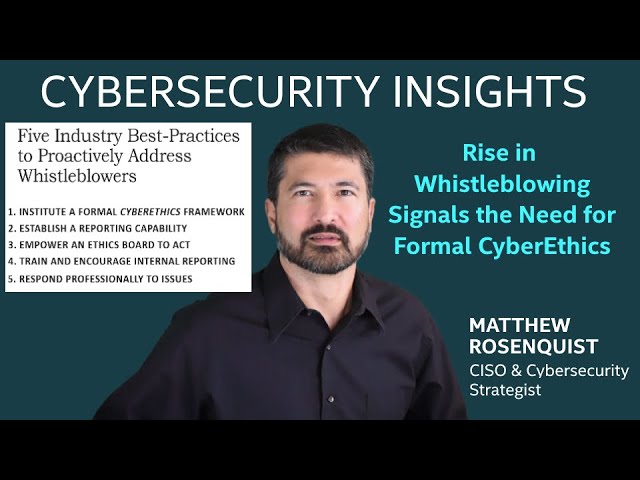
In this presentation, the speaker highlights a sharp increase in SEC whistleblower tips—over 6,900 tips, a 30% rise year‑over‑year—and notes that whistleblowers in the financial sector can receive substantial monetary rewards, with payouts exceeding $700 million since the program’s inception in 2012. This financial incentive, combined with a broader cultural shift that makes employees more willing to challenge unethical behavior, creates a new wave of internal and external reporting. To help organizations manage this risk, the speaker outlines five best‑practice pillars for a corporate cyber‑ethics program: (1) instituting a formal cyber‑ethics framework that spans policies, product design, marketing, cybersecurity, privacy, and partner relationships; (2) establishing both internal and anonymous reporting channels for employees, contractors, vendors, and customers, with encouragement and possible rewards for reporters; (3) empowering a diverse ethics board with authority to investigate and enforce the ethics policy; (4) providing training that encourages internal reporting and educates staff and management on the value of whistleblowers; and (5) responding to reports promptly, confidentially, and consistently in line with regulations and internal policy. The speaker concludes by offering assistance from reputable cyber‑ethics teams for organizations seeking help.
Chapters
Times are changing. People are more empowered to challenge unethical situations in the workplace. Getting Ahead can help manage the risks and be used to improve, identify, and resolve caustic situations, well, before they get out of hand. So let's talk about the challenges in the industry and the best practices around addressing whistleblowers. So the SEC, in recent data from them, uh, has come out that has indicated that they've received, well, over 6,900 tips, a 30% jump over the last year. And these are whistleblower reports that financial companies were acting unethically. And in the financial sector, whistleblowers can actually get a slice of the penalties incurred on the companies found to be breaking the law. Last year, one such anonymous reporter received over $113 million from the SEC for their information and assistance that led to successful enforcement of the SEC in related actions. Since inception back in 2012, the SEC has paid out over $700 million, right around there, to whistleblowers. So there is a financial incentive for people to report these things in the financial sector. Now socially, employee behavior is changing, and it's becoming much more acceptable to stand up, to raise issues, and if they aren't addressed, to flat out report it. Business leaders from all walks of industry really must ask themselves if their organization is acting ethically. If not, they better be prepared for a new wave of employees that are empowered and motivated to report issues both internally and externally. Having a good ethics program can help companies quickly identify and address unsavory situations and work environments, rapidly responding to fix detected issues is far better than dealing with investigations and trial by media situations. So let's really kind of take a look and see where we are, um, from industry best practices. And I want to cover 5 of them today, which is really kind of important. And the first one is really around instituting, well, a formal cyber ethics framework. And this is a combination of policies and structures, um, to really help organizations define what their ethics are and put that into practice. And so it's policies, and, and it has to reach beyond just internal behaviors and processes. It also has to include product designs, marketing messages, service offering, um, customer and partner relationships, cybersecurity, and even privacy. So it has to be pretty sweeping out there to cover all these different areas. The second thing is, well, to establish a reporting capability. It's important for people to be able to report these things, um, and feel secure, feel good about it, and there has to be that, that function in place. So organizations have to maintain an ethical reporting capability for employees, contractors, vendors, suppliers, and even customers, and it should be both internally identifiable. If somebody wants to raise it and be known within the company, if they feel comfortable about that, that's great, but there also must be anonymous options that are available to everybody, for people that don't want to be identified, and that has to be respected. As part of this, I mean, you're really trying to encourage, support, and in some cases even reward employees who properly raise issues. Now, the third area is to empower an ethics board to act act. So you have to establish a, a diverse ethics board, ethics board that reviews these tips and has the authority to initiate internal investigations and is empowered to enforce the ethics policy. The fourth one is around, well, training and encouraging that internal reporting, because you really want that to happen first. So we have to be able to support the ethics and the internal reporting, we have to train the staff and management. Whistleblowers can be a valuable asset to detect potential destructive situations, especially for executives who may not have visibility to things that are going down much further in the organization. This can be that window opportunity of insight, so it's important. And lastly, it's really about responding to these issues in a very professional way, you know, addressing them quickly, making sure that everything around it is confidential, and addressing them in a consistent manner that aligns both to regulations as well as internal policy. Now, whistle— whistleblowers can be, well, an important signal that something is seriously wrong in certain parts of the organization. It's that red flag, potentially. And organizations do have great influence to determine if issues are addressed internally or if they're going to be judged in the eyes of the public. Now, if you need help, there are reputable cyberethics teams that can assist. I know people, I'm part of teams. If, if you're having problems, drop me a note and I can provide some references.