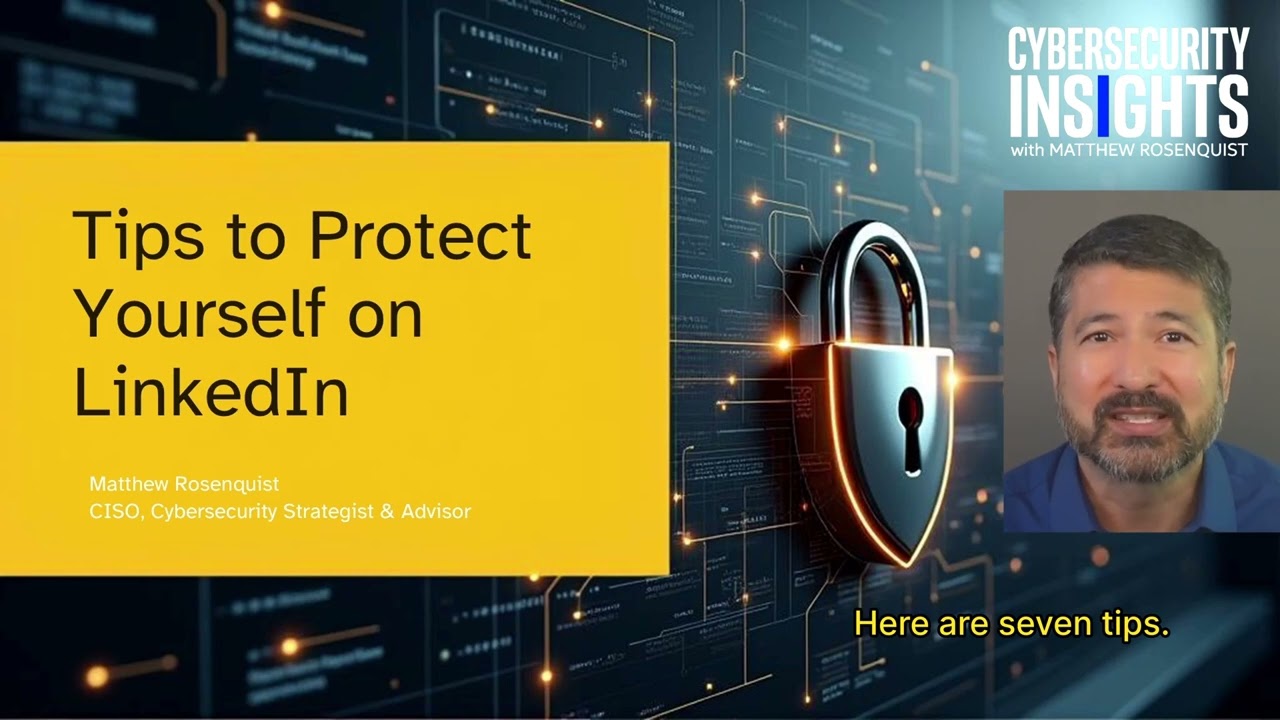
LinkedIn attracts nation-state actors and criminal groups hunting for intellectual property, money, and personal data. Don't post clearance levels or wealth indicators, keep work details private, verify profiles before trusting them, and be skeptical of unsolicited messages that might contain phishing links or malware.
Chapters
Are you doing these things to keep yourself safe on LinkedIn? Here are 7 tips that may protect your reputation, financial assets, and time. LinkedIn is a great communication tool for business professionals that informs, provides career opportunities, and fosters collaboration among professionals, which is exactly why it is attractive to sophisticated cyber adversaries, including cyber criminals and aggressive nation-state actors who use LinkedIn for nefarious activities such as information gathering, target profiling, intellectual property theft, social engineering, fraud, and extortion. Attackers can use LinkedIn as part of a slow game to make contact and build trust over time, grooming victims and collaborators. We also see tactics sending urgent and time-sensitive messages, especially regarding career opportunities, that target cognitive vulnerabilities to manipulate victims. Bottom line, use and benefit from the tool, but know the dangers. Measures and take necessary precautions. Here are 7 tips. First, don't share your clearance level or indicators of wealth. This makes you a preferred target. Second, don't share details of confidential work activities such as project names, details, timelines, names of coworkers, or plans. Third, keep it professional. Don't expose private personal information about yourself, your family, or others. For example, you wouldn't want to share a post that said, "Happy 25th birthday, Bob!" This gives the fraudster that person's birthdate. Number 4, expect to be contacted by fraudsters and people with malicious intent. Not everybody that reaches out is your friend, so keep that in mind. Have a healthy degree of skepticism. Number 5, don't assign credibility, well, without verification to what someone lists on their profile. Or puts in their posts. Again, LinkedIn can basically be used to push fake information, and that's what fraudsters will do. And understand that there will be some level of fake accounts, impersonations, fictitious company listings, phony job postings, and news misinformation. So don't be lured. And lastly, be careful with direct messaging. It can be used to push spam or phishing. It can distribute dangerous attachments, malware,, and it can send you to malicious sites. So be sure to educate yourself about common scams on the platform, and it is crucial to use critical thinking and common sense. Don't be an easy victim or a useful idiot. Stay updated on cybersecurity trends and risk patterns. If unsure about a situation, ask a cybersecurity professional. We live for this stuff, and we're also on LinkedIn. So be smart and stay safe. Like and share if this was useful for you.