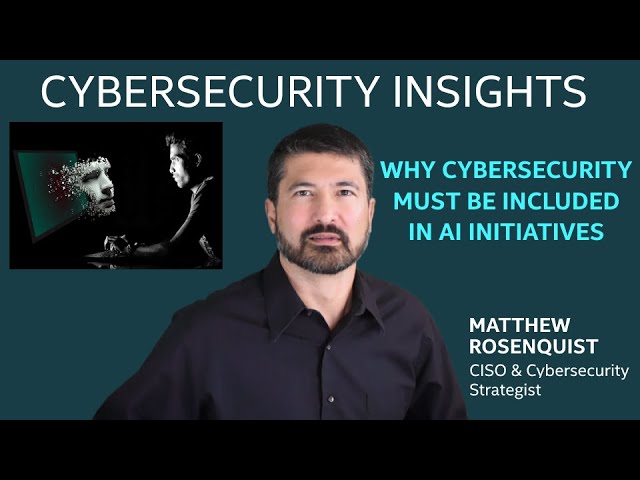
AI systems handle sensitive data and are vulnerable to attacks that expose information, manipulate outputs, disrupt services, and automate threats. Security must be built into AI from design through deployment, not added later, to prevent data leaks, financial fraud, and regulatory violations.
Chapters
Cybersecurity must absolutely be included in AI initiatives. Modern AI systems are incredibly powerful business tools, and through the use of access to data inputs, they can create valuable outputs, efficiency analysis, predictions, and even automation. As such, AI deployments are embedded within an organization's digital ecosystem. And with all that incredible power comes equitable cyber risks. Now, cybersecurity is a foundational pillar for digital trust as it protects confidentiality, availability, and integrity of data and services. AI tools can be targeted and abused by cyber attackers, which opens significant business ethical, reputational, and regulatory risks. So for example, if we think about confidentiality and privacy, those can be major concerns with AI deployments. AI systems need vast amounts of data, both for training and during inference operations. This data can be sensitive and personal in nature. If attackers can manipulate or breach the system, it can lead to a significant data exposure. Now, the integrity of data transactions and even output commands to downstream systems are also at risk. These could be financial, health, social, or safety related. Cybercriminals like tampering with billing and payment transactions. But there are even more serious aspects to consider. Imagine an AI system that guides vehicle navigation, infrastructure operations, or safety systems that send commands to automated control surfaces. Manipulating those transactions could have devastating effects. Hackers can also use the effectiveness and speed of AI systems for automated internal or external attacks that undermine the availability of systems that they can touch. These can impact the company and potentially partners, vendors, suppliers, and definitely customers. There are also brand reputation and even liability factors to consider. Suppose an attacker can take over an AI system that automatically communicates with customers. Well, then they could send messages with malicious payloads or links for phishing sites that will harvest credentials and victimize those targets. Overall, there are reputational, operational, and ethical risks that can manifest if systems are not properly protected. That's why you need cybersecurity involved from the onset. And attackers can take control of AI systems and abuse permissions to sensitive assets, spoil input data, tamper output results, expose sensitive information, leverage automation routines to communicate or process malicious actions. And potentially alter the integrity of business transactions. Compromised AI systems can be a launchpad for various types of internal and external cyberattacks. Cybersecurity must be involved in the ethics, architecture, design, implementation, and even the sustaining operations of AI systems. Risk assessments and security controls will result as part of that partnership and And that's in order to maintain an optimal balance of security against undesired incidents that undermine trust and cause loss. If you want to know more about ethical risks and best practices of deploying AI systems, which includes understanding the intersection of cybersecurity, I recommend reaching out to my colleagues at Virtue Consultants. Reid Blackman, the founder and CEO, literally wrote the book on AI ethics. Otherwise, you can put your thoughts and concerns in the comments below, and I'll weigh in.