DAY 3 Mold-Safe Building: Foundations (Slab, Crawl Space, Basements and more!)
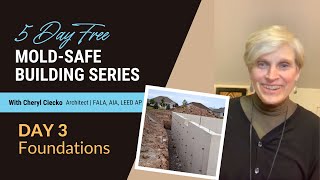
Matt Kelly covers foundation types and how any of them can develop mold if built poorly. Key safeguards: wait about two years before finishing basement walls, route downspouts away visibly, and design crawlspaces like short basements. Poor drainage, freezing mortar, and moisture are the main failure causes.
Chapters
Foreign. I'm back again, only this time I'm on my phone. And I apologize for our technical difficulties. I am not a Facebook expert. FaceTime expert, Facebook Live expert. Hopefully everybody can see this. I do think I'll see some of the comments on my screen, but my phone is really small and, and they go pretty quickly. So I apologize for that. I'm not. Like I said, if someone's an expert on Facebook Live, let me know and I would like your help. But for now, we're going to talk about foundation. So we're on day three of the Build a Safe home Freebie week that we're offering. So we have. It's Wednesday. We're going to talk about foundations today. And let's see. I'm just gonna see. I have see if I can see comments here on my computer. I know people do live Facebook lives just because I can't. It just exposes where I have other talents. Just say that. And going to try to see the comments from my assistant so that I can be live. I see people coming back on. Thanks for jumping back on again. And okay, so I am getting a message that it's totally fine now and that's good. So anyway, welcome to day three. You should have gotten an email. We've been talking about this. Some people have said that they didn't get an email. Check your spam folder, your junk mail folder. There might be a folder if you're using a Google Gmail account. It's called promotions might be in there. Maybe it's in social. I would check every kind of folder that you have to look for this thing because we have had great response to this offer. In fact, I think there's 500 people or something that have signed up for this. So we know that building a quality home, a home without water damage is, is important and, and that people care. So that's good news and we're going to do our best to share this information as we go along. So we're talking today about day three. Day one was site and climate, which is very important. So go back and see that video if you want to see what we talked about that day. Each day is recorded. Day two, we talked about building design. So while we are also designing the site, we're designing every aspect of the building. And so I talked about that yesterday. Very, very important topic. Those first two topics often get overlooked. Let's see if today we're going to talk about foundations. Tomorrow will be walls, and the Friday will be roofs. And then there is a bonus module with the master course that is on contracts, which is just as important as all this stuff. So let's talk a little bit about what's in the foundation section. And so the course that you're getting, the introductory course, is an overview of the masterclass. Just so that we're clear, because there is some confusion. I do have a lot of stuff that I'm producing, so I'm not surprised, but I do apologize for that. So you're getting a full course that's an hour long, that is an introductory course for this masterclass. So I go through each module in that course that you're getting for free this week. Only this week. So watch the recording. It is available on a recording this week, but it is going to go away at the end of the week. And I go through each one of these modules, know that there's a lot more content. This course is minimum of six hours. Just in the educational content, the master course, what you're getting is one hour. The master course is an hour on each topic, minimum. There may be more. It's broken down into modules, so it's really easy to watch. Some modules maybe 5, 7, 9 minutes, and some modules may be 20 minutes or a little bit more. Depends on the topic. So within the foundation section, we have an overview, talk about the words and the terms that we're going to be talking about. We talk about the different kinds of foundations. And for anyone that's wondering, one of the big myths in buildings is that there's a certain type of foundation that's going to make our homes more safe from mold. Nothing can be further from the truth. We have slab foundations, we have crawl space foundations, and we have basements. Mold can be a problem in every single one of those. So any building foundation type can be built well or built poorly. I will say that in the slabs category, what's important to know is that if you are in the south, your slab is going to be constructed differently than it is if you're in the north. So people that have a frost line, which is a term we go over in the course, professionals that might be watching this will know this term. That's the level at which below the ground, below the surface of the ground, the ground will freeze. Our foundations that are holding up our house, they're supporting our house, need to be on undisturbed soil, which means nobody's dug it up and moved it around with a bulldozer or any of those things. Means nature has compacted it for many, many years. That's the dirt we can support our buildings on and in a slab foundation. If there's a frost line, which means and there is a frost line in everywhere but some places it might be six inches below the surface. In a warm climate, in a colder climate, in a Chicago, a Wisconsin area, Minnesota, Minneapolis, North Dakota, Michigan, our frost line is three feet. It could even be four feet. Canada, you guys are going to have be in that four foot range. Unless you're on the the coast. It might be less on the coast. So this is where at that first module I talked about climate. So in foundations there's subcategories under slabs that's going to. That's going to be differences depending on what climate you're in. Crawl spaces in actuality I think were intended to be temporary buildings. I don't think that anybody who in the history that I've researched that crawl spaces were meant for a modular building that was being shipped out, that was a temporary facility of some sort, a temporary home, temporary housing, and was not intended to be long term, unfortunately that was very inexpensive. And so it has turned into long term. Now the other alternative with crawl spaces are that they were as a home built on piers such as in. In a place that could flood. So maybe Louisiana, Florida, places that are on the coast that could have high water line or high tides. And those buildings, we lifted them off the ground historically on piers, piers are posts and, and originally those were had a lot of air moving through them. They were not enclosed. And in a very warm climate they can be open. I was recently in Louisiana and they're raising buildings up and they're putting them 20ft in the hot in the sky like existing buildings that were built on the ground. Now these are not concrete slabs, but some sort of probably a crawl space building. And they're raising them up way, way high because of the amount of. So that is something that can be done. You can build like that, but know that if you have freezing temperatures ever, you might not want to be like that up high off the ground. Because our water and our sewer pipes are coming from the ground and they need to go back to the ground. Many times our electrical is coming from below ground. Sometimes that is overhead. So that's not as big of an issue. But our water pipes cannot freeze. So or our sewer pipes. We don't want to have a clog in the sewer pipe because there's a block of ice in there. And we certainly don't want our water pipes to freeze because they can burst. So when you are raising up your building then we have the conundrum of, well, how do we keep the water from freezing? That came from under the ground. And. And so that is where people started enclosing their crawl spaces and they protecting them from freezing. And then that became bigger and just enclosed the whole thing. Maybe in these houses on piers, they're having a mechanical room that they enclose. Maybe that's the only thing they enclose. So that's crawl spaces. Basements is the third type, which is basically a deeper crawl space or a deeper slab. The slab is concrete, is what you're living on in a crawlspace. And a basement foundation, you're living on some other kind of framing usually. And a basement is living space that you can use. It should be heated and cooled just the way the rest of the house is. And basements can be dry. I have a house I built, we have a dry basement. We've never had any moisture issues, so it is possible. But somebody has to pay attention to the details. And that usually is going to require an architect because there are a lot of details. One of the details that's going to matter is back to the climate site section, getting our drainage to work. Well, when we get to the roof section, we're going to talk more about how roofs can have an impact on all of this. So our buildings are a system and they. All the pieces are interrelated. It isn't one thing where we can say if I get the foundation right, then everything else in my house is going to be perfect. No, that's why there's six modules to this course, because there's. It's all interrelated. And this is really an introductory course. Those of you who have a background in building, or especially our licensed architects or engineers, know that we have lots of education and we're still learning. So took me six years of going to college to be able to work as an apprentice architect and then ultimately sit. That took three years before I could even sit for the licensing exam. So there's a lot to know about buildings. Very, very complicated structures. They are systems and small homes. Big homes are not that different than other kinds of big buildings. We're doing the big buildings wrong too. So check out my YouTube channel. Don't forget to like and subscribe there or Instagram. I have a lot of videos there as well. And you can see a lot of the defects that I share. So after we talk about the three kinds of foundations, slabs, crawl spaces and basements, then we talk about foundation drainage, which is not the same as site drainage. So That's a different topic. So we go into that in detail. We talk about waterproofing, we talk about damp proofing. Again, two different things. One may be there definitely could be a price difference in those two things. We don't want to overkill so much that we don't have any money left to build our building. But we want to do the right thing for our situation to keep the building as dry as possible. So we talk about that. And the final section in this one is, is the choices that we can make with foundations. And there are just like with walls and everything else, there's, there's ICF foundations, there's, there's even wood foundations. Is actually a thing that the codes allow. I don't recommend it. But in the end, the success or failure of any foundation is going to depend on the details, whether it's a slab, a crawl space or basement. If it is a crawl space, I suggest you design your crawl space as a short basement. So the details for the crawl space would be exactly the same as the details for a basement just happens to be short, but hopefully tall enough that you're going to be willing to go in there and look around. So if the space is too small, and I've seen some that I've reviewed for clients where the foundation, the crawl space is basically something someone has to crawl in and it may not be a grown adult size, regular sized man because there's inches, those can never be done. Well, if you have to fix something like that, you're almost going to have to take up the floor above so that somebody could work. So we have to be realistic about what's possible and how we can work in these spaces. And vigilance is a big piece of, of keeping our building safe because stuff happens, things change. Animals are going to build a nest. You know, there's all kinds of stuff. So this is what we're doing with the foundation section. There are some examples of foundations that I, that I'm discussing in the, in the free introductory course that you're getting this week. So check that out. Is there. Is anybody have any questions about this section? I will look and see if I can see any here. Tomorrow, day four, we will be talking about the roof. And I do want to mention that I mentioned this. I think the, the start of this email would. Or this Facebook Live that didn't work. Is that on day five, for those of you who keep checking your emails and, and are listening to this stuff and hearing about it that you will get a free what to ask your builder checklist. So that's going to be really valuable. Another freebie and also a promo to purchase the build a safe home course. So let's see. All right, so I have some questions here. Does soil type determine the best type of foundation as well? Like in certain areas in North Carolina, soil is very red clay and everyone has crawl spaces. What are your thoughts on French drains in a crawl space or outside along a foundation? Not sure if I answered this. Okay, that's a great question. So there we don't always get to choose what kind of foundation we're going to have because in certain parts of the country this goes back to site and climate. There just isn't. It isn't done in Florida. It's a swamp. Nobody's building a foundation. That's a basement that I have seen so far. There may be some. Some high ground in Florida somewhere, but generally there are no basements in Florida. Likewise, in some of the other states that you may be working in, there's. There could be bedrock, in which case nobody's doing a basement because that would would require blasting to remove the bedrock to build their house into the ground. So you want to look around and say what is being done in this area? If it's an area where there are basements and basements are common, then that's where I would do a basement. Crawl spaces is a little bit of a different situation because I think it's. There's. You can still do a tall crawl space that's built like a short basement. Usually in these climates like North Carolina, where everyone has a crawl space, you could do the same type of basement detail. They certainly have the same flaws in terms of walls leaking. Ideally, a crawl space should not be is because you've raised your building up, not that you've dug down to have your crawl space. Ideally, a crawl space floor should be the same as the floor or the ground height around the building, the high part. So, so that's what's. Those are some, some of the variables. But like I said, on a crawl space you can't do any vigilance. But in Florida, almost everything is on. On a slab. So that. That's what I should have said on the slab. You can't really look. But Florida is all on a slab. There are some crawl spaces maybe in Florida. I was in Wyoming recently in Montana and Utah, crawl spaces everywhere. All telling me, the realtors telling us, my husband and I, that oh, we don't have any mold here. When I talk about what I do, because we're Wyoming, South Dakota, Montana, Utah, and it's so dry here, however, we would go into homes that we couldn't even. I actually didn't go in some because you open the door and you could smell the musty smell. So everywhere, even in the desert, the ground has moisture in it. And that's going to end up in our foundation. As soon as we put our building over the ground, the foundation, whatever kind of foundation it is, then we're trapping the moisture that is in the ground that naturally is trying to dry into the atmosphere. That's how it works. It rains everywhere sometimes and there are plants everywhere. And even in the desert they have done studies that they were trying to bury some toxic waste and metal drums. And they needed to know are the drums going to corrode? So just like wood will decay and in moisture will sew a metal and through corrosion. And so they did these studies to see could they bury this toxic waste in metal drums in the middle of the desert. What they found is they could not. You can probably find this online. Maybe I will post it somewhere. I think I have posted it in the past. It's available online and you can read the study. And so what they found was that there's a relative humidity of almost 95% in the ground below the surface, everywhere, including in the desert. And so that that force of moisture that's always trying to dry to the, to the atmosphere above. And that's why in the desert, okay, it's super dry because of the weather is very dry. So the ground is very dry appearing. But if you dig down, you will find moisture even in the desert. And if you cover the ground even in the desert, you can try this. If you want to experiment with a, with a big vapor barrier, a drop cloth. People who have tents know that you put a vapor barrier under your tent, then you put your tent over that, and that it, the longer you stay on the same site that you're eventually going to get kind of damp under that ground vapor barrier, ground cloth. Which is why we do it. That's why we have a vapor barrier ground cloth. So in this section we do talk about vapor barriers and where they go. There was a question about an unfinished basement wall and how to insulate that. We do touch on that. I have other places where I talk even more about finishing basements, but we do touch on that. And the concepts that we're talking about are all important. I don't recommend finishing basements in the first two years, at least not the exterior walls. The reason why is because any of these foundations usually involve some sort of component concrete. Now, if it's concrete block, then that would be dry, at least for the mortar is the wet part. But the concrete block is way more porous for absorbing the moisture in the ground than poured concrete. However, poured concrete is coming out poured. So it's a liquid. It's coming out of a truck, and it gets poured down a chute. And so that liquid has a lot of water in it, then. Then has to dry. And it. It dries it about. Concrete dries at about. I think it's 30 days every inch. And foundation walls and slabs tend to start to get thicker, at least the supporting parts at the exterior walls. And then if they get wet during the construction process and they're continually getting wet from the ground, then we're. We're adding to that. But in my experience, I've seen mold growing behind drywall and behind insulation in homes that are under two years old. So I think after two years, you have enough time that you can be going through all the seasons with your foundation, with your basement, in this case, where you can see that everything you've done on the outside to waterproof your basement has been working, and then you can be comfortable. That one, it's been drying and curing. So concrete cures. That's part of the water coming out of it. And that additional moisture isn't being added because of something that has gone awry in the drainage of the site. So I hope that helps answer that question. How can I secure a house when the basement walls are shifting in? Okay, basement walls. Foundation walls should never be moving. That would be called a foundation defect, and it has to be fixed. So the reason walls move is because they're not designed correctly or the site. There's site water that is moving the soil from under the foundation and displacing it. So there's. Those are. Usually there's a water reason. It could be that the site that the foundation wasn't built correctly, that it wasn't built on, disturbed on undisturbed. So soil. So something moved. The moisture issue, though, is the most common reason that I see foundations failing. A foundation shifting and falling in is a failure of a foundation that needs a structural engineer or a licensed architect to devise the solution and to really ascertain what the flaw is and what has happened so that it doesn't happen again. Concrete block foundations, cinder block, are much more susceptible to caving in, partly because sometimes they're not. Well, they have grout joints. So let's Think about this. They're little pieces that are solid, that are stacked up, and then they have a grout joint. So there's horizontal joints that are weak compared to the solid concrete. That's one piece. Now, there's also reinforcing bar that should be included in your foundation wall. That's got us, that's got to hold back the horizontal, we call them lateral loads of the ground. So the deeper you go down, the more force there is horizontally of the ground pushing against the walls of the foundation. And so we do want to be careful if you have an existing home as well, that you don't displace dirt, Everything becomes a system. And at some point, the ground in the walls are. Should be in homeostasis or not moving. And some people go and they dig out the dirt next to their foundation to waterproof after the fact. And that can actually cause structural damage as well. So if your foundation is moving, though, there's a reason. And I would start with the reason possibly being moisture and whether there could be a downspout that's collecting water near the foundation, displacing dirt, causing the. The soil to be differentially not saturated, the same. So our buildings want everything to be the same. So if the ground is wet, our buildings want the ground to be wet the same all the way around the building. If there's one place where the roof is flooding the foundation, where a driveway is dumping water, where a downspout or some other reason that the water is sitting, maybe it's a low spot on an inside corner. If water is saturating one place different than the rest of the soil around the foundation, then that will cause differential settling and could cause a foundation failure. So Angela is saying the mortar is turning to sand between the bricks. Well, that could be bad mortar easily. So there is a right and a wrong way to do everything. And I had a situation actually in a house where the, the. The chimney was done during freezing temperatures. So we can't be letting the concrete freeze. We can't be letting grout freeze. So we're getting to colder temperatures now in the winter. And if you're in a climate zone where, where it could get cold at night, freezing mortar actually will make a lot create a situation where that mortar will fail. And so we had a situation, or there was a situation I was involved in, where the chimney was put up in February. So it's brick, it's block, and then. And they did not protect the, the grout, the mortar from freezing. So it froze at night. Freezing expands. We Water expands when it freezes and then it creates a lot of air void. So it wasn't as strong. And so we actually had to check that out. Golda saying, water from flowing gutters with downspouts going into the ground. How to check them except cleaning, wrongly installed. I never, never, never, never, never recommend putting your downspouts into the ground. The only case where maybe it will be okay is if you're in a place where it never freezes. But even then you have this situation where you can't see. You can't see if the connections are holding. You can't see if some animal that. I mean, people don't even know where these things go. Half the time in the houses that I'm reviewing, it's like, hey, where does that downspout go? Oh, I actually don't know. Bad sign. Because what can happen is that somebody drives the lawnmower over the end where the water comes out, that gets squished and blocked and nobody realizes that the downspout is not working anymore. It's not actually going anywhere. It just fills up for 20, 30ft. And once it's filled up, it starts backing up and flooding the house. Or usually what happens is they come down and they turn and make a 90 degree angle because they're not going very deep. I've never seen one go below the frost line for sure. And so there's a 90 degree angle there. And if water sits in, in there, we have the potential if it's free, if it freezes close to the surface, then freezing water expands and you can crack the pipe. It could be that it just disconnects because of movement of the soil, movement of the house, water bad, bad installation, all kinds of things. But this is a place anytime we can't see the connection, we could have a problem. So I prefer to say just go pull them out. It's very, very easy. You can leave what's there in the ground, abandon it for now, you may go back to use it later. But especially for winter, I would pull them out of the ground. You can go to the local big box store. This is very inexpensive. Do it yourself for stuff. Or you can get downspout extensions. It's ideal to get depending on the slope away, 6, 10ft away. Nobody's cutting their lawn in the winter, so you don't have to worry about the, the downspouts going out in the winter. And then you can worry about what you're going to do next in the summer. Some, some of these have, they flip down, but you Want to be able to see where the water is going and you also want to have enough slope away. I've actually seen downspouts next to foundations where the water comes down, the downspout goes out. They had extended the gutter or the downspout and then the extension and then you could see the path where the water actually turned around and came right back to the house because it was low there. So these are all things to think about. So Leanne is saying, when you've moved from multi homes in the past, how much of your stuff. Oh, was I we haven't moved from anymore. We've always been able to fix our situations, so we've never left because we couldn't fix something. I've also had. Haven't been in some of the situations that some people have been in and that I'm very aware of things that are going on. So even my. The first time we were exposed, which is a house that we lived in temporary, was temporarily for like five years. And in that house, it was in the ducks. Now, everything else about the house looked great. I inspected all that. I didn't know you could have mold in the ductwork. Now that's way more pervasive in terms of getting the dust all over the place and really spreading around toxins. But we did get. We did figure it out and we did stay in that house. It happened within the first six months and we stayed, I think five years, four or five years in that house. So we stayed, we recovered, our family recovered. It doesn't mean that we didn't have health issues at the time. That was a big part of my learning curve 17 years ago. And I continue to learn. There's always something new to learn. It's very rare. There's always going to be something happening to our homes. If you don't let it go on and on and on and on, then there it should be something that can be fixed. In the case of. That's a whole nother topic. And so I don't want to get into that because we're talking about the build a safe home thing right now. But. But you can check out my other. My other resources and even my online education community on the online education community for more information on those topics. So Karen's asking if I have a video on mold testing, what do I have on mold testing? I do have something in the build. Let's see the Dwell well Institute, which is my online education community. It's a private online education community, but we're happy to have people Join and it's, it's not on the usual portal. So that's what I like about it. And it's a much smaller group. I'm trying to get back to my roots where it was easy to manage the groups and the questions and I could do it. And so but the Build a Safe Home masterclass we do. I do come on monthly and live like this. Usually people send in questions in advance and. But I can take them on the spot as well. And the questions that do come in in advance, I am using more pictures and I'm really discussing with. With the educational tools that I can come up with. And that gets recorded. It goes into the course for eternity and for other people to review. And then those that have asked a question can go at any time to see their answer if they're not able to come on live. So we do that every month. And people who buy this course, the Build a Safe Home course, also do get several months of free access to the Dwell well Institute online education community. And there's a ton of resources there that we've been adding as well. So lots of different stuff. The Build a Safe Home masterclass is focused on building, if you, if it can be helpful though, if you're trying to figure out if your home was built well. So yes, Angela, in Florida, everywhere they're building homes super fast where they're getting moldy and, and that has to do with. With people not taking good care of the job site. And that's why I added the bonus section with the Build A Safe Home Master course that is on contracts because we need to define what standard of care, what specifying the materials that we're going to have. We need to define that in our contracts from the beginning. And if your builder isn't open to that, then I would not be using him. So there are some standard contracts that are going to protect the homeowner as much as it's going to protect the builder. So that's what we want to be using because we want to say, define everything that we're doing in the details. And I do recommend people get architects involved. I can consult. I prefer if it's a situation where you have your local architect and that the local architect is open to taking into account my consults. But I'll consult on the stuff related to mold because I have the fast track. I've been studying this stuff for so long that I can help direct my peers, fellow architects, to the resources they need to be comfortable with doing the suggestions that I'm doing. And I'm basically an insurance policy for the homeowner and for the architect as well. And then I would be having an architect be involved in watching your construction, and they should be finding the mistakes if they're being made in the construction side along the way. And so, yeah, everywhere is having problems with construction. That's why we're having this course. There's stuff that I talk about in this course that I would have thought, doesn't everybody do this? And I'm realizing that they don't. There was a question about drains. Footing drains and French drains are not the same thing. I know there are some parts of the country where it seems that people are using those interchangeably. That's not correct. Just the fact that everybody uses them incorrectly does not mean it's the right terminology. No, we never want to have water sitting next to our foundation. We don't want to add water next to our foundation. We don't want to direct water next to our foundation. However, a footing drain is something down, usually below the frost line at the footing that's not connected to the surface water, and that can take away excess water. So we do a lot of things in our buildings, especially with foundations, that I would call belt and suspenders protection. So our belt would hold up our pants, and a suspenders would hold up our pants. If we have a belt and suspenders on at the same time, then we're definitely not going to lose our pants. So that's what I try to do in our building is building process, is say, okay, we've done this to protect the wall. We've done this to protect the foundation, and we're going to do this also, which is also going to protect the wall and the foundation and the roof and our building. So we're doing multiple things that are all protecting our building, that are all designed to help avoid mistakes. Human beings are building these buildings. Human beings make mistakes. So we want to factor in some protections so that the mistakes don't become catastrophic or that we can find them before there's a big, you know, before it becomes something super expensive and people are sick. So Leanne is asking, say, the lumber used was good and properly covered in the build, but there were some issues with the build. It does happen. So. So there are projects I've been involved with that I'm the architect consultant. There is an architect involved. And then, yes, something happened. There's been cases that I've seen where the plumber makes a mistake, something happens, and something floods. As I said, this is human beings and it's okay. We don't need to put anybody in jail or we have to move on from this stuff. So there are things that we will have to address when those things happen. But being vigilant, measuring moisture content in the materials, looking at the foundation and seeing if there's puddles. If there's a pile of snow in winter that's ended up in our basement, then we're gonna have to shovel that out. That actually is the bonus of working in the winter, is you can shovel the water out before it melts in the form of snow. So if you're. If your construction has been covered in snow, you can use a broom, you can use a shovel, you can actually remove all that water. And the other good thing is that mold doesn't grow below freezing temperatures. So both in that we don't have water, we have snow. And so that helps to manage that. But then that's work for a contractor to do, to pay attention to. Yeah, I'm going to get rid of the snow. I'm not just going to let it melt. Likewise, when it rains on our buildings and there can be puddles even on the wood framing on the subfloor, if someone knows that they're responsible for this, because you've discussed it in your contracts and you've made it their responsibility to protect the job site, either they're going to put up tarps. If the tarps leak, which they can. Then when they go on the job site first thing in the morning and there's puddles because it rained the night before, then somebody's got to get out there and move the water around, push the water off the subfloor, spread it around so that it's easier to dry. Could be something that needs fans. If it could be something that needs heat to help dry. Heat is very drying. There are construction furnaces. So just recently on Instagram, I posted the picture. We actually just bought one. Not that we're doing any construction. We're going to use it for some. Something else. But we need a heater outside and it happens to be a contractor furnace, a contractor space heater. Those kinds of things are very drying and can help facilitate drying if something does get wet. So I'm not sure there's any other questions, but I think we've been on for long enough. If anybody does have any questions, you can quickly put them in the chat and I will see them. And looking at Crystal's notes, who's my assistant. Crystal can be if you. I think you're gonna find Your emails at, in your spam or in your junk mail, if you haven't found them already and keep coming on. Keep following us and let us know what other topics you want to talk about. I do. I would like to talk about wind events, especially tornadoes. My heart goes out to everybody that's been affected in Kentucky. There are other places that have had similar damage. Gets researched a lot. Some of the building processes that we're doing, some of the building techniques that we're doing are contributing to the amount of devastation. So at a certain point, a tornado is going to, can take anything apart. Definitely masonry, brick and concrete, steel, metal. None of it's immune. However, there are ways we can keep our building more intact. We want to try to keep the roof on. We want to try to keep the walls from, from breaking open where the wind currents actually blow the whole thing apart. So that's another topic. I'm curious if anybody's interested in that and I can figure out what I would, how I would do that. I don't have that made, but consider joining us in the Build a Safe Home masterclass. We'd like you to join us. I'm very proud of this masterclass and we have these sessions like this that I come on live every six to eight weeks, usually closer to six. And we're talking about our buildings. The recorded section, the recorded modules you can watch anywhere, anytime. You can watch them multiple times. And it's really the best insurance policy that you're going to be able to find because one, we have to be informed clients, we have to know if something isn't being done well and then we can go research it some more. But we have to have at least a basic level of understanding what's supposed to be done in our buildings. And that's for maintenance as well. So join us in the Build a Safe Home masterclass. Enjoy this introductory course. Make sure you're taking the time to watch it because it is going to go away. And thank you so much for being here. I will see you tomorrow again. I'm not sure what the time is, but it's another time tomorrow and we'll see if we try it on the computer again. I don't know. Unless. Unless someone's going to be an expert on it and help me out with that. I think I might end up on my phone again. So thanks for being here. Have a great evening and I look forward to, to seeing you on the next video. Bye.









