Dealing with your Diagnosis and not Despairing: Part-5
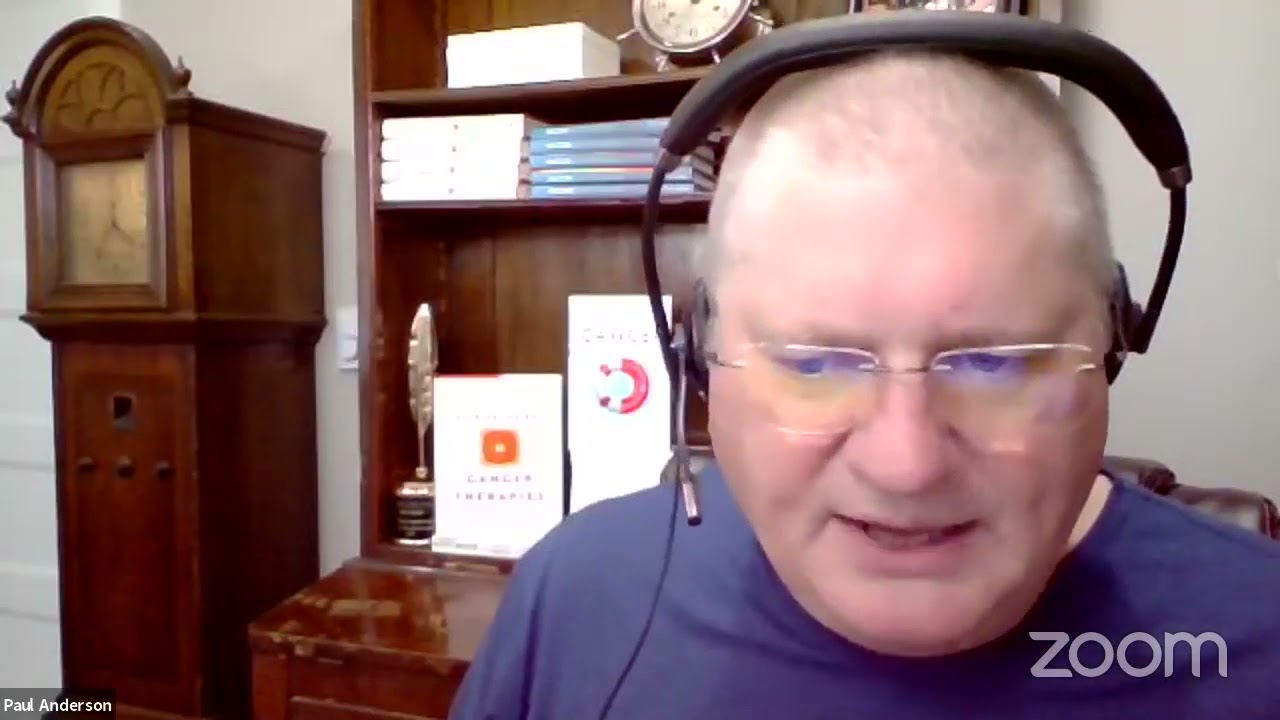
In this final episode of the "Dealing with Your Diagnosis and Not Despairing" series, Dr. Paul Anderson expands on the core message of his book Cancer: The Journey from Diagnosis to Empowerment. He explains how a diagnosis—whether cancer, multiple sclerosis, or another chronic, potentially life‑shortening illness—creates an initial shock that triggers a grief process similar to Kübler‑Ross’s stages (denial, anger, bargaining, depression, acceptance). Anderson distinguishes passive acceptance from active empowerment, arguing that empowerment (full engagement with one’s health, choices, and mindset) improves pain management, quality of life, and even physiological outcomes. He guides listeners to inventory what they can control (thoughts, lifestyle, treatment team selection) versus what is beyond their control (specific medical decisions, scan results), urging a realistic focus on controllable factors and a relinquishment of “unuseful control.” He then discusses how to respond to different disease trajectories: remission or no evidence of disease, and progressive or poor prognosis. He stresses gratitude for remission while maintaining the health‑supporting habits that achieved it, and he cautions against abandoning those practices. Regarding poor prognosis, Anderson explains that statistical averages guide doctors but individual outcomes can vary; those who defy the odds are invariably empowered patients. He uses patient anecdotes (Bob, Gia) to illustrate how empowerment influences quality of life and relational health, even when survival is limited. A central practical tool is finding one’s “true north” – a personal why or purpose – drawn from Dr. Samantha Brody’s Overcoming Overwhelm. Re‑centering on this purpose after unsettling news helps maintain emotional balance. Anderson also recommends developing a gratitude practice, redefining success over time, and learning to let go of attachment to scan outcomes, thereby reducing harmful stress‑hormone spikes. He concludes with concrete resources (dranow.com, the Overcoming Overwhelm book, gratitude practice guides) and a call to share and subscribe to the program’s online platforms.
Chapters
Of Snap Mobile. Contact Talk Radio. Welcome to Medicine and Health with Dr. Paul Anderson. This is the show about opening up the often mysterious world of how doctors think. The goal, to empower the listener to gain access to the best healthcare possible. Good day and welcome to Medicine Health with Dr. Paul Anderson. That's me, I'm Dr. Paul. And today we are in our final episode, I believe, of the series, Dealing with Your Diagnosis and Not Despairing. And of course, if you have tuned in before, you know what we've been talking about. If you haven't, This is a series that's based on this book, Cancer: The Journey from Diagnosis to Empowerment. And we've sort of done sections going through the book, and there's obviously a lot that we haven't got into, but the big points. And today what I wanna do is finish up with some, I think, some important things to consider. important things to think about. And then point you to some resources as well. But one of the things that I just want to say, because I've said it for the other sections as well, is while the book is about cancer and dealing with a cancer diagnosis, whether it's for you or a loved one, or you're a caregiver or somebody in the circle of a cancer patient. Many, many of the concepts apply to people who are diagnosed with chronic illnesses, people who have diagnoses of disability, and sometimes a combination of all of the above. Because the underlying premise— and this is the reason I wrote the book and what I've seen all of these years working with people who are sick— is Your body and your mind goes through an incredible shock, obviously, when you get a diagnosis of something like, say, cancer or multiple sclerosis or some other, you know, debilitating, life-shortening, potentially, you know, disease. And so the concepts really are around what do we do with that shock, which is normal, and our body and our brain have a way to work through it, but it's normal to be really thrown off in the beginning. And how do we go from that diagnosis and shock to empowerment? And empowerment is simply you as either the loved one, caregiver, helper, or You, the patient, being on top of the situation as opposed to being a victim to the situation. Now, that sounds real easy, but the process that we have to go through to get there can be kind of a twisty road because we have to accept a lot of things. We have to learn a lot about ourselves that really we— Didn't have to learn a terribly large amount about before we had a life-threatening or life-shortening diagnosis. And so there's a lot that goes into, you know, this journey. So wanted to start off there and then just kind of to frame the discussion, remind ourselves that essentially, if you're looking for stepping stones in the pathway from the diagnosis and the shock that you go through, what you really are undergoing is, is a process of grieving your prior life, your life when you were healthy, you didn't have cancer, you didn't have whatever other diagnosis you had, and now you do. So what I've experienced with patients is they go through a very similar process to the ones that Elisabeth Kübler-Ross described originally around grieving. So those start, you know, with denial and then anger and then bargaining and then depression and then acceptance. Now, what I've said throughout this series is what we want is not just acceptance but actually empowerment. So there's sort of a jump off of acceptance, and the difference really there is Acceptance can be very passive, and you can still be accepting of a diagnosis for yourself or your loved one, but still feel victimized by it. And if you still feel victimized by it, which is a normal human emotion, what is going to happen is your ability to become empowered will be decreased. Greatly. And so we've talked about it in the prior sessions, so I don't really want to go deeply into it, but the purpose of being an empowered patient or empowered loved one or caregiver is that we have science to show that if you are the patient, your care goes better the more empowered you are around your health and whatever disorder you have going on. You literally have, from your epigenetic signals all the way out, you have the ability through empowerment to shift the way your physiology actually responds. There's data I share in the book that talks about how people who have more of what's defined as empowerment around their cancer have better pain management if they have a lot of pain. Their Their pain management strategies work better. Your quality of life improves. There's a number of other things that we bring up in the book. So, and if you go back to the previous ones, I believe this is number 5, so there's plenty of previous ones to go back through. One of the things that I've recommended along the way is in addition to this, you know, kind of windy road of progressing through the mental-emotional states of dealing with, you know, your grief over your diagnosis and coming to acceptance and then being empowered is the first thing is knowing that the pathway exists. Next thing is understanding that each of these steps can take longer or shorter for all of us. So let's say you and your spouse are going through this, or you and your best friend. Right. And, you know, you, you have the disease and they're just there to support you, they're going to be, you know, as upset as you are that you have whatever the new diagnosis is. So initially there can be denial, but some people are a little more adept at dealing with denial than other people. So some people may move through that phase a lot faster. Some people, when they get to the anger phase, stay there for a while. Because either they're unused to dealing with their angry emotions, or they don't have good coping skills around anger, or they've just never really had to deal with that. And so maybe they're there a little longer. And at each step where you get stuck, you can— there's outside help you can get. There's other things we talk in the book about. You know, so as you go through, the important thing to know is that it's not a linear, you know, quick one-time through these steps and boom, you're, you know, you're empowered. But it's a trip. And your trip, while following the same pathway, is going to be different than everybody else's trip. And that's okay. Okay. There's a lot of stuff in the book where I remind the reader that it's just okay. That's part of being a human. The important thing is realizing that the trip is worth it. You want to take the trip and realizing that you're going to be challenged at each step, some more and some less, and that your goal is to get on top of the diagnosis and the situation so that you are empowered. You do become empowered because empowerment is what brings you the most power, literally, as the patient or as a caregiver. Giving help. So the next thing that I brought up in most of the sections before, and we will circle around to this again today, is the idea of then kind of making an assessment, because this is part of empowerment and being realistic, is looking at all of the things going on. And what do you have control over and what don't you have control over? As we talked about a lot last time in Section 4, um, there's a lot of things that you may have complete control over. There are things that you have completely no control over, and then there's things that are a little bit of both. So one of the examples I gave was if you have a diagnosis that then requires you to get particular medical care, you may have some control in many cases over who's going to provide that medical care for you. Sometimes you don't, but often you do. But you will not generally have control over what that medical care exactly is going to be and how it's going to be delivered to you. So to take a common example in the world of cancer, uh, if you decide to go forward and there's a high probability that a certain chemotherapy regimen is going to get you in remission. Well, if there's a high probability of that, meaning the statistics say that for your stage and grade and type of cancer, this regimen, you know, has a 70-plus percent success rate, that those are, you know, those are very good odds. And in the hands of skilled providers, it can be very useful. Doesn't mean that you're not going to have other problems and side effects, etc. But, you know, you're You have a high probability of some success. Well, you may decide then, I want to do that. Well, at that point, then you're giving up control over a lot of things. Number one, the drugs they're going to give you, you're not going to decide on those usually. The doses, you're going to decide on those. The schedule, you're not going to decide that. And all of the rest. Okay, so you might have a little control in the picking of the medical team who's going to do this or the facility. You might have a little control in the sense that some conditions you might have 1 or 2 ways to go or 3. And so you certainly have control over those decisions, but once it gets down to actually having the medical care delivered to you, that's outside of your control. And the reason I bring up this thing about what, you know, Making inventory of what can I and can't I control, and then what's sort of in the middle, is if we focus our time and effort on the things that we do have control over, and we're realistic, and we realize that there's parts of this that I'm submitting myself to that I now am going to trust the expertise of whoever's doing, you know, my medical care, that allows us to let go of a certain— Yeah. amount of unuseful control. And unuseful control is basically trying to control things and be in control of things that you have no control over, such as, you know, once you've chosen your surgeon and you've agreed on the type of surgery, once you are anesthetized and no longer conscious, it's all in the hands of the team working on you. You really have no control at that point. So you have to relinquish that. Now, why is this such a big deal when it comes to being empowered versus being victimized, etc.? I've had a lot of patients over the years that didn't get this distinction, that there's all this stuff here that I can control and maybe I should put my efforts into that versus I want to control 100% of everything. And it caused them A number of problems. Well, one of the problems that it would cause is a lack of decision-making sometimes. Some people, when they want control over everything, will just say no to everything. And so they might not get treatment that might be helpful. Other times what I have seen is that they would hypercomplicate their treatment interactions and their treatment plans and all this because they thought that that was a way to control. And their, you know, their providers who have the expertise in the areas would often be frustrated because that really isn't helping you. That's not bringing you closer to, you know, getting assistance. So I think that this idea of inventorying what I do and don't have control over is something that it's hard because we have to look at ourselves, we have to look realistically at our situation. But by the same token, you have to do that in order to then Release the things to the experts that you don't have a lot of control over and put your energies into what you do. Well, what do you have control of? Well, we talked about this last time. You have control pretty much completely over your thoughts and how you control your mind and your body. You have control generally over what you eat and what you put into your body and whether you're moving around and exercising or not and all the other, you know, physical aspects. That go along with it. You have control over a lot of other things. Let's say that you have a chronic illness or cancer and you decide to avail yourself of some integrative treatments. Generally, you have a lot of control over, you know, finding an expert there and bringing them in. And, and because that's the area I work in, a lot of integrative treatments for oncology and chronic illness. Yeah. What you find is, you know, you have this, let's say there's a standard medical model treatment going on. The job then of the integrative provider or providers is to integrate in and around that to make that work as well as possible, but also to keep you as healthy as possible. So you may have a ton of choices in there and options and things that they talk to you about that you can be involved in. So it's putting your efforts into places where your efforts should go because you actually can do something about it. So that's all a very important thing, but in chapter 10, I believe it is, that we're talking about, which is one of the ending chapters, there's some resources and some other things after that, but the last major chapter with all the components in it, there's a couple of questions that I bring up to grapple with. Now, the first thing is, you know, what if I go into a remission or I have no evidence of disease? And this could be with cancer, certainly. And there's a bit of a difference between, you know, remission versus no evidence of disease, but both are really nice goals to get towards. You also can go into remission with You know, chronic illnesses with autoimmune disease, other problems. And I've even seen people, you know, work really hard with a bunch of providers and get their autoimmune condition to no evidence of disease. Now, what you need to keep in mind, as we talked about a little bit, is with cancer or chronic immune condition, Even if you have no evidence of the disease being there, the remnants of the disease can be hanging out and hiding out microscopically. So we need to keep in mind that that's what's going on. Same with remission. It's really common for people to do a set of therapies that, especially if they're, you know, a high probability of success therapies, and they go into a remission. Right. Okay, and a remission is literally there still may be a base of, say, your cancer or your autoimmunity there, but you're not having growth and progression. Well, the things to consider in that case, remission, no evidence of disease, the first thing is to be thankful for it because not everybody gets the opportunity to get that. Many people, you know, just as we know, and to be realistic, with cancer and certain chronic illnesses have progressive disease that maybe their quality of life improves, but the disease marches on. So that does happen. So we want to be thankful for the fact that we got a remission or no evidence of disease. But the other thing— excuse me— that's very, very important is that we don't want to change Everything we're thinking about and doing, um, that got us to the point of getting to remission or no evidence of disease, because then our disease will surely come back in most cases. So while we're giving thanks for it, we also want to be realistic about the fact that all the work we did to get us there— now it might be different work once you're in a remission or no evidence of disease, but we still need to be attentive to our body. We need to be attentive to what we're letting into our brain. brain and our thought life and our mind-body connection. We need to be attentive to what foods and chemicals are and aren't going into our, into our body via eating and drinking, et cetera. It's all important in that respect. So we don't want to undo all the good work that we did at that point. Now, although the point of this book, Cancer: The Journey from Diagnosis to Empowerment, the point of the book, of course, is more about the mind-body connection. We did talk a little bit about, you know, there's, there's these things that are factors in remission and no evidence of disease, such as keeping cancer stem cells quiet. Or if you have an autoimmune condition or chronic illness, it's a lot of times around immunomodulation, getting the immune system back to balance. So whatever work we did to get there, we want to keep the pressure on and keep that going. And a lot of that has to do with diet and lifestyle and other things, again, that we have control over. Now the other question that comes up, because in the real world we don't always get, you know, a remission or no evidence of disease, is, well, what if things aren't going well with my disease? You know, what if my autoimmune condition has become rapidly progressive? What if my cancer is not going into remission? It's, it's You know, seemingly unaffected by all the treatments I'm doing, etc. So the first thing that you need to think about, whether it's chronic illness, cancer, or whatever, is that a bad prognosis— so me, the doctor, telling you, you know, your, your disease is in progression, and it's resistant to the treatments that we have tried thus far. A poor prognosis, being what I just said, is based on more about statistics and groups of people than it is about you individually. Now, what does that really mean? Well, I have seen people who were diagnosed literally with Pretty advanced disease, cancer, who had so much body-wide disease that their oncologist basically said, you know, based on your age, your health, and the type of and extent of disease you have, you know, you're not likely to live to your next birthday. You're not going to have another year. I've seen people like that. die certainly within that amount of time. And I've seen people like that live for literally 10 or more, more years. Now, why would that be? And why would the doctor on the front end say that? Well, as with most things in life, if you take enough people with a similar type of condition, And you look at them just statistically across the board, you're going to have some people who maybe progress much more rapidly than you think they will. You're gonna have most of the people who are going to progress at a predictable rate. And you're gonna have some people over here on the other side. It's like a bell curve that goes up and down. Some people on the other side are literally going to defy all of those odds. Okay. Now, since this book is about empowerment and dealing with your diagnosis and the mind-body connection and all that business, what does that have to do with a poor prognosis? And I've got this distribution of people from faster than I expect disease progression, average disease progression, which is what doctors base their comments to you on. And then defying the odds. Okay, well, when you get to defying the odds, and having looked at this with plenty of people over the years, just looking face to face with them as they go through things, the one thing I know is that while being an empowered patient and working through all these things we've talked about and, and dealing with, you know, your mind and your body and keeping them as tuned up as you possibly can and much positive going as you can, Well, that doesn't guarantee things are going to go well because they don't always. It will— it does generally guarantee you have better quality of life and experience. But it's hard for me to think of a case of somebody who was in the defied the odds category. Remember, on the edge of the bell curve, we have either worse than expected or better than expected, defied the odds. I can't think of anybody who defied the odds of a bad prognosis who wasn't an empowered patient, who wasn't working through all these things. And I believe that the data, even though it's sort of partitioned out because that's how things are researched in the, you know, quality of life things and pain management and treatment response, it's not all there as one like boom, this is definitely going to help. But if you had to consider, well, okay, so the doctor's telling me bad news. It's their job to tell me whatever the standard is for where my condition is and what my age and stage and grade and all that stuff. But your job is to try and be as empowered as possible, all the things we've talked about that that means. Because if you're going to go with the odds and you want to try and improve above what the averages are, you certainly need to be, in my experience, as empowered and doing everything you can with what you can have control over positive in order to get into that defy the odds category, even though it's a smaller number of people. As I say, I can't think of anybody in that category that I have seen defy the odds who wasn't. Now, have I seen people, you know, in the, you know, kind of stay in the median and, you know, have their disease progress like the statistics say? Certainly. Who were empowered? Have I seen empowered people really progress rapidly? Yes, but much less commonly, okay, but it does happen. And in the book, with the— remember, we have the 2 sort of stories of patients that go along. There's the Bob story, a guy named Bob, and the story of Gia. Obviously, these aren't their real names, but the example of Bob is one of these people where they heard the statistics They knew that, you know, that was probably going to be the way it was. They weren't— it wasn't a good prognosis. And they decided to become everything except empowered. And whether or not it would have affected their length of life, nobody knows. But what I had watched with them and many other people like that is it definitely affected their quality of life in a bad way. And it Definitely affected their primary relationships in a very, very bad way. And, you know, if that's how you choose to spend your remaining time on earth, that's your choice. But for most people that— and their loved ones, that's not what they want. It's not how they want to do it. So, yes, we want to be realistic and know that people die who do all the right things. Okay, that happens. But most of the time, people who become empowered and, and take care of the things that are under their control and do as much as they can have very much improved quality of life, very much improved relational aspects. And, you know, we're not lone creatures. Humans are, you know, humans are social and communal creatures. And so we need others around us. And so that is part of, that is part of empowerment is, you know, participating in improving your quality of life regardless of what the timeframe is. So even though you can have a lot of poor health, So let's say it's not cancer, but you, you have an aggressive form of an autoimmune condition or, you know, something that's debilitating, painful, really altering quality of life, etc. You can kind of go through that same thing. You know, your doctor might say most people who have this going on at the rate yours is, you know, will need to be in a wheelchair or will need this or that. That may happen to you, may happen faster, but it also may not happen to you. All of that happens. It's basically the same kinds of ground rules. The other thing is, is that regardless of where you are realistically across that spectrum, when you go back to what do I really have control over, you essentially have full control over your over your decisions, your ability to step back and say. Whether this goes worse than expected, as expected, or better than expected, I am going to do whatever I can from the inside out. Now, part of that is staying centered, which is very hard to do when you have this happen. You know, physically, most of us, you know, unless you've had a brain injury or something like that, can stand up and not fall over. Our brain talks to our body to allow us to stand up and not fall over. If someone comes up behind you and you don't know that they are there and going to do it and hits you and pushes you really far forward and you're past your balancing point, you will 100% fall on the floor. Okay? You will lose your center. Getting a diagnosis or getting a new prognosis where your doctor says, well, the treatment doesn't look like it's working. Looks like you're progressing is just like getting knocked over. It knocks you off your center. The point where you have control— so you didn't have control over that. Okay, and this goes back to what's the inventory of what I have control over or not. What you do have control over is what you do next. Okay. Now, if someone physically knocks you over, there may be other issues going on, but Let's say that's all they wanted to do is just knock you over, surprise you. You can choose to get back up. You can also choose to lay on the floor and stay down. Okay, now that's kind of where the analogy ends, but it's a lot like that. And one of the things, and it's in the earlier chapters, so I'm not going to dig back into it too much, but I kept repeating this one refrain throughout the book that You know, XYZ, as we talked about it, is normal. Remember that that's normal. It is completely normal to fall over if someone blindsides you and hits you hard enough. It is completely normal to lose your center and become angry or depressed or whatever when you get new bad news. That's normal. That's part of being human. What you do with it after that is what is in your control. Now, there are factors that come up where if you have a longer experience, as many people nowadays do with autoimmunity or cancer, chronic illness, where you may know that there are going to be discussions with your doctor or other healthcare providers along the way. And so you might get your first experience of a bad prognosis or a good prognosis where they say, wow, you know, you've gone into remission. Well, that's— then we're happy and rejoicing, or You know, gee, you know, your disease is not responding to the treatment. It's progressing very rapidly. That's not stuff we wanted to hear. So all of those things may happen, and that might be literally like being blindsided, knocked over. But another aspect of that is if you have, you know, the common experience of a chronic active treatment, you know, progression with cancer or any other chronic illness, You know that there'll be a time in the future where your doctors will be checking back in with you because they've redone laboratory testing or they've redone imaging or some combination of things. And they'll say, okay, well, remember 6 months ago we said, you know, you were at this stage, now you are here. What's different about the second one? Well, the second one, you do know at least the discussion is coming. You don't know what the discussion is going to be or what it's going to look like, but you know the discussion is coming. And I've seen a lot of people where there's a, there's a lot that goes on around this that can either feed into a more positive or negative experience when you have a follow-up check-in. And so what are things that Go into that? Well, the first time is often literally like being blindsided and knocked over. It's very disorienting. The second time, if you're one of these people I talked about a couple of programs ago who have that sort of passive denial where, you know, they intellectually understand that they have the disease, but most of their mind and body are trying to ignore it. And not in a positive way at all. It's just trying to just ignore it. Those people, it's like Groundhog Day. They— every time they go for a check-in, it's a new disorienting blindside that they get hit with. Other people get so mentally and emotionally worked up by the fact that in a week I'm going to have a follow-up because I had some scans done or you know, tumor markers, etc., that they actually make themselves sick. And the event of checking back in with their healthcare providers is so traumatic and so problematic for them that even, even if it's good news, that they've worked themselves up to a state where, you know, they're just not sure. you know, how to feel. And it robs their quality of life and robs many, many things from them. So that's one of the things. So you can be enough in denial where it's just a new blow every time, or you can actually make it worse. Because I've seen a lot of people where they have, you know, scan paralysis, where they, you know, they're going to get, let's say, a PET scan done or brain scan, and they're going to get some labs done, and then You know, 4 days, you're going to talk to their doctor. And in that time working up to the scan, they're getting more and more anxious and upset. Between the scan and the doctor visit, they're getting more and more anxious and upset. And then their whole world rides on, you know, is it good news or bad news that the doctor's going to share? Now, realistically speaking, yes. Reduced to its core, it's going to be Probably good or bad news, or you know something maybe in between. But what benefit does it gain you to make yourself literally sick over this news that you really don't have any control over? Right now, you can be doing all the right things. You can be helping. You can be putting input. But the news is the news. It is what it is. And I know that this is the hardest thing in the world when. of the hardest things in the world to deal with when you have these bad diagnoses, but it's a part of life and it's part of having the diagnosis. And if you're going to have this experience of dealing with a chronic extended, say, you know, cancer journey or a chronic infectious journey or chronic fatigue journey or chronic autoimmune journey, you're not just going to have one experience of interacting with your doctor about your prognosis and updates. Okay, so just like there's this process to go through after your initial diagnosis, moving towards acceptance and empowerment, there is a process of, of essentially realism and self-assessment that you can take yourself through so that each successive interaction with your healthcare team Does not make you sicker. Okay, now that is not easy for most people. Some people do it just naturally, and that's great. But for most people, it's not easy because you see that, well, how my next scan goes is, you know, am I progressing or not? And this is my life we're talking about. So it's not that it's unrealistic to have those feelings, but you have to limit them. To some degree, because it is so easy to work yourself up into such a state where your stress hormones are all out of balance and they're over, you know, being overproduced and all this. And what do we know? And we mentioned the book a little bit, but what do we know about stress hormones and any chronic illness? When they are out of balance, they do not promote healing. They do not promote return to health. Yeah. Okay, so you're not helping yourself. You are literally, by stimulating your stress system in an unhealthy way— remember, there's healthy and unhealthy stress response— but by stimulating your stress system in an unhealthy way, you are literally giving yourself poison instead of medicine. And so you might say, well, okay, intellectually I can buy into that. I have no idea. How to get myself so that I don't get this worked up over that. Now, there's things we talk about in the book. There are things for recentering. If it's a really bad situation for you, and you truly, you know, you want to react differently, but you cannot react differently, which does happen. We recommend in the book, you know, working with someone in the helping professions who works with people with cancer and chronic illness, and they can coach you through. So there's a lot of— there's psychiatrists, psychologists, social workers, some types of clergy, some types of other counsel, etc., that literally focus on this, and they can help you to talk through the issues, talk through the things again that you can and can't control. give you tools for dealing with those things that you can't control, but that ramp up your anxiety. And they can help you get to that point. So if it's not something you do on your own, there is a lot of help out there. And we give some ideas in the book around that too. So as we wind The last full chapter of the book up, there are some next steps that we like to focus on and kind of bringing things in to, okay, I've— I understand it makes a difference. I understand that is important for me, my quality of life, my relationship quality, and likely the length of my life to do these things. I understand it's tough and it's a journey, but I'm, I'm in for it. Um, you know, what do I do either initially or when these new things happen where someone gives me good news, tells me I'm in remission, or they give me unpleasant news saying I'm progressing? Uh, I still have control over how I deal with all of, all of that ultimately. So some steps to consider. There's a concept that I talked about earlier, I think it was in section 2 or 3, about finding your true north, quote unquote true north. This is a concept that a colleague of mine, Dr. Samantha Brody, wrote about. We list the book in the book as a resource, but the book is simply, it's Dr. Samantha Brody, Overcoming Overwhelm. And the book is not really written, of course, about, you know, dealing with a cancer diagnosis, but it's literally about its title, Overcoming Overwhelm. Well, one of the reasons I use that book with people and recommend it is you can have— you may be totally healthy, but you can have overwhelm in your life that is psychologically and physically damaging to you. That's bad enough. But you also then can have a chronic illness, potentially life-threatening illness, etc. And the overwhelm that you have there is the overwhelming amount of information coming at you, the overwhelming amount of loss of control that you feel in the situation, the overwhelming surprise of that, you know, of that updated diagnosis. It's either good or not so good. Yeah. So what Dr. Brody talks about there in Overcoming Overwhelm is finding your true north. So the idea, of course, is true north, you can use that for navigating. Well, the idea is that if you get knocked off center, so you're out hiking, you know, you're On a path, you've got your compass, and as has happened to me occasionally, you're hiking an unfamiliar place and you step over what you think is a small hill, and it's steeper than you think, and next thing you know, you're 12 feet lower than you used to be with the wind knocked out of you. And so you come to, and you don't really know which direction you were traveling before you Fell off, right? Well, the idea of the true north and recentering is you take a moment, you figure out where you are. Now, if you're doing celestial navigation, you would literally find the North Star, but you find— you get your compass and you look and you get back on track. Now, Dr. Brody talks about this as maintaining your, your why. As a lot of, you know, Simon Sinek and a lot of people on, you know, on media talk about, you know, start with why. What is your why? You know, why are you doing it, etc.? Well, so the idea there with a cancer or chronic illness patient that gets knocked off their center by an updated diagnosis or a bad scan or, or good scan, whatever it is, is that you can take a moment. And, you know, just like if you fall down a hill and get knocked out and you come to and you're not sure where you are, it's a lot like that with new diagnoses. You can take a moment, recenter, reposition yourself towards your why. Now, I've had some people— now, certainly if you've ever dealt with cancer or a negative, you know, long-term chronic illness, you probably have been through all of this. I've had some people ask and say, well, what would— like, if I have cancer, what's my why? You know, what would a why be? Well, I've had people discuss all sorts of things with me. I've had people who had lived longer than they should have with a certain type of cancer, if you're just looking at statistics or doing all this stuff to keep their body going and their quality of life. And their why literally came to, I know I'm not going to live the span of time I thought I was. I'm going to pass away short, you know, in a shorter amount of time. My why has nothing to do with how long I'm going to live. But I have one thing I want to accomplish more than anything Before I leave. I've had that be something like going to a loved one's wedding, and that was X number of weeks or days away. I've had people who were not supposed to be alive prior to that, and that was really They needed to do that, they wanted to do it. We did things to facilitate their health so they could, knowing full well this is not going to change their underlying disease, but it'll get them through. They go, they participate, they come back, and I've literally had them then, you know, pass away when they returned home from whatever the event was. Wow. And in most cases, very, very peacefully. I've had it in similar circumstances be a husband or a wife who said, you know, our X anniversary is coming up and we have a trip planned. And I know that this cancer is, you know, physically getting the better of me, but my goal right now is to make that trip. With, with my loved one. I've also had it be people who maybe were in a little better place physically. So they had treatment for, say, a stage 2 cancer, breast cancer or something, and they got into remission or no evidence of disease. And I've had them come in. Remember we talked last time about secondary Prevention, preventing a return of the cancer, is I say, what's your goals? What's your why? Is essentially what I'm asking. And their why is their children. And they say, I still have children at home and I need to be there for them. And that is an extreme motivation, but it's also an extremely good why. Now, these people, whether they were leaving the earth sooner or later, do they hit these rocky road points? And do they get knocked off and they lose, you know, they lose their center and their compass? Certainly. But when they have that why to come back to, it's a lot easier to recenter and find your path again. So I think that's really brilliant. And if that's a concept you want to get into, Dr. Samantha Brody, The book is called Overcoming Overwhelm. You can get it anywhere you get books. It's just, it's, it's excellent, and it really breaks it down and tells you how to do that. Now we just have time for a couple more concepts here, but I did want to just go over a couple of things. When we're looking at Getting past, so know your kind of true north, your why, etc. The next thing that can be very helpful is developing a gratitude practice. This can be really hard, especially when you are very ill or you've had a flare-up of a chronic illness that you didn't think was coming back, and it has to be grateful for much of anything. Because when you feel bad, it's, it's human nature that we're not often terribly grateful. But there's actually research that shows that mindfulness and gratitude and these sort of things that bring us back to our core, even in the face of ill health, improve— again, much like being empowered— improve things like our pain management ability, our ability to interact, our quality of life, even in the face of a bad event. Going on. Now we have resources in the book about gratitude practices. You can look it up online. It's just really not that difficult to know what to do. It is difficult to develop it. If you, you know, let's say you don't have a life-shortening that you know of disease, but you just have a chronic illness that comes with a lot of pain that comes and goes. The days where the pain has returned and is pretty, you know, pretty aggressive, that can be a time where it's very difficult to be grateful for anything. And if you can push through that and you can work to that, that can be very, very positive and very, very healing for you. The other thing which goes along with your, you know, what is your why? Why are we moving forward? Why am I putting effort into taking the trip from, you know, denial to empowerment? Why am I going through all of this stuff to recenter and all that. But a corollary to that is, you know, how are you going to define success? And you can change that over time. So for instance, the lady I was talking about who, you know, really knew she was at the end of her life, and she needed to get to this family event, it was a wedding. And there was no— her primary doctor says, there's no way you're going to make it, no way you're going to get on a plane. And she came to us and we You know, worked with her to get her physically healthy enough, which shocked her primary doctor, but we did it. Got her safely on the plane and back, and then she passed away. Well, you know, 2 years prior to that, she had a different goal because she wasn't as sick. Disease was progressing, but kind of slowly. She— her goal was, you know, to slow the disease down, and that worked for a while. So you need to know that success, whatever way you define it, and your why may shift over time. And the people who are not, who can't stay empowered, who are trying to control everything, are often people who can't shift their vision, their why and their vision of success. So if you truly are progressing, or you get to a different stage, and then you level out, you may have different things that mean that you are winning, you are Enjoying and appreciating success. The other thing, of course, which is basically what we're talking about, is you have to embrace and then abandon outcomes. This goes along with that idea of not working yourself up and making you sick over waiting for the next scan to come back or whatever. It's human nature that, you know, you're— the unknown is scary. But the more that you can let go of what the outcome is and just focus on your why and readjust as you need to, the better your quality of life and your happiness and the help of those around you is. Again, you go back to focusing on what you can and cannot control. While you control the lead-up to and your health and all that goes into your next updates, whether it's a scan or, you know, lab tests or physical exam or all of the above. You don't control how those numbers are going to look. You don't really control how that scan is going to come out. So you have to do everything you can and then embrace the fact that you have an unknown coming and, and And again, not an easy thing to do, but important for your mental-emotional health, your mind-body connection, quality of life, relationships, all the stuff we talked about. Very important as you go along is letting go of your attachment to all of that. A lot of this goes back to a quote I did in the beginning of the book by Dr. Viktor Frankl, where he talks about The moment between what happens to you, the stimulus, and the response that you make. There is sometimes very fleeting, but there is always a moment where you have a decision, not over what happened, but over how you respond to it. And that is a very tough behavior to learn, to do anything other than normal primal responses. But what we're really talking about is building yourself up and practicing to the point where you can objectify the negative that happened and realize that that doesn't have to determine everything about how the rest of your day goes or how your mind goes, etc. So we're just about out of time. The book ends with resources and some Some final words of wisdom and exhortation from me of what to do next. And again, the book is Cancer: The Journey from Diagnosis to Empowerment. People have been asking me what's the easiest way because you've got Instagram, Facebook, you got YouTube, you got all these outlets and other stuff, newsletters. Go to just the main hub website, dranow.com. There's links to all the media, links to the YouTube, links to all that stuff. If you are watching on YouTube, by the way, like, share, and subscribe. I think we have to say that, right? If you're on YouTube, like, share, and subscribe, please. Also on Instagram, you know, or Facebook, it's DRA Online. But just go to dranow.com, and that'll get you links to everything, plus links to the newsletters and all the other stuff we talked about. But we're out of time now for this week. It's been my pleasure speaking with you. Thank you so much for your time. This is Dr. Paul Anderson with Medicine and Health with Dr. Paul Anderson, and I will see you all on the radio next week. You've been listening to Medicine and Health with Dr. Paul Anderson.









