DETOXIFICATION - WHAT IS DEPURATION AND DETOX?
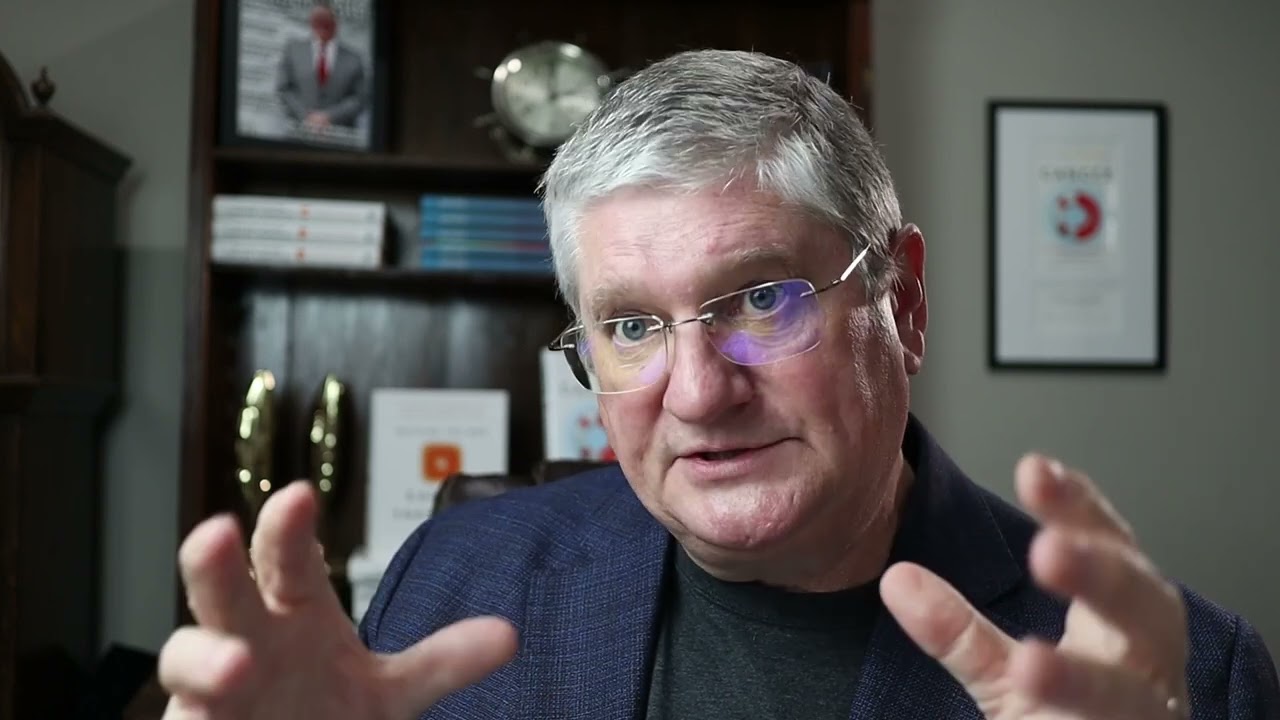
Dr. Paul Anderson distinguishes depuration, the body's natural elimination process, from detoxification, which involves three metabolic phases. Toxins leave through urination, defecation, sweating, and breathing. Movement, hydration, intermittent fasting, saunas, glutathione, and dietary fiber all support these pathways.
Chapters
Good day, welcome to Medicine Health. I'm Dr. Paul Anderson, and we're doing a series today on toxicants and toxins. Part 1, we talked about what they are, why they're bad for us, etc. And one of the things that we talked about in that section was the difference between depuration and detoxification, although they kind of play in the same ballpark. Depuration is supporting your body and the natural processes your body has to get rid of stuff. So that is a topic for here. Detoxification is a metabolic process, such as your phase 1 and phase 2 and phase 3 eliminatory pathways, which we're also going to talk about as well. So when it comes to depuration, or just helping your body do the best to get rid of junk, what's one Reason for that? Well, as I mentioned in part 1, most of the toxins and toxicants that we encounter, not all, but most, are fairly new to this earth. So our body hasn't had time to evolve processes to get rid of them. Consider especially, you know, the human-created, uh, you know, petrochemical things and herbicides and pesticides and the heavy metals we put in the environment and all that stuff. Those things are just very difficult for the body to deal with because we can get rid of some, but not all of them. So depuration being what can I do to make the most out of what my body does to get rid of things? Well, depuration is stimulated by a number of factors, which are some, some of which I think will be common sense to you, but a number of factors that are very useful. in getting supported to help your body get rid of stuff. So if you want to kind of work from the end backwards, we can think about what are ways to get things out of the body. Okay, most of the time we think about certainly urination, that's one way out of the body. We also think about defecating, that's another way for things to get out of the body. But then there's also things like sweating. Well, it turns out based on research we have from the last 10 years that sweating is not only good for getting rid of some of the chemical toxins, but it also will help eliminate metal toxins as well, which is kind of a cool thing because metal toxin elimination is limited through urine, bile, gallbladder, and feces. We do get rid of some, but it's limited, and we get a lot of recirculation back into the system. So if we can get things moving out better, whether it's through sweating, urinating, defecating, it's going to improve. Now, what's another way out of the body? We don't always think about this, but breathing. So when we respire, we inspire the air in and then we expire the air out. But when we expire air out, we think, well, it's a higher carbon dioxide gas that we're exhaling, which is true. But we also can expire certain chemicals, etc., beyond carbon dioxide, oxygen, nitrogen, etc. So when we're thinking about it, we want to think about all these ways out. Now, what's another thing that would stimulate the body to start to say, let's move some junk out of here? Well, movement, moving your body, especially moving the bigger muscles around your body. And so those are the things like your legs that carry you and your abdomen and your, your arms and your core muscles, et cetera. The legs are probably the biggest driver. So even just walking, but people who do yoga, people that do Pilates, people that do, um, you know, therapeutic dance, people do any other thing that moves the body around, including other exercise that you might think of. are actually stimulating the removal of toxins from the body. So movement is huge. Now, if you're real sick and you're not feeling like moving, I can certainly understand that. What we usually try and do is get people to go just one little baby step as they go along. So if you've been doing nothing, like complete couch potato, or maybe you've been so sick you've been in bed for 3 weeks, then just start by walking around your living room a couple of times and get, get used to that. Then walk maybe outside around the house or around the block. And just do a little bit at a time to get the movement back. Now, if you're already exercising, you're already doing this, so good for you. The next thing that's critically important that, you know, Grandma probably told you was hydration. And something to keep in mind, when you hydrate, water is what hydrates us. So what we want is water to go in. The water is going to then help us, not just, we think about peeing the water out and some toxins are gonna come out there. Certainly, you drink more water, you're going to pee more. But the other thing to keep in mind is, is that every cell detoxifies every second of every day, and the more dehydrated you are, the more the detoxification of the cells will back up. So being hydrated is a benefit to not only just moving and flushing water through, but also keeping your cells in an environment where they are not only Safer, but they're also moving the good stuff in and the bad stuff out more quickly. So then if you combine that with hydrating better and then moving your body, you're naturally going to have 2 forces moving junk out of the system. Now, another thing that can be helpful, which we've done whole videos on, I'll just mention it as a footnote, is time-restricted eating or intermittent fasting. If you and your healthcare provider believe that's a good idea. The reason is, is that cell repair is sped up when we don't eat for a period of time. Usually that starts between 12 and 13 hours. And again, go look at the other videos on that if you want to. But time-restricted eating can be a benefit too. So hydration, movement, time-restricted eating. Then there's heat. Well, we all, you know, kind of have this thought about, well, saunas and other stuff. You know, can help us really heat up, and that is true. What else do they do? They make us sweat. So that's sort of like the analogy of water drinking and then urinating more, sure, but there's stuff in the middle. Well, heat on the body makes me sweat, okay, those are 2 good things, more goes out in sweat, but you also want to remember that when we heat the body up, a lot of the enzyme systems in the body speed up as well. And And that can be very helpful in speeding up our natural depurative or even detoxifying pathways. Also, when we're heating things up on the inside, we can stimulate more movement through the cells. Remember I said good stuff goes in, bad stuff goes out? More hydrated we are, the better that is. The more, you know, we do a little time-restricted eating, the better that is. The more we're heated up periodically, the better we will do. Then there's going to be what I would call natural supports to your endogenous pathways that go on. So one that everybody thinks of, because it's certainly one of the more critical ones, is glutathione support. Glutathione is involved in a whole bunch of stuff. Now, I've done things on oxidative reductive balance, And we know that sort of in the middle of the oxidation reduction cascade works with vitamin C and vitamin E, but also glutathione. So that's generally taking care of our, you know, oxidant needs and all of that. But generally speaking, the glutathione is also used in phase 2 of our natural detoxification processes. Now, these are often taught as something that go on in the liver, and they certainly do go on in the liver. You've got phase 1 and 2, and then there's a phase 3. But also, um, phase 1 and 2 go on in your GI tract and your kidneys to some degree and other organs in your body. It's just your liver does most of the heavy lifting. So phase 1 is generally reserved for fat-soluble toxins and toxicants, you know, like a lot of chemicals and some hormones and some xenobiotic hormones and stuff. And that runs through the cytochrome system, which is very dependent on minerals and is inhibited by heavy metals. So phase 1 support is usually, in addition to hydrating, is going to be getting enough, you know, trace elements, trace minerals, and making sure that those things are moving through. Now naturally, when we run phase 1 a lot, the first phase of detox, we are going to increase the amount of oxidation because we make these peroxide radicals. Through phase 1. So another reason why glutathione— and there's this thing called superoxide dismutase— help to calm that down. But then we pass that molecule off to phase 2, or if it's not fat soluble, it goes right into phase 2 in many cases. Phase 2 is not about enzymatically converting things. It's about what I always tell students is putting an anchor on the toxin or toxicant, which means it's about conjugation. And so you have things in phase 2 like glycine and glutathione and many other intermediate steps that go on to help to conjugate a toxin. And literally by putting like an anchor molecule on it, it is very likely to either go out through the urine or go out through the liver, through the bile in the gallbladder Then out into the digestive tract and out in the stool. So that's also very important to do as well. And that's why things like vitamin C and glutathione and all that are so important, especially in phase 2. Remember, they back up phase 1 and they help to run phase 2. And there's other stuff in phase 2 as well. And then phase 3 are the eliminatory phases. And that is, do you have enough fiber and other stuff inside of your digestive tract so that if I send toxins in your bile, the fiber will bind it up and you will eliminate it by pooping it out? If it's going out through your kidneys, do I have enough water coming in, enough hydration to force those things out, to get them out as well? Now, another thing that— enough antioxidants, primarily vitamin C, glutathione, and vitamin E, but there's other things, and enough water moving through us to really support the movement and the elimination of these nasty things inside. Now, I mentioned a little bit earlier, the corollary to enough water for the kidneys is going to be enough fiber, normally dietary fiber, things that are within your, um, within your diet to help you move the toxicants out that go out through the gallbladder and bile, and the bile goes into digestive tract. And bile is there to break down your fats and do other stuff, but it's also a vehicle out for certain types of toxins and toxicants. And so if you don't have enough fiber and things to bind that bile up, the chemicals, the toxins, will often recirculate back into the bloodstream, and that's something that you don't want. So fiber in the diet is also very, very useful. So again, We've got movement, we've got heat, we've got hydration. We have nutrients like glutathione and trace minerals and vitamin C and all that. And then we have things like binders to help us get out. All right. Thank you very much. We'll move on to the next section. Please like, share, and subscribe. Also do notifications. We're on all of the, all of the pod burners. We're on YouTube at DRA Online, Dr. A Online. Can't find us there? Go to my hub website. dranow.com, D-R-A-N-O-W. It's got links to everything on there, and I will see you on the next installment.









