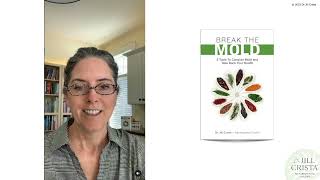
Dr. Jill Crista presents a Lunch & Learn on gliotoxin (April 17, 2024). She describes gliotoxin as a virulence factor produced by Aspergillus, Trichoderma and Candida that suppresses immunity, increases fungal colonization risk, and causes neurotoxic, hepatotoxic and oxidative damage. Key clinical signs include itchiness, bloating, sulfur intolerance, cognitive/mood symptoms (anxiety, suicidal thoughts), recurrent infections, and constipation. Diagnostic limitations and testing caveats are noted; treatments emphasized include sinus+systemic antifungals, plant antifungals (thyme, holy basil), binders (kale, charcoal), bile support (ox bile, cholagog herbs, coffee enemas), bioflavonoids, molybdenum, and cautious use of sulfur-containing thiols (NAC, ALA, glutathione).
Chapters
Hey, welcome. Welcome to this series on mycotoxins. We're doing Lunch and Learn all this week, and today's mycotoxin is gliotoxin. Gliotoxin is. The way I think of it is it opens the doorway to infection. So yesterday we talked about ochratoxin, and my little nickname for ochratoxin is that it's the persister mycotoxin, gliotoxin, I think of as the door opener. It goes ahead and lays a red carpet for the fungi in your body to take advantage, so they can either overgrow, colonize, infect. Gliotoxin is the toxin that molds will make. And not just molds, specifically aspergillus molds. We'll talk about source and symptoms, that kind of thing. But also Candida in your own body can make gliotoxin. So if you have a mold exposure and you have gliotoxin that you're finding on your mycotoxin tests, whatever way that you're testing that now, you know that you most probably also have a fungal burden in your body and colonization, because gliotoxin just lays that red carpet, like, here you go, here. We've shut down all the immune system, so you can't. It can't fight you off fungus. So think of gliotoxin as the red carpet for fungi to take over. So where does gliotoxin come from? That's from. I'm just going to read here. The Aspergillus species mold, Trichoderma and Candida, all of those can make mycotoxins. Some of them are from outside your body, and some of them are from inside your body. No good. The color of these molds, these can be the. So Aspergillus tends to be kind of white to light green. That's its steady state color. But any of these molds can take on any color depending on what they're eating. So if the substrate that they're eating has any kind of melanin to it, it will turn it black. And then you think, oh, my gosh, this is scary black mold. Well, they're all scary indoor molds. Not supposed to be there. So. No, no, no. Let's see. Favorite building material, flooring, carpet, textiles, wood, plywood, and modified wood products such as OSB board, which is unfortunately becoming very common to use and even can happen on concrete. It's not really the concrete that's feeding the mold. It's the dust on top, the particulate. And that's what, if you have enough Dust in particulate and then you have humidity. You can grow mold. You can be a mold farmer. Great, huh? So let's talk about the details about gliotoxin. Let's see, what can I tell you? It is a virulence factor for airborne molds. So it's something that medical doctors and pulmonologists do watch, because if this is here, it's in your system. There's a higher risk of having fungal infection in the lungs. So it's got to get it. We got to get it out of your body. Fungal sulfur uptake is required for its formation. So what do I mean? Means if you are getting enough sulfur in your diet. It's a Goldilocks glutoxin is kind of a Goldilocks mycotoxin. So it is. Oh, hey, John, Nice to have you here. Thanks for joining the Goldilocks principle. You know, the just right. So if you have not enough sulfur, then you can. You can't detox gliotoxin. If you have too much sulfur and your body isn't keeping the fungus down, that sulfur could be being uptaken by the fungal overgrowth in your body to make more gliotoxin, to open the doorway for it to be more infective. So why am I bringing this up? It's super confusing, you know. So are you saying sulfur is good or sulfur is bad? Sulfur in high amounts, really high amounts, like therapeutic amounts that we get from thiols, such as alpha lipoic acid, N acetylcysteine, glutathione. These are very therapeutic because if they're in a high enough amount, it actually impairs the fungi from making gliotoxin and from growing themselves, so they're antifungal. However, if you have a huge fungal burden, you could, if you're taking those kinds of things and you're one of those people, has a really bad reaction to them. That's like, ding, ding, ding, ding. That is a warning sign to me that you have a massive fungal burden in your body. And we need to get you on antifungals as soon as possible. So you can take your sulfur containing thiols, alpha lipoic acid and acetylcysteine glutathione. We need those so that you can detoxify this. And as an antifungal property, however, they may be making you not feel good. So a classic thing is somebody who has gliotoxin burden and fungal burden, so who needs to be on antifungals as soon as possible, is that if you eat foods that are high in sulfur, you don't feel good. Or if you take an Epsom salt bath, even though everybody's like, that's the perfect thing for detox. And you do an Epsom salt bath and you don't feel good, this is a sign that you're probably dealing with some gliotoxin burden and some fungal burden in your body. So I hope I didn't just confuse everybody. So sulfur, when you get it, you want it just right, and then therapeutically, you want it really high. But you might need to be on a low sulfur diet at first to reduce your symptoms so that you can get on the antifungals as quickly as possible. And then you bump the glute, the sulfur. Does that make sense? I hope so. Okay, somebody give me a thumbs up. That. That actually made sense. I'm getting some waves. Hey. Hey. All right, let me go back to questions. So, actually, before we do that, let's talk about symptoms that I've seen in my patients. The overall health impacts of gliotoxin is it's immunosuppressive, so it's suppressive to the immune system, it's toxic to the immune system, so it's immunotoxic, it's neurotoxic, hepatotoxic, meaning toxic to the liver. It's highly oxidative, so it's a perfect lead in to a sers kind of picture a chronic inflammatory response. Picture with your mold exposure. It's toxic to the genes, can be toxic to actual cells. That's how it lays the red carpet for the fungus to take over. And it is toxic to any kind of skin or mucosal lining. So that can be respiratory passages, sinuses, lungs. That can be your throat. That can lead toward thrush, it can be lead toward yeast vaginitis, skin infections, and gut colonization. So in my patients, what I'm seeing, what I've done is I've just kind of collated all the patient results that I have and tried to create lists of what it. What is each mycotoxin, kind of what's its special sauce, and what are the things that you might be seeing so you can make connections for yourself. So what we're seeing is itchiness, itchiness. Itchiness. Itchiness is a big thing with gliotoxin, excess and fungal burden, mast cell reactions, bloating after eating, sweet cravings, alcohol cravings, nausea, constipation. A lot of people have, like, sluggish bowels. You might be going every day. But it's like you're a day behind that kind of thing. That's a gliotoxin thing. Intolerance to sulfur and sulfur containing foods, which you're like, what is the sulfur containing food? That's going to be anything that has is the stinky food. So garlic, onions, eggs, fish, any of the Brassicaceae family, like broccoli, cauliflower, Brussels sprouts. If you have bad reactions to those, you have a fungal burden and gliotoxin is involved. Okay. I also see chemical sensitivities, fatigue, cognitive difficulties, meaning you just have trouble thinking. Gliotoxin and yeast in particular really go to the brain. They really, really affect the mind, the mood. We can actually see a lot of anxiousness is correlated with having gliotoxin in your body and yeast overgrowth and even to the point of despair. And I've seen some patients have their first ever suicidal thoughts once they are in this mold environment and they have gliotoxin high. And so the yeast is winning in coordination can happen headaches for sure, Ms. type symptoms, insomnia, frequent infections and delayed wound healing. So I want to make sure that I get to some questions and then I can talk more about gliotoxin itself, if that's helpful. So if gliotoxin is high, but aflatoxin is low from Aspergillus, can you assume the gliotoxin is from Candida colonization? No, we can't make any of those assumptions. We just don't have the data in humans. And also it all has to do with how you're excreting. So if you are excreting very. If you're excreting gliotoxin easier than you're excreting aflatoxin, then the gliotoxin is going to show up and the aflatoxin might look really low. But what we typically see is as we put someone on an antifungal, then their gliotoxin goes down and then we see the other ones show up like the trichothecines and things like that. So unfortunately there are a lot of limitations to how we test mold and mycotoxins and the we have to be really careful of over interpreting what those labs mean. And by the way, I do have a gliotoxin fact sheet on my website. So if you go to drkrista.com gliotoxin all of this is on the fact sheet. So you don't have to be like, what, what do I have to remember this? I mean this is Going to be recorded and posted, but also that is on a fact sheet you can download. So onions and garlic. Yep. Those are high in the sulfur and they can cause someone to have reactions to the food. If you have gliotoxin as a toxic part of your mold exposure and or fungal colonization and yeast overgrowth, what about alkalinized silver versus antifungals? So silver is really more effective against bacteria. I haven't seen it really take down fungus, especially fungal colonization. However, most colonization does have bacteria overgrowth in conjunction. So that's where we see the Marcons and things like that. Pretty much everybody who has sinus colonization is going to have one of the bad guy bacteria or a resistant bacteria resistant to antibiotic. And that's where silver really shines. So typically what I'm doing is I'm combining an antifungal with a silver spray so that we're getting the mixed microbial characters. We're taking them all down. What are the symptoms? I just ran by that. Real life symptoms. Yep. Will kale help bind all types of mold? Kale will help bind bile. So anything that is fat soluble gets bound up in bile and then that gets picked up by the kale. Steamed kale, steamed collard greens, steamed mustard greens. Those were shown to be about 30 to 35% effective as cholestyramine. And. And they feed your microbiome. So you're getting like double whammy benefit. So it will help bind all types of mycotoxins because mycotoxins are fat soluble. So if you just think about what are we binding? When you have a water damage, building exposure, when you're breathing in those mycotoxins, they get soaked in through your sinuses and through your lungs. That soaks into the bloodstream. The bloodstream takes it either to the kidneys to get peed out, which we talked about yesterday, how ochratoxin makes that difficult and it takes it to the liver to be detoxified. So don't forget kidneys. Like your kidneys are working on the mycotoxins much harder than your liver is. That's why binders are not required for people to get better. They're not required. So if you're having trouble with binders, don't sweat it. Support your kidneys. Your kidneys will take care of it. How do I like to treat Marcons Silver? Silver works very, very well. Ozone also works well. And then again, remembering that this is just the top of the tube. So if you have anything in your sinuses, your gut needs this support as well. So I. I don't think I ever have treated only the sinuses without treating the whole body and vice versa. Like, they all. I used to only treat the body, the systemic, the whole body, antifungals. And then I read Dr. Joseph Brewer's study where, you know, it was like, everybody's colonized. And I went, oh, my goodness, I'm missing this. And my patients went from getting better like this to all of a sudden we added the antifungals, and it was like, major improvement. Don't eat grains or sugars. That's if you have a candida problem. Candida overgrowth can take advantage of that. But remember, any dietary recommendation is a therapeutic diet, which means it's temporary. Once we get patients on antifungals, a lot of these foods come back. High oxalate foods, high histamine foods, high salicylate foods, foods that can grow, candida foods that are a little bit higher in carb. I mean, sugar is not great for any of us. But grains provide a lot of our trace minerals that we need for detoxification and for blood sugar balance, such as magnesium for good cardiovascular health, magnesium, selenium for detox. So the hull of the grain is where we get a lot of those really necessary nutrients. And so I try not to have my patients be too restrictive if they can tolerate a little bit. What foods are recommended? Okay, let's rock to some treatment things. I want to make sure that I tell you all about. Let me tell you all about the other things that gliotoxin can do. They are a potent inducer of causing not just immune cells to have damage and can actually die, but. But also the liver and the neurological system. I think that's why candida and yeast that make gliotoxin are so hard on the mood and the mind. I think they're actually creating changes in the brain. And so they're also immunosuppressive, meaning they're reducing the immune system. And if you have a patient or if you yourself have noticed that you have a low IgG3 subclass deficiency. This is gliotoxin that has a disulfide bond, and gliotoxin has a disulfide bond. Some people in medicine think glia toxin means it's brain toxin and it's glio toxin, meaning just the name of the thing. It has nothing to do with the brain. However, it does affect the brain, which is really strange. It is rapidly taken up by the liver cells, and the liver detoxifies it. And Packages it with those high sulfur containing thiol supplements such as N acetylcysteine, alpha lipoic acid and glutathione. So the liver really needs that support. But again, sometimes when you're just new into treating, if you have a big fungal burden and those fungi are making gliotoxin, you get feeling a lot worse from those things. A lot worse. So we get you on the antifungals, and then we support those thiols. It reduces mitochondria. So we see fatigue a lot. With gliotoxin exposure, some DNA changes, which makes your immune system forget it's ever seen Epstein barr virus or mono. So we see a lot of people having Epstein barr reactivation, EBV reactivation, When they've had exposure to gliotoxin, because the immune system completely forgets it's ever seen it, and you have to fight it all over again without being a strong teenager having all that strength. It's also neurotoxic, which we talked about. Okay, So I. When I see gliotoxin, I try to get my patients on antifungals as quickly as possible. And if they're super sensitive, I'll start with something really simple, like holy basil tea. Holy basil is a very highly tolerated plant that has antifungal properties. It also nourishes the adrenal glands. It has some antiviral properties. It's just a lovely, lovely plant. And it lifts the mood, so it's taking care of that mood part. You can also do this with spices. There are lots and lots of spices. But what's really interesting is that if gliotoxin is impairing the immune system, if we give your meals and your supplements with a little bit of bitter, it will actually kick in a response of your immune system Called the innate immune system, and wake it back up. We found that the innate immune system is really important in fighting Covid and getting over long haulers. So adding a little bit of bitter every time you eat and every time you take your supplements, even your. So if you're on binders and you're trying to take that away from food or something like that, have a little bit of bitter in there, and that will induce the immune system to kick in and say, wait a minute, we've got colonization here. We got to kick back in and take care of our mucosal surfaces. All right? So that's the dietary thing. Sometimes I will add ox bile. If my patients have a lot of constipation, the constipation starts Higher up and oh, hey, Pam. So it starts higher up in the tube. And we want to support the bile part because that's where things get stuck sluggish and that's what gets impaired. So for my patients who are missing a gallbladder and need a little extra help, not everybody who's missing a gallbladder needs bile. Some people are like super bile creators because the body's like, oh my gosh, we don't have a storage container, We've been able to make a bunch of it. So if you tend to be more constipated, you're not suffering from bile dump diarrhea, those people could use some bile. So if bitters aren't alone, aren't doing it and we're using the bile, I still keep the bitters because of that little effect on the immune system that we're looking for to get it to kick back in. All right. Other things are, we want to make sure that we're supporting, on the dietary side, we're supporting getting rid of the oxidative. Remember, gliotoxin is highly oxidative, so we need to set that back without using the sulfur containing antioxidants. You can do that through bioflavonoids. And I'm sure you're like, oh, here she goes again. Broken record on the bioflavonoids. But every color band in the rainbow has been shown to be effective for supporting the body. And that's going to be anything like that. We can go through the whole rainbow. So the reds would be lycopene, oranges would be beta carotene, zeaxanthin, astaxanthin. The yellows would be quercetin, rutin, luteolin. The greens would be folinic acid. The blues, purples would be resveratrol. All of those are really protective. And so if you're eating the whole rainbow every day, then you're protecting your body from the gliotoxin impact and the oxidative stress until you can get on antifungals. And you can start with those sulfur containing ones which are super beneficial for fighting off gliotoxin. If you can't handle sulfur, a lot of people are very low in molybdenum. Molybdenum is one of those trace minerals that's in the hull of the grain and in our soil. And some of, you know, if you're eating good dirty food, food was still a little bit of dirt on it, you know, like a carrot out of the garden. So a lot of people that Are mold sick, have malabsorption, and can't take these things in, and are on food, like, restrictive diets where they can't get these nutrients. What I found in animal studies is that a little bit of lycopene will help. So that's the red color band, helps you absorb your trace minerals like molybdenum. But a lot of my patients who have sulfur sensitivity need a molybdenum supplement. And that's just an easy, you know, like 250 to 300 micrograms a day taking it with food, because we need a little stomach acid in our stomach to chelate that and absorb it. And then that helps people tolerate taking the sulfur foods, taking an Epsom salt bath, and taking the supplements with sulfur in them. All right. Oh, that's the question about the pupils. That's a very complicated question. That's dysautonomia. So I would encourage you to work with your doctor on treating your dysautonomia. A lot of, like, the polyvagal treatments can help that. Obviously, treating the mold and getting it out of your body, especially sinus. You might want to check into whether you have a sinus colonization and treating that big time treating that, because that's very close to all of this neurology. I do consult on cases with doctors who have taken my training course so that I don't have to repeat myself a lot. And what antifungals. I go through all the antifungals in my book Break the Mold. I start my sensitive patients with holy basil because it is the most tolerated. And one of my favorite all around is the herb thyme. T H Y M E It has a special thing that it can do where it will shut down mold's ability to make more gliotoxin to defend itself. So often if I have to use some kind of drug antifungal, I always keep time on board, keep my patient on the time, because it will not only help reduce drug resistance, but it reduces the fungus ability to make mycotoxins. We see in studies that molds will kick up their production of mycotoxins once we add antifungal drug antifungal, because it knows you're coming for it and it'll try and defend itself. When having a HERCS and antifungal, should you stop? Typically, yeah. I do have my patients. It depends on the level of the hercs, but there's no reason to have a Herx. You don't have to have a herx to get Better like that's not a required thing and you don't have to like grunt through it or anything like that. Sometimes if it's too hard, it's too hard. You know, your body just can't do it. You're getting more die off than you can handle. Before starting my patients on antifungals, I techni typically am having them start a day or two of charcoal just to make sure they can still poop. Because we do not want to cause constipation. If you're on antifungals and binders and you're constipated. No, no. The number one thing we need to do is make sure you're pooping. That's how you get this stuff out of your body. So if you cannot poop, if you're not going to like predictable bowel movements every day, we need to make sure that we are not overbinding you because you're just going to reabsorb all that toxin so that if you're having a herx and you're, you know, you're pooping twice a day, you're able to tolerate some charcoal to sop up stuff for first couple like day to week of your antifungals and you're having a herx that's like kind of mild and you can still go through your day but you might be headachy achy. That's kind of a get through it. But that herx should pass in two to three days. And if it doesn't, that's not a herx. That's not a herx. That is your organs screaming at you that they can't handle it. A herx is just supposed to be like a short 48 hour period. Beyond that, that's not something that we want to ask your body to tolerate. It's too much for your body. Okay. What if a person is allergic to cows and ox bile? Yeah, there's lots of other options. Tons and tons and tons of other options. We can use cholagog herbs, which Cholagog is a kind of old timey herbal word that means things that make and move bile. So there are a ton of them such as dandelion, gentian. We can use the herbs to do it. Ox bile is not required. Sometimes for my patients I'll use something like, I'll use a pharmaceutical like Actigol. If they're really, really sensitive to the bile and they, they did well on it, but they had an allergy, then we can use pharmaceuticals. How long should you be out of Mold to start antifungals. A lot of people need them, need them while they're in mold to prevent colonization. So I do, I have a course called 9 Things to Know while you're still in mold. I do treat my patients sinuses while they're in mold because then they don't become as colonized and they get better faster once they get out of mold. And then we can use the plant based antifungals while you're in mold. The gentle ones that aren't going to really be causing a lot of die off that just kind of keep a lid on things so that you're better off once you get out of mold. And yes, this will be posted, definitely. What if you have issue with oxalates, can you eat the rainbow foods? I mean, obviously if you have issues with oxalates, you're gonna have to modify, but just try to get as much of the rainbow as you can. And if you can't get the rainbow, you can supplement with the color band. That's really hard on you. So a lot of foods that are in the green band, I won't say a lot. Some foods in the green band have oxalates and so you can just take folinic acid and then fill in with the other colors everywhere else. Okay. And the oxalate problem actually is because of fungal overgrowth in most people. There are very, very rare people who have genetic issues. But this is a think of it as a fungal overgrowth thing. Think of it as a colonization thing. And once you treat that, the oxalate problems go away. My patients don't oxalate problems for the rest of their life. That's just. That's a because of mold thing. That's a because of fungal overgrowth thing. How do we check for sinus colonization? You. Am I back, y'? All? I got an alert on my phone. Somebody is stealing cars every time I try and do an Instagram live. Okay, so one kind of easy way, or. I don't want to say easy. I want to say. What's the word I'm looking for? Not necessarily a guarantee, but a hint is we can run an organic acids urine test called an OAT test. And there are signs on there that we can see in the very first section, the bacterium fungal metabolite section, that if they are raised, there's a high prevalence of colonization. And if you have colonization in your gut, you have colonization in your sinuses. They're a connected tube. So. And usually it's the sinuses seeding the gut every time you swallow. So that would be one of the things that you might look into. However, there are plenty of people who have sinus colonization who have a perfectly normal organic acids test. So whenever I'm finding mycotoxins in a patient, if they are excreting them in the urine, provoked or not provoked, I consider them colonized until proven otherwise, until we get a negative test. I treat my patients with antifungals in the nose and whole body until we get zeros. And I mean zeros. It happens on their mycotoxin testing. People get better. If you're doing all the right things, you're not getting better. Make sure you are really out of mold, that you didn't bring moldy stuff with you and you don't have to throw everything away. Like, you just need to be very judicious about how you're assessing the things that you might have brought with you. But that's been basically the reason for a lot of my patients is once we get them treated, we get them on the antifungals in their nose and their sinuses, we're treating their organs of detoxification. You know, we're supporting everything. We're giving them the nutrients that they need, enough fat for a good oil change, putting in good fats and getting rid of the mycotoxin laden fat, bioflavonoids, things that support the liver, things that support the kidneys, like melatonin. If all that's in place and you're still feeling cruddy, you're still in mold. And no one wants to hear that, but I can tell you, I see it all the time. Is it thyme oil? You can use essential oil of thyme if you're trained internally. If you're not, be very careful. So I use thyme as the whole herb and, and in capsules or time tincture or time glycerate for kids. And then thyme essential oil. There are people who are using that internally. But make sure you have the training for that. What do I do for folks with eye irritation that have detox mold and babesia and bartonella positive. And are babesia and bartonella positive? Pam, I can't just answer that question. That's, that's very, very case specific. So I, yeah, I'm gonna have to say I can't just answer that on the fly. I'm so sorry. The plant that comes to mind right off the top is eyebright. I love that plant. And also there are some drops, like similison. Drops are really nice. If you're. If the eye irritation is, like, allergic and that kind of thing. So we can treat topically, but there's probably a lot more that you need to be doing for the Babisian, the Bartonella taste, take care of it. And I know you have a lot of dental stuff going on, which definitely, you know, those roots of our teeth go right up to the those nerves and can cause irritation. All right, so we are at time. I hope. I'm hoping that I got. Oh, I just want to say one more thing that is wonderful for bile secretion. If you can't tolerate ox bile, you can't tolerate the kogogog herbs, and we need bile to be kicking out. The gliotoxin is coffee enemas. They're just miracle. And you can do one a week. And I will do that with my patients, whether you're in mold or out of mold. And I have my patients go to Dr. Jill Carnahan's website. She has a nice little packet that it's clean coffee she imports, and it's just a whole set. So it makes it really, really easy. And, you know, I have no affiliation. I just love the product. So. All right. We talked about supporting your body. I hope that you're walking away with more information instead of confusion over gliotoxin. And tomorrow we're going to be covering zearolanone. All right, I hope you can join me. Thanks for joining me today.









