HISTAMINE INTOLERANCE: Symptoms, Root Causes in the Gut Microbiome, and Treatment | Dr. Anderson
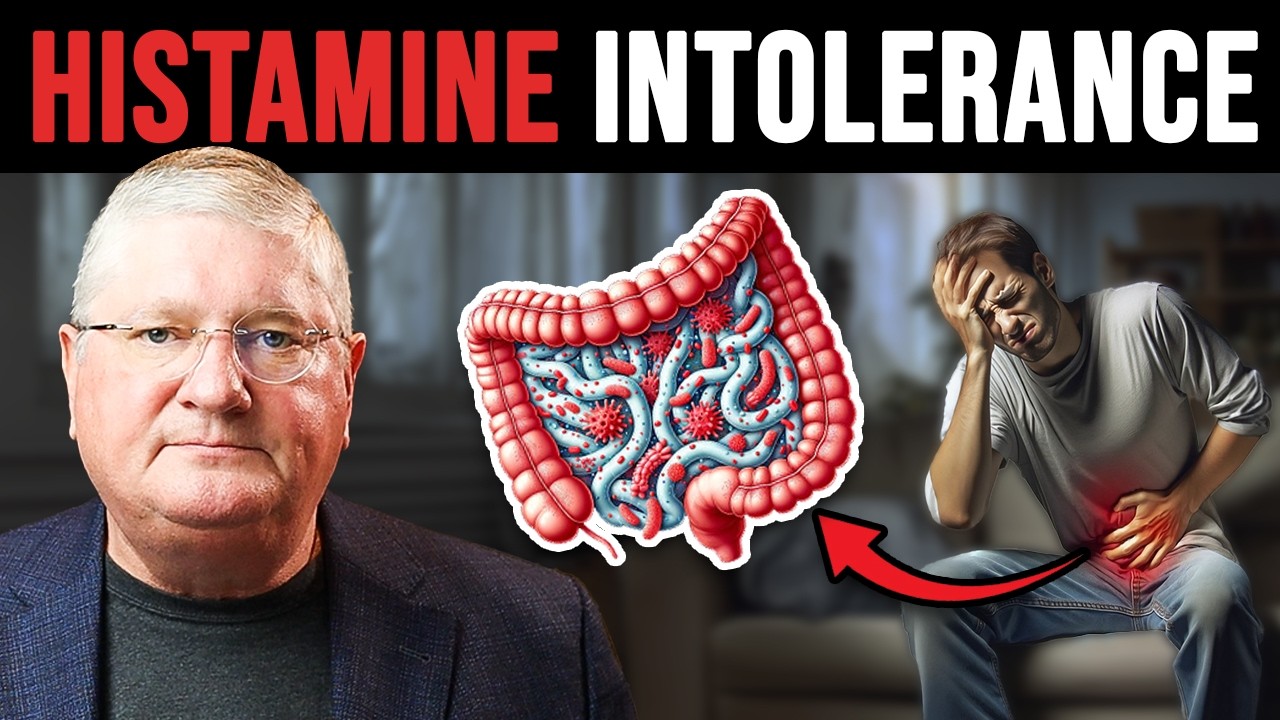
Dr. Anderson explains how gut microbiome disruption from antibiotics, SIBO, or parasites can trigger mast cell activation and histamine intolerance, causing delayed symptoms like brain fog, bloating, and headaches hours after eating. Treatment involves eliminating trigger foods and restoring the microbiome with antimicrobials and beneficial bacteria.
Chapters
So this one today, what I really want to look at is mast cell activation and histamine sensitivity in regard to how it interplays with the gut microbiome and the GI tract. Hey, it's Dr. A. Welcome to my channel. I answer questions on here because I've been teaching and researching in the integrative and naturopathic medical world for the last 30 years. Now we've got a ton of content on mast cell disorders, mast cell activation syndrome, histamine Et cetera. What we're gonna get into here is what would it look like if I had mast cell activation, histamine overload, and it was triggered by something in my digestive tract? So let's dive into this right here. The first thing that's kind of obvious to people, or at least they think of right away, is, well, I eat something and then I get allergic phenomenon, hives, rashes, other stuff like that. And that certainly is one. Now, if you have that happen, you may be actually allergic to that food. We all probably, or maybe you do yourself, know somebody who's allergic to shellfish or allergic to bananas or whatever, and they have to carry an EpiPen because if they get exposed to this, it could kill them. Well, that's a true IgE histamine mast cell-mediated food allergy, and that's a very sort of one-to-one linear relationship. But what if you had something that triggered a reaction that was not that? You don't get anaphylaxis or hives, Or something. What other ways would we see it? Number one, headache upon eating. Now this could be either while you're eating or a little bit delay, like 20 to 40 minutes after. And the reason for that is that shifts in histamine through the mast cell dumping can trigger the vasculature in the brain, trigger a migraine. It can trigger other types of headaches, but headaches after eating are one that you might not think of. The next is related where you may not get pain, but Brain fog after eating. So you were thinking fairly clearly, things were going kind of well in the brain department, and then you eat, and then while you're eating or somewhere up to an hour after you eat, you feel brain fog. Now this can be from other things. This could be from blood sugar shifts and many other things, but brain fog after eating is another sign of mast cell histamine dumping because of something that you ate. Another one which I have seen, and that can be very tricky. Because it comes in different flavors, as it were, is actual digestive tract inflammation. And you think, well, my digestive tract's on the inside of me, so it's not like I'm getting hives on my face or my lips are swelling up or, you know, whatever else, or I'm itchy. What would my digestive tract swelling be like? Well, this is why there's different flavors of this particular type of problem. So what I mean by flavors is presentations. You'll see in children and adults, but more commonly in children because adults learn to avoid things. If they eat a food that has a mast cell reaction and they don't get a headache, they don't get hives, they don't get wet, they might throw up right away or throw up while they're eating or throw up right after they eat. That's really common, especially in children. It can happen in adults too. But what if it gets a little bit further? So it's not in my stomach and I don't vomit it up. I might have a delay. These are the other flavors. So I might have a delay that's 1 or 2 or 3 or 4 hours. Maybe I get stomach cramps. Maybe I get sudden urgency to have diarrhea. Maybe constipated. Maybe I bloat really badly, sort of in the near term. I don't throw up, but you know, something a little bit lower. And then there's the final kind of category of GI response. That's what we might call delayed, where it's sort of, you don't notice it the first few hours after you ingest the food, but your entire digestive tract, all the way from, you know, your stomach and your esophagus are swelling, becoming inflamed. You're getting more mucus production, more inflammatory molecules that Et cetera. And this usually comes with a couple of things. Somewhere between 12 and 24 hours, the person will say, I wish I would've thrown up because now I just feel horrible inside. It's because their whole digestive tract is inflamed and it's sort of like, imagine having a hive reaction or angioedema with your lips or whatever on the outside of your body, but you're having it on the inside of your body. That's a really common one too. And they may wake up at night with it. Again, they may have very Bad diarrhea that goes on all day the next day. They may just feel horrible, not really have any bowel movement changes, but just feel horrible, you know, inside. It is kind of tummy troubles. So that's another way that that would express. Now, beyond the mast cells being activated, which can be for lots of different reasons, what would be a primary GI tract way where this would become connected, as it were? Why would it be a gut Well, first off, you have lots of immunity in your GI tract. You have a whole GI tract immune system. That means you have a whole GI tract set of cells that are granular cells, things like mast cells, basophils, eosinophils, CD40 plasma cells. These all get in the act, right? And many of them will produce histamine and other stuff because they're inside of your gut and they're not part of your peripheral immune system. These special cells are very sensitive to the normal flora, the normal good bacteria, good viruses, et cetera, that help us keep a normal microbiome. So a common thing that we will see with people is, let's say they have a damage to their microbiome from chemotherapy, or they have a damage to their microbiome from antibiotics, or they have a damage to their microbiome from whatever else. The more you damage the microbiome, if you already had mast cell problems, now you're going to have gut mast cell problems. If you didn't have mast cell problems you knew about before, and now you've damaged or thrown off your microbiome, now you're going to have mast cells that go from subthreshold to super threshold, and they're going to behave badly. A common example of this, which is much more commonly known now than it was 10, 15 years ago, is small intestinal bacterial overgrowth, where you overgrow the wrong kind of bacteria in the small intestine called SIBO or SIBO. It's also small intestinal fungal overgrowth. You also can have parasite overgrowth and all manner of other things, but it's very common in your SIBO, SIFO patients to see mast cell activation that didn't used to activate. So at whatever level you've messed up the microbiome, part of getting the mast cells back under control is to get the microbiome back under control. Now, if that means you have SIBO, SIFO, or dysbiosis, or some other creatures that shouldn't be growing there, what that means is you usually have to kill those creatures and then repopulate with the good flora, the good bacteria. Now, good bacteria is something we talk more about, but specifically human microflora has to be And what we've seen in people is if we take away the stressor, which is the infectious agent, and we put back in and you restore the ecology with the human microflora, then not today, not tomorrow, not overnight, but over time, the mast cell problems decrease. And you might say then, why would that affect my systemic mast cell problems? It's because, yes, these are GI reactions and the microbiomes in your gut, but there's so many mast cells and related cells in the GI tract that they're constantly being triggered by microbiome shifts, and we take that away, it decreases the amount of mast cell triggering, and then that decreases the total amount of mast cell triggering in your whole body. Does it always work like that? No, because there's other reasons for mast cells to behave badly, but the gut is a huge, huge reservoir. So in this one, I just wanted to answer the why and kind of get to the base of why we recommend certain GI things. But what it comes down to as far as what we've talked about today and histamine intolerance and mast cell overload in the gut is we have 2 things primarily I've talked about. There's other stuff related, but stick with the 2 I talked about that we can do. One is we can identify foods that are triggering histamine and other what we call mediators, mast cell mediators. That can be done by elimination challenge testing. And there's another category of testing called MRT, mediator response testing. That's not a brand name, it's just a category of test. And what they do is they challenge your immune cells to different food proteins and they see how many of the mast cell mediators get excreted when we challenge it with, you know, milk or coconut or whatever. Is it a perfect test? No, there's no perfect test for this sort of thing, but a mediator response test might be something you want to ask. And often this would be somebody like an integrative or naturopathic physician. Some gastroenterologists that do work with SIBO do work with mediator response testing too. Not all of them though. So that's one thing you can do. You can either do elimination challenge, you can do MRT testing. Don't eat those foods anymore. Huge help. Next thing, microbiome. If you have chronic digestive problems, please Get checked out because it could be all manner of diseases. But if you have chronic digestive problems and nothing's been diagnosed, you might want to look for somebody who specializes in bacterial overgrowth syndromes, SIBO, SIFO. Usually they'll be in in groups you know that specialize in this. There are some gastroenterologists that specialize in SIBO and SIFO testing. Again, a lot of people in the world of the integrative medicine community, the naturopathic medicine community, have specialized in these GI areas. And again, you want somebody who does this. And they can look for that, and also they can treat it because it's usually not like a simple straightforward treatment. Normally, there's twists and turns as you're doing the treatment. So reestablishing the microbiome, but sometimes that means we have to remove bad guys first. And removing bad guys means we got to identify at least some of the bad guys or the overgrown things. We have to kill them with the right things and then put the good bacteria, the good flora back in. So remove offending foods through whatever means you can, and then get the microbiome straightened out. Neither is quick or easy, but. But they can help in an amazing way because your gut carries so many of these mediator-releasing cells like mast cells and can create histamine intolerance. I'm Dr. A. Thank you for listening again. Thanks for all you new subscribers. Thanks for you old subscribers. Thanks for watching. Like, share, subscribe, do the notification thing. I'll be back to you with the next video.









